What to look for in the sky during totality—beyond the corona
If you get into the path of a total solar eclipse, the corona deserves your full attention. It is the reason people cross countries, book backup hotels, and text the family group chat six months too early. But the corona is not the only thing happening overhead. During those brief minutes, the whole sky changes character.
That is why so many people ask about planets visible during total solar eclipse conditions, or wonder what will the sky look like during totality once the Sun’s bright face is gone. The short answer is: stranger than daytime, brighter than true night, and much more dynamic than most first-time viewers expect. If you are planning ahead for 2026, start with the Helioclipse Eclipse Explorer map so you know whether you will actually be inside totality, because everything in this article depends on that geometry.
First: totality is not “night in the middle of the day”
A lot of disappointment comes from one bad mental picture. People imagine totality as if someone flips the world from noon to midnight. That is not what happens.
Professional observing guides and eclipse reports describe the sky during totality as more like deep twilight—roughly the kind of brightness you might know from 20 to 40 minutes before sunrise or after sunset, though the exact impression changes with cloud cover, local haze, the height of the Sun, and how long totality lasts. That matters because it explains why some bright objects pop out immediately while others remain invisible.
So if you are searching for what the sky looks like during a total solar eclipse, think “rapid, eerie twilight with a black hole where the Sun should be,” not “full nighttime sky.” You may see one or two brilliant planets very easily. You may see a handful of bright stars. You will not suddenly get a perfect planetarium dome full of everything above the horizon.
And if you are outside the path of totality, stop there: you will not get this experience at all. A deep partial eclipse can be dramatic, but it does not reveal the corona and it does not produce the same sky. If you need a clean explanation of that line, read our guide to when glasses on, when glasses off: eclipse phases explained for first-time viewers.
The best naked-eye priorities during totality
When totality begins, your first job is not hunting planets. It is looking up and taking in the eclipsed Sun itself.
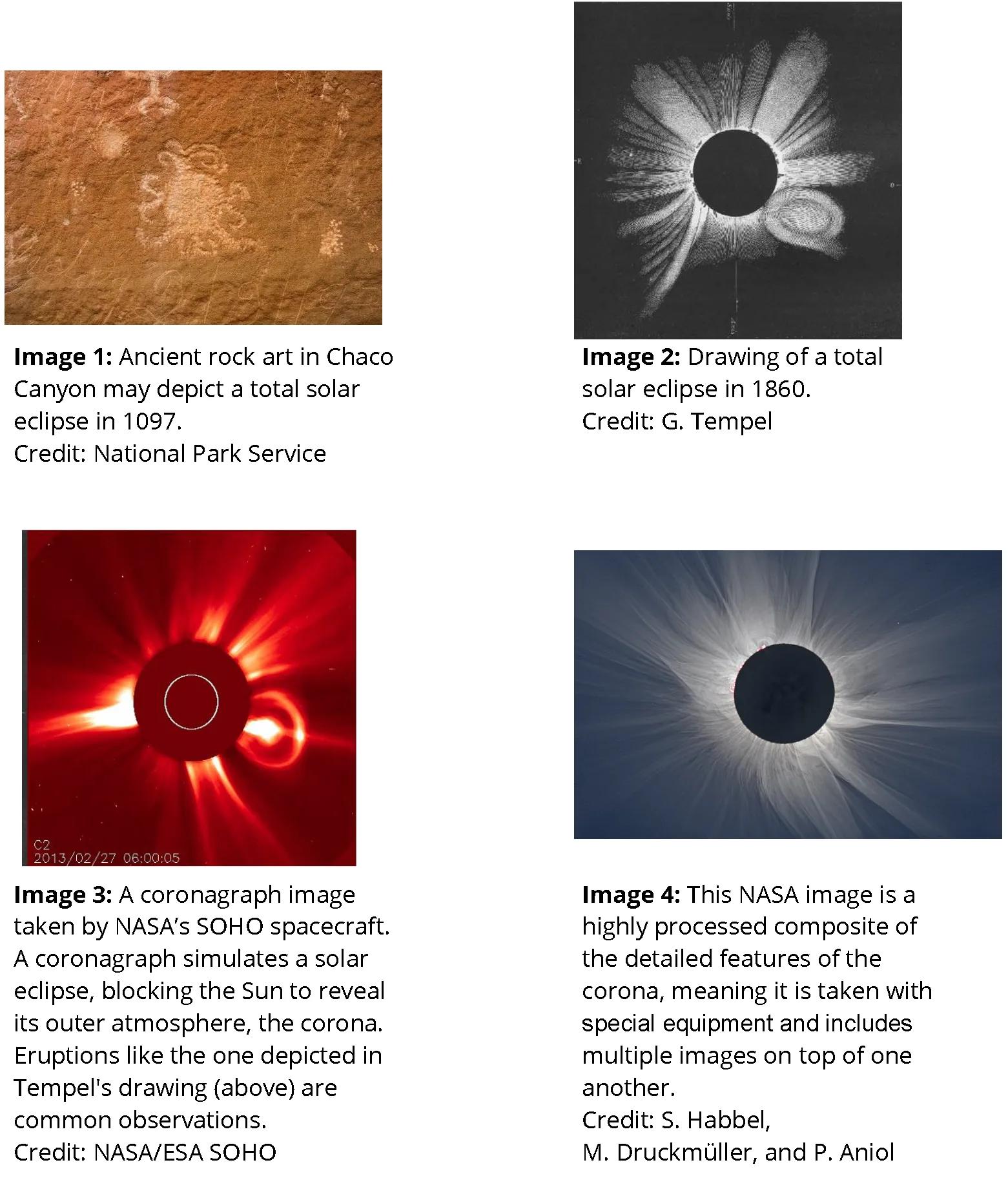
That sounds obvious, but people really do spend precious seconds fiddling with cameras, checking apps, or trying to remember where Jupiter ought to be. Experienced eclipse observers keep giving the same advice because it is right: the corona is the main event, and your unaided eyes are exceptionally good at seeing its delicate structure.
A smart order of attention looks like this:
- The corona around the Moon’s black disk.
- Pink prominences or chromosphere near the edge, if they are visible.
- The 360-degree horizon glow.
- The overall color and darkness of the sky.
- Only then, quick glances for bright planets or stars.
That is the spirit of any good planets visible during total solar eclipse 2026 guide: know what might be there, but do not let a side quest steal the eclipse from you.
What planet is visible during the eclipse?
The honest answer to what planet is visible during the eclipse? is usually: Venus is the best bet, Jupiter is often next, and everything else depends.
NASA’s public recap of the April 8, 2024 total eclipse noted that viewers in Dallas could spot Venus and Jupiter during totality. That lines up with broader skywatching coverage from 2024: Venus was the standout bright object, Jupiter was also prominent, while fainter planets were much less certain.
This is where people get tripped up by overconfident lists. You may see headlines about planets visible during total eclipse 2024 or planets visible during totality 2024 that make it sound as if the whole solar system will line up for inspection. Geometrically, many planets can be above the horizon during an eclipse. Visually, that is a different question.
A planet has to be bright enough, far enough from the Sun’s position in the sky, and placed in a part of the sky where the remaining twilight and atmospheric haze do not wash it out. That is why bright planet visibility depends on geometry and eclipse planning more than wishful thinking. The eclipse darkens the sky, but not equally in every direction and not to true nighttime levels.
Why Venus so often wins
Venus is usually the easiest planet because it is often dazzlingly bright. In the 2024 eclipse, reporting grounded in ephemeris-based sky positions placed Venus about 15 degrees from the Sun and bright enough to be obvious to many observers. That combination—high brightness plus a manageable separation from the eclipsed Sun—is exactly what you want.
Why Jupiter is often second
Jupiter is commonly the next easiest target when it is favorably placed. In 2024, it sat much farther from the Sun than Venus, around 30 degrees away in widely cited observing summaries, which made it easier to separate from the corona visually once people knew where to look.
Why Mercury, Mars, and Saturn are less reliable
These can be possible in some eclipses, but they are not promises. A planet may be too faint, too low, too close to the Sun, or simply not obvious enough in a sky that still behaves like twilight. Mercury is especially notorious for being theoretically present and practically elusive.
So when you see phrases like planets visible during total eclipse or planets visible during total solar eclipse today, read them as conditional. The right follow-up question is not “Which planets exist above the horizon?” but “Which ones are bright enough and well placed enough for this eclipse, from my location, in my sky conditions?”
Why visibility changes from one eclipse to the next
Every eclipse has its own sky.
The Moon may cover the Sun beautifully, but the surrounding sky scene depends on the date, the season, the Sun’s altitude, the observer’s latitude, local transparency, and the current positions of the planets along the ecliptic. That is why planets visible during total solar eclipse nasa summaries for one event should not be copied blindly onto another.
For example, the April 8, 2024 eclipse favored Venus and Jupiter for many observers in North America. That does not mean the same pair will dominate every future total eclipse. By August 12, 2026, the planetary lineup relative to the Sun will be different. If you are planning for that event, use the Helioclipse Eclipse Explorer map to lock in your observing site first, then check updated sky charts and professional previews closer to the date.
This is also why we are careful with phrases like planets visible during total solar eclipse tonight. “Tonight” language sounds simple, but planet visibility during an eclipse is never a universal answer. It changes with the event and with where you stand under the shadow.
What else to look for in the sky during the eclipse
If you ask us what to look for in the sky during the eclipse, the best answer is broader than planets.
The eclipse changes the entire dome of the sky and the landscape under it. Some of the most memorable effects are not tiny points of light at all.
The 360-degree sunset
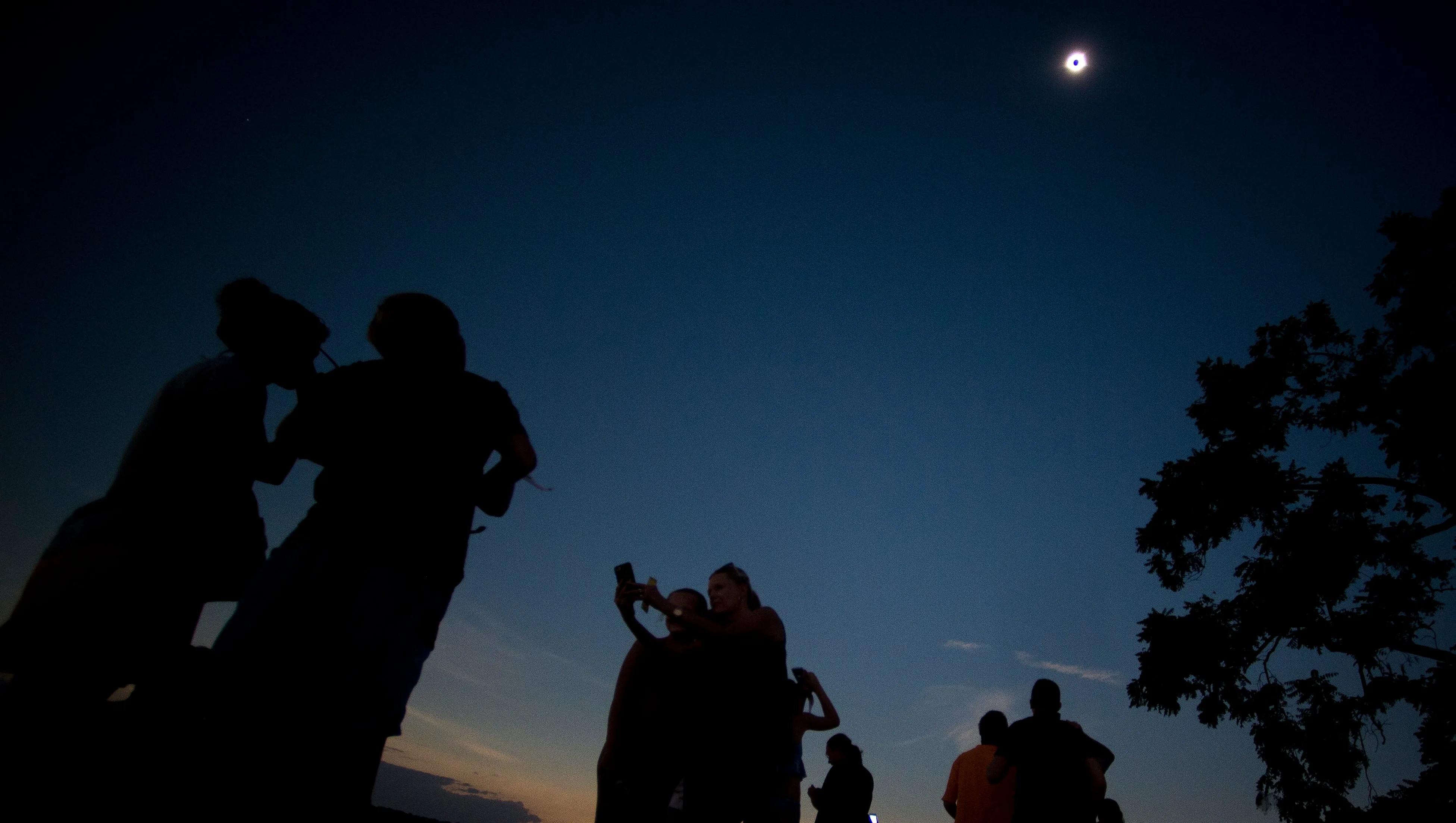
One of the most uncanny sights during totality is the bright band around the horizon in every direction. NASA’s eclipse guide highlights this “sunset-like glow,” and once you see it, you understand why eclipse chasers talk about it so much.
You are standing inside the Moon’s umbra, but areas far beyond the shadow are still in daylight. The result is a ring of warm light around the horizon while the sky above you deepens into twilight. It can feel as if sunrise and sunset are happening all at once.
The approaching and receding shadow
If you have a wide western view and a little elevation, you may catch the Moon’s shadow approaching before totality and racing away after it ends. Space.com’s 2024 observing coverage described it as stormlike, and that is a useful comparison: not because it looks exactly like weather, but because it feels like a moving wall of altered light.
The strange color of the sky
The sky overhead can take on dusky blue, slate, or steel tones, while the horizon glows yellow, orange, or copper depending on haze and distance to the shadow edge. This is one reason what will the sky look like during totality is such a good question: the answer is not just “dark.” It is a layered, colored, directional darkness.
Bright stars
A few first-magnitude stars may appear if they are well placed. Which ones depends entirely on the season and the eclipse date. In 2024, some bright winter stars were possible from parts of the path, though not equally from all locations because horizon altitude matters. A star can be bright enough in theory and still be lost below your local horizon or in murky low-altitude air.
Shadow bands
In the minute or two before and after totality, faint rippling bands of light and dark can sometimes appear on pale surfaces such as white sheets, walls, or cars. They are subtle, atmospheric, and easy to miss if you are not ready for them. They are not guaranteed, but they are one of the most delightful “extra” phenomena around totality.
A reality check for 2026 planners
For English-language readers, the next huge planning target is the August 12, 2026 total solar eclipse. If you are building your own planets visible during total solar eclipse 2026 guide, treat the planet question as the final layer of planning, not the first.
First, get yourself into totality. Second, maximize your odds of clear sky. Third, know your local duration. Only then worry about whether a bright planet might decorate the scene.
That sequence matters because a mediocre sky inside totality still beats a perfect forecast outside it. If you are planning Europe 2026, our August 12, 2026 total solar eclipse: what to expect and how to plan ahead and 2026 totality in Spain: path basics, timing, and what “on the centerline” really means are the right next reads.
For a total eclipse, even the difference between being near the centerline and near the edge of the path can mean a major change in totality duration—often the difference between having a calmer minute-plus experience and a much shorter, more frantic one. That extra time can be the difference between noticing the horizon glow and spending the whole event catching up with your own heartbeat.

Don’t let planet hunting ruin your totality
This is the part experienced observers say with love: do not over-prepare yourself into missing the thing itself.
Yes, it is fun to know where Venus or Jupiter might be. Yes, it is satisfying to understand the geometry. But totality is short, emotional, and visually rich. If you spend it sweeping the sky for a marginal target, you may come home with a correct answer and the wrong memory.
A better approach is to rehearse a simple plan with your group:
- Keep glasses on through the partial phases.
- At totality, look first at the eclipsed Sun and corona.
- Take one quick horizon sweep.
- If a bright planet is obvious, enjoy it.
- As soon as the bright Sun reappears, put your viewers back on.
If you are bringing children, first-time viewers, or a mixed family group, simplicity wins. You can even assign jobs: one person watches for shadow bands, one person scans the horizon, one person just soaks in the corona. Then everyone shares what they noticed afterward.
Safety still rules the whole experience
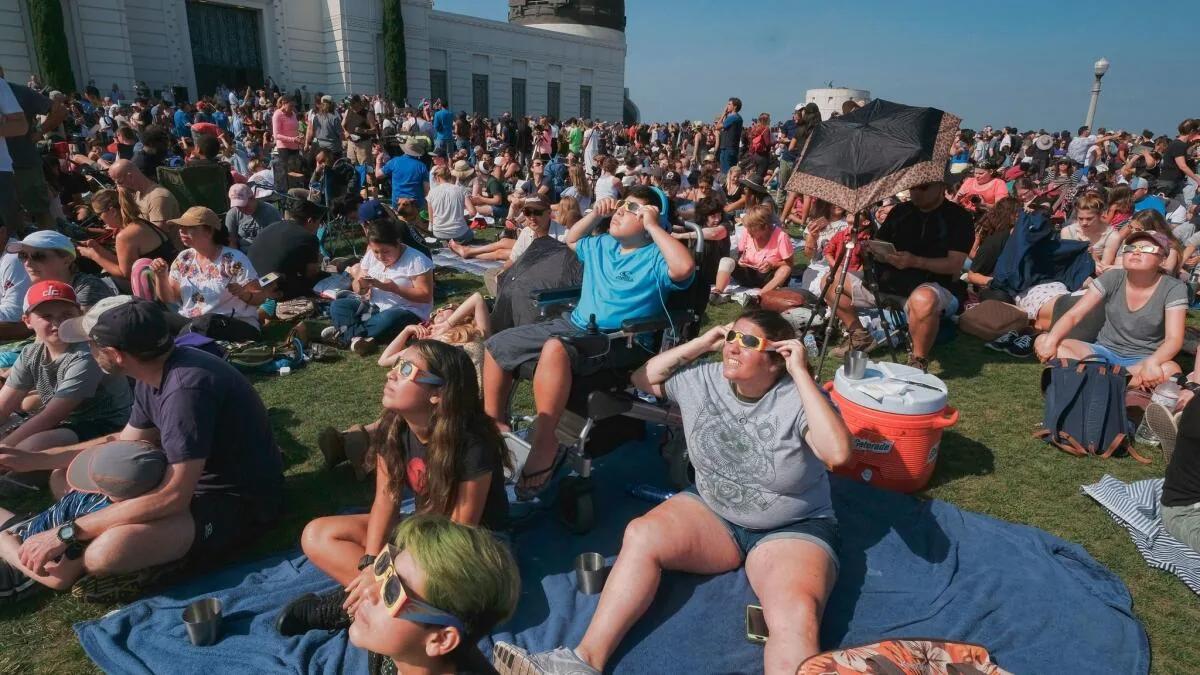
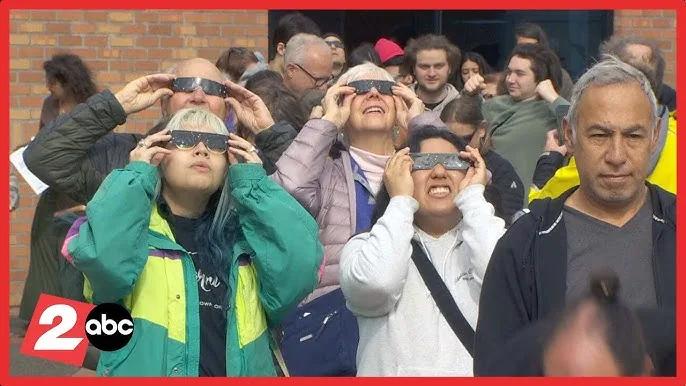
Because this article is about totality, it is worth saying the safety line plainly: you may look at the eclipse without eye protection only during the brief total phase, and only if you are actually inside the path of totality and the Sun’s bright face is completely covered.
At all other times, use a special-purpose solar viewer that conforms to ISO 12312-2. The American Astronomical Society is explicit about this, and so are we. Ordinary sunglasses are not enough.
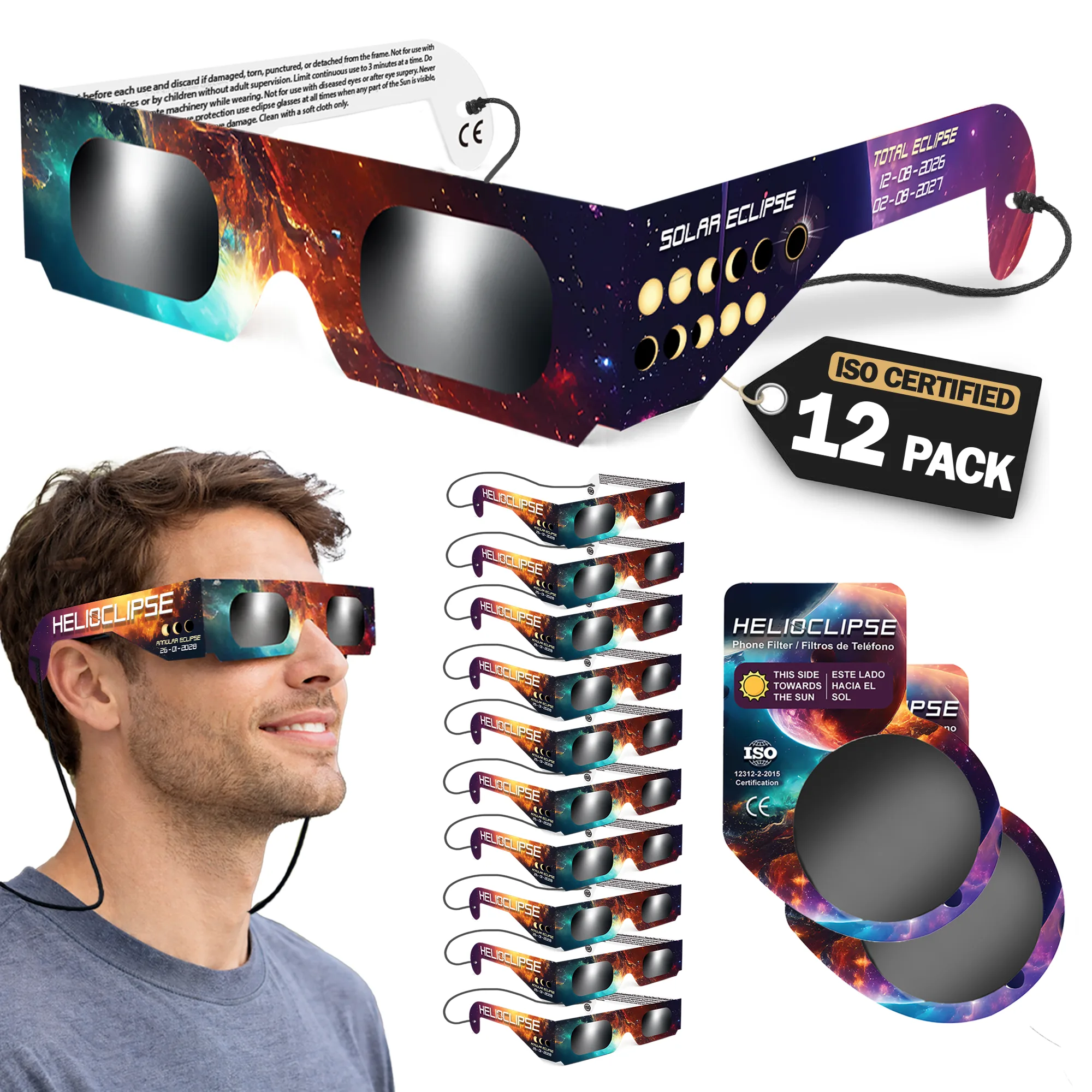
If you are buying viewers for a family or school group, do it early and sanity-check what you are trusting. Readers often search phrases like approved solar eclipse glasses, eclipse viewing glasses, or solar eclipse glasses iso 12312-2 certified; what matters is not the wording alone but whether the product is genuinely intended for direct solar viewing and in good condition. You can browse Helioclipse solar eclipse glasses and, if you want the deeper standards context, read our guide to ISO 12312-2 and eclipse viewers: what the standard means for your family and our post on fake and low-quality eclipse glasses: how to sanity-check what you are about to trust.
The best way to remember totality
The most useful mindset is this: know enough to notice more, but not so much that you turn the eclipse into a scavenger hunt.
That is really the answer to what to look for in the sky during totality—beyond the corona. Look for the changed world. Look for the horizon ring. Look for one brilliant planet if it presents itself. Look for the emotional shock of seeing daylight reorganized around a black Sun.
And if you later compare notes with friends about planets visible during total eclipse 2024, planets visible during totality 2024, or whatever future event becomes the next big search wave, remember the deeper lesson from every good eclipse report: the exact list matters less than being in the right place, under a clear sky, ready to look up at the right moment.
April 2024 - What to Look For During Totality
Totality Town
Frequently asked questions
Will any planets be visible when totality begins, or is the corona the only thing to look for?
Yes, some bright planets may be visible during totality, along with a few bright stars. But the article emphasizes that the corona is the main event, and you should expect a deep-twilight sky rather than a full night sky.
What time does the September 21 solar eclipse happen?
The excerpt does not give a time for the September 21 eclipse. It only says that everything depends on whether you are actually inside the path of totality, so you would need a location-specific eclipse map or local timing information.
What should people expect from the sky during the 2024 eclipse if they are hoping to see planets?
During totality, the sky can become dark enough for one or two brilliant planets to stand out easily. The article also notes that you should not expect a planetarium-like sky full of visible objects, because totality looks more like deep twilight than true night.
What should viewers know about the sky during totality in 2024?
The key point is that totality is not the same as nighttime; it is more like eerie deep twilight. That means the corona is the main sight, while a few bright planets and stars may appear, depending on local conditions and how long totality lasts.
What should a 2026 eclipse guide say about seeing planets during totality?
It should say that bright planets can be visible, but only if you are actually inside the path of totality. The article also recommends checking a map in advance, because the experience depends on the eclipse geometry and on local conditions like cloud cover and haze.
On-site next steps
- Use the Helioclipse Eclipse Explorer map to confirm whether your viewing spot is inside totality, near the centerline, or only in a partial zone.
- If you are planning for a family, class, or travel group, order Helioclipse solar eclipse glasses well before the rush so you are not scrambling in the final weeks.
- For more planning help, browse the Helioclipse blog for guides on eclipse phases, weather strategy, travel backups, and safe viewing.
Sources & further reading
- Stars, planets and more will be visible during the total solar eclipse on April 8. Here's where to look
- What to Look For & When During a Total Solar Eclipse
- The April 8 Total Solar Eclipse: Through the Eyes of NASA
- What to Expect: A Solar Eclipse Guide
- How To 'See' Every Planet In The Solar System During The Total Solar Eclipse
- How to view a solar eclipse safely
- Eclipse basics
- All about solar eclipses
- What is a solar eclipse?