Teaching the eclipse: lesson hooks that stay on the right side of safety
A solar eclipse can turn an ordinary school day into the kind of day students remember for years. The room changes. The playground changes. Even the kids who usually do not care about skywatching suddenly want to know what is happening overhead. That is exactly why teaching the eclipse matters so much: the lesson is not only astronomy, but judgment, supervision, and how science works when the real world gets exciting.
If you are building a teaching solar eclipse classroom activities safe 2026 guide, the best starting point is simple: make the science vivid, and make the safety boring in the best possible way. Predictable. Rehearsed. Non-negotiable. For planning direct viewing, our shop for eclipse glasses can help you prepare certified viewers ahead of time, and our Eclipse Explorer / 3D map is useful if your school community wants to understand what kind of eclipse your location will actually get.
This article is for teachers, school leaders, museum educators, and families helping with group events. It is not legal advice, and it is not a substitute for district policy. Permission slips, supervision ratios, and liability decisions belong to your institution. What we can do is help you keep the lesson strong and the viewing plan aligned with AAS and NASA-style safety guidance.
One more thing before we get into activities: a lot of search traffic still circles around teaching solar eclipse 2024, but the core classroom principles have not changed. Whether you are planning for the next big event or refreshing materials from a previous one, the safe structure is the same.
Start with the rule that makes every other decision easier
When people ask what are the safety precautions for viewing eclipses?, the classroom answer should be short enough for a student to repeat back to you.
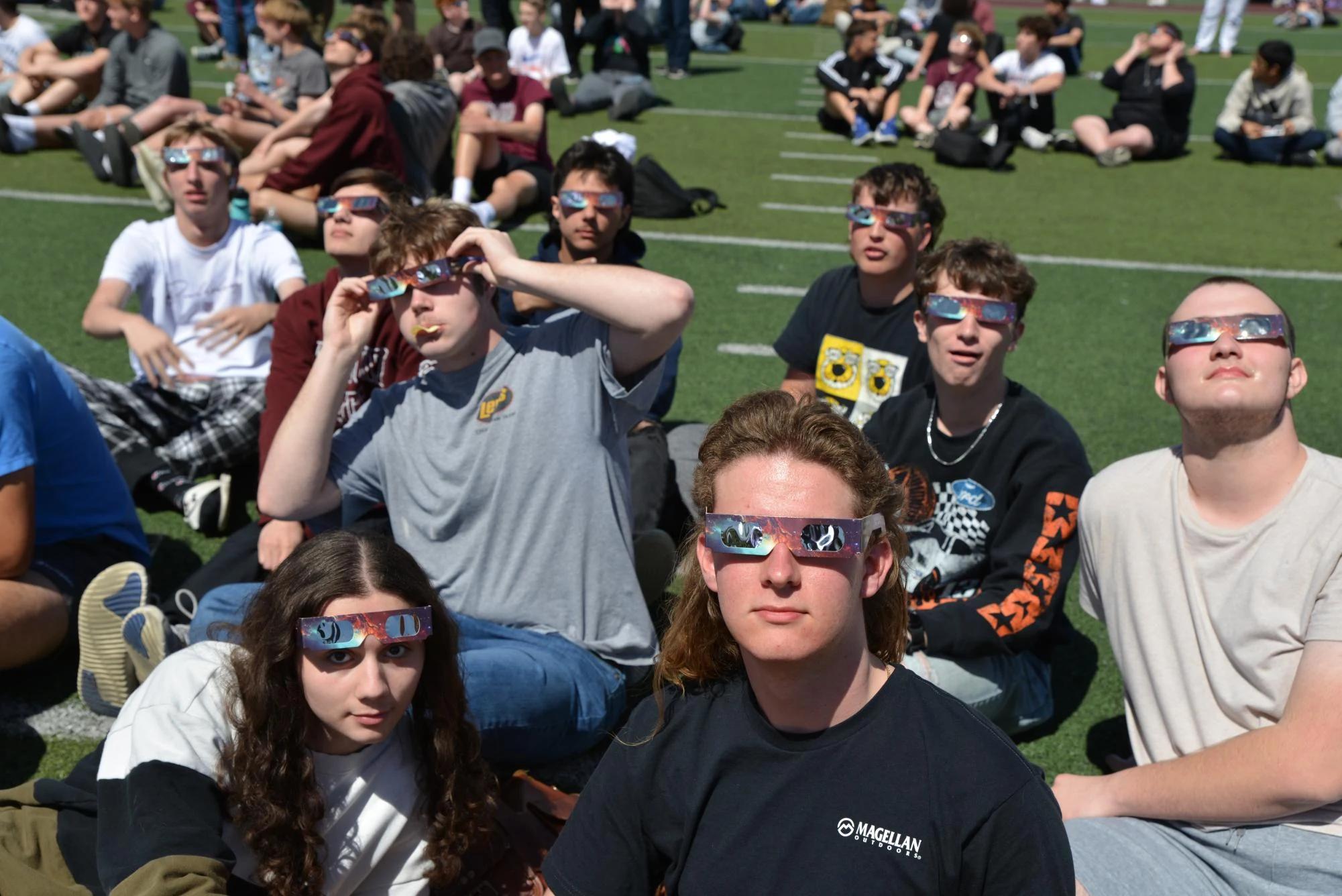
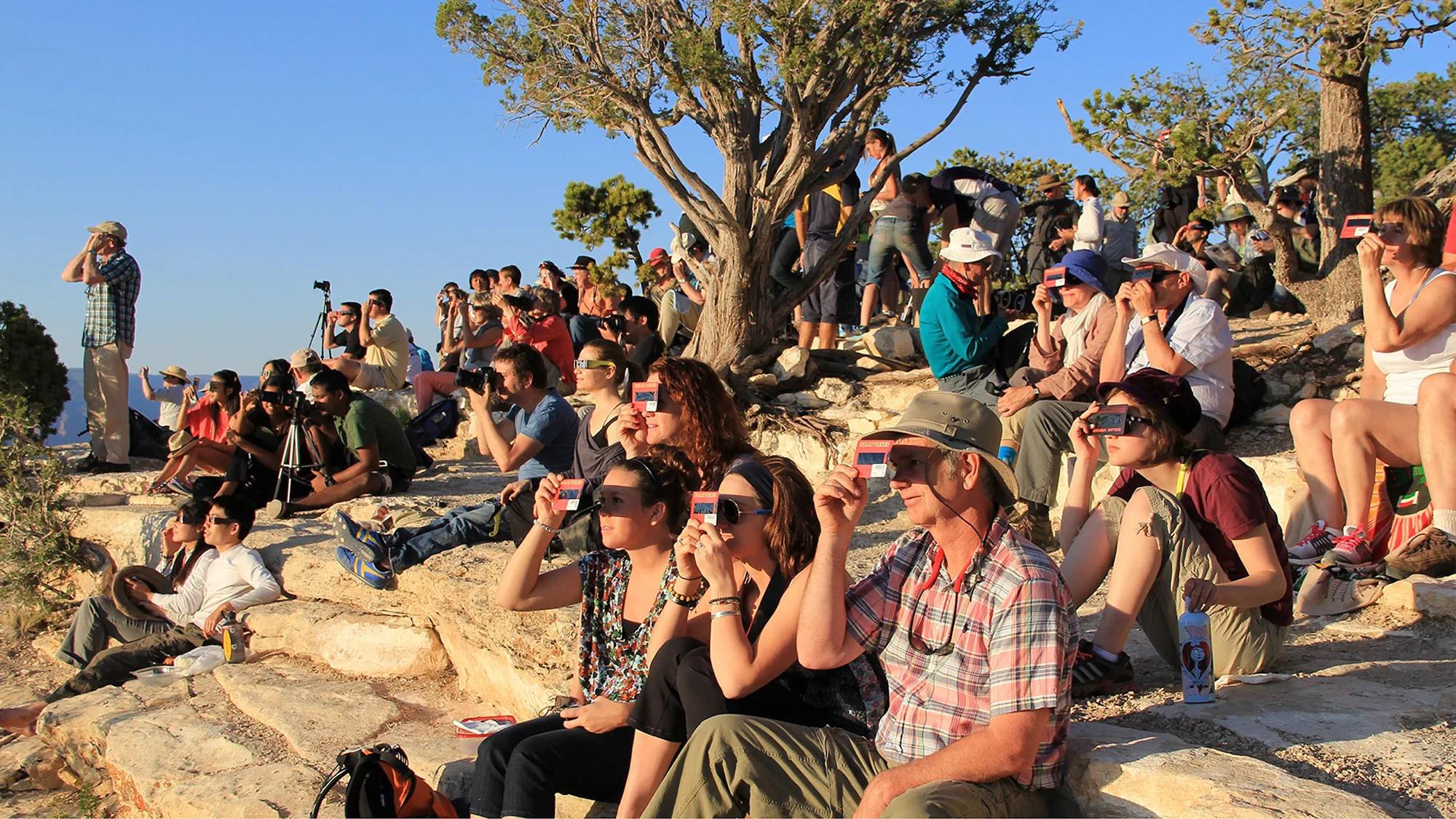
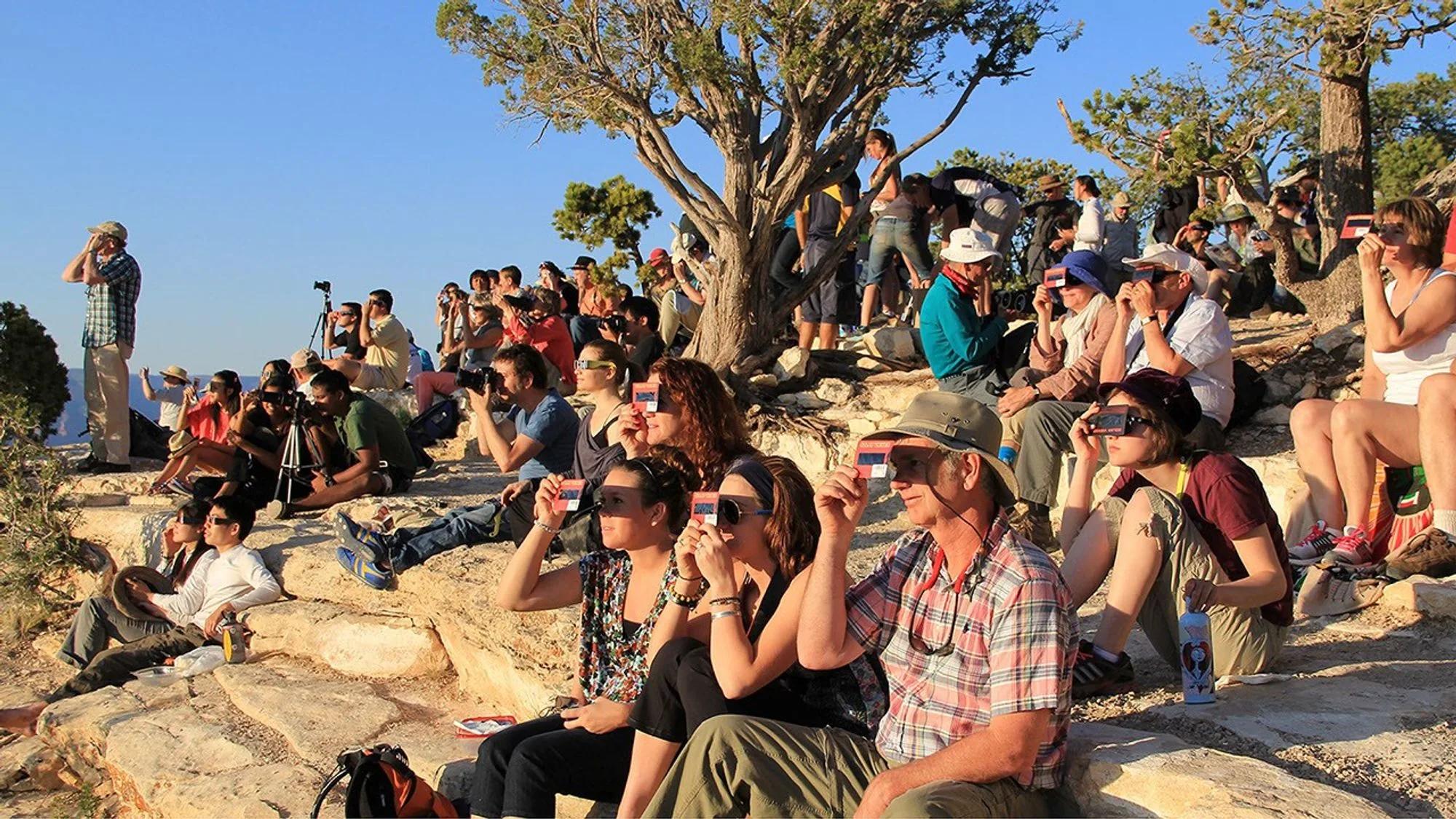
For any partial solar eclipse, and for the partial phases before and after totality during a total solar eclipse, nobody looks directly at the Sun without proper solar viewing protection that conforms to ISO 12312-2, or without a fully indirect method such as projection. Ordinary sunglasses are never enough. Looking through cameras, binoculars, or telescopes without the correct front-mounted solar filter is unsafe. And children should always be supervised when using solar viewers.
That single rule immediately improves your lesson design. It pushes you away from improvised stunts and toward activities that scale well in a classroom: shadow observations, pinhole projection, model-building, timed observations, and short, supervised direct looks only when you have the right equipment and enough adults.
If your school community is new to eclipse planning, it also helps to share a plain-language explainer on when glasses on, when glasses off so staff and families do not confuse totality rules with partial-eclipse rules. That distinction causes a lot of preventable mistakes.
The safest lesson hooks are the ones that do not require anyone to look up first
The strongest classroom opener is often not the Sun itself. It is anticipation.
Try opening with a prediction question: What will change first during the eclipse: the light, the temperature, the shadows, or the behavior of people around you? Students love making a claim before the event and checking it later. That turns eclipse day into a real observation exercise instead of a one-minute glance.
This is where teaching the eclipse becomes more than a craft project. You are showing students that science is not just facts on a poster. It is noticing patterns, recording evidence, and comparing expectation with reality.
A few hooks that work well across age groups:
Shadow detectives
Have students trace or photograph shadows from leaves, railings, or a colander before maximum eclipse and then again during the event. During partial phases, tiny gaps act like many little projectors, and students can see crescent-shaped Suns on the ground. It feels almost magical, but it is also a clean demonstration of light traveling in straight lines.
Brightness journal
Ask students to rate outdoor brightness every 10 or 15 minutes using simple language: normal, slightly strange, noticeably dimmer, or dramatic. Older students can connect those observations to eclipse magnitude and Sun coverage.
Temperature and sound log
Even when the temperature change is modest, students can compare shaded and unshaded readings, or note whether birds, insects, or playground noise seem different. The point is not to promise a dramatic environmental shift every time. The point is to teach careful observation.
Build the alignment first
Before eclipse day, use a lamp and balls to model Sun-Earth-Moon alignment. Keep it simple. Younger students need the idea that the Moon moves between Earth and Sun. Older students can go further into why eclipses do not happen every month and why the path of totality is narrow.
These are the kinds of solar eclipse activities for students that stay useful even if clouds ruin the live view.
Pinhole projection is the classroom hero for group viewing
If you need one method that is cheap, scalable, and institutionally comfortable, it is projection.
The AAS and NASA both emphasize indirect viewing methods for good reason. A pinhole projector lets students observe the Sun’s changing shape without anyone looking directly at it. A cardboard box viewer, an index card with a small hole, a colander, or even crossed fingers can project a solar image onto a surface when the Sun is behind the observer. The key instruction is the one students most need repeated: do not look through the hole. Look at the projected image.
Astronomy Magazine’s box-style projector guidance is especially teacher-friendly because it translates well to a classroom build. It is also realistic about supervision: adults should handle the cutting steps for younger groups.
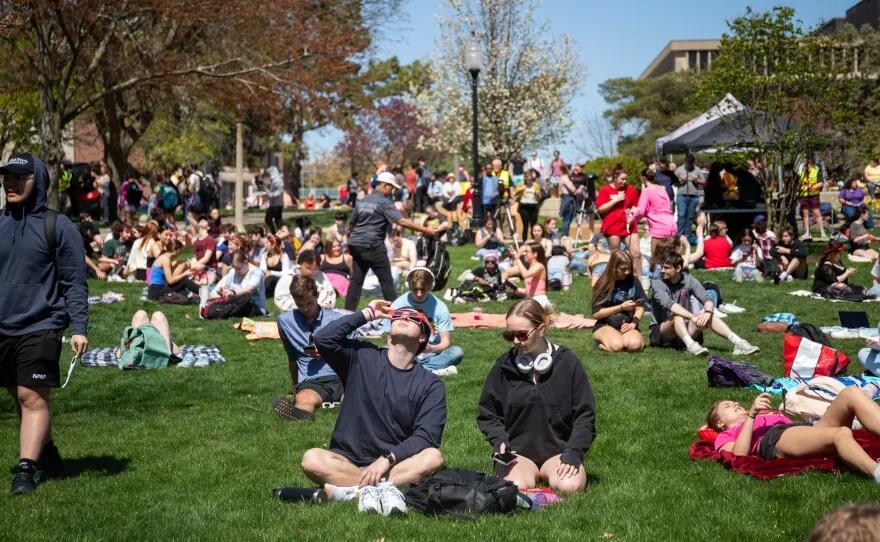
For a school event, this matters more than people sometimes realize. A projection station can serve many students at once. It reduces crowding. It lowers the chance that a child lifts glasses too early or turns toward the Sun without them. And it gives you something meaningful to do even if you have only a limited number of certified viewers.
That is why a good teaching solar eclipse classroom activities safe plan usually treats direct viewing as one station, not the whole lesson.
Direct viewing can be part of the day, but only if the logistics are real
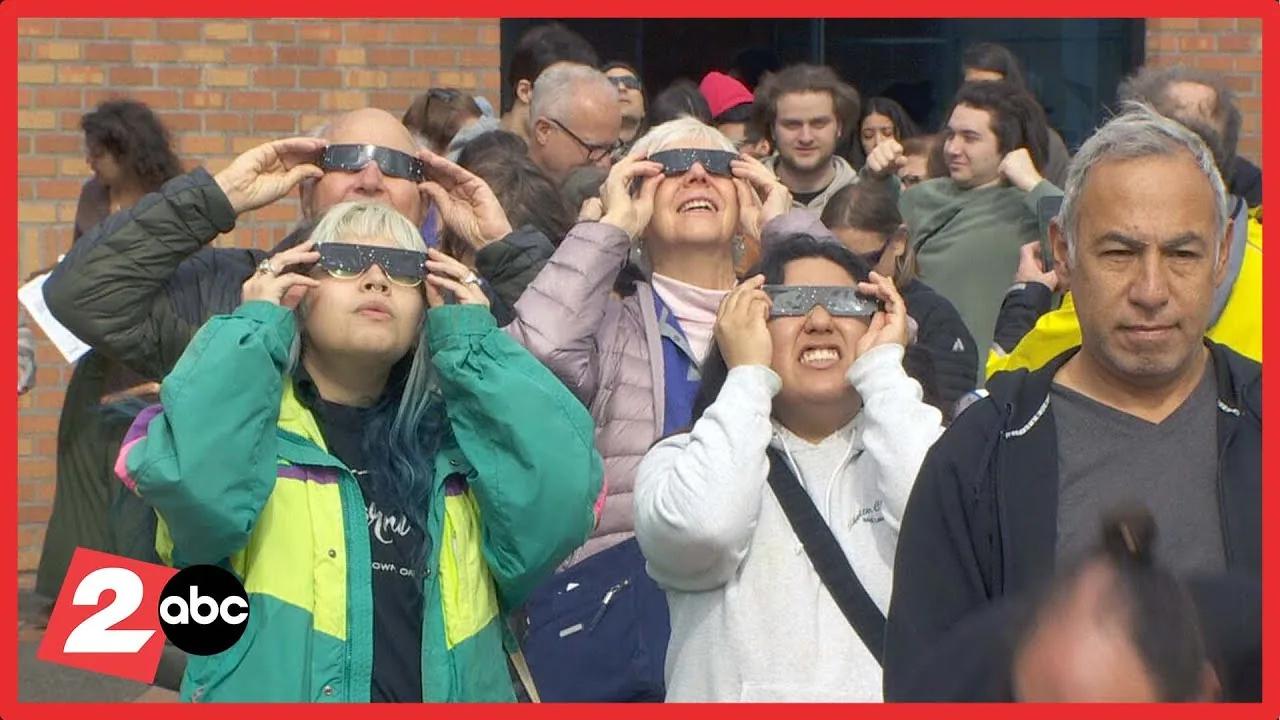
There is nothing wrong with letting students see the Sun directly through certified viewers under close supervision. In fact, for many children, that first glimpse of a crescent Sun is the moment the eclipse becomes real.
But the educational value depends on the adult plan being stronger than the excitement.
If you are organizing direct viewing, think in operational terms:
- How many students per adult?
- How many viewers are available?
- Where will students stand while waiting?
- Who checks each viewer for damage before use?
- What is the script for putting glasses on before looking up and turning away before taking them off?
- What is your backup if a class arrives late or the line gets chaotic?
The AAS notes that groups can share viewers because the eclipse changes slowly; students do not need to stare continuously. That is useful for schools. It means you can design short, calm turns instead of trying to equip every child for constant viewing.
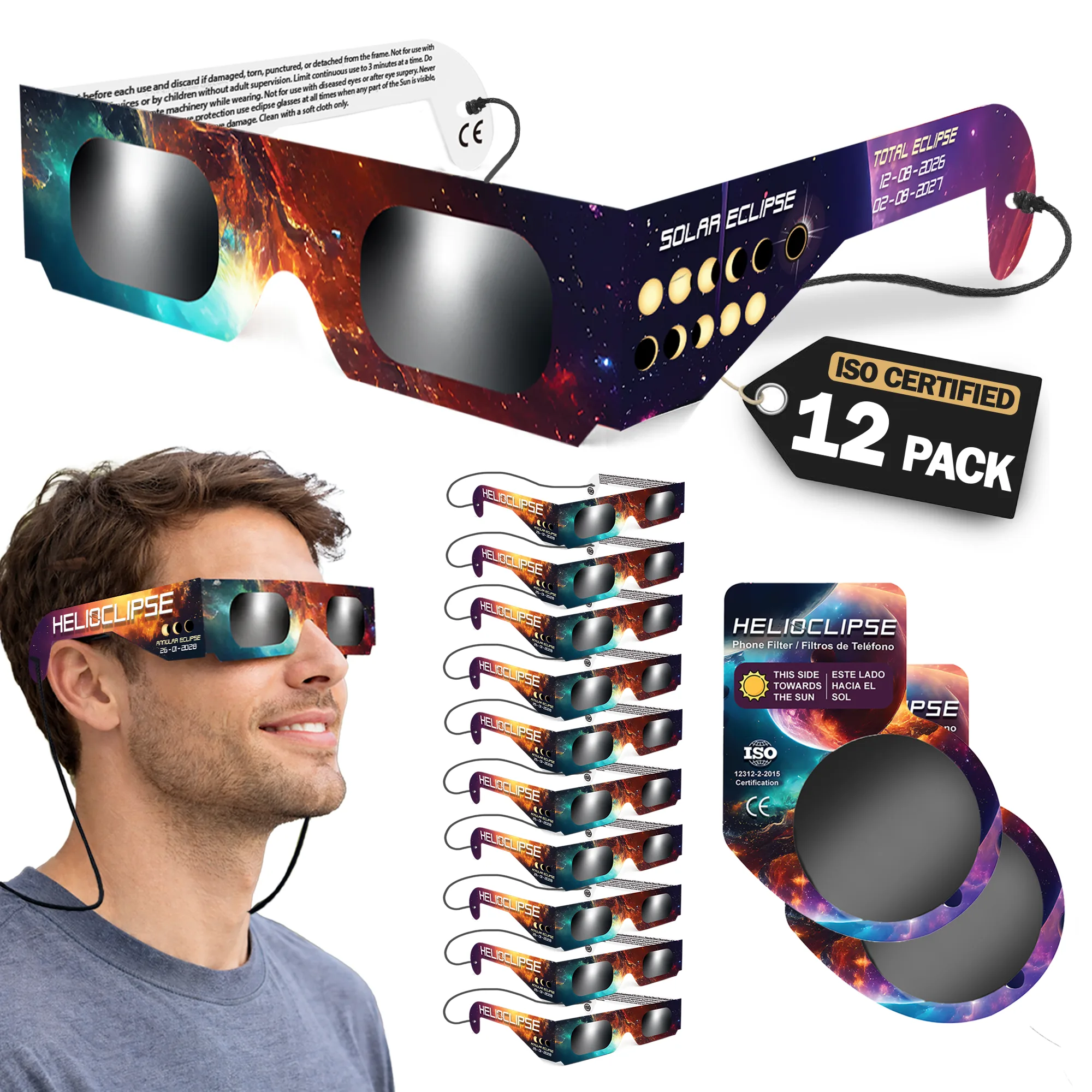
In product language, many teachers and parents look for approved solar eclipse glasses or solar eclipse glasses iso 12312-2 certified, but it is worth being precise with families: NASA does not certify or endorse a brand. What matters is that the viewer conforms to the ISO 12312-2 standard and is in good condition. If you are buying for a class set, Helioclipse eclipse viewing glasses are designed for exactly this kind of planned, supervised use.
If you want a deeper standards explainer for staff or parents, send them to our guide on ISO 12312-2 and eclipse viewers.
Age-appropriate activities: what changes by grade level
The phrase teaching solar eclipse classroom activities safe for preschoolers points to a real issue: the right activity for a 5-year-old is not the right activity for a 15-year-old.
The safest and most successful school plans match the task to the age of the group.
Preschool and kindergarten
Keep the goal concrete: the Moon can move in front of the Sun, and we never look at the Sun without safe help from adults.
Good choices:
- shadow play with leaf patterns or colanders
- a teacher-led lamp-and-ball demo
- drawing how the playground light changes
- a short story sequence: before, during, after
- one projection station run entirely by adults
For this age, teaching solar eclipse to preschool or teaching the eclipse to preschoolers should lean heavily on indirect viewing. If direct viewing happens at all, it should be brief, one-on-one or very small group, and tightly supervised. This is also the age band where teaching solar eclipse classroom activities safe for preschoolers is less about squeezing in every science detail and more about building one unforgettable, correct memory.
Elementary school
This is the sweet spot for hands-on eclipse lessons. Students can compare predictions with observations, build simple projectors, and start distinguishing partial from total eclipses.
Good choices:
- pinhole viewer construction with adult prep for cutting
- eclipse vocabulary sort: shadow, orbit, alignment, crescent
- timed observation sheets
- measuring changes in shadow shape
- a solar eclipse model for kids using balls and a lamp
If you are teaching solar eclipse to elementary students, this is also a good age to explain that not every place gets the same eclipse. One city may get a deep partial eclipse while another sits inside totality. That helps students understand why maps matter.
Middle school
Now you can add geometry, scale, and evidence. Students can handle the idea that the Moon is much smaller than the Sun but also much closer, which is why it can cover the Sun’s disk from our point of view.
Good choices:
- estimate-and-check exercises using eclipse timing tables
- comparing direct and indirect methods
- analyzing why the path of totality is narrow
- discussing why eye injury risk exists even when the Sun looks like a thin crescent
This is a good stage for a serious conversation about why “just a quick look” is not a safety plan. If you want a stronger background piece for adults, our post on why staring at the Sun without protection is never just a quick look can help frame that discussion.
High school
Older students can handle the full scientific and social picture: orbital mechanics, historical eclipse science, data collection, public communication, and risk management.
Good choices:
- designing a school observation protocol
- comparing eclipse types: total, partial, annular, lunar
- evaluating public safety messaging for clarity
- connecting eclipses to corona research and historical tests of relativity
At this level, teaching the eclipse: lesson hooks that stay on the right side of safety can include media literacy too. Students can examine how misleading product claims, vague social posts, or sloppy demonstrations spread confusion.
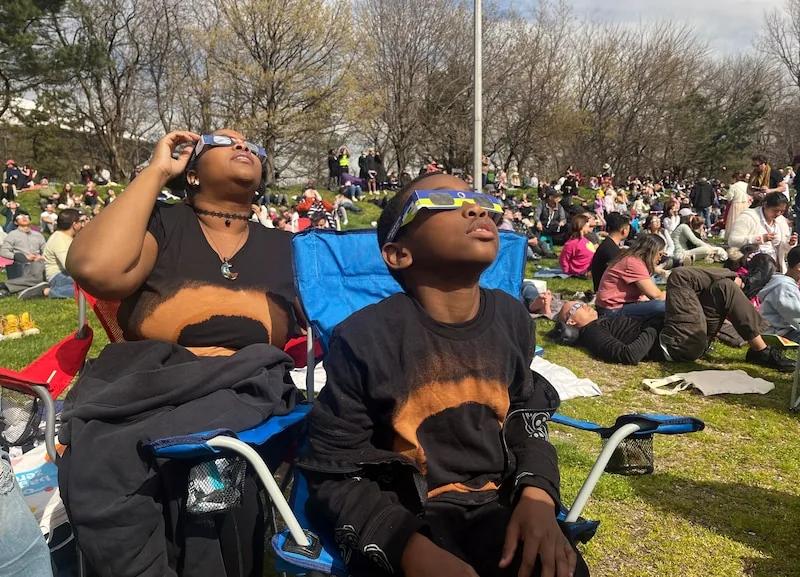
What are the safety precautions during a solar eclipse?
For teachers, this question is not abstract. It is a checklist.
What are the safety precautions during a solar eclipse? Use only certified solar viewers for direct viewing, inspect them before use, supervise children, never use regular sunglasses, never combine eclipse glasses with unfiltered optics, and use indirect methods whenever group control is easier that way.
Add a few school-specific layers:
- rehearse the viewing script indoors first
- assign adults to stations rather than roaming loosely
- separate waiting students from active viewing students
- have a cloud plan so disappointment does not become disorder
- tell families in advance what students will and will not do
That last point matters. A calm parent note can prevent a lot of confusion. Explain whether the class will use projection only, projection plus supervised viewers, or indoor-only activities if your institution prefers not to do outdoor direct viewing.
This is also where the phrase free teaching solar eclipse classroom activities safe can be useful in a practical sense. There really are strong no-cost options. You do not need expensive gear to teach the science well. A cardboard projector, a shadow observation sheet, and a clear safety script can carry an excellent lesson.
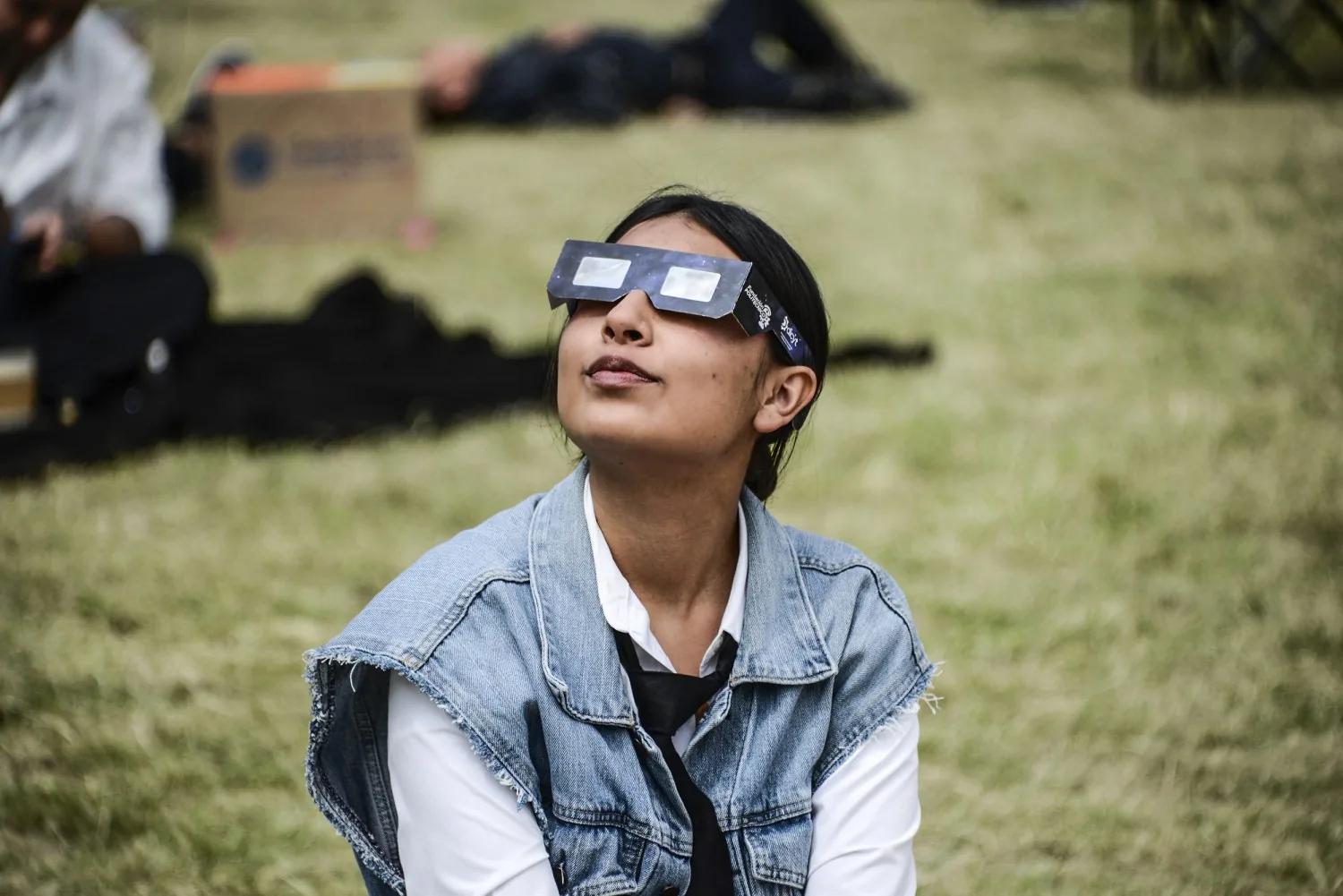
A quick but important contrast: solar eclipse safety is not lunar eclipse safety
Search results often mix eclipse types, so let’s answer this cleanly.
What are the safety precautions for lunar eclipse? For a lunar eclipse, it is safe to look at the Moon with unaided eyes. You do not need eclipse glasses. You do not need a solar filter. A lunar eclipse is a different event entirely because you are looking at the darkened Moon, not the bright Sun.
That means classroom language has to stay precise. If students hear “eclipse” and assume the same rules apply to every eclipse, they can walk away confused. One of the simplest teaching solar eclipse lessons is just learning that solar and lunar eclipses are not interchangeable from a safety standpoint.
And because mixed messaging is common online, it helps to answer both questions directly: what are the safety precautions for lunar eclipse? Very few, beyond ordinary nighttime supervision. What are the safety precautions during a solar eclipse? Strict eye protection rules unless you are using an indirect method, and special totality rules only for people actually inside the path of totality during a total solar eclipse.
Do not let “total eclipse” language leak into a partial-eclipse school plan
This is one of the easiest mistakes to make in assemblies, newsletters, and morning announcements.
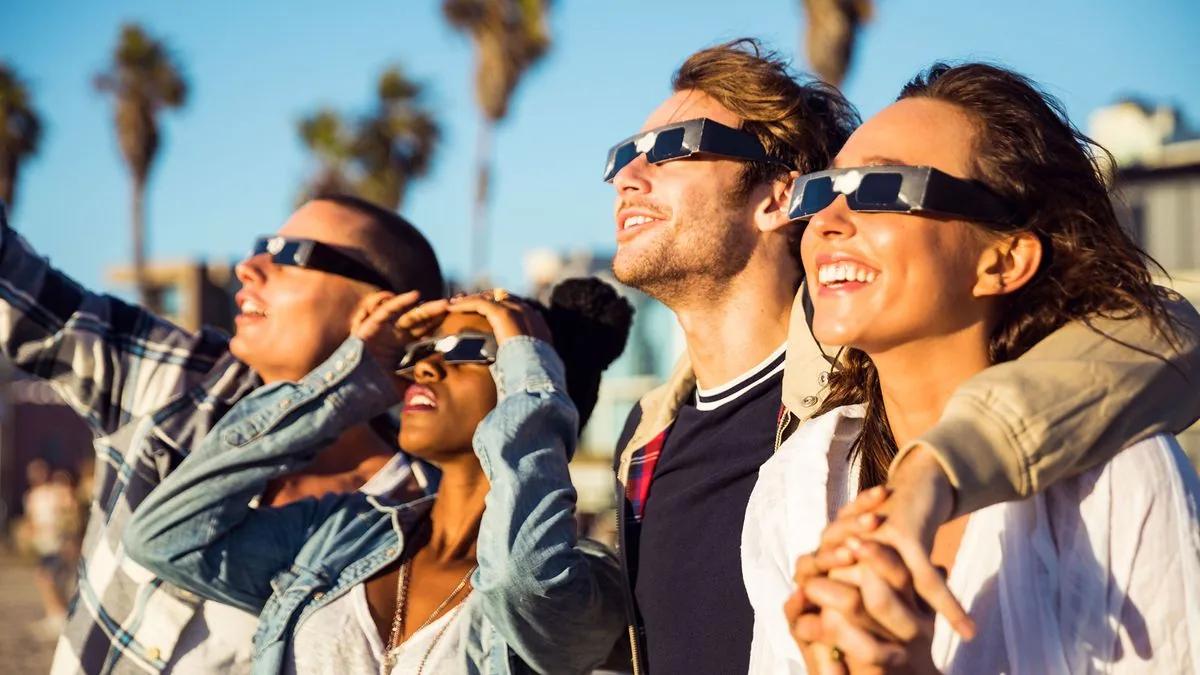
If your location is getting a partial eclipse, then viewing partial solar eclipse means glasses stay on for every direct look, the entire time. There is no safe glasses-off moment. None.
If your location is inside the path of totality for a total solar eclipse, the rules are different only during the brief total phase when the Sun’s bright face is completely covered. That is a special case, and it requires accurate location-specific planning. For most school communications, especially when families may travel or compare different towns, it is smarter to keep the message conservative unless you are certain of the local circumstances.
That is one reason we like putting the Helioclipse 3D eclipse map in front of teachers and parents early. It helps people see that eclipse experience depends on where you are, not just on the event name.
A school-friendly permission note should explain the plan, not perform legal theater
Schools often feel pressure to turn eclipse day into a liability document. That instinct is understandable, but educationally it can backfire if the note becomes vague, scary, or overloaded with jargon.
A better parent communication does four things:
- states what students will do
- states what safety equipment or indirect methods will be used
- states what supervision will look like
- states whether families need to provide anything
For example: students will observe eclipse effects through projection and shadow activities; some classes may also use supervised certified viewers for brief direct observation; students will be instructed not to look at the Sun without proper protection; outdoor time may change based on weather and school procedures.
That is clearer than trying to write your own legal warning from scratch. Again, permission slips and liability language are institutional decisions, not ours. But from an educational point of view, clarity beats drama.
A practical lesson sequence that actually works on eclipse week
If you want a usable arc instead of a pile of ideas, here is a school-tested structure.
One to two weeks before
Teach the basic alignment. Explain the difference between solar and lunar eclipses. Build or demonstrate a projector. Send family information home. Check your viewer supply if you plan direct observation.
One to three days before
Practice the outdoor routine without looking at the Sun. Students should know where to stand, when to put viewers on, how to turn away before removing them, and what the projection station looks like.
Eclipse day
Open with prediction questions. Rotate through stations: projection, shadow observation, brightness log, and short supervised direct viewing if your plan includes it. Keep students busy enough that waiting does not become wandering.
After the event
Have students compare what they expected with what they observed. Did the light change more than they thought? Were the crescent shadows surprising? Did the event feel slower or faster than expected?
That reflection step is where teaching solar eclipse stops being a novelty and becomes science learning.
What to say when families ask what to buy
Teachers are often asked for shopping advice, even when they would rather not be.
You do not need to turn into a product reviewer. You just need a clean standard: for direct solar viewing, use viewers that conform to ISO 12312-2, inspect them for damage, and buy early enough that you are not making rushed decisions right before the event.
Some families will use phrases like eclipse glasses nasa approved or certified solar eclipse glasses. It is fine to meet that language with a correction that builds trust: NASA offers safety guidance, but it does not approve a specific consumer brand. The safer habit is to verify the standard, inspect the product, and buy from a source you trust. If your school or family wants a straightforward option, our shop for Helioclipse viewers is built around that need.
For larger events, planning ahead matters. A class set or family order is easier to manage than a last-minute scramble, especially if you are coordinating solar eclipse activities for kids at school and at home.
Why this topic deserves more care than a one-page worksheet
A lot of eclipse education online is cheerful but thin. It offers a coloring page, a cookie model, maybe a vocabulary list, and then quietly assumes the safety part will sort itself out.
We think that undersells the moment.
Teaching the eclipse should feel bigger than that because it is bigger than that. Students are watching celestial mechanics happen in real time. They are learning that science can be predicted, observed, and shared. They are also learning that awe does not cancel rules. In fact, the more exciting the event, the more the rules matter.
That is why teaching the eclipse: lesson hooks that stay on the right is not a limiting idea. It is the whole point. Good eclipse teaching does not drain the wonder out of the day. It protects the wonder long enough for students to actually experience it.
Connect and Detach Eclipse Ball Pump | Home Infusion ...
University of Rochester Medicine
Frequently asked questions
What safety steps should a class follow before looking at a solar eclipse?
For any partial solar eclipse, and for the partial phases before and after totality during a total solar eclipse, students should not look directly at the Sun unless they have proper solar viewing protection that conforms to ISO 12312-2 or are using a fully indirect method such as projection. Ordinary sunglasses are not enough, and cameras, binoculars, or telescopes need the correct front-mounted solar filter. Children should always be supervised when using solar viewers.
How would you explain a solar eclipse to younger students in simple terms?
A solar eclipse is when the Moon moves between Earth and the Sun and blocks some or all of the Sun’s light. In a classroom, it is a chance to teach both astronomy and how scientists observe the real world safely when something exciting is happening overhead.
What should teachers keep in mind when planning eclipse lessons for 2024 or any other year?
The main classroom principles have not changed: make the science vivid and the safety predictable, rehearsed, and non-negotiable. The article also notes that the safe structure is the same whether you are planning for a new eclipse or updating materials from a previous one. Schools should still follow their own district policies on permission, supervision, and liability.
Which eclipse activities work well for students without breaking safety rules?
Activities that do not require direct viewing are the easiest to manage safely, such as shadow observations, pinhole projection, model-building, and timed observations. If you do include direct viewing, it should be short, supervised, and done only with proper equipment. The article emphasizes that the lesson should stay strong while the viewing plan follows accepted safety guidance.
What kinds of eclipse activities are appropriate for kids?
Kid-friendly activities are the ones that keep the science clear and the viewing controlled, especially indirect methods like projection and simple observation of shadows. The article stresses that children should always be supervised when using solar viewers, and that direct viewing is only appropriate with proper protection. That makes the lesson safer and easier to manage in a group setting.
On-site next steps
- Need viewers for a class, club, or family group? Visit our shop eclipse glasses and order early so your school plan is not built around last-minute availability.
- Want to show staff or families what kind of eclipse your location gets? Use the Helioclipse Eclipse Explorer / 3D map to check whether you are in partial coverage or totality.
- Building a broader teaching pack? Browse the Helioclipse blog for safety, eclipse phases, and first-timer planning guides you can share with parents and colleagues.
Sources & further reading
- How to View a Solar Eclipse Safely — American Astronomical Society
- Indirect Solar Viewing: Pinhole & Optical Projection — American Astronomical Society
- Eclipse Viewing Safety — NASA Science
- Eclipses — NASA Science
- Solar Eclipse Resources — NASA Science
- Solar Eclipse Safety Activity — My NASA Data
- Selected Eclipse Activities for Educators — AAS PDF
- Educational Resources — University of Southern Indiana Solar Palooza
- Solar Eclipse Activities, Resources, and Safety Information — TCEA
- How to make a pinhole camera for the 2024 eclipse — Astronomy Magazine