Rehearsing the eclipse in software: what planetarium simulators help with (and what they cannot)
A good eclipse app can make a once-in-years event feel real before the day arrives. You can watch the Moon take its first bite from the Sun, see how high the Sun will be above your horizon, preview whether your town gets a deep partial eclipse or true totality, and practice the sequence so you are not fumbling when the sky starts changing for real.
That is the promise behind planetarium app solar eclipse practice — and it is a genuinely useful one. But it only works if you treat software as rehearsal, not as the final authority. For definitive path position, timing, and the all-important difference between “inside totality” and “almost there,” we recommend checking the Helioclipse Eclipse Explorer / 3D map alongside authoritative eclipse guidance.
This is tool-agnostic guidance—compare app outputs to authoritative map eclipse planning. We are not here to start fan-club arguments about one app versus another. We are here to help you use software well, avoid the common traps, and show up on eclipse day with the right expectations, the right safety habits, and a better chance of actually enjoying the sky.

What eclipse software is actually good at
The short version: software is excellent at helping you build a mental model.
A strong planetarium solar eclipse app or simulator can show you the geometry of the event from your exact location. That matters more than many first-time viewers realize. The eclipse does not just happen “over there.” It unfolds at a specific altitude, in a specific direction, with a specific sequence of contacts and a specific amount of Sun covered at maximum.
That means software is especially useful for five things.
First, it helps with orientation. Where on the Sun will first contact appear? Will the Sun be high overhead, or lower in the sky toward one side of your observing site? If you are using a filtered telescope or binoculars, knowing where to expect the first visible notch can make the opening minutes much less stressful.
Second, it helps with timing rehearsal. Many apps can show the beginning and end of the partial phases, maximum eclipse, and — if you are inside the path of totality — the start and end of totality. Some can also provide audible reminders. That is useful because the partial phases feel slow, while totality feels absurdly fast.
Third, it helps with location comparison. A simulator can make the difference between 98% partial and totality emotionally obvious in a way a table sometimes cannot. That is one of the most important planning lessons in eclipse chasing. A place just outside the path may look close on a map, but the lived experience is completely different.
Fourth, it helps with site setup. If the Sun will be 35° above the horizon in the local afternoon, that is a different setup problem than if it will be 12° above rooftops or trees. Software can help you choose a field, beach, overlook, schoolyard, or parking area with a clean line of sight.
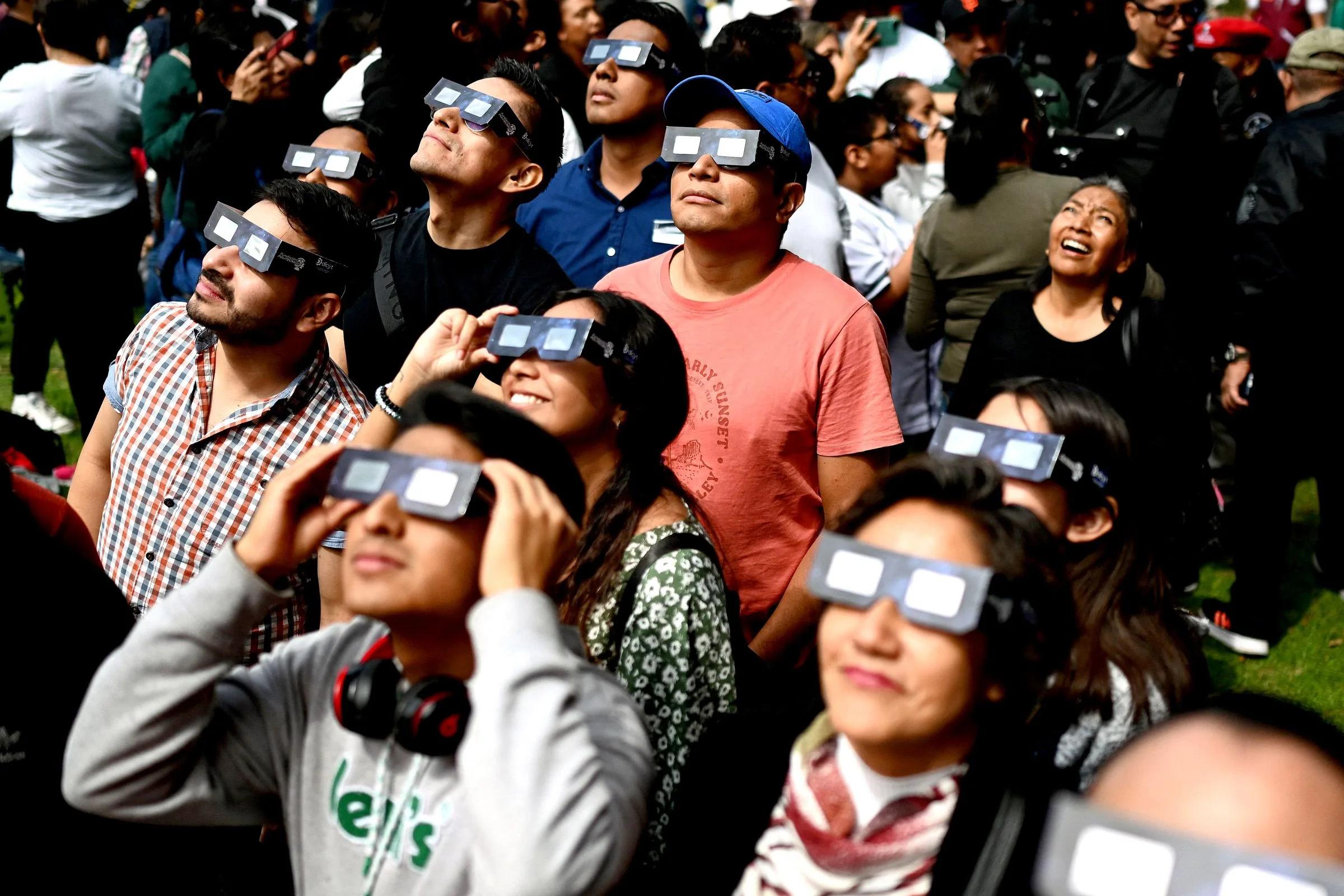
Fifth, it helps with group prep. Families, teachers, and friend groups can rehearse together. If you are the person organizing the day, that matters. A quick run-through on a phone, tablet, or laptop can save ten minutes of confused explaining when the real event starts.
This is why articles about rehearsing the eclipse in software: what planetarium simulators help with keep resonating with readers. The best apps do not replace the sky. They reduce uncertainty before the sky takes over.
The most valuable rehearsal: learning what your location really gets
The biggest planning mistake in solar eclipses is not technical. It is conceptual. People hear “eclipse visible from my city” and assume that means a similar experience everywhere.
It does not.
NASA notes that the next total solar eclipse on August 12, 2026 crosses Greenland, Iceland, the Atlantic, northern Russia, Spain, and a small corner of Portugal, while much of Europe and other regions see only a partial eclipse. That single sentence contains the planning problem. “Visible” is not enough. You need to know whether you are in the narrow path of totality or outside it.
A simulator can make that difference vivid. If you set one location in northern Spain inside the path and another outside it, the contrast is immediate: one view ends with the Sun completely covered for a brief interval; the other never does. That is why one of our core 2026 solar eclipse planning tips is to verify your exact site, not just your region.
This is also where software becomes emotionally persuasive in the best way. A lot of people think 99% partial must be “basically the same.” A good simulation shows why that is wrong. The last sliver of direct Sun is not a rounding error. It is the difference between filtered partial viewing and the full totality experience.
If you are comparing candidate sites, this is the real use case behind best places and timing for planetarium app solar eclipse practice. Not “which app has prettier graphics,” but “what will I actually see from this exact place?”
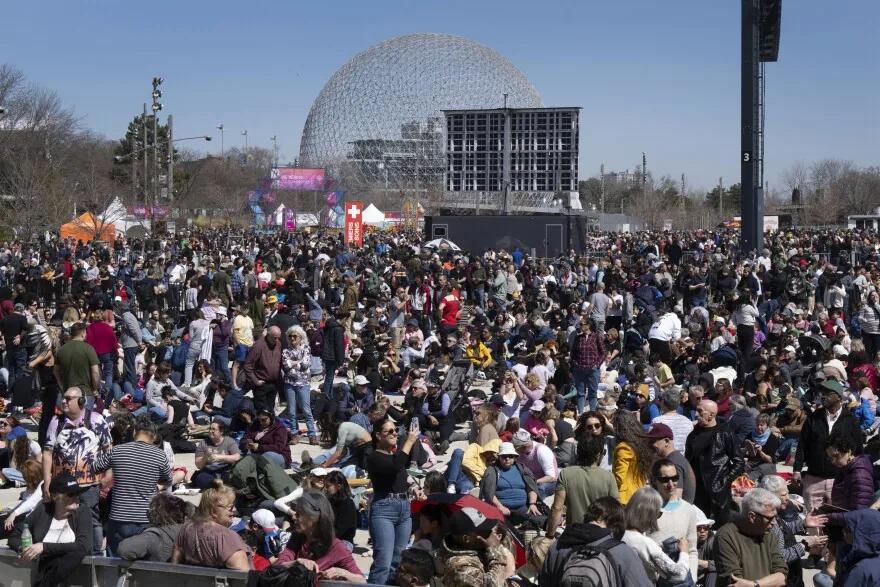
What software can preview beautifully
Some of the most satisfying features in eclipse software are visual rather than numerical.
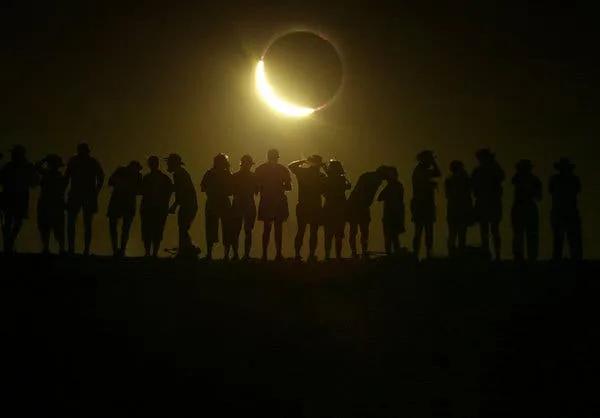
A simulator may show the Moon’s path across the Sun, the changing crescent shape, the Sun’s altitude and azimuth, and in some cases a stylized preview of Baily’s beads, the diamond ring, or sky darkening near totality. The American Astronomical Society’s eclipse resources specifically highlight apps and desktop planetarium programs that can simulate eclipse circumstances, interactive maps, and local sky views. Sky & Telescope’s app roundup makes the same practical point: these tools can help you know when the eclipse begins and ends, how much of the Sun is covered at maximum, and where to look for first contact.
That is real value. If you have never seen a total eclipse, software can teach you the order of events before adrenaline gets involved.
It can also help you answer practical questions like these:
- Will the Sun be above the trees behind the campsite?
- If I move 20 or 30 kilometers, do I gain meaningful totality time?
- Is my chosen site near the centerline or close to the edge of the path?
- Will maximum eclipse happen in local morning, midday, or afternoon light?
- If I am outside totality, how deep is the partial eclipse likely to be?
For many readers, that is the real heart of a planetarium app solar eclipse practice 2026 guide. You are not trying to become a software expert. You are trying to reduce surprises.
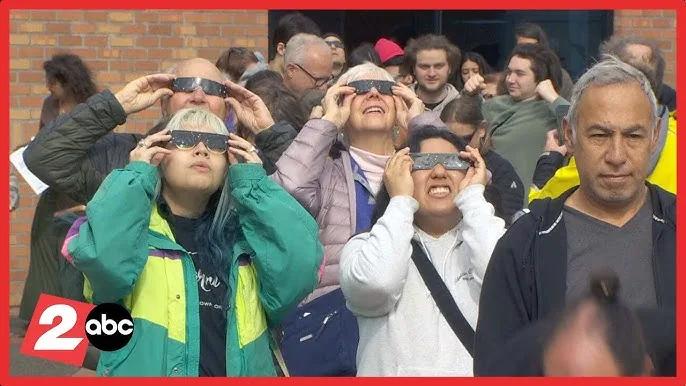
What software cannot tell you with enough authority
Now for the part that matters just as much: software has limits, and some of them are easy to underestimate.
It is not your final authority on path position
Apps can be excellent, but they vary in data sources, update cycles, interface clarity, and how clearly they communicate uncertainty near path edges. The AAS apps page is careful about this in spirit: listed tools are useful and high quality, but no single list can certify perfection, completeness, or eternal currency.
That is why we always recommend cross-checking with an authoritative planning reference and an interactive map built for location-specific verification. Use the simulator to rehearse. Use the Helioclipse Eclipse Explorer / 3D map to confirm whether your exact site is inside totality, how far from the centerline you are, and how your circumstances change if you move.
This matters most near the edges of the path. A location that looks “close enough” on a casual app view may lose a shocking amount of totality time, or miss totality entirely, if you are not careful. Even a few miles or kilometers can matter a lot near the boundary.
It is not your safety authority
A simulator can show totality. It cannot grant permission.
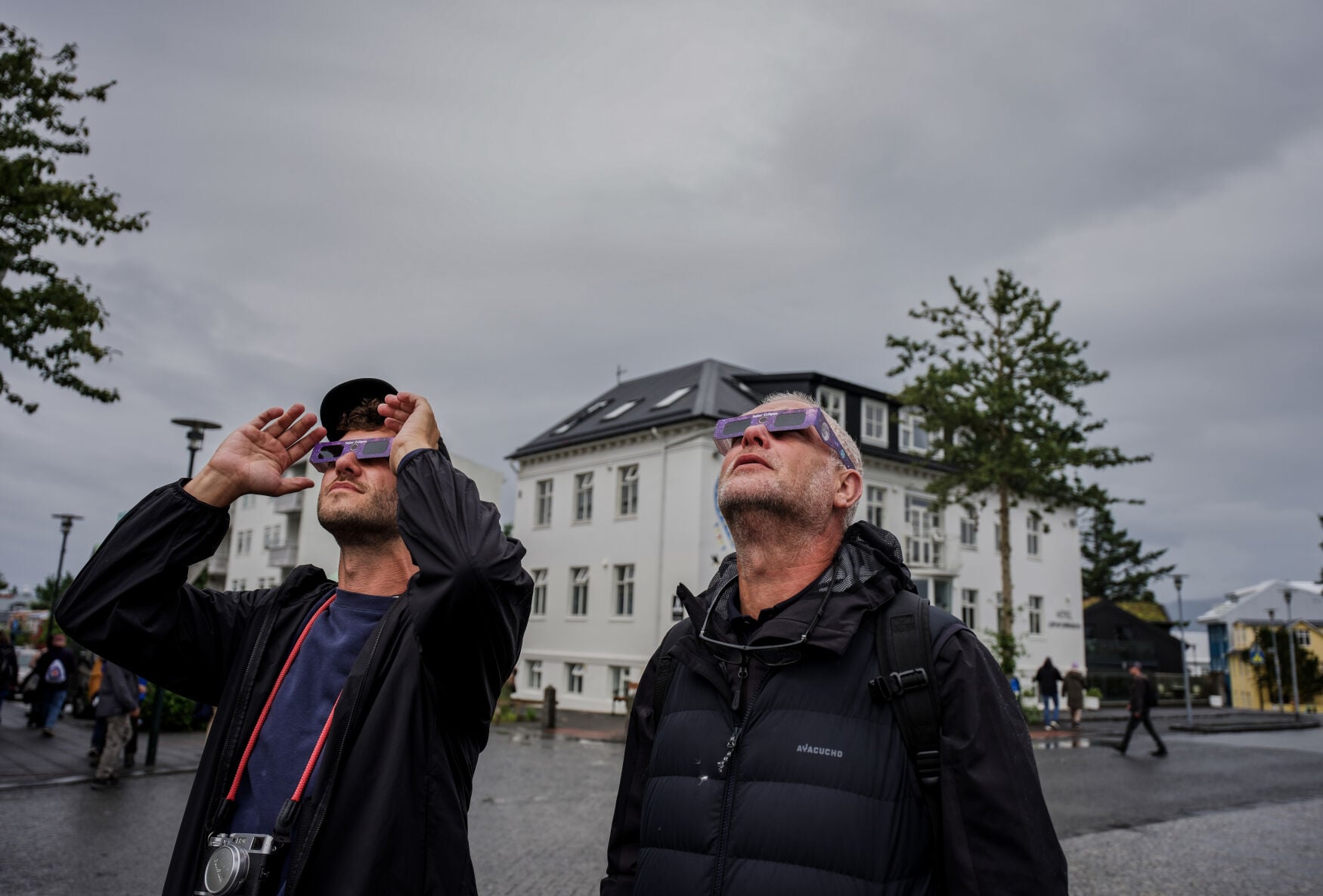
The AAS eye-safety guidance is the standard we want readers to remember: except during the brief total phase of a total solar eclipse, and only if you are actually inside the path of totality, direct viewing requires special-purpose solar filters that conform to ISO 12312-2. Outside totality, there is no safe naked-eye interval.
That is why software is the wrong place to make casual assumptions like “the app says totality starts now, so I’m good.” Your actual location must be correct. Your understanding of the eclipse phases must be correct. And if you are not certain, you keep your viewers on.
If you want the clearest plain-English version of that rule, read our guide to when glasses on, when glasses off. And if you are buying for a family or group, learn what the standard means in our explainer on ISO 12312-2 and eclipse viewers.
It cannot choose trustworthy viewing gear for you
This is a surprisingly common confusion, especially when people mix up software, shows, events, and shopping searches.
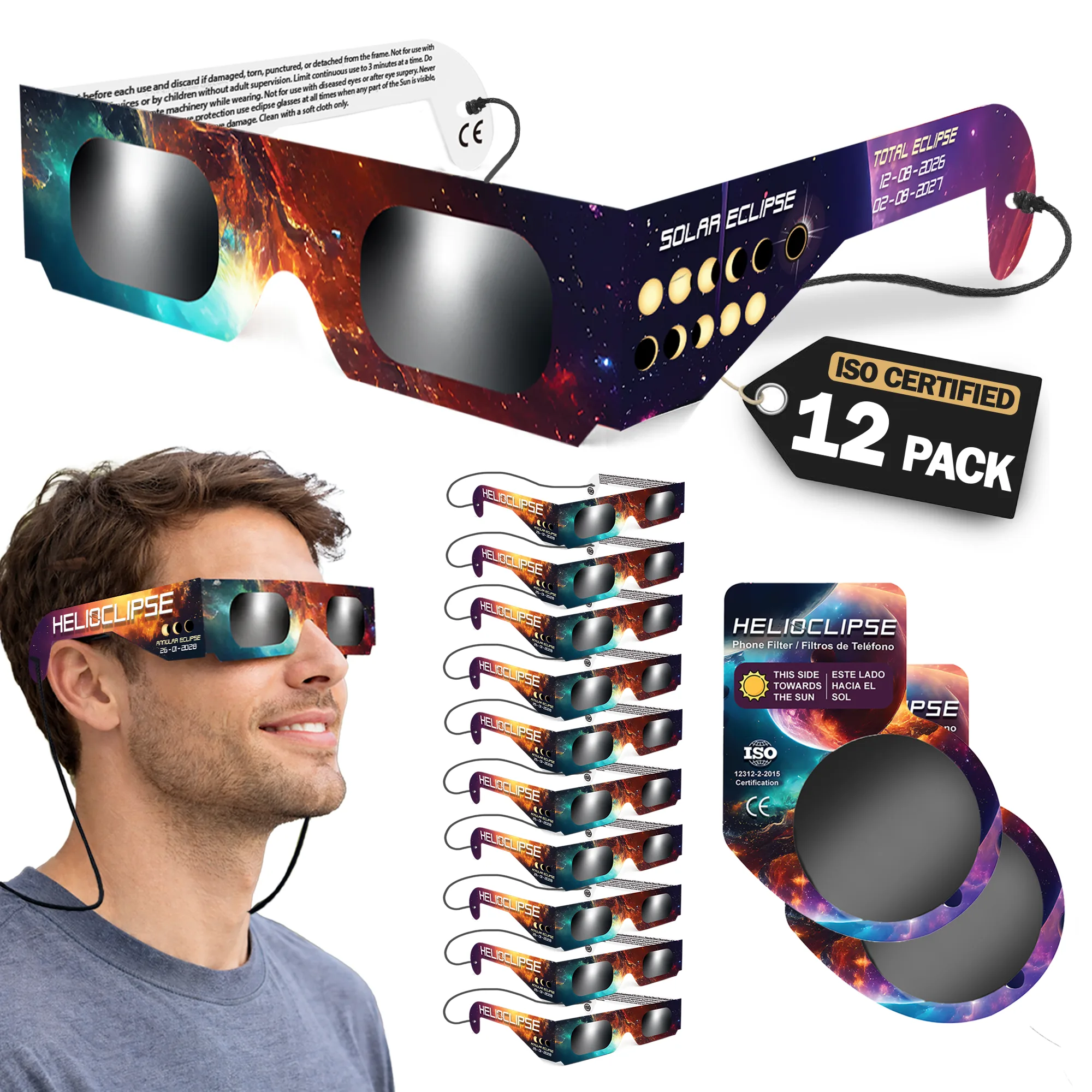
You may see phrases like planetarium solar eclipse glasses floating around online, but a planetarium app does not validate eyewear. A museum show does not validate eyewear. A livestream does not validate eyewear. Product trust comes from the filter standard, the condition of the viewer, and whether you are buying from a source you trust.
If you need viewers, buy them deliberately. On our shop page you can find approved solar eclipse glasses and solar eclipse glasses iso 12312-2 certified options designed for real eclipse use. If you have questions about labels, counterfeits, or what to inspect before eclipse day, our guide to fake and low-quality eclipse glasses is worth reading well before the event.
It cannot promise clear skies
No simulator can do the hardest part of eclipse planning: weather.
Some apps include forecasts, and that can be helpful in the final days. But climate context and short-term weather are different things. A beautiful simulation of totality from your chosen hilltop does not mean the hilltop will be cloud-free.
That is why serious planning combines three layers: eclipse geometry, local logistics, and weather mobility. If you are traveling for 2026, our guide to cloud cover and eclipse day mobility is the right companion to any software rehearsal.
The best way to use a planetarium app before eclipse day
If you want a practical routine, keep it simple.
Start by choosing your likely observing site. Then run the eclipse in software from that exact location. Watch the whole sequence once at normal speed and once with pauses around the key moments. Note the Sun’s direction and height. Note whether the app reports partial-only viewing or totality.
Then stop trusting the app alone.
Open the Helioclipse Eclipse Explorer / 3D map and verify the same location. Confirm whether you are inside the path, how close you are to the centerline, and whether moving a short distance would improve your totality duration or reduce risk near the edge.
After that, rehearse your real-world setup:
- where you will stand
- where children or first-time viewers will stand
- where your bags, water, and spare viewers will go
- whether trees, buildings, or hills block the Sun
- whether you have mobile signal or offline maps
- whether you can relocate if clouds threaten
If you are using optics or a camera, practice with the exact configuration you plan to use. Orientation can flip or invert depending on the setup. That is not a software failure; it is a reminder that the sky and your equipment are a system.
And if you are the organizer for a family, school, or friend group, do one spoken rehearsal. Say out loud what happens during the partial phase, what changes during totality, and when viewers stay on or come off. That one step prevents a lot of chaos.
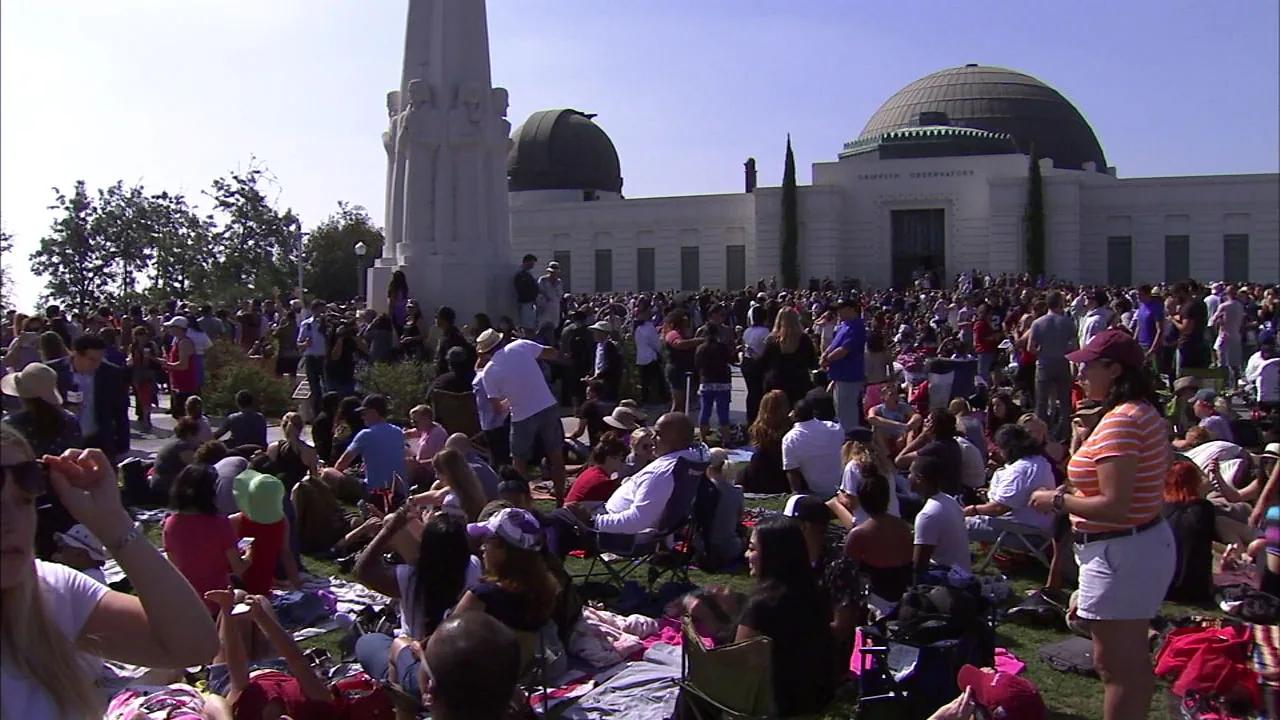
A note on “planetarium,” “observatory,” and other search confusion
Search results around eclipse software are messy because people use the same words for different things.
A planetarium solar eclipse show is usually an educational presentation in a dome theater. It can be fantastic for teaching the geometry of eclipses and getting children excited. But it is not the same thing as a sky-simulation app on your phone or laptop.
A planetarium is also not an observatory. A planetarium recreates the sky indoors for education or simulation. An observatory is a place or facility for observing the sky with instruments.
Then there are event searches like planetarium solar eclipse tickets, which usually refer to admission for a public program, not to planning software at all.
And then there are unrelated technical terms that happen to contain the word “Eclipse.” If you have stumbled across queries like what is the eclipse treatment planning system? or eclipse treatment planning tutorial, those are generally about medical radiation-treatment software, not astronomy. Likewise, varian eclipse treatment planning system belongs to that medical context, not to solar-eclipse planning. The overlap is a naming coincidence, not a useful eclipse-viewing resource.
The same goes for what is nasa planetarium software? NASA offers excellent eclipse science, public education, and app-related resources, but “NASA planetarium software” is not one single official consumer tool that covers every eclipse-planning need. Think in categories instead: science guidance, safety guidance, maps, simulators, weather tools, and event resources.
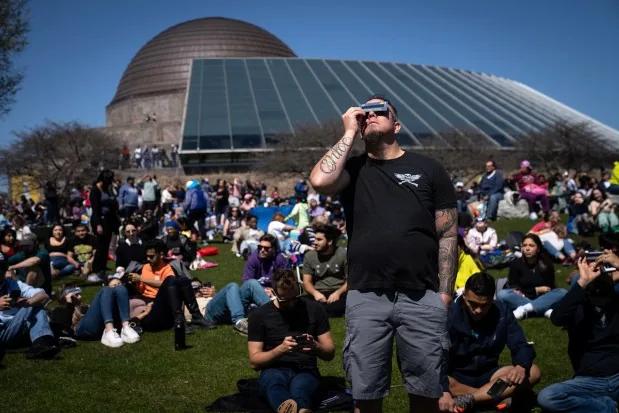
Why old eclipse app searches still matter
You may notice people still searching for planetarium solar eclipse 2024 long after that event passed. That is not as irrelevant as it sounds.
The 2024 eclipse was a huge public test case for eclipse software. It pushed millions of people to compare apps, maps, weather tools, and timing alerts in real conditions. Reviews, explainers, and lessons from that cycle are still useful because the core questions do not change much from one eclipse to the next: Where do I need to be? What will I see from there? When do I use filters? How do I avoid missing the best part while staring at my phone?
So if you are planning for 2026, older app coverage can still teach you what features matter. Just do not assume an app page written for 2024 automatically reflects the latest data, interface, or supported eclipses. Check current coverage and verify your event.
What a good rehearsal looks like for 2026
For the August 12, 2026 total solar eclipse, the planning stakes are high because many readers will be deciding whether to travel into totality or settle for a partial eclipse closer to home.
A good software rehearsal for 2026 should answer a few concrete questions.
Are you actually in the path of totality, or only in the broader partial-eclipse zone? If you are in Spain, for example, your exact town matters enormously. If you are elsewhere in Europe, “visible” may still mean partial only. NASA’s eclipse hub gives the broad geography; your map and local circumstances tool should do the fine-grained work.
How much totality do you gain by moving? The centerline-versus-edge difference is not cosmetic. Duration drops as you move away from the center of the path, and near the edge it can collapse quickly to mere seconds. That is one reason best places and timing for planetarium app solar eclipse practice is really a planning question, not a software question.
What will the Sun’s position mean for your site? A beach, ridge, plaza, or roadside pull-off can look perfect on a map and still be awkward if the Sun sits behind a building line or slope at the wrong moment.
And what is your backup plan if weather turns? Software rehearsal is most powerful when it includes Plan B, not just the dream site.
If you are building your own planetarium app solar eclipse practice 2026 guide, that is the checklist we would use.
What not to do on eclipse day, even if your app looks confident
Do not let the phone become the event.
A good app should reduce stress, not create it. If you spend the entire partial phase refreshing screens, comparing countdowns, and second-guessing your location, you are using the tool backward.
Do not use software as a substitute for understanding the phases. If you are unsure when it is safe to remove viewers during totality, learn that before the day arrives. Our guide on why eye injury happens during solar eclipses explains why “just a quick look” is not a harmless gamble.
Do not assume a dramatic simulation means your local experience will feel identical. Simulators can approximate sky darkening and eclipse phenomena, but they cannot fully reproduce the emotional shock of totality, the horizon glow, the crowd reaction, or the way the temperature and ambient light can change around you.
And do not leave gear decisions until the last minute. If your group needs eclipse viewing glasses, order early, inspect them early, and keep a spare pair or two in your eclipse kit.
Software is rehearsal, not replacement
The best eclipse software does something subtle and valuable: it turns abstract astronomy into a sequence you can inhabit ahead of time.
You stop thinking in generic terms like “there’s an eclipse that afternoon” and start thinking in real ones: the Sun will be there, first contact will appear on that side, maximum happens around then, if we move deeper into the path we gain more time, and if clouds build over this ridge we can head west.
That is why we like software. It makes you more prepared, more realistic, and usually more excited.
But the final chain of trust should still look like this: learn the event, rehearse with software, verify with an authoritative map, watch the weather, and use certified viewers correctly.
That is the difference between a fun app demo and a plan.
Eclipse Tutorial on Stellarium Web
Discover the Universe
Frequently asked questions
How can software help me plan for an eclipse before the day arrives?
It can help you rehearse the event by showing the Moon’s first contact with the Sun, the Sun’s height and direction in your sky, and whether your location gets a deep partial eclipse or totality. It is useful for building a mental model and practicing the sequence so you are not figuring things out in the moment.
How do I tell whether my location is actually in the path of totality?
A simulator can give you a strong first check, but it should not be treated as the final authority. For the definitive path position and the difference between being inside totality and just missing it, compare app output with authoritative eclipse guidance and a detailed eclipse map.
What time will the eclipse happen at my location?
A planetarium-style app can show the timing of the partial phases, maximum eclipse, and totality if your site is in the path. The excerpt also warns that software is for rehearsal, so you should verify the exact timing with authoritative eclipse guidance rather than relying on the app alone.
What should I avoid doing during a solar eclipse rehearsal or on eclipse day?
Do not treat software as the final authority for safety or viewing decisions. The article also notes that knowing where the Sun will appear can reduce stress if you are using filtered optics, but it does not replace proper eclipse safety habits or authoritative guidance.
What should I know about using a planetarium app for eclipse practice in 2024?
It is a genuinely useful way to practice the sequence, compare locations, and understand how the eclipse will look from your exact site. Just remember that the app is a rehearsal tool, not the final source for path position, timing, or whether you are truly inside totality.
On-site next steps
- Check your exact location in the Helioclipse Eclipse Explorer / 3D map to confirm whether you are in totality, near the centerline, or in a partial-only zone.
- If you are planning for August 2026, start with our August 12, 2026 total solar eclipse planning guide and build your travel and weather backup plan from there.
- Order your viewers before the rush from our shop for eclipse glasses. If you are comparing labels like eclipse glasses nasa approved or certified solar eclipse glasses, the key thing to verify is compliance with ISO 12312-2 and the condition of the filters.
- Explore more practical explainers in the Helioclipse blog, especially if you are organizing for children, schools, or a big family group.
Sources & further reading
- Apps & Software — American Astronomical Society
- Totality: Your Solar Eclipse Companion — American Astronomical Society
- Apps to Help You See the Solar Eclipse — Sky & Telescope
- Turn Your Smartphone into an Eclipse Tool Kit with Essential Apps — Space.com
- Simulate what totality will look like during the solar eclipse — Astronomy Magazine
- How to View a Solar Eclipse Safely — American Astronomical Society
- Eclipse basics — American Astronomical Society
- NASA Science — Eclipses
- Downloads — American Astronomical Society eclipse resources
If you use any app or simulator, treat it as a planning aid. For eclipse day decisions, especially path position and eye safety, cross-check with authoritative guidance and your exact location in a trusted map.