Centerline obsession versus ‘good enough’ totality: a kinder framework for anxious planners
If you have caught yourself zooming in and out of maps, comparing one minute 44 seconds with one minute 29 seconds, and wondering whether a not-quite-perfect spot means you are “doing the eclipse wrong,” take a breath. We have seen that spiral before. A total solar eclipse is rare enough to feel high-stakes, and the Helioclipse Eclipse Explorer makes it very clear that geometry matters. But geometry does not require perfectionism.
For many readers, the real question hiding under all the map tabs is not just where should I stand? It is is it worth traveling for total solar eclipse if your plan is messy, your family has limits, your budget is real, or your nerves are loud. The short answer is yes: if you can get safely inside totality, even without a “perfect” centerline plan, you can still have an unforgettable day.
This is an is it worth traveling for total solar eclipse 2026 guide in the most human sense. We are not going clinical, but we are taking the feeling seriously: mental-health-adjacent but not clinical—validate anxiety while grounding eclipse planning in the actual shape of the Moon’s shadow. The goal is not to shame people who stay partial, and it is not to glorify suffering for a few extra seconds. The goal is to help you choose a plan you can actually carry out.
The first kind truth: totality is not graded on a curve
A lot of anxious planning comes from a hidden assumption: if the centerline gives the longest totality, then anything less is a compromise bordering on failure. That sounds logical until you look at how eclipse paths actually work.
Yes, the centerline is where totality lasts longest. NASA’s eclipse geometry pages and map explainers from Space.com both make that clear. But they also point to something planners often miss: the closer you get to the centerline, the smaller the payoff becomes. Duration does not fall off like a cliff the moment you drift away from the middle. It tapers.
That taper matters. In one 2026 Spain example cited by Space.com, Burgos, close to the centerline, gets about 1 minute 44 seconds of totality, while Valladolid, roughly halfway toward the southern limit, gets about 1 minute 29 seconds. That is a real difference. It is also not the difference between “real eclipse” and “wasted trip.” It is the difference between two strong totality experiences.
For some eclipses, the numbers are even more revealing. A classic Space.com edge-of-path explainer noted that moving partway off the centerline can cost surprisingly little at first, while the real danger is getting too close to the path edge, where seconds vanish fast and local terrain effects on the Moon’s limb can matter. So the kinder framework is not “centerline or bust.” It is: avoid the edge, get comfortably inside totality, and then optimize for the day you want to have.
What totality gives you that partial eclipse never does
Before we talk tradeoffs, we need to be honest about one thing. If you are asking is it worth traveling to see totality, the answer depends on whether you are comparing total to partial.
That distinction is not snobbery. It is physics.
Inside the path of totality, the Moon fully covers the Sun’s bright face for a brief interval. That is when the corona appears, the sky drops into deep twilight, the horizon glows in every direction, and the whole scene changes from “interesting solar event” to something that feels startlingly unlike ordinary daylight. The American Astronomical Society’s eclipse phenomena guide and NASA’s total-eclipse planning material both describe this as a fundamentally different experience from a partial eclipse.
Outside totality, even at a very deep partial eclipse, the Sun is still too bright for the corona to appear. The light gets strange, shadows sharpen, crescents show up under trees, and the atmosphere can feel eerie and memorable. That is real. It is worth seeing. We never want to sneer at partial-only viewers, especially if travel is impossible. But if your question is is a total solar eclipse worth seeing? compared with staying just outside the path, then yes: totality is the threshold that changes everything.
That is why we encourage readers to use the map early and honestly. If you are deciding between a comfortable partial eclipse at home and a manageable trip into totality, the map is not there to make you anxious. It is there to show you where the experience changes category.
If you want a clearer walkthrough of the safety side of that threshold, read When glasses on, when glasses off: eclipse phases explained for first-time viewers.
The second kind truth: “worth traveling” is not the same as “worth overreaching”
People phrase this question in a lot of ways: is it worth traveling for the eclipse, is it worth traveling for total eclipse, is it worth traveling for solar eclipse, is it worth traveling for a total solar eclipse. Those are all really asking the same thing: how much stress, money, uncertainty, and motion should you accept for a few minutes under the Moon’s shadow?
Our answer is simple. Travel for totality if the trip still leaves you able to enjoy the day.
That means a plan can be “good enough” if it does these things:
- gets you clearly inside the path of totality, not flirting with the edge
- gives you a realistic shot at clear skies
- fits your group’s stamina, budget, and mobility
- leaves room for delays, food, water, bathroom breaks, and a backup move
- keeps safety simple, especially for children and first-time viewers
A plan is probably not worth it if chasing theoretical perfection makes the actual day worse. If you are driving exhausted, dragging a reluctant family into a last-minute scramble, or locking yourself into an obstructed viewpoint because the centerline looked emotionally satisfying on a screenshot, you are not honoring the eclipse. You are feeding the anxiety.
That is why some of the best eclipse advice sounds almost deflating at first: be in totality, be where it is clear, and do not make the day harder than it needs to be.
What the map should calm down for you
A good eclipse map does not just tell you where the line is. It tells you what changes with location and what does not.
What changes:
- whether you are in totality or only partial
- how long totality lasts
- how high the Sun is above the horizon
- whether local terrain, buildings, or haze could block your view
- your weather odds and mobility options
What does not change once you are sensibly inside the path:
- the fact that totality is totality
- the need for eye protection during the partial phases
- the emotional force of seeing the corona for the first time
- the value of a calm, workable plan
For the 2026 solar eclipse on August 12, 2026, this matters a lot because the event is not just about duration. In Spain, the eclipsed Sun will be low in the west-northwest late in the day, and that makes sight lines a major planning factor. Space.com’s 2026 trip guide notes that Burgos is near the centerline with about 1 minute 44 seconds of totality, while Valladolid gets about 1 minute 29 seconds. But the same guide also stresses sky position, horizon clearance, and weather. In other words: the map is not asking you to worship the middle. It is asking you to understand the whole situation.
If you are planning Spain specifically, our guide to 2026 totality in Spain: path basics, timing, and what “on the centerline” really means goes deeper into those local tradeoffs.
For 2026, a few concrete examples beat a hundred nervous tabs
Let’s make this practical.
On August 12, 2026, totality crosses parts of Greenland, Iceland, Spain, and a tiny slice of Portugal after beginning near Siberia. The maximum totality anywhere on Earth is about 2 minutes 18 seconds. That number is useful, but it is not the whole story.
In northern Spain, Burgos is one of the better-known inland options near the centerline, with roughly 1 minute 44 seconds of totality in the Space.com planning example. Valladolid, farther from the centerline but still well inside totality, gets about 1 minute 29 seconds. That 15-second trade can be worth it if your lodging, road access, family comfort, or weather flexibility improve.
Farther east in Spain, places such as Zaragoza can offer the drama of a very low eclipsed Sun and, in some locations, a partially eclipsed sunset afterward. That is visually extraordinary, but it also raises the risk from haze, low cloud, and blocked horizons. On some coasts and islands, the Sun may be only a few degrees above the horizon during the event. That is not automatically bad. It just means “best” depends on what you are optimizing for.
In Iceland, western parts of the country and Reykjavík are part of the conversation for the 2026 solar eclipse, but again the map matters more than the vibe. You want to know whether your exact site is in totality, how long totality lasts there, and whether local cloud and horizon conditions make sense. “In Iceland” is not precise enough. “On this side of town, with this horizon, for this duration” is the right level of thinking.
That is why a total solar eclipse 2026 map time mindset is healthier than a centerline screenshot mindset. Use the 3D eclipse map to check whether you are inside totality, how far from the edge you are, and what the local circumstances look like. Then stop refreshing and start building a day plan.
The edge is risky; the middle is optional
This is the geometry sentence that saves a lot of stress: the edge of totality is where caution belongs, not the centerline.
Multiple eclipse explainers make this point. Near the path edge, totality can shrink to almost nothing, and tiny location errors matter. Lunar mountains and valleys can also affect what you actually experience right at the limit. If your dream plan puts you barely inside the path because the hotel is cute or the parking looks easy, that is not “good enough” totality. That is gambling.
But once you move comfortably inward, the logic flips. Now you are not trying to rescue totality from disappearing; you are deciding how much extra duration is worth extra hassle.
That is where many anxious planners need permission to stop. You do not need to prove devotion by extracting every last second. In fact, one of the most repeated truths among eclipse chasers is that totality feels absurdly short no matter what the stopwatch says. Two minutes can feel like a gasp. Ninety seconds can feel like a gasp. The difference between “I saw the corona” and “I did not” is enormous. The difference between 89 seconds and 104 seconds is real, but it is not always life-changing.
So if you hear yourself spiraling, try this reframing:
- crossing from partial into totality is a major gain
- moving away from the edge into safer interior path is a major gain
- moving from decent interior path to exact centerline is often a minor gain
That is the heart of centerline obsession versus ‘good enough’ totality: a kinder framework for planning. Respect the geometry. Do not worship it.
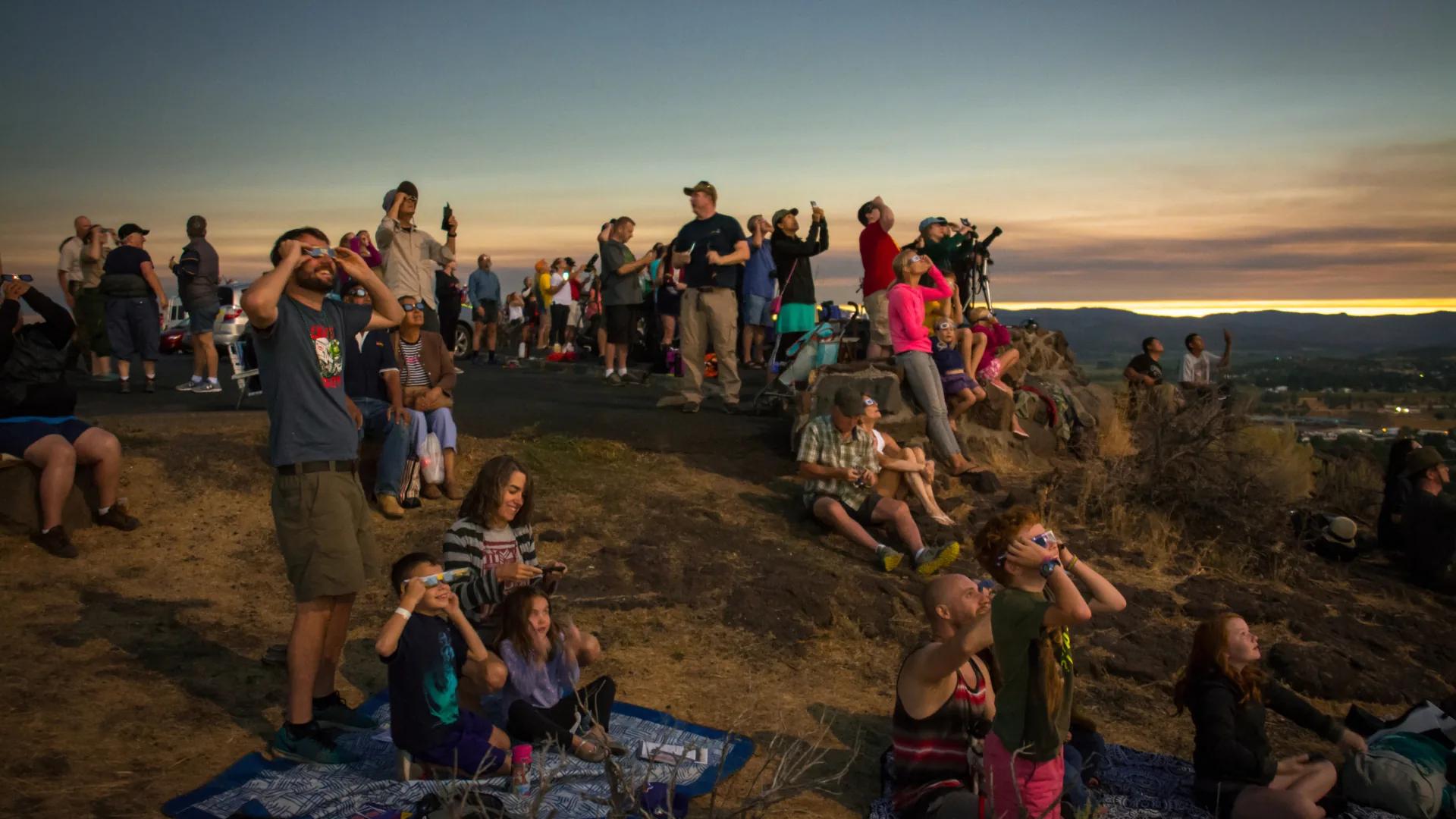
Family memory beats stopwatch purity
A lot of eclipse advice online quietly assumes a solo, highly mobile, weather-chasing adult with flexible money and no bedtime constraints. That is not most people.
If you are traveling with children, older relatives, friends who are curious but not hardcore, or anyone who gets overwhelmed by crowds, your best plan may be the one with easier parking, a bathroom, shade, snacks, and a clean horizon rather than the mathematically longest totality.
NASA’s eclipse planning guidance is wonderfully practical on this point: get there early, think about food and water, expect traffic, and make sure your viewing method is safe. Those are not boring details. They are the difference between a day that feels magical and a day that feels like a test.
This is also where we want to say clearly: if you cannot travel into totality, you have not failed. A serious partial eclipse can still be worth planning for, especially with children, schools, or first-time viewers. The light changes, the crescents under leaves, the collective attention to the sky — those are meaningful experiences. They are just not the same as totality, and pretending otherwise helps nobody.
If your 2026 plan may stay in Madrid or another partial-only location, we would rather help you plan that honestly than pressure you into a miserable trip. See Madrid in August 2026: a serious partial eclipse—without pretending you are in totality.
A calmer decision checklist for anxious planners
When you feel yourself looping, stop asking “What is the perfect spot?” and ask these instead.
1. Am I safely inside totality?
Not barely. Not “the hotel says yes.” Check the map yourself. If you are near the edge, move inward.
2. What am I buying with extra travel?
Another 10 to 20 seconds? Better weather odds? A clearer horizon? Less traffic after? Name the benefit. If you cannot name it, you may be chasing emotion, not improvement.
3. What is the failure mode?
Cloud? Gridlock? A blocked horizon? An exhausted child? A late ferry? The best plan is often the one that fails gracefully.
4. Can I stay mobile on eclipse day?
For 2026 in Spain, late-day timing means you may have time to reposition for clearer skies. That can matter more than sleeping exactly on the centerline. Our eclipse travel without the chaos guide and cloud cover and eclipse day guide can help here.
5. Will my group remember this as joy or as strain?
This is not sentimental fluff. It is planning quality. The eclipse is a sky event, but the memory is embodied: the rush of darkness, the shouting, the weird wind, the shared look on people’s faces. Protect that.
Safety is one place not to compromise
A kinder framework is not a looser framework. There are a few things we do not soften.
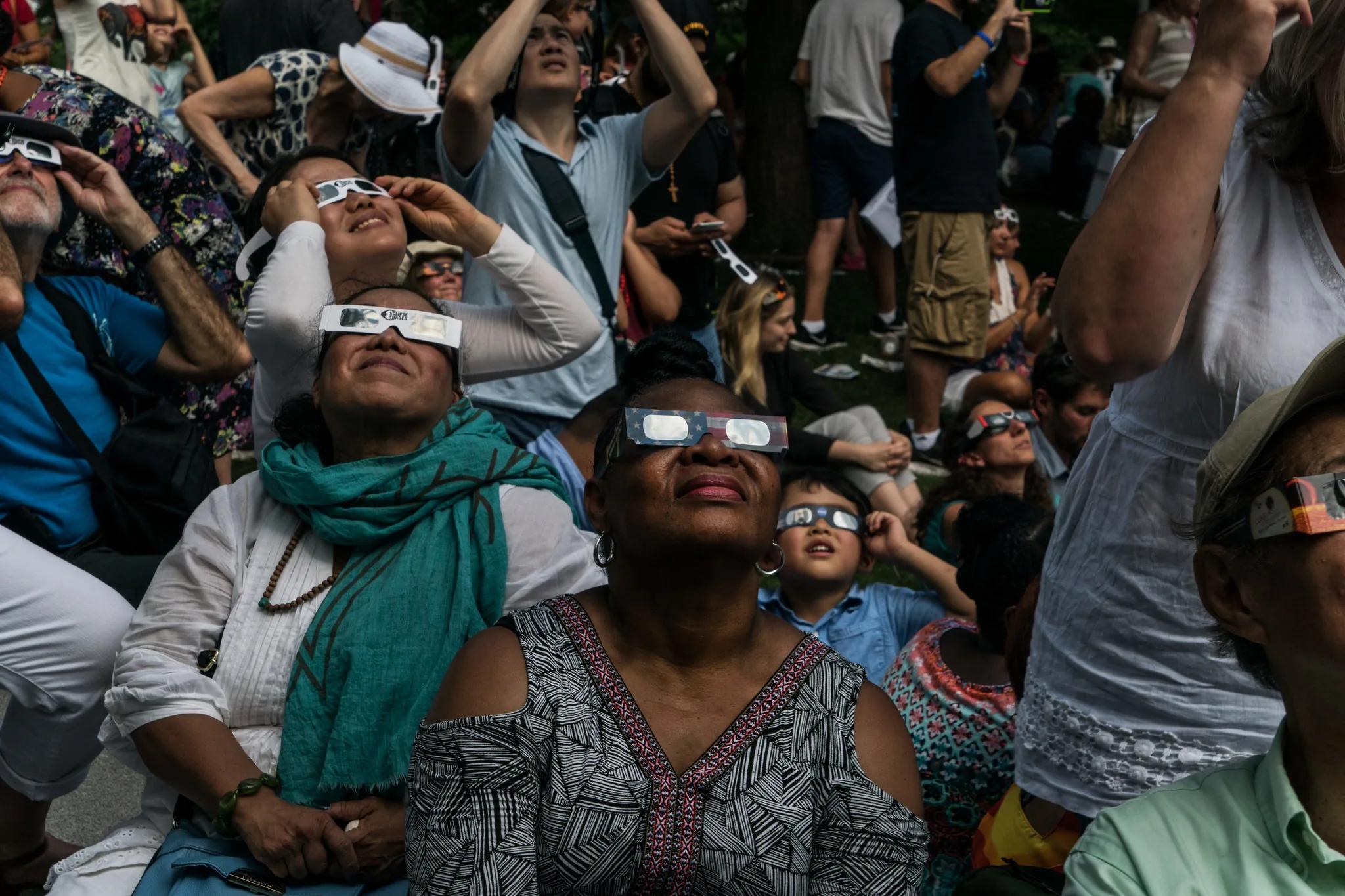
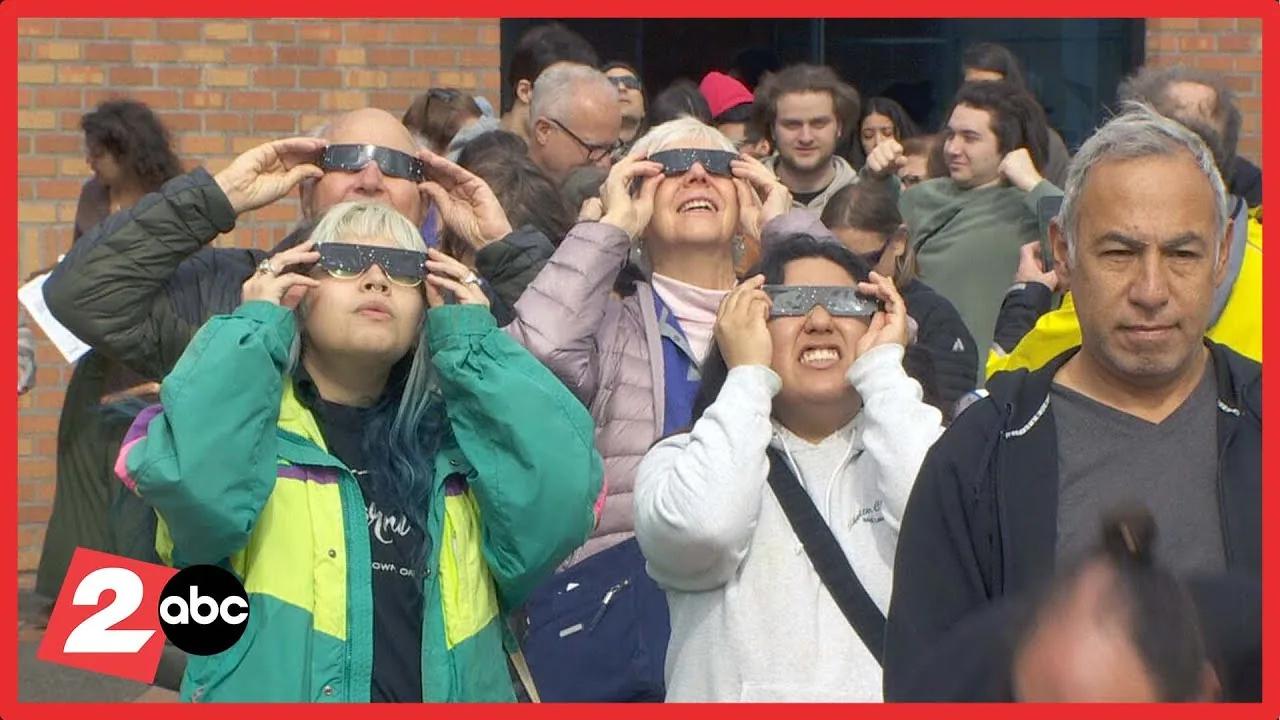
During the partial phases before and after totality, you need proper solar viewing protection. Only during the brief total phase itself — when the Sun’s bright face is completely covered — is it safe to look without eclipse glasses. The moment bright sunlight reappears, glasses go back on.
That means this is a good place to be picky. Buy early. Inspect what you have. Do not trust random leftovers in a drawer. Do not use regular sunglasses. Do not look through binoculars or a camera while wearing eclipse glasses unless the optics themselves have proper front-mounted solar filters.
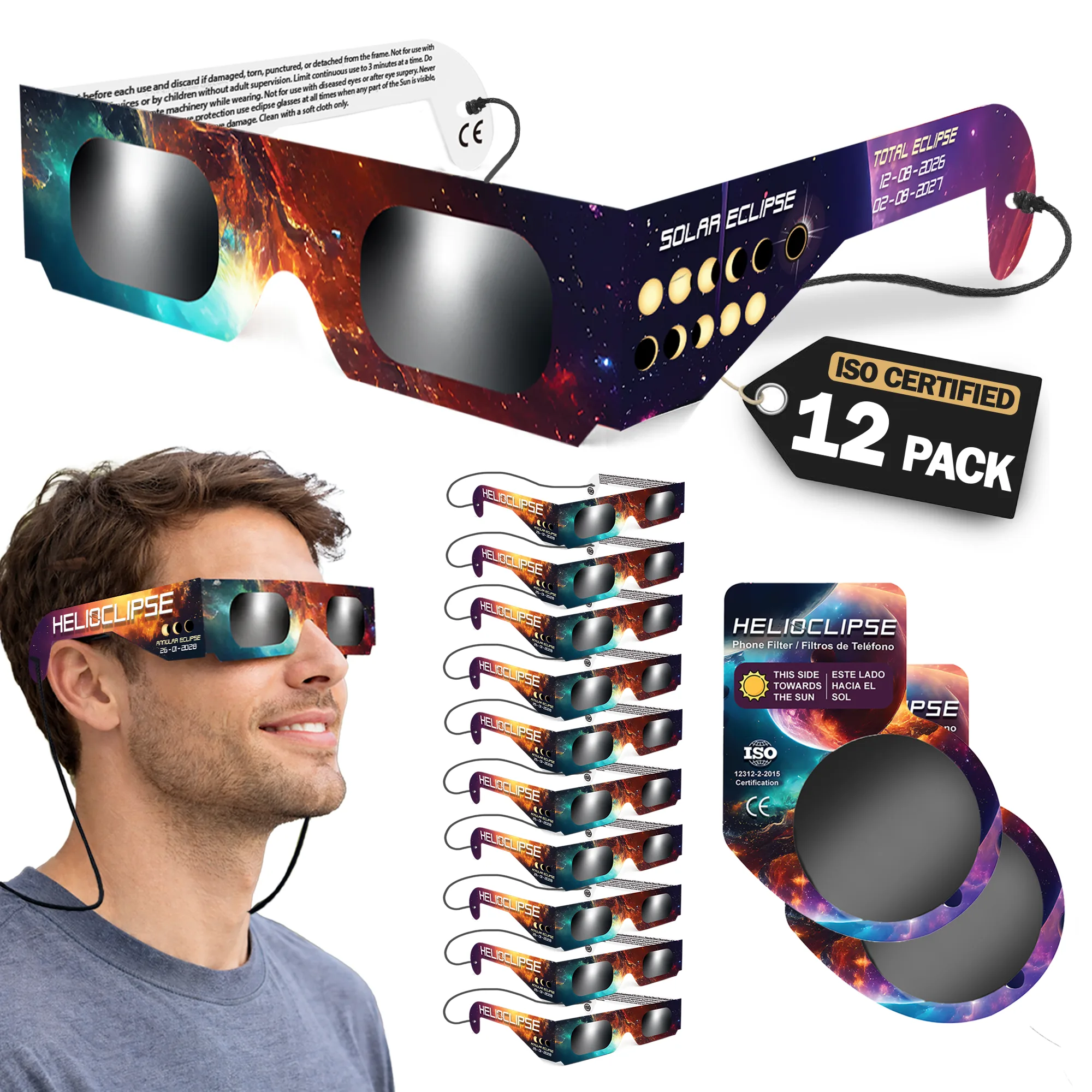
If you are shopping now, look for language people actually use when they are trying to buy safely: approved solar eclipse glasses, solar eclipse glasses iso 12312-2 certified, and certified solar eclipse glasses. On our shop page, we focus on ISO 12312-2 context and practical family-ready viewing rather than hype. If you want the standard explained in plain English, read ISO 12312-2 and eclipse viewers: what the standard means for your family.
And if you are worried about counterfeits or vague labeling, do that check now, not in the parking lot five minutes before first contact. We walk through that in Fake and low-quality eclipse glasses: how to sanity-check what you are about to trust.
What about 2027, 2022, and all the internet arguments?
You will see people compare events endlessly. Some threads ask is it worth traveling for total solar eclipse 2022 as a way of debating whether shorter or harder-to-reach eclipses “count.” Others search is it worth traveling for total solar eclipse reddit because they want emotional testimony, not geometry. And yes, people already look ahead to total solar eclipse 2027 because that event offers much longer durations in parts of North Africa and the Middle East, with a maximum over 6 minutes on land.
Those comparisons can be useful, but only if they help you make your decision. A longer eclipse in 2027 does not make a workable 2026 plan foolish. A dramatic story from 2022 does not mean you need to recreate somebody else’s hardship to earn the experience. And a Reddit thread full of centerline purists does not know your child’s tolerance for heat, your budget, or your nearest airport.
The right question is not “What would the most intense eclipse chaser do?” It is “What plan gets me a real totality experience with the best odds of actually enjoying it?”
That is why our answer to is it worth traveling for total solar eclipse 2026 guide questions is usually yes, with conditions. Travel if you can get into totality without turning the day into a punishment. Travel if you can stay flexible about weather. Travel if you can prepare your group and your gear. Travel if the trip expands your life instead of shrinking it into one brittle outcome.
If you need one sentence to remember, make it this
Be well inside totality, not necessarily on the centerline.
That sentence respects the map. It respects the weather. It respects your nervous system without pretending the eclipse is just a mindset exercise. It also leaves room for delight. Because once totality begins, nobody around you is going to ask whether you optimized correctly. They are going to gasp.
And if you are still wondering, one last time, is it worth traveling for total solar eclipse — yes, often very much so. Not because you achieved perfection, but because for a brief interval the world will look impossible, and you will have been there to see it.
Why It's Dangerous to Look at the Sun During an Eclipse
New York University
Frequently asked questions
Is it worth going out of your way to see a total solar eclipse?
Yes—if you can get safely inside the path of totality, it can be an unforgettable day even if your plan is not perfect. The article emphasizes that you do not need a centerline spot to have a strong experience; being comfortably inside totality matters more than chasing the absolute maximum duration.
Will this eclipse have any special effect on Aquarius?
The excerpt does not discuss zodiac signs or personal astrological effects. It focuses on eclipse geometry, travel planning, and how to choose a practical viewing location inside totality.
Is it safe to travel by air during a total solar eclipse?
The excerpt does not address flying or travel safety during the eclipse itself. Its guidance is about planning a viewing location, with the main practical advice being to avoid the edge of the path and aim for a comfortable spot inside totality.
What should people expect from the September 21 eclipse?
The excerpt does not provide details about a September 21 eclipse. It does explain a general planning principle: totality is not all-or-nothing, and being inside the path of totality is the key factor for a worthwhile experience.
Where should I go in 2026 if I want a strong total eclipse view?
A good choice is a location comfortably inside the path of totality, rather than obsessing over the exact centerline. The excerpt gives Spain examples showing that places close to the centerline can still offer strong totality, with Burgos getting about 1 minute 44 seconds and Valladolid about 1 minute 29 seconds.
On-site next steps
- Explore your exact options on the Helioclipse Eclipse Explorer / 3D map. Check whether your site is inside totality, how far from the edge it is, and what the local geometry looks like.
- If you are planning with family or a group, order Helioclipse solar eclipse glasses early so safety is solved before the travel stress starts.
- For the bigger picture, browse our blog hub for planning, weather, safety, and first-timer guides.
Sources & further reading
- Why you don't need to get to the centerline for April's total solar eclipse — and what will happen at the edge
- 10 tips for planning your 2026 solar eclipse trip
- Eclipse experts' best travel tips for the total solar eclipse 2027
- How to read and understand a solar eclipse map
- An 'Edgy' Suggestion on Where to Watch the Total Solar Eclipse
- What to Expect: A Solar Eclipse Guide
- Why Do Eclipses Happen?
- Eclipse Viewing Safety
- Phenomena You'll Experience at a Total or Annular Eclipse
- Maps, Globes & Calculators