The night before: sleep, alarms, batteries, and not sabotaging your own eclipse morning
The most common eclipse mistake is not forgetting your glasses. It is turning a once-in-years morning into a self-inflicted scramble.
If you already know where you plan to watch from, the Helioclipse Eclipse Explorer should be open tonight, not for the first time at 5 a.m. tomorrow. The same goes for your viewers, your route, your battery pack, and the very basic question of whether you are trying to leave the house half-awake with three people, two kids, one camera bag, and no water.
That is what this guide is for. Think of it as a night before total solar eclipse sleep routine 2026 guide, but also as permission to stop overcomplicating things. You do not need a mystical ritual. You need a decent night, redundant alarms, charged gear, and a bag that is already by the door.
Your real goal tonight: make tomorrow boring until the sky gets weird
A good eclipse morning should feel almost disappointingly ordinary. You wake up when you meant to. Your phone is charged. Your eclipse glasses are where you thought they were. The car is fueled or the EV is charged. Nobody is hunting for sunscreen while the first partial phase is already underway.
NASA’s eclipse planning advice is refreshingly grounded: know where you are going, arrive early, bring food and water, and do not assume the day will run on normal local capacity. Small towns can get crowded. Roads can back up. Cell service can bog down. Restaurants can be slammed. That is why the night before eclipse matters more than people think.
This is also where logistics meaning becomes very simple: reduce the number of decisions your sleepy future self has to make. If you want event logistics examples, eclipse day is a perfect one. The event is fixed. The clock will not wait. The partial phases last a while, but the most dramatic changes near totality happen fast enough that you do not want to be parking, unpacking, or arguing about whose cable is whose.
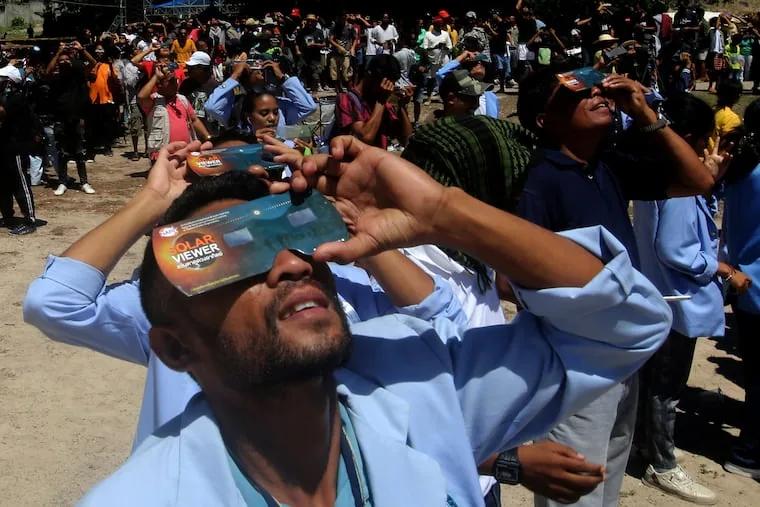
First: yes, you should sleep
Let’s answer the anxious question directly: can we sleep before an eclipse? Yes. Please do.
There is no scientific reason to stay up late because the eclipse feels important. In fact, the better move is the boring one: protect your sleep enough that you can drive safely, think clearly, and enjoy the event instead of stumbling through it. If your viewing plan requires a dawn departure, that matters even more.
A practical night before total solar eclipse sleep routine is not about chasing perfect sleep. It is about avoiding obvious own-goals:
- Stop doom-scrolling weather apps late into the night.
- Set your alarms early enough that you are not negotiating with the snooze button.
- Lay out clothes for the actual conditions, not the fantasy conditions.
- Finish packing before bed.
- Go to sleep early enough that losing 20 or 30 minutes to excitement does not wreck the whole night.
If you are the kind of person who has read a night before total solar eclipse sleep routine reddit thread and come away with ten conflicting hacks, simplify. You do not need a biohacking protocol. You need enough sleep to be functional, patient, and present.
And if you have also seen night before total solar eclipse sleep routine astrology takes, treat them as culture, not planning. The sky event is real; your alarm clock still needs a battery.
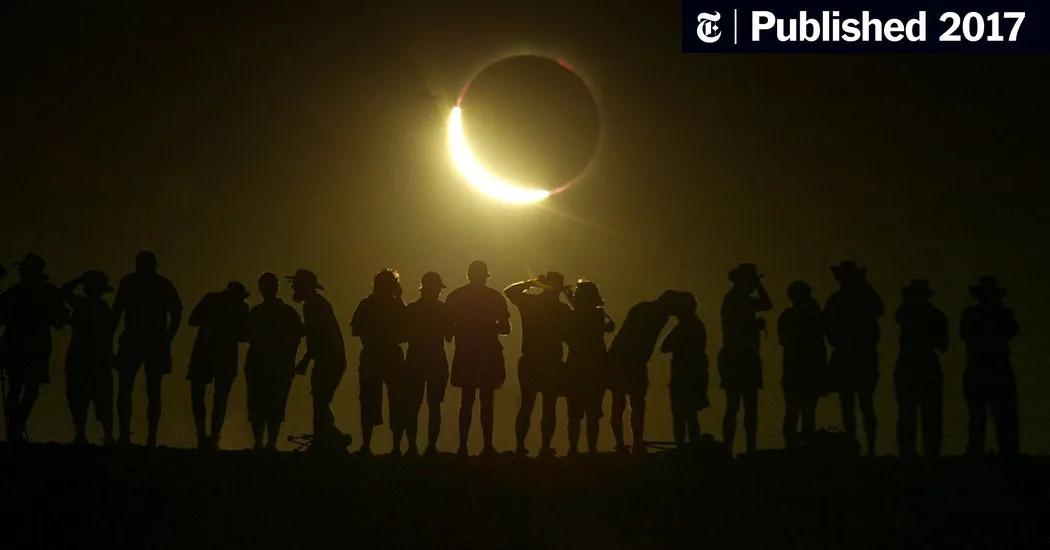
Build a two-alarm system, not a one-alarm wish
If eclipse morning matters, one alarm is not a plan.
Use at least two independent wake-up paths. For most people that means a phone alarm plus a second device: a watch, a travel alarm, a smart speaker, or another phone in the room. If you are sharing a room or campsite, make sure at least two adults know the departure time and both have alarms set.
Here is the simple version:
- Set a primary alarm for your ideal wake-up time.
- Set a backup alarm 5 to 10 minutes later.
- Put the phone somewhere you must physically reach for it.
- If you are a chronic snoozer, make the second alarm a different sound on a different device.
- If you are leaving very early, tell someone else in your group your exact departure time before bed.
This is not paranoia. It is just acknowledging that eclipse mornings are unusually easy to sabotage. Excitement can make sleep lighter or more fragmented. Unfamiliar lodging can make you oversleep or wake confused. Campsites and road-trip stops are not your normal routine.
If you are wondering how to stop sabotaging your sleep? Start by not turning the final hour before bed into a gear audit, weather spiral, and group-chat debate.
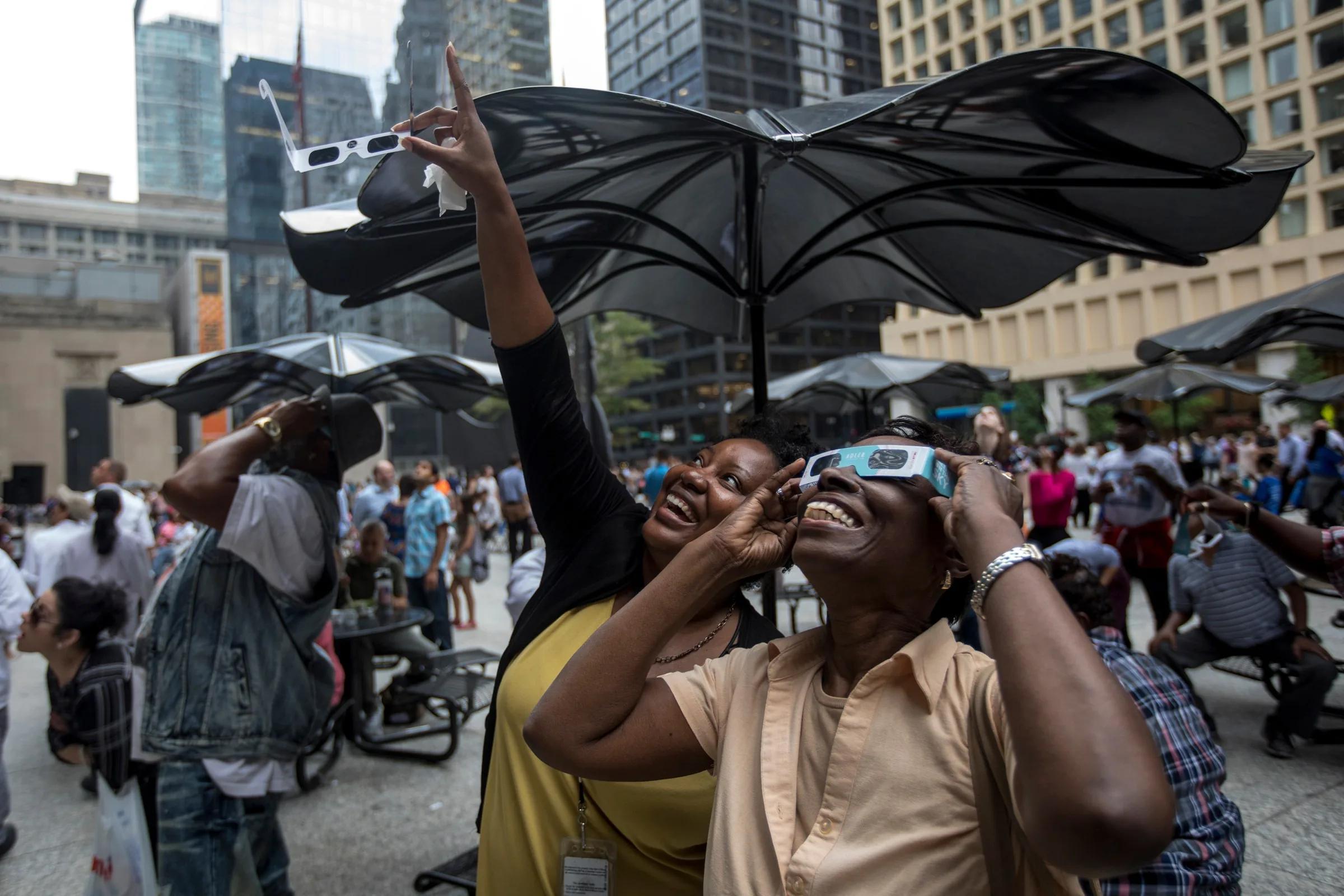
Charge everything that matters — and define what “everything” means
The phrase practical pre-event logistics—charge cycles, alarm redundancy, packed eclipse pl looks mangled because it came out of keyword tooling, but the underlying advice is exactly right. The night before solar eclipse viewing is mostly about removing preventable failure points.
Charge these tonight, not in the morning:
- Phone
- Power bank
- Camera batteries
- Smartwatch or fitness watch if you use it as an alarm
- Headlamp or flashlight for pre-dawn setup if relevant
- EV to your planned level, with margin
- Any hotspot, radio, or GPS device you actually rely on
Then do one more thing people forget: check cables. A dead battery is obvious. The wrong cable is sneakier.
For photography readers, this is where we give the gentle pointer rather than a full camera masterclass. The AAS photography guidance strongly favors testing gear in advance, using fresh batteries and memory cards, and making sure filters fit securely on the front of optics during the partial phases. If you plan to shoot, tonight is the time to confirm your filter, tape, tripod plate, interval settings, and spare battery placement. Tomorrow is not the time to discover that your camera bag contains last month’s full memory card.
If you want the full safety timing for when filters stay on and when they can come off during totality, read our guide to when glasses on, when glasses off: eclipse phases explained for first-time viewers.
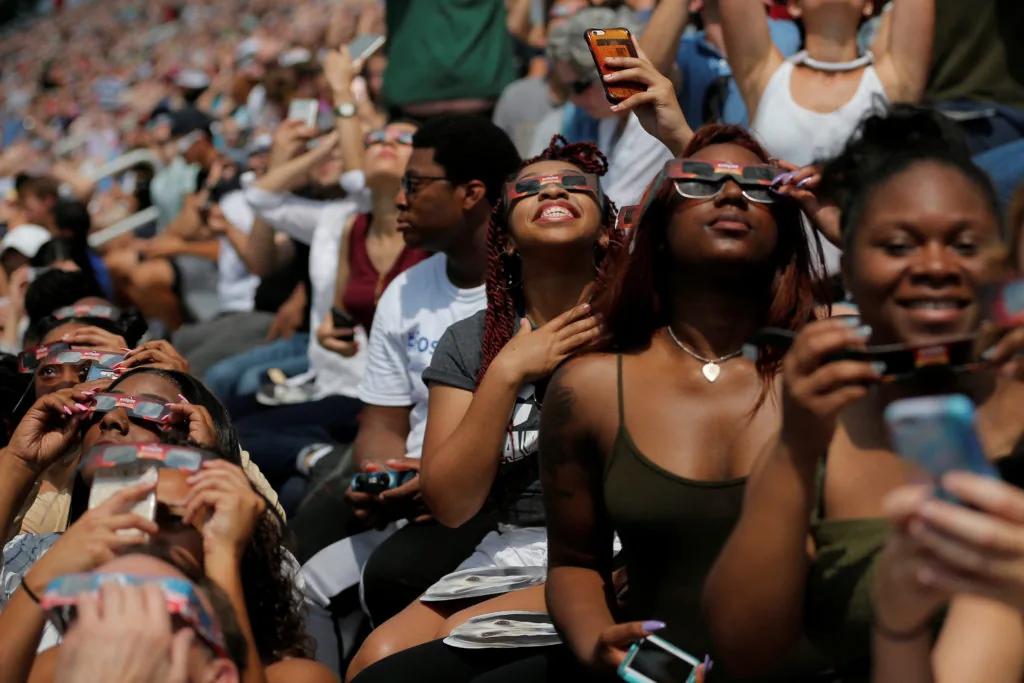
Pack the bag as if cell service will be bad and shops will be busy
NASA and Sky & Telescope both make the same practical point in different ways: eclipse days can overload ordinary infrastructure. Roads clog. Gas stations get busy. Food lines get long. Cellular networks can struggle. That means your packed bag should assume a little friction, not a perfect retail environment.
A solid eclipse bag usually includes:
- Eclipse glasses for everyone who needs them
- One spare pair or shared backup viewer if possible
- Water
- Easy snacks that survive heat
- Sunscreen
- Hat
- Light layer or jacket
- Printed directions or an offline map
- Portable charger and cable
- Tissues or toilet paper
- Hand sanitizer
- Small first-aid basics
- Blanket or folding chair if you will be waiting a while
If you are bringing kids, double the snacks and lower your expectations about how long they want to stand in one place. If you are bringing older relatives, think hard about shade, seating, walking distance, and restroom access. The best places and timing for night before total solar eclipse sleep routine planning are the ones that match the people actually coming with you.
And yes, put the bag by the door tonight.
Put your eclipse glasses with your keys, not in a “safe place” you will forget
The safest storage location is not the cleverest one. It is the one you will remember at dawn.
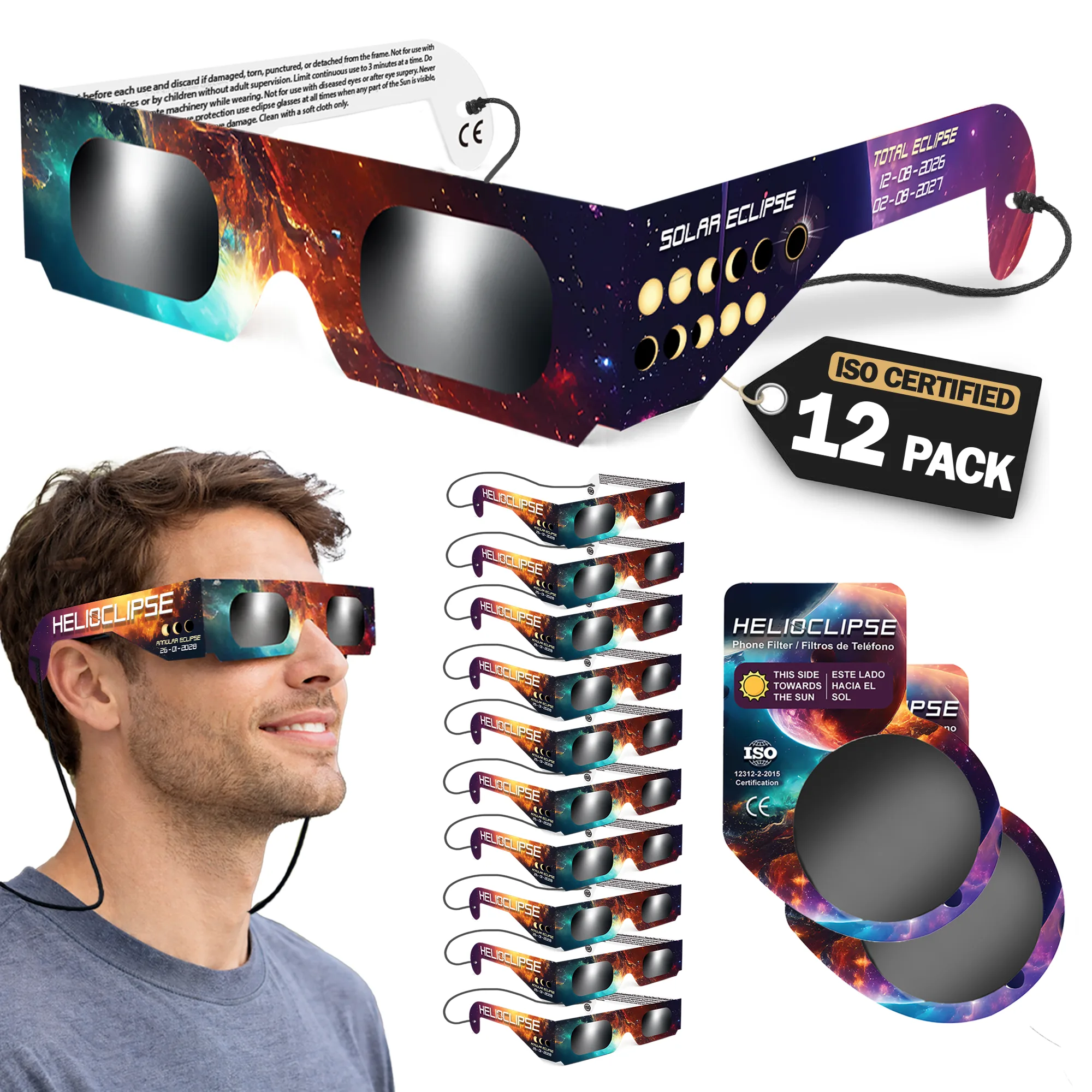
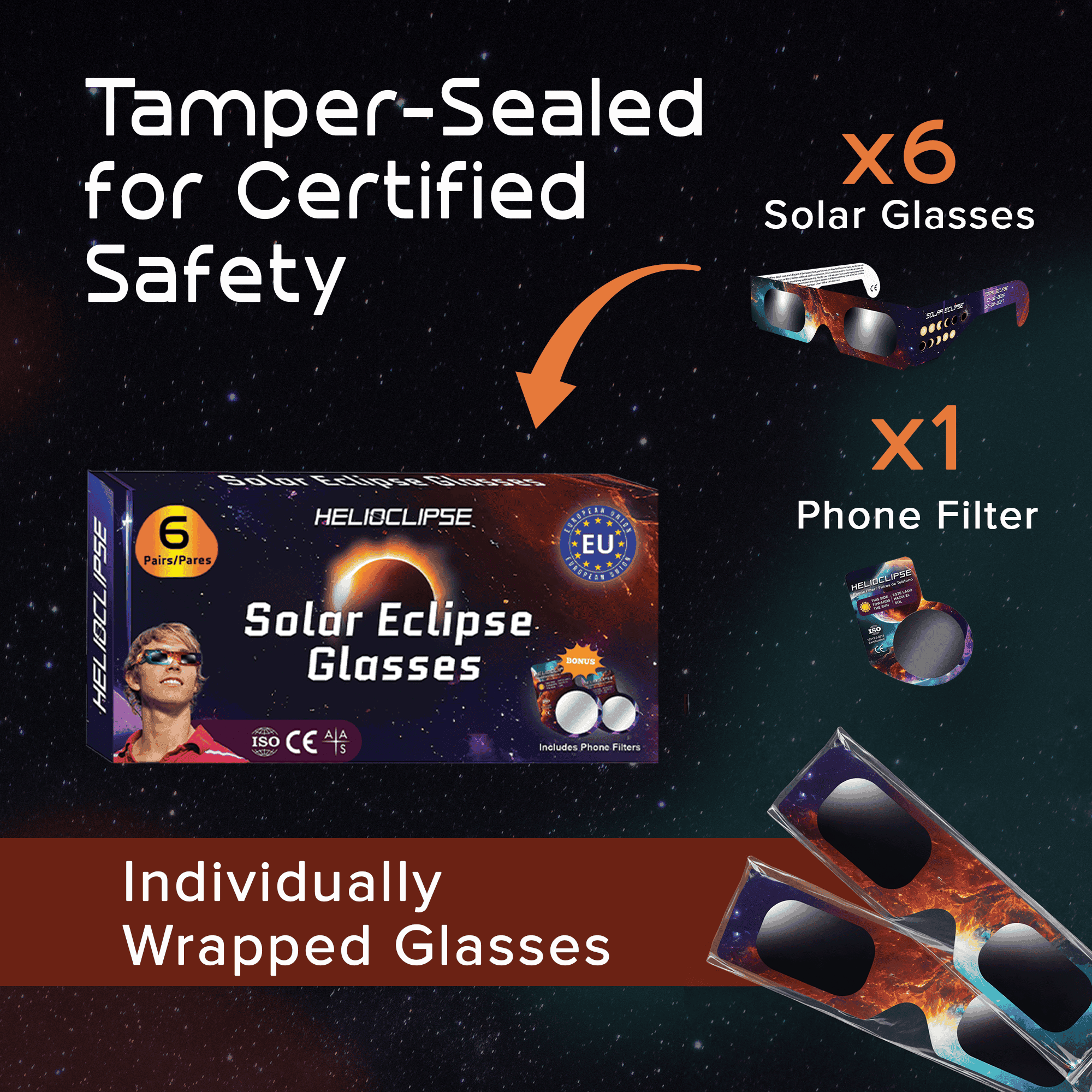
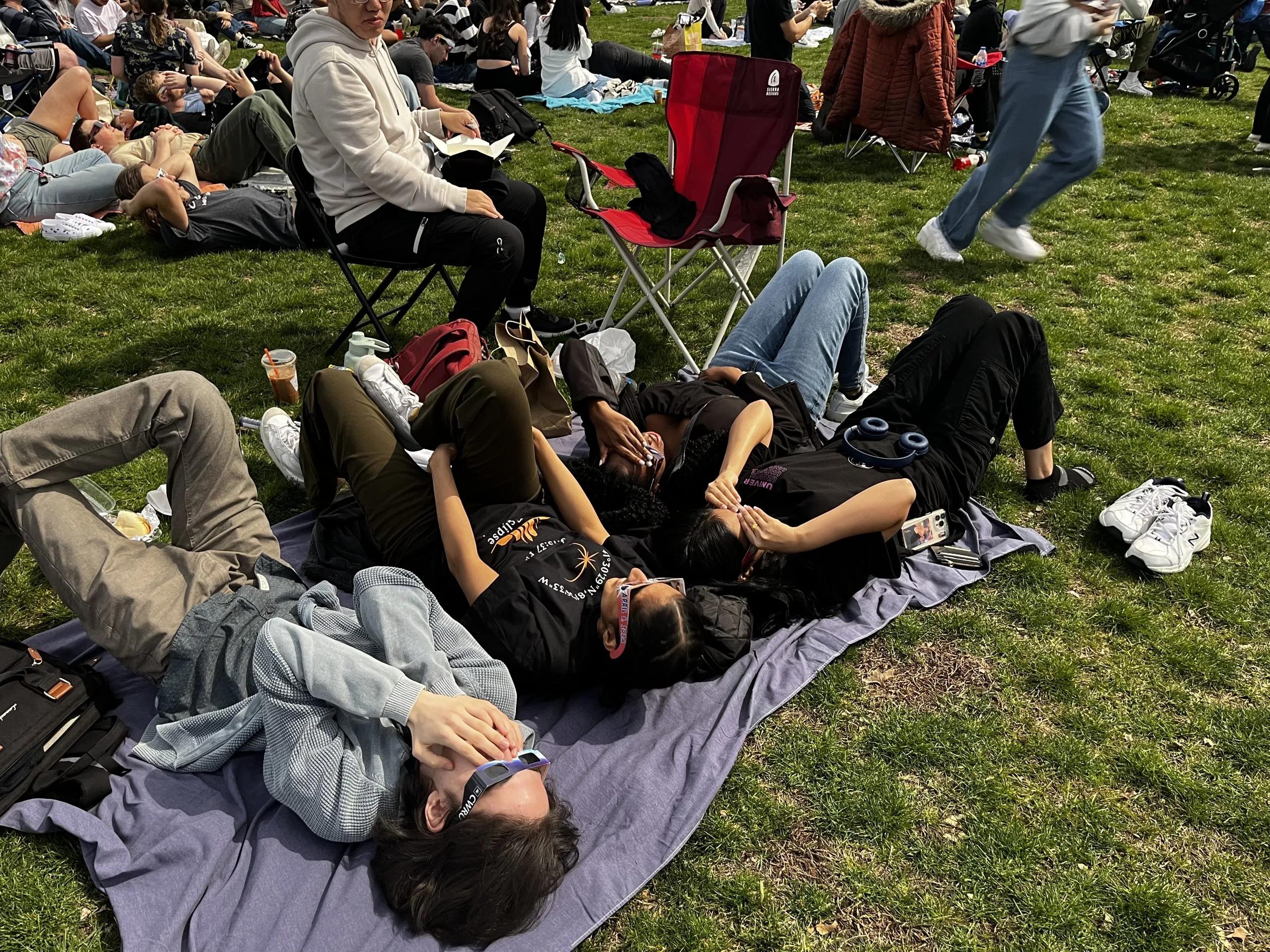
Keep your viewers with the items you cannot leave without: keys, wallet, daypack, camera bag, or the front passenger seat if you are not worried about damage. Before bed, inspect them. If they are scratched, punctured, torn, or otherwise damaged, do not trust them. The AAS eye-safety guidance is clear: during all partial phases, and during any partial or annular eclipse, direct viewing requires special-purpose solar filters that conform to ISO 12312-2.
When you shop, ignore sloppy marketing language and focus on the standard and the seller. Phrases like approved solar eclipse glasses, eclipse glasses nasa approved, and solar eclipse glasses iso 12312-2 certified show up constantly in shopping language, but NASA does not approve specific brands. What matters is whether the viewer genuinely conforms to ISO 12312-2 and arrives in good condition from a source you trust.
If you still need viewers, our shop for eclipse glasses is the calm way to solve that tonight instead of gambling on a last-minute listing. For a deeper buyer’s checklist, read ISO 12312-2 and eclipse viewers: what the standard means for your family.
Fuel, route, and parking: do not leave these as morning surprises
One of the most useful pieces of NASA planning advice is almost comically ordinary: check your gas tank. It sounds small until you are stuck in post-eclipse traffic in a rural area with a quarter tank and no easy detour.
Tonight, do these four things:
- Fuel the car or charge the EV.
- Save the route offline.
- Identify one backup viewing area or parking option.
- Decide what time you are leaving, not just what time you hope to leave.
If your site is in or near the path of totality, arriving early matters. The path is narrow, and the difference between being inside it and outside it is enormous. A 99% partial eclipse is still not totality. If you are still choosing between locations for August 12, 2026, start with our August 12, 2026 total solar eclipse planning guide and then confirm your exact spot in the 3D eclipse map.
For 2026 specifically, the event will reward preparation. Space.com notes that totality on August 12, 2026 reaches places including western Iceland and northern Spain, with a maximum totality of 2 minutes 18 seconds somewhere along the track. In Spain, the Sun will be low late in the day, which means local horizon obstructions matter. Gijón gets about 1 minute 46 seconds of totality around 8:26 p.m. CEST, while A Coruña gets about 1 minute 15 seconds around 8:27 p.m. CEST. Burgos is around 1 minute 44 seconds near 8:28 p.m. CEST, but with the Sun only about 8 degrees above the west-northwest horizon. Those are not “close enough” differences if a ridge, building, or traffic delay steals your view.
That is why the night before total solar eclipse sleep routine 2026 guide idea is not just about sleep. It is about setting up a morning — or in Spain’s case, a whole day — that does not unravel because you treated route planning as optional.
A gentle word on alcohol, heat, and “celebrating early”
We are not going to lecture you. We are going to be honest.
If tomorrow involves heat, sun exposure, a long drive, or an early departure, tonight is not the ideal moment to overdo alcohol. Even mild dehydration and mediocre sleep can make a crowded, hot, stop-and-go eclipse day feel much worse. The same goes for staying up too late because the group is excited.
You do not need monk-like discipline. You just need to avoid waking up dry, groggy, late, and irritable on the day you have been talking about for months.
The same principle applies to caffeine. If you need it for an early departure, fine. Just do not turn tonight into a weird all-nighter and tomorrow into a crash.
If you are photographing, protect your eyes and your attention
The AAS photography advice is blunt in the best way: first-timers are often happier if they spend more time watching and less time trying to produce perfect images. We agree.
If you do plan to photograph the eclipse, make your setup simpler than you think it should be. Pre-attach what can be pre-attached. Pre-set what can be pre-set. Tape what might slip. Put spare batteries and memory cards in one obvious pocket. And rehearse the filter move if you are in the path of totality.
A quick dark-adaptation note: totality is not the same as night. It is more like an intense, fast-arriving twilight, and the light changes much faster than your eyes fully adapt. That is one reason the final minute feels so dramatic. You do not need to “train” for a nighttime solar eclipse, because that phrase is misleading; a total solar eclipse happens in daytime conditions that plunge toward twilight, not true night. The better prep is to know your sequence and avoid blasting yourself with bright screens in the final moments if you want to appreciate the changing light.
And if you are outside the path of totality, there is no safe moment to remove solar filters for direct viewing. None.
Ignore the weird search-noise and keep the useful question underneath it
Modern search results around eclipses are full of unrelated phrases. You may stumble across eclipse tps, eclipse treatment planning tutorial, or questions like what is the eclipse treatment planning system? Those refer to medical software, not celestial planning.
You may also see can you sleep during solar eclipse terraria, which is a video-game question, not an astronomy one.
The useful real-world question underneath all that noise is simpler: how to plan logistics for an event? For an eclipse, the answer is to lock down the fixed-time essentials first — location, departure, safety gear, power, food, water, and backup options — and leave the optional extras for last.
That is also the answer to what are the skills of event logistics? In eclipse terms: timing, redundancy, comfort, route discipline, and not asking tomorrow’s stressed version of you to solve tonight’s preventable problems.
What about after the eclipse?
People ask about sleep after solar eclipse for two very different reasons. One is practical: you may be exhausted after a long day in the sun, a long drive, or a huge emotional high. The other is mystical internet chatter. The practical answer is enough.
After the eclipse, expect a weird mix of adrenaline and fatigue. NASA notes that many people leave immediately after totality and run into heavy traffic, while others linger through the final partial phases and let the rush thin out. If you can do that safely, it is often the saner move.
Then eat, hydrate, and give yourself time to come down. If you are traveling with kids, assume they may crash hard or melt down, possibly both. If you are the driver, protect your recovery the same way you protected your morning: water, food, and a realistic schedule.
And if the eclipse hooks you — which happens a lot — you may already be asking about the next total solar eclipse after 2026 in the world. There is a reason people do this again. The sky can reset your sense of scale in a few minutes.
Your 10-minute night-before checklist
If you only do one thing from this article, do this before bed:
- Confirm your exact viewing location in the Helioclipse map.
- Set two alarms.
- Charge your phone and power bank.
- Charge camera batteries or decide not to bring the camera.
- Put eclipse glasses where you cannot forget them.
- Fuel the car or charge the EV.
- Pack water, snacks, sunscreen, and a hat.
- Save your route offline or print directions.
- Lay out clothes and shoes.
- Go to bed.
That is the whole game. Not perfection. Not superstition. Not a heroic 1 a.m. packing session. Just enough order that tomorrow’s wonder is about the sky, not your own preventable chaos.
How to Pick Safe Eclipse Glasses for Any Solar Eclipse
Natural Portraits Global
Frequently asked questions
What does a simple eclipse planning system actually include the night before?
It is mostly a checklist that reduces morning decisions: know where you are going, have your route set, charge your battery pack, and keep your viewers and other gear ready. The article also recommends a bag by the door, food and water packed, and enough preparation that the morning feels ordinary until the eclipse begins.
How should I handle sleep the night before a total solar eclipse?
Yes, you should sleep normally and protect your rest. The article says there is no reason to stay up late for the eclipse; instead, go to bed early enough to drive safely, think clearly, and avoid a rushed morning.
What is the best advice for a pre-eclipse sleep routine people share online?
Keep it practical and boring: stop checking weather apps late at night, set redundant alarms, lay out clothes, finish packing, and get to bed early. The goal is not perfect sleep, but avoiding obvious mistakes that make the morning harder.
Do I need to worry about planning for the next total solar eclipse years ahead?
The excerpt does not give details about future eclipses beyond the one being discussed. What it does emphasize is that eclipse mornings can be crowded and unpredictable, so the important part is to plan early, arrive early, and not rely on normal local conditions.
What should a basic eclipse preparation tutorial cover?
It should cover the practical steps that keep the morning calm: confirm your viewing location, pack your gear, charge batteries, and set multiple alarms. The article also says to bring food and water, expect possible crowding or slow service, and avoid leaving important decisions until dawn.
On-site next steps
- Use our Eclipse Explorer / 3D map tonight to confirm whether your exact viewing spot is inside totality, near the centerline, or only in the partial zone.
- If your viewers are still a question mark, get that solved before bed in our solar eclipse glasses shop. Look for clear ISO 12312-2 information and inspect what arrives before eclipse day.
- If you are still tightening your overall plan, browse more practical guides in the Helioclipse blog, especially travel, weather, and eclipse-phase timing.
Sources & further reading
- What to Expect When You’re Expecting an Eclipse — NASA planning guide covering travel, comfort, safety, and eclipse-day timing.
- 11 Things to Take With You the Day of the Solar Eclipse — practical packing advice for water, chargers, directions, and comfort.
- How to Shoot Solar-Eclipse Images & Videos — AAS guidance for camera prep, filters, batteries, and realistic first-timer expectations.
- How to View a Solar Eclipse Safely — the AAS’s core eye-safety reference, including ISO 12312-2 viewers and the totality exception.
- Eclipse Viewing Safety — NASA’s concise safety guidance for partial, annular, and total eclipses.
- Phenomena You'll Experience at a Total or Annular Eclipse — what changes when, and why being settled early matters.
- How Dark Does It Get During a Total Solar Eclipse? — why totality feels dramatic without becoming true night.
- Total solar eclipse 2026 – Everything you need to know — accessible 2026 context, including example locations, durations, and low-Sun planning stakes.