Deaf and hard-of-hearing guests at crowded eclipse events: communication access beyond ‘louder PA’
A crowded eclipse watch party can feel magical right up until the key information arrives in a form you cannot reliably catch: a muffled loudspeaker, a fast-moving volunteer with their back turned, a presenter standing in shadow, or a last-minute safety instruction that never appears in text.
That is why deaf and hard hearing solar eclipse event accessibility 2026 guide thinking has to start before eclipse day, not after the crowd is already in place. For us, deaf hard hearing solar eclipse event accessibility means treating communication as part of the event design itself: what is spoken, what is signed, what is captioned, what is posted visually, and what happens when the sky changes quickly and everyone gets excited at once.
If you are choosing where to watch, start by checking whether organizers publish access details as clearly as they publish parking and start times. If they do not, ask. And if you are still deciding between a public event and a quieter self-organized viewing plan, our Eclipse Explorer / 3D map can help you compare locations while our blog hub helps you plan the rest of the day.
Why “just make the PA louder” fails
The basic problem is simple: volume is not the same thing as access.
At many outdoor events, public-address systems are distorted, wind-blown, echoey, or competing with crowd noise. Even hearing attendees miss things. For Deaf attendees, many hard-of-heing attendees, late-deafened attendees, cochlear implant users, hearing-aid users, and people who rely on a mix of speechreading, text, sign language, and context, a louder speaker may do almost nothing useful. It can even make comprehension worse.
That matters more at an eclipse than some organizers realize. A solar eclipse is not a concert where missing one sentence is merely annoying. The event has phases, safety transitions, and brief peak moments. In a total eclipse, the difference between “filters stay on” and “you may remove them now if you are inside totality” is not a decorative detail. If you are new to eclipse viewing, read our guide to when glasses on, when glasses off: eclipse phases explained for first-time viewers.
The phrase deaf and hard-of-hearing guests at crowded eclipse events: communication access is really about timing. Can attendees get the right information at the right moment, in a format they can actually use, without having to fight the crowd for it?
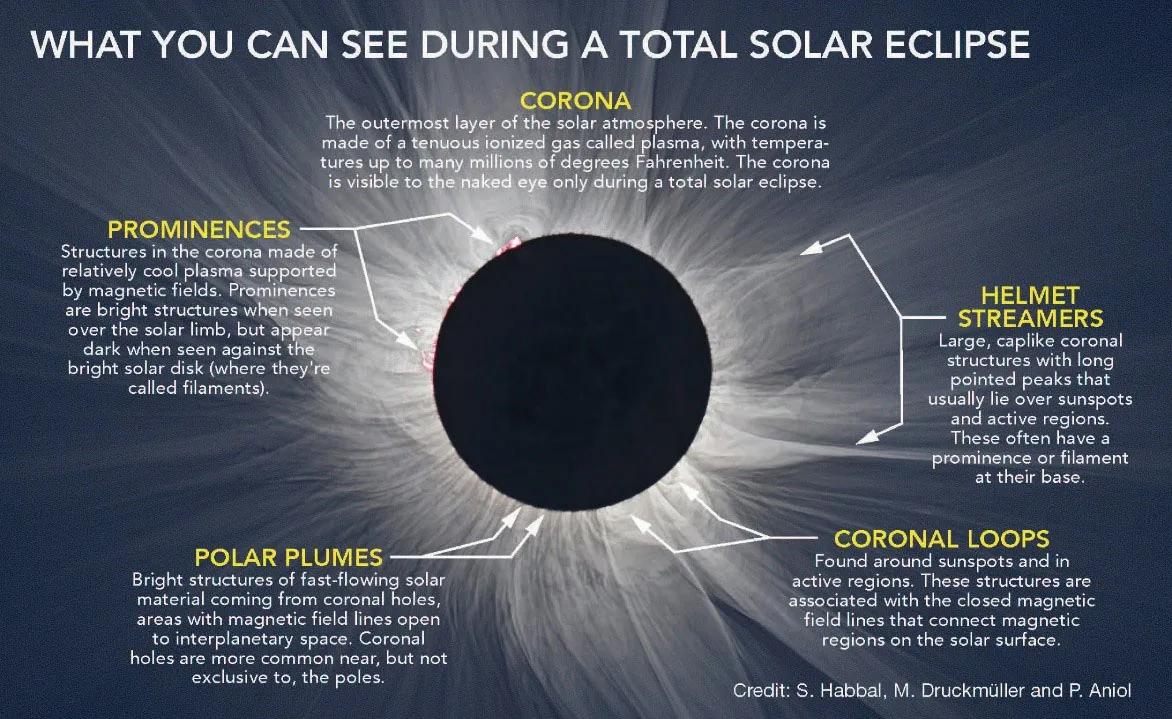
What good communication access looks like at an eclipse event
A strong access plan usually layers several tools instead of betting everything on one.
That can include qualified sign language interpreters, CART captioning for live talks, captions on prerecorded video, printed or digital schedules, visual countdowns for major program moments, text-based safety reminders, maps with clearly marked access services, and staff who know where to direct people without improvising. NASA accessibility guidance for workshops is useful here because it treats captions, transcripts, alternate formats, and a named accessibility contact as normal planning items, not special extras.
For eclipse events in particular, we also like the lesson from NASA’s Eclipse Soundscapes work: eclipses are not only visual and not only verbal. The environment changes. Light changes. Temperature can drop. Animals may shift behavior. Crowd energy changes fast. In a total eclipse, the most dramatic phase can last only a few minutes. That means access planning should support multiple ways of noticing and understanding what is happening, not just one spoken narration.
This is where the phrase solar eclipse deaf can get flattened into something unhelpful if people imagine one universal solution. There is no single “Deaf-friendly setup” that fits every venue or every attendee. Some people want ASL interpretation. Some want CART. Some want both. Some want a quieter viewing zone with strong sightlines and minimal chatter. Some mainly need clear pre-event written information so they can plan independently.
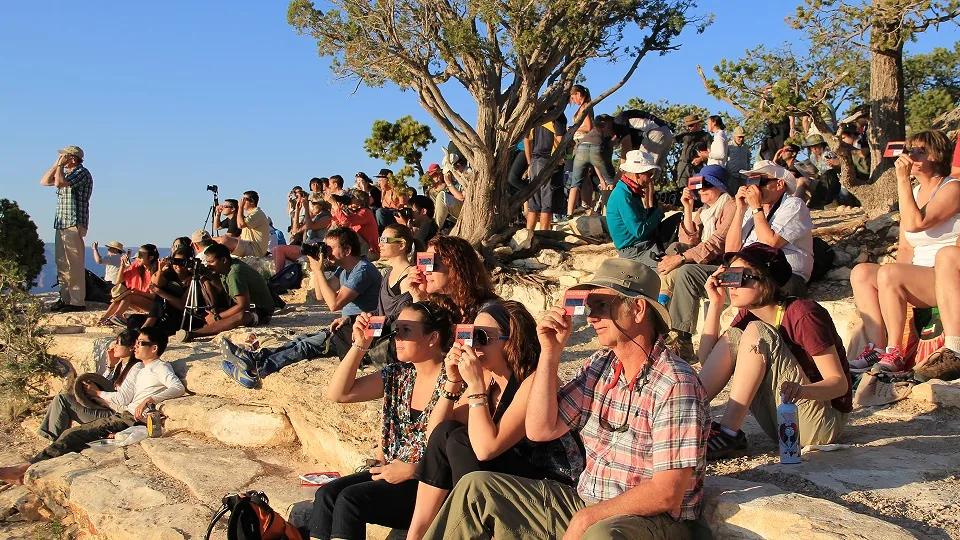
What is disability inclusion and accessibility at a public eclipse event?
A practical answer to what is disability inclusion and accessibility? is this: people should be able to get the information, move through the site, participate in the shared experience, and stay safe without preventable barriers.
For Deaf and hard-of-hearing attendees, that usually starts with effective communication access, but it does not end there. Lighting matters because interpreters and faces need to be visible. Seating matters because sightlines matter. Turn-taking matters because overlapping speech is hard to interpret and hard to caption cleanly. Handouts matter because it is difficult to watch an interpreter, watch the sky, and read a newly distributed sheet all at once.
A good organizer does not wait for attendees to guess what is available. They publish it. If there is an interpreter, say where they will be. If there is CART, say how to view it: large screen, personal device, QR code, or all three. If there are accessible restrooms, quieter areas, or designated viewing sections with better lines of sight, put them on the map.
That is also the most useful answer to what is event accessibility planning? It is not a vague promise to “welcome everyone.” It is the work of deciding, in advance, how people will actually receive information and use the space.
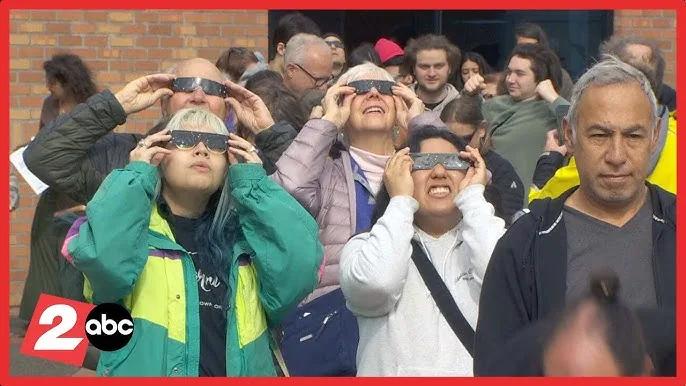
The eclipse-specific moments organizers should plan for
Not every outdoor event has a short, high-stakes peak. Eclipses do.
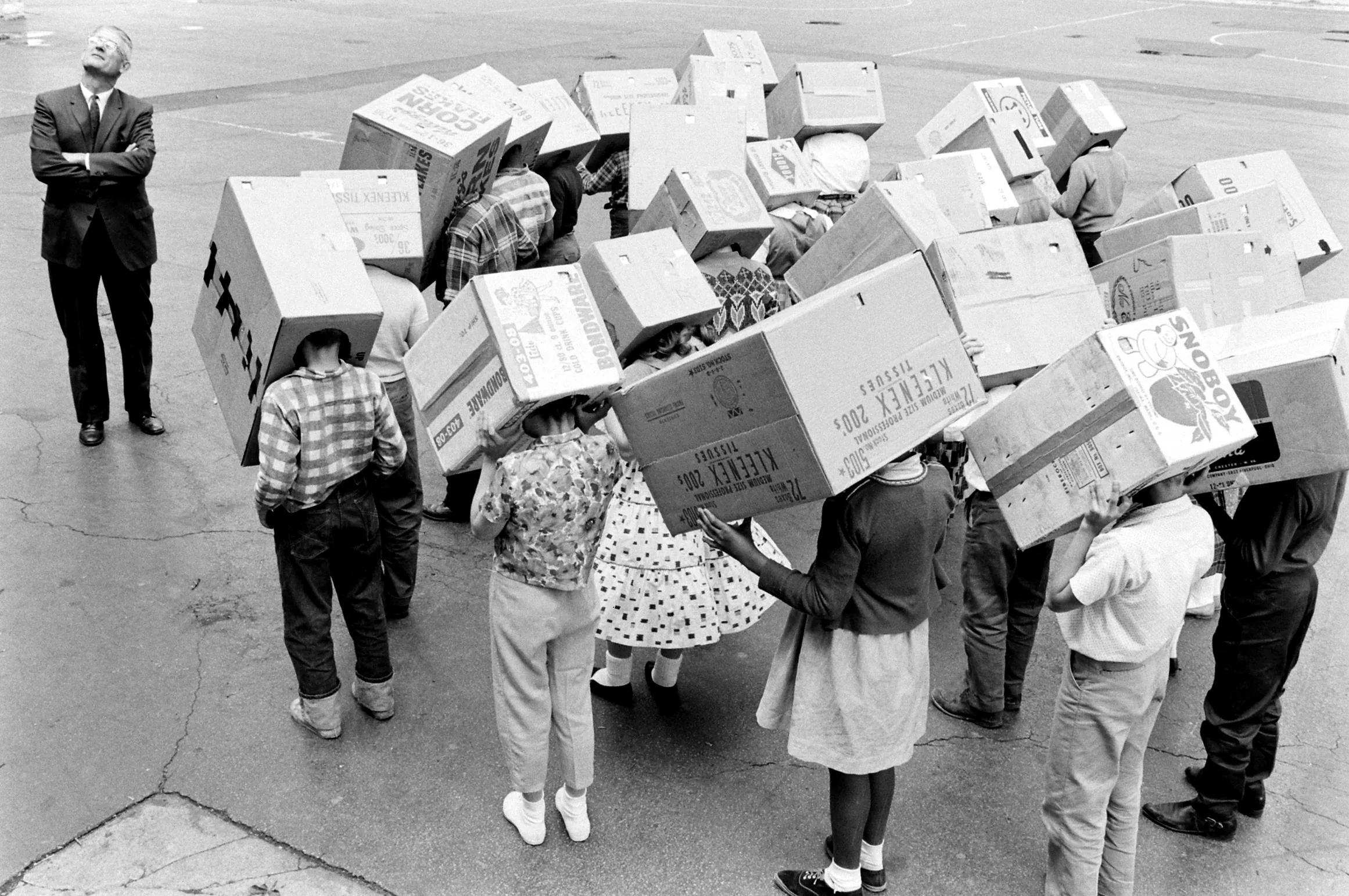
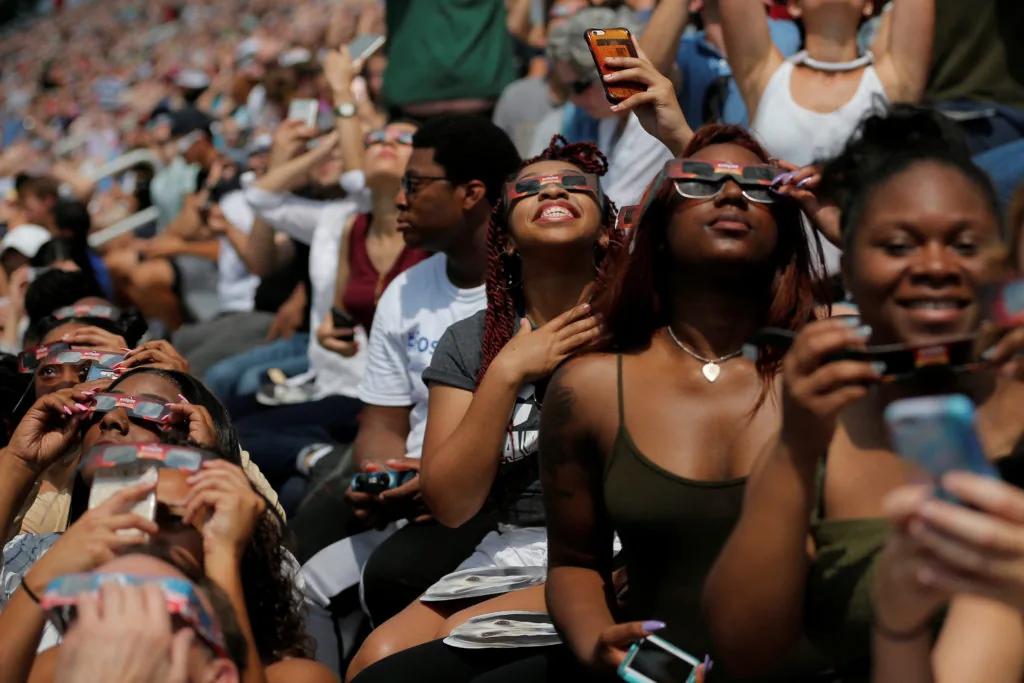
During the long partial phases, people can usually settle in, compare notes, and take turns with viewers. The American Astronomical Society notes that the partial phases progress slowly enough that groups can share viewers rather than stare continuously. But the pace feels very different near the biggest moment, especially at totality. Excitement spikes. People point, shout, move around, and stop speaking in full sentences.
That means organizers should identify a few moments that deserve redundant communication:
1. Arrival and orientation
Attendees need to know where interpreters, caption screens, accessible seating, restrooms, first aid, and quieter zones are located. This should be available before the event and again on-site in visual form.
2. Safety briefing
This must be visible, not only spoken. For any eclipse event, viewers need clear instructions about certified solar filters, damaged glasses, and the fact that ordinary sunglasses are not safe. If the event is in the path of totality, the briefing must also explain exactly when filters may come off and when they must go back on. Outside totality, they stay on the entire time.
3. Program transitions
If a scientist is about to speak, if a guided observation is starting, or if the interpreter location changes, attendees should not have to discover that by accident.
4. Peak eclipse cues
At a total eclipse event, visual countdowns can help everyone, not only Deaf and hard-of-hearing guests. A large screen, projected timer, or text board can show “about 10 minutes to totality,” “filters stay on,” and then, only for people inside totality, the moment when direct unaided viewing becomes safe. If your site is not in totality, the message should say that clearly.
5. Re-entry after the peak
Once the bright Sun begins to reappear, filters go back on immediately for direct viewing. That instruction should be visible as well as spoken.
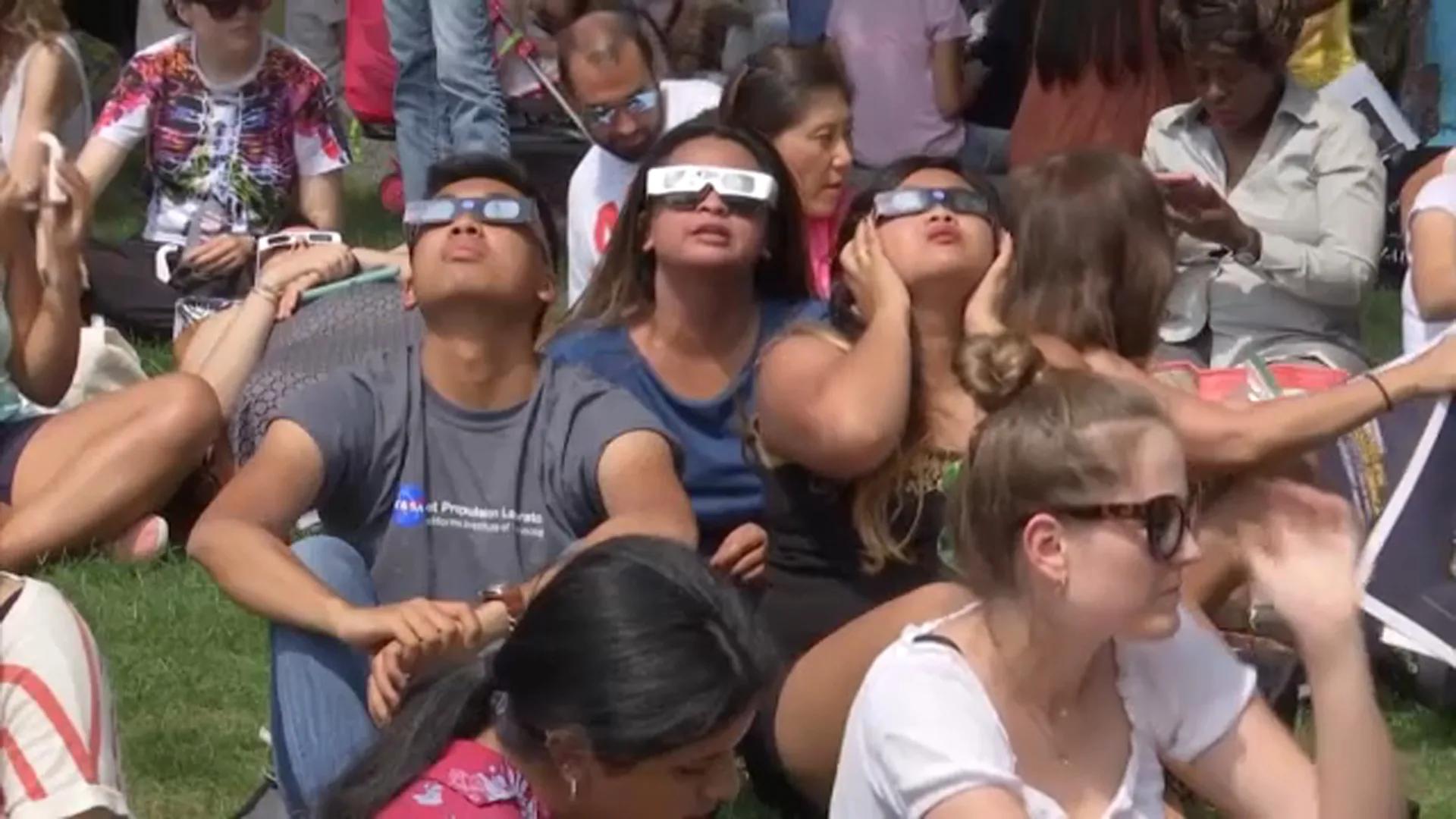
Interpreters, CART, captions, and visual alerts: different tools, different jobs
One reason accessibility at events goes wrong is that organizers treat all communication tools as interchangeable. They are not.
Sign language interpreters
Qualified interpreters can provide direct access to live spoken content for attendees who use sign language. But they need proper placement, lighting, and sightlines. University event-planning guidance often recommends front seating for attendees who need to see interpreters clearly, enough stage space near the speaker, and lighting that does not leave the interpreter in silhouette. For longer programs, two interpreters may be needed to team.
At an eclipse event, interpreter visibility can be affected by sun angle, projection screens, hats, and crowd clustering. Organizers should think about where people will actually be looking when the program starts and when the sky becomes the focus.
CART captioning
CART is especially useful for lectures, science talks, and MC-style programming. It can also help hard-of-hearing attendees who do not use sign language, people processing information in a second language, and hearing attendees in noisy conditions. Good CART is not the same as hoping auto-captions will be accurate in wind and crowd noise.
If there is CART, attendees should know whether it will appear on a large display, on their phones, or both. A QR code on arrival signage can make this much easier.
Captions on prerecorded media
If the event includes videos, those videos should already be captioned. This sounds basic, but it is often missed.
Visual alerts and text-based cues
These are the unsung heroes of outdoor access. A visual countdown, a text slide saying “speaker starting,” a posted safety board, or a volunteer holding up a large printed cue can do more for real-time comprehension than another burst of distorted audio.
That is why a serious deaf hard hearing solar eclipse event accessibility 2026 guide usa conversation should include visual alerts, not just amplified announcements. The same logic applies anywhere else too; the venue may change, but the communication principle does not.
What attendees should ask organizers before committing
You should not have to reverse-engineer an event’s access plan from social media comments. Ask directly, and ask early.
A useful message can be short:
- Is ASL or other sign language interpretation available?
- Will live talks have CART captioning?
- Are prerecorded videos captioned?
- Where will interpreters or caption screens be located?
- Is there a quieter viewing area with clear sightlines?
- Will safety instructions be available in text as well as audio?
- Who is the accessibility contact for this event?
- By what date do accommodation requests need to be submitted?
This is where a published event accessibility checklist or venue accessibility checklist becomes more than paperwork. It tells you whether the organizer has thought through the experience before thousands of people arrive.
If the reply is vague—“we’ll make announcements” or “staff can help if needed”—that is not the same as a plan. A real plan names tools, locations, and contacts.
A practical checklist for organizers
If you are helping run an eclipse event, here is a compact accessibility event checklist focused on communication access.
Before the event
- Publish an accessibility statement with a contact person.
- State what accommodations are available and how to request them.
- Set a realistic request deadline, while still considering late requests when possible.
- Confirm whether the event includes live talks, prerecorded video, guided observing, or only informal viewing.
- Book qualified interpreters and/or CART when needed.
- Prepare captioned video and text versions of key safety instructions.
- Share maps showing entrances, seating, restrooms, first aid, interpreter area, caption display, and quieter zones.
At the venue
- Place interpreters where they can be seen clearly.
- Avoid backlighting and visually busy backgrounds behind interpreters.
- Reserve seating with good sightlines to both the speaker and the sky.
- Use large, high-contrast signage.
- Provide visual schedules and countdowns.
- Train volunteers to give short, clear directions and to point people to the accessibility contact.
- Regulate turn-taking during Q&A so one person speaks at a time.
For eclipse safety communication
- Put the eye-safety rules in writing, not only on the microphone.
- Distinguish clearly between total, partial, and annular viewing rules.
- If the site is outside totality, say so plainly.
- If the site is inside totality, explain that direct viewing without certified filters is safe only during the brief total phase, and only once the Sun’s bright face is completely covered.
- Repeat the “filters back on” cue visually after totality.
After the event
- Ask attendees what worked and what did not.
- Save the access plan for the next eclipse instead of starting from zero.
If you are wondering how to make an event accessible?, this is the real answer: publish the plan, layer the communication methods, and test the experience from the attendee’s point of view.
Access is not one-size-fits-all, and that is the point
One of the most useful lines in disability-inclusion guidance is that Deaf and hard-of-hearing people use varied modes of communication. That should change how organizers think.
Some attendees will prioritize interpreter access. Some will care most about captions. Some will want to stand with family and simply receive the crucial safety and timing information in text. Some will avoid the biggest official event entirely and choose a smaller gathering because crowd density itself is the barrier.
That is why we do not think a single template solves every case. A museum plaza, a rural park, a school field, and a city science festival all have different constraints. The right question is not “What is the one correct accommodation?” It is “What communication barriers does this specific site create, and how are we removing them?”
That is also why a deaf hard hearing solar eclipse event accessibility 2026 guide free resource is most useful when it helps people ask better questions, not when it pretends every venue can copy the same diagram.
Safety still has to be crystal clear
Communication access should make eclipse safety clearer, never fuzzier.
The AAS eye-safety guidance is the standard reference we trust for public-facing basics: use special-purpose solar filters that conform to ISO 12312-2 for direct viewing of the uneclipsed, partially eclipsed, or annularly eclipsed Sun. Ordinary sunglasses are not safe. Damaged viewers should be discarded. And you should never look at the Sun through unfiltered cameras, binoculars, or telescopes.
For public events, that means organizers should not assume everyone already knows the difference between a total eclipse and a partial one. If you are outside the path of totality, there is no moment when it is safe to look directly at the Sun without proper solar viewing protection. If you are inside totality, the no-filters moment is brief and specific.
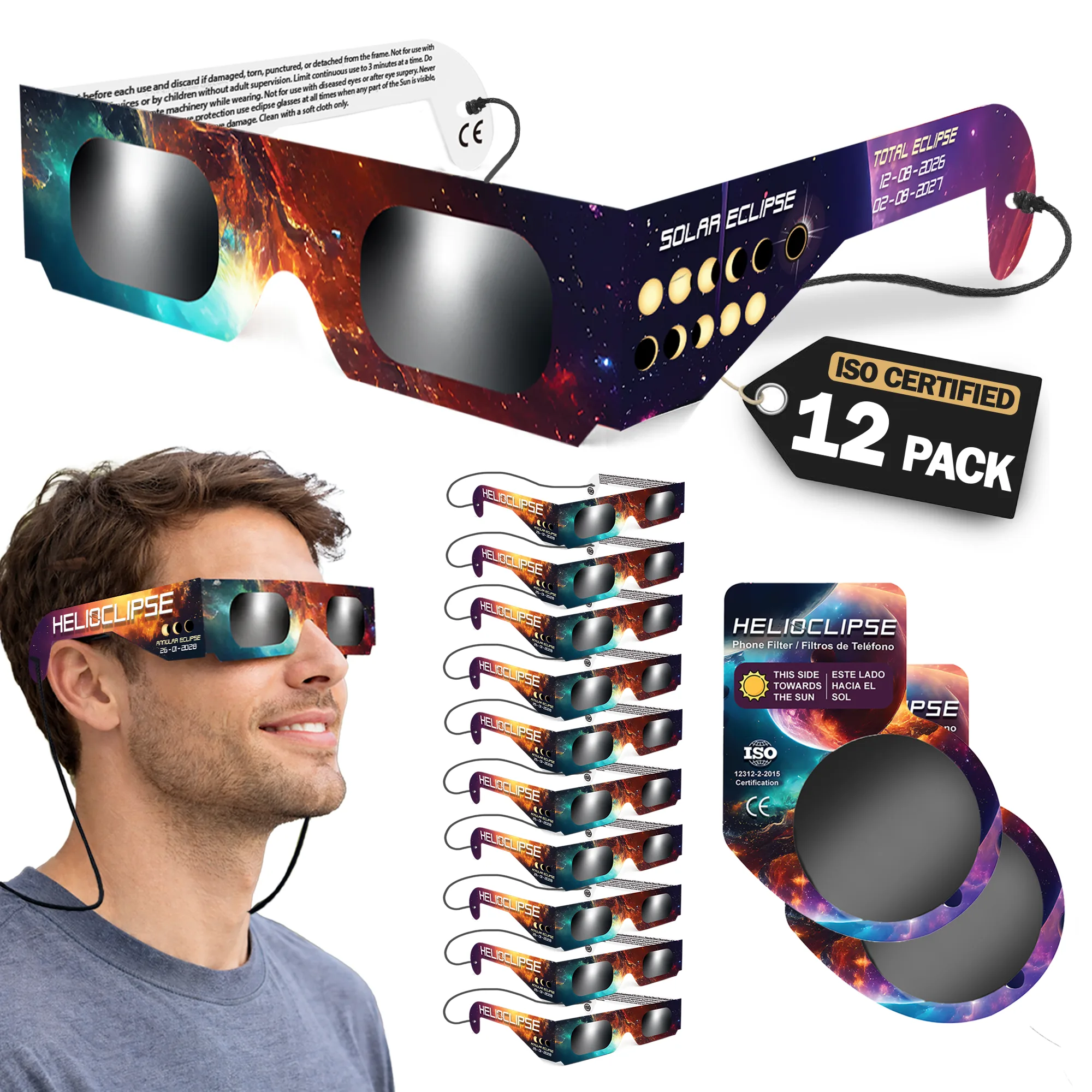
If your group is buying viewers, stick to trusted sources and check the labeling carefully. On our shop page you will see language people often search for, including approved solar eclipse glasses, solar eclipse glasses iso 12312-2 certified, and eclipse viewing glasses. What matters is not the marketing phrase by itself, but whether the product genuinely conforms to the standard and arrives in good condition. Our explainer on ISO 12312-2 and eclipse viewers: what the standard means for your family goes deeper, and our guide to fake and low-quality eclipse glasses: how to sanity-check what you are about to trust can help if you are ordering for a group.
Choosing between a huge public event and a smaller plan
Sometimes the most accessible eclipse plan is not the biggest official gathering.
A large event may offer interpreters, captions, and structured programming. It may also bring long lines, blocked sightlines, crowd surges, and constant ambient noise. A smaller school, library, community center, or family-organized watch party may be easier to control and easier to adapt, especially if everyone agrees in advance how safety cues and timing updates will be shared.
If you are comparing options for 2026 or another eclipse year, think beyond “best places and timing for deaf hard hearing solar eclipse event accessibility.” The best place is not only the place with the best sky geometry. It is the place where you can actually receive the information you need, stay oriented, and enjoy the moment with the people you came with.
For some readers, that may mean starting with a quieter site and using our Eclipse Explorer / 3D map to confirm whether you are in totality or only seeing a partial eclipse. For others, it may mean contacting a major organizer early and asking for the published access details that should have been on the event page from the start.
A better standard for 2026 and beyond
We want eclipse culture to get better at this before the next big crowd forms.
That means moving past the idea that accessibility at conferences is one topic and accessibility at outdoor science events is another. The same planning habits carry over: publish the accommodations, name the contact person, provide captions and transcripts where relevant, think about lighting and sightlines, and do not force attendees to negotiate access in real time while the program is already underway.
It also means recognizing that an eclipse is a shared emotional event. People bring children, grandparents, classmates, science clubs, and group chats full of first-timers. If one person in that group cannot reliably catch the key instructions or the live explanation, they are not fully included in the moment everyone came for.
A strong deaf hard hearing solar eclipse event accessibility 2026 guide should leave readers with one clear standard: ask organizers to publish communication access information with the same seriousness they give weather updates, parking maps, and eclipse timing.
Blind People Can Also Hear Total Solar Eclipse; Here's How ...
MIRROR NOW
Frequently asked questions
What should I look for in eclipse event access planning if I’m deaf or hard of hearing?
Look for communication access that is built into the event, not added as an afterthought. The excerpt says organizers should provide information in multiple formats, such as sign language, captions, printed or digital schedules, and visual updates, because louder sound alone is not enough.
How can I tell whether a public eclipse event is accessible for deaf and hard-of-hearing visitors in the U.S.?
Check whether the organizers publish access details as clearly as they publish parking and start times. If they do not, ask before you go, because the article emphasizes that communication access should be part of event design before eclipse day.
Can I find a free eclipse viewing option that still includes communication access?
Possibly, but the excerpt does not promise that free events are accessible. It says to compare locations and ask organizers about access details, since a quieter self-organized viewing plan may sometimes be easier to manage than a crowded event with limited communication support.
What is the safest way to watch a solar eclipse?
The safest approach is to follow the event’s safety instructions at the right time and in a format you can actually use. The excerpt stresses that eclipse viewing depends on brief transitions, so attendees need clear, timely information about when filters stay on and when they can come off inside totality.
How should I plan if weather or visibility changes during eclipse day?
Plan for fast-changing conditions by relying on visual, captioned, or signed updates rather than only spoken announcements. The article notes that eclipse events can shift quickly and that important instructions may arrive at the last minute, so access needs to be in place before the crowd builds.
On-site next steps
- Use our Eclipse Explorer / 3D map to check whether your viewing site is in totality or partial eclipse territory before you commit to an event.
- Browse the Helioclipse blog hub for planning, safety, and first-timer guides you can share with family, schools, or community groups.
- If you are organizing a group watch, review our safety explainers on eclipse phases and when to use solar glasses and eye injury risk from unsafe solar viewing.
- If your event needs viewers for direct solar viewing during partial phases, see our solar eclipse glasses and order early enough to check quantities and condition before eclipse day.
Sources & further reading
- Sense the solar eclipse with NASA's eclipse soundscapes project
- Observe How Eclipses Impact Wildlife with the Eclipse Soundscapes Project
- Accessibility Statement
- How You Can Make Your Event or Activity Accessible for Deaf and Hard of Hearing Attendees
- Accessible Event Planning Guide
- How to View a Solar Eclipse Safely
- Phenomena You'll Experience at a Total or Annular Eclipse
- Accessibility Policy
- How to observe the Sun safely during a solar eclipse
- What is a solar eclipse?