Accessibility at eclipse gatherings: seating, sensory load, and inclusive planning
A solar eclipse can feel wonderfully communal: families passing viewers around, friends counting down together, a whole park going quiet for a minute that everyone remembers. But that same excitement can become exhausting or exclusionary fast if the site is hot, crowded, noisy, hard to navigate, or built around the assumption that everyone experiences the event in the same way.
Good eclipse viewing accessibility is not a bonus feature for a “special” audience. It is basic event design. If you are organizing a school watch party, a museum lawn event, a library program, a neighborhood gathering, or a travel meetup for eclipse viewing 2026 or even a smaller eclipse viewing 2025 event, inclusive planning usually makes the day better for everyone: older adults, disabled attendees, families with small children, people with migraines or sensory sensitivities, blind and low-vision participants, and anyone who simply cannot stand in a crowded field for hours.
That is why our eclipse viewing guidance starts before first contact. Use the Helioclipse Eclipse Explorer / 3D map to understand where the eclipse is partial or total at your location, then build the gathering around what people will actually need on the ground. If you are also sorting out eye protection, our guides on when glasses on, when glasses off and ISO 12312-2 eclipse viewers help you explain the rules clearly without adding stress.
Accessibility starts with the site, not the speech
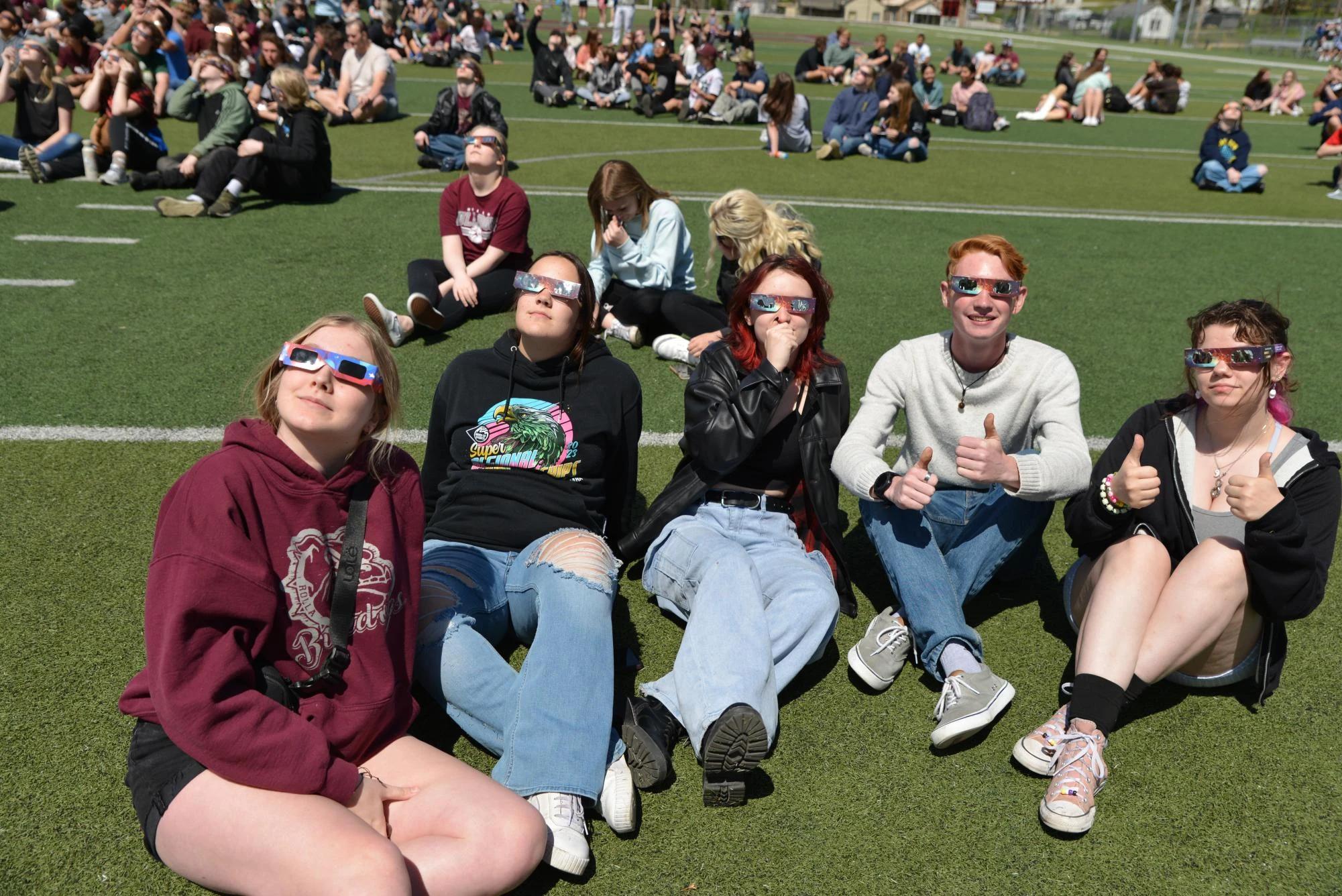
The phrase accessibility at eclipse gatherings: seating, sensory load, and inclusive planni may look awkwardly truncated in some search snippets, but the idea behind it is exactly right: inclusion is physical, sensory, and logistical before it is rhetorical. A cheerful emcee and a printed safety handout do not fix a site with no shade, nowhere to sit, confusing paths, and a crush of people around the best sightline.
Start with the simplest question: what does a person need in order to stay at this event long enough to enjoy the eclipse? For many attendees, the answer is not “a better astronomy explanation.” It is a chair with back support, a predictable route from parking to viewing area, a quieter place to wait, access to water and toilets, and a way to participate without having to stand shoulder-to-shoulder in the densest part of the crowd.
That is the heart of solar eclipse viewing accessibility. You are not trying to create one perfect viewing spot and force everyone into it. You are creating several workable ways to take part.
A practical site plan usually includes:
- seating that does not require people to bring their own
- at least one shaded or lower-stimulation waiting area
- clear routes wide enough for wheelchairs, walkers, strollers, and volunteers assisting others
- a viewing zone where people can remain seated and still have a usable line of sight
- simple, repeated communication about timing, safety, and where to go for help
If you are planning for a major public event, this is also where crowd management becomes accessibility. A route that avoids bottlenecks is not just efficient; it reduces fatigue, anxiety, and the risk that someone gives up before the eclipse reaches its best phase.
Seating is not an afterthought
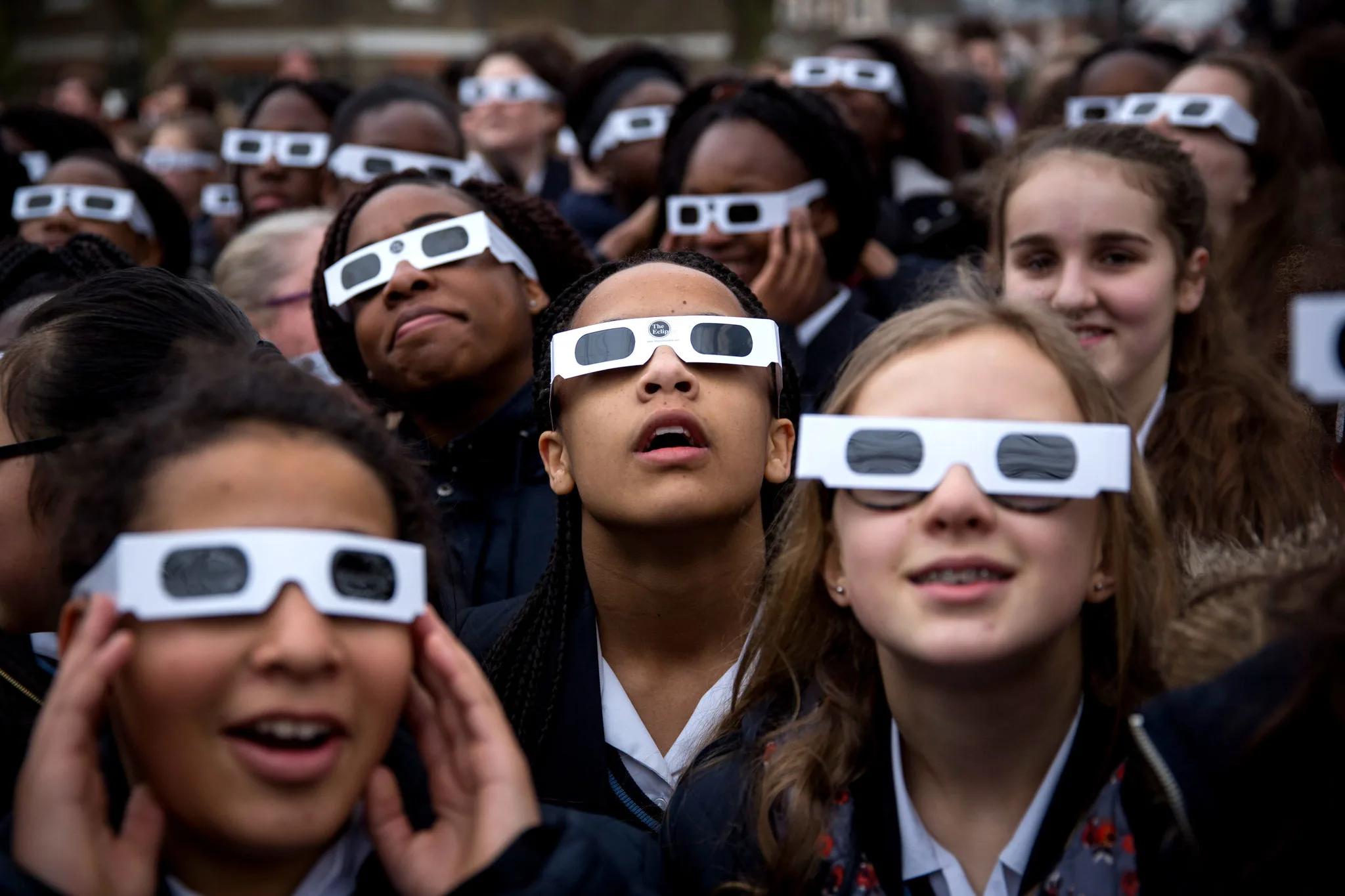
At many eclipse events, seating gets treated as optional because the “main moment” is short. That misses the reality of eclipse day. The partial phases unfold slowly, often over well more than an hour, and people may arrive early to claim space, settle children, or avoid traffic. Even when totality lasts only a few minutes, the event itself is much longer.
So if you want real eclipse viewing accessibility, plan for dwell time, not just peak spectacle.
A few details matter more than organizers sometimes expect:
Put seating where the eclipse can actually be experienced
Do not place all chairs behind a standing crowd or far from the main sightline. A seated viewing area should have a direct view of the sky segment where the Sun will be, or a clearly supported alternative such as projection, audio description, or a nearby screen feed if your event includes one.
Offer different seating types
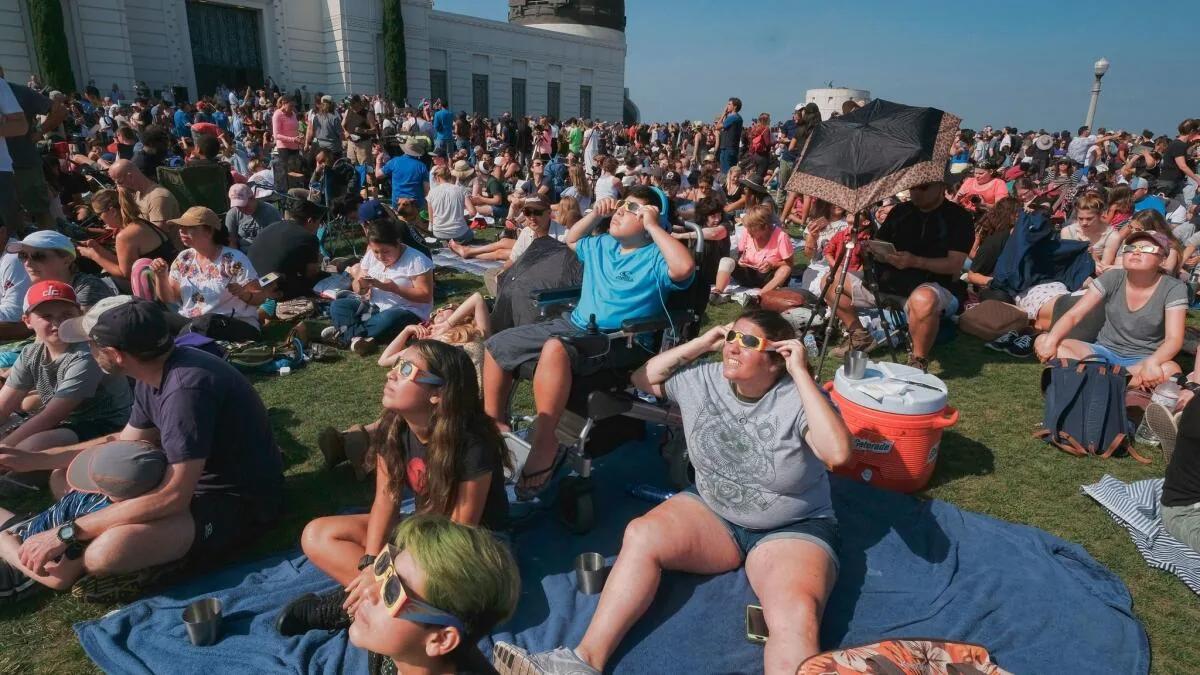
Backed chairs, benches, and spaces for personal mobility devices serve different needs. Some people need armrests to stand up safely. Others need room beside them for a support person, service animal, stroller, or equipment bag. “Bring a blanket” is not an accessibility plan.
Leave circulation space
Rows packed too tightly can make a seated area unusable for wheelchair users, cane users, or anyone who needs extra turning room. Volunteers should be able to reach people without stepping over bags and legs.
Think about neck strain
Watching the Sun can be physically awkward. A site where attendees can angle themselves, lean back safely, or use projection methods during the partial phases will be more comfortable than one that assumes everyone can stand and tip their head upward repeatedly.
This is also why indirect viewing can help. The AAS guidance on projection methods shows how pinhole projection can let groups observe the changing crescent Sun without everyone needing to look up constantly through viewers. That does not replace direct viewing for people who want it, but it can reduce pressure on the most crowded area and give people another way in.
Sensory load is real on eclipse day
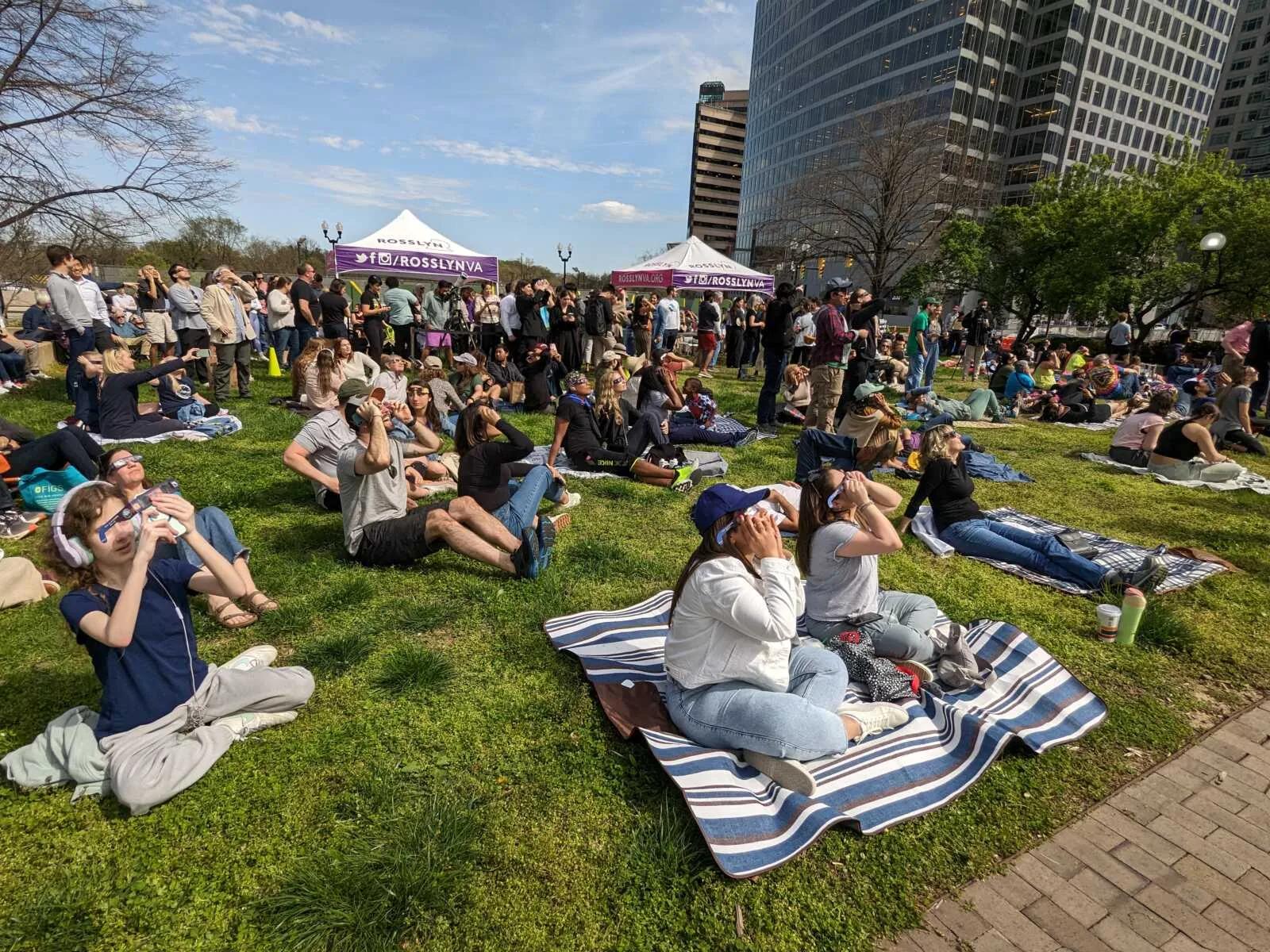
An eclipse gathering can be joyful and still be too much for some attendees. The sensory profile is unusual: bright heat, crowd chatter, public-address announcements, children running, last-minute safety reminders, people cheering at maximum eclipse, and the emotional intensity of the sky changing overhead.
For some people, that is thrilling. For others, it is draining or overwhelming.
Inclusive event design does not require a medical diagnosis or a complicated protocol. It requires respect for the fact that sensory load varies from person to person. The Rochester Accessible Adventures planning material and AAS inclusion resources both point toward practical steps that lower friction without turning the event into a clinical space.
Useful options include:
- a clearly marked quiet zone away from speakers and the densest crowd
- lower-volume or no-amplification areas
- advance notice about when announcements will happen
- a printed and digital schedule so people are not relying on constant audio updates
- permission for attendees to step out and rejoin without losing all access
- volunteers trained to give short, calm directions instead of rapid-fire instructions
This matters during the waiting period as much as during maximum eclipse. The hardest part for many people is not the celestial event itself. It is the hour of uncertainty, heat, noise, and crowd compression before anything dramatic happens.
If you are publishing event information, say this plainly. Tell people whether there will be music, amplified countdowns, school-group noise, or a designated low-stimulation area. That kind of specificity is better eclipse viewing guidance than generic promises that the event is “family friendly.”
Inclusion is more than vision alone
A solar eclipse is often described as something you watch, but that is only part of the experience. NASA’s Eclipse Soundscapes work is a useful reminder that eclipses can be observed in a multisensory way: changes in ambient sound, temperature, wind, crowd reaction, and animal behavior can all become part of the event.
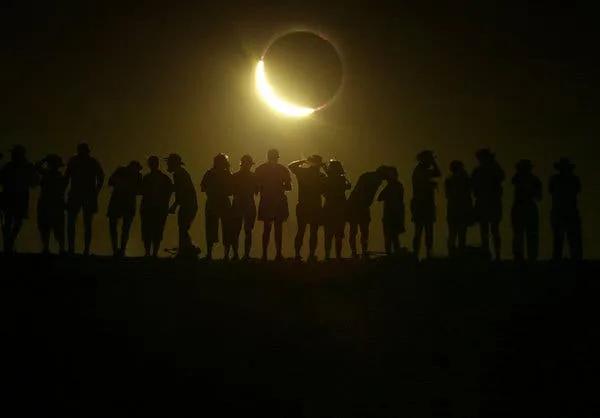
That matters for blind and low-vision participants, but it also enriches the experience for everyone. When the light changes rapidly during totality, birds may quiet, insects may shift behavior, and the atmosphere around you can feel suddenly different. Those are not consolation prizes. They are real observations.
A more inclusive program can build on that by offering:
- spoken descriptions of what is happening in the sky
- countdowns at meaningful moments, delivered calmly and clearly
- tactile or verbal orientation to where the Sun is located before the event begins
- invitations to notice temperature, wind, shadows, and sound changes
- a simple observation prompt sheet for “what you saw, heard, or felt”
NASA’s Eclipse Soundscapes project explicitly frames eclipse participation as open to people of different backgrounds and abilities, with multiple roles and formats. That is a powerful model for public events. Not everyone needs to engage in the same way to be fully included.
For organizers, this is liberating. You do not have to force every attendee into a single visual script. You can create several valid modes of participation and let people choose.
Clear communication reduces stress more than you think
A surprising amount of accessibility and event planning comes down to communication that is early, plain, and repeated in more than one format.
Before the event, tell people:
- where accessible parking or drop-off is located
- what the ground surface is like
- whether seating is provided and whether attendees may bring their own
- where shade, toilets, water, and quieter areas will be
- whether the event is likely to be crowded
- whether the eclipse is partial or total at that site
- what eye protection is required
That last point matters because confusion about eclipse phases creates avoidable anxiety. If your site is outside totality, say so directly: viewers stay on for all direct solar viewing. If your site is inside totality, explain that the rule changes only during the brief total phase, and only then. Our eclipse phases guide is useful to share with first-time attendees because it turns a stressful “when do I take them off?” question into a clear sequence.
During the event, do not rely on one communication channel. Use a mix of spoken announcements, printed signs, volunteers, and digital updates if your audience expects them. A person who cannot hear the PA clearly, cannot see a distant sign, or arrives late should still be able to understand the plan.
This is where an event accessibility checklist earns its keep. You do not need jargon-heavy frameworks about what are the 5 c's of event planning, what are the 5 p's of event planning, or what are the 5 w's in event planning to improve an eclipse event. You need the basics covered in a way people can actually use: where, when, how, what to bring, what to expect, and how to participate safely.
Safety has to be simple, visible, and calm
Accessibility does not mean relaxing eye safety. It means making safe participation easier.
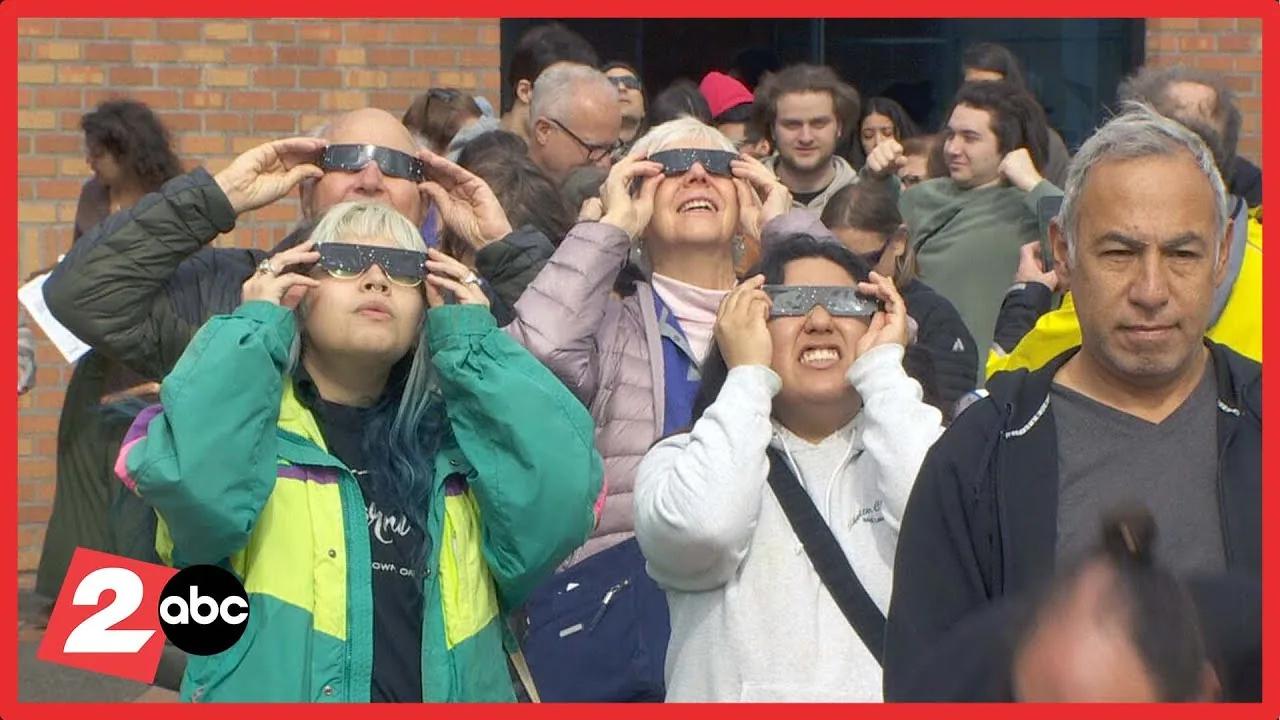
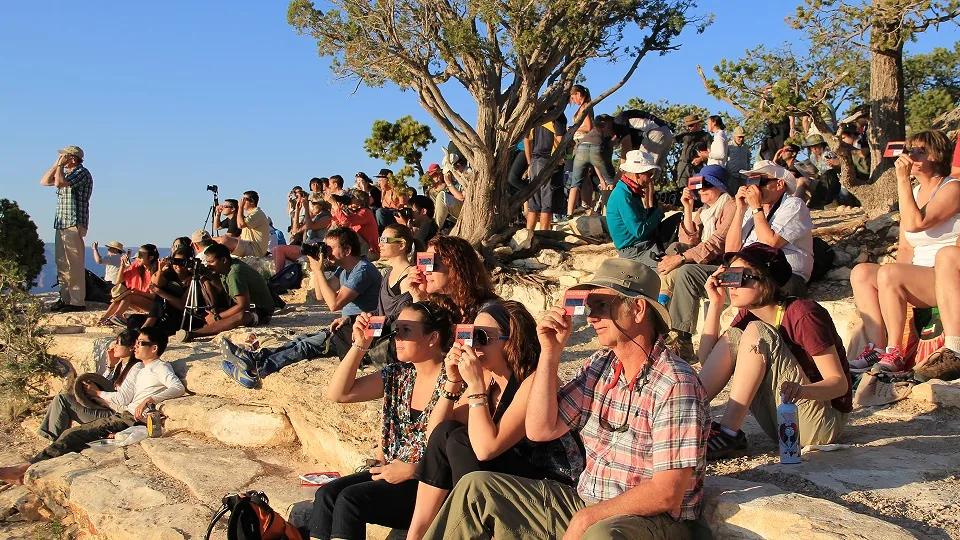
For direct solar viewing during any partial eclipse, and during the partial phases of a total eclipse, people need special-purpose solar filters that conform to ISO 12312-2. Ordinary sunglasses are not enough. The AAS safety guidance is very clear on this point, and it is worth repeating in plain language because mixed messages spread quickly in crowds.
If your event provides eclipse glasses, distribute them in a way that does not create a last-minute rush. Demonstrate how to use them before people look up. Remind attendees to inspect viewers for damage. Supervise children. And do not let people use handheld viewers or glasses together with unfiltered binoculars, cameras, or telescopes.
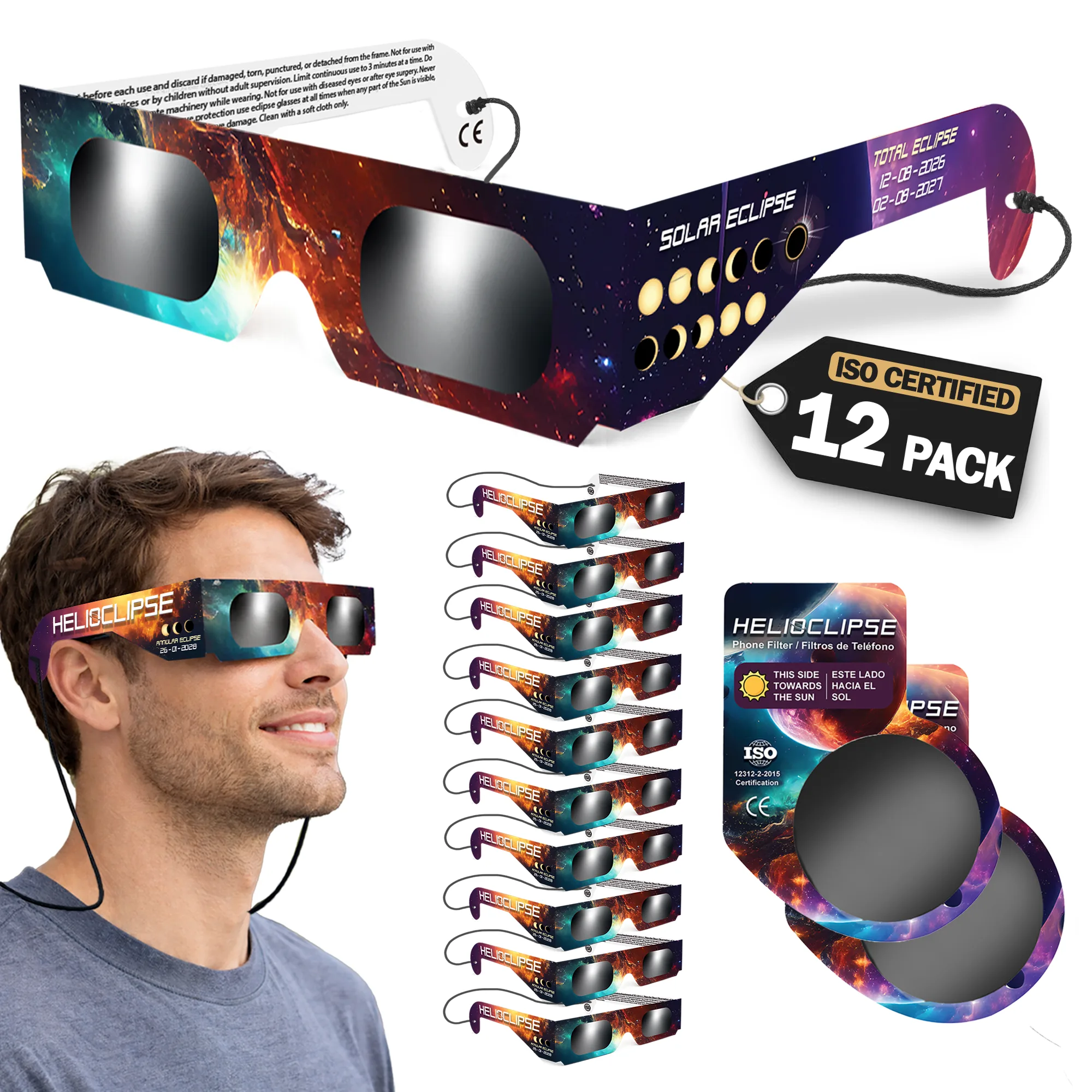
When you are helping families shop ahead of time, practical product language matters too. People often look for approved solar eclipse glasses, solar eclipse glasses iso 12312-2 certified, or certified solar eclipse glasses because they are trying to translate a technical standard into a buying decision. We recommend keeping that explanation tied to the standard itself, not to vague claims or social-media reassurance. If you need viewers for your group, you can shop Helioclipse eclipse glasses and then brief attendees on exactly when they are required.
You will also see phrases like “eclipse glasses nasa approved” or “nasa certified solar eclipse glasses” in the wild. The safer, more precise way to talk about direct-viewing eyewear is to point readers back to ISO 12312-2 and reputable safety guidance rather than implying NASA runs a consumer approval label for every product listing.
For organizers, the accessibility angle is straightforward: safety instructions should be short, repeated, and available in more than one format. A calm volunteer saying “glasses on before you look up; turn away before you remove them” is often more effective than a dense paragraph on a poster.
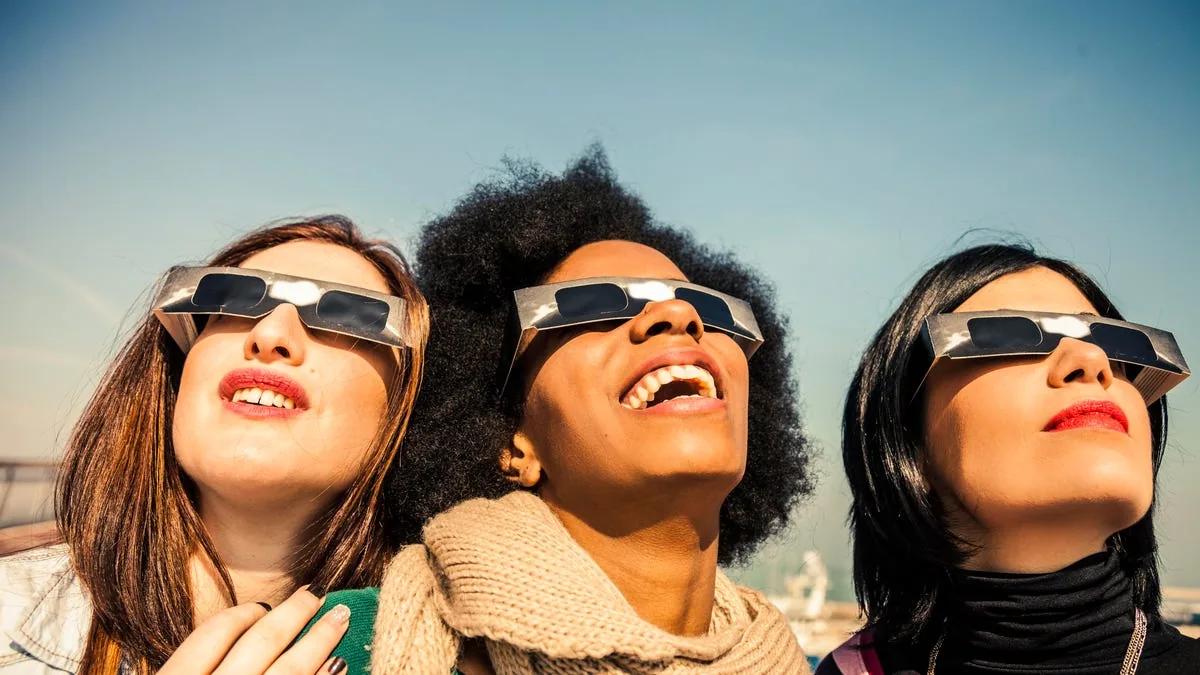
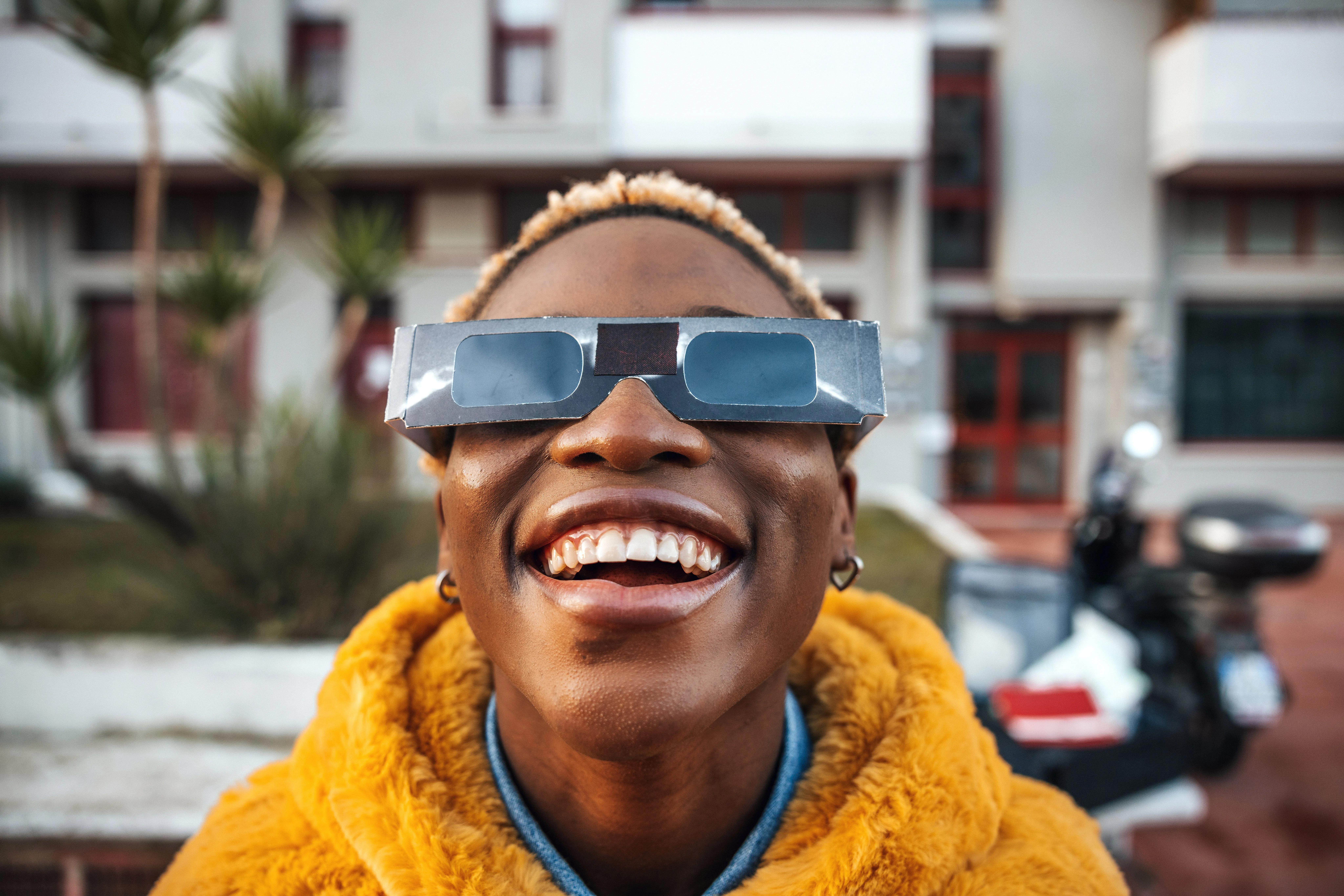
Group viewing works better when there is more than one way to participate
One of the best pieces of eclipse viewing guidance for public events is this: stop designing the whole gathering around a single front-row experience.
A strong inclusive setup often has layers:
- a direct-viewing area for people using viewers
- a seated area with a good sky line
- a projection area for partial phases
- a quieter or lower-density area nearby
- volunteers available for verbal description and timing cues
That kind of layout helps with best viewing areas for eclipse in a practical sense. The “best” area is not always the one closest to the loudest countdown or the densest crowd. For some attendees, the best place and time to watch eclipse is the spot with stable seating, shade, and a clear explanation of what is happening. For others, the best place and time to see eclipse is the central lawn with the full crowd reaction. Inclusive planning makes room for both.
This is also the right answer to vague searches about best places and timing for eclipse viewing accessibility. The best setup depends on the person and the site, but the pattern is consistent: choose a location with manageable access, predictable communication, and a realistic way to stay comfortable through the waiting period.
If you are planning a major trip for eclipse viewing 2026, pair accessibility planning with route and crowd planning early. Our guide to eclipse travel without the chaos is especially useful if your group includes older relatives, disabled travelers, or children who will not cope well with a last-minute scramble between sites.
Geography still matters for accessibility
Even though this article is about inclusive planning rather than one specific path, location changes what accessibility looks like.
A neighborhood partial-eclipse event may need clear shade, seating, and safe viewer sharing more than anything else. A destination total-eclipse trip may add long drives, rural roads, patchy mobile service, limited toilets, uneven ground, and weather-driven relocation decisions. Those are accessibility issues, not just travel annoyances.
That is why eclipse viewing by area code is not a useful planning standard on its own. Postal shorthand does not tell you whether your exact site is in totality, whether the Sun will be high or low, whether the terrain is paved or grassy, or whether your backup location is reachable for someone with limited mobility. Use a real map and a real site assessment.
The Helioclipse Eclipse Explorer / 3D map helps here because it lets you check whether a location is inside or outside totality and compare circumstances by place. For region-specific planning, that is much more useful than assuming a whole city or county shares the same experience.
And if weather is part of your decision, build your backup plan around the people in your group, not just the sky. A theoretically clearer site an hour away may be the wrong call if it means losing accessible parking, toilets, seating, or the quiet setup that made the original plan workable. Our weather-and-mobility guide on cloud cover and eclipse day can help you think through that tradeoff.
A practical checklist for organizers and hosts
If you want a compact eclipse viewing accessibility 2026 guide you can actually use, start here.
Before the event
- Confirm whether your site will see a partial or total eclipse.
- Publish the date, approximate timing, and whether viewers are needed throughout.
- Describe the ground surface, walking distance, and seating situation honestly.
- Identify shade, toilets, water, and quieter space.
- Decide how you will communicate with people who miss or cannot hear announcements.
- Train volunteers to give short, consistent safety instructions.
- Plan at least one participation mode beyond direct visual viewing.
At the site
- Mark accessible routes clearly.
- Keep seated areas usable, not decorative.
- Avoid blocking seated viewers with standing crowds.
- Separate the loudest activity from the quietest area.
- Put safety information where people queue, wait, and sit.
- Make help easy to find.
During the eclipse
- Give calm time cues at meaningful moments.
- Repeat eye-safety instructions without shouting or dramatizing.
- Invite multisensory observation: light, temperature, sound, shadows.
- Let people participate from where they are instead of forcing movement at the last minute.
That is what good eclipse viewing guidelines look like in practice. Not abstract inclusivity language—usable decisions that help more people stay, understand, and enjoy the event.
Inclusive planning makes the eclipse feel bigger, not smaller
There is a persistent fear that accessibility measures somehow dilute the magic. In reality, the opposite is usually true.
When people are not fighting for space, overheating in full sun, or panicking about where to stand, they notice more. They hear the crowd change. They feel the air cool. They have enough bandwidth left to be surprised.
That is especially important for first-time viewers. A well-run, inclusive event does not flatten the wonder of the eclipse into a checklist. It protects the conditions that let wonder happen.
And because eclipses are social, your planning ripples outward. One accessible setup can mean a grandparent stays for maximum eclipse instead of leaving early. A child who needs lower sensory load gets to enjoy the day instead of melting down in the queue. A blind participant is included as an observer, not treated as an afterthought. A family that was nervous about safety gets clear instructions and relaxes into the experience.
That is the real promise of eclipse viewing accessibility. More people get a genuine memory, not just admission to the field.
Eclipse Safety Video - How to Safely View the Sun
Saint Louis Science Center
Frequently asked questions
Is there any safe way to watch a solar eclipse without eye protection?
No. The excerpt says eye protection rules should be explained clearly, and it points readers to guidance on when glasses should be on or off during eclipse phases. For a safe viewing setup, organizers should also make participation easier with seating, shade, and clear routes so people do not feel pressured to improvise.
Do I need eclipse glasses to look at the sun during an eclipse?
Yes, you need proper eclipse eye protection for direct viewing. The article specifically recommends using clear guidance on eclipse phases and ISO 12312-2 eclipse viewers so people can follow the rules without added stress.
Can I step outside and watch the eclipse tonight without any eye protection?
No, not for direct viewing of the sun. The excerpt focuses on making eclipse events accessible and safe, including giving attendees simple, clear instructions about when glasses should be used and creating spaces where people can wait comfortably.
Are regular sunglasses enough for looking at a solar eclipse?
No. The article does not present sunglasses as a safe substitute; instead, it points readers to eclipse-specific eye protection guidance and standards. It also emphasizes that good event planning should reduce confusion by explaining the viewing rules clearly.
What should people planning an eclipse gathering in 2026 keep in mind for accessibility?
They should plan for seating, shade, quieter waiting areas, clear paths, water, and toilets, not just the viewing moment itself. The excerpt says eclipse viewing accessibility is basic event design, and that inclusive planning helps older adults, disabled attendees, families with small children, and people with sensory sensitivities participate more comfortably.
On-site next steps
- Explore your exact location in the Helioclipse Eclipse Explorer / 3D map to check whether your site is partial or total and to compare backup locations.
- If your gathering needs safe direct-viewing gear, browse Helioclipse eclipse glasses and order early enough to brief your group before eclipse day.
- For more planning help, visit the Helioclipse blog and our related guides on eclipse phases, ISO 12312-2 viewers, and travel backup plans.
Sources & further reading
- RAA Eclipse Planning
- Planning through the Lens of Inclusion
- Accessibility for the 2023 and 2024 Eclipses
- Community
- Sense the Solar Eclipse with NASA’s Eclipse Soundscapes Project
- How to View a Solar Eclipse Safely
- Indirect Solar Viewing: Pinhole & Optical Projection
- Eyewear & Handheld Viewers
- About the ISO 12312-2 Standard for Solar Viewers
- Eclipse Soundscapes - NASA Science