Infants and toddlers during a solar eclipse: supervision, indirect options, and realistic expectations
A solar eclipse can be one of those family memories that sticks: the strange light, the sudden hush, the adults looking up in disbelief. But if you are bringing a baby or a toddler, the plan should start with one honest idea: your child does not need a perfect “astronomy experience” for the day to be a success.
For very young children, toddlers babies solar eclipse viewing safety 2026 guide thinking is less about maximizing sky time and more about matching the event to their age, attention span, and impulse control. In practice, that means adult-led supervision, short viewing moments, and a strong willingness to switch to indirect methods or a livestream if direct viewing is not realistic.
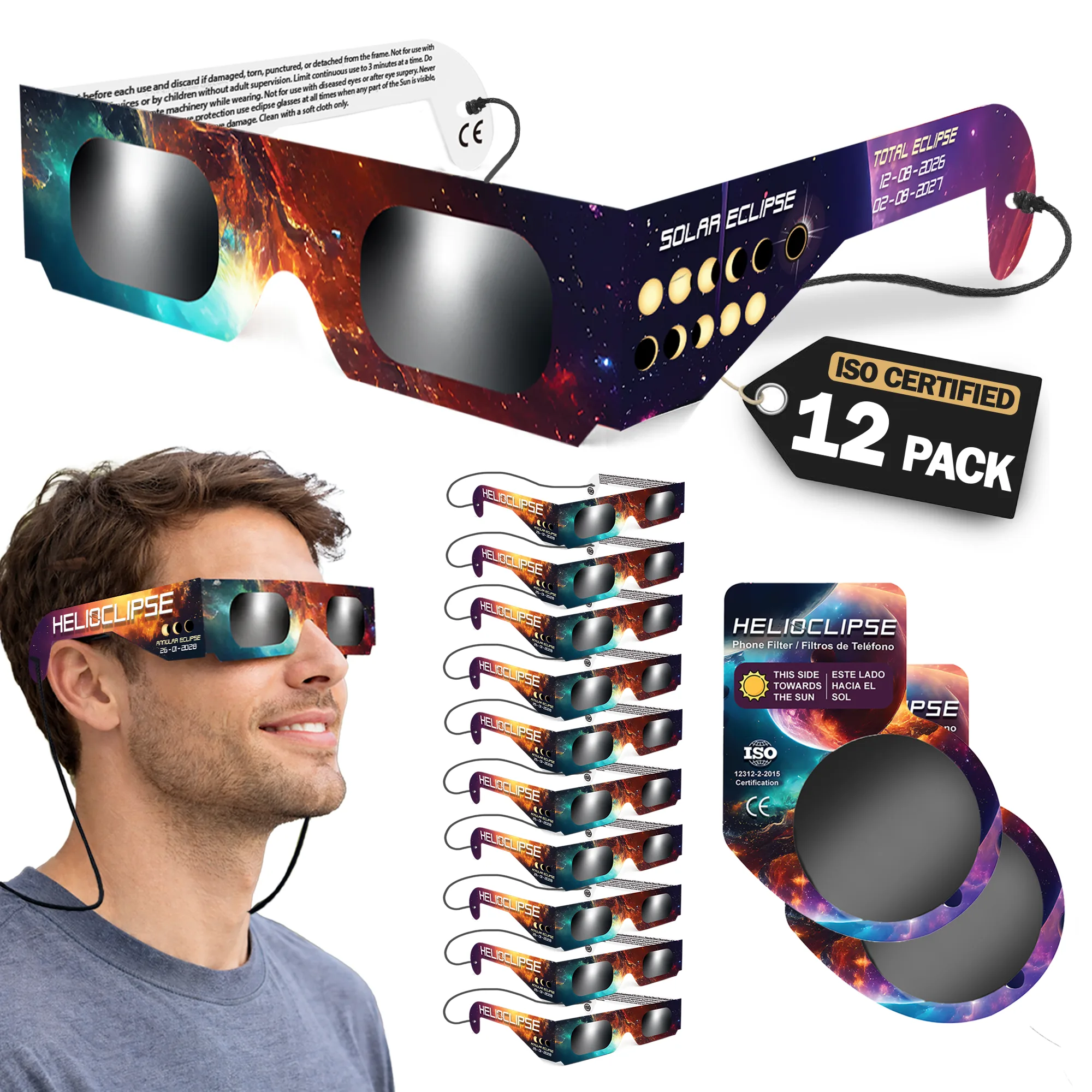
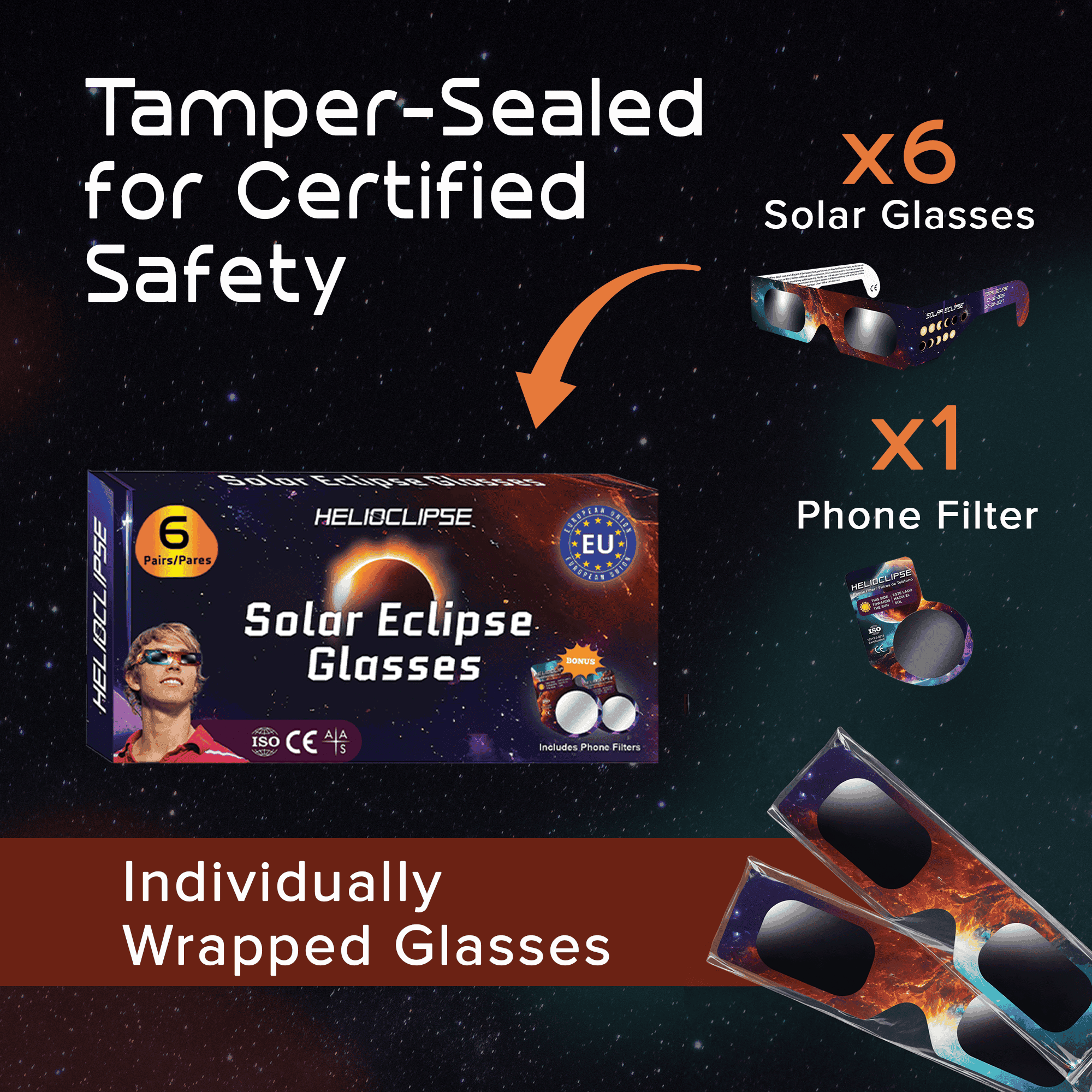
If you are still figuring out your family setup, start by checking the Helioclipse Eclipse Explorer / 3D map to see whether you will be in totality or only a partial eclipse, because that changes what adults may experience and what safety rules apply. And if your group needs certified viewers, our shop eclipse glasses page is the place to get family-ready options early, before the rush.
The first rule: babies and toddlers do not manage eclipse safety on their own
This is the heart of toddlers babies solar eclipse viewing safety: the adult is responsible for every step. Not partly responsible. Completely responsible.
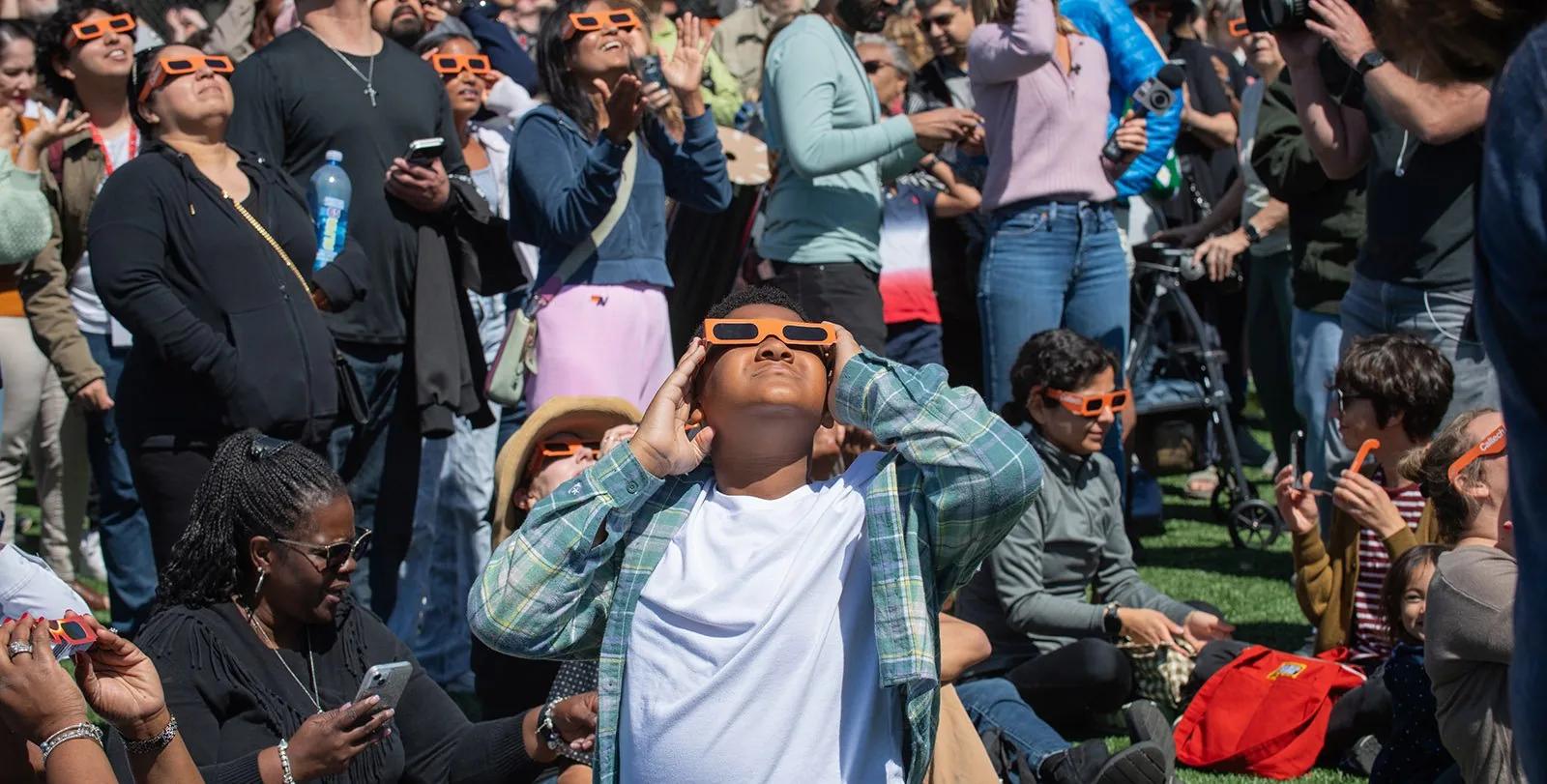
Pediatric guidance and eclipse safety guidance line up clearly here. The American Academy of Pediatrics’ HealthyChildren advice, NASA, and the American Astronomical Society all stress the same basics: children using solar viewers need supervision, damaged viewers should be discarded, and regular sunglasses are not safe. That matters even more with infants and toddlers, because they are exactly the age group most likely to pull glasses off, peek around the edge, look up suddenly, or refuse the whole setup at the worst possible moment.
A toddler is not being difficult by doing that. A toddler is being a toddler.
So the safest mindset is not “How do I make my two-year-old watch like an adult?” It is “What version of eclipse day can my child do safely, briefly, and without a struggle?” For many families, the answer will be a mix of short direct viewing for adults and older kids, plus indirect observation, shade play, stroller time, snacks, and maybe a livestream for the youngest child.
That is not settling for less. It is good planning.
Can kids watch the solar eclipse?
Yes, but the real answer depends on age, development, and the kind of eclipse.
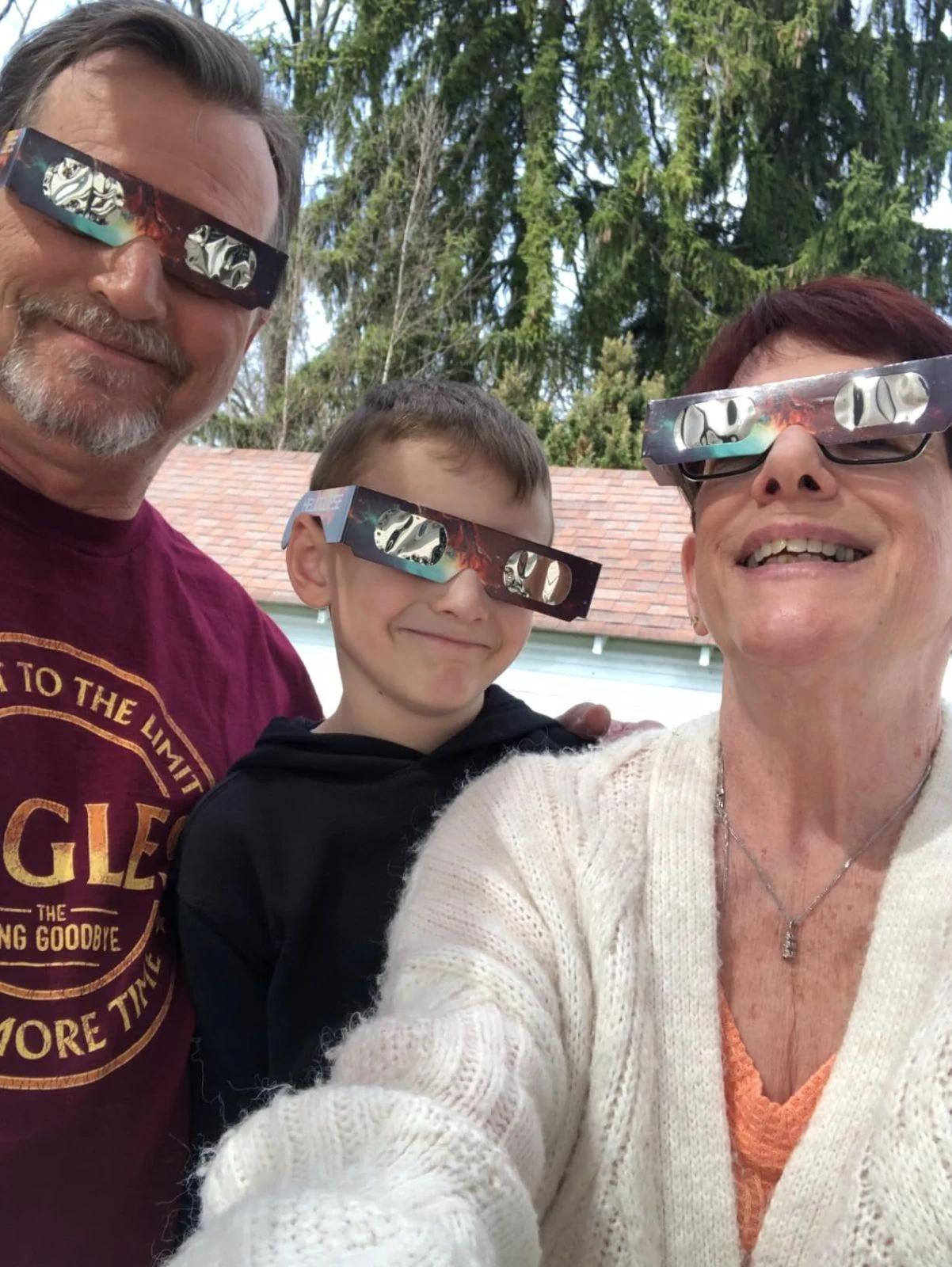
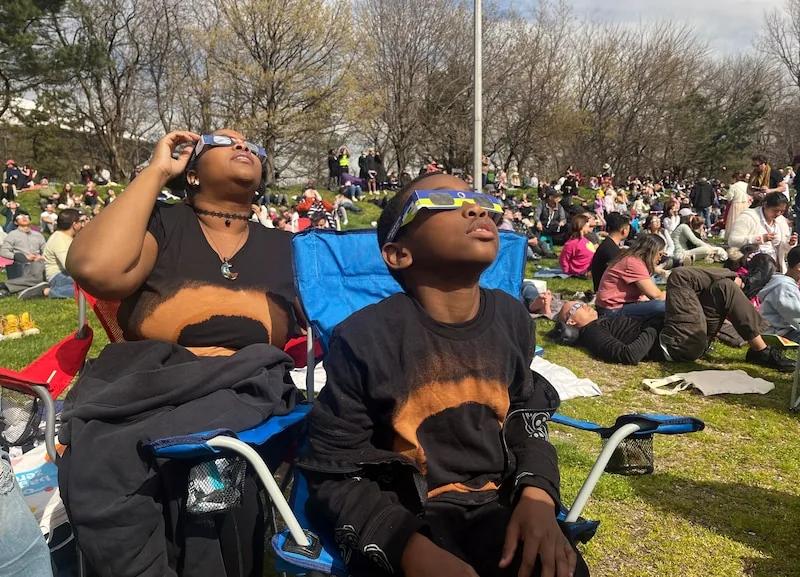
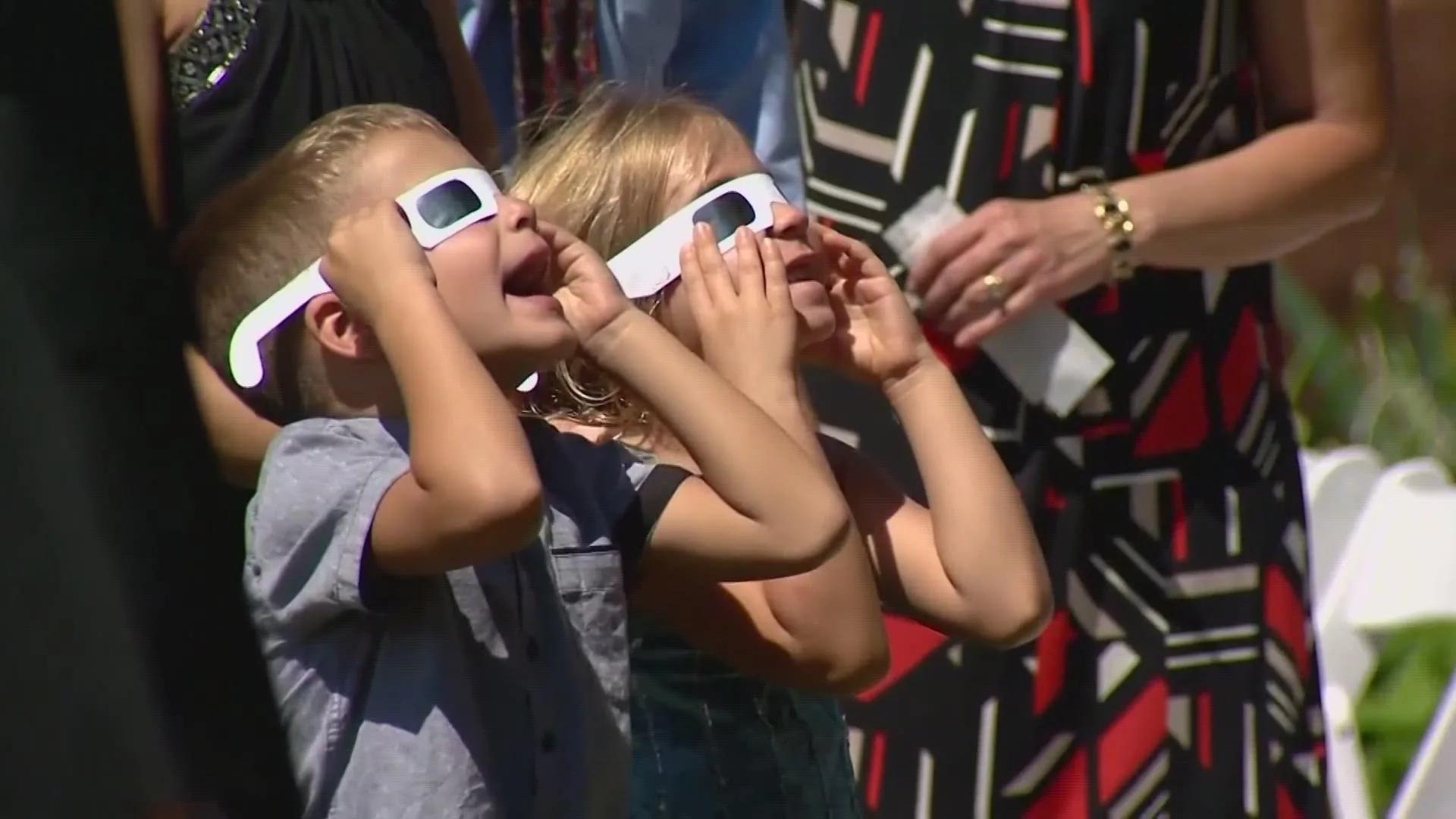
If you are asking can kids watch the solar eclipse?, the safest answer is: some can directly view it with proper protection and close supervision, and some are better off experiencing it indirectly. Babies cannot follow instructions. Many toddlers cannot reliably keep viewers on correctly or resist looking up at the wrong moment. Some preschoolers can manage short, coached looks if an adult is right there and the glasses fit well.
That is why toddler solar eclipse safety is not just about owning the right gear. It is about behavior. A pair of safe viewers only helps if the child keeps them on, keeps them positioned correctly, and looks away before removing them.
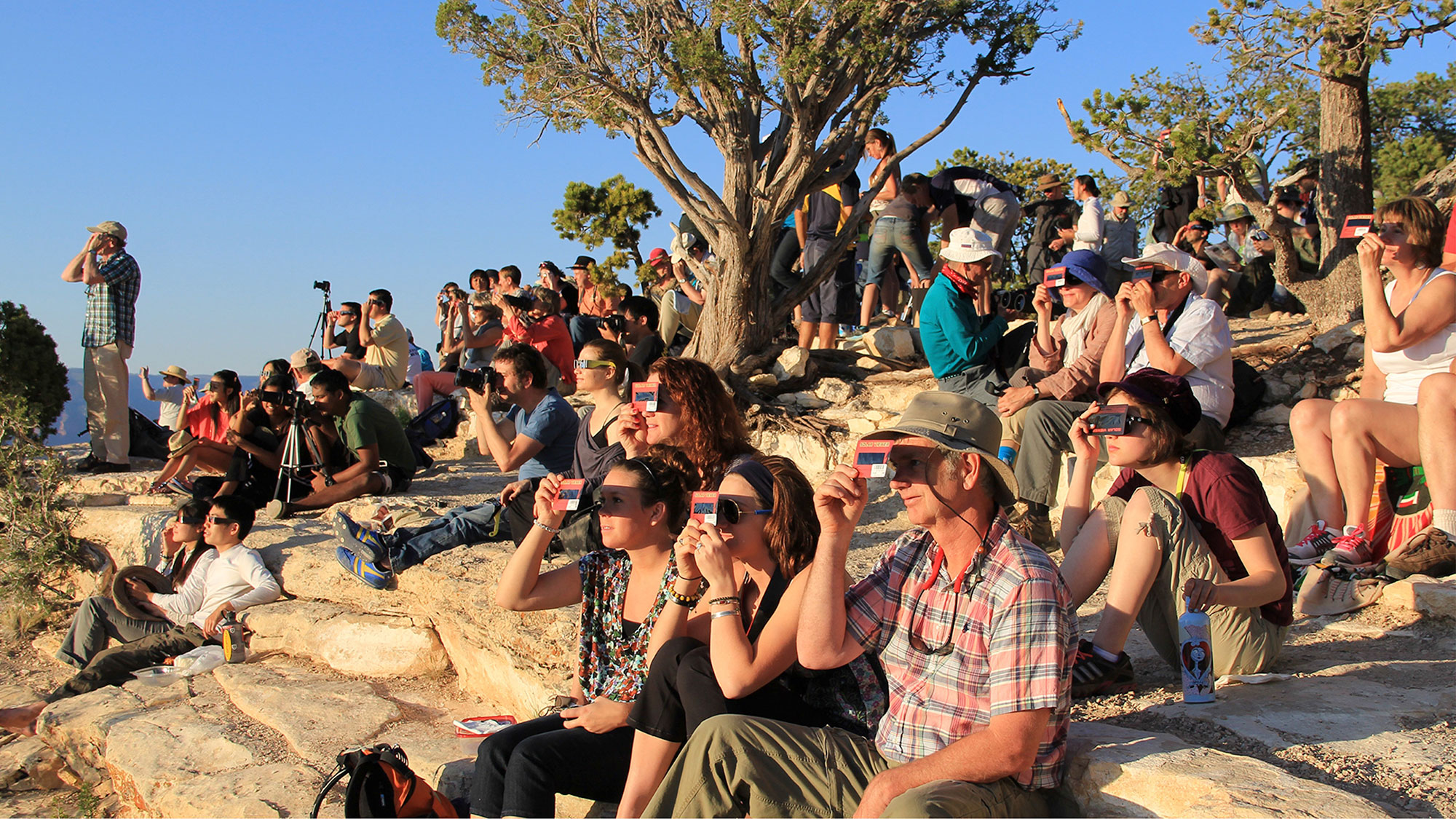
For a total solar eclipse, there is one more layer: adults inside the path of totality may briefly remove eye protection only during totality itself, when the Moon completely covers the Sun’s bright face. Outside totality, and during all partial or annular phases, direct viewing requires proper solar protection at all times. If you want the full explanation, our guide to when glasses on, when glasses off is worth reading before eclipse day.
For infants and toddlers, though, even in totality, we would still keep expectations modest. The dramatic darkening, temperature drop, crowd reaction, and changing shadows may be more meaningful to them than a carefully timed naked-eye look at the corona.
What are the safety precautions for viewing a solar eclipse?
Parents often ask, what are the safety precautions for viewing a solar eclipse? The short version is simple, but the details matter.
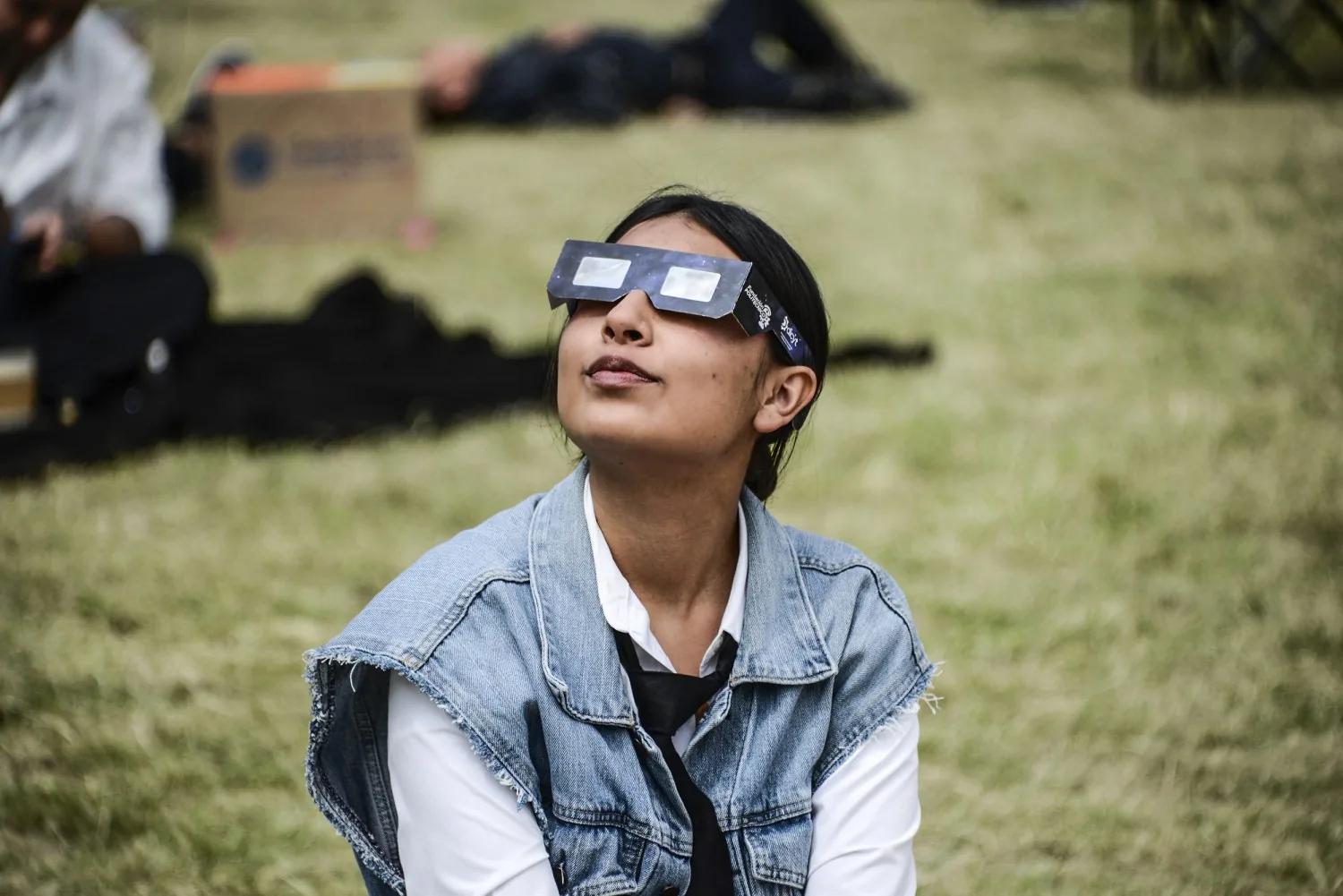
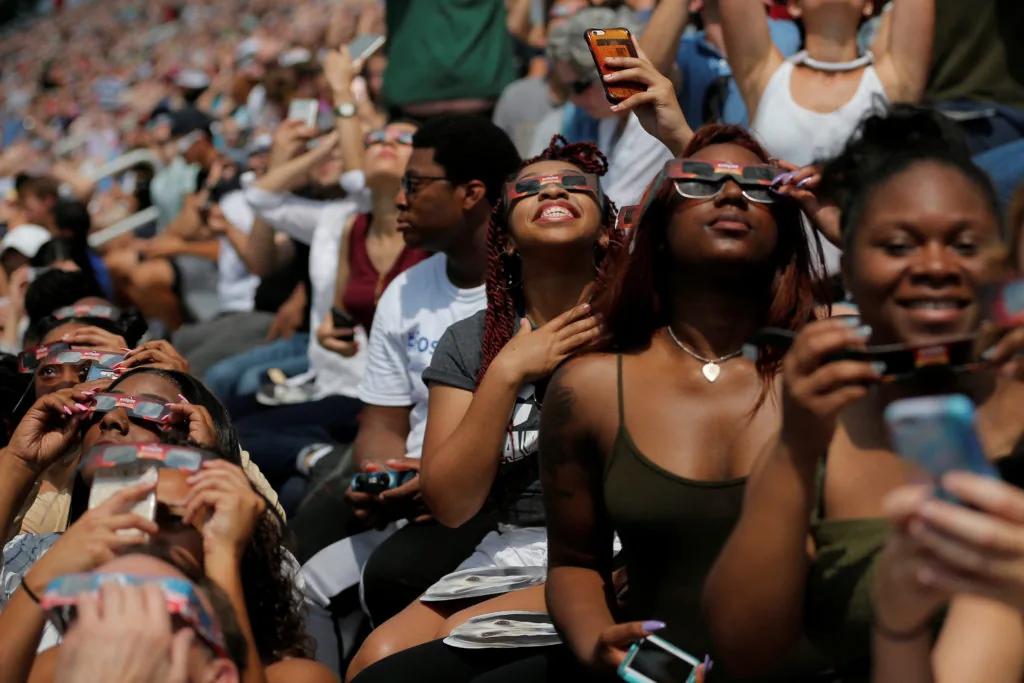
First, for any direct viewing of the Sun outside the brief total phase of a total eclipse, use only special-purpose solar viewers that conform to ISO 12312-2. In everyday shopping language, families may look for phrases like approved solar eclipse glasses or solar eclipse glasses iso 12312-2 certified, but the important thing is not a marketing phrase by itself. It is whether the viewer is genuinely intended for solar viewing, labeled appropriately, undamaged, and sourced responsibly.
Second, inspect the viewer before use. NASA and the AAS both say to discard viewers that are torn, scratched, punctured, or otherwise damaged.
Third, put the viewer on before looking up, and look away before taking it off. That sequence matters.
Fourth, never use regular sunglasses. If you are wondering can you look at a solar eclipse with sunglasses, the answer is no, even if they are very dark.
Fifth, never look through binoculars, a telescope, or a camera while wearing eclipse glasses unless the optical device itself has the correct front-mounted solar filter. Concentrated sunlight can burn through inadequate protection and cause severe injury.
And sixth, always supervise children using solar viewers. For families, that line from NASA and the AAS is not a formality. It is the whole game.
Why direct viewing is often the wrong goal for the youngest kids
A lot of eclipse advice online quietly assumes a cooperative school-age child. That is not the same thing as toddlers solar eclipse planning.
With babies and young toddlers, the biggest risk is unpredictability. They may yank at anything on their face. They may arch backward in your arms and look straight up. They may copy the adults around them without understanding why everyone is staring at the sky. They may be overtired, overstimulated, hot, hungry, or frightened by the crowd energy.
That is why toddler viewing solar eclipse plans should be built around short windows and easy exits. If your child resists the glasses, that is your answer. Do not negotiate with the Sun. Switch to an indirect method, move into shade, or watch a livestream.
This is also where realistic expectations matter. If your toddler gives you one calm five-second look through properly fitted viewers, great. If they never directly look at the eclipse at all but still notice the crescent shadows under a tree and the weird dim afternoon light, that can still be a wonderful first eclipse memory.
Indirect viewing is not a backup plan. For little kids, it is often the best plan.
The phrase developmentally appropriate strategies indirect observation for little eclipse p is clumsy as written, but the idea behind it is exactly right: for very young children, indirect observation is often the safest and most age-appropriate way to participate.
NASA and the AAS both recommend indirect viewing methods when you do not have safe direct viewers or when direct viewing is not practical. For babies and toddlers, these methods are especially useful because they remove the hardest part of the problem: getting a small child to use eye protection correctly.
Good indirect options include:
Pinhole projection
A pinhole projector creates an image of the Sun on another surface. The key rule is that you look at the projected image, not through the pinhole toward the Sun.
A kitchen colander or strainer
This is one of the nicest toddler-friendly options. Sunlight passing through the holes creates many tiny crescent Suns on the ground or on white paper during the partial phases. It feels a little magical and does not require a child to keep anything on their face.
Leaf shadows under a tree
During the partial phases, gaps between leaves can project little crescent shapes on the ground. For a toddler, this can be more engaging than the sky itself: they can point, walk, crouch, and compare shapes.
Livestreams
HealthyChildren and NASA both point families toward livestreams as a safe alternative. This is especially useful for babies, children who will not tolerate viewers, or families dealing with clouds, heat, crowds, or nap schedules.
If you have seen searches for toddlers babies solar eclipse viewing safety video or even toddlers babies solar eclipse viewing safety reddit, that usually reflects the same real need: parents want to know what this looks like in practice, not just in theory. In practice, the best setup is often the least dramatic one—something simple, supervised, and easy to abandon if your child is done.
How to decide whether your child should use eclipse glasses at all
Not every child in the “toddler” category is the same. A nearly four-year-old who follows directions is different from an 18-month-old who removes hats, sunglasses, and mittens on principle.
Ask yourself these questions before eclipse day:
- Can your child keep glasses on for a few seconds without pulling them off?
- Can they follow a one-step instruction like “look, then look down”?
- Can you physically stay close enough to control the moment?
- Will the glasses fit snugly enough to block side peeking?
- Are you willing to stop immediately if the child resists?
If the answer to several of those is no, direct viewing is probably not the right plan.
That does not mean you should skip eclipse day. It means you should redesign it.
For families buying eclipse viewing glasses or certified solar eclipse glasses, think in terms of the whole group, not just the youngest child. Adults and older siblings may use the viewers directly, while the baby or toddler joins for the changing light, the projected crescents, and the atmosphere of the event.
If you want a deeper explanation of standards and labeling, our guide to ISO 12312-2 and eclipse viewers breaks down what the standard means for your family.
What happens during a solar eclipse for kids?
A child does not need the full orbital mechanics lecture to enjoy the day. But parents often ask, what happens during a solar eclipse for kids?
A good toddler-level explanation is: the Moon moves in front of the Sun and blocks some or all of its light for a little while.
Then connect that to things they can notice:
- the daylight looks strange
- shadows get sharper or turn into crescents
- the air may feel cooler
- birds and insects may act differently
- grown-ups may suddenly get very excited
That last one is real, and kids notice it.
If you are in the path of totality, the experience can become dramatically darker for a few minutes. If you are outside totality, even a deep partial eclipse will still not produce the same full “day turns to night” effect. That distinction matters for adult expectations and for children’s reactions. A toddler may not care whether the eclipse is 90% partial or total in the technical sense, but the adults planning the day absolutely should.
For broader family planning around a major event, our August 12, 2026 total solar eclipse planning guide can help you think through timing, travel, and what the day will actually feel like.
A realistic eclipse-day plan for babies and toddlers
The best family eclipse plans are boring in the right places.
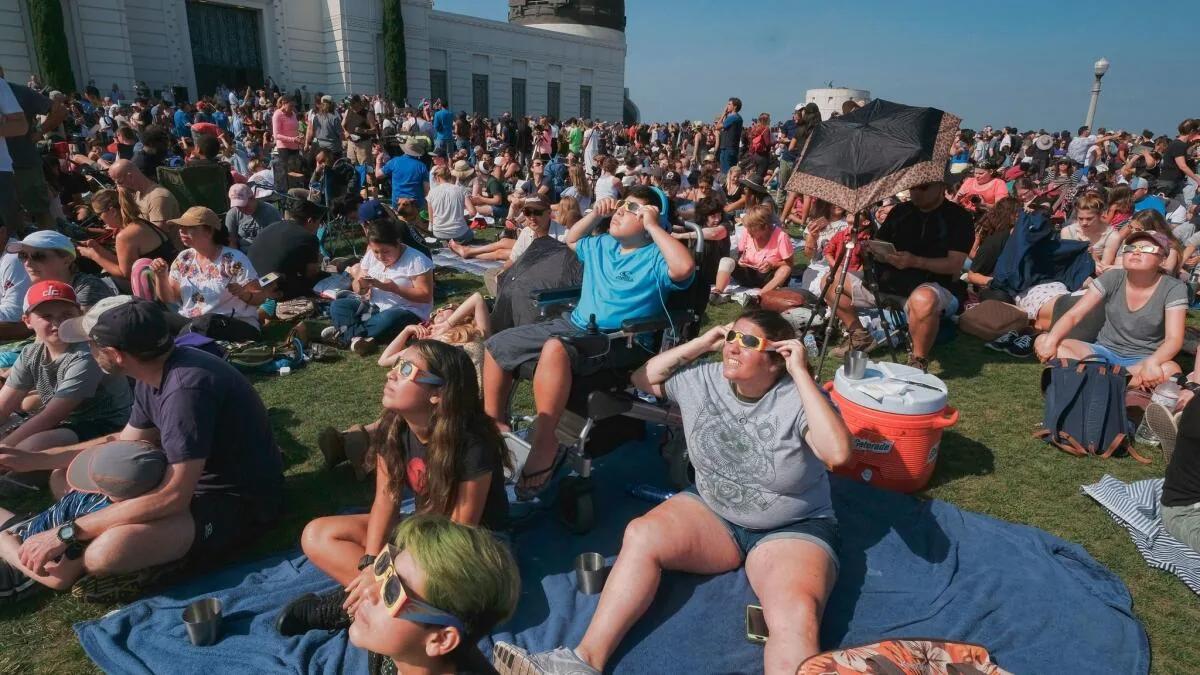
Bring water, snacks, shade, diapers, wipes, a blanket, and a stroller or carrier. Assume you may be outside for hours even though the most dramatic moments are brief. NASA’s family guidance also reminds people to think about sun protection for skin, not just eyes: hats, sunscreen, and protective clothing matter because you may be standing in direct sunlight for a long time.
If you are traveling, arrive early. Children’s Health highlighted a sobering traffic point from the 2017 eclipse: eclipse travel can create real road risk. With little kids, that means you should never plan to “catch the peak” while still driving. Be parked, settled, and away from traffic before the interesting part begins.
A practical family sequence might look like this:
- Set up in a safe, stationary place.
- Let adults and older children take brief direct looks with proper viewers.
- Keep the baby or toddler engaged with indirect projection, snacks, shade, and short explanations.
- Watch for the changing light and environment together.
- If the child becomes dysregulated, stop trying to force the experience.
That is a successful eclipse day.
What not to do with little kids
Some mistakes are common enough that they are worth stating plainly.
Do not hand a toddler eclipse glasses and assume that solves the problem.
Do not use regular sunglasses, smoked plastic, exposed film, X-ray film, camera filters, or improvised dark materials. None of those are safe substitutes for proper solar viewers.
Do not encourage a child to “just peek for a second.” If you have ever wondered what happens if you look at the solar eclipse for 1 second, the problem is that eye injury is not something you can time safely by guesswork, and retinal damage does not come with an immediate pain warning.
Do not let a child look through binoculars, a telescope, or a camera viewfinder unless the equipment is properly filtered for solar use and managed by someone who knows exactly what they are doing.
Do not turn the day into a power struggle. If your toddler hates the glasses, the answer is not to insist harder. The answer is to switch methods.
And do not assume a partial eclipse is harmless because the Sun looks dimmer. NASA is explicit here: a partially covered Sun is still dangerous to view directly without proper protection.
If you want the medical why behind that, our article on why staring at the Sun without protection is never “just a quick look” is the right follow-up.
If you are in totality, the adults may get a bigger show than the toddler
This is worth saying out loud because it helps families plan emotionally as well as logistically.
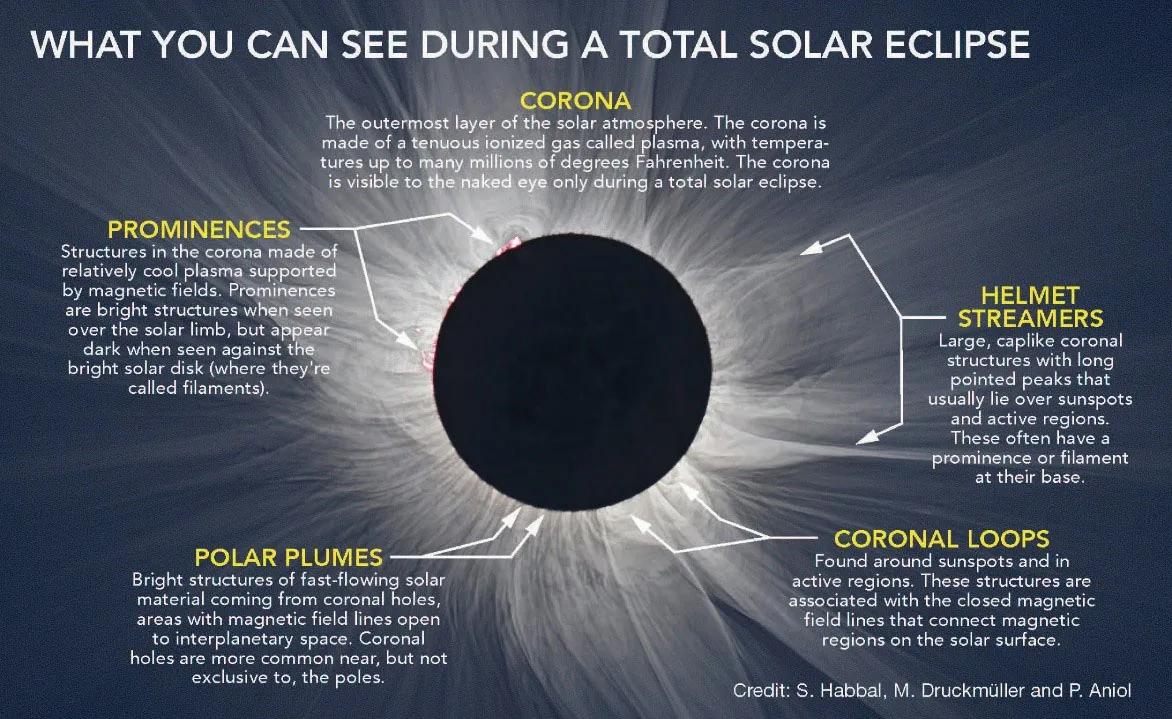
A total solar eclipse can be overwhelming in the best way. The sky darkens fast, the horizon glows strangely, the corona appears, and crowds often gasp or cheer. Adults remember it for years.
A toddler, meanwhile, may be fascinated by none of that and instead become deeply invested in a cracker, a stroller buckle, or the fact that everyone is yelling.
That is normal.
If you are inside totality, one good strategy is to assign roles. One adult gets the “look up and experience totality” job. Another stays child-focused. Then switch if circumstances allow. Families who try to have every adult fully immersed while also managing a baby often end up doing neither well.
And if you are outside totality, be honest about that too. There is no safe glasses-off moment in a partial eclipse. That is especially important if you are traveling with children and trying to keep rules simple.
Shopping for family viewers without getting sloppy about safety
This is where parents can get tripped up by rushed buying, vague listings, and last-minute panic.
When you shop for solar eclipse glasses, do it early enough that you can inspect them calmly. Look for ISO 12312-2 labeling and manufacturer information, and check the viewers for damage before eclipse day. NASA also notes that it does not approve any particular brand of solar viewers, so phrases like “NASA approved” should not be treated as magic proof on their own.
That is one reason we encourage families to buy from a source they trust rather than gambling on random last-minute listings. If your household needs multiple pairs, our shop eclipse glasses page is built for exactly that family-planning moment: getting viewers in hand before the scramble, with enough time to check fit and talk through the rules.
And because young children are hard on gear, it is smart to think beyond a single pair. One lost or bent viewer should not derail the day for everyone.
The goal is not perfect compliance. The goal is a safe, memorable family day.
The most useful phrase in this whole topic may be the least glamorous one: infants and toddlers during a solar eclipse: supervision, indirect options, and realistic expectations. That is the real framework.
Not every child needs to look directly at the Sun.
Not every family needs the same plan.
Not every eclipse memory comes from the sky itself. Sometimes it comes from the odd little crescents under a tree, the sudden dimness in the middle of the day, or the photo you take later of your child asleep in the stroller while everyone else is still buzzing.
That is still your family’s eclipse story.
How to protect your child's eyes during a solar eclipse
BabyCenter
Frequently asked questions
What safety steps should adults take when young children are near a solar eclipse?
Adults should supervise every step, because babies and toddlers cannot manage eclipse safety on their own. Use only proper solar viewers for direct viewing, discard any damaged viewers, and never rely on regular sunglasses. Keep viewing moments short and be ready to switch to indirect methods if the child is not cooperating.
Is it okay for children to look at a solar eclipse?
Yes, some children can view it directly if they are old enough to follow instructions and are closely supervised. Babies and many toddlers are better off with indirect observation or a livestream, since they cannot reliably keep viewers on correctly or avoid peeking around them. The safest approach depends on the child’s age, attention span, and impulse control.
What are good eclipse activities for babies and toddlers who are too young to watch directly?
Indirect observation is often the best fit for very young children. Shade play, stroller time, snacks, and a livestream can let them take part without the pressure of direct viewing. The article emphasizes matching the day to the child’s development rather than trying to force a full viewing experience.
What will a solar eclipse feel like for young kids?
For children, the experience may be more about the strange light and the sudden quiet than about understanding the astronomy. The article suggests that a successful eclipse day does not require a child to watch for long or even to look directly at the sky. Short, age-appropriate moments are enough.
What should families know about using eclipse glasses with children?
Children who use solar viewers need close adult supervision, and damaged viewers should be thrown away. Regular sunglasses are not safe for eclipse viewing. For infants and toddlers, the article suggests that direct viewing may not be realistic, so adults should be ready to use indirect options instead.
On-site next steps
- Need viewers for adults, older siblings, or the whole group? Visit our shop eclipse glasses and order early so you can inspect them before eclipse day.
- Not sure whether your location gets totality or only a partial eclipse? Use the Helioclipse Eclipse Explorer / 3D map to check what kind of event your family will actually experience.
- Want to keep reading before you commit to a plan? Browse the Helioclipse blog for family safety, eclipse phases, travel, and weather guides.
Sources & further reading
- How can I safely watch a solar eclipse with my children? — HealthyChildren / American Academy of Pediatrics
- Solar Eclipse Safety Tips for Educators, Families — San Diego County Office of Education
- How to safely view the solar eclipse with kids — Children’s Health
- Solar Eclipse Activities for Kids and Families — Sky & Telescope
- How to observe the Sun safely during a solar eclipse — Astronomy Magazine
- Eclipse Viewing Safety — NASA Science
- How to View a Solar Eclipse Safely — American Astronomical Society
- Eclipses Frequently Asked Questions — NASA Science
- What to Expect: A Solar Eclipse Guide — NASA Science
- Partial: The Solar Eclipse for the Rest of Us — Sky & Telescope