Multilingual crowds at megawatt events: volunteers, interpreters, and clear safety phrases
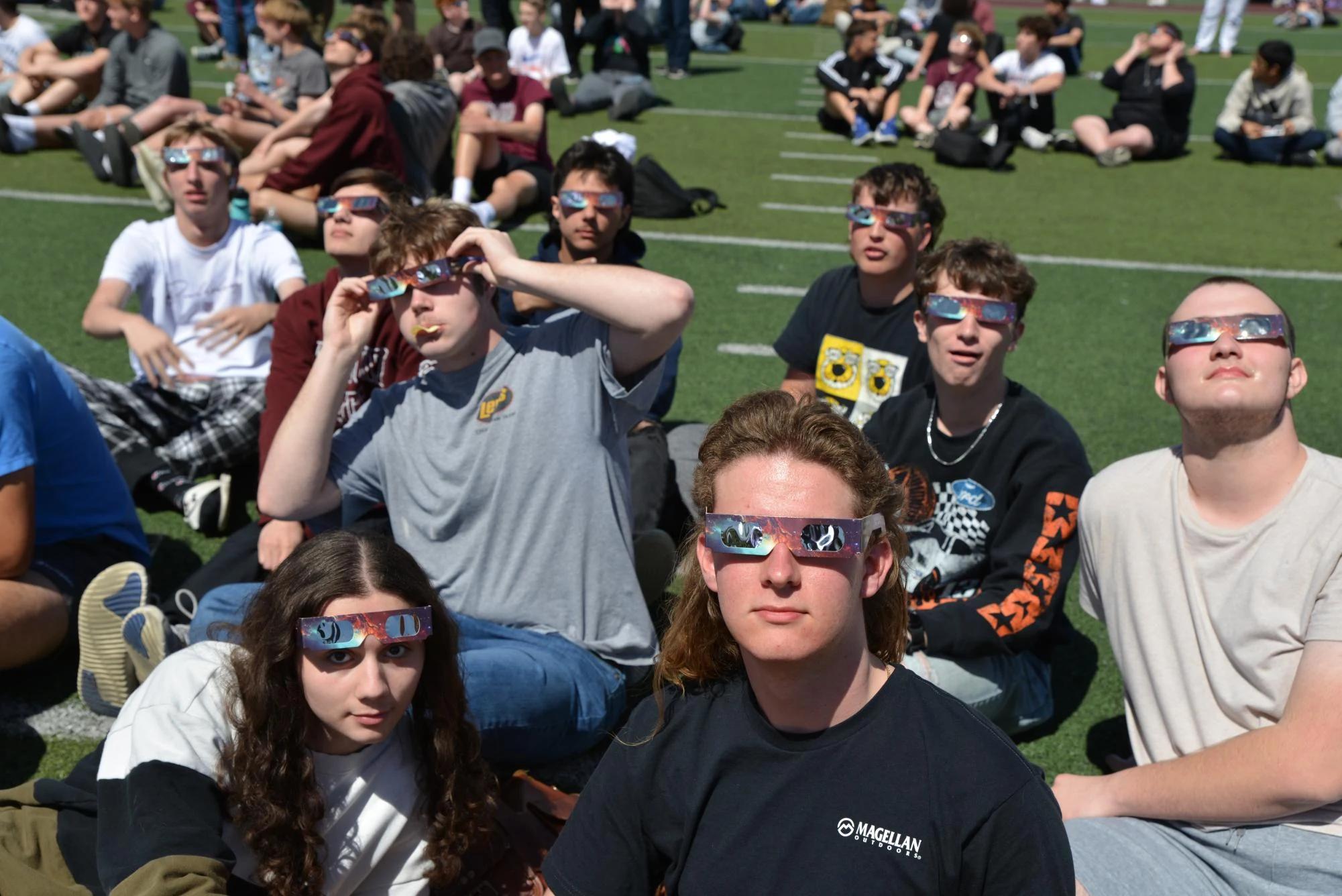
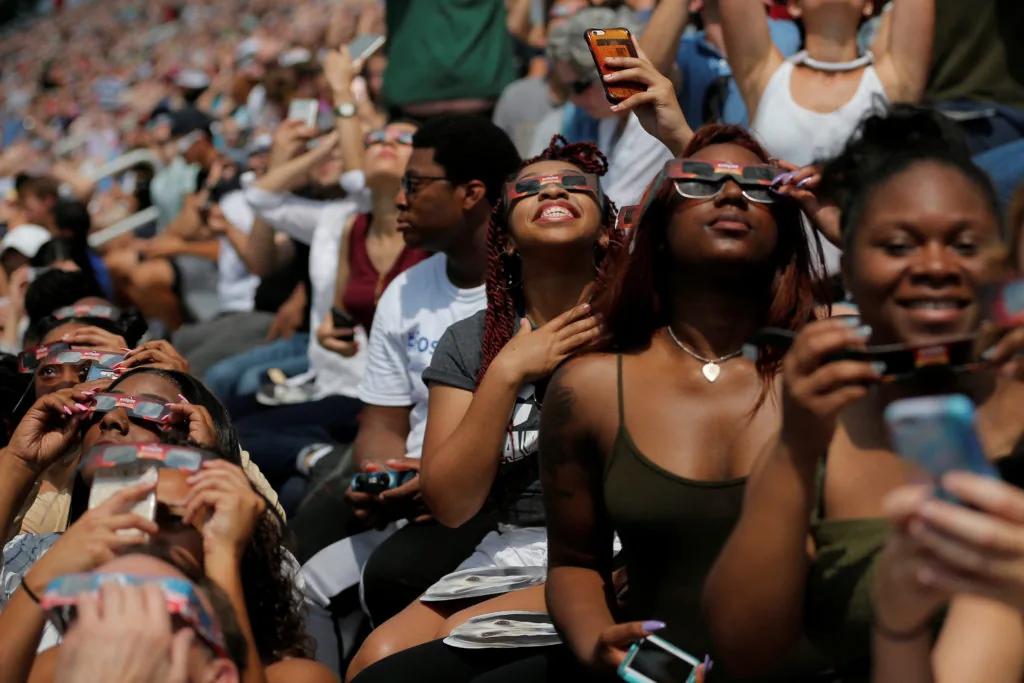
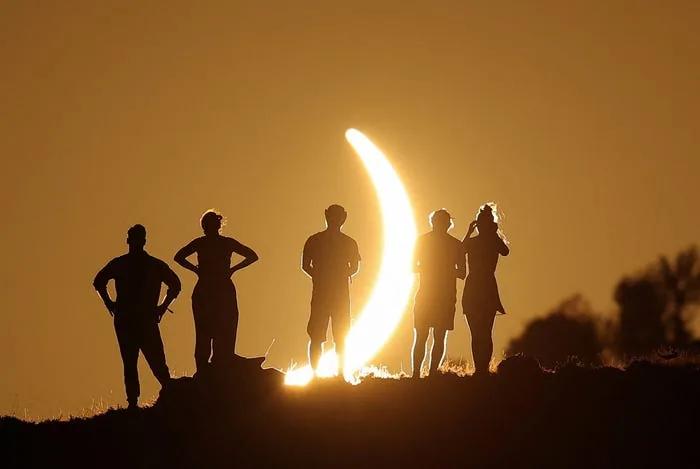
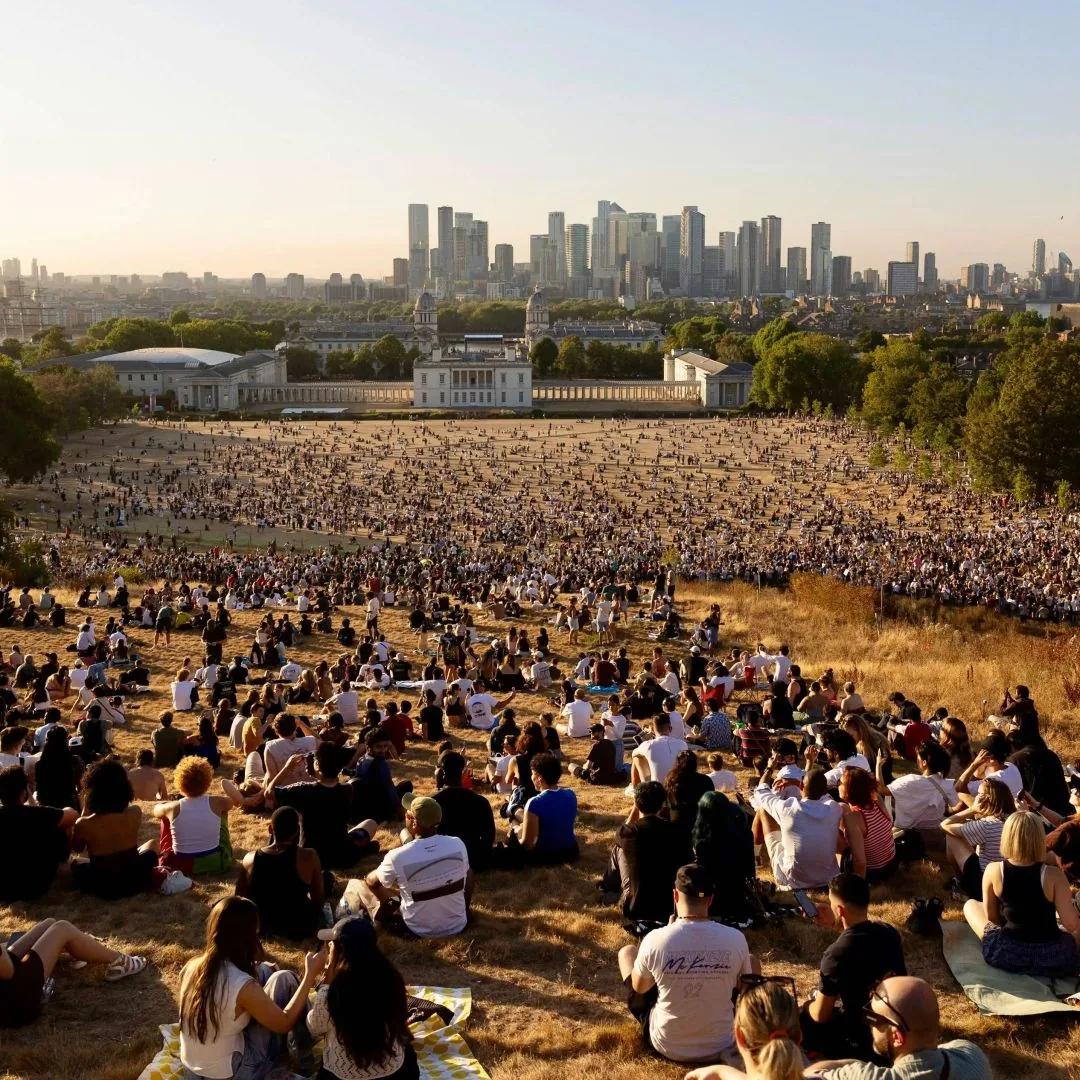
A solar eclipse can turn a park, school campus, museum plaza, or waterfront into a temporary multilingual city. Families arrive together. Tourists follow signs they may only partly understand. Children swap viewers. Public-address announcements compete with music, conversation, wind, and the collective gasp when the light begins to change.
In that setting, translation is not decorative. A short instruction about when to use eye protection can carry real consequences. Organizers therefore need more than a bilingual volunteer with a microphone: they need verified wording, clearly assigned roles, accessible communication, and a plan for what happens when someone asks a question the team has not rehearsed.
The August 12, 2026 total solar eclipse made that challenge especially visible across an international path that included Greenland, Iceland, Spain, and a small part of Portugal, while much of Europe and nearby regions saw a partial eclipse. The safety instruction depended on each observer’s exact location. Use our Eclipse Explorer to establish whether an event site is inside the path of totality, near its edge, or outside it before writing any script.
Translation is part of the safety system
At a large eclipse gathering, the same message may appear on a website, parking sign, printed viewer instructions, stage screen, handout, public-address script, and volunteer cue card. If those versions disagree, the crowd has no reliable source of truth.
Start by creating a small set of approved source-language statements. Have the scientific and safety leads verify those statements first; only then should qualified translators or interpreters produce the other language versions. NASA’s multilingual safety sheets and glossary demonstrate the value of keeping terminology consistent across languages rather than improvising a new explanation at every station.
This is also why compressed internal labels must not leak into public material. A planning note such as “multilingual crowds at megawatt events: volunteers, interpreters, and clear safe” is not a usable instruction. Nor are cumbersome working labels such as “solar eclipse outreach volunteer interpreter spanish english 2026 guide” or “eclipse outreach volunteer interpreter spanish english 2026 guide near.” Turn the underlying intent into ordinary, grammatical language that a tired parent can understand immediately.
The same rule applies to the idea hidden inside “best short safety phrases across languages humility toward eclipse planning”: short phrases help only when they remain scientifically correct, culturally clear, and honest about what the speaker is qualified to explain.
Volunteers, translators, and interpreters do different work
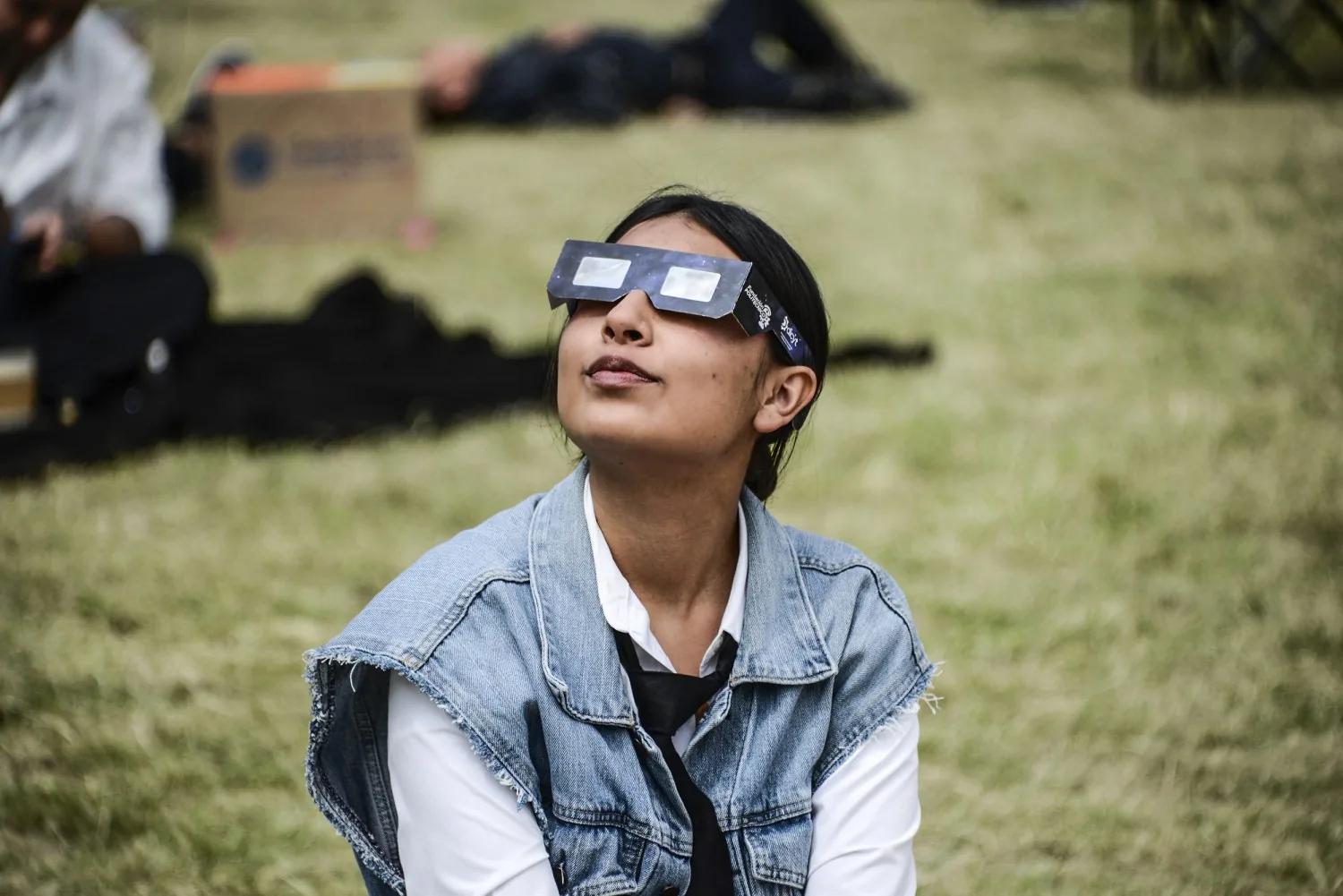
A translator generally works with written material. An interpreter conveys spoken or signed communication, either simultaneously or consecutively. A bilingual staff member may be able to welcome guests and repeat a prepared instruction, but language ability alone does not make that person a professional interpreter.
That distinction matters most when communication becomes consequential. A trained interpreter should handle press briefings, emergency directions, accessibility needs, medical conversations, and unscripted safety questions whenever possible. An eclipse volunteer can distribute verified handouts, demonstrate how to hold a viewer, point visitors toward an interpreted briefing, and repeat an approved announcement without pretending to offer a live technical translation.
Build a simple responsibility ladder:
- Qualified interpreters handle live, complex, or consequential communication in the languages assigned to them.
- Reviewed translators prepare signs, scripts, web pages, maps, handouts, and captions before the event.
- Bilingual volunteers deliver rehearsed messages, welcome visitors, and summon an interpreter when the conversation moves beyond their brief.
- General volunteers use pictograms, color-coded station cards, and a language-identification card to connect guests with the right person.
- Science and safety leads remain responsible for the factual source message in every language.
Organizations advertising spanish interpreter volunteer opportunities or broader interpreter volunteer opportunities should state whether they need professional interpreting, community-language support, or ordinary event assistance. Someone responding to a notice headed spanish interpreter volunteer near me should not discover on arrival that they are expected to translate emergency instructions without preparation, reference material, or professional support.
Write the message before translating it
Good safety copy is short because the thinking happened beforehand, not because important qualifications were removed. Each statement should contain one action and, where necessary, one condition.
For example, “Keep your viewers on” is incomplete at a total-eclipse event unless the audience knows when and where the instruction applies. “Use your viewers whenever any bright part of the Sun is visible” is more useful. The matching event plan must then identify who is authorized to announce the beginning and end of totality.
Before translation, test every source statement against four questions:
- Is the action explicit? Use, inspect, discard, turn away, stop, or ask.
- Is the condition explicit? Partial phase, totality, bright Sun visible, damaged viewer, or magnifying optics.
- Could it be misunderstood outside the path of totality? If so, rewrite it.
- Can a volunteer demonstrate it without adding an improvised explanation? If not, provide a longer backup card.
An internal document titled eclipse outreach volunteer interpreter spanish english 2026 guide can be useful for project management, but its public-facing instructions should sound like speech, not keywords. The broader phrase eclipse outreach volunteer interpreter spanish english describes a staffing need; it does not replace a run sheet defining who says what, in which language, and at which phase.
A short English–Spanish phrase set for rehearsal
The following pairs illustrate the length and structure organizers need. They are a starting point, not a substitute for review by a qualified Spanish translator familiar with the audience, regional usage, the event geometry, and the final equipment instructions.
| Purpose | English source phrase | Spanish working phrase | |---|---|---| | General direct viewing | Use eclipse glasses or a safe handheld solar viewer. | Use gafas para eclipses o un visor solar manual seguro. | | Before looking up | Cover your eyes before you look at the Sun. | Cúbrase los ojos antes de mirar al Sol. | | After looking | Turn away from the Sun before removing the viewer. | Apártese del Sol antes de quitarse el visor. | | Damaged equipment | Do not use a scratched, torn, or punctured viewer. | No use un visor rayado, roto o perforado. | | Children | Adults must supervise children using solar viewers. | Los adultos deben supervisar a los niños que usan visores solares. | | Optical equipment | Do not look through a camera, binoculars, or a telescope without the correct front-mounted solar filter. | No mire por una cámara, binoculares o un telescopio sin el filtro solar correcto colocado en la parte frontal. | | Partial or annular eclipse | Keep your solar viewer on whenever you look directly at the Sun. | Mantenga puesto el visor solar siempre que mire directamente al Sol. | | Totality ending | Bright sunlight is returning. Put your viewers on now. | Está volviendo la luz brillante del Sol. Pónganse los visores ahora. | | Ask for help | Please ask a volunteer before using unfamiliar equipment. | Consulte a un voluntario antes de usar equipo que no conozca. |
Pronouns, formality, vocabulary, and sentence rhythm vary across Spanish-speaking communities. A translator may also choose different terms for glasses and handheld viewers. Preserve those distinctions consistently on signs and in speech rather than letting every volunteer choose a favorite synonym.
Do not ask volunteers to memorize every line in two languages. Print large, phase-specific cue cards, include pronunciation support where a qualified language professional recommends it, and put the English source phrase beside the approved translation so team leaders can locate the right card quickly.
The one distinction every station must communicate
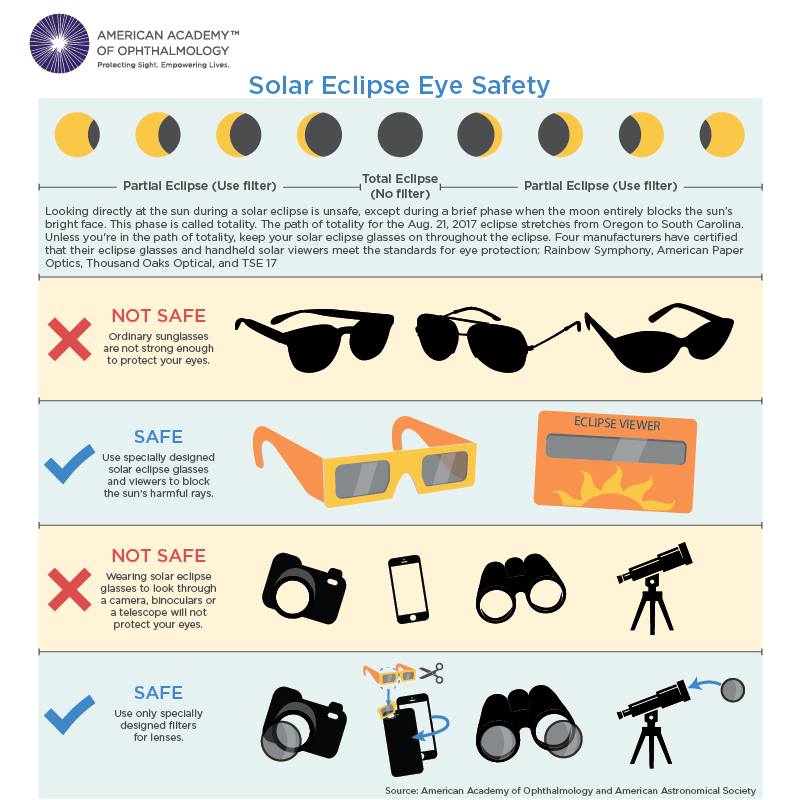
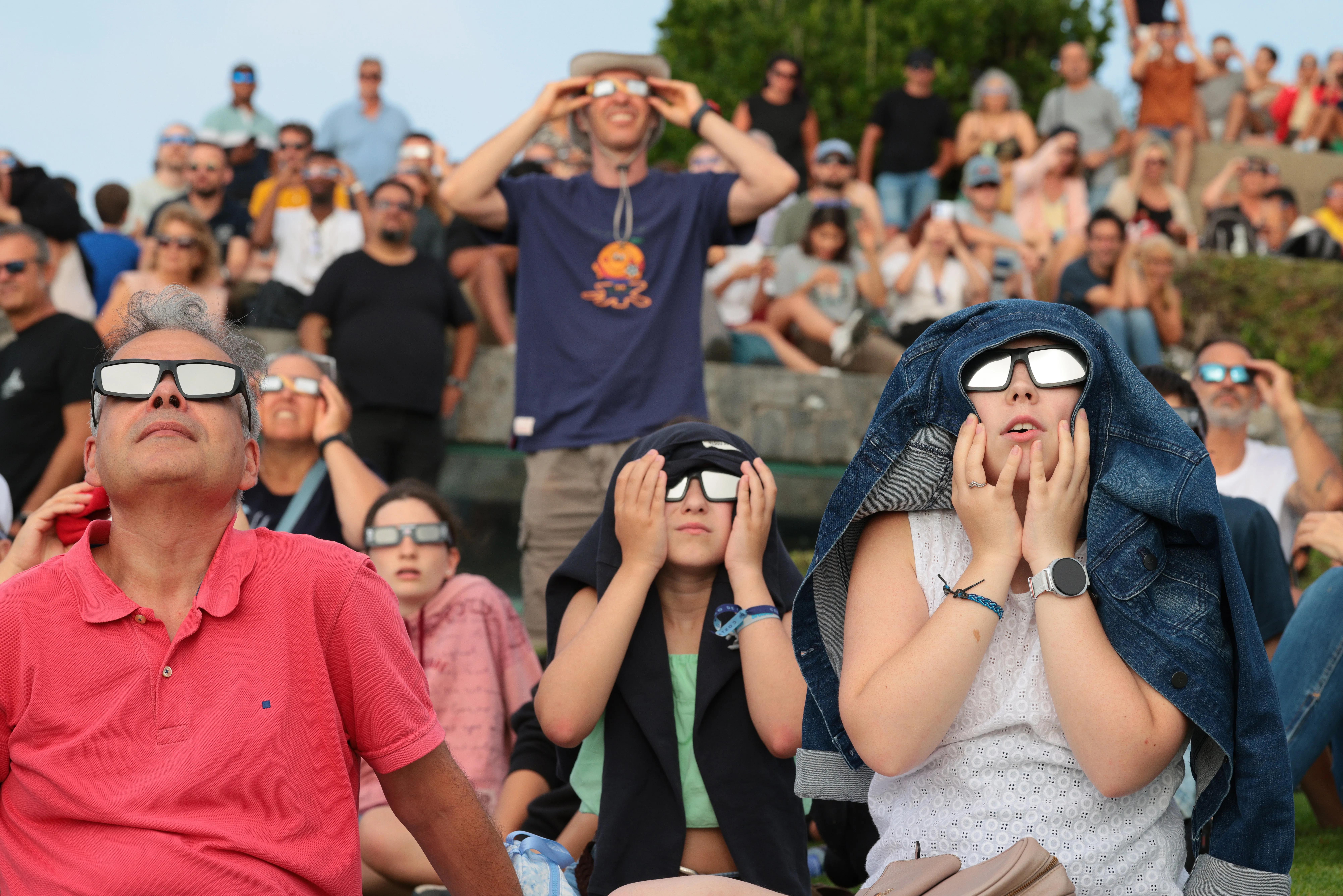
Except during the brief total phase of a total solar eclipse, direct viewing of the Sun requires specialized solar viewing protection. At a partial or annular eclipse, there is no glasses-off interval. Outside the path of totality, there is no glasses-off interval either.
Only observers inside the path of totality may look at the fully eclipsed Sun without a solar viewer, and only while the Moon completely covers the Sun’s bright face. As soon as bright sunlight reappears, viewers go back on. Our guide to eclipse phases and when to use solar glasses can help organizers build that distinction into training.
This is where vague crowd language becomes dangerous. “You can remove your glasses during the eclipse” is wrong. “Totality is safe” is too loose because people may mistake a deep partial eclipse for totality. At an event outside the totality path, remove all glasses-off language from the script instead of expecting a volunteer to add a correction every time.
Use the event’s exact location when rehearsing. For August 12, 2026, an instruction intended for a totality site in northern Spain could not simply be reused at a partial-eclipse gathering in Madrid. The date was the same; the viewing rule was not. Organizers should verify path status and local contact times on an interactive map, then place the approved timing in the run sheet with its time zone clearly labeled.
Equipment language needs its own briefing
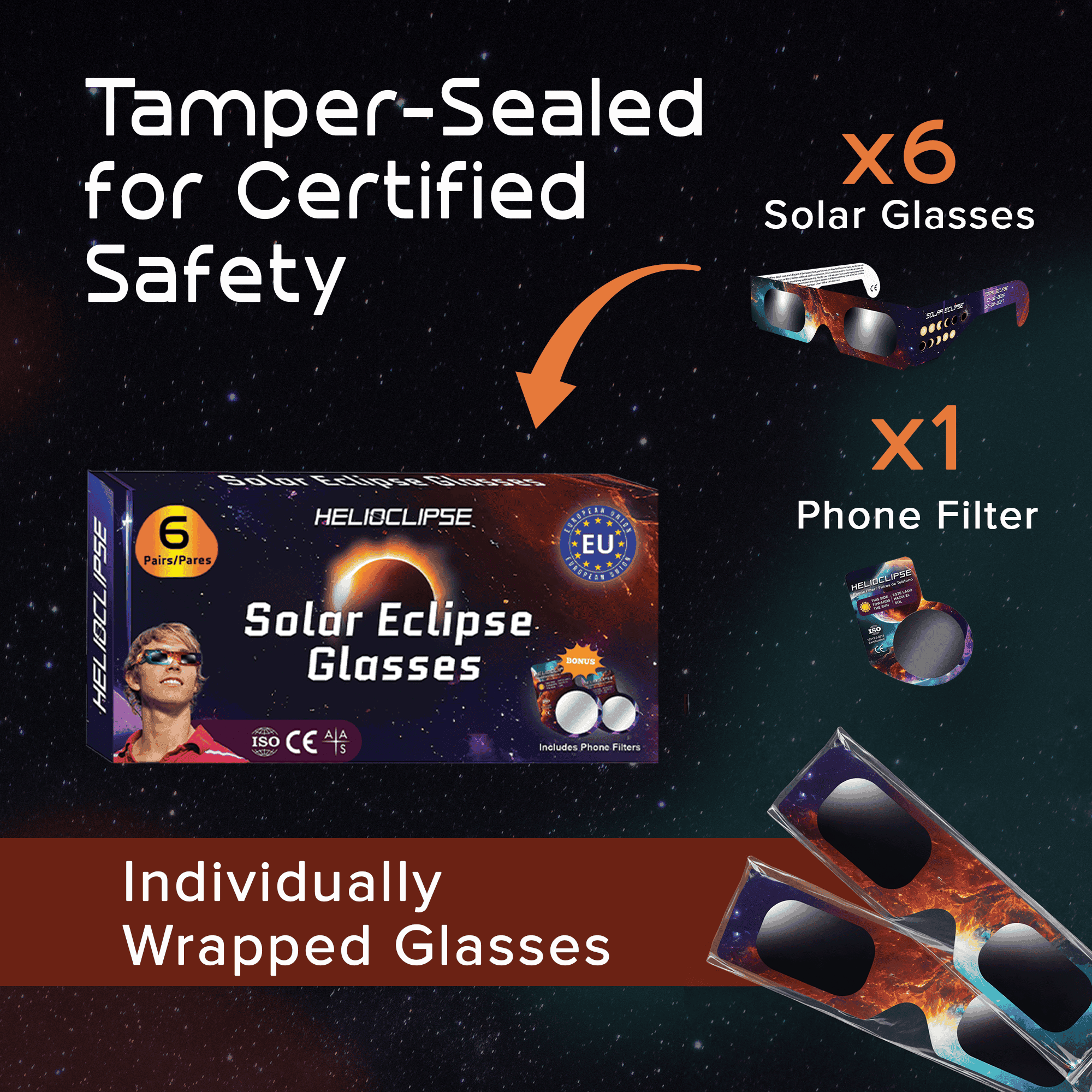
A safe solar eclipse viewer is not an ordinary pair of sunglasses. For direct, unmagnified observation of the bright or partially eclipsed Sun, viewers should conform to the ISO 12312-2 international standard and come from a trustworthy source. Inspect each one before use and discard it if the filter is scratched, punctured, torn, loose, or otherwise damaged.
The phrase iso 12312-2 eclipse glasses is useful shorthand for the relevant product category, but a printed standard number alone does not prove that an unfamiliar product was properly made or tested. Volunteers should not authenticate random viewers at the gate based only on a logo or label. Give them a simple escalation line: “I can’t verify this viewer; please use one supplied or approved by the event.” Our explainer on what ISO 12312-2 means provides additional background for team leaders.
Attendees may ask for eclipse glasses nasa approved, but NASA explicitly says that it does not approve particular brands. Product language such as approved solar eclipse glasses should therefore identify who performed the approval and what evidence supports it. When buying for your event, look for solar eclipse glasses iso 12312-2 certified by a responsible supplier, retain procurement records, and keep the maker’s instructions with the event inventory.
Do not permit diy eclipse glasses made from ordinary sunglasses, smoked glass, exposed film, food wrappers, or improvised dark plastic. A pinhole projector can be homemade because the observer looks at a projected image with the Sun behind them; that is fundamentally different from constructing a filter for direct viewing. A pinhole is not a peephole, and nobody should look through it at the Sun.
Cameras, binoculars, and telescopes need filters designed for the instrument and secured over the front aperture. Wearing eclipse glasses while looking through unfiltered magnifying optics is not safe because concentrated sunlight can damage the viewer and the eye. Assign an experienced astronomy lead to any telescope station rather than asking general volunteers to troubleshoot optical equipment.
Design for noise, disability, and imperfect attention
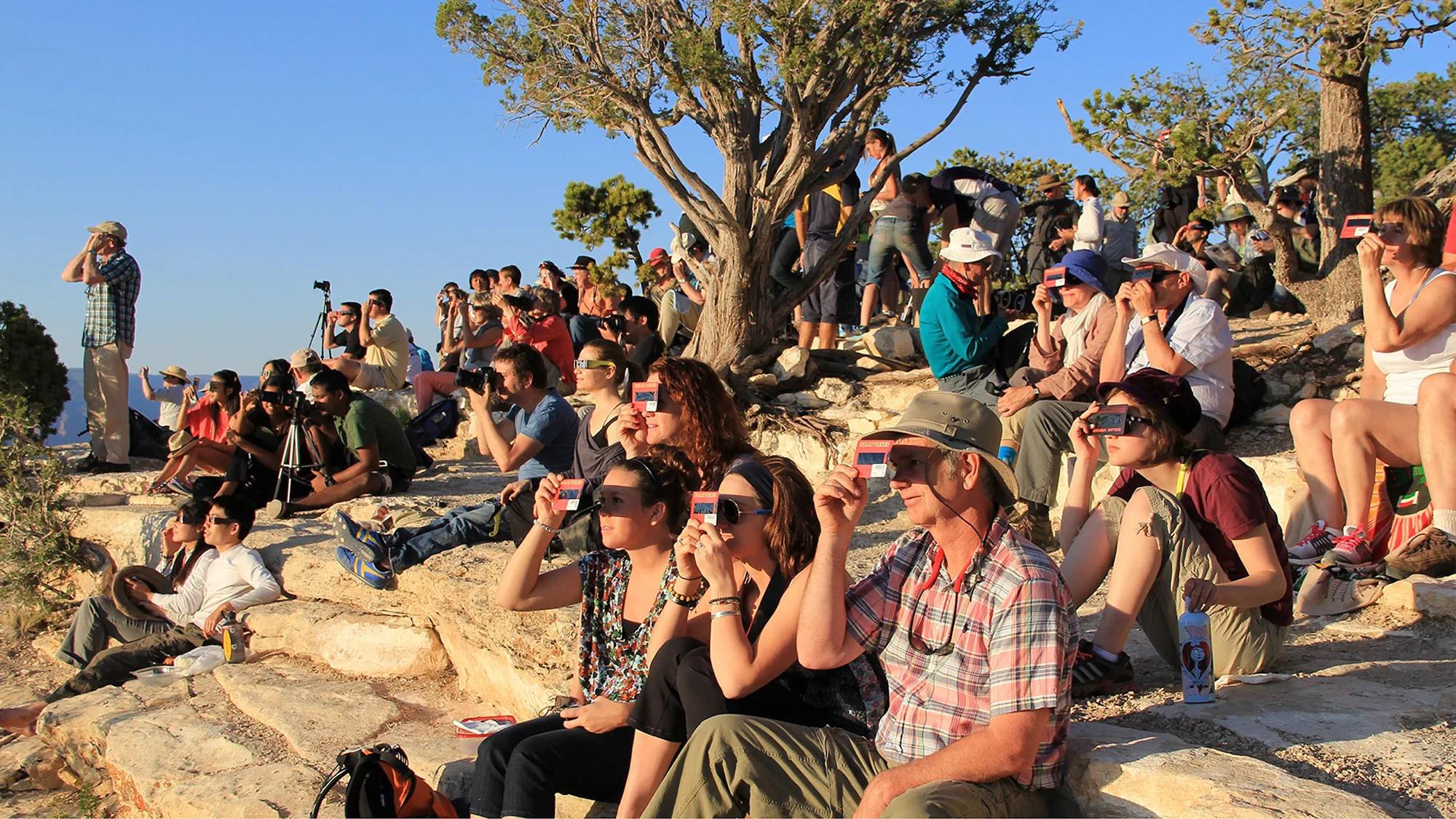
A multilingual plan should also be multimodal. Some visitors will not hear the stage. Some will not be able to read a distant sign. Others may understand the language but miss the message while helping a child or navigating the crowd.
Repeat critical instructions through several channels:
- large, high-contrast signs at entrances and viewing areas;
- captioned stage screens and livestreams;
- printed or digital cards in the event’s priority languages;
- American Sign Language or the locally appropriate signed-language interpretation;
- pictograms showing viewers on, damaged viewers discarded, and binoculars prohibited without filters;
- trained roving volunteers who can demonstrate the safe viewing sequence;
- quiet information points away from loudspeakers and dense foot traffic.
Use color only as a secondary signal, never as the sole distinction. Pair every color with words, a symbol, or a shape. Avoid flags as language selectors when possible: a language may be used across many countries, and a country may have several major languages.
Plan for low literacy as well. “Stand still. Cover your eyes. Look up. Turn away. Remove the viewer.” can be demonstrated step by step. The sequence is easier to follow than a dense paragraph about optical radiation, while the longer scientific explanation remains available at the information desk.
Rehearse the transitions, not just the welcome
The hardest moment is rarely the opening announcement. It is a transition: the partial phase deepens, totality approaches, the crowd grows louder, or bright sunlight returns suddenly at the end of totality.
Run a timed rehearsal with the actual public-address system. The science lead gives the phase cue; interpreters deliver the approved messages in a planned order; screens and signs change together; roving volunteers demonstrate the action. Measure how long the complete multilingual sequence takes. If the announcement lasts longer than the available transition, shorten the source script with the interpreters rather than telling them to speak unnaturally fast.
Give every eclipse volunteer a one-page escalation chart. It should identify the interpreter coordinator, safety lead, telescope lead, medical point, lost-child procedure, and emergency authority. Include a plain sentence volunteers can use when they reach the edge of their role: “I don’t want to guess. I’m finding the right person for you.”
Rehearse likely questions too. A parent may ask, “how to teach solar eclipse?” The useful response is not a lecture delivered while the crowd is moving. Start with the physical model—Moon between Earth and Sun—then demonstrate safe observation and distinguish a solar eclipse from a lunar eclipse. Lunar eclipses are safe to watch with unaided eyes; solar eclipses require the protections described here except during the fully total phase at a location inside the totality path.
A practical organizer checklist
Six to twelve months before the event
- Identify the languages used locally, including signed languages and languages spoken by visitors likely to travel to the event.
- Confirm whether the site will experience totality, a partial eclipse, or an annular eclipse.
- Recruit qualified interpreters and translators before finalizing public materials.
- Appoint one scientific source-message owner and one language-access coordinator.
- Budget for interpretation, captioning, printing, accessible signage, radios, and volunteer training.
One to three months before the event
- Freeze the core safety statements and obtain scientific review.
- Translate and independently check signs, scripts, viewer instructions, web pages, and emergency messages.
- Acquire appropriate viewers early and retain documentation.
- Publish access information so guests know which languages, captions, and interpretation services will be available.
- Build a run sheet using verified local eclipse circumstances rather than a generic national schedule.
One week before the event
- Inspect viewer inventory and isolate damaged stock.
- Give interpreters the complete script, glossary, site map, contact times, and speaker list.
- Brief volunteers on role limits and escalation procedures.
- Test screens, caption feeds, radios, loudspeakers, backup power, and quiet information points.
- Rehearse the end-of-totality warning at full speed.
On eclipse day
- Hold a short all-team briefing before gates open.
- Post language availability at every entrance and information station.
- Keep interpreters reachable by radio without turning them into general-purpose runners.
- Monitor whether guests can hear and see instructions from the back and edges of the crowd.
- Correct misinformation calmly and through all active languages, not only in English.
The Government-subsidized ECLIPSE GLASSES #eclipse ...
unPASOalFRENTE
Frequently asked questions
What is a clear safety sentence to use when explaining an eclipse to the public?
Use a short, approved statement that has been verified by the event’s scientific and safety leads. It should be written in ordinary, grammatical language that a tired parent can understand immediately, rather than using internal planning labels or improvised wording.
How can attendees safely observe an eclipse at a public event?
The safety instruction must match the observer’s exact location, including whether the site is inside the path of totality, near its edge, or outside it. Organizers should establish that location before writing scripts and make sure the same verified message appears across announcements, signs, handouts, and volunteer materials.
How should volunteers teach visitors about a solar eclipse in more than one language?
Begin with a small set of approved source-language statements verified by scientific and safety leads, then have qualified translators or interpreters prepare other language versions. Keep terminology consistent across every communication channel so visitors do not receive conflicting instructions.
What eye-protection guidance should an eclipse event provide?
Provide a verified instruction about when eye protection is needed, tailored to the event site’s exact eclipse circumstances. Because a short instruction can have real consequences, it should be consistent on printed materials, signs, public-address scripts, and volunteer cue cards.
What should an outreach team understand about multilingual volunteer and interpreter guidance for an eclipse event?
Volunteers, translators, and interpreters have different roles, so organizers should assign responsibilities clearly rather than relying on one bilingual volunteer to handle every task. Public-facing guidance should use clear language, verified wording, and a plan for questions the team has not rehearsed.
On-site next steps
Explore more organizer and family guidance in the Helioclipse blog, then use the Eclipse Explorer to verify the event geometry and local phase times that belong in your script.
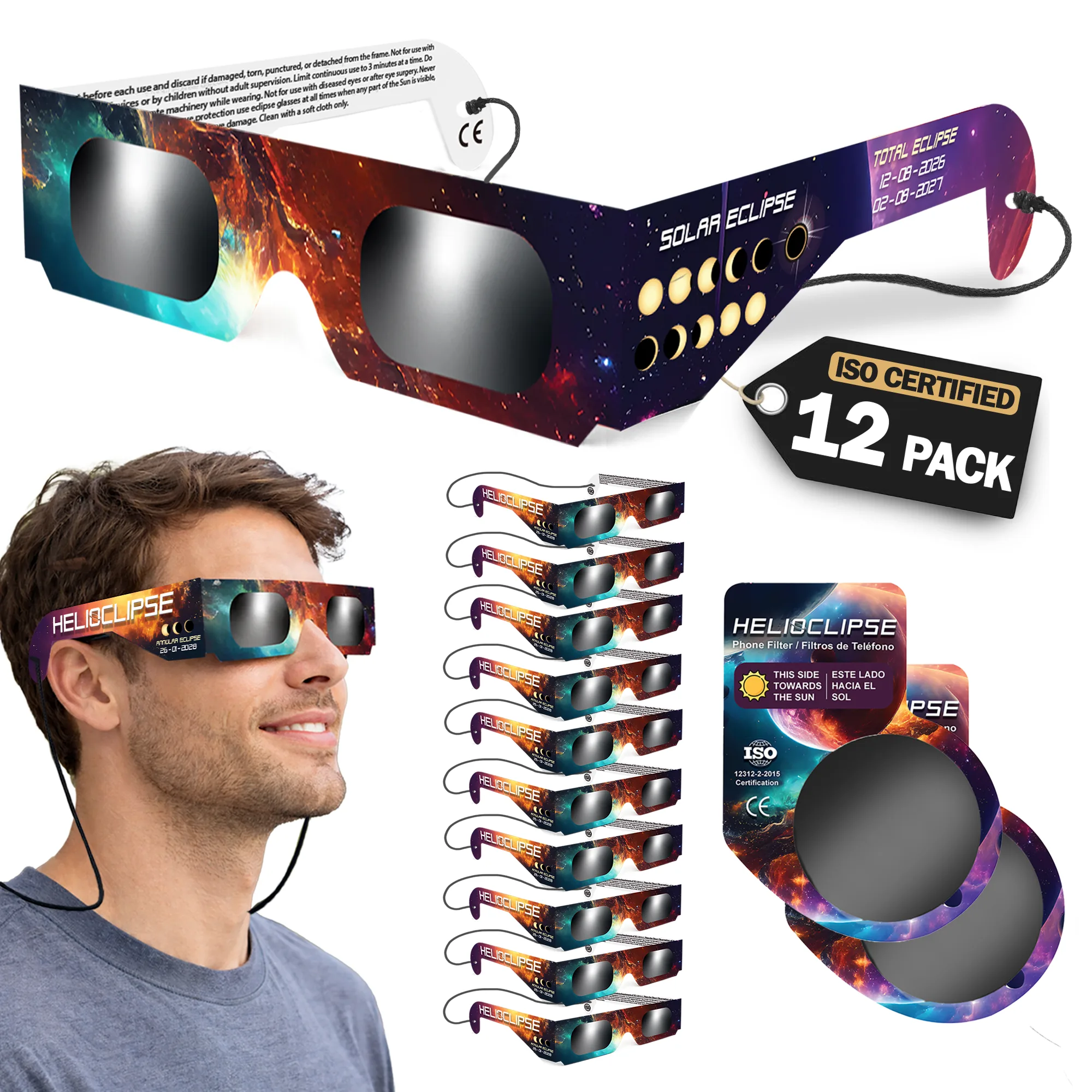
If your event will provide direct-viewing equipment, review quantities, accessibility, distribution points, and storage early. Helioclipse offers ISO 12312-2 certified solar eclipse glasses for safe unmagnified viewing during the appropriate phases. Give every language team the same manufacturer instructions and do not rewrite them from memory.
Sources & further reading
- NASA: 2024 Total Solar Eclipse Safety Sheet – Multilingual
- American Astronomical Society: Cómo ver de forma segura el eclipse solar total del 8 de abril de 2024
- NASA: Safe Eclipse Viewing Flyer
- NASA: Eclipse Glossary
- American Astronomical Society: Solar Eclipse Planning Workshops
- American Astronomical Society: How to View a Solar Eclipse Safely
- NASA: Eclipse Viewing Safety
- American Astronomical Society: Eyewear & Handheld Viewers
- American Astronomical Society: About the ISO 12312-2 Standard for Solar Viewers
- NASA Science: Eclipses