Showing up without taking over: crowding, noise, litter, and local rhythm on eclipse weekend
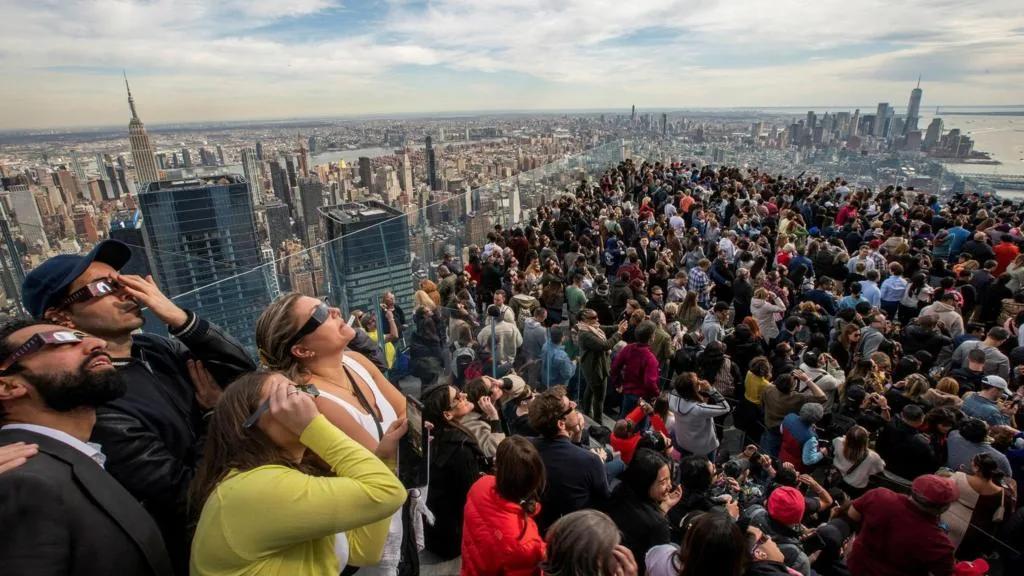
A total solar eclipse can make ordinary places feel suddenly historic. A quiet town, a farm road, a beach pullout, a school field, a city park — all at once they can become the place where thousands of people want to stand still and look up together.
That shared excitement is part of the magic. It is also exactly why manners matter.
If you are planning eclipse 2026 travel or any future eclipse trip, the goal is not to arrive like a private expedition and treat the host community as a backdrop. The better goal is simpler: come prepared, take up only the space you truly need, follow local rules, and leave the place ready for the next morning’s dog walkers, school buses, deliveries, and residents. That is the heart of respectful eclipse tourism locals leave no trace.
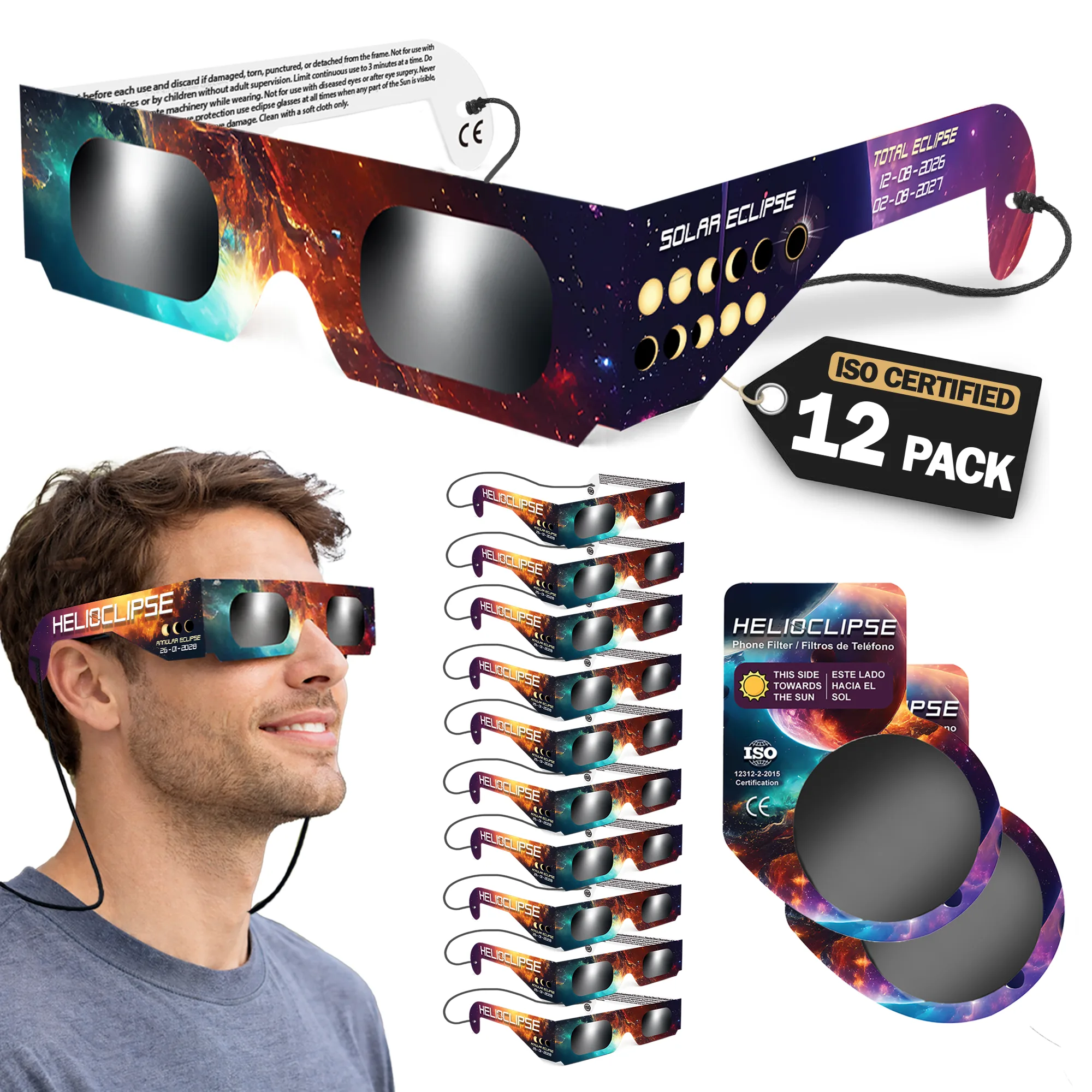
Before you lock in a viewing spot, use our Eclipse Explorer / 3D map to understand whether you actually need to travel, whether you are aiming for totality or a strong partial eclipse, and how much moving around on eclipse day is really worth it. If you are bringing a group, order certified viewers early from our shop so you are not scrambling at the last minute.
This is our respectful eclipse tourism locals leave no trace 2026 guide, but the habits here work for any eclipse weekend: less noise, less mess, less blocking, less entitlement — and a much better day for everyone.
The basic idea: an eclipse is public wonder, not private takeover
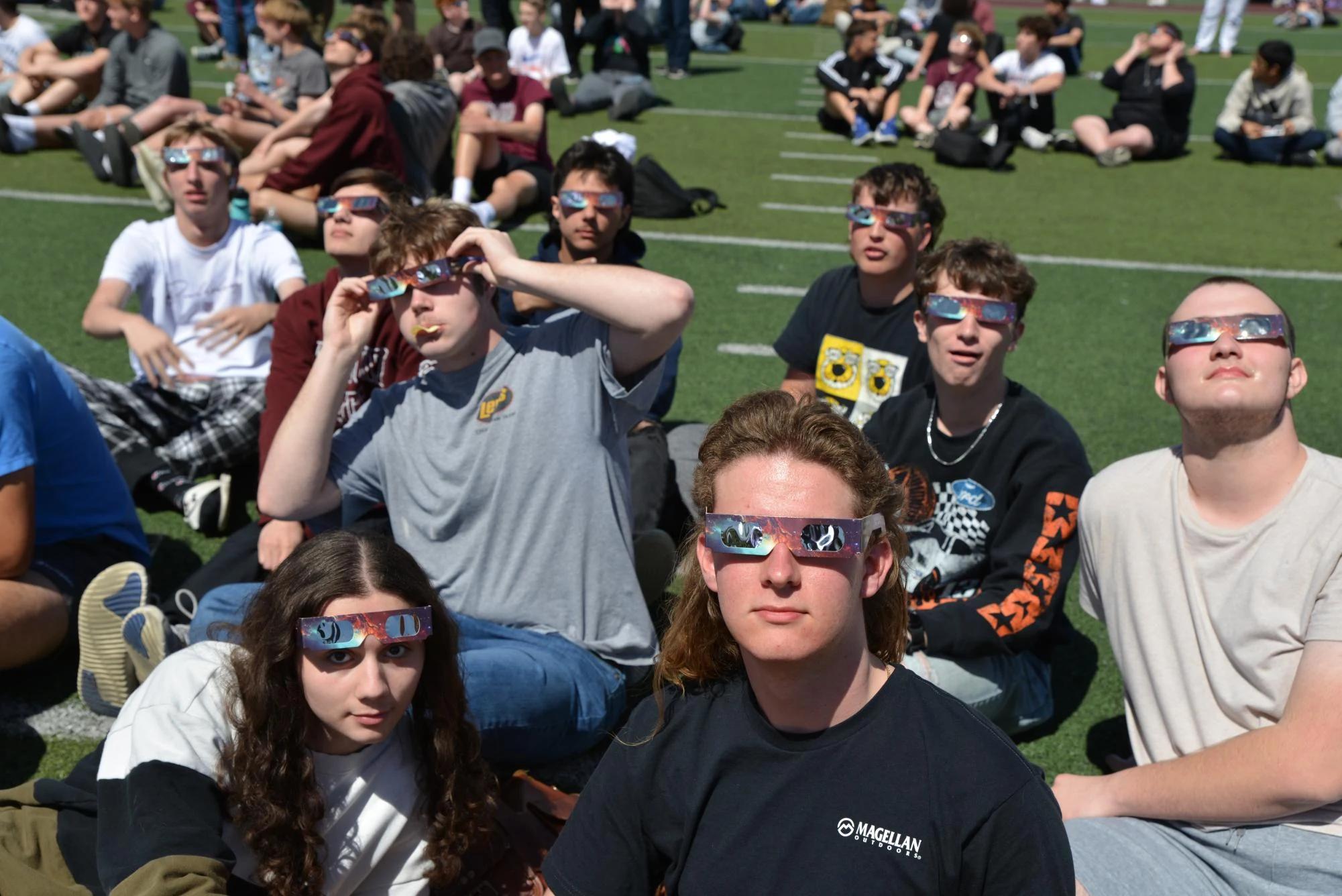
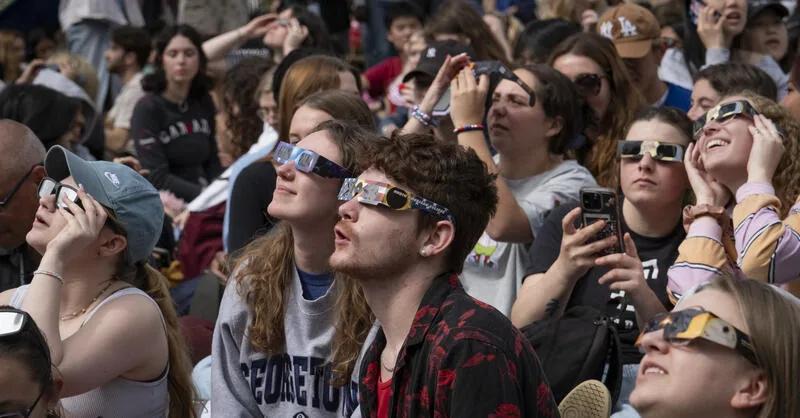
The best eclipse trips have a strange mix of festival energy and library etiquette. People cheer at totality. Kids gasp. Neighbors talk to strangers. Then, just as quickly, the place has to function again.
That is why outdoor ethics and host-community framing from established eclipse planning matters so much. NASA’s eclipse planning advice is practical for exactly this reason: crowded roads, sold-out lodging, busy shops, long fuel lines, and small towns serving far more people than usual are not side issues. They are part of the event. The American Astronomical Society’s eclipse-planning workshops also show how much work host communities do behind the scenes — tourism offices, parks, emergency managers, law enforcement, libraries, schools, and road agencies all prepare for the surge.
So the respectful mindset is not abstract. It means recognizing that your perfect viewing plan sits inside someone else’s normal weekend, work shift, harvest schedule, church service, campground routine, or emergency response system.
A good eclipse travel guide should say this plainly: if a town hosts you for the sky, you owe that town your best behavior on the ground.
First question: do you actually need to travel?
One of the smartest crowd-reduction choices is deciding not to chase a slightly better spot if your current one is already good enough.
Space.com’s reporting on 2024 traffic made this point well: people near the path often created their own headaches by driving for a little more duration and joining everyone else on the same roads. If you already live inside totality, staying put may be the most respectful option available. One or two minutes of totality from your own yard, a local park, or a nearby open space is still extraordinary.
That is especially true if the alternative is adding another car to a rural bottleneck, another parking problem to a village center, or another late-arriving group trying to squeeze into a full site. We cover that planning logic in more detail in Eclipse travel without the chaos: routes, crowds, and backup plans for 2026.
For many readers, the most useful form of eclipse travel expectations is this: the “best” place is not always the place with the absolute longest duration. Sometimes it is the place where you can arrive early, park legally, use toilets, buy food without stripping shelves bare, and leave without turning a two-hour drive into an all-night crawl.
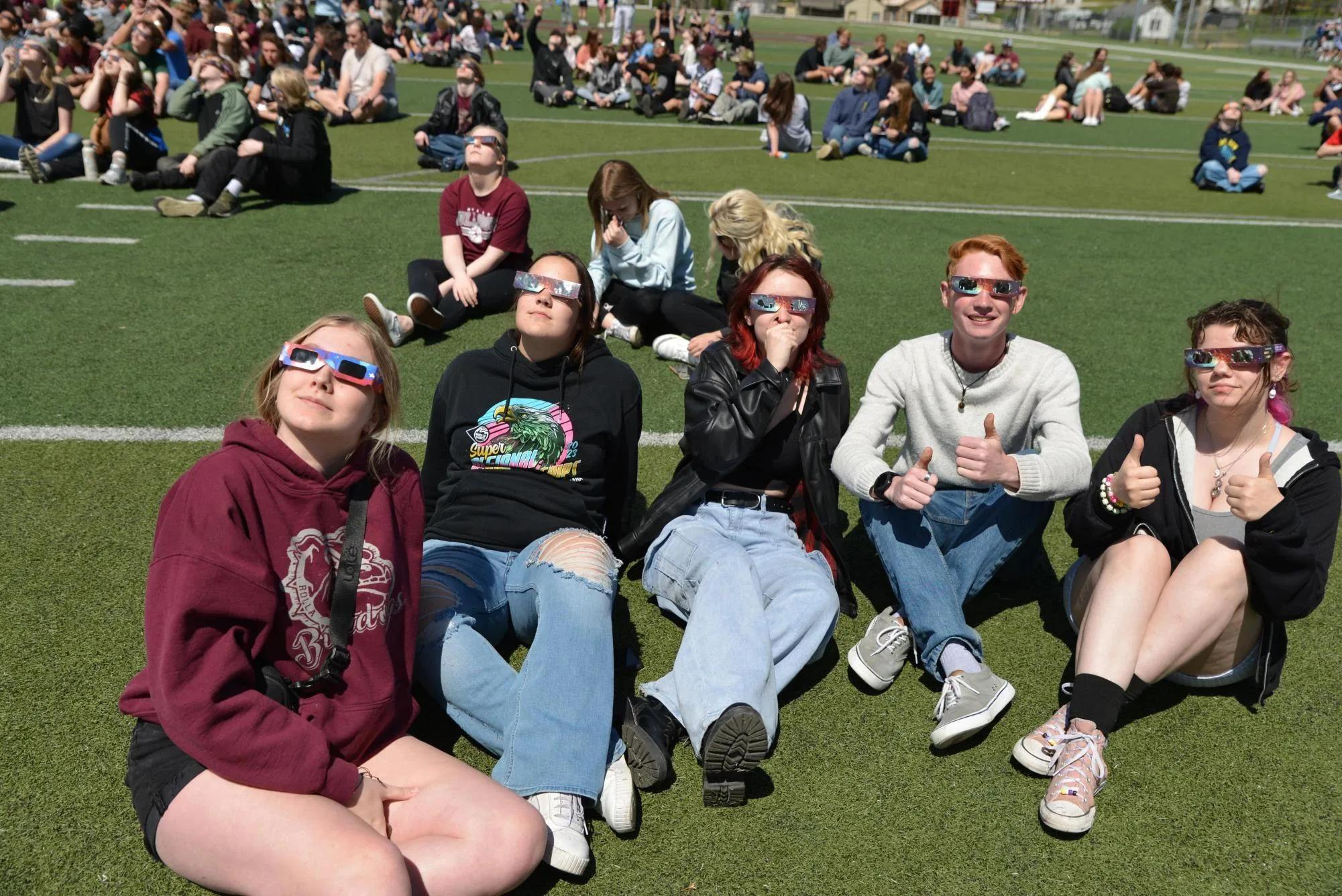
Leave No Trace works in towns too, not just in wilderness
People hear “Leave No Trace” and picture backcountry campsites. But the core idea applies just as well to a roadside turnout, a municipal park, a beach promenade, a vineyard event, or a neighborhood edge where visitors gather for an eclipse.
The National Park Service’s summary of the leave no trace principles is useful because it is not mystical. Plan ahead. Travel on durable surfaces. Dispose of waste properly. Leave what you find. Minimize fire impacts. Respect wildlife. Be considerate of other visitors.
That is the real leave no trace meaning on eclipse weekend: not “be perfect,” but “do not make your presence someone else’s cleanup, safety problem, or ruined experience.”
In practice, that means:
- pack out every wrapper, bottle cap, cigarette butt, cable tie, and food scrap
- use toilets where provided instead of improvising behind buildings or hedges
- park only where parking is allowed, even if others are already cheating
- keep paths, gates, driveways, and field entrances clear
- do not trample crops, dunes, fences, or restoration areas for a slightly wider view
- keep speakers off and voices reasonable before dawn, late at night, and in quiet public spaces
- skip fireworks, sky lanterns, and illegal campfires entirely
- follow closures and emergency instructions immediately, even if they disrupt your plan
That is what respecting eclipse looks like when the sky event meets real life.
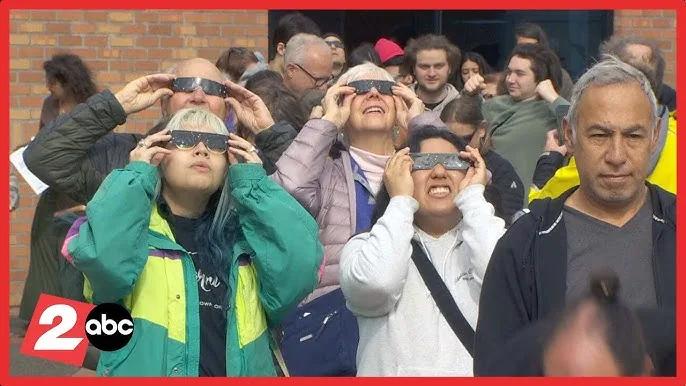
Crowding: how not to become the problem
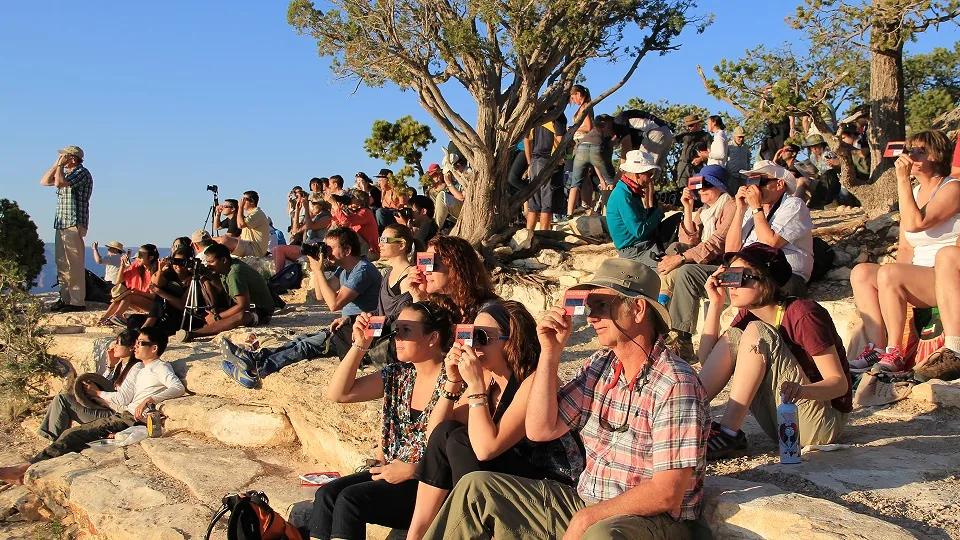
Most eclipse crowd problems are not dramatic. They are cumulative. One car half on a shoulder. One family spreading blankets across a path. One drone overhead. One group using a turnout as a tailgate party. One person asking to “just hop this fence for a minute.” Multiply that by hundreds.
NASA’s eclipse guide recommends arriving early, carrying food and water, and expecting congestion. That advice is not just about your comfort. It reduces the temptation to improvise badly when the obvious spots fill up.
Better crowd behavior in real life
Arrive with a specific legal destination, not a vague hope that something will open up.
If a site has marked parking, use marked parking. If it is full, move on. Do not create a second parking lot on grass verges, shoulders, or access roads unless local authorities explicitly direct overflow there.
If you are in a park or public field, keep your setup compact. Chairs, picnic blankets, tripods, coolers, and strollers spread farther than people think. Leave room for late arrivals, wheelchair users, staff vehicles, and ordinary circulation.
If you are traveling in a large group, split up when appropriate. The NPS Leave No Trace guidance specifically notes that smaller groups reduce impact. Ten people moving as two clusters often fit a site better than ten people insisting on one giant footprint.
And if you find yourself in a residential area, remember that you are not at an outdoor concert. Keep driveways clear. Do not sit on walls, porches, or private steps. Do not queue across someone’s front path because the view is good from their block.
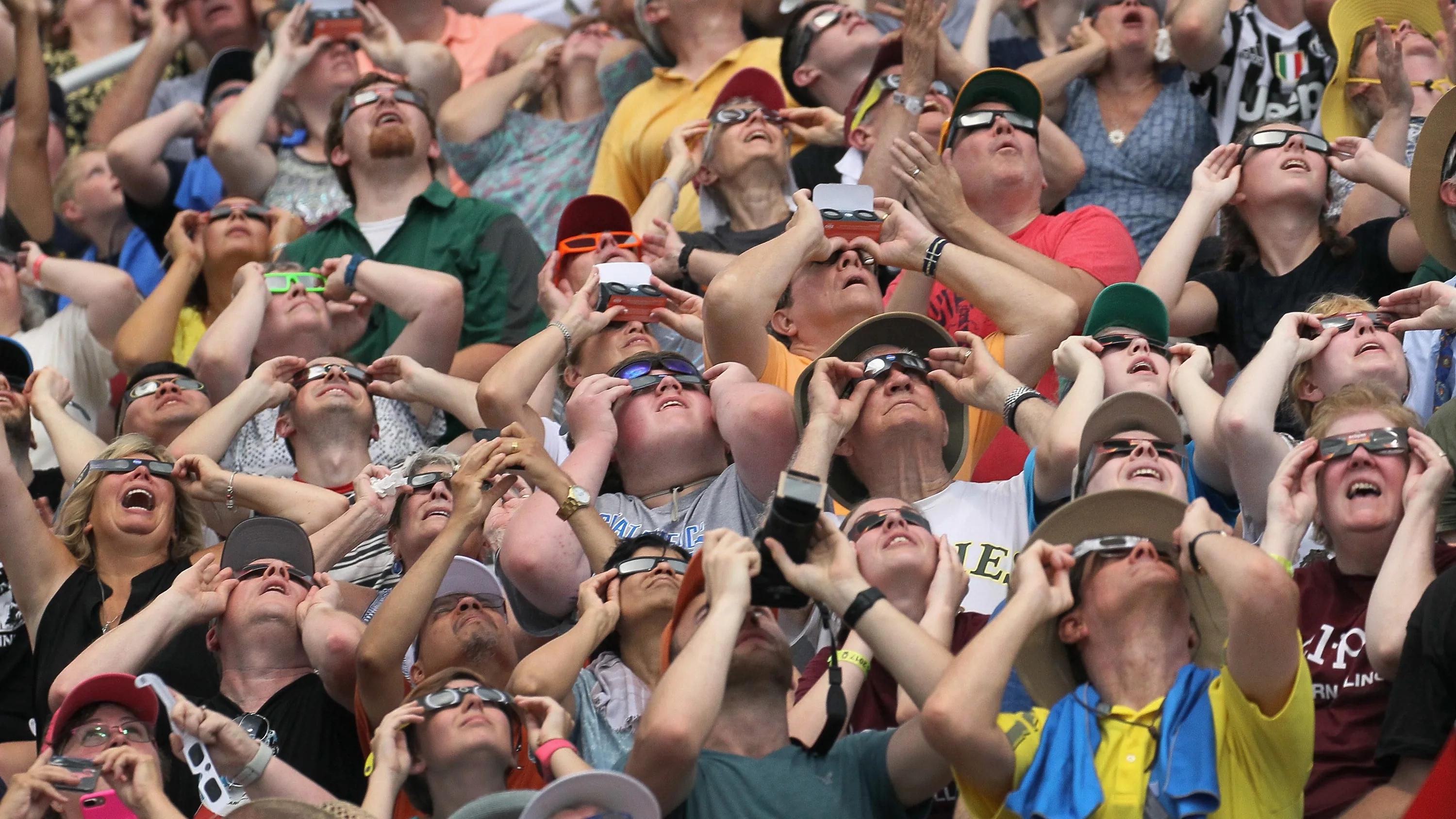
Noise: totality cheers are fine; hours of disruption are not
There is a difference between joy and domination.
A total solar eclipse is emotional. People cry, laugh, clap, and shout when the corona appears. That is normal. Sky & Telescope’s eclipse stories are full of cheers, gasps, and neighborhood celebration. Shared reaction is part of the experience.
The problem is not the ten seconds of astonishment. The problem is the hours around it if visitors behave as though the whole area has become their private festival ground.
The NPS guidance says, “Let nature’s sounds prevail. Avoid loud voices and noises.” On eclipse weekend, we would extend that to host-community sounds too: morning deliveries, local conversations, birds, surf, wind, church bells, train crossings, and the ordinary rhythm of a place.
So keep the speaker at home. Do not test your playlist in a dawn parking area. Do not run a generator unless the site explicitly allows it and you genuinely need it. If you are arriving before sunrise or leaving after dark, lower your voice, dim your lights, and close doors gently.
If you want commentary during the eclipse, use one phone at low volume or headphones. The sky does not need a soundtrack.
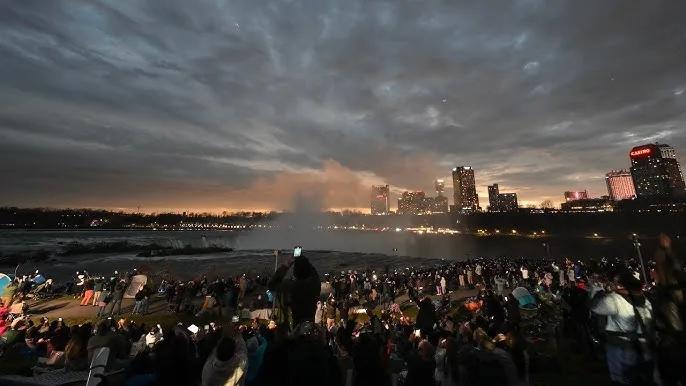
Litter is not just ugly — it changes the day for locals
Litter after a major event is a message. It tells residents that visitors came for the spectacle and left the work behind.
That is why “pack it in, pack it out” matters so much. The NPS guidance is blunt: inspect your rest area and pack out all trash, leftover food, and litter. On eclipse weekend, that includes the tiny stuff people forget — fruit stickers, wet wipes, broken sunglass sleeves, zip bags, coffee stirrers, parking receipts, and the cardboard tabs from snack packaging.
If you are wondering what the act of dropping rubbish on the ground in public places does to a host town, the answer is simple: it turns volunteers, park staff, business owners, and residents into your cleanup crew.
It also attracts wildlife, clogs drains, and makes already-crowded places feel neglected and tense. In neighborhoods and town centers, even small pieces of rubbish that have been left lying on the ground in public places can make residents feel that visitors stopped seeing the place as a real community.
Bring a dedicated trash bag. Bring a second one for recyclables if local systems support it. If bins are overflowing, do not balance your waste on top and call it done. Take it with you.
Fire, smoking, and “just one little stove” decisions
This is the category where a casual mistake can become a serious emergency.
The Leave No Trace framework says to minimize campfire impacts. For eclipse travel, we would make that even plainer: if there is any local restriction on open flames, charcoal, fireworks, or smoking, treat it as absolute. Dry grass, roadside vegetation, forest edges, and agricultural land do not care that you only planned a quick coffee setup.
Do not light an illegal campfire. Do not use a disposable barbecue where it is prohibited. Do not flick cigarette ends into dry ground. Do not launch fireworks because totality felt celebratory. And do not assume a fire ring means conditions are safe that day; local bans can override normal site rules.
This is one of the clearest examples of outdoor ethics and host-community framing from established eclipse planning becoming practical behavior. Emergency services may already be stretched by traffic, heat, medical calls, and crowd management. Do not add a preventable fire.
Private land is still private land during an eclipse
A beautiful field under the eclipse path is not an invitation.
This sounds obvious, but eclipse weekends create a strange social pressure where people start treating fences, farm tracks, and gates as negotiable. They are not. If a field is private, it stays private during totality. If a gate is closed, it is closed for you too.
Do not climb fences for a cleaner horizon. Do not move barriers. Do not stand in crops because “it’s only for a few minutes.” Do not block access needed by farm vehicles, residents, or emergency crews.
If a landowner is hosting viewers, follow their rules exactly. If they are charging for access, pay without arguing that the eclipse should be free. You are not buying the sky; you are paying for lawful use of space, parking, toilets, staffing, and risk.
Wildlife, pets, and the temptation to overdo the moment
Eclipses can change animal behavior briefly. NASA notes that birds and insects may react as light fades. That is fascinating — and not a cue to chase, call, bait, or crowd wildlife for a better story.
Respect distance. Do not feed animals. Secure your food and trash. If you are in a coastal, desert, mountain, or park setting, remember that the eclipse is happening in an ecosystem, not just over a viewpoint.
Pets deserve the same calm. Not every dog enjoys dense crowds, heat, traffic, and sudden cheering. If your pet is likely to be stressed, leaving them at home may be kinder than bringing them into a packed viewing site.
And if you do bring a pet, control them at all times, clean up after them, and do not let them wander through other people’s setups.

Small-town pressure is real: buy thoughtfully, not frantically
NASA’s planning guide warns that restaurants, grocery stores, and fuel stations in small towns can get overwhelmed or run short when visitor numbers spike. That matters for etiquette too.
Do not arrive assuming the host community will absorb your lack of planning. Fuel up early. Carry water. Pack snacks. Bring any medications, sun protection, chargers, and child essentials you will need.
Then, if you do shop locally, do it in a way that helps rather than strains. Be patient in lines. Tip decently where tipping is customary. Accept that staff are working under unusual pressure. If shelves are thin, do not complain that a small town failed your big trip.
The best version of eclipse tourism 2026 is not visitors extracting maximum convenience from a place. It is visitors arriving prepared enough that any money they spend locally feels like support, not stress.
Safety etiquette is part of social etiquette
Eye safety is not separate from crowd etiquette. It is part of it.
If you are the organized person in your family or friend group, bring enough certified viewers that nobody feels pressured to share unsafely at the critical moment. The AAS is clear: for all partial phases, and for any partial or annular eclipse, direct viewing requires special-purpose solar filters that conform to ISO 12312-2. Only people inside the path of totality may remove eclipse viewers during the brief total phase, and only once the Sun’s bright face is fully covered.
If your group needs a refresher, read When glasses on, when glasses off: eclipse phases explained for first-time viewers and ISO 12312-2 and eclipse viewers: what the standard means for your family.
Near the practical end of planning, plain product language helps. If you are shopping for a group, look for approved solar eclipse glasses and solar eclipse glasses iso 12312-2 certified from a source you trust, rather than gambling on vague listings or last-minute marketplace sellers. Our shop eclipse glasses page is the straightforward place to start if you want eclipse viewing glasses for family, school, or a small travel group.
And one important correction we always make: phrases like eclipse glasses nasa approved are common in shopping language, but NASA does not approve specific brands of eclipse viewers. What matters is compliance with the relevant safety standard and buying from a trustworthy source.
The best etiquette move after totality: don’t sprint for the exit
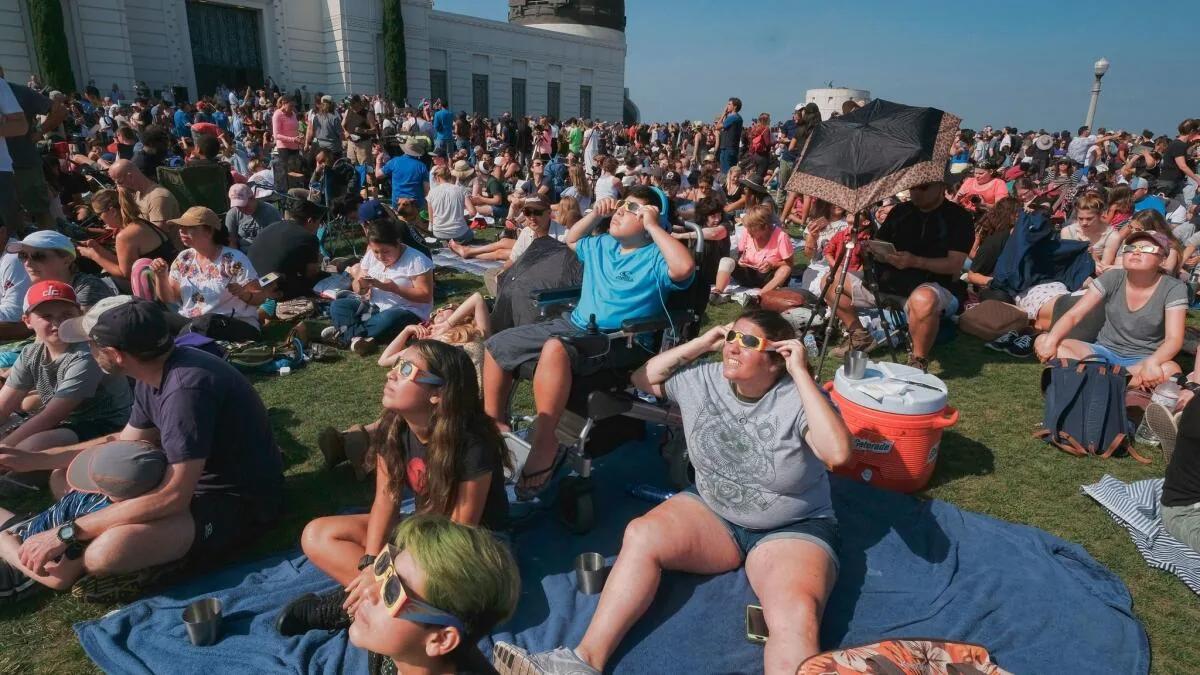
One of the most useful lessons from recent eclipses is that the worst traffic often begins when everyone tries to leave at once.
NASA explicitly notes that if you want to avoid crowds, you can stay through the final partial phases and linger longer afterward. Space.com made the same point for 2024: you are very unlikely to beat the traffic by joining the first wave seconds after totality ends.
This is not just a self-serving travel hack. It is courteous. A staggered departure reduces pressure on roads, fuel stations, junctions, and local police. It lowers the chance of risky driving by tired, disappointed, or impatient people.
So if your site allows it, stay a while. Finish your water. Pack carefully. Check for litter. Let children decompress. Thank the host if there is one. Use live traffic information before you move. If you booked lodging, staying overnight after the eclipse is often the single best decision for both your sanity and the host region.
That is a big part of realistic eclipse travel expectations: the event is not over when the corona disappears. The social event on the ground continues into the departure.
A simple code for eclipse weekend
If you want one compact standard to remember, use this:
Before you go
- Know whether you are traveling for totality or a partial eclipse.
- Check local rules for parking, fires, drones, pets, toilets, and site hours.
- Bring food, water, fuel, medications, sun protection, and waste bags.
- Bring certified viewers and teach your group how to use them.
- Share your plan with friends or family so nobody improvises badly.
While you are there
- Park legally.
- Stay on durable surfaces and in designated areas.
- Keep your footprint small.
- Keep noise low except for the natural burst of eclipse joy.
- Pack out every scrap.
- Respect residents, staff, volunteers, wildlife, and private land.
- Follow emergency directives immediately.
When you leave
- Scan the ground before you go.
- Do not dump waste beside full bins.
- Leave slowly and patiently.
- Support local businesses thoughtfully if you can.
- Leave the place looking as though a careful guest had been there, not a crowd.
That is the practical version of respectful eclipse tourism locals leave no trace. Not performative purity. Just disciplined, generous behavior.
Why this matters more in 2026
For many readers, 2026 will be the first eclipse trip they plan with friends, children, grandparents, or a mixed group of first-timers. That is exciting. It also means more people learning eclipse logistics all at once.
A good eclipse travel guide should not only tell you where the shadow goes. It should help you become the kind of visitor a host community would welcome back.
That is why we think this topic belongs beside route planning, weather strategy, and eye safety. The eclipse itself may last minutes. The impression visitors leave on a place can last much longer.
If you are still building your plan, start with the big picture in August 12, 2026 total solar eclipse: what to expect and how to plan ahead. Then make your local choices with the same care you bring to the sky.
No eclipse shades? Other ways to watch safely
CBC News
Frequently asked questions
How can I visit for eclipse weekend without overwhelming the town hosting me?
Come prepared, take only the space you truly need, follow local rules, and leave the area ready for the next morning’s normal routines. The article frames this as respectful eclipse tourism: less noise, less mess, less blocking, and less entitlement.
What does good eclipse planning say about being a guest in a local community?
It says to treat the host community as a place where people live and work, not as a backdrop for your trip. Crowded roads, busy shops, fuel lines, and the extra work done by local agencies are part of the event, so your behavior should account for that reality.
What should I keep in mind when planning an eclipse trip in 2026?
The main point is to decide whether you actually need to travel at all, and whether you are aiming for totality or a strong partial eclipse. If your current location is already good enough, staying put can reduce crowding and make the day easier for everyone.
What should I know before traveling for the eclipse?
Plan early, because eclipse weekend can bring crowded roads, sold-out lodging, busy shops, and long fuel lines. If you are bringing a group, the article also advises ordering certified viewers early so you are not scrambling at the last minute.
What is the safest way to watch a solar eclipse?
Use certified eclipse viewers and get them ahead of time, especially if you are bringing a group. The article also suggests checking whether you need to travel at all and using a map to understand your viewing options before eclipse day.
On-site next steps
- Explore the Helioclipse Eclipse Explorer / 3D map to decide whether you should stay local, cross into totality, or choose a less crowded backup area.
- If you are organizing family or friends, get your certified eclipse glasses from Helioclipse early so nobody is left improvising on eclipse week.
- For more planning help, browse the Helioclipse blog for crowd strategy, weather mobility, eclipse phases, and safety guides.
Sources & further reading
- What to Expect: A Solar Eclipse Guide — NASA Science
- Solar eclipse jam — how to avoid getting stuck in traffic on April 8, 2024 | Space
- Astro-tourism: Chasing eclipses, meteor showers, and elusive dark skies from Earth | Astronomy.com
- Where Will You Be on Eclipse Day: April 8, 2024? — Sky & Telescope
- The Totality Experience: S&T’s Eclipse Stories — Sky & Telescope
- How to View a Solar Eclipse Safely | Solar Eclipse Across America
- Leave No Trace Seven Principles | U.S. National Park Service
- 7 Principles - Leave No Trace
- Solar Eclipse Planning Workshops | Solar Eclipse Across America
- Eclipse 2024: Getting Your Business Ready