Lodging and eclipse weekends: what “book early” looks like in practice
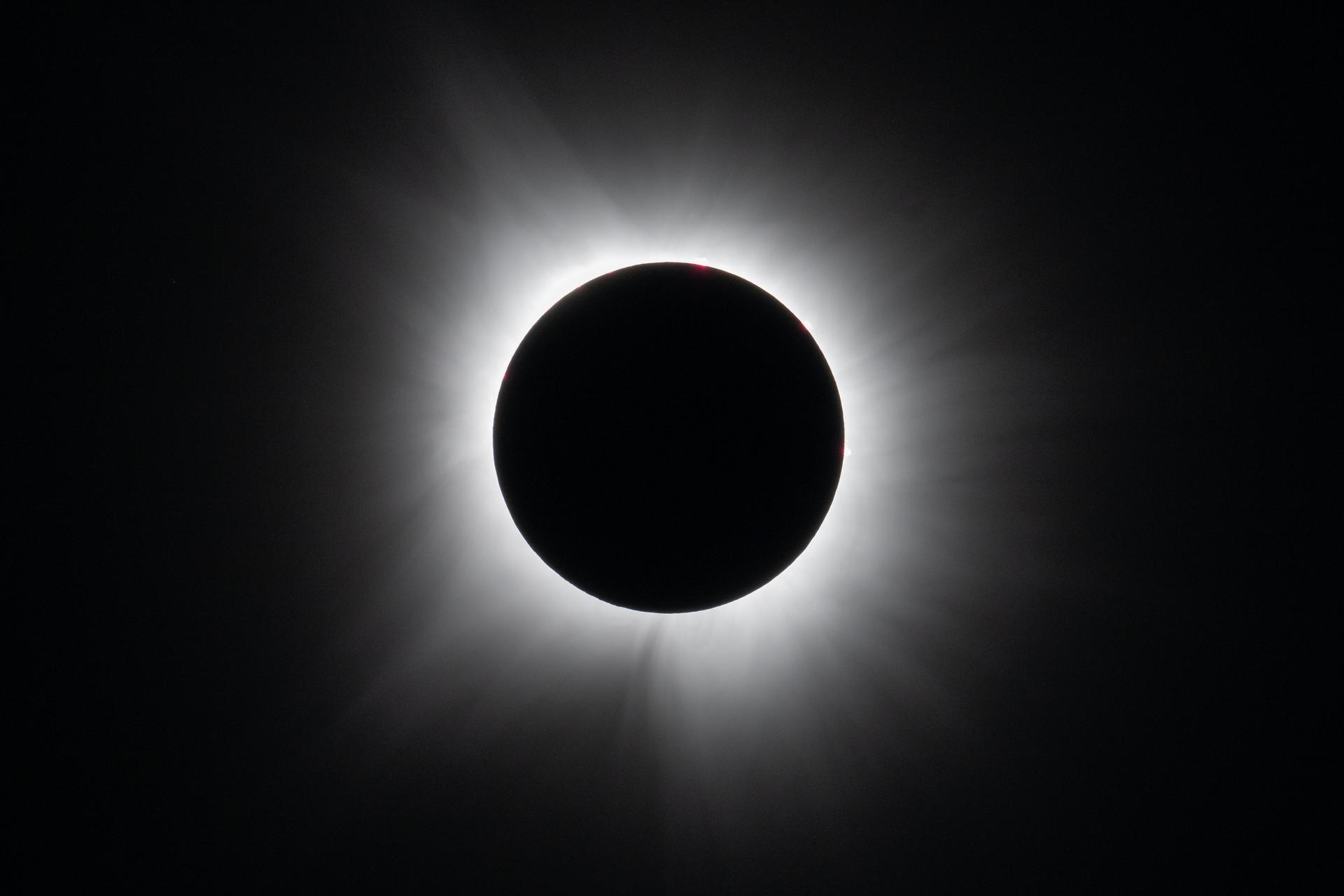
If you have ever read eclipse advice that says “book early” and thought, yes, but what does that actually mean, this is the practical version. For a normal weekend trip, you can often improvise. For an eclipse weekend, especially a total solar eclipse, you are competing for beds, campsites, parking, road space, and clear-sky options inside a narrow corridor that can be less than 150 miles wide and sometimes much narrower. That geometry is the whole story.
A lot of eclipse lodging stress comes from treating the trip like ordinary tourism until it suddenly is not. The better approach is to decide early what kind of traveler you are: fixed-location planner, flexible driver, camper, RV traveler, or “I’ll stay outside the path and move in” strategist. Then use the Helioclipse Eclipse Explorer / 3D map to see where totality actually falls, because being just outside the path is not “almost the same.” If you need a refresher on why 99% partial is still not totality, our guide to August 12, 2026 total solar eclipse planning is the right place to start.
The short version: eclipse accommodation book early is good advice, but not because there is one magic booking date. It means making decisions early enough that you still have choices.
Why eclipse weekends break normal travel habits
A total solar eclipse concentrates demand in a very small place for a very specific time. NASA notes that the path of totality is usually a long but narrow strip, often less than 150 miles wide. AAS and NASA both emphasize the same practical consequence: only people inside that path get totality, and everyone else gets a partial eclipse.
That sounds simple, but it changes travel behavior in a big way. Instead of visitors spreading out across a whole country or region, they pile into a corridor of towns, roadside hotels, campgrounds, and rental properties that may not be used to handling that surge. A typical umbral path can be less than 50 miles wide, according to NASA’s eclipse geometry explainer, even though the broader partial-eclipse zone spans much more territory.
That is why eclipse lodging behaves differently from a concert weekend or a holiday city break. The event is short, but the pressure is intense. People who care about totality are not choosing between dozens of equivalent neighborhoods. They are choosing between “inside the path” and “outside the path,” and that pushes demand into a narrow band.
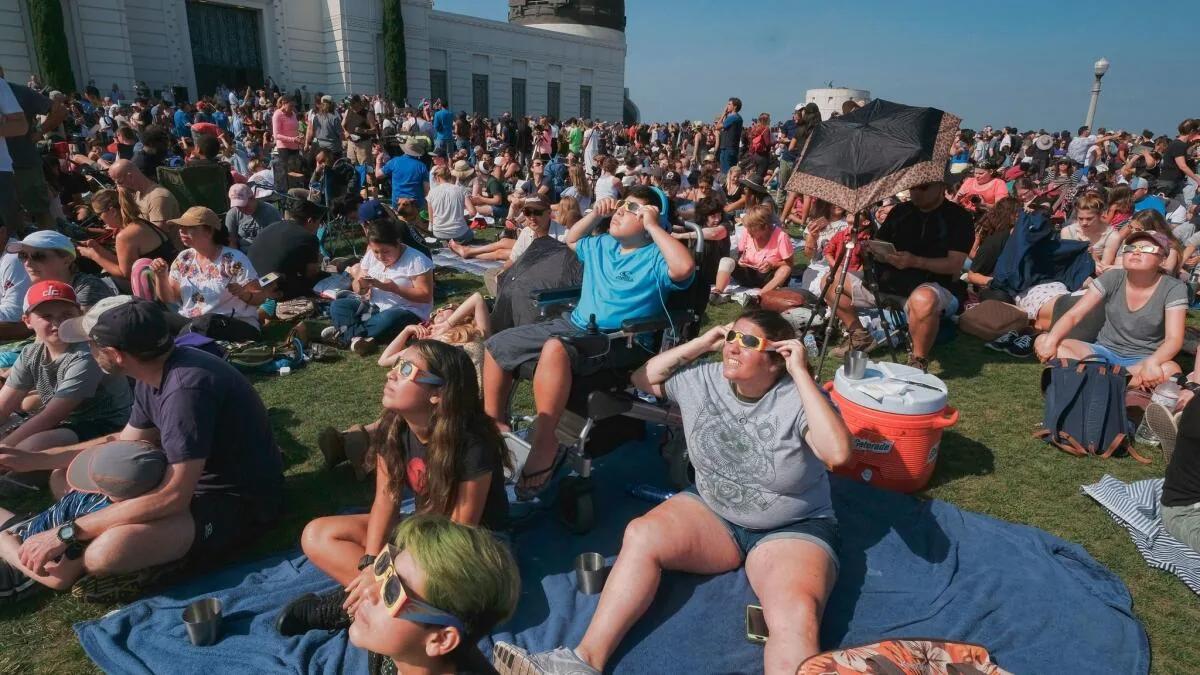
Space.com’s reporting before the 2017 U.S. eclipse captured this clearly: some hotels in the path had been booked for months or years, campgrounds were under pressure too, and travelers who waited found themselves paying more, staying farther away, or getting creative. NASA’s own eclipse planning guide says much the same thing in calmer language: if you want totality, find lodging as early as you can.
What “book early” actually means
In practice, “early” is not one universal deadline. It is a sequence.
First, book your decision, not just your room. Pick whether you are aiming for the center of the path, the edge of the path, or a larger city within driving distance. If you skip that step, you can spend months browsing rooms without ever solving the real problem.
Second, book the hardest thing first. For most people that is lodging, not eclipse glasses, not restaurant reservations, not a camera accessory. Flights matter too if you are crossing a border or ocean, but on many eclipse trips the room is the real bottleneck.
Third, book for flexibility, not fantasy. The best reservation is not always the closest bed to the centerline. It may be the cancellable room in a larger town, or the campsite with a realistic driving route, or the extra night that saves you from joining the post-eclipse traffic stampede.
That is the heart of eclipse booking. You are not just buying a place to sleep. You are buying options.
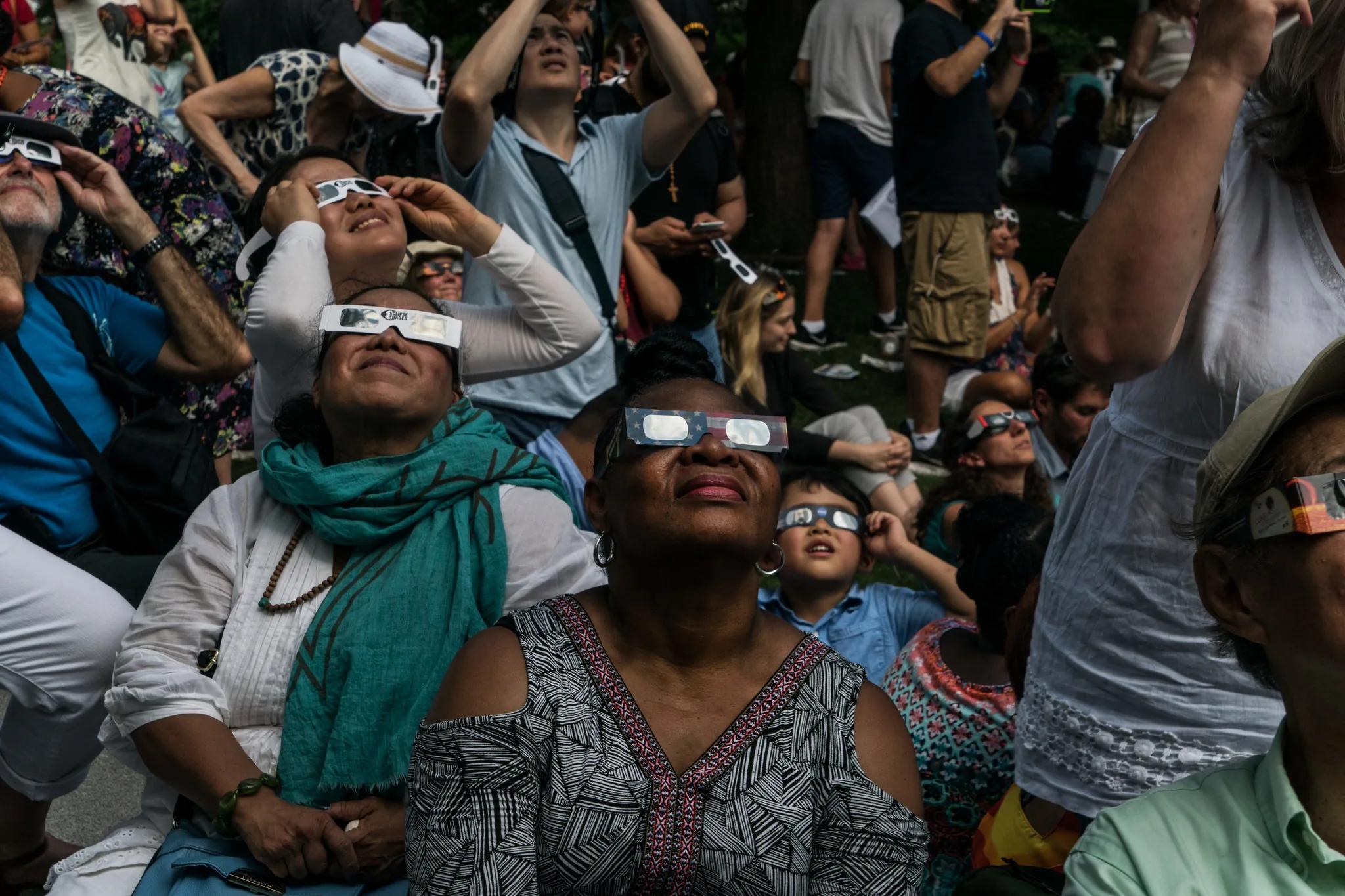
The pattern we keep seeing from one eclipse to the next
We do not need to invent hotel statistics to see the pattern. We have enough from recent eclipses and from how eclipse authorities talk about planning.
Before the 2017 U.S. total solar eclipse, Space.com reported that some rooms in the path had already been snapped up long in advance, with higher rates and stricter terms appearing in some places. Before and during the 2024 eclipse cycle, the same themes showed up again in public planning advice: stay close if you can, arrive early, and do not assume you can breeze in on eclipse morning.
NASA’s eclipse guide explicitly warns that hotels and campgrounds in the path of totality sell out quickly. Its advice is not dramatic; it is logistical. If many people from far and wide want the same narrow strip of land on the same date, the supply problem is obvious.
That is why phrases like 2024 eclipse lodging, eclipse 2024 lodging, and 2024 eclipse hotel reservations became so common in the run-up to April 8, 2024. They reflect a real planning pattern: people discover the path late, realize the geography is unforgiving, and then rush for the same inventory.
The lesson for 2026 and beyond is not “panic years ahead.” It is “do not wait until the event feels close.” Our eclipse accommodation book early 2026 guide would say the same thing in plain English: once you know you want to go, start looking while the market still has shape.
How early can I book hotel rooms?
This is where people want a universal rule, and there really is not one. Hotels, chains, independent inns, apartment hosts, campgrounds, and tour operators all release inventory on different schedules. Some open rooms roughly a year ahead. Some do it earlier. Some hold blocks. Some change terms for special-event weekends.
So when people ask, how early can i book hotel rooms?, the useful answer is: earlier than you think, but only after you know your eclipse strategy.
If you are targeting a famous eclipse corridor, start checking well ahead of the event and keep checking. Not every property loads availability at the same time. A “sold out” result can mean genuinely full, not yet released, or temporarily blocked. That is another reason to use a map first and build a shortlist of several towns, not one dream spot.
For a total eclipse, your booking window should open as soon as you are serious about going. For a partial eclipse trip in a major city, the pressure may be lower, but the principle still holds: special dates compress normal inventory.
And remember the difference between path position and sleep position. A room 60 to 90 minutes from your intended viewing site may be a smarter booking than an expensive room in a tiny town with one road in and one road out.
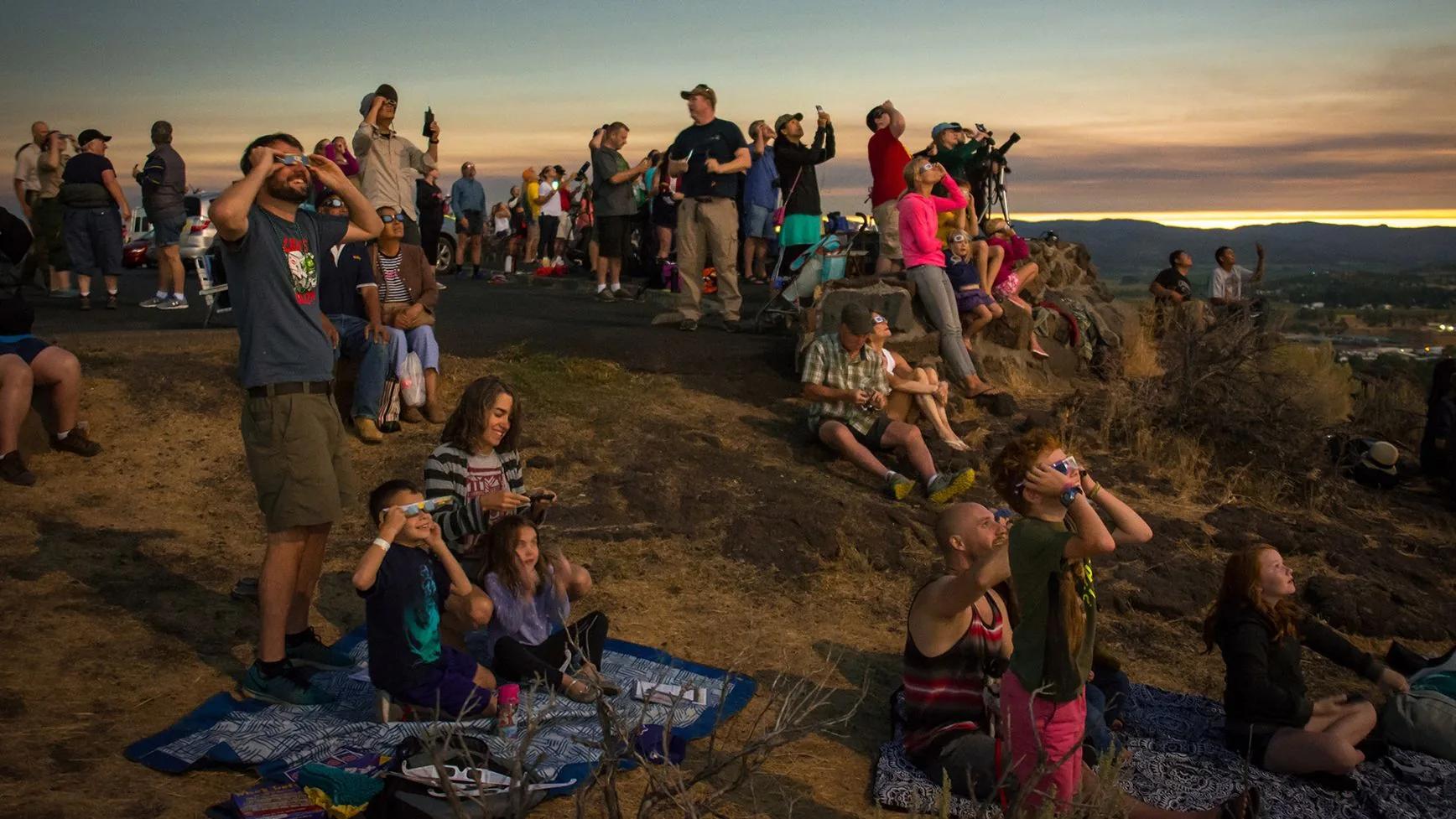
The smartest lodging strategies are not always the closest ones
People often assume the best room is the one nearest the centerline. Sometimes it is. Sometimes it is the room that traps you.
A centerline location can maximize totality duration, but that does not automatically maximize your odds of a good day. Weather, road access, horizon obstructions, and your ability to move matter too. For 2026 in Spain, for example, Space.com’s reporting highlights a diagonal path across the northeast, with totality shortly before sunset and terrain becoming a real issue in some areas. A room in a scenic village sounds romantic until you realize the local horizon is blocked, parking is chaotic, and your cloud backup is two mountain roads away.
This is why the best places and timing for eclipse accommodation book early depends on more than one variable:
- Are you inside totality or outside it?
- Are you near a fast road or trapped on a local bottleneck?
- Can you pivot for weather?
- Do you have a clear western or southwestern horizon if the eclipse is late in the day?
- Are you staying the night after the eclipse, or trying to escape with everyone else?
For many travelers, the winning move is a larger base town near the path, not the tiniest settlement on the centerline. Space.com made that point for 2017 as well: larger cities just outside or grazing the path may offer more inventory and less extreme pricing, while still giving you a workable drive.
Why staying one more night is often the cheapest luxury
One of the most underrated eclipse decisions is whether to leave immediately after totality. We usually tell people not to.
NASA’s planning guide says traffic can remain heavy for hours after the eclipse and suggests that, if possible, traveling the day after may be easier. Space.com’s 2026 reporting on Spain is even blunter: do not try to drive straight back to Madrid or Barcelona right after the eclipse if you can avoid it.
That extra night can do three jobs at once. It reduces stress, lowers the chance of a dangerous tired drive, and lets you actually enjoy the event instead of sprinting away from it. If you have children, grandparents, or a mixed-experience group, this matters even more.
This is where eclipse lodging becomes part of eclipse psychology. People spend months planning for a few minutes of totality, then sabotage the day by treating the exit like a fire drill. If your budget allows one extra night, it is often worth more than shaving 20 seconds off your drive to the centerline.
Read the terms like an eclipse traveler, not a weekend tourist
Special-event weekends can come with unusual conditions. That does not mean every property is doing something shady, but it does mean you should read carefully.
Look for:
- minimum-night stays
- deposits
- nonrefundable clauses
- cancellation deadlines
- occupancy limits
- parking rules
- late-arrival policies
- whether the listed room type is guaranteed
The 2017 pre-eclipse reporting from Space.com included examples of changed rates, special agreements, and stricter conditions around eclipse dates. Even when a property is acting within its rules, you do not want surprises.
This is also a good moment to say something about language confusion online. If you stumble across phrases like eclipse book age rating, that is usually about the novel or film franchise, not astronomy travel. It is a good reminder to verify what you are actually reading before you assume it applies to your trip.
Campsites, RVs, and “creative” lodging are real options
When hotel inventory tightens, people widen the definition of accommodation. That is not a last resort. For many eclipse travelers, it is the best plan from the start.
Camping can work extremely well if you are comfortable with it and if the site gives you a realistic route to your viewing area. NASA specifically mentions campgrounds as part of eclipse planning, and Space.com’s 2017 article notes that campsites inside the path can also become competitive. So yes, camping may be cheaper, but it is not automatically abundant.
RVs and motorhomes add mobility, which is valuable on weather-sensitive eclipses. They also add complexity: rental availability, fuel, parking, dump stations, and local restrictions. Mobility is only useful if you can actually move.
Vacation rentals can be excellent for families or friend groups because they spread cost and keep everyone together. But the same rules apply: read the cancellation terms, check the exact location on a map, and think about road access on eclipse morning.
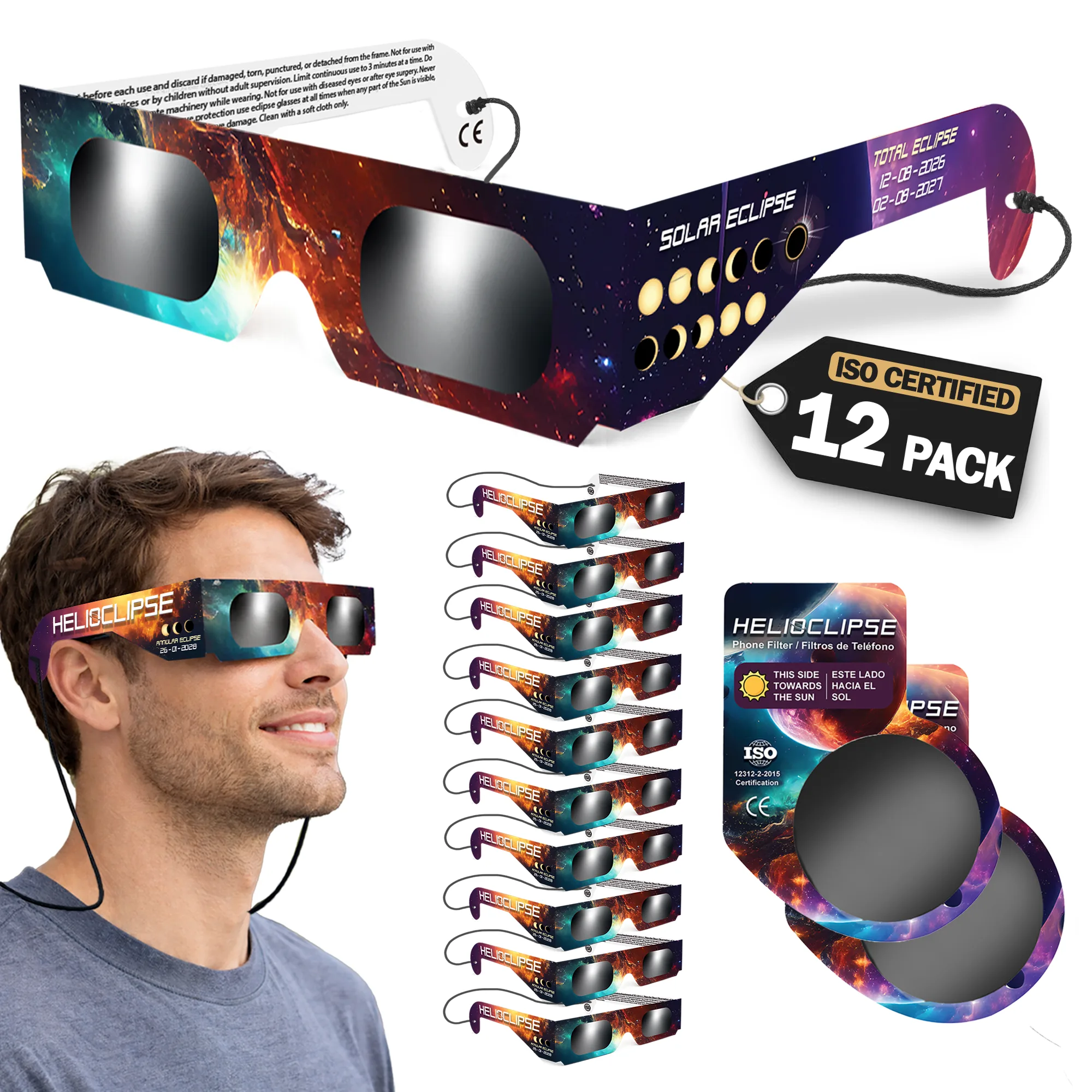
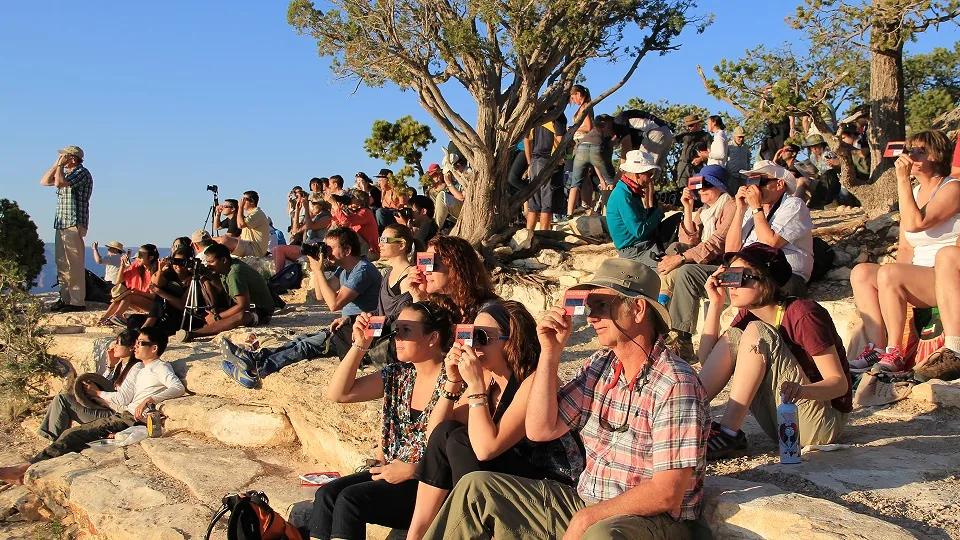
If you are building a group trip, assign roles early. One person tracks lodging, one person tracks route options, one person checks horizon and weather context, and one person makes sure everyone has safe viewers. That last part matters. Before you travel, make sure your group has solar eclipse glasses that meet the right standard, and if you need the deeper safety background, read our guide to ISO 12312-2 and eclipse viewers.
Near checkout time, shoppers often use phrases like approved solar eclipse glasses or solar eclipse glasses iso 12312-2 certified. The important thing is not the wording itself but what you verify: proper labeling, intact filters, and a seller you trust.
Do not separate lodging from weather and mobility
A room is not a plan. It is a base.
Experienced eclipse travelers think in layers: sleep location, viewing location, backup viewing location, and escape plan. That is especially important when weather is uncertain. Space.com’s 2026 eclipse travel piece boils expert advice down to three strategies: plan ahead, check weather forecasts, and stay mobile.
That does not mean you should book nothing and improvise everything. It means your lodging should support a weather decision, not prevent one. A hotel with a good highway connection may beat a prettier place with no easy exit. A stay in a larger city inside the path may beat a remote cabin if the forecast shifts and you need to move 90 minutes at dawn.
For a deeper look at that side of the trip, our guides on eclipse travel without the chaos and cloud cover and eclipse day mobility pair naturally with your lodging plan.
A practical timeline you can actually use
Here is what “book early” looks like when translated into actions.
As soon as you know you want to go
Use the Helioclipse Eclipse Explorer / 3D map to identify the path, nearby larger towns, and whether you care most about maximum duration, easier access, or weather flexibility.
Make a shortlist of at least three base areas, not one. If the eclipse is late in the day, think about horizon direction. If it is in peak holiday season, assume competition will be stronger.
When booking windows begin to open
Start checking hotels, rentals, and campgrounds. Compare total cost, not just nightly rate. A cheaper room far away may become expensive in fuel, parking, and stress.
This is the stage where eclipse lodging decisions should stay flexible if possible. Favor reservations with clear cancellation terms over “perfect” bookings that lock you in too hard.
Months ahead
Confirm your reservation details. Recheck the exact map position. Make sure your room is where you think it is relative to totality, not just where the town name suggests.
If you are flying, this is also when to think about how far in advance can you book a flight and whether your arrival timing leaves margin for delays. A late-night arrival before eclipse morning is a bad gamble.
In the final weeks
Watch weather trends, local event announcements, and road guidance. Reconfirm check-in times and parking. If you are arriving late, tell the property.
This is also when people get distracted by package deals and event marketing. Some eclipse 2024 packages looked convenient, but convenience is not the same as being in the right place. Always verify the exact viewing location.
On eclipse day
Leave early. Earlier than feels necessary. NASA says to get to your site before the partial eclipse starts, and experienced eclipse chasers say the same. If you have booked somewhere close to your intended viewing area, do not waste that advantage by sleeping in.
Questions people ask that matter a little — and a few that matter less
Some travel-search questions are useful, but they can also distract from the big decisions.
What is the cheapest day to book accommodation? Sometimes there are patterns in ordinary travel markets, but eclipse weekends are not ordinary travel markets. The bigger win is booking when inventory exists and terms are acceptable, not trying to outsmart a surge with a Tuesday-night hack.
Can you book a trip a year in advance? Often yes, depending on the provider. For eclipses, that can be completely reasonable.
How many days before a trip should you book a hotel? For an eclipse in or near totality, “days before” is usually the wrong frame. Think months, sometimes longer.
Can I check in 30 minutes early to a hotel? Maybe, if the room is ready, but that is a customer-service question, not an eclipse strategy. Your real goal is to avoid arriving so late that a small delay threatens your whole plan.
How far in advance can I book a Premier Inn room? That depends on the chain’s release policy and the market. The eclipse lesson is broader: know when your likely properties release inventory, and set reminders.
And yes, you may also see future-looking questions like what will happen on August 2, 2027? or what will happen on July 22, 2028? Those matter because eclipse travelers often plan the next one before the current one is over. Spain sees another total solar eclipse on Aug. 2, 2027, and another major eclipse follows on July 22, 2028. Once you understand the lodging pattern, you start earlier next time.
The part people forget: safe viewing is also a supply issue
Lodging is not the only thing that tightens before a big eclipse. Safe viewers can, too.
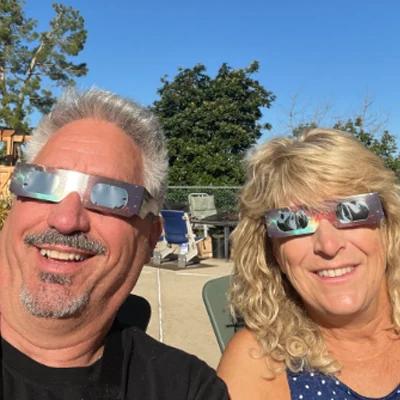
NASA advises people to buy or find eclipse glasses early, before they sell out, and AAS says direct viewing is safe only with special-purpose solar filters that conform to ISO 12312-2, except during the brief total phase of a total eclipse when the Sun’s bright face is completely covered. Outside totality, or during any partial eclipse, keep the filters on.
That means your trip checklist should include viewers well before departure, especially if you are organizing a family or group. Phrases like eclipse viewing glasses and certified solar eclipse glasses are common because people often leave this purchase too late. We would rather you handle it early, store them safely, and stop thinking about it.
If you are traveling with first-timers, send them our explainer on when glasses are on and off during eclipse phases before the trip. It prevents a lot of confused last-minute conversations in parking lots.
What “book early” should feel like
Not panic. Not doomscrolling. Not opening 47 tabs and convincing yourself you need the single most famous town on the centerline.
It should feel like reducing risk while choices still exist.
Good eclipse accommodation planning means you know whether you are sleeping inside or outside totality, how far you may need to drive, whether you can stay the night after, what happens if clouds threaten, and whether everyone in your group has safe viewers. That is what lodging and eclipse weekends: what “book early” looks like in practice really comes down to.
And one more note for anyone who has landed here through messy search results: phrases such as lodging and eclipse weekends what book early looks like ins or lodging and eclipse weekends: what “book early” looks like in sometimes show up in scraped or truncated listings. Ignore the awkward wording. The real question underneath is solid: how do you avoid being the person who discovers the path too late and spends eclipse weekend sleeping somewhere that makes the whole trip harder?
Eclipse Safety Video - How to Safely View the Sun
Saint Louis Science Center
Frequently asked questions
Why is eclipse weekend such a big deal for lodging and travel?
Because the path of totality is very narrow, often less than 150 miles wide and sometimes much narrower, so demand gets concentrated in a small corridor. That means hotels, campsites, parking, and road space can fill up fast, and people outside the path do not get the same experience.
What does "book early" actually mean for eclipse accommodation in the United States?
It means making your lodging decision early enough that you still have real options inside the path of totality. For an eclipse weekend, waiting until the last minute can leave you paying more, staying farther away, or having to change your travel plan entirely.
How early should I start planning lodging if I want to see totality?
Start by deciding what kind of traveler you are and then check where totality actually falls before you book. The article does not give one magic booking date; it says the practical goal is to decide early enough that you still have choices.
What should I know about booking for the 2026 eclipse?
The key point is that being just outside the path is not the same as being in it, so use a map to confirm where totality will occur before reserving a place. If you want totality, book early enough to secure lodging inside the narrow corridor rather than assuming you can move in later.
What happened with lodging during the 2024 eclipse weekend?
The excerpt does not give specific 2024 lodging details, but it explains the general pattern seen during eclipse weekends: places inside the path fill quickly and travelers who wait often end up farther away or paying more. The practical lesson is to plan early because eclipse demand behaves very differently from ordinary tourism.
On-site next steps
- Explore the Helioclipse Eclipse Explorer / 3D map to compare towns inside totality, edge-of-path options, and realistic drive times.
- If your trip is taking shape, order your Helioclipse solar eclipse glasses early so your group is covered before travel inventory tightens.
- For more planning help, browse the Helioclipse blog for guides on weather, traffic, eclipse phases, and safe viewing.
Sources & further reading
- Want to See the 2017 Solar Eclipse? Better Book Your Hotel Room Now — Space.com
- Eclipse chasers share insider tips, travel advice and skywatching secrets for the 2026 total solar eclipse — Space.com
- 10 rookie mistakes first-time eclipse-chasers make (and how to avoid them) — Space.com
- A guide to the 2024 eclipse from Astronomy magazine — Astronomy Magazine
- Detailed maps of totality for the 2024 eclipse — Astronomy Magazine
- What to Expect: A Solar Eclipse Guide — NASA Science
- Total Solar Eclipse FAQ — NASA Science
- Why Do Eclipses Happen? — NASA Science
- How to view a solar eclipse safely — American Astronomical Society
- Eclipse basics — American Astronomical Society