Rental cars and eclipse weekend: insurance legibility, scratches, and the parking fantasy
A rental car can give you valuable flexibility for Spain’s total solar eclipse on August 12, 2026. It can move your family from a blocked valley to an open horizon, carry water and chairs, and let you respond to a changing cloud forecast. What it cannot do is create a parking space, turn a farm entrance into a public viewing area, or lift you over the queue when thousands of people leave at once.
The eclipse will arrive late in the day, with the Sun low in the west-northwest. Madrid and Barcelona are outside the path of totality, while the path crosses northern and eastern Spain before reaching the Balearic Islands. That geometry could generate substantial same-day movement from major population and holiday centres. Before booking a car, use our Eclipse Explorer and 3D map to check whether your base and proposed viewing site are inside totality—and whether the western horizon is actually visible.
In practical terms, this is a rental car Spain August 2026 eclipse traffic insurance 2026 guide built around one unglamorous idea: the words in your booking, the condition photographs on your phone, and the legality of your parking place may matter more than the model of car you collect.
A car provides mobility, not immunity from eclipse traffic
Spain’s path of totality will be roughly 305 kilometres wide as it enters the country, but being somewhere inside that broad strip is only the first test. Totality occurs shortly before sunset, and the eclipsed Sun will be much lower in eastern Spain than in the northwest. Hills, buildings, trees and even a modest ridge several kilometres away can erase the view.
The contrast is concrete. Published circumstances cited for Valencia place totality at about 8:32 p.m. CEST, lasting roughly 1 minute and 3 seconds, with the Sun only about 4.4 degrees above the west-northwest horizon. At Playa de Palma on Mallorca, totality is listed at approximately 8:31 p.m. CEST for about 1 minute and 36 seconds—but the Sun is only around 2.4 degrees high. Near the central portion of the Spanish path, the longest totality is about 1 minute and 44 seconds. Exact circumstances vary by coordinates, so check your individual site rather than treating a city-wide figure as a promise.
Madrid and Barcelona will experience deep partial eclipses, not totality. Even if nearly all of the solar disk is covered, the remaining portion stays intensely bright and the corona does not appear. That distinction could send drivers from both metropolitan areas toward the path, adding pressure to roads and stopping places. Our guide to Spain’s 2026 path and what the centreline means can help you decide whether a drive is necessary before you reserve one.
A rental car is most useful when you have two or three researched sites within a realistic radius, not when your plan depends on racing across a province during the final hour. Mobility works best early. Once roads fill, the car that was supposed to preserve your options can become the reason you watch the sky change from a slip road.
Read the agreement, not just the insurance headline
“Full cover,” “premium protection” and similar booking labels are not enough to establish what will happen after damage. Rental contracts can distinguish between collision damage, theft, glass, tyres, wheels, underbody damage, roof damage, lost keys, towing, misfuelling and interior damage. They may also contain exclusions linked to unpaved roads, negligent use, unauthorised drivers or failure to follow the reporting procedure.
The important document is the policy and rental agreement that applies to your booking. Read it before collection if possible, save a copy offline and look for plain answers to these questions:
- What excess or deductible remains for collision and theft?
- Is the product supplied by the rental company, or is it separate reimbursement cover that requires you to pay first and claim later?
- Are glass, tyres, wheels, roof and underbody included or excluded?
- Are there restrictions on unpaved roads or tracks?
- Which people are authorised to drive?
- What police report, incident form, photographs or telephone notification would be required after damage?
- What deposit or card authorisation will be taken at collection?
- Are roadside assistance, towing and replacement transport included in every circumstance?
- What happens if the car is returned late because of traffic?
Do not assume an online forum thread about rental car insurance Spain Reddit discussions—or someone else’s receipt from last summer—describes your contract. Products, excesses, intermediaries and exclusions differ. If wording is unclear, ask the company to identify the relevant clause in writing. This article is planning guidance, not legal or insurance advice, and we do not endorse an insurer or rental operator.
Also confirm the fuel or charging policy, mileage terms, cross-region restrictions if any, office opening hours, late-return process and emergency number. Save the booking voucher, agreement, condition report and assistance details somewhere accessible without mobile data.
Photograph every scratch before leaving the collection area
Eclipse excitement is a poor reason to rush the collection inspection. Walk around the car slowly in good light. Take a continuous video and overlapping photographs of every side, then record close-ups of existing scratches, dents and wheel damage. Include the windscreen, mirrors, roof, bumpers, lower panels, wheels, tyre sidewalls, interior and fuel or battery display.
Make sure the time and pickup location can be established from your files. Compare the car with the condition report, and ask staff to record anything missing before you drive away. Photograph the mileage and fuel gauge at collection and return. If the garage is dark, use a light and repeat the inspection outdoors as soon as the rental company’s procedure permits.
This is not about approaching the desk as if a dispute is inevitable. It is about making the vehicle’s starting condition legible to everyone. A clear two-minute record is much more useful than trying to remember whether a faint bumper mark was present three days earlier.
At return, follow the specified location and time rather than leaving the car somewhere merely convenient. If possible, obtain a signed or digital return record. Take another complete set of photographs, including where the vehicle was parked and the final fuel or charge level. Keep toll, fuel, charging and parking receipts until the deposit has been released and the final invoice checked.
The parking fantasy ends where the legal space runs out
A viewpoint marked on a map is not automatically a place where you can stop. A scenic lay-by may hold six cars, a lighthouse access road may be restricted, and a field edge may be private land or needed by agricultural vehicles. Beaches, reservoirs, hilltops and famous overlooks are likely to attract more vehicles than their ordinary August capacity was designed to handle.
The tempting plan—drive until you see a promising horizon, pull onto the verge and improvise—can fail in several ways. Soft ground can damage the car or trap it. Dry vegetation may present a fire risk. A narrow shoulder can obstruct emergency access. Parking on an uneven edge can expose wheels and lower bodywork, precisely the areas many rental agreements treat separately.
Choose a site with permission and capacity, not just good celestial geometry. Check municipal announcements, organised events, reservation requirements, opening hours and temporary traffic controls as August 2026 approaches. Confirm that the parking area will remain open after sunset and that you can leave without crossing a pedestrian viewing zone.
Use satellite imagery and maps only as an initial screen. If possible, inspect the site the previous evening at roughly eclipse time. In eastern Spain, the critical view is low toward the west-northwest—not toward the Mediterranean sunrise horizon that many resorts and promenades face. A location can look spacious and still put the eclipsed Sun behind a hotel, ridge or line of trees.
Never block a carriageway, stop on a motorway shoulder for the eclipse, enter private land without permission or rely on a roadside pull-off whose legal status and capacity you have not verified. If your primary site fills, move to a researched alternative early rather than circling during the partial phases.
Plan for a slow exit—or no immediate exit at all
The largest traffic wave may begin immediately after totality, even though the partial eclipse continues. A viewing area with one narrow exit can empty far more slowly than it filled, especially when pedestrians, coaches and cars all move at once. Navigation apps cannot manufacture road capacity; a suggested detour may simply send many vehicles down the same minor road.
Plan as though the return journey will take substantially longer than normal. Carry drinking water, food, necessary medication and a charging cable. Begin with enough fuel or battery range to tolerate queues and diversions. NASA’s general eclipse-day guidance similarly recommends preparing for heavy post-eclipse traffic and possible pressure on fuel stations and local shops.
The calmest option may be to remain in the path overnight. If that is impossible, consider staying at the viewing site through the remaining partial phases, eating a pre-packed meal, or delaying departure until the first surge has passed. Do not promise yourself a fixed arrival time in Madrid, Barcelona or at an airport unless you have allowed a very large margin.
Build fatigue into the decision. Eclipse day can involve an early start, heat, hours outdoors and an emotional peak at sunset. A long night drive after a traffic jam is not automatically better than an extra night nearby. Share the driving only with people named as authorised drivers in the agreement.
For a broader route-and-backup framework, see our guide to eclipse travel, crowds and backup plans.
Tolls, fuel, charging and the last-mile problem
A search for rental car Spain tolls will not produce one universal instruction for every journey or vehicle. Your route may combine free roads, tolled sections, controlled urban access, paid parking or operator-specific electronic payment arrangements. Check the current route with official road and municipal information, then ask how the rental company handles tolls, administrative fees and delayed charges.
Do not plan around a single fuel station or charger near a popular viewing zone. Arrive with a generous reserve and identify alternatives in different directions. For an electric car, consider whether a charger will be reachable if the direct route is congested and whether you can complete the return without joining a queue at the busiest time.
The last few kilometres deserve more attention than the motorway journey. Ask what happens between the main road and the viewing site: Is the surface paved? Can two cars pass? Is there a gate? Does the route cross land that may close after business hours? Would emergency vehicles still have access if every marked space were occupied?
A smaller, ordinary car may be easier to place in a marked bay than a large vehicle, but choose for your passengers, luggage and mobility needs. Never select a vehicle on the assumption that extra ground clearance grants permission to drive on tracks excluded by the contract or closed by local authorities.
The driver does not watch the partial Sun
This rule needs to be explicit: do not glance at the eclipsed Sun while driving. During the partial phases, the Sun remains unsafe to view directly without a proper solar filter. A windscreen, ordinary sunglasses and the briefness of a glance do not provide safe solar protection—and looking up also takes your attention away from the road.
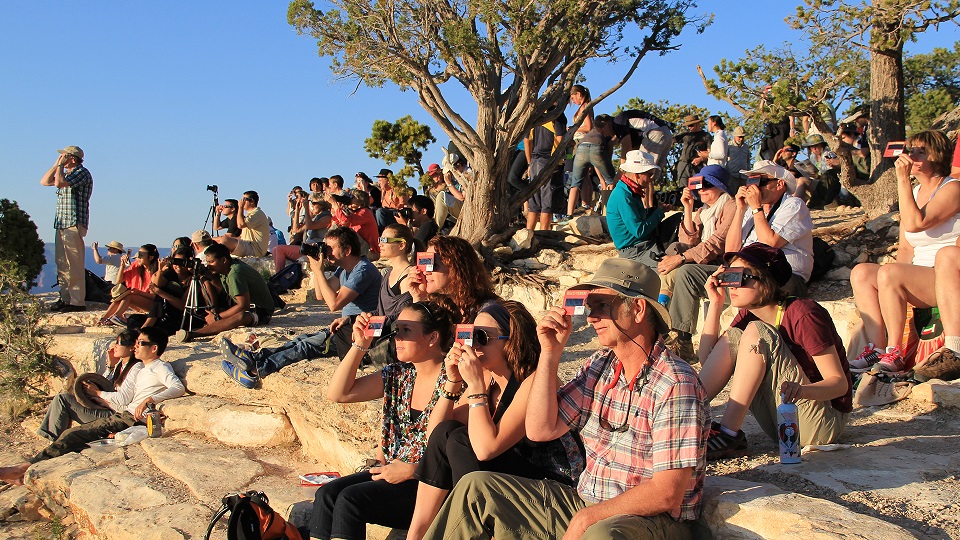
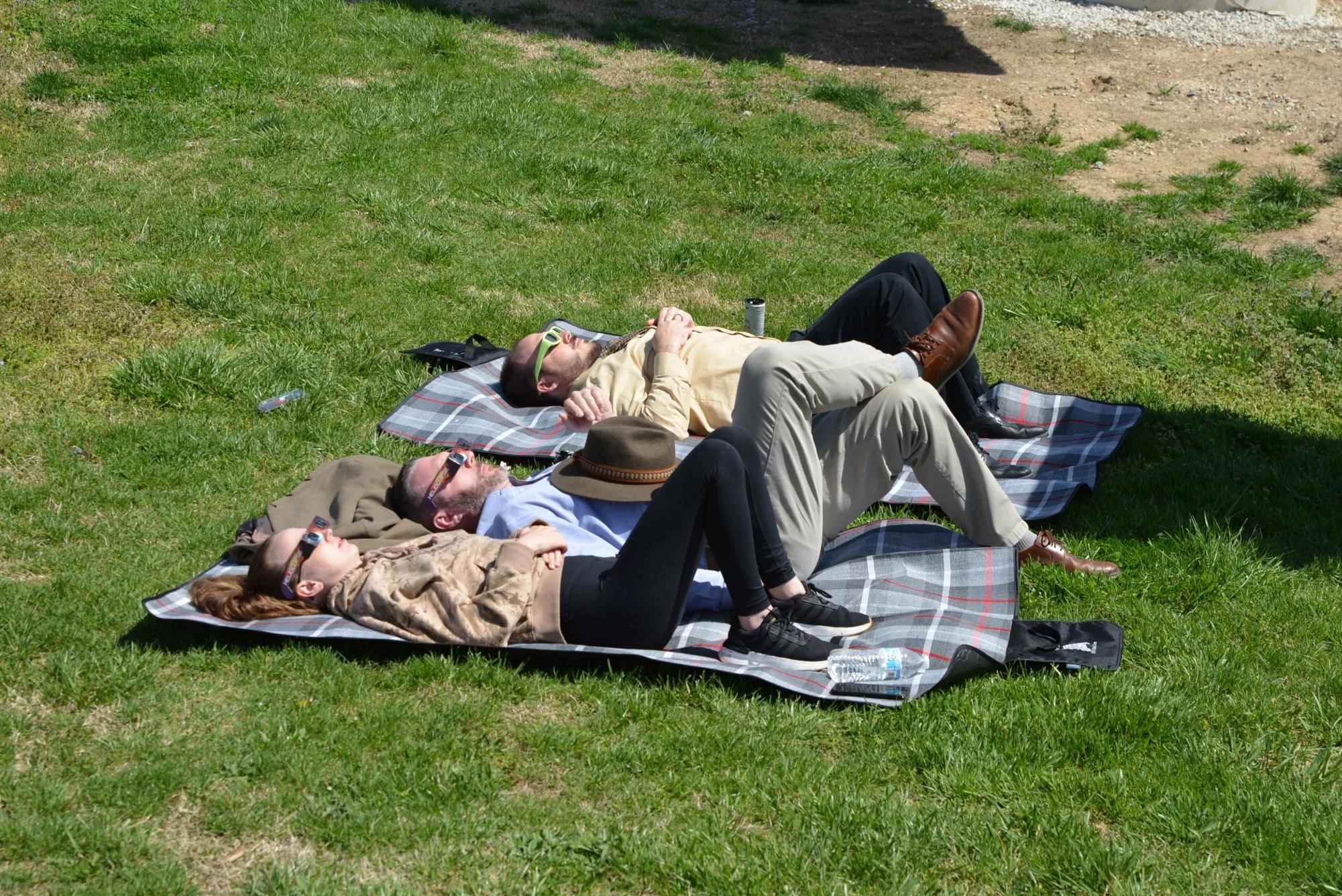
If anyone wants to observe, park legally, switch off the vehicle and get everyone clear of moving traffic first. Put viewers on before looking up, then turn away before removing them. Children should be supervised. Inspect every viewer and discard it if the filter is scratched, punctured, torn or separating from the frame.
Only people who are stationary, confirmed to be inside the path of totality, and certain that the Sun’s bright face is completely covered may view totality without solar viewers. The viewers must go back on as soon as bright sunlight begins to reappear. In Madrid, Barcelona and every other location experiencing only a partial eclipse, there is no glasses-off phase. Our first-timer’s guide to eclipse phases explains that transition in detail.
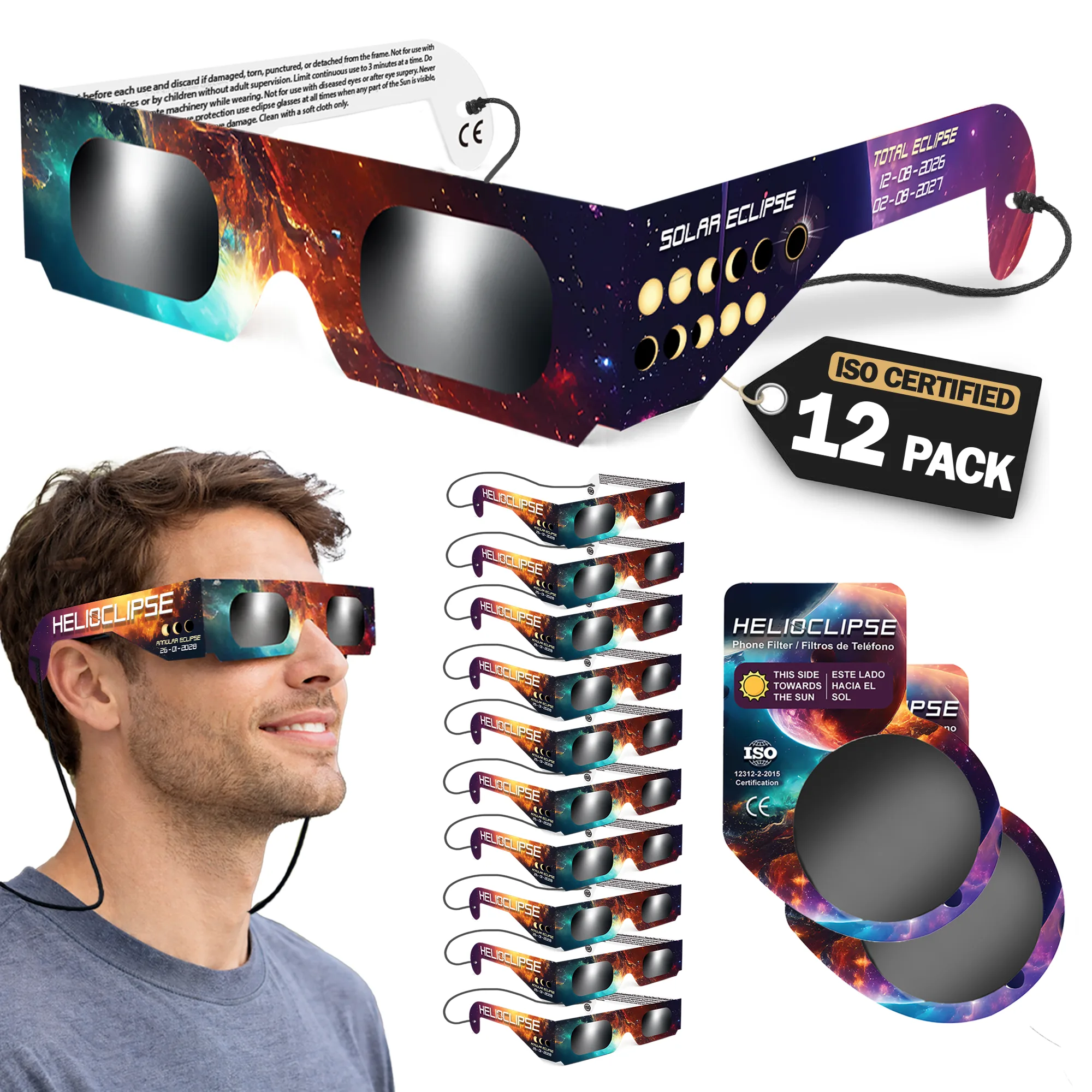
Product wording can be confusing. NASA does not approve individual brands, so claims such as “eclipse glasses NASA approved” should not be treated as a real certification category. What matters for direct viewing is special-purpose eclipse viewing glasses that conform to the ISO 12312-2 international standard and are undamaged. If you are preparing a group, arrange certified solar eclipse glasses early and keep them protected from keys, grit and luggage inside the car.
Cameras, binoculars and telescopes require solar filters designed for those optical systems and secured over the front of the optics. Wearing eclipse glasses while looking through an unfiltered magnifying device is not safe.
A rental-car checklist for August 12
Before booking
- Plot your base and candidate sites on the eclipse map.
- Confirm total versus partial eclipse at each coordinate.
- Compare totality duration, horizon direction and solar altitude.
- Read the insurance, excess, deposit and exclusion terms.
- Check authorised drivers, mileage, fuel, charging and late-return rules.
- Reserve accommodation or create a deliberate delayed-departure plan.
At collection
- Match the driver names, dates and vehicle to the booking.
- Photograph every panel, wheel, window and existing mark.
- Record mileage, fuel or charge, and warning lights.
- Save the agreement, damage report and assistance number offline.
- Ask how tolls and after-hours return charges are handled.
Before eclipse day
- Verify local parking rules and temporary traffic notices.
- Inspect the western or west-northwestern horizon near sunset.
- Download offline maps and share coordinates with your group.
- Pack water, food, medication, power banks and solar viewers.
- Fill the tank or charge early; identify alternatives.
- Agree that the driver will not look at the Sun while the car is moving.
At the viewing site
- Park only where permitted and keep emergency access clear.
- Leave enough room to depart without crossing crowds.
- Keep the keys secure and valuables out of sight.
- Observe the partial phases only with proper solar protection.
- Expect to wait after totality instead of joining the first traffic surge.
The phrase rental cars and eclipse weekend: insurance legibility, scratches, and the parking fantasy captures the three avoidable mistakes: trusting a vague coverage label, failing to document the car, and assuming beautiful open land includes unlimited public parking. Solve those before eclipse day and the vehicle can do what it is actually good at—supporting a calm, flexible plan.
Frequently asked questions
What should I check in a rental-car booking for the August 2026 eclipse in Spain?
Check the wording of your booking and insurance carefully, and document the vehicle’s condition with photographs when you collect it. The article notes that these details, along with parking legally, may matter more than the type of car you rent during a high-demand eclipse weekend.
Can a rental car help me avoid eclipse traffic and parking problems?
No. A car can give you flexibility to move between researched viewing sites, but it cannot create a parking space, make a farm entrance a public viewing area, or bypass departure queues when many people leave at once.
Where and when should I drive for the best eclipse viewing conditions?
Choose a site inside the path of totality with a genuinely clear west-northwest horizon, because totality occurs late in the day with the Sun low in the sky. Check the circumstances for your exact coordinates rather than relying on a city-wide estimate, and remember that hills, buildings, trees, or even a distant ridge can block the view.
What is the safest way to observe the eclipse according to this guide?
The excerpt does not provide specific eye-protection instructions. It does advise planning for a legal viewing and parking location and confirming that the site has an unobstructed west-northwest horizon before travelling.
How should I plan for changing weather and visibility on eclipse day?
Prepare two or three researched viewing sites within a realistic driving range, as a rental car can help you respond to a changing cloud forecast. Verify that each option is inside totality and has a visible western horizon, rather than assuming that being within the broad path is enough.
On-site next steps
- Open the Helioclipse 3D eclipse map and compare your accommodation, primary viewing site and two backups. Check path position and exact local circumstances rather than relying on the nearest city name.
- Once the group plan is settled, order ISO 12312-2 eclipse glasses from Helioclipse early enough to inspect and distribute them before the trip.
- Send the route, parking plan and safety rule to every driver now: nobody looks at the partial Sun from a moving vehicle.
Sources & further reading
- Instituto Geográfico Nacional: Eclipse solar de 2026 — official Spanish eclipse context; editors should verify the live URL before publication.
- Space.com: Spain's total solar eclipse 2026 comes with a catch — here's how to avoid ruining your view.
- Space.com: Eclipse chasers share insider tips, travel advice and skywatching secrets for the 2026 total solar eclipse.
- Space.com: 10 easy places to see the total solar eclipse 2026 from Spain's major vacation destinations.
- Wiber Rent a Car: Solar Eclipse 2026: guide and best places to see it by hire car — an operator’s event guide, not an independent source of insurance advice.
- American Astronomical Society: How to view a solar eclipse safely.
- NASA Science: Eclipse Viewing Safety.
- American Astronomical Society: Eclipse basics.
- NASA Science: What to Expect: A Solar Eclipse Guide.
- Your Europe: Car rental.