Small boats and eclipse day: stability, glare off water, and why skippers stay heads-up
A solar eclipse can transform familiar water in minutes. The light flattens, the horizon changes color, and every other person aboard wants to look up at once. On a small boat, however, the most important part of the spectacle may still be directly ahead: another vessel, a swimmer, a shoal, a wake, or an anchor dragging across the bottom.
That is the central rule of small boat sailing solar eclipse viewing safety: the eclipse never outranks seamanship. The person at the helm does not stare at the Sun, fiddle with a camera, or join a countdown while the vessel is underway. If everyone wants to observe, choose a legal and suitably sheltered place to stop before the partial phase becomes distracting—and confirm the eclipse geometry for that position with our Eclipse Explorer and 3D map.
The phrase small boat sailing solar eclipse viewing safety 2026 guide sounds event-specific, but the operational lessons apply to any eclipse on a boat. The total eclipse of August 12, 2026 crossed parts of Greenland, western Iceland, northern Spain, and nearby waters. It also demonstrated why a large ship’s weather team, bridge crew, stabilizers, and maneuvering room cannot be treated as a model for a family in a dinghy, RIB, fishing boat, or compact yacht.
The eclipse is not the skipper’s main job
The skipper remains responsible for the vessel, passengers, lookout, speed, and compliance with the applicable navigation rules. Under the International Regulations for Preventing Collisions at Sea—the COLREGs—vessels must maintain a proper lookout using sight, hearing, and all available means appropriate to the circumstances. Safe speed and early, clear action to avoid collision still matter when the sky becomes the center of everyone else’s attention.
COLREGs generally govern vessels on the high seas and waters connected to them that are navigable by seagoing vessels; inland or local authorities may impose additional or different rules. Check the rules for your actual waterway, harbor, marina, or lake rather than assuming one international summary covers every situation.
A useful briefing label is maritime safety primacy—life jackets, colregs, no sun eclipse planning. The wording is blunt because the hierarchy should be blunt: flotation and vessel control first, collision avoidance second, solar observation only when those duties are covered. A better view is never a reason to enter a traffic separation scheme, obstruct a channel, anchor where prohibited, overload a tender, or continue into conditions that exceed the boat or crew.
If the boat must remain underway, appoint a dedicated observer and accept that the skipper may miss the eclipse. Switching helm watch is reasonable only when the handover is unhurried and the replacement is competent, properly briefed, and already oriented to traffic and hazards. Passing over the wheel while both people are looking skyward is not a handover.
Stop first, then look up
The safest small-boat plan is usually to reach a suitable viewing area early and stop well before the most dramatic phases. That could mean returning to a berth, securing to an authorized mooring, beaching where lawful and appropriate, or anchoring in adequate depth and holding ground outside navigation channels. “Stopped” must mean safely secured—not merely drifting with the engine in neutral.
Before anchoring, check charted restrictions, depth through the expected tidal window, swing room, wind direction, current, bottom type, nearby cables, and the position of other anchored boats. Use enough appropriate ground tackle for the conditions and keep monitoring your position. An eclipse does not stop wind, tide, current, or wakes.
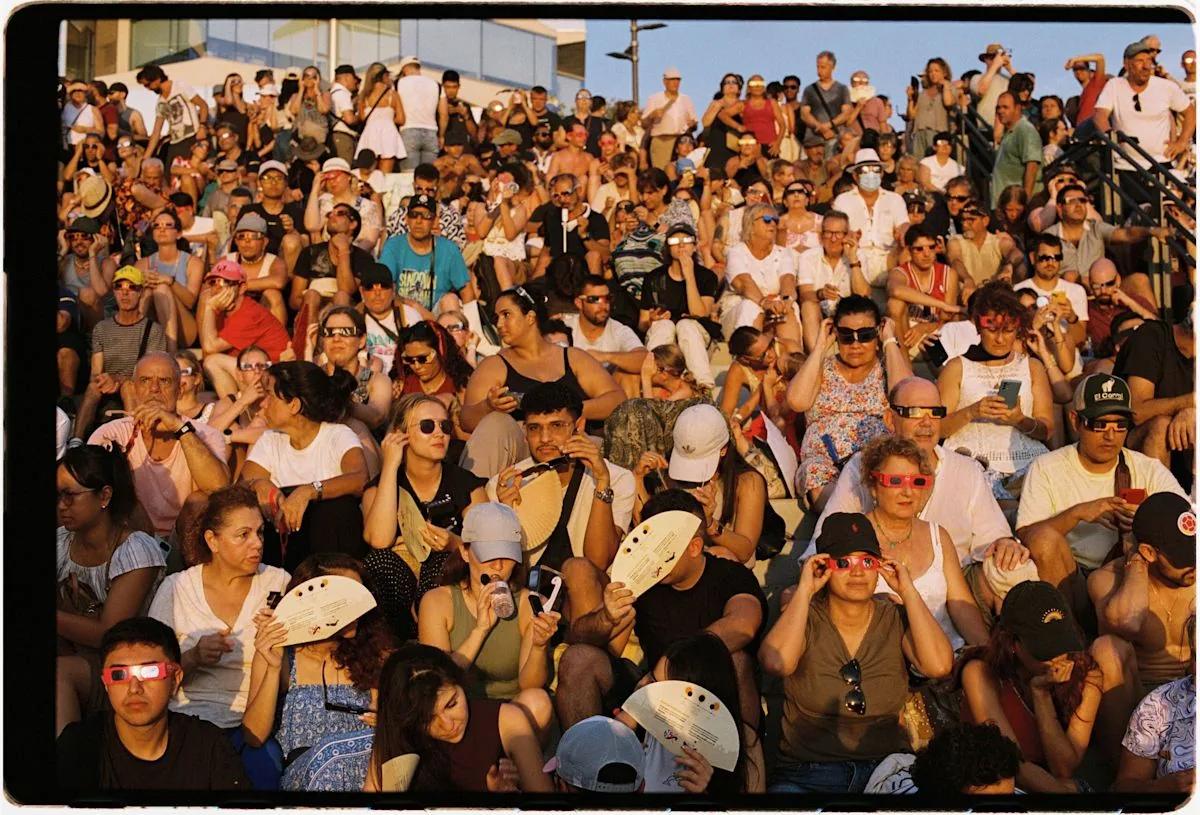
Crowding can make familiar water unfamiliar. Launch ramps may queue, marina approaches may fill, and inexperienced boaters may stop unpredictably. Arrive with a backup site and enough fuel, water, food, medication, sun protection, and time to wait for congestion to ease. Do not assume you can race back to the ramp immediately after maximum eclipse.
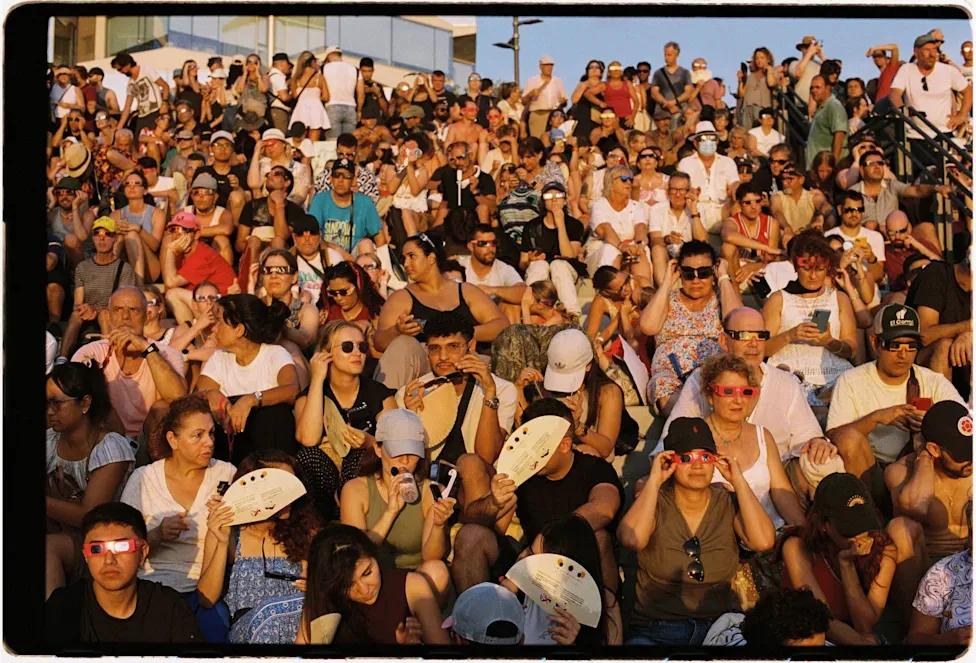
For a solar eclipse on a boat, give every person a specific place to sit or brace before anyone uses a viewer. A group that suddenly moves to one rail can change the trim of a small vessel. On a narrow dinghy or tender, even one adult standing for a better horizon view can raise the center of gravity and make a passing wake much more consequential.
Stability is a viewing-safety issue
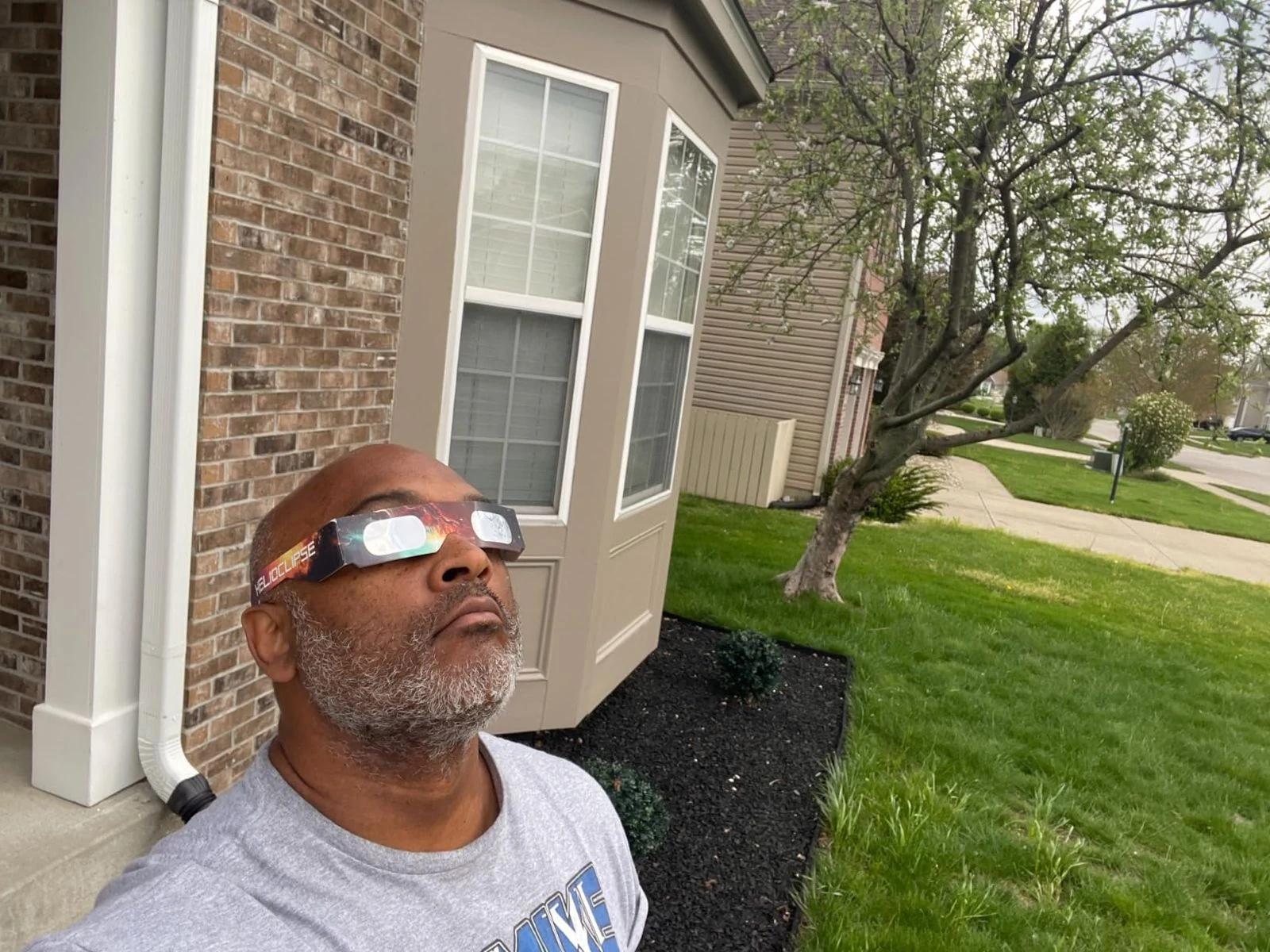
Purpose-made eclipse viewers drastically reduce sunlight, which also means they obscure almost everything except the Sun. While wearing one, you cannot reliably see a loose line, an open hatch, a wave approaching the beam, or another passenger shifting position. That is why the American Astronomical Society advises observers to stand still, cover their eyes before looking up, turn away before removing the viewer, and supervise children. Aboard a small craft, adapt “stand still” to the safer instruction: remain seated or firmly braced on a secured vessel.
A small sailboat solar-observing plan should settle several questions before departure:
- Where will each passenger sit?
- Who monitors traffic, the anchor, and weather while others observe?
- Are life jackets being worn, not merely stored aboard?
- Can viewers be reached without crossing the cockpit or foredeck?
- Are sheets, hooks, fishing gear, and loose equipment stowed?
- What wake, wind, or anchor-drag condition will end the observing session?
Wear an appropriate, correctly fitted personal flotation device according to local requirements and the conditions. Children and non-swimmers need especially close attention. A life jacket is not permission to load beyond capacity, stand on a gunwale, or operate in unsuitable weather; it is one layer in a wider safety system.
The phrase small boats and eclipse day: stability, glare off water, and why skippers stay heads-up captures three connected risks. Movement makes filtered viewing awkward, reflected light causes discomfort outside the viewer, and the shared temptation to look up can erase the lookout exactly when nearby crews may be distracted too.
Reflected glare and the eclipsed Sun are different hazards
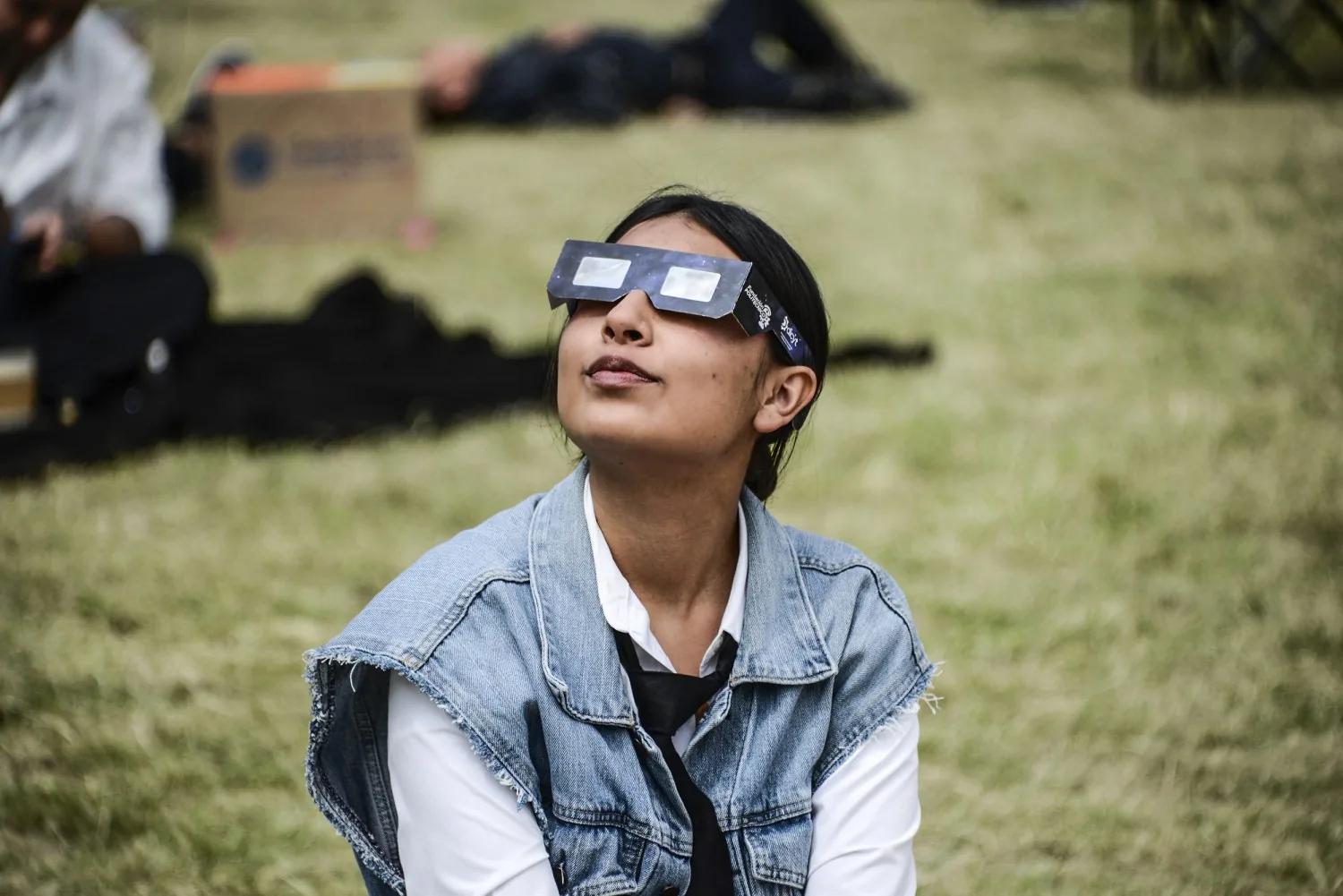
Water glare and direct solar viewing require different tools. Ordinary polarized boating sunglasses can reduce discomfort from reflections off the water, but no ordinary sunglasses—regardless of darkness, price, or polarization—make it safe to stare at the Sun. A proper solar eclipse viewer is designed for direct, unmagnified observation of the bright solar disk and should conform to ISO 12312-2.
Use normal sunglasses for routine deck awareness, then switch deliberately to a solar viewer only after sitting or bracing securely. Cover your eyes before looking toward the Sun. After a brief look, turn your face away before removing the viewer and return to normal visual awareness. Never walk around the deck wearing eclipse glasses.
Salt haze, spray, humidity, and a low Sun can reduce contrast near the horizon without reducing the Sun’s ability to injure the retina. A dim orange appearance through atmospheric haze is not evidence that direct viewing is safe. It may also make boats, buoys, and shoreline features harder to distinguish, increasing the importance of a proper lookout.
Cardboard viewers must be kept dry and protected from scratches, punctures, and bending. Store them in a rigid, dry container or sealed bag until needed, inspect every filter in daylight, and discard damaged units. Do not wipe a cardboard viewer with wet tissues or spray cleaner. Tell your group early, especially if children are coming, so you have enough intact ISO 12312-2 eclipse glasses aboard rather than sharing one damp or creased pair in a hurry.
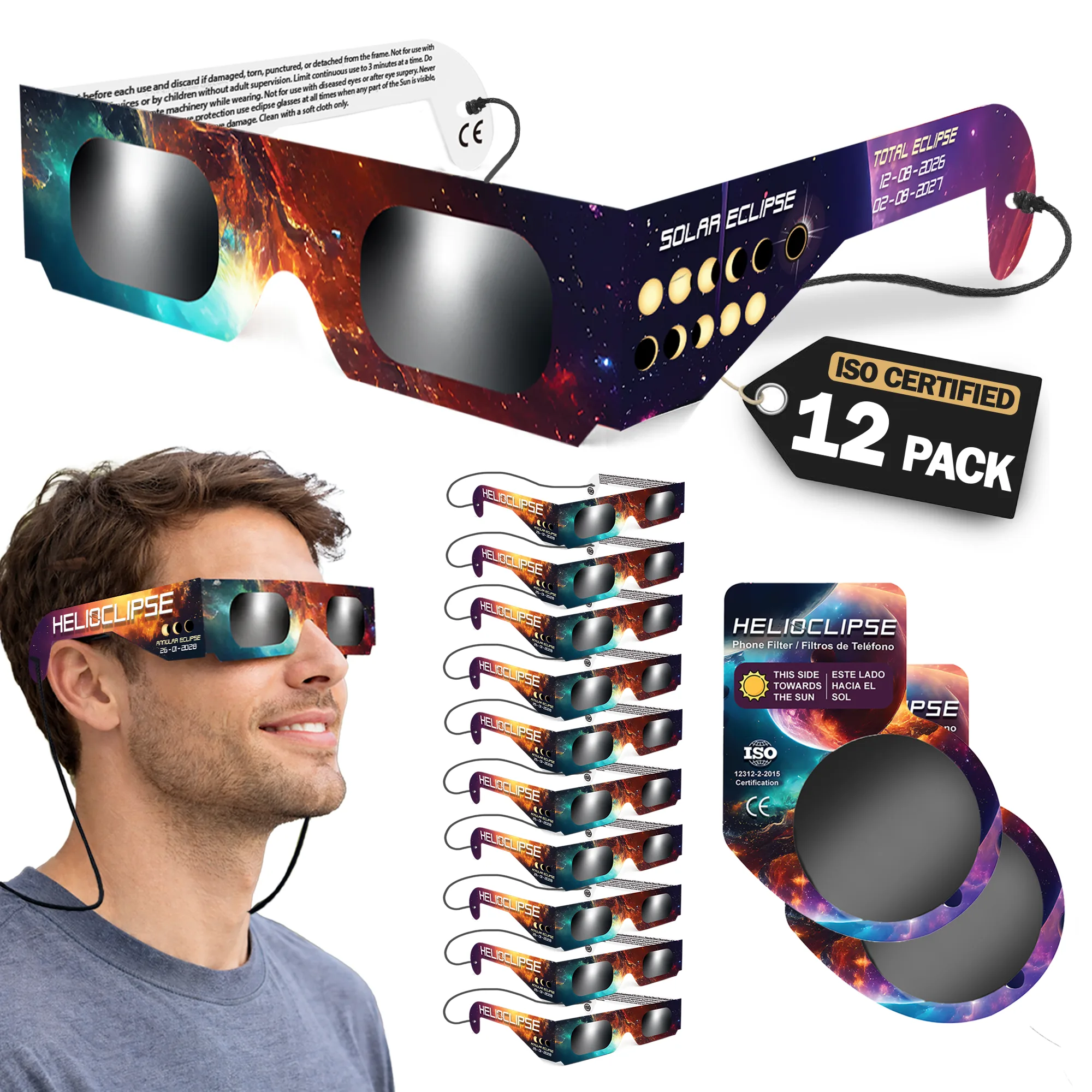
Shopping language can be confusing. Phrases such as certified solar eclipse glasses, eclipse glasses ISO 12312-2, and eclipse viewing glasses should lead you to inspect the product labeling, instructions, condition, manufacturer information, and evidence behind the conformity claim. NASA provides safety guidance but does not approve individual brands, so “NASA approved” is not an official product category.
Partial phases, totality, and a low marine horizon
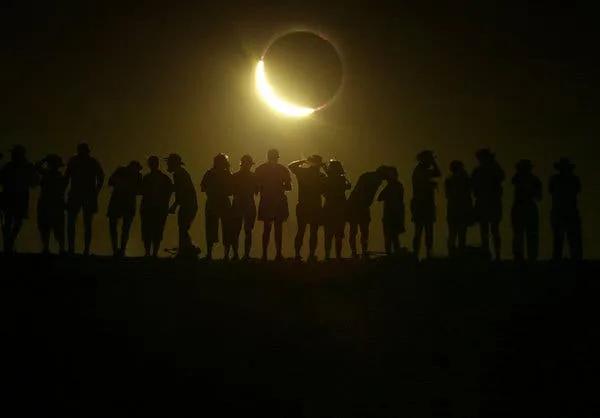
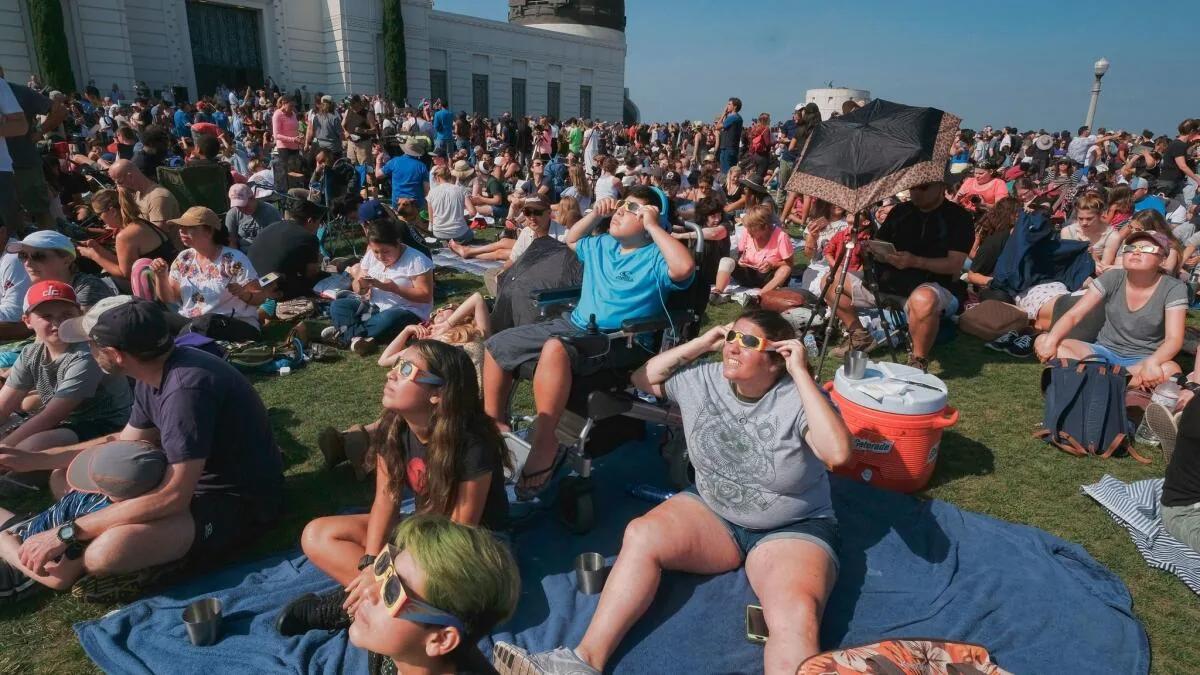
A solar eclipse of the Sun occurs when the Moon passes between Earth and the Sun and blocks some or all of the bright solar face. During every partial phase, direct viewing requires a suitable solar viewer. The same is true throughout a partial or annular eclipse: there is no filter-free interval.
Only observers inside the path of a total solar eclipse may look with unaided eyes during the brief period when the Moon completely covers the Sun’s bright face. Viewers must go back on as soon as any bright photosphere reappears. Outside the path, even a 99% partial eclipse is never totality; the remaining solar crescent is still intensely bright. Our guide to when glasses go on and off during each eclipse phase explains that boundary in more detail.
On a small boat, we recommend a conservative procedure: one informed observer calls the phases, while the skipper or designated lookout continues watching the vessel’s surroundings. Nobody removes a viewer merely because the ambient light has become dim. If position, timing, cloud, or phase identification is uncertain, keep the viewer on for every direct look.
The August 12, 2026 eclipse made horizon planning especially important around Spain and the western Mediterranean. The path crossed northern Spain and continued toward the Balearic area, with totality in Spain reaching roughly 1 minute 44 seconds near the longest part of that regional track. Near the Balearic Sea, the Sun was only a few degrees above the west-northwestern horizon around totality. A clear sky overhead could not compensate for a cloud bank, headland, mast, or coastal ridge directly in front of the Sun.
Western Iceland offered a different geometry. Parts of the Reykjanes Peninsula, Snæfellsnes Peninsula, and Westfjords lay inside the path, with reported maximum land totality near 2 minutes 13.7 seconds and the Sun around 25 degrees above the southwestern horizon. Scoresby Sund in eastern Greenland was also inside totality, with circumstances around 2 minutes 17 seconds and a solar altitude near 25 degrees. Those numbers show why “on the water” is not one viewing condition: horizon height, path position, weather, sea state, remoteness, and rescue capability differ enormously.
The 2024 total solar eclipse, which crossed Mexico, the United States, and Canada, also brought boats onto crowded waterways. Its lesson was not that boats guarantee a view. It was that eclipse traffic adds a human variable to ordinary navigation risks before, during, and after the astronomical event.
Weather mobility is easy to overestimate
Large eclipse ships can sometimes use professional forecasts, satellite imagery, bridge teams, and substantial cruising speed to maneuver around cloud. In one reported 2026 Mediterranean case, satellite imagery showed developing convection near Spain’s coast; a course adjustment helped a large vessel retain a clear view, and totality lasted about 95 seconds from its position. In a contrasting 2021 voyage near Antarctica, another ship changed course but still encountered complete cloud cover during approximately 97 seconds of totality.
Those stories illustrate uncertainty, not a strategy for recreational crews to imitate. A solar eclipse boat weighing a few hundred kilograms does not have the range, stability, communications, forecasting support, or command structure of an 11,000-ton ship. Chasing a satellite gap should never draw a small craft offshore, toward thunderstorms, into poor visibility, or beyond its fuel and crew limits.
Check marine forecasts, warnings, tides, radar, and satellite products before departure and continue monitoring appropriate official channels. Set explicit cancellation thresholds for wind, waves, lightning, visibility, heat, and crew condition. A cloud-out is disappointing; an unsafe return in darkness, squalls, or heavy traffic is unacceptable.
Weather is only one reason to abort solar eclipse sailing. Turn back or stay ashore if the engine, steering, radio, navigation lights, bilge system, anchor gear, or required safety equipment is not dependable. “We might miss it” is exactly the kind of pressure that good go/no-go rules are designed to defeat.
Cameras, phones, and binoculars create extra failure points
A phone screen is not eye protection, and pointing a phone at the Sun does not make it safe to glance repeatedly at the Sun while composing the image. It can also absorb both hands and narrow your awareness at the worst moment. On a moving or crowded deck, skip elaborate photography unless a separate, competent person can operate the equipment from a secure position without interfering with navigation.
Never look at the uneclipsed or partially eclipsed Sun through unfiltered binoculars, a telescope, a camera viewfinder, or another magnifying optical device. Wearing eclipse glasses behind unfiltered binoculars is especially dangerous: the optics concentrate sunlight before it reaches the viewer and can damage the filter and your eyes.
Optical equipment needs a correctly selected solar filter attached securely over the front aperture, with expert guidance appropriate to that instrument. Wind and vessel motion introduce additional chances for a filter to shift or detach, which is one reason a small moving boat is a poor platform for improvised solar optics.
Indirect projection can show the partial phases without direct solar viewing, but common land-based setups are often impractical aboard a small craft. A projection card that blows overboard or encourages people to cluster on one side does not improve safety. If you cannot use a direct viewer securely, enjoy the changing light and projected crescents later from a stable shore location.
A practical eclipse-day watch plan
The best places and timing for small boat sailing solar eclipse viewing safety depend on the path, local rules, weather, tides, horizon, and availability of a genuinely safe stopping point. Plot the astronomical position first, then apply marine judgment. Do not begin with an attractive spot on an eclipse map and assume the anchorage will work.
A compact plan can divide the day into four stages:
Before leaving
File or share a float plan, check required equipment, charge communications, inspect the boat, and brief everyone. Mark the eclipse contacts and the Sun’s bearing and altitude, but also mark hazards, prohibited areas, alternate harbors, and the latest safe return time. Tell a responsible person ashore where you are going and when to expect you back.
Before the partial phase
Reach the viewing position early. Secure the vessel, verify that the anchor or mooring is holding, stow loose gear, distribute dry viewers, and put passengers in assigned seats. Establish one skipper or lookout who remains heads-up throughout.
During the eclipse
Use viewers only while safely stopped and seated or braced. Take short looks rather than staring continuously. Keep monitoring traffic, position, wind, wakes, and passenger movement. If the vessel begins dragging, weather deteriorates, or traffic closes in, the observing session ends immediately.
After maximum eclipse
Remember that the partial phase continues, so viewers are still required for direct looks at the Sun. Do not join a simultaneous rush toward a ramp or marina if waiting is safer. Check every passenger, recover loose equipment, confirm the route and conditions, and make an orderly departure.
That is the real difference between seeing an eclipse on a boat and operating a boat during an eclipse: the first is an aspiration; the second is a continuous responsibility.
Casual Navigation
Frequently asked questions
What precautions should a small-boat crew take during a solar eclipse?
Keep vessel control, flotation, lookout duties, safe speed, and collision avoidance ahead of observing the eclipse. If everyone wants to watch, stop beforehand in a legal, suitably sheltered location rather than becoming distracted while underway.
How quickly can eclipse viewing harm your eyes?
The excerpt does not state how long eye damage may take after looking at an eclipse. It does say that the person at the helm should not stare at the Sun while the vessel is underway.
Is there an alternative to eclipse-viewing glasses mentioned for use on a boat?
No alternative viewing method is identified in the excerpt. Its guidance focuses on seamanship: the skipper should remain heads-up and avoid operating the boat while trying to observe or photograph the eclipse.
What eye protection does the article recommend for watching a solar eclipse?
The excerpt does not specify any type of eye protection. It emphasizes that solar observation must come only after vessel control, lookout, collision avoidance, and applicable navigation rules are covered.
What is the main takeaway from this article for eclipse day on a small boat?
An eclipse never outranks seamanship on a small boat. The skipper remains responsible for the vessel, passengers, lookout, speed, and navigation compliance, even when everyone aboard wants to look up.
On-site next steps
- Check your exact position in the Helioclipse Eclipse Explorer. Confirm whether the location is inside or outside totality, then note the local phase times, Sun altitude, and direction—but verify marine access and navigation conditions separately.
- Read our 2026 total solar eclipse planning guide for the event’s broader geographic and timing context.
- Prepare dry, undamaged ISO 12312-2 certified viewers from Helioclipse for every observer who can use them securely. Viewers support safe solar observation; they do not replace life jackets, lookout duties, local navigation rules, or the skipper’s judgment.
Sources & further reading
- Tips for Safely Viewing the April 8th Solar Eclipse from a Boat — National Safe Boating Council practical guidance.
- Advice For Waterborne Eclipse-Watchers — waterborne viewing, congestion, anchoring, and glare considerations.
- A weather satellite 22,000 miles above Earth saved my 2026 total solar eclipse cruise on the Mediterranean Sea — Space.com account of weather monitoring and course decisions at sea.
- Here's what the only total solar eclipse of 2021 was like from a cruise ship near Antarctica — Space.com report illustrating the limits of mobility under widespread cloud.
- Eclipse chasers share insider tips, travel advice and skywatching secrets for the 2026 total solar eclipse — regional path, horizon, weather, and duration context.
- Eclipse Viewing Safety — NASA guidance for partial phases, totality, indirect viewing, and optical equipment.
- How to View a Solar Eclipse Safely — American Astronomical Society instructions for direct and indirect observation.
- Solar Filters for Optics: Telescopes, Binoculars & Cameras — AAS technical guidance for front-mounted optical filters.
- About the ISO 12312-2 Standard for Solar Viewers — scope, testing context, and limitations of the solar-viewer standard.
- Eclipses Frequently Asked Questions — NASA reference covering eclipse types, prediction, science, and basic safety.