International eclipse travel: documents, timing, and realistic expectations
A total solar eclipse can justify a passport renewal, a long-haul flight, a family group chat, and a year of anticipation. It can also humble you fast. You may travel internationally for a celestial event that lasts under two minutes at your location, depends on a narrow shadow path, and can still be spoiled by one badly placed ridge, one traffic jam, or one cloud bank.
That is why international eclipse travel documents are only one part of the plan. You need the paperwork, yes—but you also need timing discipline, a realistic weather mindset, and a clear understanding of what counts as success. If you are already thinking about eclipse travel 2026 on the Helioclipse 3D map, start there: confirm whether your target spot is actually inside totality, how long totality lasts, and how low the Sun will be.
This guide is our practical take on international eclipse travel: documents, timing, and realistic expectations. It is not legal advice, and rules change. Think of it as a framework for general travel documentation concepts—remind readers to verify eclipse planning against current government sources, airline rules, and official destination guidance before you spend serious money.
Why eclipse travel is different from ordinary tourism
Most trips forgive small mistakes. Eclipse trips often do not.
A total solar eclipse is visible only inside a narrow path of totality. NASA explains the geometry clearly: the Moon’s darkest shadow covers a relatively small strip of Earth, while a much larger region sees only a partial eclipse. That difference is everything. A 99% partial eclipse is not “basically total.” If the bright solar disk is not fully covered, you do not get the corona, the sudden darkness of totality, or the same emotional punch. If you are new to that distinction, read our guide to when glasses on, when glasses off during eclipse phases.
For the Aug. 12, 2026 total solar eclipse, the path crosses remote parts of Greenland, western Iceland, and northern Spain before ending near the Balearic region. Space.com reports a maximum totality of about 2 minutes 18 seconds somewhere along the full track, with notable on-land durations in western Iceland around 2 minutes 13 to 14 seconds and many Spanish locations closer to roughly 1 minute 40 to 1 minute 50 seconds. That is enough time to change your life as a skywatcher. It is not enough time to fix a bad plan.
This is also why the phrase eclipse travel line matters more than it sounds. People often mean the centerline or the path itself, but for planning purposes you should care about three separate questions: are you inside totality at all, how far are you from the centerline, and what is your horizon like? A place near the edge of the path may get only a few tens of seconds of totality. A place near the centerline may get significantly longer. In Spain in 2026, that difference can be the difference between a brief gasp and a more settled look at the corona.
Documents first: what to verify before you lock in the trip
The safest way to think about general travel documentation concepts remind readers to verify eclipse planning is to separate them into layers.
First, verify your passport validity. Many destinations require more validity than “good on the day you arrive.” Some also require blank pages, proof of onward travel, or specific entry conditions for minors traveling with one parent or with grandparents. If your eclipse plan involves Iceland, Spain, Greenland, or a cruise that touches multiple jurisdictions, do not assume one booking confirmation solves all of that.
Second, verify visa or entry authorization requirements based on your citizenship, not your itinerary fantasy. Rules can differ for tourism, transit, cruise embarkation, and short stays. If you are connecting through another country, check transit rules too. A route that looks simple on a booking site can create an extra document requirement.
Third, verify health, insurance, and driving paperwork. If you plan to rent a car, confirm license requirements, age restrictions, insurance terms, and whether an international driving permit is recommended or required. If you are boarding a ship, expedition operator, or packaged tour, read the operator’s document deadlines carefully. Some cruise and expedition companies want passport details months in advance.
Fourth, verify re-entry requirements for getting home. Eclipse travelers sometimes focus so hard on the destination that they forget the return leg. If your passport is near expiration, if your name does not match across bookings, or if you are traveling with children and consent documents matter, fix that early.
We are deliberately staying at the level of general travel documentation concepts—remind readers to verify eclipse planning because current rules belong to governments and carriers, not to a blog post. Use official immigration, foreign ministry, embassy, airline, and cruise-operator pages as your final authority.
Timing is not just the eclipse clock
When people search for an international eclipse travel documents 2026 guide, they often mean “tell me when to book.” The honest answer is: earlier than you think, and with more slack than you think.
For a major event like eclipse travel 2026, timing has at least five layers:
1. Document timing
Passport renewals, visas, parental consent paperwork, and travel insurance all take time. If you wait until flights are rising and hotels are scarce, you are already under pressure.
2. Booking timing
Hotels and rentals in the path can fill far ahead of eclipse day. NASA’s eclipse guidance has long emphasized that lodging in the path of totality sells out quickly. Space.com’s 2026 coverage says the same thing in practical terms: people are already locking in plans well ahead of Aug. 12, 2026.
3. Arrival timing
Do not aim to arrive in the path on the same day unless you have no other option. In Iceland, local traffic and single-lane road bottlenecks could matter. In Spain, experienced eclipse chasers have warned against treating eclipse day like a casual afternoon drive from a major city. If you are still on the highway when first contact begins, your stress level will be doing the opposite of what the sky deserves.
4. Mobility timing
If weather is uncertain, your best asset is time to move. That means a car, a driver, fuel or charge, and enough margin to relocate without panic. NASA explicitly advises getting to your site early and expecting heavy post-eclipse traffic.
5. Recovery timing
Do not build a plan that assumes you will watch totality, sprint to the airport, and glide home. After a major eclipse, roads clog, fuel stops get busy, and cell networks can struggle. If you can, stay the night.
That is the realistic core of any eclipse travel checklist: documents, bookings, arrival buffer, mobility, and a calm exit plan.
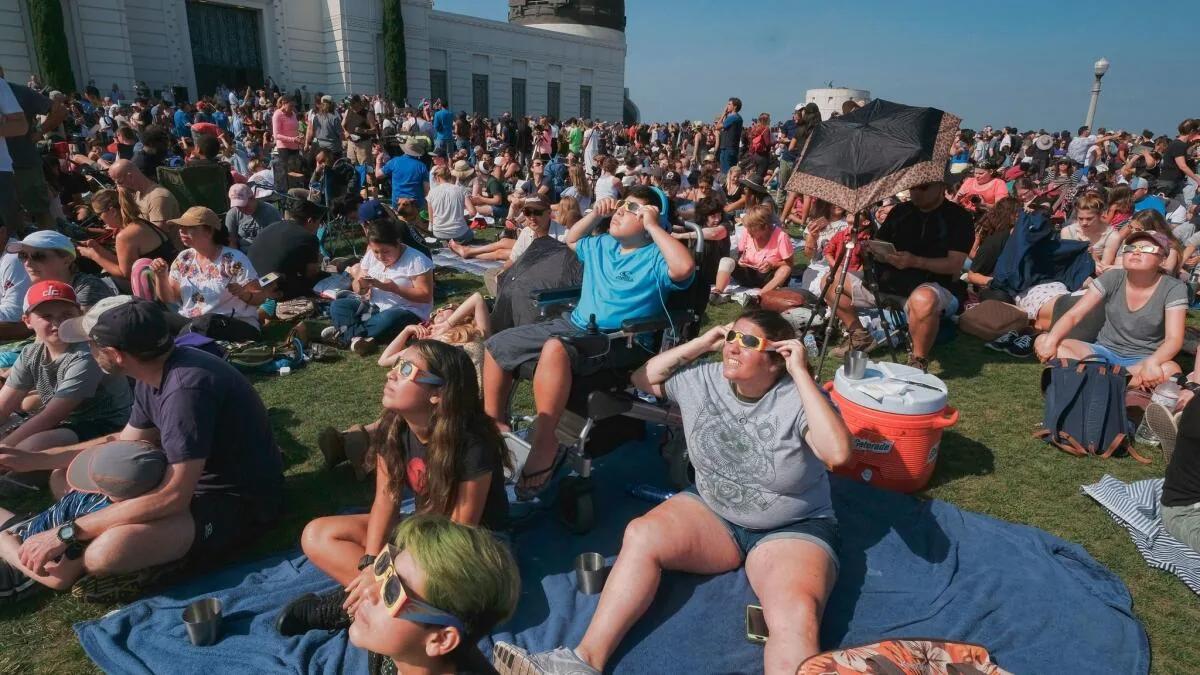
Where 2026 gets real: Iceland, Spain, Greenland, and the sea
If your eclipse 2026 trip is still flexible, the 2026 event offers very different tradeoffs depending on where you go.
Iceland: longer totality on land, but weather risk
Western Iceland is one of the headline destinations for 2026. Space.com reports totality around 59 seconds in Reykjavík, about 1 minute 42 seconds near Garður on the Reykjanes Peninsula, around 2 minutes 5 to 10 seconds near Snæfellsjökull, and roughly 2 minutes 14 seconds at Látrabjarg in the Westfjords. The Sun will be around 25 degrees above the western sky—much more comfortable than the very low Spanish geometry later in the evening.
That is the good news. The hard part is weather. Iceland can change quickly, and mobility matters. The practical upside is that the eclipse happens late enough in the day that you may have time to use forecasts and move. The practical downside is that many other people may try the same thing.
Spain: easier access, lower Sun, huge demand
Northern Spain will attract a lot of first-time and repeat eclipse travelers because access is simpler for many Europeans and weather odds can be better than Iceland’s in some inland zones. But Spain in 2026 is not one simple answer.
The eclipse reaches Galicia around 7:30 p.m. CEST and then crosses northern Spain in the early evening. Space.com cites examples such as Gijón at about 1 minute 46 seconds around 8:26 p.m. CEST, Palencia at about 1 minute 42 seconds around 8:29 p.m., Burgos at about 1 minute 44 seconds around 8:28 p.m., and Sigüenza at about 1 minute 38 seconds around 8:30 p.m. The catch is altitude: in many Spanish locations the eclipsed Sun is only around 7 to 10 degrees above the west-northwest horizon, and in Mallorca it can be under 3 degrees. That is gorgeous if your horizon is open. It is brutal if a hill, building, or mountain sits in the wrong place.
Madrid and Barcelona are especially important examples because they tempt travelers into wishful thinking. Both are expected to see an extremely deep partial eclipse—Space.com gives about 99.96% for Madrid and 99.82% for Barcelona—but they are outside totality. That means no safe glasses-off totality moment there, and no corona. If you are planning around Spain, our 2026 totality in Spain guide is the better next read.
Greenland: extraordinary setting, harder logistics
Eastern Greenland offers a rare Arctic eclipse experience, especially around Scoresby Sund. Reported totality there is on the order of 1 minute 45 to 1 minute 46 seconds, with the Sun roughly 24 to 26 degrees above the western horizon. This is not the easy option. It is expensive, remote, and often tied to expedition-style travel. But for some travelers, that is the point.
Cruises and offshore viewing
You will also see interest in 2026 eclipse travel packages, expedition voyages, and cruise itineraries. Some travelers love the idea of mobility at sea, especially if the ship can chase clearer skies. Others underestimate the tradeoffs: seasickness, horizon constraints from ship position, schedule rigidity, and the fact that “best weather” on paper does not guarantee your vessel will be in the right patch of clear sky at the right minute.
If you are comparing land plans with 2026 eclipse travel packages, ask very plain questions: Where is the planned viewing zone? How much flexibility does the operator really have? What happens if port logistics or weather shift the route? What documents are due, and when? A cruise can be brilliant, but it is not magic.
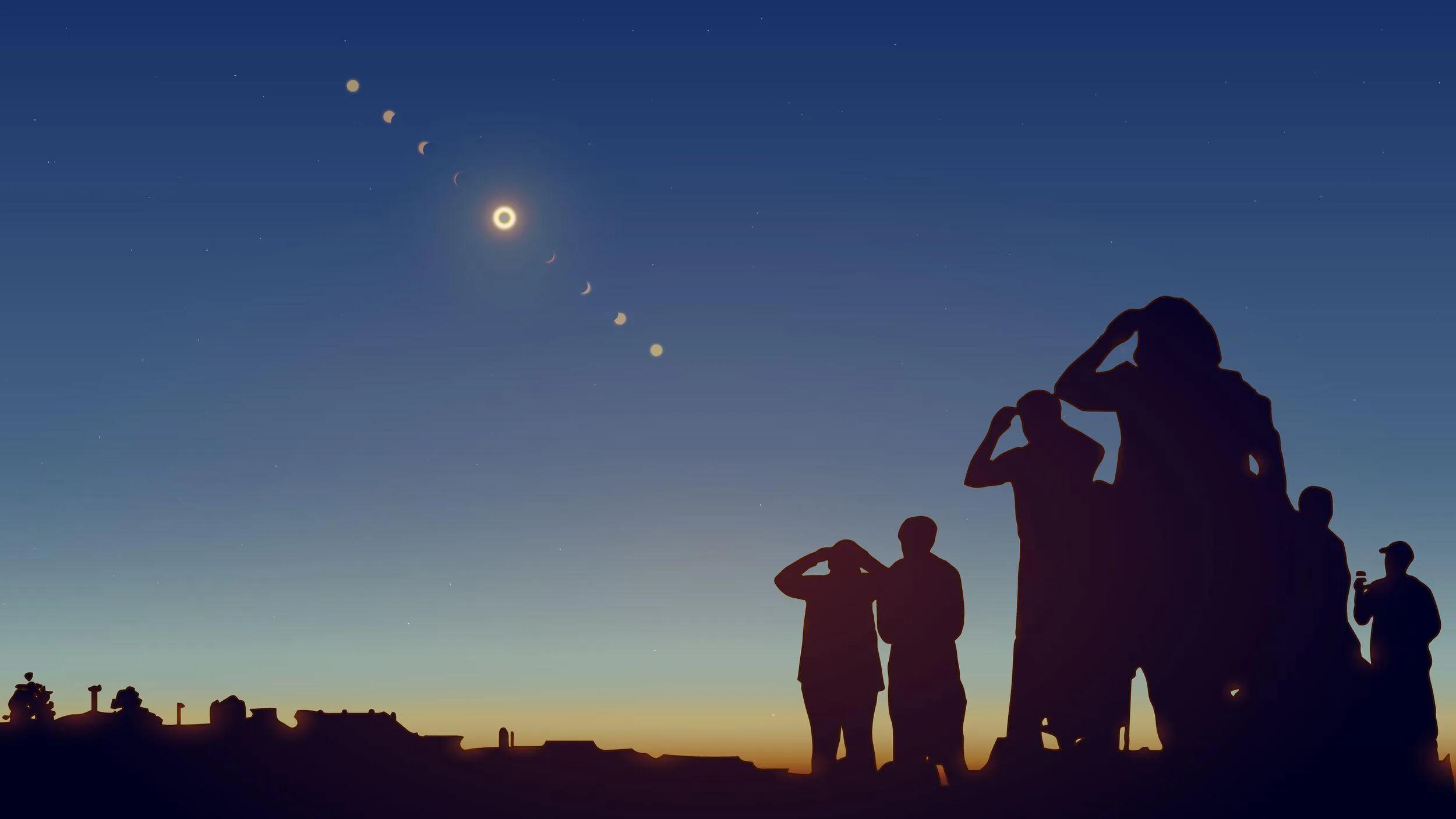
Realistic expectations: what success actually looks like
A lot of disappointment in international eclipses comes from the wrong mental model.
Success is not “I got the longest possible duration, perfect weather, no crowds, a cheap room, and a cinematic foreground.” Success is usually one of these:
- you got inside totality with a safe, unobstructed view;
- you built enough flexibility to improve your weather odds;
- you understood the difference between total and partial before spending money;
- you did not let logistics ruin the day.
For first-timers, we recommend defining three tiers before you travel:
Tier 1: Dream outcome
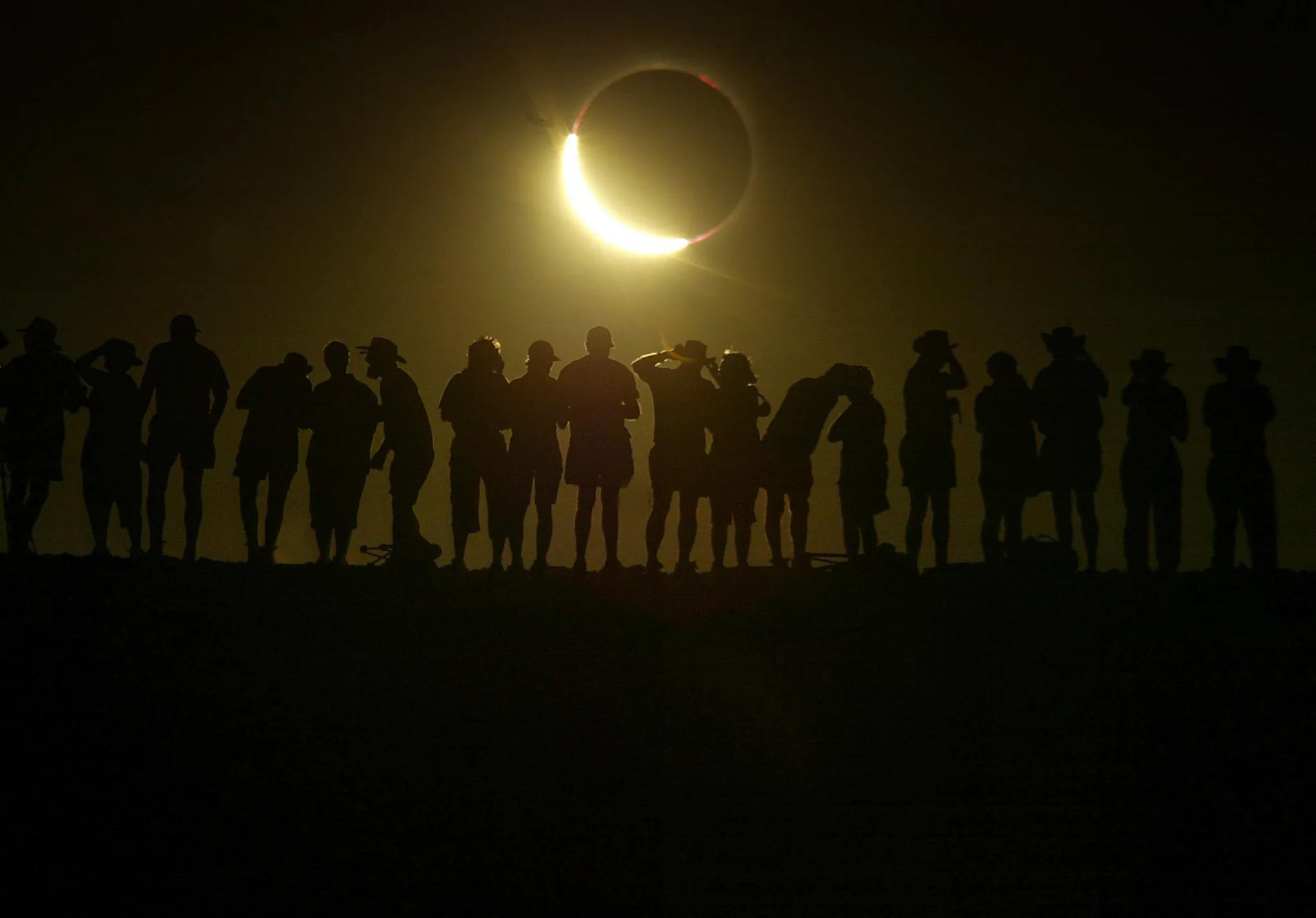
You are on the centerline or close to it, skies are clear, the horizon is open, and you get the full emotional sequence—crescent Sun, weird light, temperature drop, cheers, corona, and the rush when daylight returns.
Tier 2: Solid outcome
You are inside totality but not in the mathematically best spot. Maybe you lose 20 or 30 seconds compared with another town. That is still a real eclipse victory.
Tier 3: Salvage outcome
Clouds interfere, or you end up in a partial-only location after a plan change. That is disappointing, but it is not the same as failure if you knew the risk and made the best call with the information you had.
This is where the old international eclipse path 2024 lesson still matters. In 2024, many travelers learned that being “near the path” was not enough, and that weather strategy mattered as much as enthusiasm. The same logic applies in 2026: the map is not decoration. It is the trip.
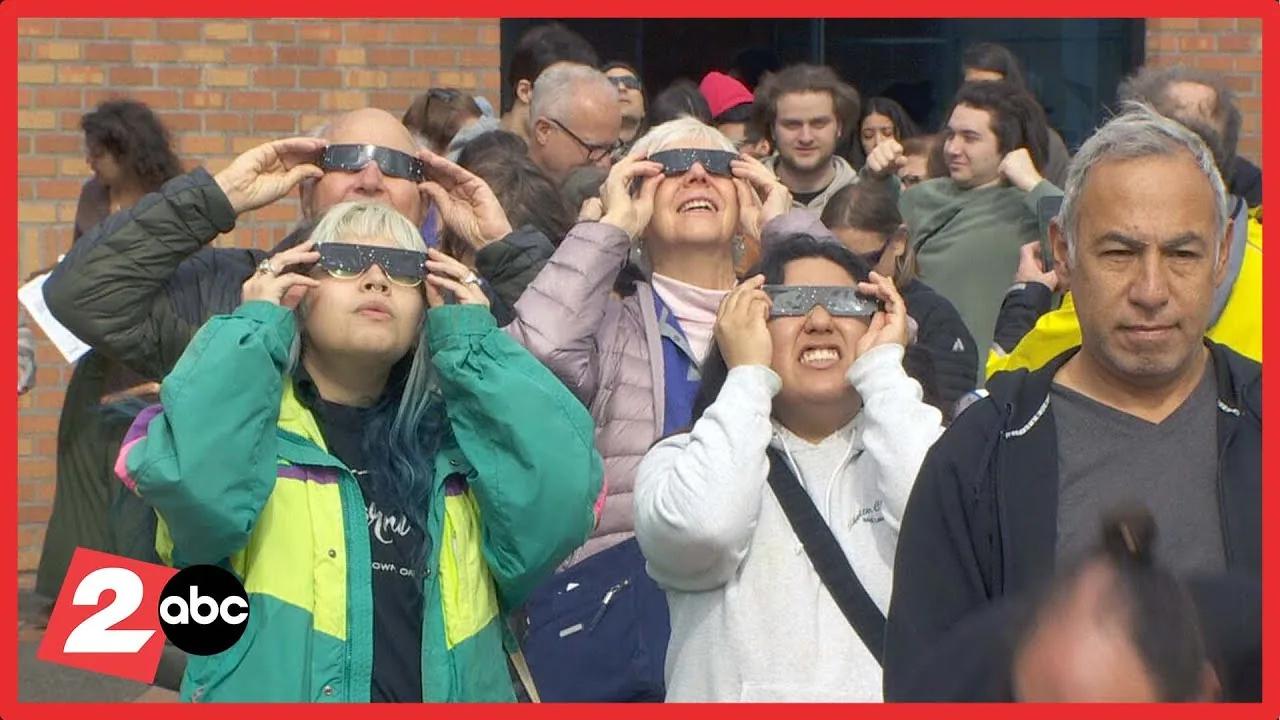
The packing mindset: what belongs on an eclipse travel checklist
A good eclipse travel checklist is not just clothes and chargers. It is a risk-management tool.
Start with the obvious travel layer: passport, visas or authorizations if needed, booking confirmations, insurance details, medications, payment backup, offline copies of key documents, and emergency contacts. Then add the eclipse layer: certified viewers, weather-appropriate clothing, water, snacks, sun protection, power bank, and a plan for limited connectivity.
Astronomy Magazine’s classic packing advice still holds up surprisingly well: water, sunscreen, hats, chairs, medicine, snacks, cash, and backup power are not glamorous, but they are the difference between “special day” and “why are we miserable in a roadside field?” NASA also emphasizes arriving with fuel or charge, food, water, and comfort items because small towns and popular viewing areas can get overwhelmed.
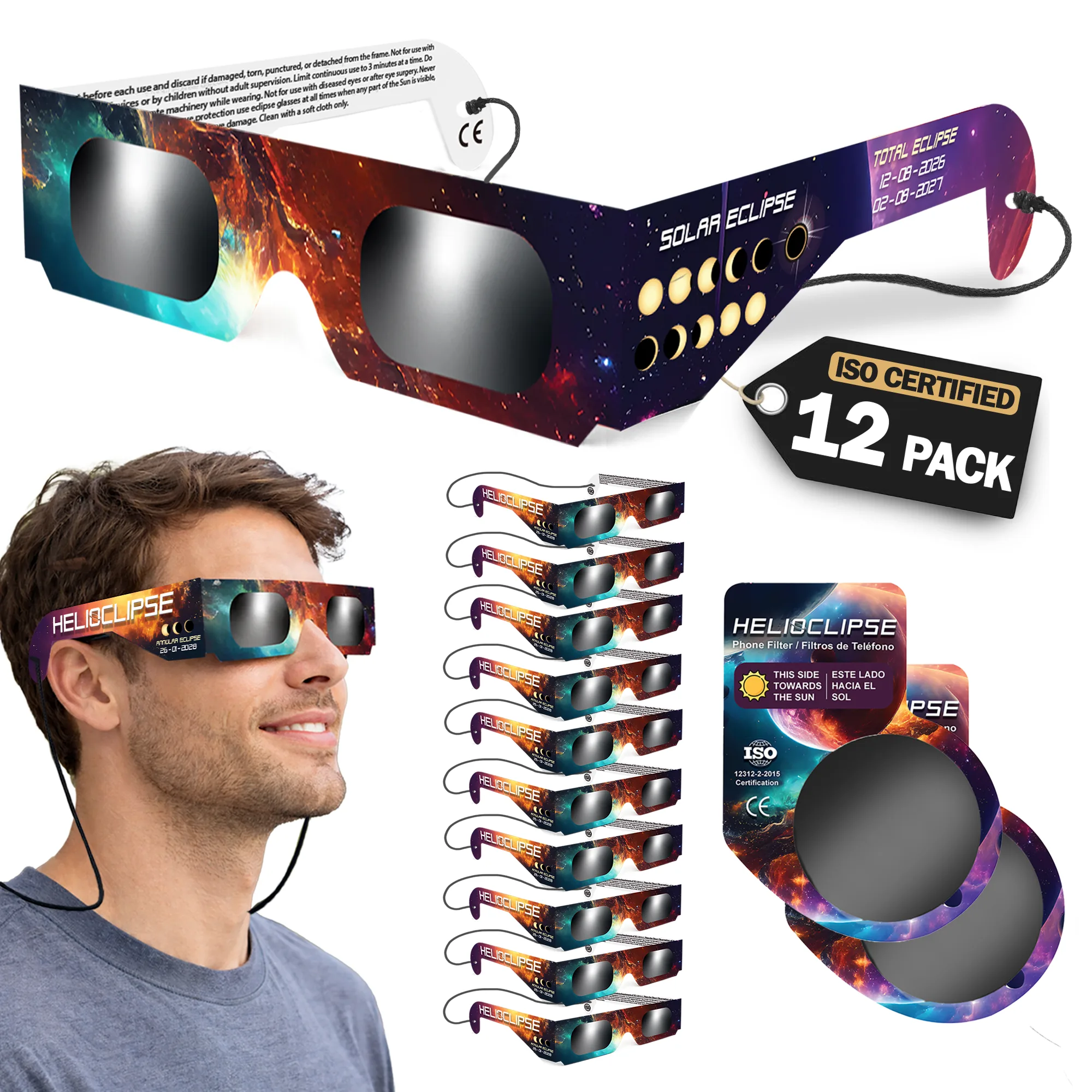
For eye safety, pack your viewers early and inspect them before you leave. If you need a refresher on what the standard means, read our guide to ISO 12312-2 eclipse glasses. If you are buying for a group, this is the moment to get organized rather than hoping someone else remembered.
Near your departure date, do a boring but valuable test: put your eclipse glasses on indoors. Per AAS guidance, you should not be able to see ordinary room details through them. Outside, the Sun should appear as a sharp disk against a dark background. If anything looks wrong, do not gamble.
And when you shop, use precise product language. Families often look for approved solar eclipse glasses, solar eclipse glasses iso 12312-2 certified, or simple eclipse viewing glasses because they want a quick confidence check before travel. That is exactly why we recommend ordering from the Helioclipse shop well before departure, not from a last-minute mystery listing.


Safety abroad: the rule does not change when you cross a border
Travel can make people weirdly casual about eclipse safety. New country, festive atmosphere, everyone pointing phones at the sky—suddenly someone says, “It’s almost total, right?”
No. The rule is the rule.
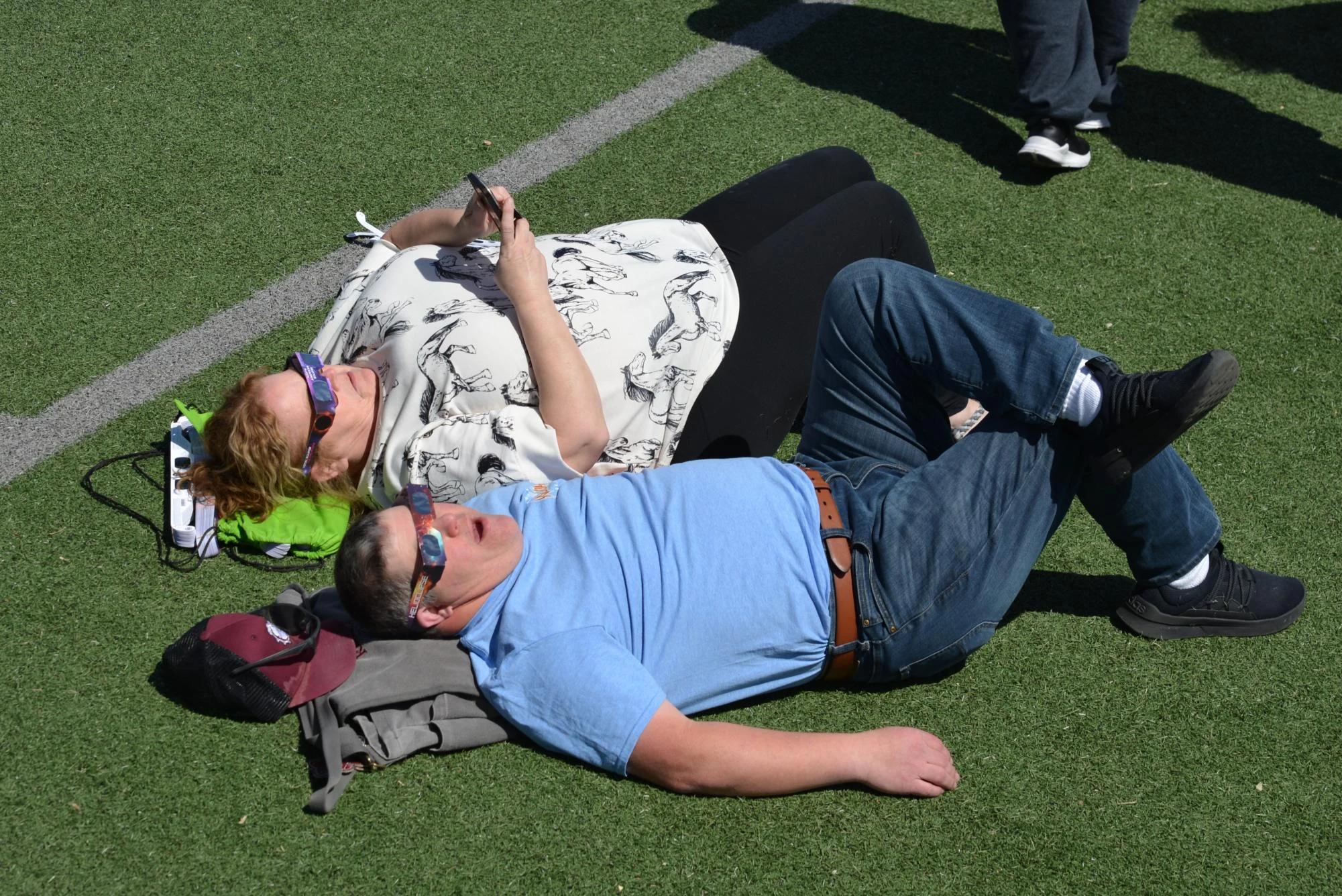
According to the American Astronomical Society, it is safe to look directly at the Sun only through special-purpose solar filters that conform to ISO 12312-2, except during the brief total phase of a total solar eclipse when the Sun’s bright face is completely covered. Outside the path of totality, there is no glasses-off moment. During a partial eclipse, there is no glasses-off moment. During an annular eclipse, there is no glasses-off moment.
That matters especially in places like Madrid or Barcelona in 2026, where the eclipse will be spectacularly deep but still partial. It also matters for travelers who assume local excitement means local expertise. Crowds can be joyful and still be wrong.
If you are traveling with children, grandparents, or a mixed group of first-timers, agree on the safety script before eclipse day. If you want the deeper why behind retinal injury and false confidence, read why staring at the Sun without protection is never just a quick look.
How to choose a destination without fooling yourself
People often ask for the best places and timing for international eclipse travel documents as if one answer exists. It does not. The best destination depends on what you value most.
If you want easier access and lots of lodging options within a broader tourism network, Spain may win. If you want longer on-land totality and dramatic scenery, Iceland may win. If you want a rare expedition experience and accept high cost and complexity, Greenland may win. If you want operator-managed logistics, one of the 2026 eclipse travel packages may suit you better than DIY planning.
But the right way to compare destinations is not romance first. It is geometry, weather, mobility, and paperwork first.
Ask these questions:
- Are you definitely inside totality?
- How long is totality there compared with nearby alternatives?
- How high is the Sun above the horizon?
- What terrain could block the view?
- How easy is it to move if clouds threaten?
- What are the document and entry requirements for your citizenship?
- How painful will post-eclipse transport be?
For U.S.-based readers, the phrase best places and timing for international eclipse travel documents usa points to a real planning issue: once you leave the country for an eclipse, your trip becomes a border-crossing exercise, not just an astronomy outing. That means passport timing, transit rules, and return logistics matter as much as the sky.
And if you are still comparing map positions, use the Helioclipse Eclipse Explorer to check whether a town is central, edge-of-path, or partial-only. That one step prevents a remarkable number of expensive mistakes.
What not to do
Some eclipse mistakes are so common that they deserve their own section.
Do not book a city because it is famous without checking whether it is actually in totality.
Do not assume “99%” means “close enough.” It does not.
Do not arrive late on eclipse day and expect roads to behave normally.
Do not choose a scenic overlook without checking the Sun’s direction and altitude.
Do not buy unknown viewers at the last minute and hope the printing on the package tells the whole truth. The AAS is blunt here: you cannot confirm safety just by looking at a claim on the product. You can, however, reject obviously bad viewers and buy from more trustworthy sources. If you want a practical pre-trip sanity check, read our guide on spotting fake or low-quality eclipse glasses.
Do not plan to drive straight back to a major city immediately after totality if you can avoid it. NASA’s advice to linger is not just about comfort; it is about sanity.
And do not let weird search-noise distract you. If a results page throws in something irrelevant like a celebrity travel documents hub, close the tab and go back to official travel sources and eclipse authorities.
A simple planning timeline for an international eclipse trip
If you want a cleaner framework for international eclipse travel documents 2026 guide planning, use this:
9–18 months out
Pick your country or sea-based strategy. Check passport validity. Estimate budget. Decide whether your priority is duration, weather odds, scenery, or simplicity.
6–12 months out
Book lodging and major transport. Confirm entry requirements from official sources. Decide whether you need a car for weather mobility. Start building your group plan.
2–6 months out
Buy certified viewers. Review local horizon issues. Save offline maps. Build a backup site list. If your trip is for the August 2026 event, this is also when you should be reading our broader August 12, 2026 planning guide.
2–4 weeks out
Recheck documents, names on bookings, baggage rules, and local transport. Watch long-range weather only for pattern awareness, not emotional stability.
48 hours out
Commit to a primary site and at least one backup. Charge devices. Fuel the car. Pack water, snacks, layers, and viewers where you can reach them.
Eclipse day
Leave early. Stay flexible. Follow the safety rules. Look around during the partial phases. And when totality comes, if you are in it, actually experience it.
Preparing Travel Documents for International Travel: Tips that ...
Ben Thoennes Dream Vacations
Frequently asked questions
Are there any cruise options that could be in the path of totality for the 2026 eclipse?
The excerpt does not name any cruise, so you should not assume a sailing will see totality. What matters is whether the ship is inside the narrow path of totality at the right time, and that should be checked against current maps and official guidance before you book.
Where should I go to have the best chance of seeing the 2026 total solar eclipse?
The article says the Aug. 12, 2026 total eclipse crosses remote parts of Greenland, western Iceland, and northern Spain, ending near the Balearic region. It also notes that totality lasts longest along the track’s best locations, so you need to confirm that your exact spot is inside totality and not just in a partial-eclipse area.
Which countries are actually in the eclipse path for 2026?
Based on the excerpt, the path of totality crosses Greenland, Iceland, and Spain. The article also emphasizes that being in a country is not enough by itself—you still need to verify that your specific location is inside the narrow shadow path.
What time does the solar eclipse happen on February 17, 2026?
The excerpt does not provide a February 17, 2026 eclipse time. It only discusses the Aug. 12, 2026 total solar eclipse, so you should verify any date and timing details with current official sources before making plans.
What should I know about travel paperwork and planning before I go?
International eclipse travel documents are only one part of the plan; you also need timing discipline, a realistic weather mindset, and a clear sense of what counts as success. The article says to verify your plans against current government sources, airline rules, and official destination guidance, because rules can change and eclipse trips leave little room for error.
On-site next steps
- Explore your exact location on the Helioclipse Eclipse Explorer / 3D map to confirm whether you are in totality, how long totality lasts, and what the Sun’s position will be.
- If your group still needs viewers, order from the Helioclipse eclipse glasses shop early so you are not scrambling right before departure.
- For more planning help on crowds, weather mobility, and destination tradeoffs, browse the Helioclipse blog and build your trip around the sky you will actually have, not the one you hope for.
Sources & further reading
- Eclipse chasers share insider tips, travel advice and skywatching secrets for the 2026 total solar eclipse
- 1 year until the total solar eclipse 2026: Here's what you need to know
- Where can I see the total solar eclipse on Aug. 12, 2026?
- Total solar eclipse 2026 — Everything you need to know
- 25 things to bring to the eclipse
- What to Expect: A Solar Eclipse Guide
- Why Do Eclipses Happen?
- How to View a Solar Eclipse Safely
- About the ISO 12312-2 Standard for Solar Viewers
- How Can You Tell If Your Eclipse Glasses or Handheld Solar Viewers Are Safe?
Before you travel, verify all passport, visa, transit, cruise, and entry rules with current government and carrier sources. Eclipse planning rewards enthusiasm, but border rules reward checking twice.