2026 eclipse from Ireland and the UK: what you will (and won’t) see from home
The big truth first: the august 12 2026 solar eclipse visible uk ireland story is exciting, but it is not a total-eclipse-at-home story. From Ireland and the UK, you will see a deep partial eclipse in the early evening on august 12 solar eclipse 2026 day. In many places, more than 90% of the Sun’s disk will be covered at maximum. That is dramatic. It is also still partial, which means your eclipse glasses stay on for the entire event.
If you want to check your exact local circumstances instead of relying on a national average, open our Eclipse Explorer / 3D map early. An august 12 2026 eclipse interactive map is the fastest way to see whether your town is closer to the deeper western side of the partial footprint, what time maximum happens for you, and how far you would need to travel if you want actual totality.
This cross-border guide is here to set honest expectations for home viewers in Ireland and the UK. We are not going to sell you “almost total.” We are going to tell you what the sky will really do, where the eclipse is deepest, and when it becomes worth considering a ferry, flight, or road trip instead of the back garden.
What the British Isles get in 2026 — and what they do not
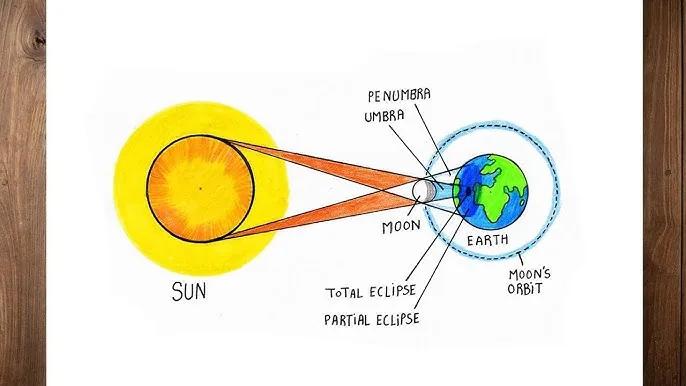
The solar eclipse of august 12, 2026 is a total solar eclipse globally, but the path of totality does not cross Ireland or the UK. NASA’s event page places totality across parts of Greenland, Iceland, the Atlantic, northern Spain, and a small corner of Portugal, while much of Europe gets a partial eclipse instead.
That distinction matters more than many first-time viewers expect. In a total eclipse, the Moon completely covers the Sun for a brief interval, the corona becomes visible, and the sky can darken dramatically. In a partial eclipse, even a very deep one, some of the Sun’s bright photosphere remains exposed. That remaining sliver is still intensely bright. So from home in Britain or Ireland, there is no safe glasses-off moment.
NASA’s eclipse tables give a good reality check. Dublin is listed at about 94% coverage at maximum, London about 91%, and Belfast about 93%. Those are impressive numbers, but they are not totality. If you want the full experience, the relevant question is not “How close is 94% to 100%?” but “Am I inside the Moon’s umbral path?” From Ireland and the UK, the answer is no.
If you want a deeper explanation of why that last few percent changes everything, our guide to When glasses on, when glasses off: eclipse phases explained for first-time viewers is worth reading before eclipse week.
Where the eclipse is deepest across Ireland and the UK
For eclipse ireland 2026 planning, the broad pattern is simple: the farther west and southwest you are, the deeper the partial eclipse tends to be. Ireland generally does a little better than much of Great Britain, and southern Ireland does especially well.
The numbers most often cited from accessible planning sources line up closely with NASA-class maps: Cork around 96% obscuration, Dublin around 94%, Belfast around 93%, Cardiff around 93%, London around 91%, and Edinburgh around 91%. Those are not tiny differences. A few percentage points near the top end of a partial eclipse can noticeably change how thin the solar crescent looks and how strange the daylight feels.
That is why ireland solar eclipse 2026 searches often come with a follow-up question: will the solar eclipse in 2026 be visible in southern Ireland? Yes — and southern Ireland is among the better home-viewing areas in these islands for eclipse depth. But “better” still means partial only.
For a practical mental picture:
- Cork and the south of Ireland: among the deepest home views in the British-Irish region, with only a very thin solar crescent left at maximum.
- Dublin and eastern Ireland: still a striking deep partial eclipse, but not quite as deep as the far south.
- Belfast, Cardiff, western Britain: strong partial territory, comfortably above 90% in many cases.
- London and southeast England: still worth planning for, but a little less dramatic than Ireland or western Britain.
- Northern Scotland: still deep enough to be memorable, but not the regional maximum.
This is exactly where an august 12 2026 solar eclipse map helps more than hype. A map shows the gradient. It lets you see that the event is not identical everywhere, even within one country.
Timing: when to look up from home
Across Ireland and the UK, this is an early evening eclipse. NASA’s published city tables put the event roughly in the following window:
- Dublin: partial begins about 6:12 p.m. IST, maximum about 7:10 p.m., ends about 8:05 p.m.
- London: partial begins about 6:17 p.m. BST, maximum about 7:13 p.m., ends about 8:06 p.m.
Other cities in the region cluster close to that pattern, with maximum generally arriving a little after 7 p.m. local clock time. That means the eclipse is easy to share with family, neighbours, or a school holiday group: it is not a dawn alarm-clock event, and it is not buried in the middle of the workday.
It also means you should think about your western sky and local obstructions. This is not as low and sunset-sensitive as totality in Spain, but late-day Sun angle still matters. A house roofline, tree belt, apartment block, or ridge can ruin a carefully planned home view more effectively than any astronomy fact sheet.
If you are comparing places, use the map for exact local geometry rather than assuming one city’s clock time applies everywhere. A total solar eclipse 2026 map time search is really a search for three different things at once: whether your location is total or partial, what your maximum coverage is, and when the Sun is high enough to be easy to watch. Our Eclipse Explorer / 3D map is built for that exact planning problem.
Why 94% is not “basically total”
This is the part many articles get wrong.
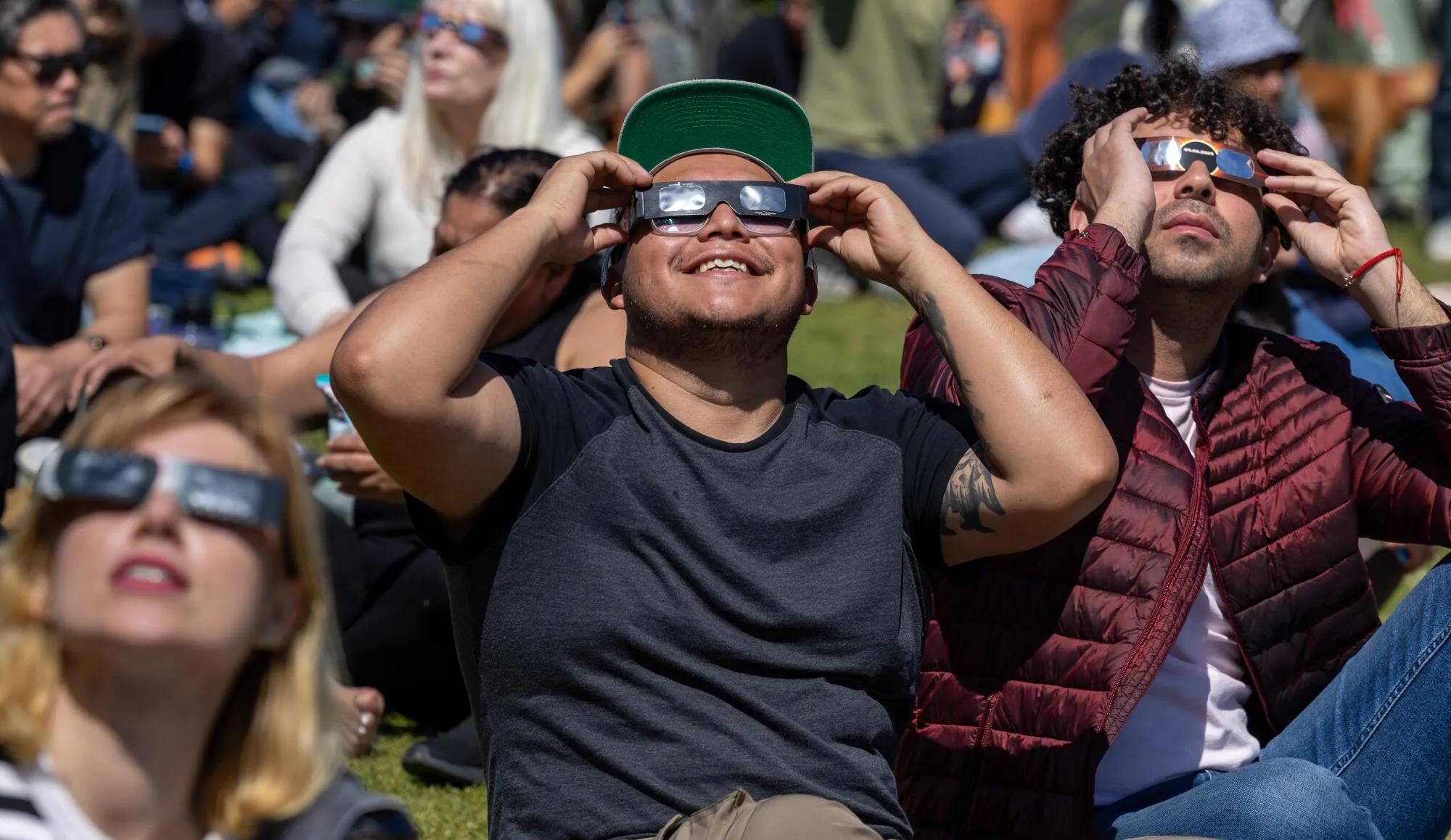
A 94%, 96%, or even 99% partial eclipse can sound close enough to totality that the difference feels academic. It is not academic. The remaining uncovered part of the Sun is still so bright that it keeps the event in the direct-solar-viewing category. That means certified viewers the whole time, no corona, no true daytime darkness, and no safe naked-eye interval.
NASA’s eclipse basics and the AAS eye-safety guidance are completely aligned on this point: only people inside the path of totality, and only during the brief total phase itself, may look without solar protection. Outside that path, a partial eclipse is just that — partial — even when the crescent is razor-thin.
So when you hear phrases like august 12 2026 solar eclipse visible uk ireland 2026 guide, the useful question is not whether the event is “good enough.” The useful question is what kind of experience you want.
From home in Ireland or the UK, expect:
- a shrinking Sun that becomes a dramatic crescent,
- noticeably odd daylight,
- crescent-shaped pinhole projections under trees or through kitchen colanders,
- a fun shared event with plenty of time to watch the Moon’s motion.
Do not expect:
- the corona,
- stars popping out in a dark sky,
- a true 360-degree sunset effect,
- or the emotional punch of totality itself.
That is not disappointment talking. It is geometry talking.
If you want totality, where does travel start to make sense?
The august 12 2026 solar eclipse path and the broader total solar eclipse 2026 path run well away from the British Isles. For many readers here, the most realistic totality options are Iceland or Spain, with Spain generally offering stronger weather prospects in August than Iceland.
The august 12 2026 solar eclipse iceland angle is real: Iceland lies in the path of totality, and Reykjavik is on NASA’s total-eclipse city list. But Iceland also carries serious cloud risk, as technical eclipse planners have emphasized for years. It can absolutely work, but it is not a “book anything and relax” destination.
Spain is different. The path there reaches major population centers and, in many areas, better climatological odds. It also comes with a low Sun near sunset, which creates its own planning challenge: you need a clear western horizon. If you are weighing home partial versus travel total, our guide to 2026 totality in Spain: path basics, timing, and what “on the centerline” really means is the right next read.
For readers comparing options, here is the honest hierarchy:
- Stay home in Ireland or the UK if you want a convenient, family-friendly deep partial eclipse.
- Travel to Spain if you want the best mix of accessibility and a real shot at totality.
- Travel to Iceland if you want totality with dramatic landscapes and are willing to accept higher weather uncertainty.
That is the real meaning behind phrases like august 12, 2026 eclipse path and total solar eclipse 2026 map time. The map is not just a pretty footprint. It is a decision tool.
What the eclipse will actually feel like from a garden, park, or seafront
A deep partial eclipse is subtle at first. For the first half hour or so, the Moon’s bite out of the Sun can feel more interesting through glasses than in the landscape around you. Then the atmosphere starts to shift.
As maximum approaches, the light can take on a flatter, stranger quality. Shadows sharpen. Tree gaps project little crescents onto pavements and picnic blankets. If you are with children, this is often the moment the eclipse becomes real to them: not when you explain orbital mechanics, but when the ground fills with dozens of tiny Suns.
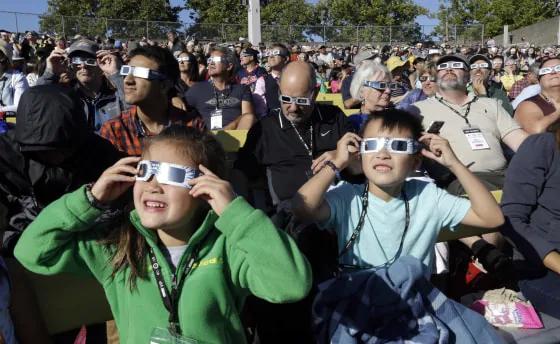
In Ireland and the UK, where the eclipse is deep but not total, that eerie dimming should be noticeable without becoming full darkness. Think “the day feels wrong” rather than “night falls.” That is a good reason to plan a social viewing setup instead of just stepping outside for ten seconds. Put out chairs. Tell the family group chat. Bring a colander. Let people compare the direct filtered view with the projected crescents under leaves.
And because the event unfolds over roughly two hours, you do not need to stare continuously. The AAS explicitly notes that partial phases move slowly enough for people to share viewers in a group, taking occasional looks every few minutes.
Eye safety: what to wear, what not to trust
For home viewers, the rule is simple: if you are in Ireland or the UK on eclipse day, wear proper solar protection whenever you look directly at the Sun. This is true for the entire event.
The AAS says safe direct viewing requires special-purpose solar filters that conform to ISO 12312-2. NASA says the same thing in plainer language: eclipse glasses are not ordinary sunglasses, no matter how dark those sunglasses seem.
That is where product wording can confuse people. Phrases like approved solar eclipse glasses, solar eclipse glasses iso 12312-2 certified, and certified solar eclipse glasses are useful only if the product is clearly labeled, intact, and sold by a source you trust. “NASA approved” is not a formal product certification program; NASA itself says it does not approve particular brands of viewers. So when shoppers see language such as eclipse glasses nasa approved, they should treat it as marketing shorthand, not as a substitute for checking the actual safety standard and seller credibility.
If you are buying for a household, classroom, or friend group, get them early from our shop for eclipse glasses, and read our deeper guide to ISO 12312-2 and eclipse viewers: what the standard means for your family. If you are sanity-checking a product already in a drawer, our post on fake and low-quality eclipse glasses will help you avoid last-minute guesswork.
A few non-negotiables:
- Do not use ordinary sunglasses.
- Do not look through binoculars, a telescope, or a camera while wearing eclipse glasses unless the device has a proper front-mounted solar filter.
- Do not use damaged viewers with scratches, punctures, or loose filters.
- Do supervise children.
If you do not have viewers, indirect methods are still excellent. A pinhole projector, a colander, or leafy tree shadows can turn the whole event into a safe, memorable demonstration.
Should you stay home or cross the water?
This is the real planning fork for many readers.
If your goal is convenience, shared experience, and a strong partial eclipse, staying home is completely reasonable. The august 12 2026 solar eclipse visible uk ireland event is good enough to justify a proper plan, especially in Ireland, Wales, Northern Ireland, southwest England, and western coastal locations where obscuration is deeper.
If your goal is to understand why eclipse-chasers cry, cheer, and book years ahead, then home is not enough. You need totality. That means travel.
A useful way to decide is to ask yourself which sentence sounds more like you:
- “I want a beautiful, easy, local eclipse evening with family and friends.”
- “I want the full total-solar-eclipse experience, even if it means logistics, weather risk, and money.”
The first answer points to home viewing. The second points to Spain or Iceland, plus backup planning. If you are leaning toward travel, read our August 12, 2026 total solar eclipse: what to expect and how to plan ahead and our travel guide on routes, crowds, and backup plans for 2026.
A quick word on naming the region
Some readers searching for this topic will run into geography terms as much as astronomy terms. This article uses “Ireland and the UK” because it is the clearest practical framing for eclipse planning across the places most readers mean when they want a shared home-view guide. The sky does not care about political language, but readers do, and clarity matters.
For eclipse purposes, what matters is not the label but the map: where you are relative to the partial footprint, your local maximum obscuration, and whether you are willing to travel to the august 12 2026 solar eclipse path of totality.
What to do now if you plan to watch from home
Do three things early.
First, check your exact location on an august 12 2026 solar eclipse map rather than relying on a national headline. Even within these islands, a few percentage points of obscuration can separate a merely nice event from a genuinely striking one.
Second, choose a viewing spot with a clear view of the Sun in the early evening. Your own back garden may be perfect — or it may be blocked by one mature tree.
Third, sort your eye protection well before August. Deep partial eclipses create last-minute demand spikes because people suddenly realize they cannot safely improvise. If you are planning a family gathering, a scout group, or a neighbourhood watch party, this is the moment to tell people, not the week before.
That is the practical value of a guide like 2026 eclipse from ireland and the uk: what you will see from home. It is not just about astronomy facts. It is about avoiding the very normal mistake of assuming “I’ll sort it later.”
Total Solar Eclipse 2026: Europe's Stunning Sunset Spectacle ...
WION
Frequently asked questions
Where would I need to be to see the 2026 eclipse in totality?
You would need to be inside the Moon’s path of totality, which does not cross Ireland or the UK. The excerpt says totality runs across parts of Greenland, Iceland, the Atlantic, northern Spain, and a small corner of Portugal.
Will people across Europe be able to see the 2026 solar eclipse?
Yes, but not everywhere will see the same thing. The excerpt says much of Europe gets a partial eclipse instead of totality, while the deepest views are in the totality path outside Ireland and the UK.
Can viewers in southern Ireland see the 2026 eclipse?
Yes, southern Ireland will see a partial eclipse, not totality. The article says Ireland can expect a deep partial eclipse, with some places seeing more than 90% of the Sun covered at maximum.
What should I expect from the August 12, 2026 eclipse if I’m in the UK or Ireland?
Expect a deep partial eclipse in the early evening, not a total eclipse at home. The article says the eclipse is impressive from the UK and Ireland, but there is no safe glasses-off moment because some of the Sun remains visible throughout.
What is the key takeaway for the August 12, 2026 eclipse guide for UK and Ireland readers?
The main point is to set realistic expectations: the eclipse will be dramatic, but it will still be partial from home. The excerpt also recommends checking an interactive map for your exact location, since timing and depth vary by town and the western side of the footprint sees the deeper eclipse.
On-site next steps
- Explore your exact local view with our Eclipse Explorer / 3D map. It’s the easiest way to compare your town with nearby coastlines, see whether you are getting 91% or 96%, and understand how far totality really is.
- Get ready for safe direct viewing with our solar eclipse glasses. For Ireland and the UK in 2026, you need certified viewers for the whole event.
- Want the deeper planning picture? Browse the Helioclipse blog for safety, travel, weather, and totality guides.
Sources & further reading
- NASA Science — Total Solar Eclipse on August 12, 2026
- NASA Science — Types of Solar Eclipses
- NASA Science — What to Expect: A Solar Eclipse Guide
- AAS Solar Eclipse Across America — How to View a Solar Eclipse Safely
- AAS Solar Eclipse Across America — About the ISO 12312-2 Standard for Solar Viewers
- National Solar Observatory — August 12, 2026 Solar Eclipse Map
- BBC Sky at Night Magazine — Total solar eclipse August 2026: Path map, key locations and viewing guide
- Royal Museums Greenwich — How to see the 12 August 2026 partial solar eclipse
- Eclipsophile — Total Solar Eclipse 2026 August 12
- ESA — Total solar eclipse 12 August 2026: Global map