Burgos in 2026: one city, one eclipse—plateau winds, cathedral silhouette, and horizon math
At about 8:28 p.m. CEST on August 12, 2026, Burgos is expected to spend roughly 1 minute 44 seconds inside the Moon’s shadow. The Sun will be only about 8.3 degrees above the west-northwestern horizon. That combination promises an extraordinary scene: the corona hanging low in an evening sky, perhaps close to the city’s Gothic skyline, while daylight drains from the Castilian plateau.
It also creates a planning problem. For anyone preparing for the total solar eclipse 2026 Burgos Spain offers excellent path geometry, but being inside the path does not guarantee an unobstructed view. A roofline, mature tree, ridge, crane, or badly chosen side of a building could hide the eclipsed Sun at the decisive moment.
The shorthand Burgos eclipse 2026 therefore needs three coordinates attached to it: your exact position, a clear west-northwest sightline, and a weather plan. Start by placing your intended observation point on our Eclipse Explorer and 3D map, then inspect the real horizon from ground level. The map establishes the celestial geometry; your eyes establish whether a neighborhood actually lets you see it.
The Burgos numbers that shape the experience
The Burgos 2026 eclipse is a late-evening total eclipse. Published circumstances for the city indicate totality beginning at approximately 8:28 p.m. CEST, lasting around 1 minute 44 seconds, with the totally eclipsed Sun about 8.3 degrees high toward the west-northwest. Exact contact times vary with coordinates, so obtain the final seconds for your chosen site rather than treating a city-center value as universal.
Those 104 seconds are substantial by the standards of this eclipse. Burgos is close to the central portion of the path: Valladolid, farther from the centerline, is expected to receive about 1 minute 29 seconds. That is a difference of approximately 15 seconds—not enough to justify sacrificing a clean horizon, safe access, or a workable cloud escape route merely to stand closer to an abstract line.
The total solar eclipse 2026 path Spain segment is roughly 305 kilometres wide as it crosses northern Spain, but totality remains all-or-nothing. Burgos lies inside the path; central Madrid and Barcelona do not. A 99% partial eclipse still leaves direct photospheric sunlight visible, so it does not reveal the corona or permit unfiltered viewing. Our broader guide to the 2026 totality path across Spain explains why the boundary and centerline play such different roles.
The Burgos Spain 2026 eclipse is also close to sunset, but totality itself is not expected to occur on the horizon. At 8.3 degrees, the Sun is about 16 apparent solar diameters above a perfectly flat horizon. That sounds generous until buildings and terrain enter the calculation.
Eight degrees is lower than it sounds
Hold a clenched fist at arm’s length: it spans roughly 10 degrees for many people. The eclipsed Sun over Burgos will sit a little less than one fist-width above the astronomical horizon. From a medieval street, that entire gap can disappear behind a façade.
A simple calculation shows why. The elevation angle of an obstruction depends on its height relative to you and its distance. At an angle of 8.3 degrees:
- an object 100 metres away can block the Sun if it rises roughly 15 metres above your eye level;
- at 500 metres, the equivalent height is about 73 metres;
- a ridge 5 kilometres away needs to rise about 730 metres above your sightline to cover that point in the sky.
These are simplified flat-ground examples, but they expose the scale of the problem. Nearby apartment blocks and trees may matter more than a distant mountain. You should also leave space around the Sun rather than merely proving that its center clears an obstacle: the solar disk is about half a degree wide, and the corona extends beyond the black lunar silhouette during totality.
For a total solar eclipse 2026 map time and position must be treated as one data pair. Changing your observation point by several blocks changes both the foreground and, slightly, the calculated contacts. A solar eclipse 2026 interactive map can confirm whether a coordinate is inside totality and identify the Sun’s direction, but it cannot certify that a temporary stage, summer foliage, or construction crane will not be there.
Open the total solar eclipse 2026 Burgos Spain map and record the azimuth, altitude, totality duration, and local contact times for each candidate. Your total solar eclipse 2026 Burgos Spain time should come from the actual pin you plan to occupy—not simply from a timetable headed “Burgos.”
Medieval core or outer ring?
Burgos Cathedral gives the eclipse an irresistible visual identity. Its towers and spires could form a striking foreground, but a famous silhouette is not automatically a usable observing site. To place the cathedral between you and a west-northwestern Sun, you would generally need to observe from its east or southeast side along a suitable alignment. From there, dense buildings may block the sky before the cathedral can frame it cleanly.
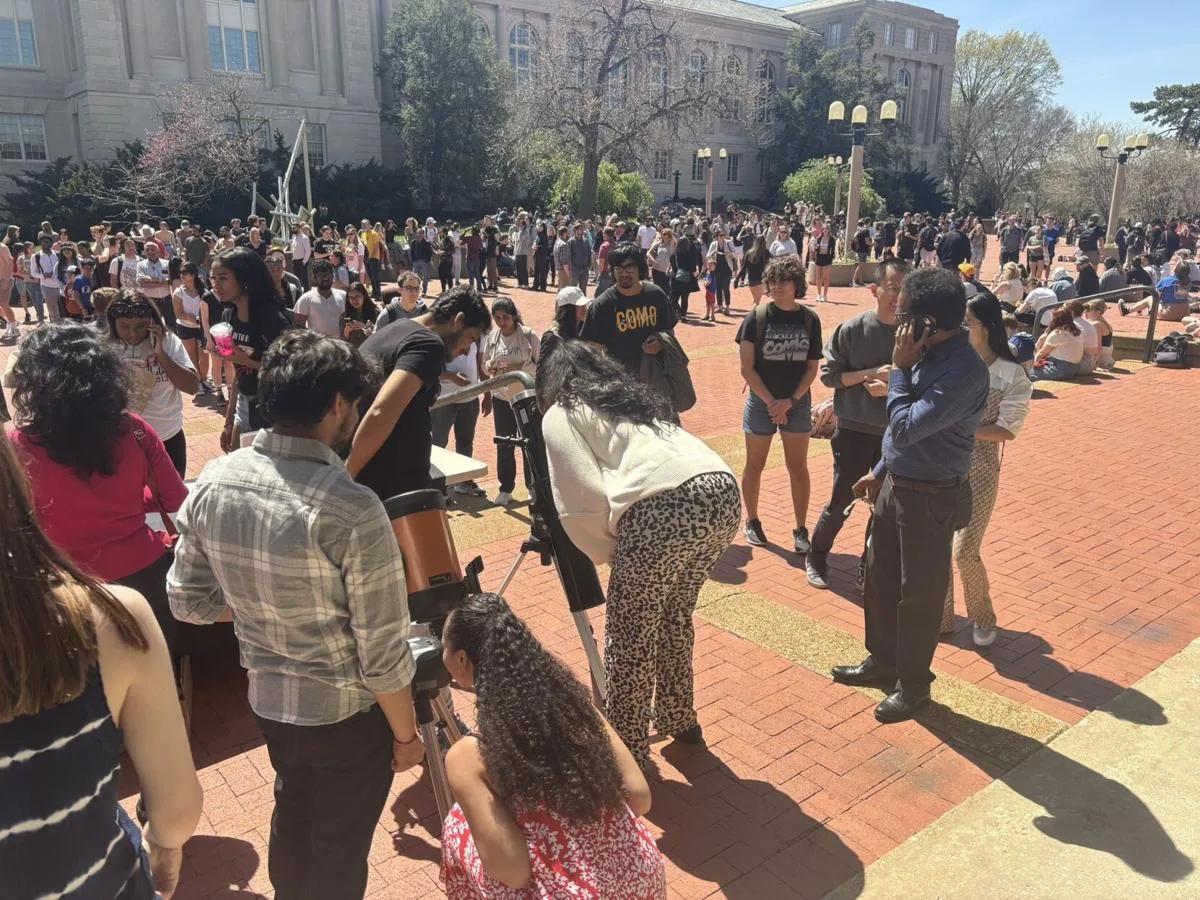
The Arco de Santa María and streets close to the cathedral will attract attention because they are recognizable and pedestrian-friendly. Yet the enclosed medieval core is exactly where an 8.3-degree Sun is vulnerable to stone façades, narrow street axes, trees, and crowd compression. A busy plaza can offer atmosphere while offering almost no margin for moving ten minutes before totality.
Parque del Castillo deserves advance reconnaissance because its elevation can open broader views around the city. Published planning coverage specifically points to its northwestern side as a possible panoramic option. Do not convert that suggestion into a guarantee: walk the site, identify the precise west-northwestern bearing, and check whether the Sun clears vegetation and terrain from the exact patch of ground you intend to use.
Outer districts can exchange architectural drama for a larger sky. Eastern or southeastern positions may offer potential cathedral alignments, but only where the intervening urban corridor is open. Western-edge sites may face more open country in the eclipse direction, although industrial structures, roads, and access restrictions can replace the obstacles of the historic center. In areas such as Gamonal, Villímar, Villalonquéjar, or the approaches to Fuentes Blancas, evaluate individual coordinates rather than assuming that “outer city” means “clear horizon.”
A total solar eclipse 2026 Burgos Spain 2026 guide map is useful only if it records these ground-level differences. For every candidate, save:
- exact coordinates and a backup point within walking distance;
- the bearing of the Sun during totality;
- the highest obstruction in that direction;
- pedestrian and vehicle access after the event;
- whether you can relocate without crossing the congested center.
The cathedral photograph and the viewing experience are different plans
A cathedral-and-corona photograph requires a narrow geometric alignment. A relaxed family observation site needs room, safe footing, a clear sky, and an easy way to supervise children. Those objectives may overlap, but do not assume they will.
If photography is your priority, scout the composition near the same clock time on a preceding evening. The Sun’s exact position will not perfectly reproduce eclipse day unless you account for the date, but a planning tool can project the required azimuth and altitude. Confirm whether the cathedral fits beneath the eclipse position with the focal length you intend to use. A telephoto composition also compresses apparent distance; the location that creates a dramatic silhouette may be much farther from the cathedral than expected.
Never improvise solar filtration for a camera, telescope, or binoculars. Eclipse glasses worn over your eyes do not make an unfiltered optical instrument safe. Magnifying equipment requires a properly fitted solar filter secured over the front aperture, plus knowledgeable setup and testing before eclipse day.
If your priority is seeing totality with friends or family, choose the cleanest horizon rather than the most recognizable postcard. During those 104 seconds you may notice the temperature dip, the horizon retain sunset-like color, and the corona emerge around the Moon. A cathedral does not need to sit directly beneath the Sun to give the moment a powerful sense of place.
Plateau weather: use climate, then replace it with a forecast
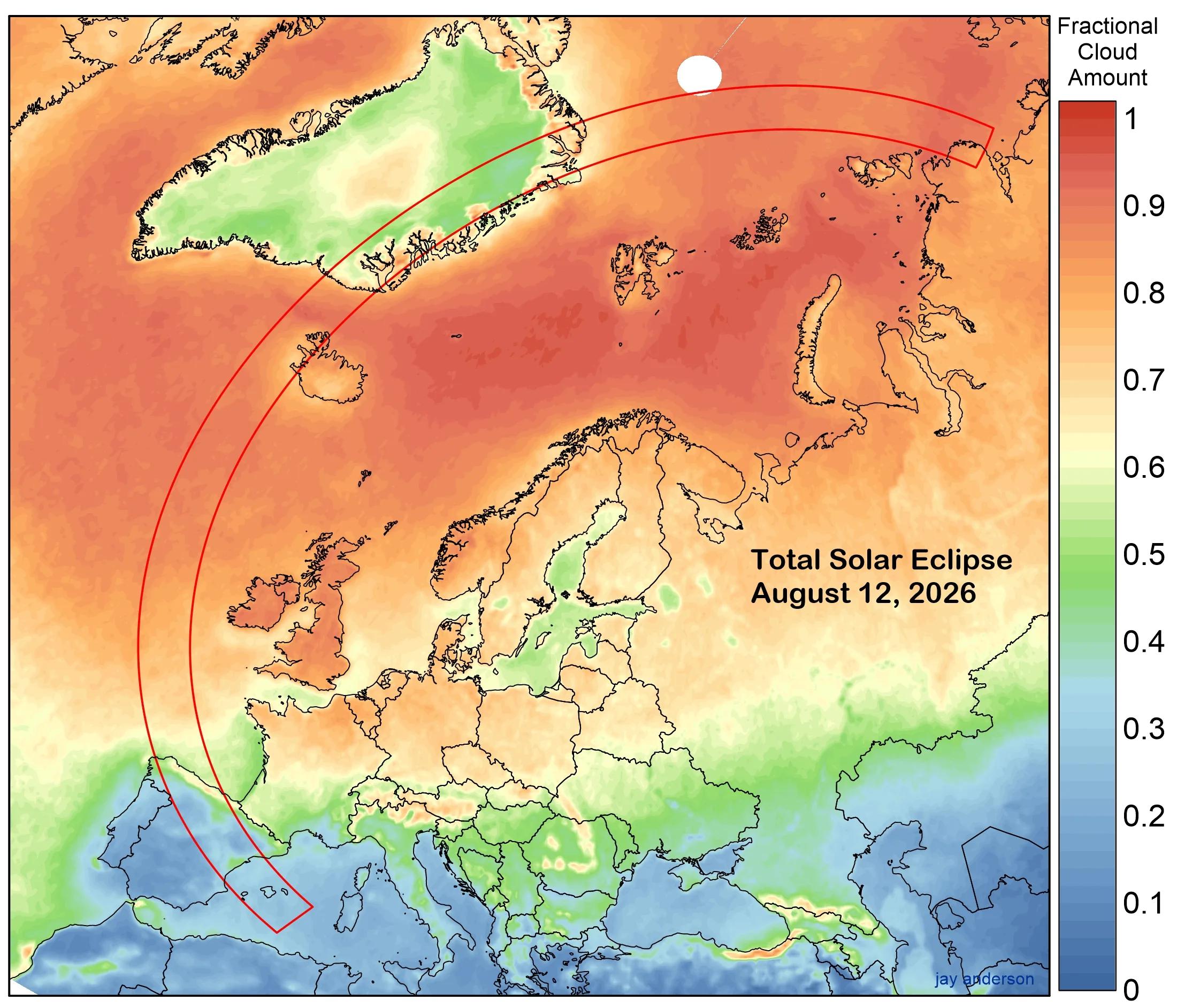
Burgos stands on Spain’s elevated northern plateau at roughly 860 metres above sea level. The Cantabrian Mountains influence moisture moving inland from the Bay of Biscay, while higher terrain northeast of Burgos can slow some incursions. August is generally promising compared with cloudier parts of the 2026 path, but no climatology can tell us what one west-northwestern strip of sky will do on one evening.
One published analysis based on observations since 2000 gives Burgos an approximate 31% chance of cloud at totality. Treat that as broad planning context, not a prediction of a 69% personal success rate. A single bank of low cloud in the eclipse direction can defeat an otherwise blue sky, while a mostly cloudy day can still produce the one opening you need.
The elevated plateau also makes wind part of the practical plan. We do not have a defensible site-specific gust forecast this far ahead, and sheltered streets can behave very differently from exposed parks. Check the official forecast close to August 12, especially wind direction, gusts, cloud layers, and western-horizon visibility. A light breeze may feel welcome after a hot afternoon; stronger gusts can lift cardboard, shake tripods, and make loosely fitted filters unsafe.
Bring a compact bag, secure loose papers, keep viewers in a rigid or protective sleeve, and avoid balancing equipment on walls. If a tripod is necessary, keep its footprint out of pedestrian routes and weight it appropriately. The eclipse is too short to spend totality catching a falling phone or chasing a timetable across a park.
For decision-making during the final days, use the workflow in our guide to cloud cover and eclipse-day mobility: climate for the long-range choice, forecasts for the regional decision, and direct observation for the final horizon.
Do not confuse Camino footfall with horizon quality
Burgos is a major stop on the Camino de Santiago, so its historic center already knows how to absorb streams of pedestrians. That does not make pilgrim density a useful proxy for eclipse visibility. The busiest route may run through the most enclosed streets; an uncrowded edge of the municipality may provide a much broader west-northwestern sky.
Expect hotels, central plazas, and recognizable overlooks to fill early. Tell your group now where the primary site is, where the backup is, and what condition triggers a move. “Cloud over the city” is too vague. “A persistent opaque bank covers the west-northwest below 12 degrees at 5 p.m.” is an actionable observation.
Avoid a plan that depends on driving through the center late in the afternoon. Park legally, preserve emergency access, and aim to complete the final move well before the partial phase becomes compelling. The best site is not merely the place with the longest calculated totality; it is the place your entire group can reach, occupy safely, and leave without improvisation.
The Burgos Spain eclipse 2026 plan should therefore prioritize sightline and execution over prestige. A quiet open horizon can beat a celebrated landmark, while a well-scouted urban composition can succeed where a casual visit to an open-looking plaza fails.
Safety through every phase
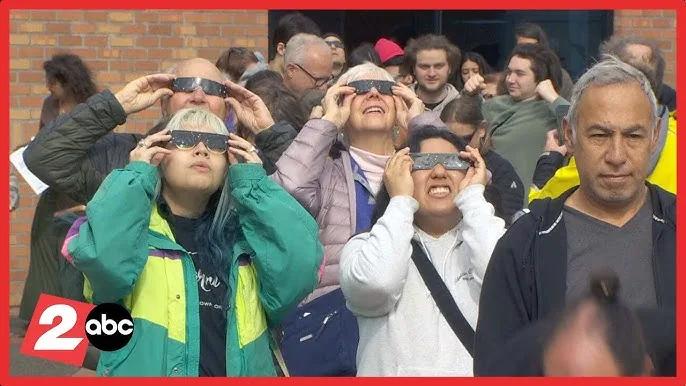
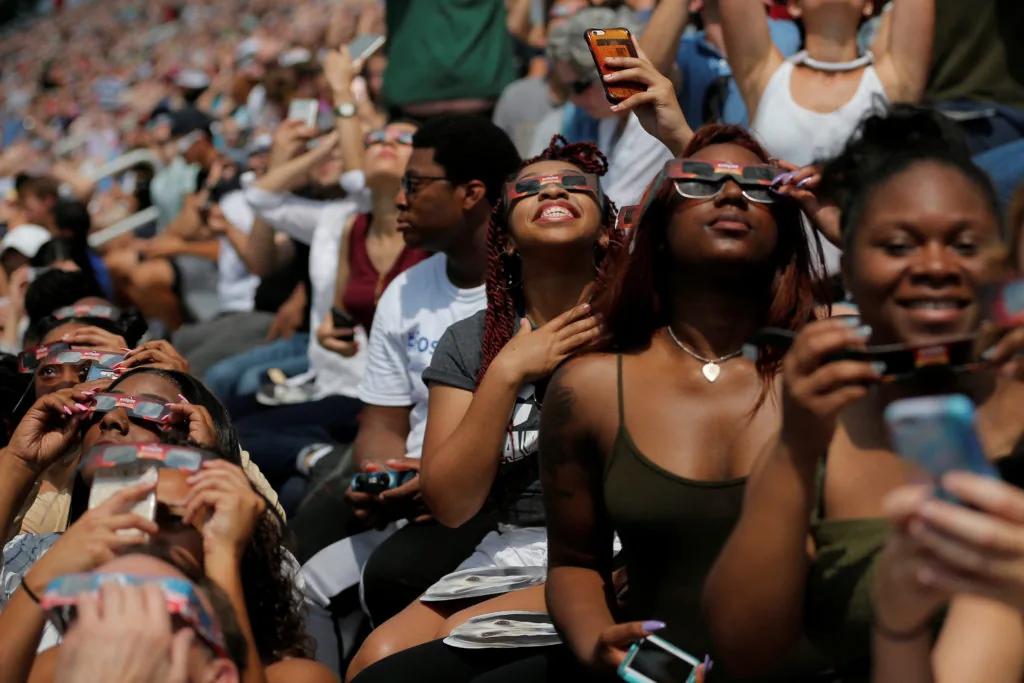
The partial phase lasts far longer than totality, and certified solar viewers are required whenever any part of the Sun’s bright face remains visible. Ordinary sunglasses are not adequate, regardless of tint. Use viewers that conform to ISO 12312-2, inspect every filter for tears, punctures, scratches, or separation from its frame, and supervise children.
Only after the Sun’s bright face is completely covered may people inside the path remove their viewers for unaided observation. In Burgos that interval is expected to last about 1 minute 44 seconds, depending on the exact coordinate. The instant a bright point of photosphere reappears, viewers go back on. Our first-timer guide to eclipse phases and when to use solar glasses gives the sequence in practical detail.
Product language can be misleading. Phrases such as approved solar eclipse glasses, solar eclipse glasses iso 12312-2 certified, and eclipse viewing glasses do not by themselves prove that a particular item has been properly tested or safely stored. NASA does not approve consumer eclipse-viewer brands. Check the manufacturer information and instructions, buy from a trustworthy source, and reject damaged filters even when the printing looks convincing.
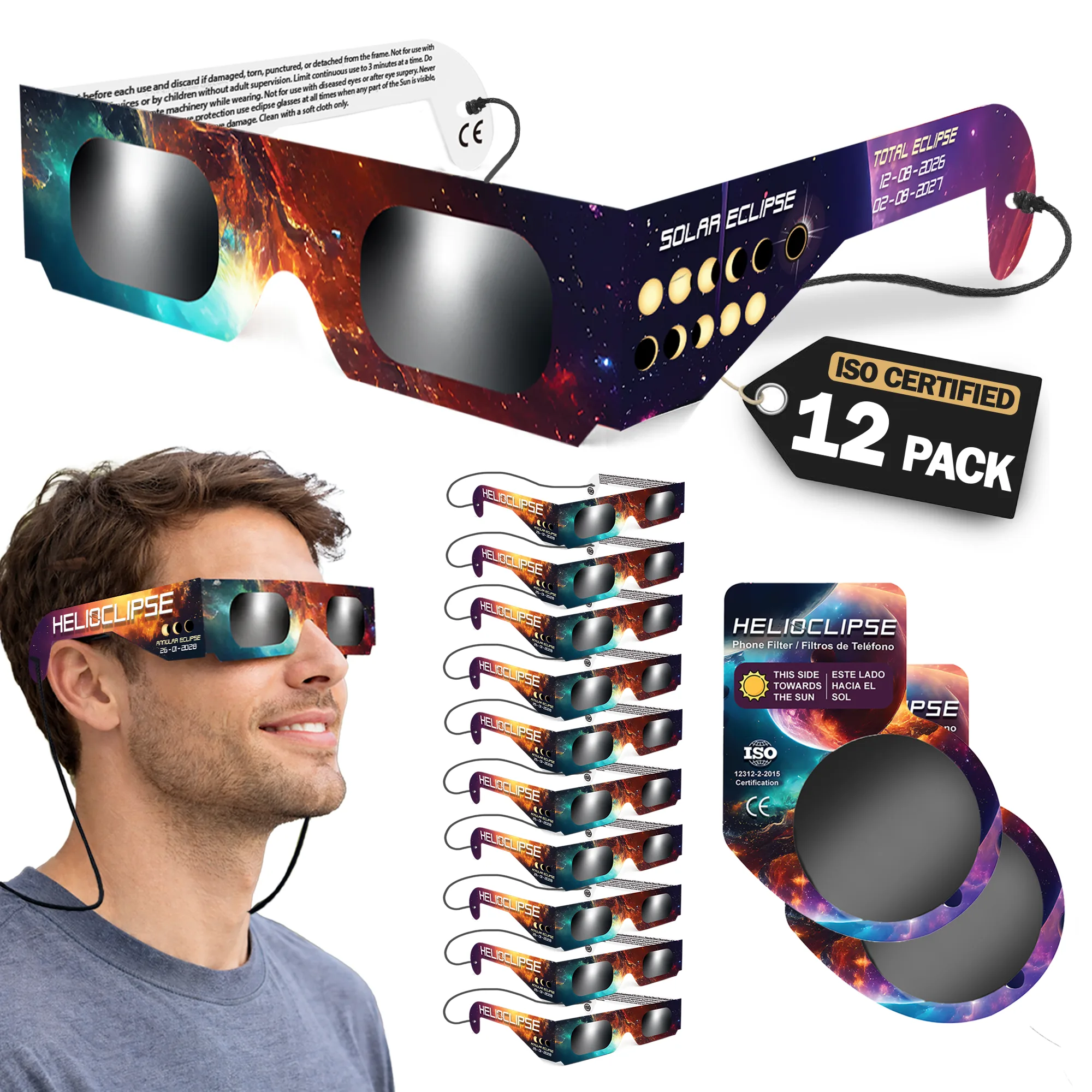
Order enough ISO 12312-2 eclipse glasses from Helioclipse for your group well before August. Practice the routine with children: look down, put the viewers on, look up, then turn away before removing them. That small rehearsal prevents confusion when everyone around you starts counting down.
A practical Burgos scouting schedule
Several months out, use the map to create a shortlist in the historic core, on elevated ground, and near a more open municipal edge. This total solar eclipse 2026 Burgos Spain 2026 guide deliberately does not declare one universal “best” pavement square because tree growth, temporary structures, permissions, and crowd controls can change.
One or two days before the eclipse, visit the primary and backup sites. Stand where you will actually stand—not at a nearby viewpoint—and photograph the west-northwestern skyline. Measure or estimate the altitude of its highest obstacle. Confirm toilets, water, shade before the event, accessible routes, and the location of the nearest safe exit.
On August 12, reassess cloud and wind during the afternoon. Set a firm decision deadline so the group does not fragment. Once settled, distribute viewers, review the glasses-off and glasses-on signals, and leave time to experience the scene rather than treating it as a camera test.
The evening timing is socially convenient: families and friends can gather after much of the day has passed. It also means there is little daylight left to recover from a wrong turn. Share coordinates rather than a place name, download essential details for offline access, and make sure every adult knows the backup plan.
How Medieval Builders Constructed Burgos Cathedral Without ...
Before Machine Age
Frequently asked questions
Where in Spain should I watch the 2026 total solar eclipse?
There is no single best location for every observer: a site inside the path of totality with a clear west-northwest horizon is essential. Burgos has favorable path geometry and is near the central portion of the path, but a clean sightline, safe access, and a weather backup matter more than a small gain in totality duration.
How long will totality last in Spain during the 2026 eclipse?
Duration varies by location within the path of totality. In Burgos, totality is expected to last about 1 minute 44 seconds, while Valladolid is expected to receive about 1 minute 29 seconds.
What are the key viewing conditions for the 2026 total solar eclipse in Burgos?
Burgos is expected to enter totality at about 8:28 p.m. CEST on August 12, 2026, with the Sun roughly 8.3 degrees above the west-northwestern horizon. Although the city is inside the totality path, nearby buildings, trees, ridges, or other obstructions could block the low Sun.
What should I check when planning an eclipse-viewing site in Burgos?
Check the exact circumstances for your chosen location, since contact times vary with coordinates, and inspect the real horizon from ground level. Choose a place with an unobstructed west-northwest view and prepare a weather plan rather than relying only on city-center timing or map geometry.
Will the eclipsed Sun be on the horizon in Burgos?
No, totality is not expected to occur directly on the horizon in Burgos. The Sun should be about 8.3 degrees high—around 16 apparent solar diameters above a perfectly flat horizon—but local terrain and structures can still obstruct it.
On-site next steps
- Pin your exact Burgos viewing coordinates in the Helioclipse Eclipse Explorer, then check totality duration, local contacts, solar altitude, and the west-northwestern direction.
- Visit the site at ground level and compare the real skyline with the map. Keep at least one backup within the municipality.
- Get your group’s Helioclipse solar eclipse glasses early, inspect them before use, and rehearse safe viewing with children.
- Save the plan offline and share the same coordinates, meeting time, and weather trigger with everyone attending.
Sources & further reading
- 10 best Spanish cities to see the total solar eclipse 2026 — Space.com
- Spain’s total solar eclipse 2026 comes with a catch — Space.com
- 10 tips for planning your 2026 solar eclipse trip — Space.com
- Total Solar Eclipse, August 12, 2026 — Eclipsophile
- Plan Now for the 2026 Total Solar Eclipse in Europe — Sky & Telescope
- Total Solar Eclipse on August 12, 2026 — NASA Science
- How to View a Solar Eclipse Safely — American Astronomical Society
- About the ISO 12312-2 Standard for Solar Viewers — American Astronomical Society
- Eclipse Basics — American Astronomical Society
- Eclipse Viewing Safety — NASA Science