Ocean viewing and eclipse planning: motion, weather windows, and realistic trade-offs
A ship can sound like the perfect eclipse platform: open horizon, no mountain blocking the Sun, and the tempting idea that if clouds threaten, you can simply move. That is the appeal behind every eclipse viewing cruise, every forum thread about a solar eclipse on cruise ship, and every anxious search for a solar eclipse viewing cruise ship motion weather reality check.
The truth is better than the hype and stricter than the marketing. A vessel at sea can improve your odds in some situations, especially when mobility lets a captain chase a clearer weather window. But a ship is also a moving, vibrating, wind-exposed platform with operational limits, safety rules, and no guarantee that the sky will cooperate. If you are planning for 2026 or beyond, start with the Helioclipse Eclipse Explorer / 3D map so you know exactly where totality or partial phases fall, then judge whether being offshore actually helps your specific plan.
For the August 12, 2026 total solar eclipse, that distinction matters. The path crosses Greenland, Iceland, the Atlantic, Portugal, and northern Spain, and a large fraction of the track lies over water. That makes ocean-based viewing a real option, not a gimmick. It does not make it an automatic best choice.

Why ships are attractive for eclipse chasing in the first place
The strongest argument for a ship is simple: mobility. Space.com’s reporting on 2026 eclipse voyages quotes veteran eclipse chasers and expedition operators making the same point again and again. If a captain has room to maneuver and is willing to use weather data aggressively, a ship may be able to leave a cloudier patch for a thinner or clearer one.
That matters because the path of totality is narrow. NASA explains that the umbral path on Earth is typically far smaller than the broad partial-eclipse zone, and at any one location totality lasts only a few minutes. If your observing site is fixed on land, you can still drive for better weather if roads allow. At sea, the equivalent advantage is that the platform itself can reposition.
For 2026, that is especially relevant because two-thirds of the eclipse track lies over open water, according to Space.com’s 2026 cruise overview. In eastern Greenland, many observers will effectively need to be ship-based anyway. In western Iceland or offshore Spain, ships may also try to optimize around cloud patterns.
But “can move” is not the same as “will move enough, in time, to the right place.” That gap is where many unrealistic expectations begin.
Mobility helps, but it does not erase weather risk
The most important planning sentence in this whole topic is this: climate is not a promise, and mobility is not magic.
The American Astronomical Society’s weather guidance makes the core point clearly: experienced eclipse chasers balance duration, logistics, and likelihood of clear skies, while remembering that historical averages are only probabilities. Or, in the eclipse-chaser shorthand AAS highlights, climate is what you expect; weather is what you get.
That is why a solar eclipse viewing cruise ship motion weather 2026 guide should never read like a guarantee brochure. A ship may improve your odds if it can respond to satellite imagery and short-term forecasts. It may also run into a broad cloud shield that covers a huge area, or face sea, ice, traffic, or schedule constraints that limit repositioning.
A useful real-world reminder comes from Space.com’s report on the 2021 total solar eclipse near Antarctica. The ship changed course overnight based on satellite imagery and moved closer to the centerline, yet passengers were still completely clouded out. They experienced the eerie darkening of totality through overcast, but not the corona itself. That is not a failure of planning so much as a reminder that weather can beat even smart decisions.
For 2026, the weather story also depends on where you are. Space.com’s broader 2026 planning piece notes that Greenland’s coast and parts of the Atlantic are more cloud-prone than waters off northern Spain or the Mediterranean, while Iceland can change rapidly and may still offer local breaks. Those are not reasons to avoid the sea. They are reasons to ask a harder question than “Is there a ship?” Ask: what weather regime will this ship actually be operating in on eclipse day, and how much freedom does it have to respond?
The deck is not an observatory platform
People often imagine a solar eclipse cruise ship as a giant steady balcony. In practice, even a large vessel moves in several ways at once: roll, pitch, yaw, vibration, and small unpredictable shudders from wind and sea state. If the ocean is calm, this may be only mildly annoying for casual viewing. If the sea is lively, it changes everything.
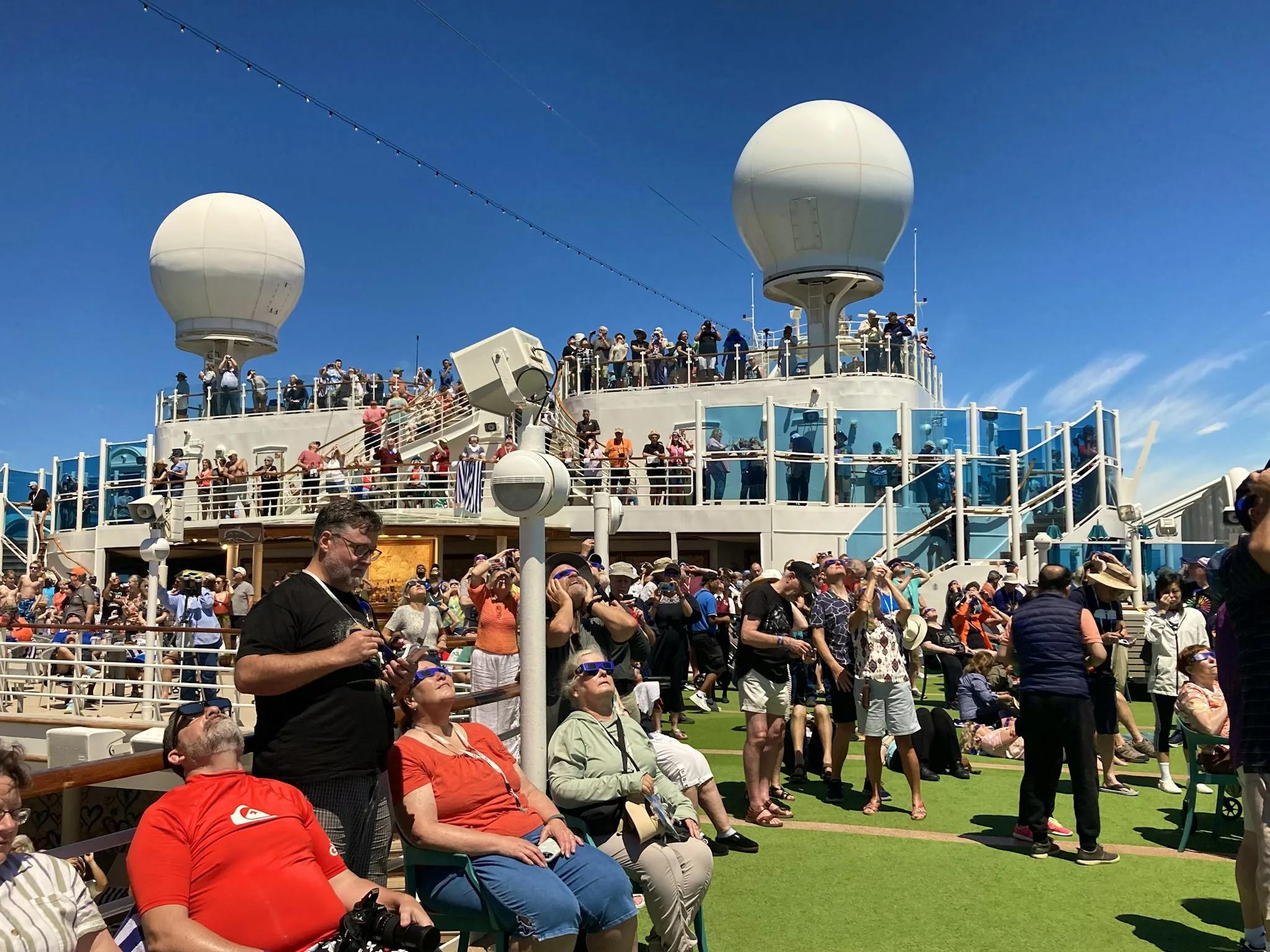
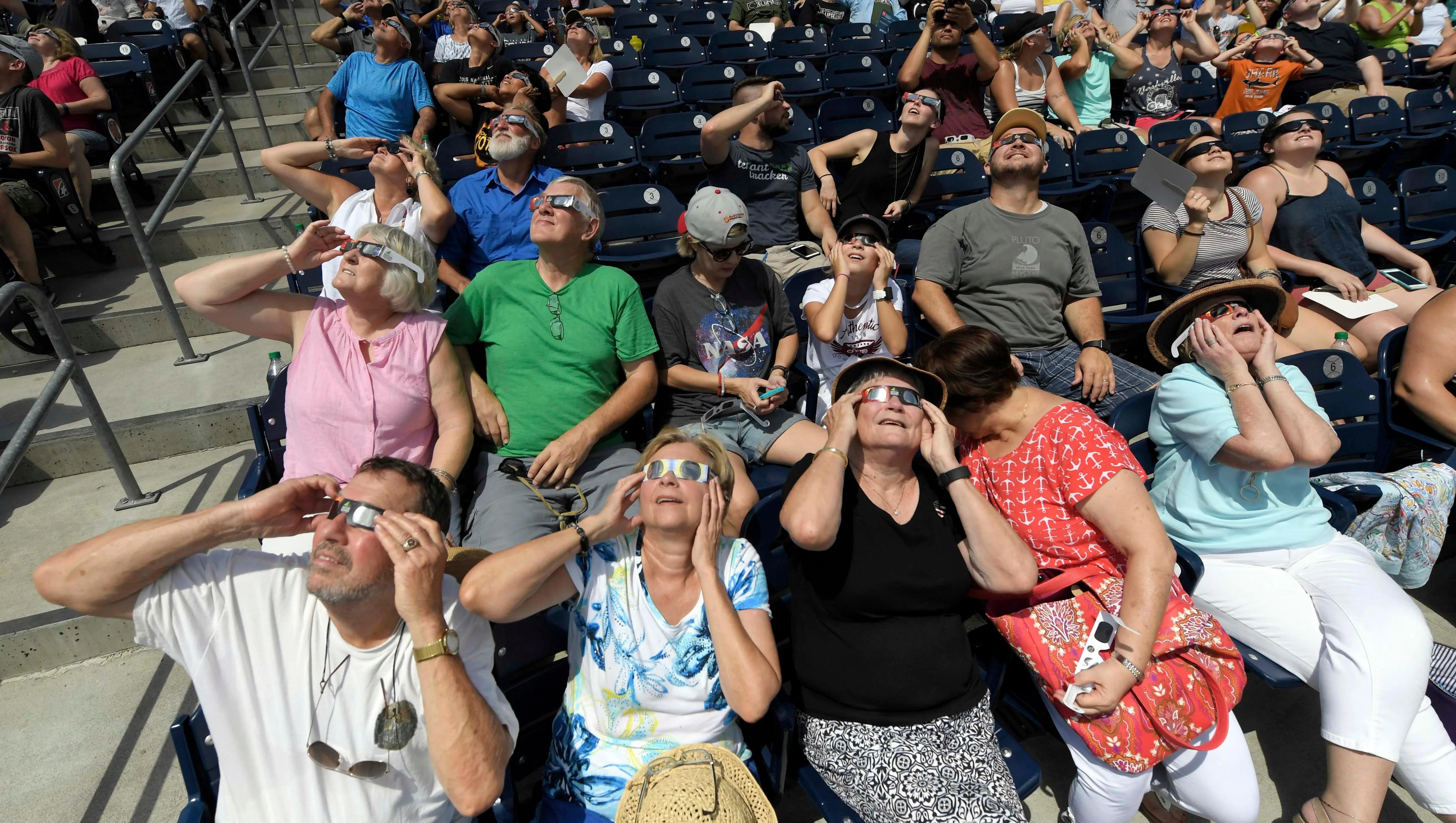
For naked-eye viewing during the partial phases, motion is mostly a comfort issue. You can still watch safely with certified viewers, glance away, talk with family, and enjoy the changing light. During totality itself, if you are inside the path and the Sun is fully covered, the spectacle is broad enough that modest ship motion does not ruin the emotional experience.
Photography is another matter. Long focal lengths magnify every wobble. A setup that feels manageable on land can become frustrating on deck. Railings vibrate. Tripods transmit motion. Wind catches lens hoods and jackets. Other passengers shift the deck under your feet. If your dream is not just to witness totality but to produce razor-sharp close-ups of the corona, a ship is a much less forgiving platform than a stable site on land.
This is one reason seasoned eclipse travelers often separate “best place to experience it” from “best place to image it.” A ship may be excellent for flexibility and horizon access, but mediocre for precision imaging unless conditions are unusually calm and your expectations are realistic.
Horizon access is real, but so are sight-line problems
One genuine advantage of ocean viewing is the horizon. If the eclipse happens with the Sun low in the sky, open water can remove one big headache: terrain.
That matters for the August 12, 2026 eclipse in Spain and nearby waters because the eclipse occurs late in the day there. Space.com’s 2026 planning coverage notes that in Spain the event happens shortly before sunset, and even modest hills can block the view in some eastern regions. Offshore, you may avoid that terrain problem.
But “open horizon” does not mean “perfect sight line.” Your actual view depends on which side of the ship you are on, whether upper decks or structures block part of the sky, whether access is restricted, and how crowded the best rail positions become. A low Sun can also be more vulnerable to haze, marine cloud, or a distant cloud bank sitting right on the horizon.
This is where total solar eclipse cruise planning needs a reality check. The best place is not automatically the highest deck or the fanciest ship. It is the location on that vessel with a clear line of sight to the relevant azimuth, enough room to stand safely, and enough time margin that you are not fighting a crowd in the final minutes.
If you are considering a ship for a low-altitude eclipse, ask practical questions early: Which decks are open during the event? Which side faces the Sun at maximum eclipse? Will bridge wings or private areas be off-limits? Can passengers move freely during the partial phases? Those questions matter more than glossy itinerary language.
Centerline, edge of path, and why a few miles can matter
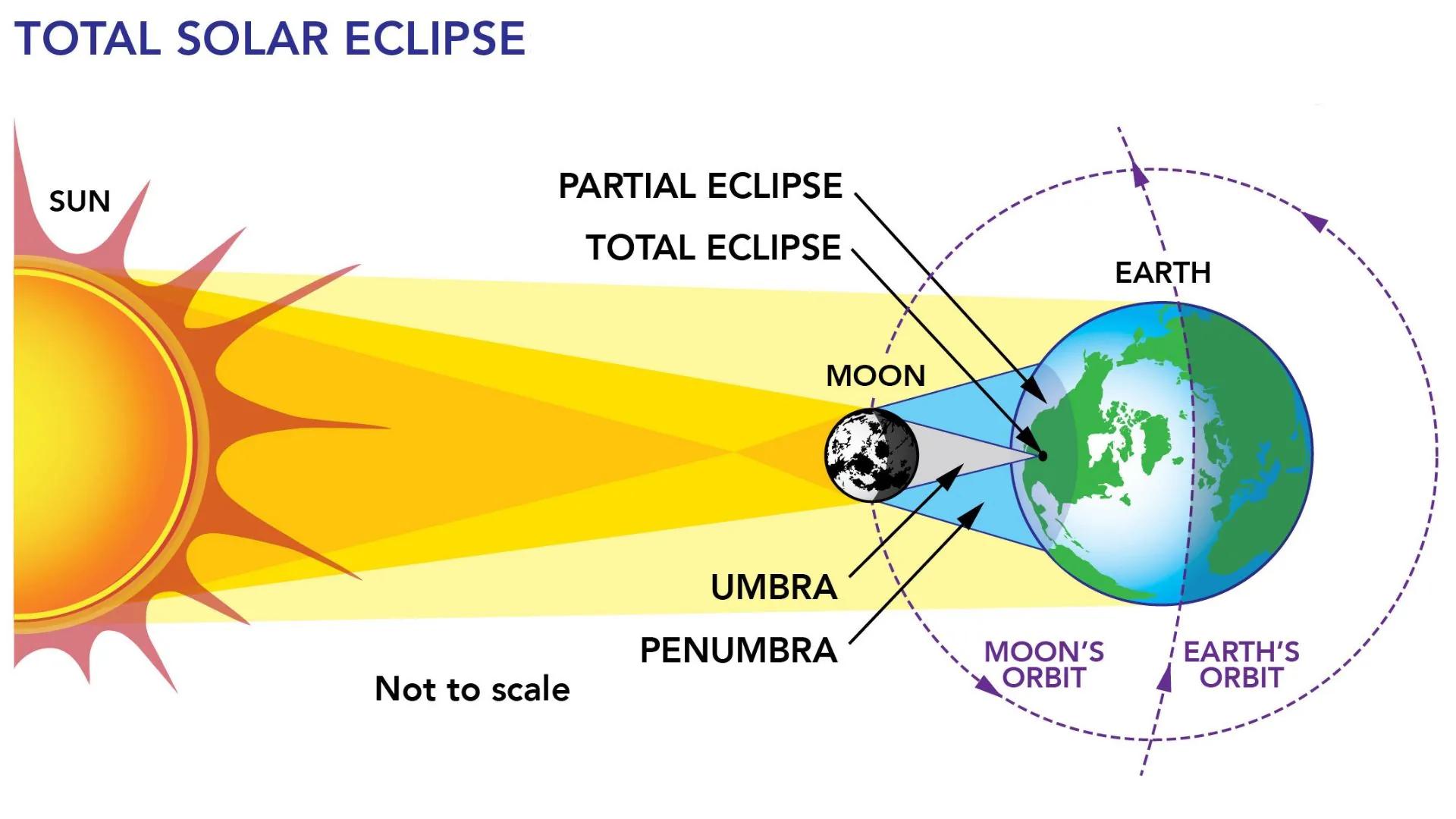
At sea, just as on land, geometry still rules. NASA’s eclipse geometry pages explain why: totality only happens inside the Moon’s umbra, and the duration is longest near the centerline of the path and shorter near the edges.
That means a ship’s position is not just about “in path” versus “out of path.” It is also about how deep into the path the vessel can get. For some 2026 Arctic expedition concepts, Space.com reported centerline-adjacent viewing with about 2 minutes 17 seconds of totality near Greenland’s Blosseville Coast. On land in Iceland, Space.com cites a maximum of about 2 minutes 13.7 seconds. In Spain, totality is shorter, around 1 minute 44 seconds at the longest points, and the Sun is lower.
Those are not tiny differences when you are planning a once-in-years trip. An extra 20 or 30 seconds of totality is enough time to stop fumbling, look around, notice the horizon glow, and actually breathe. Near the edge of the path, totality can shrink dramatically.
So if a cruise itinerary or brochure only tells you that the ship will be 'in the path,' that is not enough. You want to know whether the plan aims for centerline conditions, whether weather could force a trade toward a shorter-duration location, and whether the operator treats the eclipse as the main event or as a bonus attached to a normal voyage.
The operator question: eclipse-first or cruise-first?
This is where many readers start searching for specific offerings — a solar eclipse cruise, named operator sailings like Norwegian eclipse voyages or Princess itineraries, or dedicated expedition charters. We are not here to rank operators or sell someone else's voyage, but the search behavior points to a real planning issue.
Not every ship carrying passengers during an eclipse is truly an eclipse expedition. Some voyages are built around the event, with route flexibility, expert briefings, and weather-driven decision-making. Others simply happen to be near the path on the right date.
That difference matters more than branding. Space.com’s 2026 cruise reporting includes a blunt warning from veteran observers: some ships will not make meaningful last-minute moves if weather deteriorates. A vessel may remain in port, stay committed to a broader itinerary, or prioritize operational convenience over eclipse optimization.
So when you see phrases like solar eclipse cruise 2026 tickets or solar eclipse 2026 cruise schedule, read them as prompts to investigate policy, not as proof of quality. Ask whether the captain has latitude to reposition. Ask whether the eclipse viewing area is being actively planned. Ask whether onboard experts will brief passengers on timing, eye safety, and what to expect during totality.
The same logic applies if you are already thinking ahead to solar eclipse cruise 2027. The year changes; the planning discipline does not.
Weather windows are about scale, not wishful thinking
A lot of online discussion, including threads that resemble solar eclipse viewing cruise ship motion weather reddit, swings between two extremes: “a ship can always outrun clouds” and “the ocean is always worse than land.” Neither is serious.
Weather has scale. A small broken cloud field may be navigable. A broad frontal system may not be. Local sea breeze effects may help in one region and hurt in another. Fjords can create microclimates; open ocean can expose you to large cloud shields with nowhere obvious to run.
For 2026, some of the most interesting trade-offs are regional:
- Scoresby Sund / East Greenland: expedition ships may gain mobility inside a dramatic fjord system, and some operators argue that air flowing off the ice sheet can improve local conditions. But if a large system settles in, it can blanket the area for days.
- Western Iceland: totality on land can reach a little over 2 minutes, with the Sun around 25 degrees above the southwest horizon according to Space.com’s reporting. Roads allow some land mobility, but traffic may be heavy. Offshore viewing may avoid road congestion, yet still faces fast-changing maritime weather.
- Off northern Spain or the Mediterranean approaches: climatology may be more favorable than farther north, but the late-day Sun introduces low-altitude sight-line and haze issues.
This is why maritime viewing constraints in principle—horizon motion, decks, eclipse plannin is not just a clumsy keyword string. It is actually the right mental model. Think in constraints: where can the vessel legally and safely go, how far can it move in the forecast window, what sky condition is it trying to escape, and what new compromises come with that move?
Safety on deck is simpler than people make it — but not optional
Shipboard viewing does not change the eye-safety rules. The Sun does not care whether you are on a cliff, a beach, or a top deck.
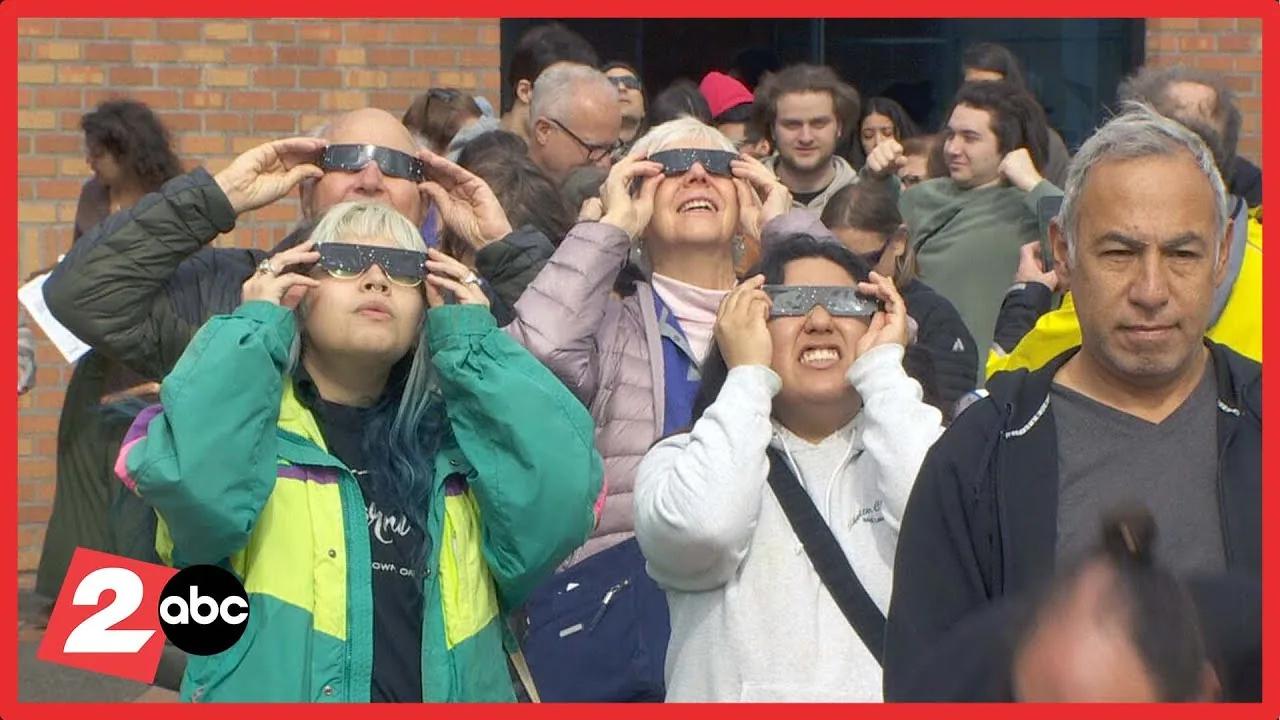
The AAS eye-safety guidance is the standard baseline: during all partial phases, and during any partial or annular eclipse, you must use special-purpose solar filters that conform to ISO 12312-2 if you are looking directly at the Sun. Only during the brief total phase of a total solar eclipse, and only if you are actually inside the path of totality and the Sun is completely covered, may you remove your viewers for direct naked-eye viewing. If you are new to that timing, read our guide to when glasses on, when glasses off.
This is also where shopping language gets messy online. Terms like approved solar eclipse glasses, eclipse glasses nasa approved, and solar eclipse glasses iso 12312-2 certified get mixed together as if they mean the same thing. They do not. NASA does not approve specific brands for consumer purchase; the meaningful standard readers should verify is ISO 12312-2, along with seller credibility and product condition. We break that down in our explainer on ISO 12312-2 and eclipse viewers.
If you are traveling with family or a group, buy your viewers early and keep them accessible, not buried in luggage until eclipse morning. On a windy deck, simple things matter: use neck pouches or a secure pocket, supervise children, and do not juggle glasses, phones, and drinks in the final minutes before maximum eclipse. If you still need viewers, our shop eclipse glasses page is the straightforward place to start.
What a ship can do better than a car — and what it cannot
A ship can solve some land problems beautifully. It can spare you from traffic jams on narrow roads. It can place you in otherwise inaccessible water-based portions of the path. It can give you a broad horizon and, on a well-run voyage, a built-in community of people who understand what they are there to see.
It cannot give you the instant flexibility of a small car on a road network if you are already in a region with many viable land options. It cannot make the deck stop moving. It cannot guarantee that your cabin side or assigned viewing area matches the Sun’s position. And it cannot rescue a plan built on vague assumptions.
That is why we think ocean viewing and eclipse planning: motion, weather windows, and realistic trade-offs is the right frame. Not romance versus cynicism. Trade-offs.
If your priority is the emotional experience of totality and you are comfortable with maritime uncertainty, a solar eclipse viewing cruise may be a wonderful choice. If your priority is maximum control over setup, exact site selection, and stable imaging, land may be stronger. If your priority is weather agility, the answer depends on the region, the vessel, and how much operational freedom exists on eclipse day.
A practical checklist before you commit to any ship-based plan
Before you spend money or commit your family to a voyage, work through these questions:
1. Is the eclipse the main mission?
A true solar eclipse viewing cruise should treat the event as operationally central, not decorative.
2. What is the target geometry?
Will the ship aim for centerline or merely enter the path somewhere? For 2026, the difference between roughly 2 minutes 17 seconds in a favorable Greenland position and around 1 minute 44 seconds in Spain is meaningful, and edge-of-path durations can be much shorter still.
3. What weather regime are you buying into?
Arctic fjords, Icelandic coasts, Atlantic waters, and the western Mediterranean do not offer the same cloud risks.
4. What are the deck logistics?
Where can you stand? How crowded will it be? Is there a clear view to the relevant horizon? Can you scout the deck the day before?
5. What is your backup mindset?
A ship is already a backup strategy against fixed-location weather, but you still need a backup mindset. If the sky loses, can you still enjoy the voyage, the science programming, and the experience without feeling cheated?
6. Are you prepared for safe viewing?
Bring enough certified viewers for your group, know the totality rules, and do not improvise with sunglasses or unfiltered optics. If you want a refresher on why shortcuts are dangerous, our article on why staring at the Sun without protection is never “just a quick look” is worth reading before you travel.
If you are planning for 2026, start with the map, not the brochure
For the August 12, 2026 eclipse, the map should drive every later decision. The path crosses very different environments: remote Greenland waters, western Iceland, Atlantic stretches, Portugal, and northern Spain. Some locations offer longer totality. Some offer better climatology. Some offer easier land access. Some offer cleaner horizons. No single ship-based answer beats all of those variables at once.
That is why we recommend starting with the Helioclipse Eclipse Explorer / 3D map and comparing sea-based ideas against land-based alternatives. If you are considering Spain in particular, our guide to August 12, 2026 total solar eclipse: what to expect and how to plan ahead helps frame the bigger event, and our post on cloud cover and eclipse day: how to read the sky and when to move is the right companion piece for weather decisions.
A final note on search noise: phrases like solar eclipse cruise ship, solar eclipse cruises 2026, or even operator-specific searches can make the topic feel more settled than it is. It is not settled until you know the path geometry, the weather logic, the deck logistics, and the safety plan.
That may sound less glamorous than the brochure version. It is also how you give yourself the best chance of standing under a darkened sky, on the right side of the line, with enough time to actually feel the moment.
4K Paradise Window View - Calming Ocean Waves & Tropical ...
Peaceful Window Views
Frequently asked questions
How many decks does a typical eclipse-viewing ship have?
The excerpt does not give a deck count for any ship, so there is no factual answer to that from this source. What it does say is that a ship is a moving, vibrating, wind-exposed platform, so the number of decks matters less than whether the vessel can provide a stable, safe viewing setup.
Can I safely watch a solar eclipse through a ship window?
No clear safety claim is given in the excerpt about viewing through windows, so it should not be assumed safe. The article focuses instead on planning for open-horizon viewing and using proper eclipse planning tools, which means you should rely on standard eclipse eye protection rather than a window as a safety measure.
How do I make a simple pinhole projector for an eclipse at sea?
The excerpt does not explain how to build a pinhole projector. It does say that eclipse planning should start with knowing where totality or partial phases fall, so a pinhole projector would be a separate viewing aid rather than a substitute for careful location planning.
Which ships are expected to be in the path for the 2026 eclipse?
The excerpt does not name any specific ships. It says ocean-based viewing is a real option for the August 12, 2026 total solar eclipse because much of the track lies over water, but whether a particular ship sees totality depends on its route, weather, and timing.
What should I know before booking a 2026 eclipse cruise?
A cruise can improve your odds if the captain can use weather data and reposition into a clearer window, but it is not a guarantee. The article stresses that ships still face motion, wind, operational limits, and no promise that the sky will cooperate, so you should check the eclipse path first and treat mobility as helpful, not magical.
On-site next steps
- Explore the Helioclipse Eclipse Explorer / 3D map to compare offshore and land-based positions, centerline versus edge-of-path viewing, and the geometry for the 2026 eclipse.
- If your group still needs viewers, visit our shop eclipse glasses and order early so you are not scrambling before departure.
- For more planning help, browse the Helioclipse blog for safety, weather, and travel guides.
Sources & further reading
- Best total solar eclipse 2026 cruises for the ultimate adventure
- Here’s what the only total solar eclipse of 2021 was like from a cruise ship near Antarctica
- Totality on a Tropical Sea
- Eclipse chasers share insider tips, travel advice and skywatching secrets for the 2026 total solar eclipse
- Eclipse chasing
- Eclipses
- Why Do Eclipses Happen?
- What to Expect: A Solar Eclipse Guide
- How to View a Solar Eclipse Safely
- Solar Eclipse Climate & Weather Data