The second rush hour: leaving the viewing site when everyone else has the same idea
Totality ends with a flash of returning sunlight, a burst of cheers—and, in many parking areas, the nearly simultaneous sound of car doors closing. Thousands of people who arrived over several hours may now try to leave within several minutes.
That is the second rush hour. It is more synchronized than an ordinary commute, often concentrated onto rural roads that were never designed for event-scale traffic, and emotionally charged by the abrupt end of an experience people may have anticipated for years.
This traffic after total solar eclipse leaving site 2026 guide has one central message: you probably cannot outrun the first departure wave, but you can choose not to join it. Before August 12, use our Eclipse Explorer and 3D map to confirm whether your site is inside the path of totality, inspect the surrounding road network, and save more than one route. Then make waiting part of the plan rather than an improvised response to a blocked exit.
Why the road fills faster than the viewing site did
Eclipse arrivals are spread out. Some visitors reach the area the previous evening, others arrive before dawn, and local residents may travel only a short distance. Departure demand is different: totality provides a common finish signal, even though the eclipse itself is still in progress.
That synchronization is why traffic after solar eclipse events can behave unlike familiar weekday congestion. A field holding 2,000 cars may empty through one gate onto a two-lane road. Several viewing sites may feed the same junction. Temporary parking on soft ground, pedestrians crossing access roads, and drivers attempting last-minute turns all reduce the number of vehicles that can move through the bottleneck.
The transportation record from the August 21, 2017 eclipse illustrates the scale. An analysis discussed by Space.com reported estimates that roughly 20 million people traveled to another city to reach the path of totality. A dedicated transportation report documented a concentrated post-eclipse departure peak. The lessons from traffic after 2024 eclipse gatherings reinforced the same basic planning principle: when a mass audience experiences one precisely timed climax, ordinary journey estimates can stop being useful.
Traffic after total eclipse events is therefore not simply “more cars.” It is a surge of cars making the same decision at almost the same moment. Navigation software can identify congestion, but it cannot create extra road capacity or make a narrow bridge, ferry terminal, car-park gate, or mountain pass process vehicles faster.
Totality is over, but the eclipse is not
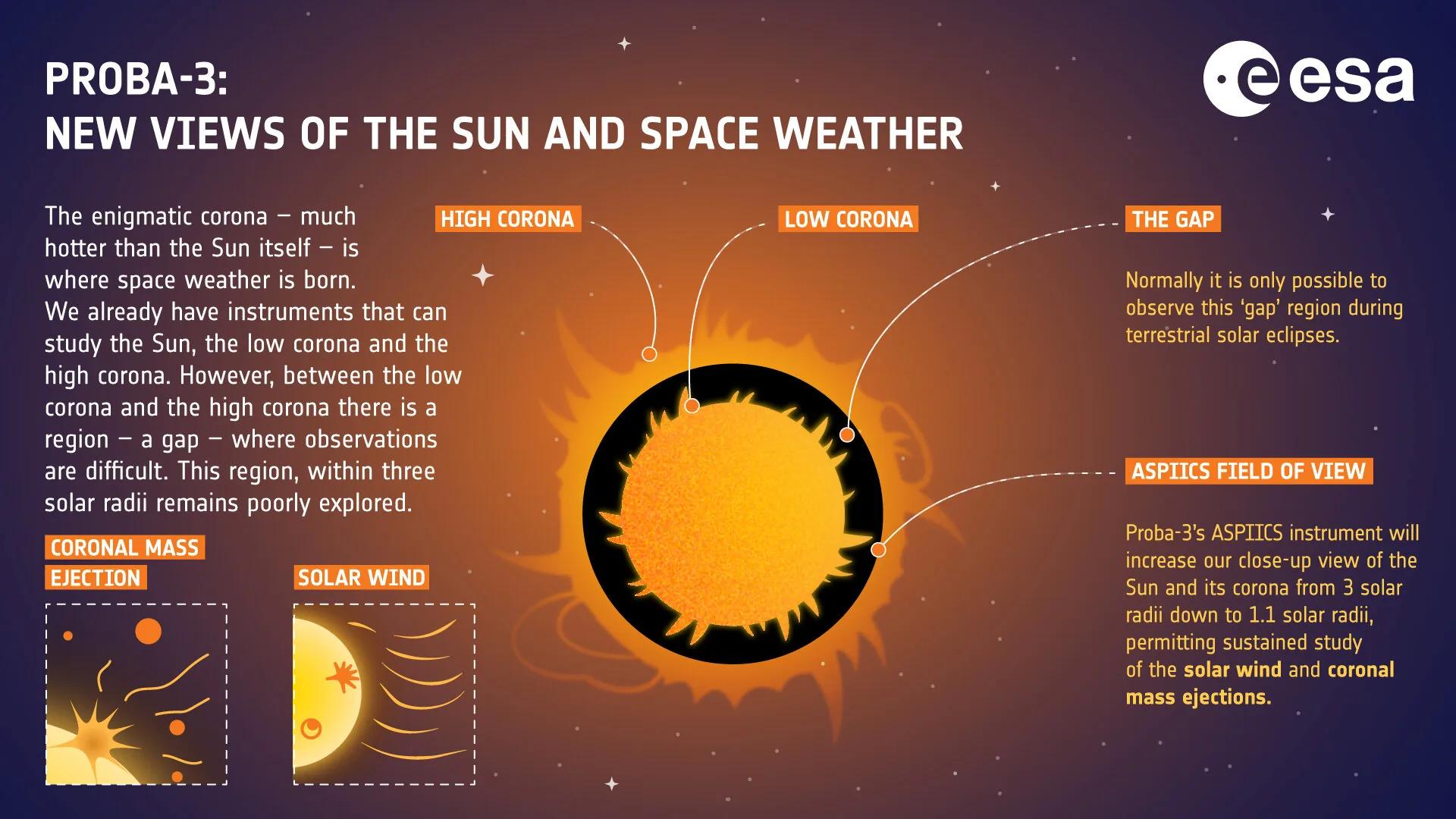
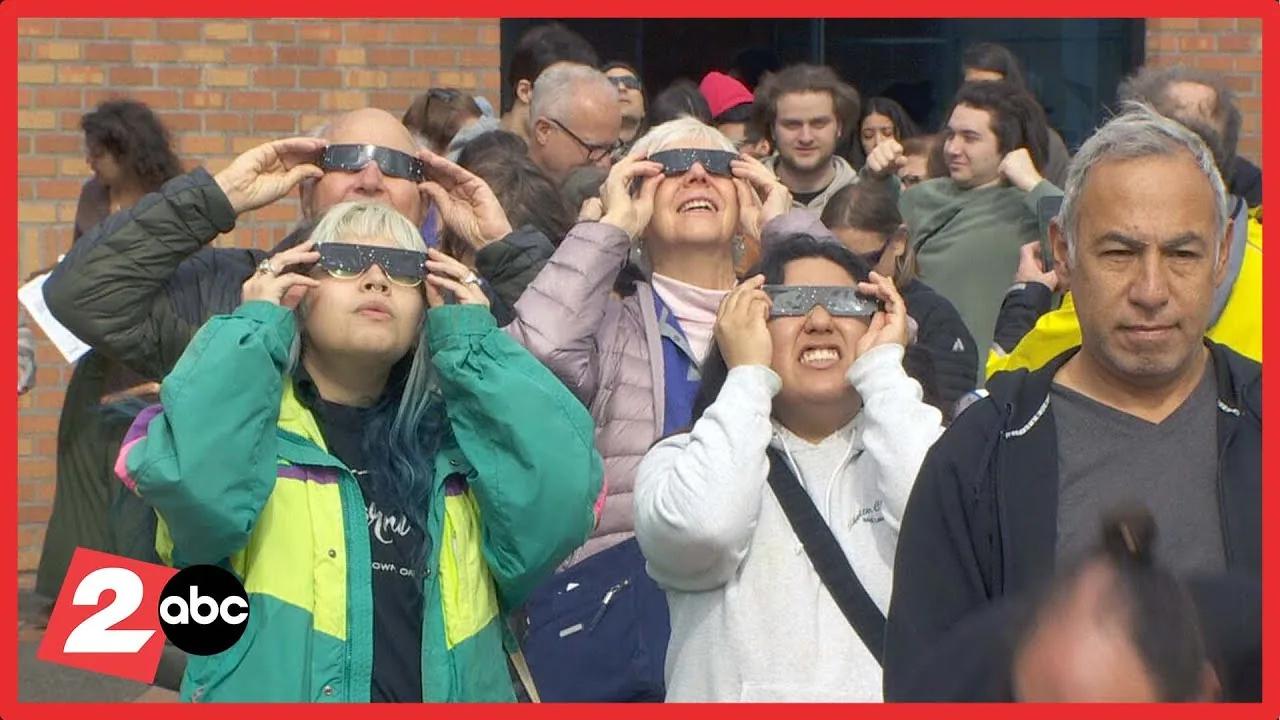
The first bright bead of sunlight after totality is called third contact. At that instant, totality has ended—but the Moon still covers most of the Sun, and the outgoing partial phase commonly continues for about another hour. The stages before totality now unfold in reverse: a thin solar crescent expands, unusual shadows return, the temperature begins to recover, and projected crescents can reappear beneath leafy trees.
Put your solar viewers back on as soon as any part of the bright Sun returns. You may look directly without them only during the brief interval of complete totality, from a location actually inside the path. Everywhere outside that path, and throughout every partial phase, proper solar protection remains necessary. Our guide to eclipse phases and when to use solar glasses explains that handover in detail.
This remaining partial phase gives your group a meaningful alternative to sitting in a queue. Watch the crescent Sun safely, compare what you noticed during totality, let children make pinhole projections, eat, drink water, and pack without racing. NASA explicitly recommends lingering through the final partial phases or staying longer when practical because many spectators leave immediately after totality.
Recheck your location in the Helioclipse map rather than assuming the celestial event has ended. Look up the final contact for your exact site, then compare that time with live road conditions and any closure schedule published by local authorities. A planned departure 60 or 90 minutes later is psychologically easier to accept than an undefined instruction to “wait until traffic improves.”
Staggered departure beats the panic merge
Traffic after totality is often made worse by a small-scale version of crowd behavior: one person starts packing, neighboring groups notice, and suddenly everyone feels late. Drivers begin to treat a stationary queue as a competition. They force merges, block junctions, follow unofficial tracks, or divert onto roads that cannot carry the extra load.
Resist that momentum. Unless an organizer, police officer, landowner, tide window, wildfire warning, or changing weather creates a genuine reason to move, leaving five minutes after totality is unlikely to put you ahead of thousands of people who made the same calculation. It may simply place you in the queue while you are still tired, hungry, and emotionally overstimulated.
Use a departure ladder instead:
- Preferred plan: remain until the partial phase ends, then reassess traffic.
- Lower-stress plan: eat an early dinner, visit a local attraction that is prepared for visitors, or stay overnight.
- Time-sensitive plan: leave promptly only if you have a real deadline, and accept that the first leg may take much longer than normal.
- Emergency plan: know the official exit and emergency-access rules; never use a closed lane, farm track, fire road, or private property as a shortcut.
The goal is not to identify a magical minute when every road turns green. The best places and timing for traffic after total solar eclipse leaving site depend on the capacity of the car park, the number of exit points, the road hierarchy, and where the audience is heading. A coastal site with one access road behaves differently from an urban park served by trains and several walking routes.
Build the exit plan before you drive in
A good departure starts before ingress. Fuel the car or charge the battery before entering the busiest area. NASA notes that service stations can face unusually high demand and may run short of fuel; an electric charger that normally has no queue can become a serious constraint when many drivers need it at once.
Use the toilet before the observing period becomes intense, and find out whether facilities will remain open after totality. Pack water, food, necessary medication, a basic first-aid kit, sun protection, warm layers, and supplies for children. Keep enough in reserve for several stationary hours rather than planning around an optimistic navigation estimate.
Download the route and essential contact information for offline use. Mobile networks can slow under event-scale demand, and a live map is much less helpful if every driver is simultaneously refreshing it. Save:
- the official exit route from the venue;
- at least one legal alternative that does not depend on a tiny local lane;
- the address of your overnight stop or destination;
- local traffic, ferry, rail, and emergency-information pages;
- the final contact time for your observing site;
- a meeting point in case your group becomes separated.
If you are attending an organized event, ask before eclipse day whether departures will be released in stages. A managed exit may look slow at the gate while producing a safer, steadier flow on the public road. Follow stewards rather than an app that tells you to turn through a barrier.
For the August 12, 2026 total eclipse, the path crosses Greenland, Iceland, the Atlantic, Spain, and a small corner of Portugal; a partial eclipse extends across a much broader part of the Northern Hemisphere. Those regions do not share one transport problem. Icelandic viewing may involve long distances and limited road redundancy, while Spanish sites may face evening travel, urban demand, mountain routes, or coastal bottlenecks. Our 2026 eclipse travel, crowds, and backup-plan guide helps you connect the sky geometry to practical route choices.
Treat fatigue as a road-safety issue
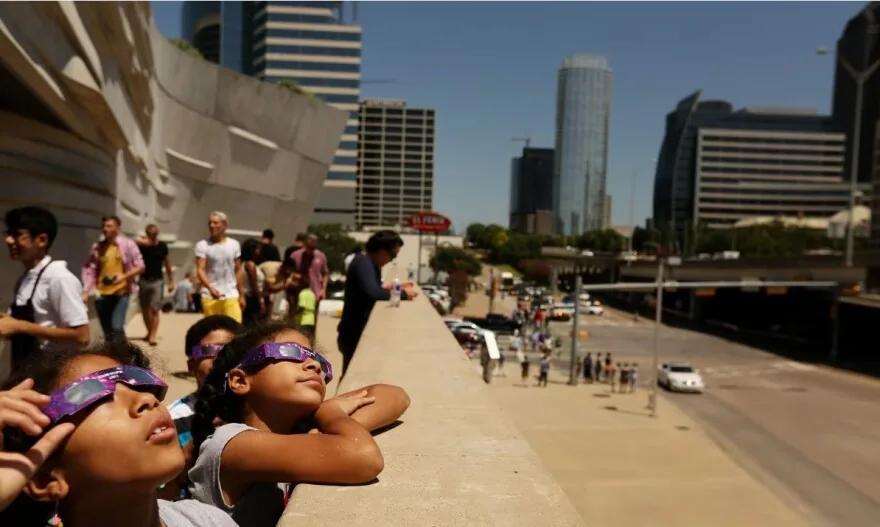
The journey home may begin at the end of a very long day. You might have driven before dawn, changed location because of clouds, spent hours in the Sun, eaten irregularly, and concentrated intensely through the final minutes before totality. Afterward, adrenaline can fall away quickly. Awe, relief, disappointment about the weather, or the urge to review photographs can all compete for attention.
We should be precise here: there is no evidence that an emotional “eclipse comedown” by itself causes crashes. There is evidence, however, that road risk increased around the 2017 event. A study summarized by Space.com found a 31% increase in fatal crashes during the three-day eclipse period compared with control periods one week before and after. Risk fell during the hour containing the eclipse and reached its highest level afterward, nearly 50% above the comparison rate. The observational analysis cannot prove that eclipse travelers caused every additional crash, but it gives us a strong reason to take the drive home seriously.
Standard precautions matter: every passenger wears a seat belt; the driver puts the phone away; turns and lane changes are signaled; speed limits are respected; and nobody drives while sleepy or impaired. Switch drivers when possible. If you are yawning repeatedly, missing signs, drifting within the lane, or struggling to remember the last few kilometres, stop somewhere legal and safe. An overnight stay costs less than trying to force a tired journey through several hours of traffic after total solar eclipse crowds.
Do not stop on a live carriageway to photograph the sky, inspect the departing lunar shadow, or check the map. Pull fully into an authorized parking place first. Passengers should also avoid creating distractions at complex junctions or during stop-start merging.
The mistakes that turn delay into danger
The short answer to what not to do during a total solar eclipse? Do not let the excitement override the rules that protect your eyes, your passengers, and everyone sharing the road.
Immediately after totality, common mistakes include:
- Looking back at the returning Sun without viewers. Solar protection must go back on as soon as the bright photosphere reappears.
- Driving while trying to watch the partial phase. The driver’s job is the road; stop legally if you want another view.
- Racing to be first out. Aggressive reversing and forced merges save little time when the downstream road is already full.
- Following an app onto unsuitable roads. A technically public lane may be narrow, unpaved, flooded, gated farther ahead, or inaccessible to emergency vehicles when blocked.
- Running the fuel or battery margin too low. Stop-start traffic, heating, cooling, and diversions can consume more energy than the normal trip.
- Blocking emergency access. Never queue across intersections, fire-station exits, rail crossings, or marked access lanes.
- Posting photographs while moving. Share them after you park or reach your destination.
The same calm applies to eyewear. Marketplace wording can be unreliable: approved solar eclipse glasses is not a complete safety claim, and eclipse glasses nasa approved is especially misleading because NASA does not approve particular viewer brands. Product information should identify compliance with ISO 12312-2, and the viewer should be inspected for tears, punctures, scratches, or other damage before use. Phrases such as solar eclipse glasses iso 12312-2 certified are meaningful only when the seller and product information are trustworthy; a printed phrase alone is not proof.
Order suitable viewers before the last-minute rush, give every member of your group their own pair, and keep a spare set protected in the vehicle. You can review Helioclipse ISO 12312-2 eclipse glasses while building the rest of your family’s viewing kit.
A practical post-totality timeline
Your exact schedule must follow the contact times, venue rules, weather, and transport network at your location. This framework turns “we will see what happens” into decisions the group can agree on in advance.
The first five minutes
Replace solar viewers as soon as sunlight returns. Account for every person in the group. Do not move the vehicle while pedestrians are still streaming between parking rows. Take a breath, drink some water, and let the first wave reach the exit without you.
The next 30 to 60 minutes
Continue observing the partial phase safely. Pack delicate equipment without rushing, but keep filtered telescopes or cameras supervised and follow the correct procedures for their front-mounted solar filters. Eat something substantial, use available toilets, and check official traffic information at sensible intervals rather than continuously.
Around final contact
The Moon finishes moving away from the solar disk. Check the car park and the first critical junction—not just the estimated arrival time at home. If the access road remains dark red on a traffic display or organizers are holding departures, another meal or conversation may be more productive than idling.
One to three hours later
Conditions may improve, but a cleared car park does not guarantee a clear regional road. Several local queues may already have merged onto the motorway or main highway. Confirm fuel or charge, choose the rested driver, and commit to the legal route. If the delay pushes your arrival deep into the night, use the overnight option.
This is why traffic after total solar eclipse leaving site planning belongs in the same conversation as cloud forecasts and viewing locations. The experience is not finished when the corona disappears; it is finished when your group gets home safely.
If you must leave immediately
Sometimes waiting is not possible. A ferry has a fixed check-in time, a child needs medication, a caregiver must return, or the observing site has a mandatory closure. In that case, simplify the exit rather than trying to improvise speed.
Park facing the permitted exit if organizers allow it, keep essential equipment easy to stow, and agree before totality on who handles children, viewers, chairs, and cameras. Do not begin packing during totality to gain a minute; those brief moments are the reason you traveled. Instead, remove unnecessary complexity earlier in the day.
Choose a site whose exit points match your deadline. Being near the centerline can add totality time, but that advantage may not justify a single-access-road venue when you have a non-negotiable departure. Check the exact duration and path position on the map rather than assuming every location inside totality offers the same experience.
Traffic after total solar eclipse is partly a geography problem and partly a behavior problem. You cannot widen the road, but you can arrive supplied, park thoughtfully, avoid the first panic merge, and decline unsafe shortcuts. That is a much stronger plan than hoping enthusiasm will somehow beat capacity.
Safety tips for being on the road during the total solar eclipse
WXYZ-TV Detroit | Channel 7
Frequently asked questions
What should I avoid doing as totality ends?
Do not assume the eclipse is over when the first sunlight returns at third contact. The outgoing partial phase commonly continues for about another hour, and leaving immediately can place you in the first, most synchronized departure wave.
How should I choose a viewing location for the next total solar eclipse?
Choose a site inside the path of totality and examine the surrounding road network before the event. Save more than one route and consider whether the site feeds into narrow rural roads, a single gate, or other likely bottlenecks.
What is important to know about traffic when leaving an eclipse viewing site?
Expect many people to try to leave within minutes of totality ending, even though they arrived over several hours. Plan to wait rather than improvising at a blocked exit, because navigation tools cannot add capacity to narrow roads, bridges, parking exits, or other bottlenecks.
What lessons did the 2024 eclipse travel experience reinforce?
The article says that travel after 2024 eclipse gatherings reinforced a basic planning principle: normal journey estimates may not apply when a large audience shares the same precisely timed event. Departure traffic is a synchronized surge, not simply ordinary congestion with more cars.
What does this guide say about observing the eclipse safely?
The excerpt explains that totality ends at third contact, while the Moon still covers most of the Sun during the outgoing partial phase. It does not provide specific instructions about safe viewing equipment or observation procedures.
On-site next steps
- Open the Helioclipse Eclipse Explorer and confirm total versus partial eclipse conditions for your exact site. Save the contact times and inspect major roads, bridges, passes, ferries, and alternative exits.
- Share a written departure ladder with your family or group: immediate exit only if necessary, final-contact reassessment, later meal, and overnight fallback.
- Order Helioclipse solar eclipse glasses early enough to inspect them, distribute them, and pack protected spares before travel.
Sources & further reading
- Total Solar Eclipse on August 21, 2017: Special Event with Coast-to-Coast Traffic Congestion
- Planning for the April 8, 2024 Total Solar Eclipse
- NASA: What to Expect—A Solar Eclipse Guide
- Space.com: Solar eclipse jam—How to avoid getting stuck in traffic on April 8, 2024
- Space.com: April 8 total solar eclipse could bring uptick in fatal car crashes, scientists caution
- NASA: Eclipse Viewing Safety
- American Astronomical Society: Eyewear & Handheld Viewers
- American Astronomical Society: Phenomena You’ll Experience at a Total or Annular Eclipse
- American Astronomical Society: Eclipse Basics
- NASA Science: Eclipses