HF bands and the eclipse: why hobbyists care about a blackout you might hear before you see
A solar eclipse does more than dim the landscape. As the Moon’s shadow cuts off sunlight, it also changes an electrically active region high above us—the ionosphere. Those changes can alter which distant radio stations are audible, how far an amateur signal travels, and whether a previously reliable frequency fades.
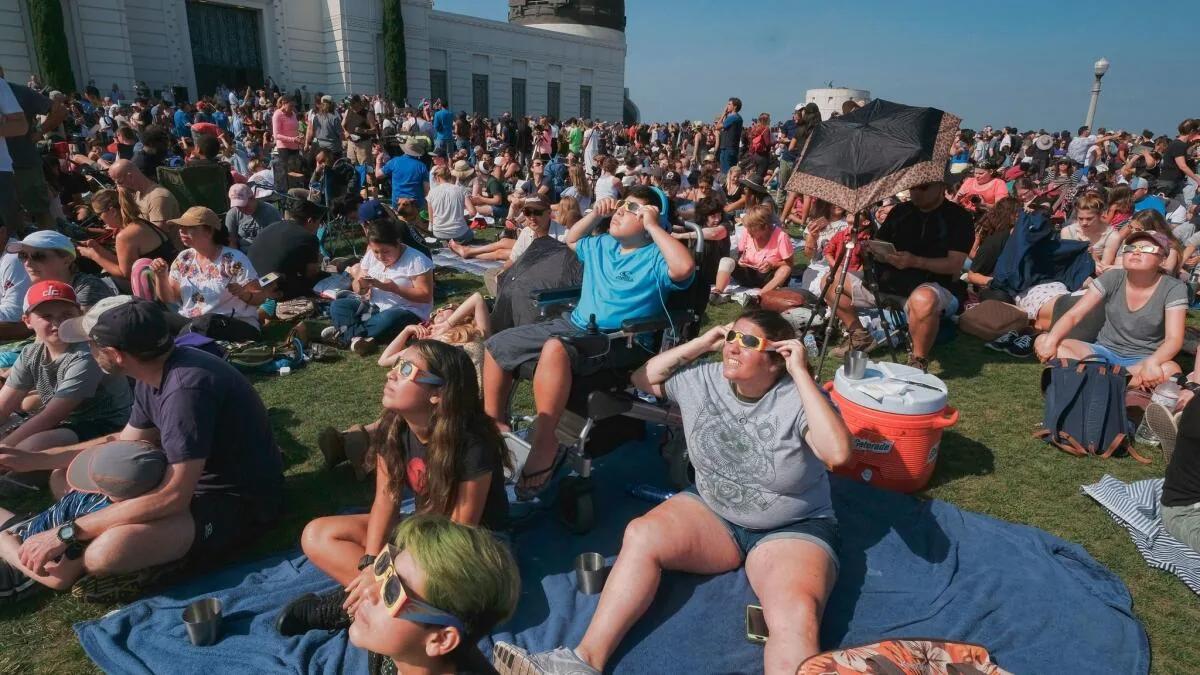
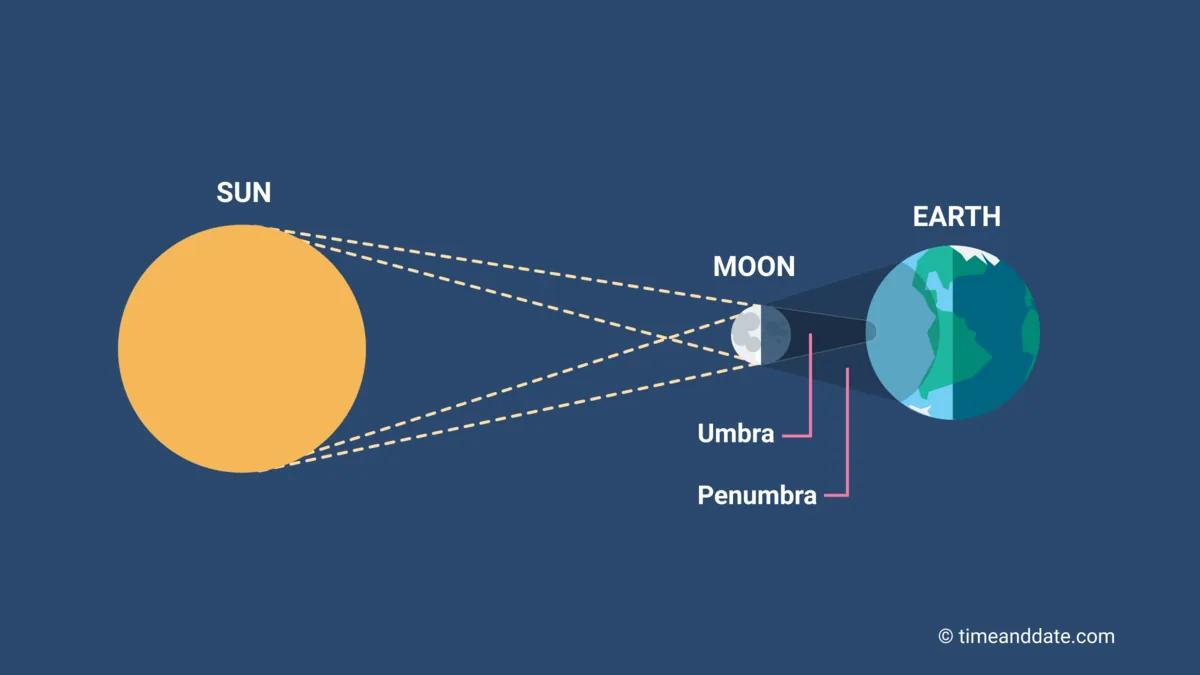
That makes an eclipse a remarkable natural experiment. Instead of switching off the Sun everywhere, nature sends a moving patch of darkness across Earth while receivers and transmitters remain spread across illuminated, partially eclipsed, and totally eclipsed regions. A radio path may react when the shadow reaches the ionosphere above a distant point, even though the Sun still looks ordinary from the listener’s garden. That is the sense in which you might hear the eclipse before you see it.
For the August 12, 2026 total solar eclipse, you can use our Eclipse Explorer to understand where the Moon’s shadow travels and whether your location experiences totality or a partial eclipse. Radio effects do not stop neatly at the visible path’s edges, however: the relevant signal path can stretch hundreds or thousands of kilometres and interact with the ionosphere far from either station.
This hf radio ionosphere solar eclipse propagation 2026 guide explains the science without turning into a licence manual. You do not need to transmit—or even hold an amateur-radio licence—to appreciate the experiment. A shortwave receiver, careful notes, and curiosity can already reveal that the sky above us is changing.
The ionosphere is part of the radio circuit
The ionosphere is not a hard shell that radio waves strike like a mirror. It is a broad, structured region of the upper atmosphere containing ions and free electrons created largely by solar ultraviolet and X-ray radiation. Its density and height vary with local time, season, latitude, solar activity, and disturbances in near-Earth space.
HF radio generally covers 3 to 30 MHz. At suitable frequencies and angles, HF waves can be refracted through the ionosphere strongly enough to return toward the ground. Another upward leg can then begin, allowing communication well beyond the ordinary line-of-sight horizon. Operators often call this a “bounce,” but gradual refraction is a better mental model than a reflection from a polished ceiling.
Different ionospheric regions play different roles. The lower D region, roughly 60 to 90 kilometres above Earth during daytime, tends to absorb energy from lower-frequency HF and medium-wave signals. Higher regions, especially the F region, can bend HF signals back toward the surface and support long-distance links. Both respond to sunlight, but not at identical speeds or in identical ways.
That balance is central to hf radio ionosphere solar eclipse propagation. Reduce sunlight and lower-region absorption may weaken, helping some low-frequency signals travel farther. At the same time, declining electron density higher up may reduce the highest frequency that a particular path can support. One band can improve while another deteriorates.
What the Moon’s shadow changes
During an eclipse, the sudden reduction in solar radiation slows the production of ions and free electrons. Existing charged particles also recombine, so electron density changes. NASA notes that the response can include altered absorption, refraction, ionospheric height, temperature, and signal fading. The disturbance is temporary and geographically structured rather than a global shutdown.
The result resembles night in some respects, but an eclipse is not simply night compressed into a few minutes. Sunset sweeps through the lower atmosphere in a familiar daily pattern; an eclipse shadow moves rapidly across a limited area while the surrounding atmosphere remains sunlit. Winds, chemistry, altitude, and the time required for different particle populations to recombine all complicate the response.
This is why the phrase hf solar propagation needs care. The eclipse does not directly “turn up” or “turn down” every radio signal. It changes the medium through which some signals travel. The outcome depends on frequency, transmitter and receiver positions, the ionospheric part of the path, antenna geometry, background solar and geomagnetic conditions, and the stage of the eclipse.
Ordinary hf radio solar activity introduces another layer. Solar flares can rapidly increase ionization in the sunlit lower ionosphere and cause HF absorption, while coronal mass ejections can contribute to geomagnetic disturbances later. An eclipse instead removes direct solar illumination along the Moon’s shadow. Logging background conditions is therefore essential: an unexpected fade during an eclipse is not automatically an eclipse effect.
A real result: lower frequencies improved while higher ones suffered
The April 8, 2024 total solar eclipse produced an unusually large radio dataset. According to NASA’s report on early results, more than 6,350 amateur operators generated over 52 million data points through the Ham Radio Science Citizen Investigation, or HamSCI.
The frequency contrast was striking. Communications both inside and outside the path of totality improved at some frequencies from 1 to 7 MHz, consistent with reduced ionospheric absorption. At 10 MHz and above, communications became worse. A separate HF technique indicated that the ionosphere rose during the eclipse and later descended toward its normal height.
Those findings show why “the eclipse improves radio” is too simple. Reduced D-region absorption can open longer paths at lower frequencies that are often more useful after dark. But if electron density in the higher ionosphere falls, a higher-frequency signal may no longer be bent enough to return to Earth. It can weaken, skip over the receiver, or pass through the ionosphere instead.
Propagation also contains a “skip zone”: an area too far away for ground-wave reception but too close for the returning skywave. If the effective height or refractive strength of the ionosphere changes, that zone can shift. A station may disappear from one receiver while becoming stronger at another. A network of observers is therefore much more informative than a single dramatic reception report.
Why the radio eclipse may arrive before local maximum
Your eyes measure what is happening along the narrow line from your position to the Sun. A radio receiver samples a much larger geometry. Its signal may have left a transmitter hundreds of kilometres away, encountered an ionospheric region somewhere between the stations, and returned to the surface near you.
Suppose the Moon’s shadow reaches that important ionospheric region before it reaches your location. The path’s absorption or refraction can begin changing while your local partial eclipse is still modest. A distant transmitter may also enter deeper eclipse before you do. Conversely, your local sky can be near maximum eclipse while the useful portion of a particular radio path remains largely sunlit.
This does not guarantee a cinematic instant when a station suddenly surges out of static. Ionospheric chemistry has response times, signals fade for ordinary reasons, and the shadow’s influence varies with altitude. “Hear it before you see it” is a testable possibility tied to path geometry—not a promise for every receiver and frequency.
For 2026, compare your site with the track shown on the 3D eclipse map, then consider where the transmitter lies and where the signal might interact with the ionosphere. Totality crosses a narrow path that includes parts of Greenland, Iceland, and northern Spain on August 12, while a much wider region sees a partial eclipse. The optical experience changes sharply at the totality boundary; radio propagation can respond across broader and less intuitive areas.
How radio hobbyists turn an eclipse into an experiment
The practical question—how do radio hobbyists use eclipses for their experiments—has several answers. Some licensed operators exchange signals and submit automated contact reports. Shortwave listeners record signal strength from stable broadcasters or time-standard stations. Other participants monitor beacon networks, use software-defined radios to preserve sections of spectrum, or contribute observations to organised citizen-science campaigns.
A useful observation needs a baseline. Listening only at maximum eclipse can tell you that a signal was strong or weak, but not whether that condition was unusual. Begin at the same times on several ordinary days if possible, then monitor well before first contact, throughout the eclipse, and after the shadow has passed.
A simple listening plan can include:
- One or more stable transmitters with known locations and frequencies.
- Receiver settings, antenna orientation, bandwidth, gain, and local noise conditions kept as consistent as possible.
- Time recorded in UTC so observations from different regions can be compared.
- Signal strength or signal-to-noise measurements at regular intervals, not only when something dramatic happens.
- Eclipse circumstances for the receiver, transmitter, and—where a model is available—the likely ionospheric interaction region.
- Background space-weather and geomagnetic conditions.
- Notes about interference, equipment changes, power supplies, nearby electronics, and weather-related static.
Transmitting introduces licensing, band-plan, identification, power, and operating requirements that vary by country. Follow your national regulations and the instructions of any organised experiment. Receiving ordinary broadcasts is a much easier entry point, although local rules and station availability still matter.
The strongest citizen-science projects standardise formats before the event. That lets researchers compare thousands of observations instead of attempting to reconstruct incompatible notes afterward. Entertainment labels such as eclipse of the heart x factor clearly have no place in scientific event metadata, while hybrid eclipse fun facts belong to eclipse-type education rather than HF propagation records. Clean categories may sound mundane, but they are what turn a lively day on the bands into analysable evidence.
What to listen for—and what not to overclaim
A lower-frequency station that is inaudible or weak in daytime may strengthen as absorption falls. A higher-frequency path may fade if the ionosphere can no longer return that signal to the receiver. The distance over which a station is heard may change, and the strongest effect may occur before or after local optical maximum because the ionosphere does not respond instantaneously.
But one receiver cannot separate every cause. HF propagation changes continually even without an eclipse. Transmitters alter power or antenna patterns, local electrical noise appears, and multipath fading can create large variations over seconds. A compelling observation becomes much stronger when it is repeated across frequencies or confirmed by listeners at other locations.
Do not treat ordinary audio quality as a direct electron-density meter. Signal-strength logs, calibrated receivers, ionosondes, GNSS measurements, radar observations, and propagation models provide different pieces of the picture. The value of amateur observations lies partly in their geographic scale: thousands of modest stations can sample more paths than a handful of professional instruments alone.
This is also why the best places and timing for hf radio ionosphere solar eclipse propagation cannot be reduced to the centreline. The centreline matters enormously for seeing totality, but a radio experiment may benefit from receivers inside and outside the path, transmitters on opposite sides of the shadow, and repeated paths sampled as the shadow advances. Scientific coverage improves when the network spans contrasting eclipse circumstances.
A radio blackout is not the same as darkness
The word “blackout” can mislead here. Optical totality is the brief interval when the Moon completely covers the Sun’s bright face for observers inside the path of totality. A radio blackout usually refers to degraded or lost communication, and not every eclipse produces that result on every HF band.
In fact, a station emerging from daytime absorption can sound like the opposite of a blackout. Meanwhile, another frequency can fail because the changed ionosphere no longer supports its path. The interesting observation is the contrast: which frequencies improve, which deteriorate, where, and on what timescale?
Eclipse type also matters. Total, partial, annular, and hybrid eclipses describe optical shadow geometry. A hybrid eclipse switches between total and annular along different portions of its path because of Earth’s curvature and the changing relationship between the apparent sizes of the Sun and Moon. That classification does not, by itself, predict a receiver’s signal strength. For radio work, the degree and timing of reduced solar illumination along the propagation path are more useful variables.
Do not let the radio distract you from safe viewing
A receiver is safe to listen to; the Sun is not safe to stare at. If you plan to operate equipment and watch the eclipse, divide responsibilities among friends, family, or club members. One person can monitor the radio while another handles timing and optical safety. Automated logging is especially valuable because it lets everyone experience the sky without abandoning the experiment.
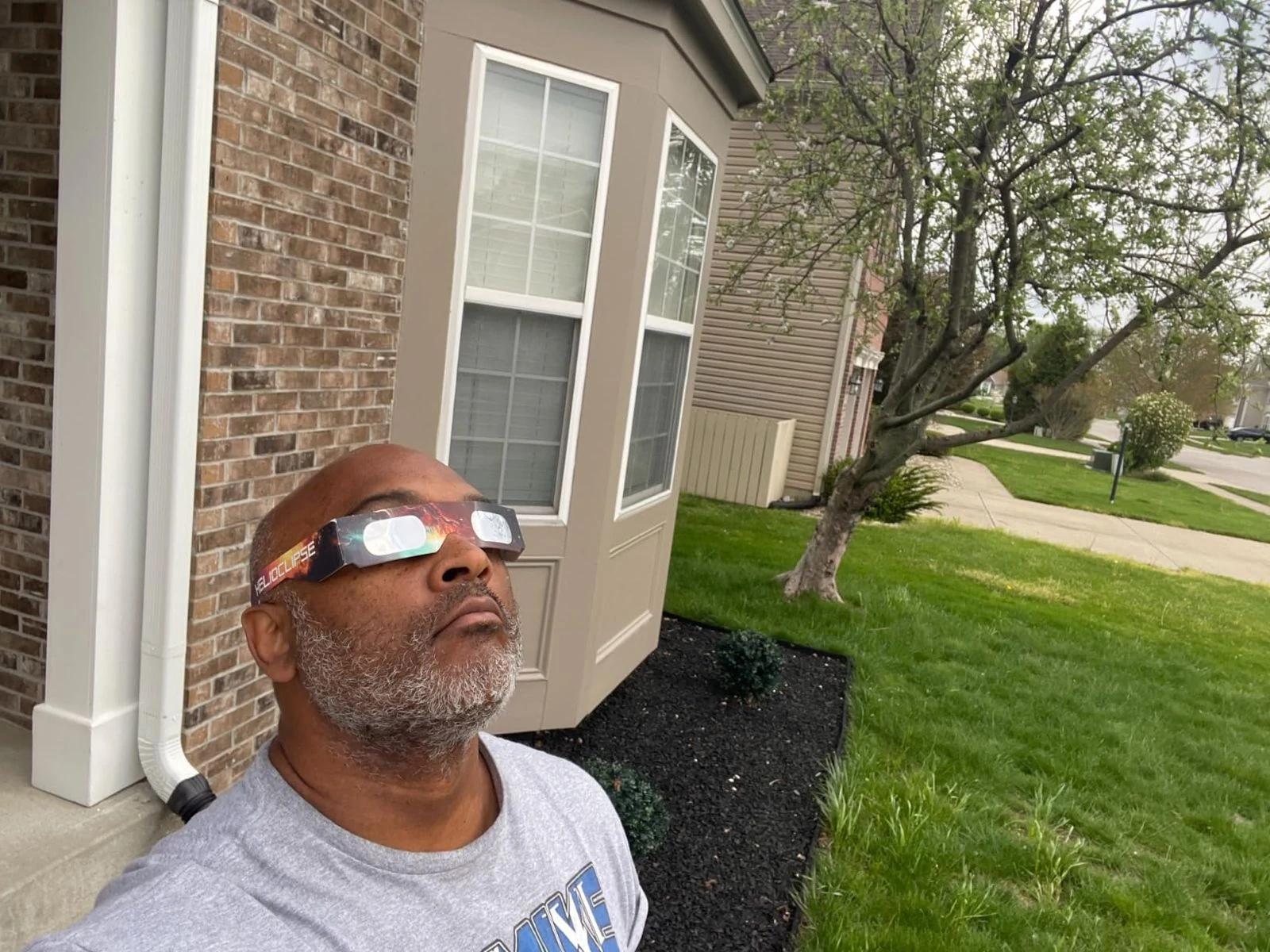
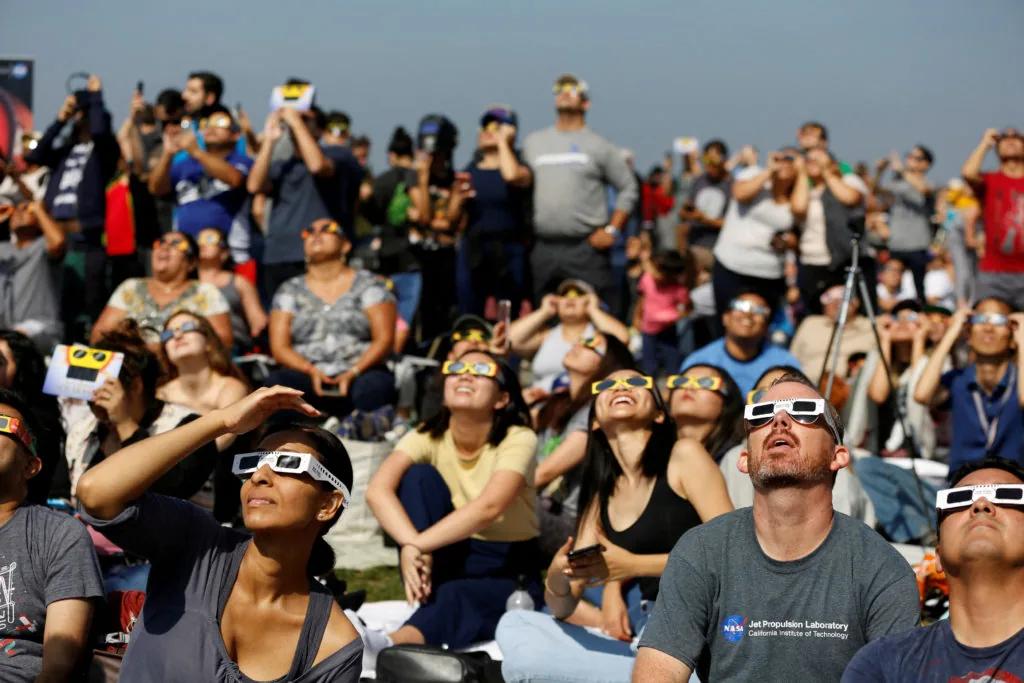
During every partial phase, use proper special-purpose solar viewers that conform to ISO 12312-2. The same rule applies throughout a partial or annular eclipse: there is no glasses-off interval. During a total solar eclipse, viewers may be removed only after the Sun’s bright face is completely covered, and they must go back on as soon as the first bright photosphere reappears. Our guide to eclipse phases and when to use solar glasses walks through that sequence.
Ordinary sunglasses are not sufficient. Eclipse glasses also do not make it safe to look through binoculars, a telescope, or a camera lens; magnifying optics require a suitable solar filter secured over the front aperture. Inspect viewers before use and discard any with punctures, tears, scratches, or loose filter material.
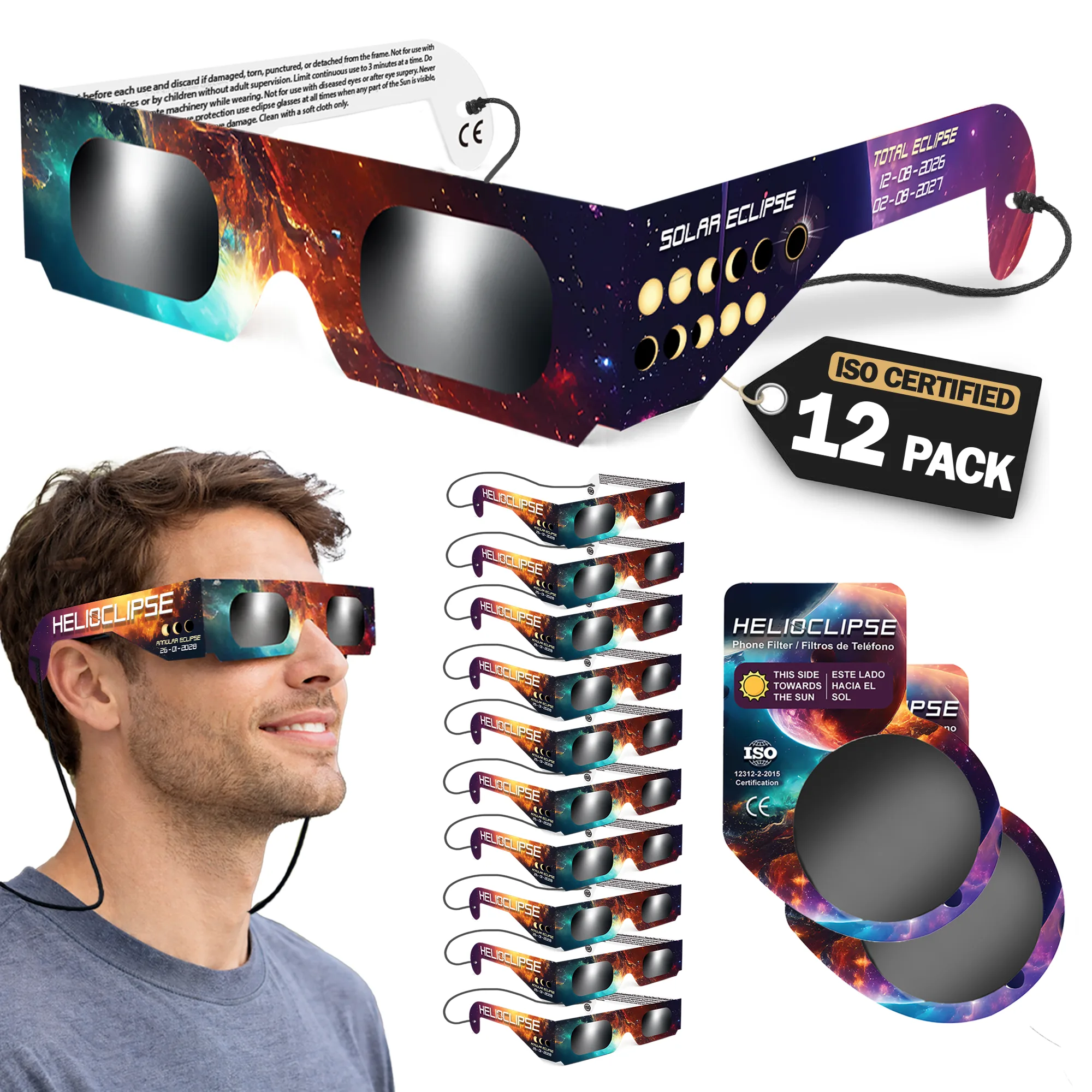
Product wording can be confusing. Phrases such as solar eclipse glasses iso 12312-2 certified, eclipse viewing glasses, and certified solar eclipse glasses describe the intended product category, but printed claims alone are not proof of testing or traceability. Check the manufacturer, instructions, condition, and credible conformity information. You can read our ISO 12312-2 explainer and prepare Helioclipse solar eclipse glasses before eclipse day.
A shadow worth listening to
The visual eclipse and the radio eclipse are two views of the same physical interruption. At ground level, daylight weakens and shadows sharpen. Far overhead, the production and recombination of charged particles shift the ionosphere’s ability to absorb and refract radio waves.
The most useful hf radio ionosphere solar eclipse propagation observations do not chase a single spectacular signal. They compare frequencies, locations, paths, and times. A weak station becoming readable at 5 MHz while a 14 MHz path collapses can reveal more than an isolated recording with no baseline. Add observations from thousands of other people and the hobby becomes a distributed atmospheric instrument.
That is why HF bands and the eclipse belong in the same conversation. The Moon’s shadow is not merely something crossing the visible Sun; it is a moving change in the energy supply to Earth’s upper atmosphere. With a receiver, a clock, and disciplined notes, you can listen as that atmosphere responds.
Unlocking the Mystery: Why the HF Bands Are DEAD
Ham Radio DX
Frequently asked questions
What can this guide explain about HF radio changes during the 2026 solar eclipse?
It explains how the Moon’s shadow can change ionospheric conditions and alter which distant HF stations are audible, how far signals travel, and whether a reliable frequency fades. A signal path can interact with the ionosphere hundreds or thousands of kilometres from either station, so effects may be heard before the eclipse is visible at the listener’s location.
What is the safest way to watch the solar eclipse?
The excerpt does not provide eye-safety instructions or viewing guidance. Its focus is on radio propagation and ionospheric changes rather than visual eclipse-observation safety.
How should I account for weather and local visibility when planning to listen for radio effects?
The excerpt does not discuss weather forecasting or visibility planning. It does note that radio effects are not limited to the visible eclipse path, because a radio path may pass through ionospheric regions far from the listener and transmitting station.
What should a first-time eclipse listener avoid assuming?
Do not assume that radio changes will occur only when the eclipse is visible from your location. The relevant ionospheric portion of a signal path may be affected by the moving shadow even while the Sun appears ordinary where you are.
What equipment do I need to follow the radio effects of an eclipse?
You do not need to transmit or hold an amateur-radio licence to follow the experiment. A shortwave receiver, careful notes, and curiosity are enough to observe possible changes in what you can hear.
On-site next steps
- Explore the path and local circumstances with the Helioclipse Eclipse Explorer. Note the eclipse date, local phase times, and whether your station is inside or outside totality.
- Continue with our blog and eclipse guides for planning, weather, eye safety, and the science behind the event.
- If your group will also observe the Sun, arrange ISO 12312-2 viewers early, assign radio and safety roles, and rehearse the equipment before eclipse day.
Sources & further reading
- NASA Science: The Impact of Solar Eclipses on the Structure and Dynamics of Earth’s Upper Atmosphere
- NASA Science: NASA-Funded Science Projects Tuning In to “Eclipse Radio”
- NASA Science: Scientists Share Early Results from NASA’s Solar Eclipse Experiments
- Sky & Telescope: “Observe” August’s Eclipse with Your AM Radio
- Phys.org: Citizen science group plans to use the 2024 eclipse for ionospheric discovery
- American Astronomical Society: How to View a Solar Eclipse Safely
- American Astronomical Society: About the ISO 12312-2 Standard for Solar Viewers
- American Astronomical Society: Eclipse Basics
- NASA Science: Eclipses
- NASA Science: Types of Solar Eclipses