Shadow bands and odd lighting: subtle effects worth knowing about
If you came away from recent eclipse coverage wondering about shadow bands solar eclipse 2024 reports, you are not alone. During a great total eclipse, people talk about the big headline moments—the corona, the sudden darkness, the temperature drop—but some of the most memorable effects are the quiet, weird ones: rippling lines on the ground, colors that feel slightly wrong, and a landscape that looks familiar and uncanny at the same time.
Those subtle effects are real, but they are also easy to oversell. Solar eclipse 2024 shadow bands videos made many people expect dramatic black stripes racing everywhere. In practice, solar eclipse shadow bands are often faint, brief, and easy to miss if you are not ready for them. If you are planning ahead for 2026, start with our Eclipse Explorer / 3D map so you know whether you will actually be inside totality, because most of the classic shadow-band experience belongs to a total eclipse, not an ordinary partial one.
What are shadow bands during a solar eclipse?
Let’s answer the plain-language question directly: what are shadow bands during a solar eclipse? They are fast-moving, alternating light and dark ripples that can sometimes appear on pale surfaces—ground, walls, cars, sheets, sidewalks—just before totality and just after it ends.
You may also see the phrase shadow bands eclipse in older astronomy writing, or total solar eclipse shadow bands in modern guides. They all point to the same phenomenon: a fleeting pattern produced when the Sun has been reduced to an extremely thin sliver and Earth’s turbulent atmosphere distorts that narrow beam of light.
NASA describes shadow bands as long, dark bands separated by lighter spaces, visible just before and after totality and often very faint. Astronomy Magazine and Space.com both emphasize the same thing: they are exciting to catch precisely because they are elusive. That is the right mindset. Think “possible bonus feature,” not “guaranteed main event.”
If you are new to eclipse timing, it helps to pair this article with our guide to when glasses on, when glasses off: eclipse phases explained for first-time viewers. Shadow bands happen right around the transition into and out of totality, when attention is already being pulled in several directions.
Solar eclipse shadow bands explained without the mystery fog
Here is solar eclipse shadow bands explained in the simplest accurate way.
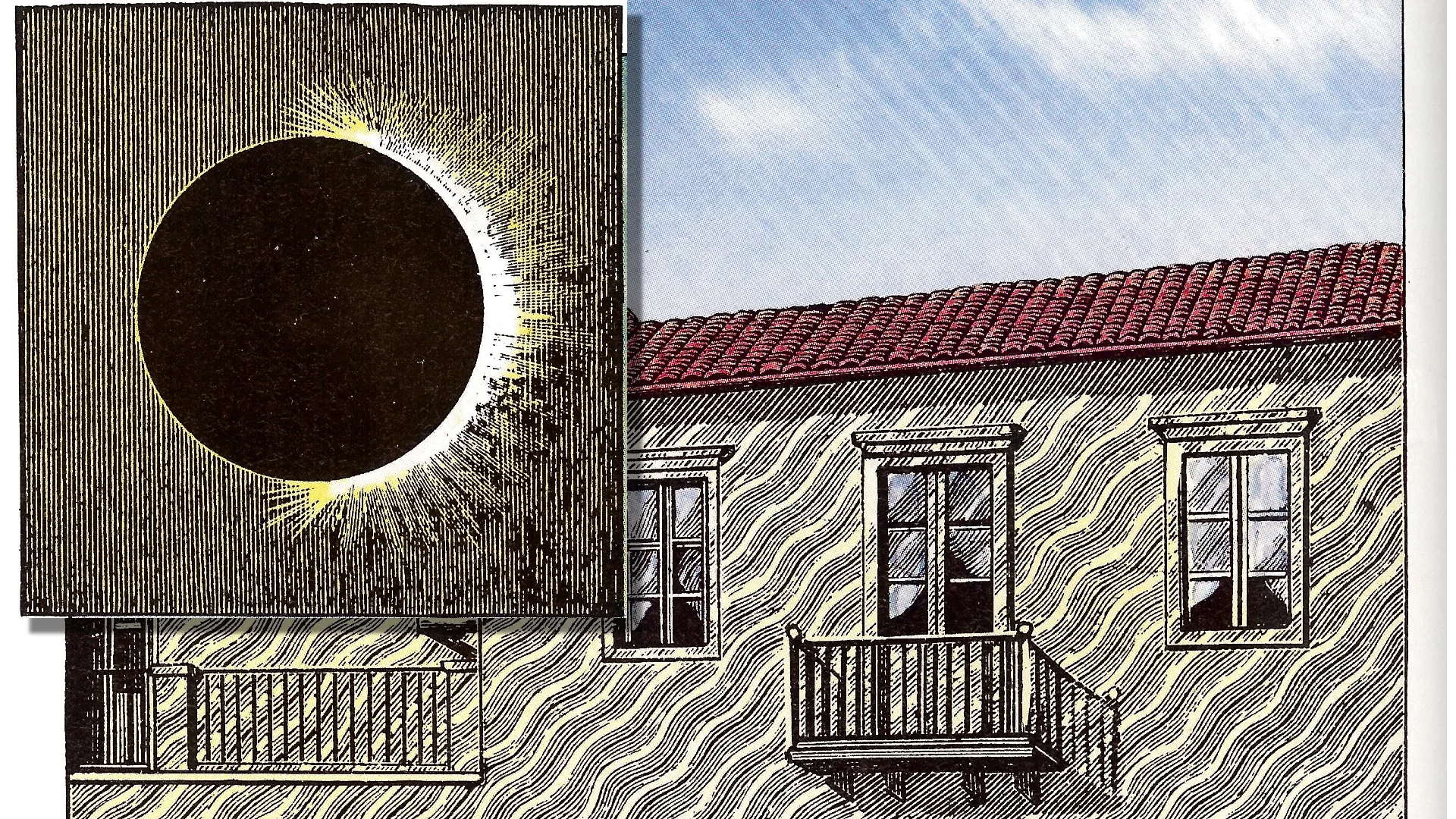
When the uneclipsed Sun is still broad and bright, light arrives from too many directions for the atmosphere’s tiny distortions to paint a clear moving pattern on the ground. But when the Moon leaves only a razor-thin crescent of sunlight, that light behaves more like a narrow source. Turbulent cells in the atmosphere—air of slightly different temperature and density—bend and focus that thin light unevenly. The result can be a wavering pattern of brighter and dimmer stripes.
That is why many scientists compare the effect to starlight twinkling. Stars twinkle because their light is coming from what is effectively a point source, and our atmosphere keeps bending it. During the last moments before totality, the remaining solar crescent becomes narrow enough that the atmosphere can impose a similar kind of shimmer on the light reaching the ground.
This is also why the phenomenon is still discussed with a little humility. The broad mechanism is well supported—atmospheric turbulence and refraction—but the exact appearance can vary a lot from eclipse to eclipse and from site to site. Some observers report neat, organized bands. Others see only a smoky shimmer. Some see nothing at all.
When do shadow bands appear, and who can actually see them?
Classic shadow bands total solar eclipse sightings happen in the path of totality, usually in the final moments before the Sun is completely covered and again just after totality ends. NASA’s eclipse stage guides place them immediately around totality, alongside Baily’s beads and the diamond ring as part of the rapid sequence of changing light.
That timing matters. If you are outside totality, you should not expect the full experience. A very deep partial eclipse can sometimes produce unusual lighting and, in rare reports, shadow-band-like effects when the Sun is more than 99% covered. But for most readers, the practical rule is simple: if you want the best chance at total eclipse shadow bands, be inside the path of totality.
For the August 12, 2026 eclipse, that means using the Helioclipse 3D map to confirm whether your exact location is inside the umbra, not merely close to it. Spain, for example, will offer both total and partial experiences depending on where you stand. A city inside the path can get totality lasting on the order of a minute or more, while a city outside it gets a dramatic partial eclipse but never the full total-eclipse sequence. If you are planning Spain specifically, our 2026 totality in Spain guide is the better place to start.
The phrase solar eclipse shadow bands 2026 guide makes sense only if it begins with that geometry. No totality, no classic totality-only light show.
What shadow bands actually look like in real life
This is where expectation-setting matters most.
People often imagine bold zebra stripes. In reality, shadow and eclipse sonic is the kind of odd search phrase that pops up when people are trying to describe something eerie and fast, but the visual itself is usually much gentler than the language around it. Many observers describe gray ripples, smoky lines, or heat-haze-like waves sliding across a white sheet or pale pavement.
Space.com notes that the bands can be only an inch or two wide and may move at roughly 10 feet per second. That is fast enough to feel alive, but not necessarily dramatic enough to jump out on a cluttered surface. They are also easier to notice in motion than in a still image, which helps explain why so many photographs disappoint people who definitely saw something with their own eyes.
A good mental picture is this: imagine sunlight reflected from the bottom of a swimming pool, but stripped of sparkle and laid across a driveway in muted gray. Or imagine the shimmer above a hot road, except organized into moving bands. That is closer to the lived experience than the most viral clips.
Why the light feels “wrong” even before totality
Shadow bands are only one part of the odd-lighting story. The whole scene changes as the eclipse deepens.
First, the Sun becomes a thin crescent, which means everyday shadows sharpen and deform in strange ways. Under leafy trees, the little gaps between leaves act like pinhole projectors, turning the ground into a field of crescent Suns. That is not the same as shadow bands, but people often mix the two together because both happen near deep eclipse phases and both make the ground look uncanny.
Second, color perception shifts as the light level falls. Space.com highlighted the Purkinje shift—the tendency for reds and oranges to lose some punch while blues and greens can feel relatively stronger in dimmer light. You may not name that effect on eclipse day, but you can feel it. The world can look flatter, cooler, and slightly stage-lit.
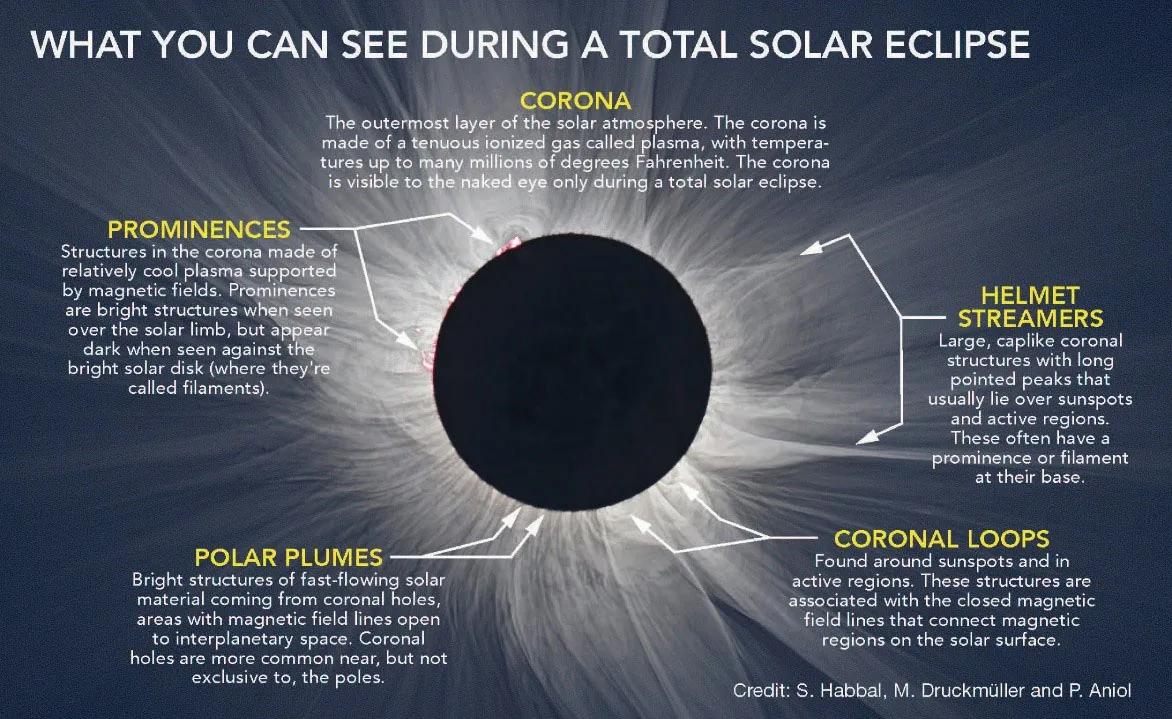
Third, the sky darkens unevenly. During totality, the horizon can glow like a 360-degree sunset while the overhead sky goes much darker. That changing balance of light is part of why readers searching for an eclipse shadow name sometimes lump together several different effects: the Moon’s large-scale shadow on Earth, the local dimming around them, and the tiny atmospheric ripples we call shadow bands.
So if you notice that the landscape looks “off” before you ever see a ripple on the ground, that does not mean you missed the phenomenon. It means the eclipse is already changing the way light reaches your eyes.
The solar eclipse shadow on Earth is not the same thing as shadow bands
This distinction is worth making clearly because search language often blurs it.
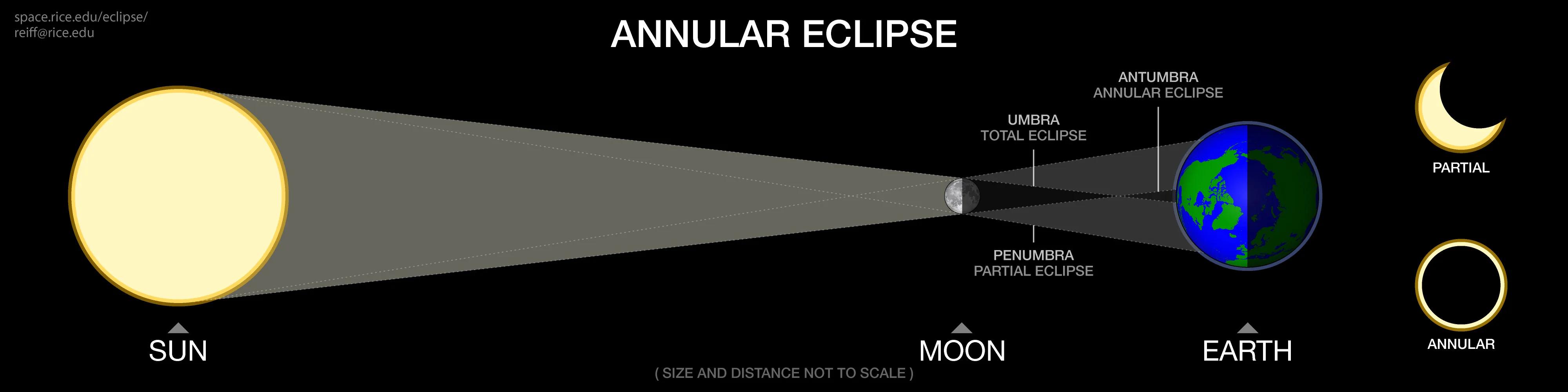
The solar eclipse shadow on earth usually means the Moon’s shadow itself: the umbra, where the Sun is fully covered and totality occurs, and the penumbra, where only part of the Sun is covered. That is the big geometric event. It is what determines whether you get totality at all.
Shadow bands are a local optical effect produced by the atmosphere acting on the last thin sliver of sunlight. They are not the same as the umbra racing across the planet, and they are not a separate “shadow object” with its own formal eclipse taxonomy. If you have seen people ask for the eclipse shadow name, the useful answer is that the main eclipse shadows are the umbra and penumbra, while shadow bands are a distinct visual effect that can accompany the approach to totality.
That difference matters for planning. The map tells you whether you can experience totality. The atmosphere decides whether shadow bands show up clearly enough for you to notice.
How to improve your chances of seeing shadow bands
You cannot force them to appear, but you can make them easier to notice.
The best trick, recommended by astronomy educators and repeated across eclipse guidance, is to put a large white or light-colored sheet, poster board, or smooth pale surface on the ground before totality. A plain bright surface gives the faint contrast somewhere to live. Fresh snow has historically been a superb backdrop, but most of us will not have that option in August.
Start watching a few minutes before totality, but do not stare at the ground the whole time. The final approach to totality is packed with other things worth seeing. If you are with family or friends, assign jobs: one person watches the sheet, another watches the shrinking crescent safely through certified viewers, another keeps track of timing. That way nobody has to choose between the sky and the ground.
A phone video or camera pointed at the sheet can help, but do not expect cinematic footage. Shadow bands are notoriously hard to photograph because they are low-contrast and brief. If you capture them at all, it may feel more like evidence than art.
Warm, dry inland conditions are sometimes described as more favorable than humid coastal air, though this is not a guarantee. Treat that as a nudge, not a rule. The honest version of a solar eclipse shadow bands 2026 guide map is this: use the map to get into totality first, then use a pale surface and realistic expectations to give yourself a chance.
Safety still comes first during the weirdest minutes
The irony of shadow bands is that they show up during the most safety-sensitive part of the eclipse.
Before totality, the remaining solar crescent is still dangerous to view directly. NASA is explicit: even when 99% of the Sun is covered, the remaining photosphere is intense enough to injure your eyes. So if you are looking up at the partial phases, you need proper solar viewers. If you are looking down at a sheet to catch shadow bands, that is fine—but do not let the excitement tempt you into sneaking an unprotected glance at the Sun early.
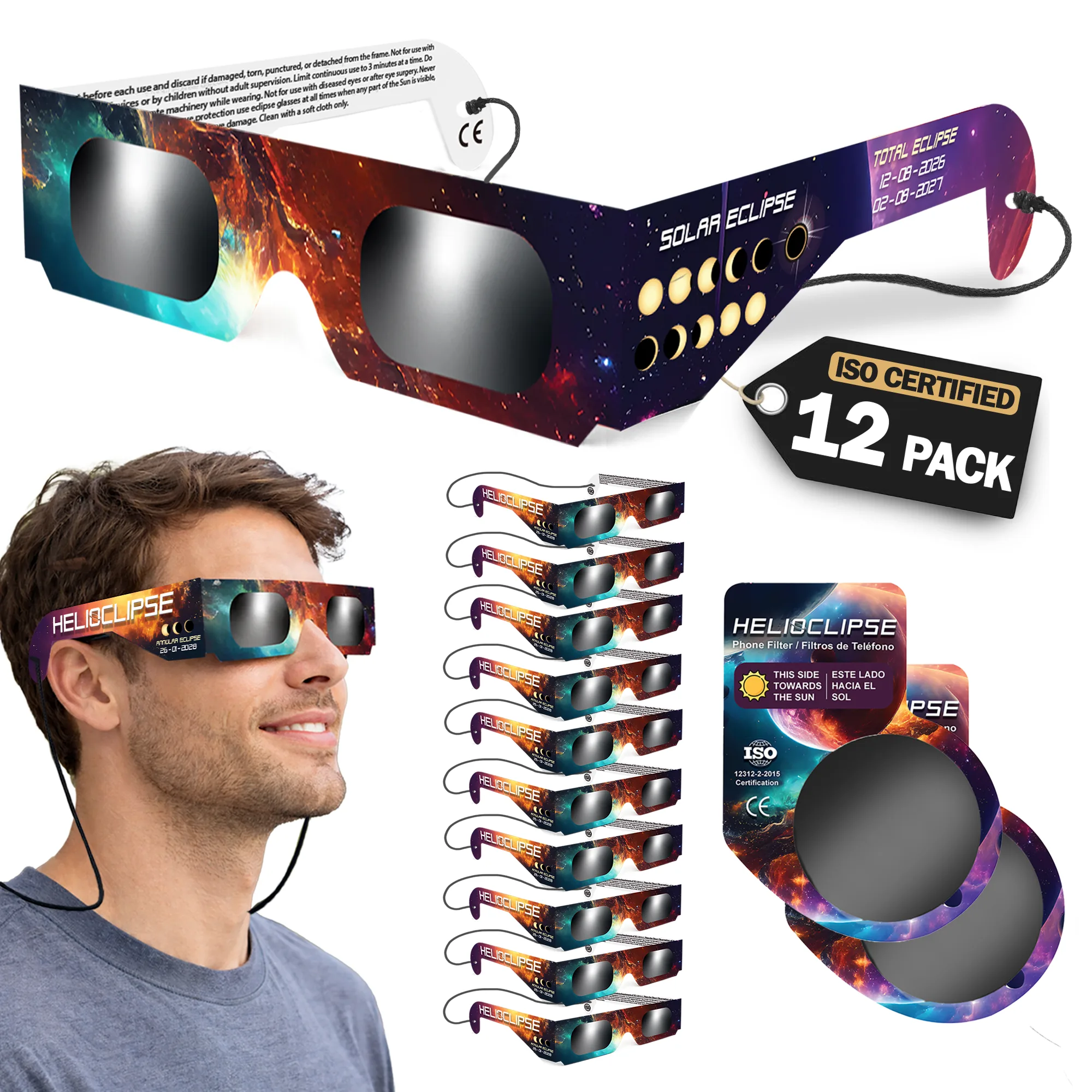
For families, schools, and group trips, this is where it helps to have your gear sorted well in advance. If you are buying approved solar eclipse glasses, eclipse viewing glasses, or solar eclipse glasses iso 12312-2 certified products, check the labeling carefully and buy from a source you trust. We explain the standard in more detail in ISO 12312-2 and eclipse viewers: what the standard means for your family, and you can browse Helioclipse eclipse glasses when you are ready to get your viewing kit in order.
One more important distinction: during a total solar eclipse, you may remove eclipse glasses only during totality itself, when the Sun’s bright face is completely covered. Outside totality—or for any partial or annular eclipse—keep certified viewers on the entire time.
Why some people swear they saw them and others saw nothing
Because both reports can be true.
Shadow bands depend on a stack of conditions: how thin the remaining solar crescent is, how turbulent the atmosphere is, what kind of surface you are watching, where your attention is, and even how your eyes respond to low-contrast motion. Space.com’s reporting on past eclipses makes this point well: at the same eclipse, some observers report vivid bands while others nearby barely notice anything.
That does not make the phenomenon imaginary. It makes it observer-sensitive.
It also explains why shadow bands solar eclipse 2024 and solar eclipse 2024 shadow bands became such common searches after the event. A total eclipse produces a flood of impressions, and shadow bands sit right at the edge between objective optics and subjective experience. They are real enough for NASA to include in official eclipse stage descriptions, but subtle enough that many people spend years hearing about them before they finally catch them.
What to watch for in 2026
For 2026, the practical checklist is short.
Be in the path of totality if you want the classic effect. Know your timing in advance. Have a pale surface ready. Tell your group what shadow bands are so nobody expects theatrical black bars. And do not let the hunt distract you from the main sequence of totality itself.
If you are still choosing where to go, start with the Eclipse Explorer / 3D map. It will show you whether your site is inside or outside totality and help you compare locations. If weather and mobility are part of your plan, our guide to cloud cover and eclipse day is a useful companion, because a perfect shadow-band setup is worthless under thick cloud.
The best version of a solar eclipse shadow bands 2026 guide is not a promise that you will see them. It is a plan that leaves room for them.
Shadow Bands: A Rare & Mysterious Eclipse Phenomenon
SKY STORY
Frequently asked questions
What are those rippling light-and-dark lines people sometimes notice during an eclipse?
They are shadow bands: fast-moving, alternating light and dark ripples that can appear on pale surfaces just before totality and just after it ends. The article explains that they happen when the Sun is reduced to a very thin sliver and Earth’s turbulent atmosphere distorts that narrow beam of light.
What should people know about the shadow-band reports from the 2024 eclipse?
The main thing to know is that these effects are real, but they are often much subtler than videos suggest. The article says they are usually faint, brief, and easy to miss unless you are specifically watching for them.
How should people interpret the dramatic shadow-band clips from the 2024 eclipse?
Those clips can make shadow bands seem more dramatic and widespread than they usually are in real life. In practice, the article says they are often faint and short-lived, so they should be treated as a possible bonus effect rather than something guaranteed to stand out.
Are shadow bands something you can expect during any eclipse?
No. The article says the classic shadow-band experience belongs mostly to a total eclipse, not an ordinary partial one. They appear right around the transition into and out of totality, when the Sun is reduced to a very thin crescent.
What should someone planning for the 2026 eclipse know about shadow bands?
Start by confirming whether you will be inside totality, because that is where the classic shadow-band experience is most likely to happen. Even then, the article notes that shadow bands are often faint and brief, so it helps to be prepared to look for them without expecting a dramatic display.
On-site next steps
- Use our Eclipse Explorer / 3D map to confirm whether your viewing spot is actually inside totality. That is the first filter for seeing shadow bands total solar eclipse effects.
- If you are watching any partial phases, get your Helioclipse eclipse glasses sorted early so your group is not improvising on eclipse week.
- For more first-timer planning, browse the Helioclipse blog and build your eclipse-day checklist before the schedule gets crowded.
Sources & further reading
- Ask Astro: What causes shadow bands during a solar eclipse?
- Shadow bands are a solar eclipse mystery (and not everyone sees them)
- The April 8 total solar eclipse will bring weird sights, sounds and feelings
- Stephen James O’Meara’s Secret Sky: Readers search for shadow bands
- Shadow Bands in Solar Eclipses | Physics Van | Illinois
- Total Solar Eclipse FAQ - NASA Science
- What to Expect - NASA Science
- Eclipse Viewing Safety - NASA Science
- About the ISO 12312-2 Standard for Solar Viewers | Solar Eclipse Across America (AAS)
- Eclipses and the Moon - NASA Science