CE marking, ISO 12312-2, and eclipse viewers: what European shoppers should understand for 2027
On 2 August 2027, the Moon’s shadow will cross southern Spain and Gibraltar before sweeping through North Africa and onward toward the Middle East. Near Luxor, Egypt, totality will last roughly 6 minutes 23 seconds—an exceptionally long interval under the Moon’s shadow. Across much of Europe, millions more people will see a partial eclipse, for which proper eye protection is required throughout.
That makes the small print on eclipse viewers unusually important. A CE mark and a reference to ISO 12312-2 may appear beside each other, but they do not mean the same thing. One belongs to Europe’s product-conformity framework; the other is an international technical standard for filters intended for direct observation of the Sun.
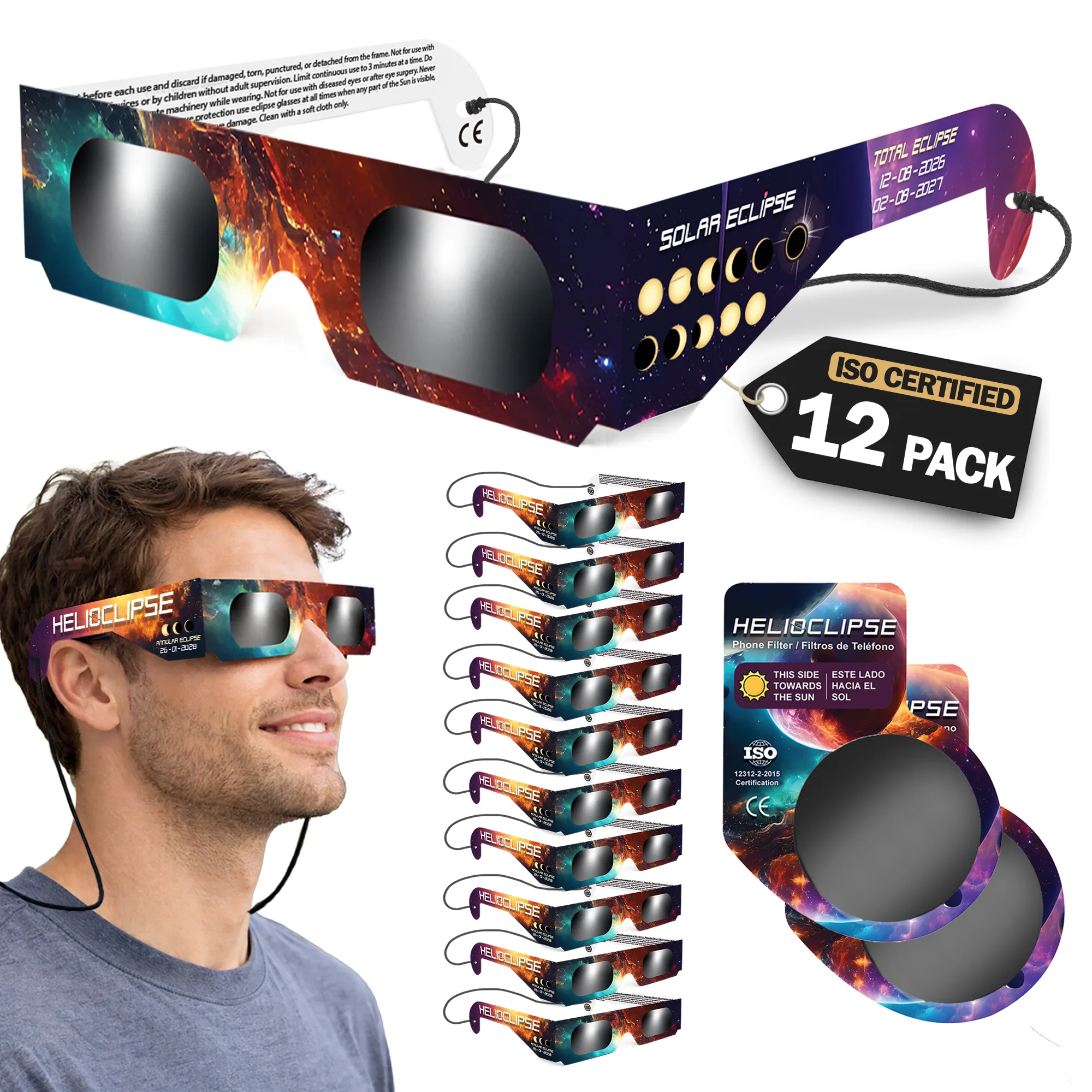
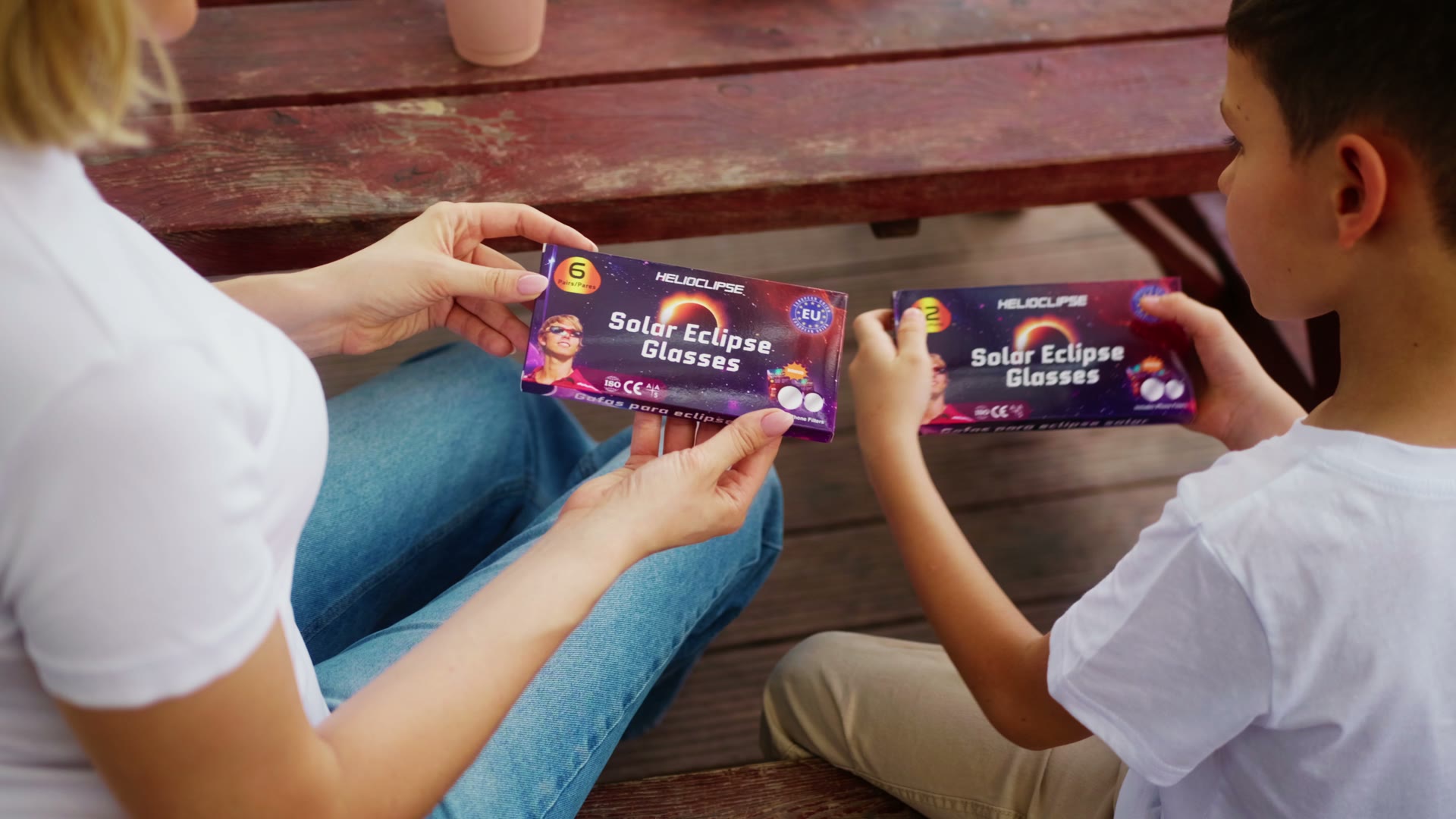
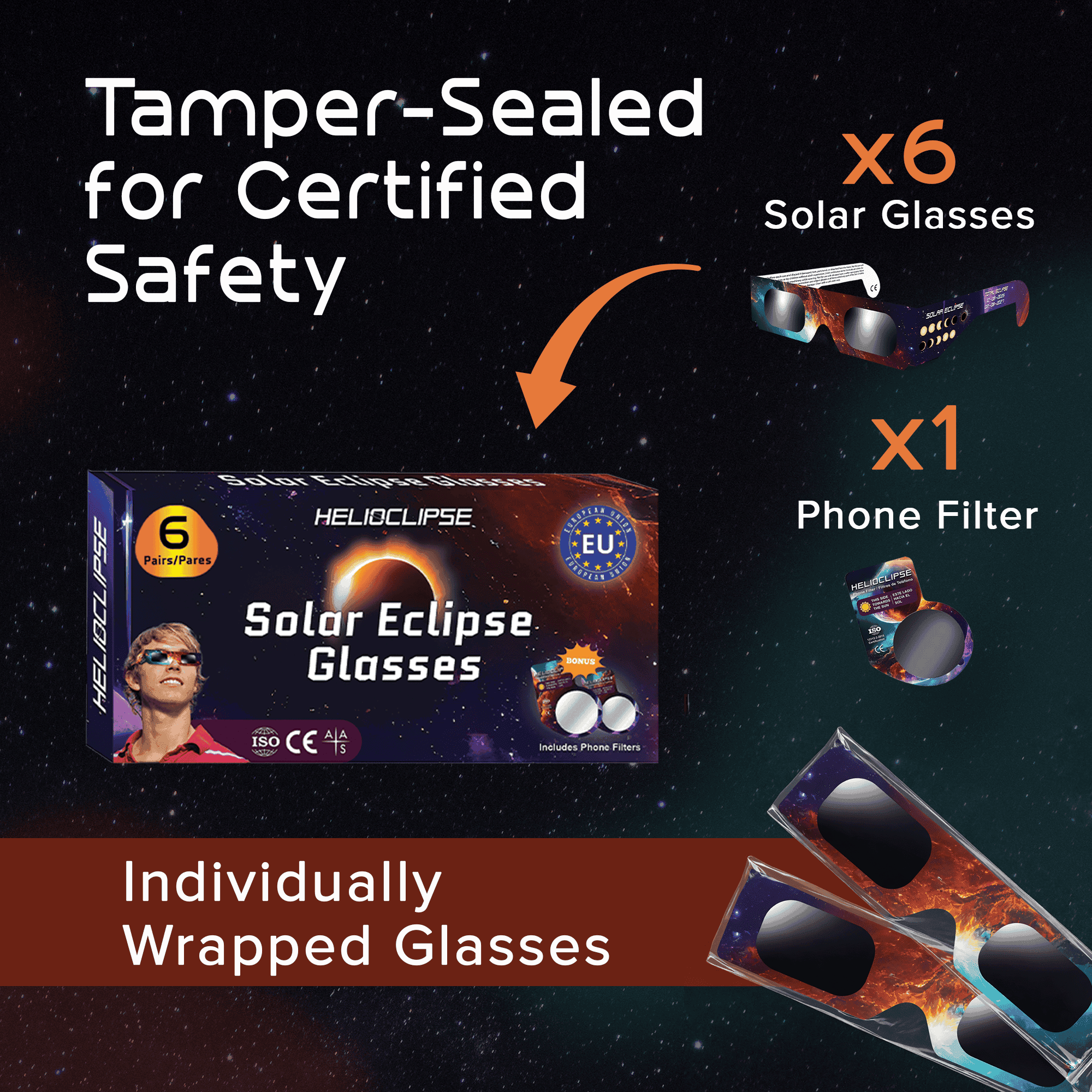
Treat this as a ce marking iso 12312-2 eclipse viewers europe 2027 guide built around one essential rule: never judge a solar viewer by a logo alone. Check the applicable standard, the seller, the product’s traceability, its instructions and its physical condition. You can start early by choosing Helioclipse ISO 12312-2 certified eclipse viewers rather than leaving an eye-safety purchase to an unfamiliar marketplace seller in the final week.
The short version: CE does not equal ISO
The two markings answer different questions.
CE marking indicates that the manufacturer declares the product conforms to the applicable requirements of European Union legislation and may be placed on the European Economic Area market. Depending on the product and legislation involved, the conformity process can require technical documentation, testing and assessment. The European Commission is explicit, however: CE is not a statement that the EU has individually inspected or approved the product.
ISO 12312-2 specifies performance and construction requirements for filters used to look directly at the Sun without magnification. It addresses much more than whether the Sun appears dim. Relevant requirements include transmission of visible, ultraviolet and infrared radiation, consistency across the filter, material quality, mounting and labelling.
A credible ce marking iso 12312 2 eclipse viewers europe review should therefore ask about both regulatory conformity and solar-filter performance. Seeing CE without a meaningful reference to the solar-viewer standard is not enough. Seeing ISO 12312-2 printed on an anonymous product is not enough either, because anyone can print a standards claim.
| Mark or claim | What it tells you | What it does not prove by itself | |---|---|---| | CE | The manufacturer declares conformity with applicable EU legal requirements | That an EU institution tested or endorsed this particular viewer | | ISO 12312-2 or ISO 12312-2:2015 | The claimed technical benchmark is the standard for direct solar viewers | That the claim is genuine or supported by an accredited laboratory report | | Manufacturer and address | The product has an identifiable responsible business | That its filter passed the required tests | | Test report or declaration | There may be documentary evidence behind the claims | That the document necessarily belongs to the exact product being sold | | Trust badge or marketplace icon | Usually a seller-created visual cue | Independent approval, laboratory testing or legal conformity |
The practical buying standard is stronger than any one row: look for a coherent package of claims, documents and traceability.

What ISO 12312-2 actually covers
So, what are iso eclipse glasses? They are nonmagnifying glasses or handheld viewers designed for direct observation of the Sun, with filters that conform to ISO 12312-2. The formal scope concerns filters for direct solar observation—not ordinary fashion sunglasses and not every kind of filter used with optical equipment.
An ISO 12312-2 filter must reduce the Sun’s visible intensity to an appropriate level while also controlling ultraviolet and infrared transmission. That invisible-radiation point matters: a piece of material can make the Sun look comfortably dim without providing the spectral protection expected of a proper solar viewer. You cannot confirm that protection by holding the product up to a lamp or judging its darkness.
The standard also addresses filter quality. Scratches, holes, coating defects and poorly secured filter material can compromise a viewer even if the original material was suitable. Labelling requirements cover information such as the manufacturer, instructions and warnings. These details are functional, not decorative: they tell you who stands behind the viewer and how it is meant to be used.
ISO 12312-1 is different. It concerns sunglasses and related eyewear for general use. Ordinary sunglasses—including very dark ones—transmit far more sunlight than is safe for direct solar observation. The relevant reference for eclipse glasses and handheld solar viewers is Part 2, ISO 12312-2.
The standard is often shown as ISO 12312-2:2015, referring to its 2015 edition. The American Astronomical Society notes that this edition was affirmed in 2020 and that revisions have been under consideration. Buyers do not need to become standards engineers, but they should recognise the correct number and understand its scope.
For a deeper look at transmission, construction and labelling, see our guide to what ISO 12312-2 means for eclipse viewers.

What CE marking means—and what it does not
Under the EU system, placing the CE mark on a covered product is a manufacturer’s declaration that it meets the applicable legal requirements. Products made outside the European Union can carry CE marking too; CE does not identify where something was manufactured.
Nor does the mark mean “approved by Brussels.” The European Commission specifically warns that CE marking does not indicate that a product has been approved as safe by the EU or another authority. It is part of a legal conformity system, not a consumer award or a five-star quality badge.
For European eclipse viewers, the relevant legal analysis can involve the EU Personal Protective Equipment framework. Responsibilities may fall on manufacturers, importers and distributors, and the required conformity documentation depends on the product and its route to market. This article provides practical shopping guidance rather than legal advice; businesses placing viewers on the market should obtain current specialist guidance and consult the official EU rules.
French consumer-protection guidance associated with the DGCCRF has similarly focused shoppers on compliant filters, intelligible instructions and identifiable sellers rather than on promotional claims alone. The central lesson agrees with AAS guidance: a standards number printed on cardboard has value only when it belongs to a traceable, properly assessed product.
Why printed logos and trust badges are not enough
A trust badge can be useful when it points to evidence. It is meaningless when it merely repeats words such as “safe,” “approved” or “certified” without identifying the responsible manufacturer, applicable standard or supporting documentation.
ISO itself develops and publishes standards; it does not inspect every packet of eclipse glasses or issue consumer product endorsements. “ISO certified” is common commercial shorthand, but the more precise question is whether the exact viewer model has been shown to conform to ISO 12312-2 through appropriate testing.
NASA also does not approve commercial eclipse-viewer brands. Listings may promise approved solar eclipse glasses or eclipse glasses nasa approved, but that language should not replace evidence of conformity and a dependable supply chain. A more relevant product description is solar eclipse glasses iso 12312-2 certified—provided the seller can substantiate that claim for the exact goods supplied.
Watch for claims that seem to borrow authority from unrelated organisations. A logo copied onto a listing, an image of a laboratory report or the name of a genuine manufacturer can all be misused. The AAS warns that counterfeit sellers have even printed the names of legitimate manufacturers on unrelated products. This is why the path from manufacturer to authorised seller matters.
Our separate guide to fake and low-quality eclipse glasses covers warning signs in more detail.
A European shopper’s verification checklist
The question how to authenticate solar eclipse glasses? has an inconvenient but important answer: you cannot prove full spectral safety by examining the filter with your eyes. Proper authentication depends on documentation, accredited testing and a traceable supply chain.
Before buying, make these checks:
- Find the exact standard. Look for ISO 12312-2 or ISO 12312-2:2015, not merely “ISO,” “solar safe” or an unrelated sunglasses standard.
- Identify the responsible business. The viewer or packaging should provide a manufacturer or responsible economic operator with a real name and address. Be cautious when the only identity is a marketplace account that could disappear overnight.
- Check the product identity. Documentation should relate to the exact model or filter being sold. A test report for a different viewer does not establish conformity of the one in your basket.
- Look for usable instructions. Instructions and warnings should be understandable in the market where the product is sold. They should explain inspection, fitting and safe solar viewing.
- Assess the sales chain. Buying directly from an identifiable manufacturer or an authorised seller is more reassuring than buying an anonymous product whose brand changes between the listing, packet and invoice.
- Inspect delivery condition. Reject filters that are torn, punctured, deeply scratched, creased across the viewing area or separating from their frames.
- Keep records. Save the order confirmation, seller identity, packaging and any conformity information. This is useful if the delivered product differs from the listing.
An indoor darkness check can reveal an obviously defective viewer, but it cannot certify a good one. According to the AAS, you should see essentially nothing through a solar viewer indoors except perhaps an exceptionally bright light, appearing very faint. If you can see furniture or ordinary room lights clearly, do not use it for solar observation. Passing that check only means the viewer is not obviously too light; it does not prove adequate ultraviolet or infrared performance.
A sound ce marking iso 12312 2 eclipse viewers europe review also distinguishes a product inspection from a laboratory assessment. Consumers can spot damage and suspicious labelling. Only suitable instruments and competent testing can measure transmission across the relevant wavelengths.

Buying locally, online or for a group
Where to buy iso 12312-2 solar eclipse glasses? Choose a seller that identifies the product, manufacturer and standard clearly and can support its claims. Museums, planetariums, astronomy organisations and established specialist sellers may provide reliable options, but the same documentary checks still apply. A familiar venue is reassuring; it is not a substitute for checking the actual product.
A listing headed iso 12312-2 glasses near me may lead to a convenient local shop, yet distance is not a safety credential. Inspect the packet rather than relying on a shelf label, ask who manufactured the viewers and avoid loose, unlabelled glasses at a checkout counter. The same caution applies to last-minute festival stalls and social-media sellers.
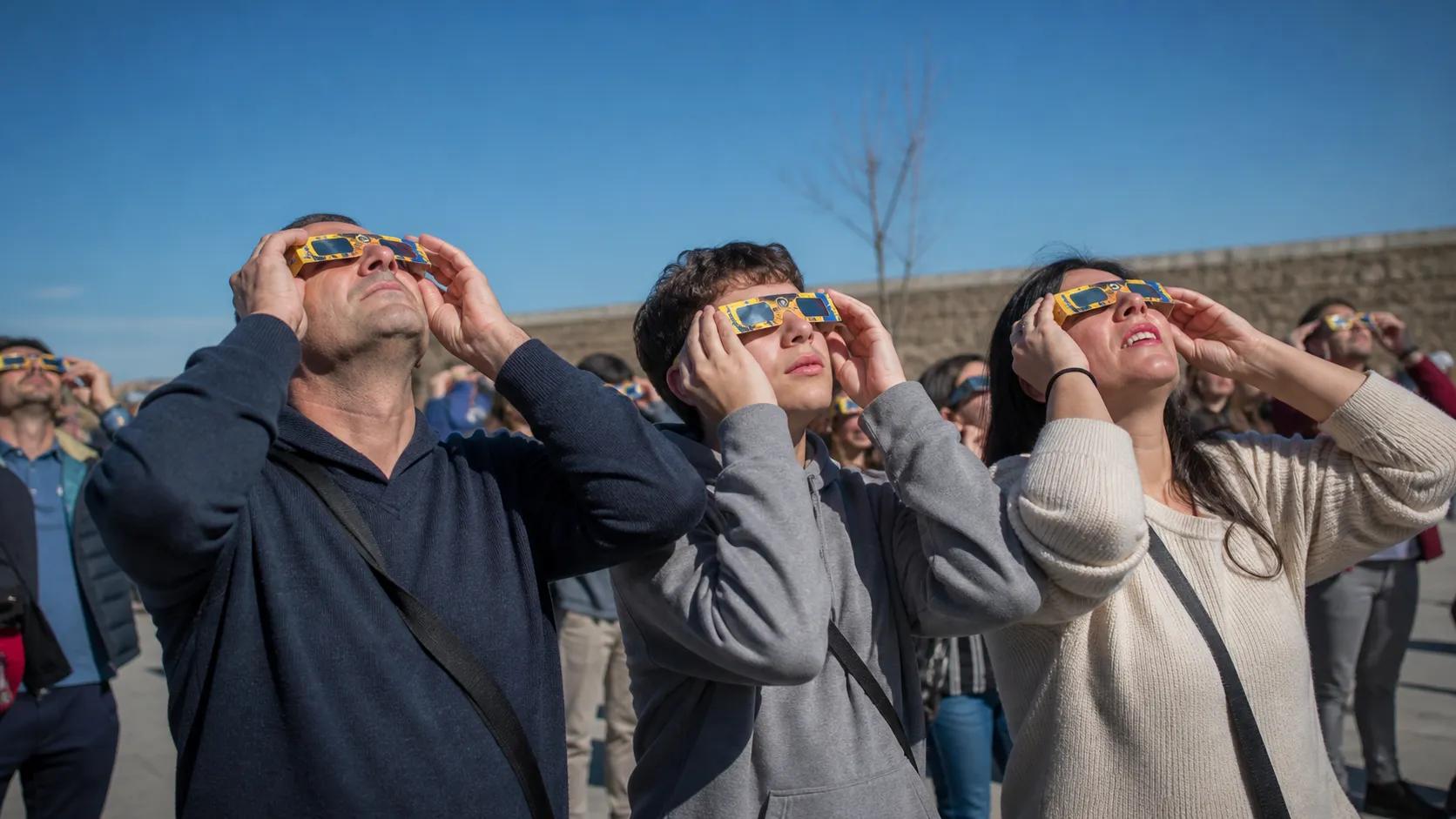
For families, schools, clubs and workplaces, order enough viewers early and keep a few spares sealed. People can share viewers because the partial phases unfold slowly, but one per person makes supervision easier—especially with children—and reduces fumbling as totality approaches. If you are organising a school event, open and inspect a sample well before eclipse day while keeping the remaining viewers protected from scratches and moisture.
The essential issue behind CE marking, ISO 12312-2, and eclipse viewers: what European shoppers need to remember is that low price and rapid delivery do not compensate for missing traceability. If you need dependable viewers for your household or group, explore the Helioclipse eclipse-glasses shop before demand accelerates.
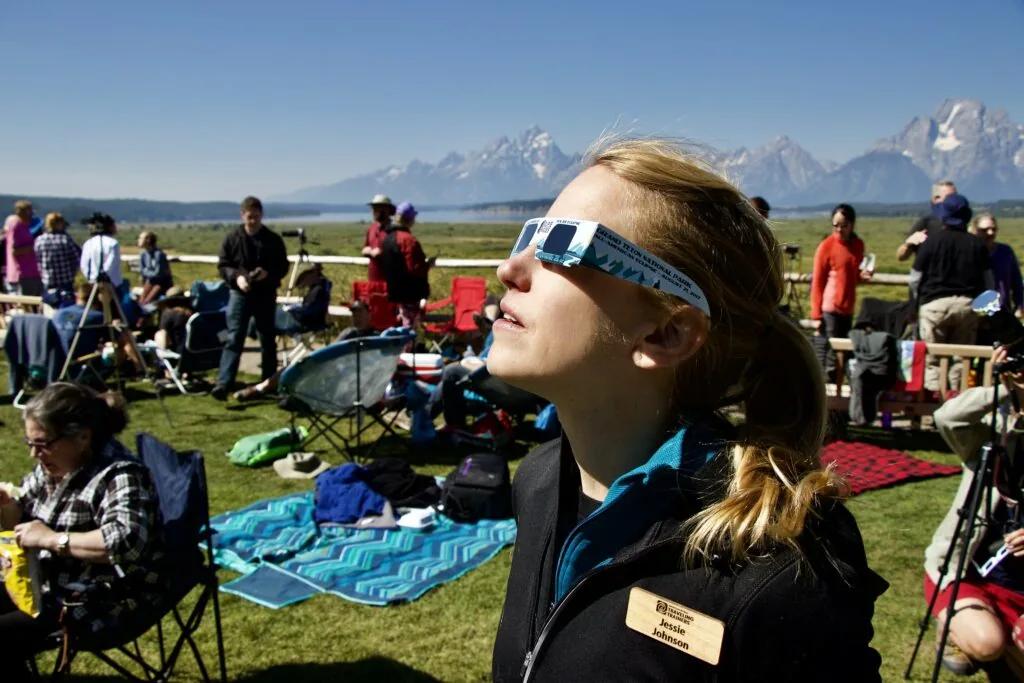
How to use eclipse viewers correctly
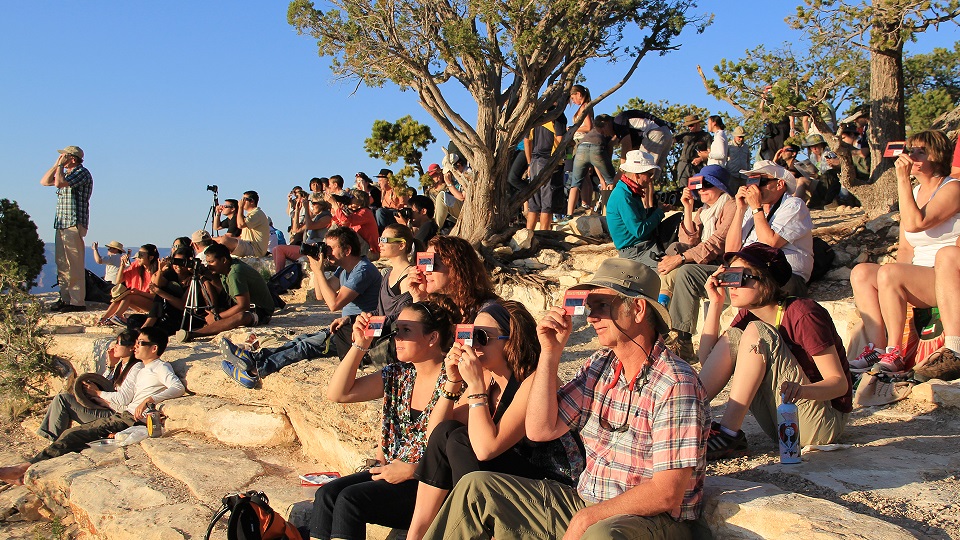
In practical terms, how to use euro eclipse glasses? Inspect them first, stand still, put them over your eyes before looking toward the Sun, and turn away before removing them. If you normally wear prescription glasses, keep those on and place the eclipse viewer over them, or hold a suitable handheld viewer in front.
Use proper viewers whenever any part of the Sun’s bright surface remains visible. For the 2 August 2027 total eclipse, that means viewers stay on throughout the partial phases. They may come off only if you are inside the path of totality and the Sun’s bright face is completely covered. As soon as the first bright point of sunlight reappears, put them back on.
Outside the path of totality, there is no glasses-off interval. A location with 99% coverage still has an exposed portion of the photosphere, and that remaining crescent is unsafe to view directly. Use the Helioclipse Eclipse Explorer to check whether your exact observing site lies inside the path rather than relying on a country name or a friend’s itinerary.
Never look through binoculars, a telescope or a camera lens while wearing eclipse glasses. Magnifying optics concentrate sunlight and require a correctly designed solar filter secured over the front aperture. Eye-worn viewers are not a substitute, and an eyepiece-end filter is not an acceptable improvisation.
If safe viewers are unavailable, use indirect projection during the partial phases. With your back to the Sun, a pinhole, colander or the gaps between crossed fingers can project small crescent images onto the ground. Do not look through the holes at the Sun.
Our phase-by-phase guide explains when eclipse glasses stay on and when they may come off.
Make standards part of the 2027 plan
Solar-viewer checks belong near the beginning of your eclipse planning, not at the bottom of the packing list. On 2 August 2027, southern Spain and Gibraltar will lie within the total-eclipse path, while locations farther from the shadow track will experience a partial eclipse. The path then crosses North Africa, with the duration increasing toward the region around Luxor, where totality approaches 6 minutes 23 seconds.
Exact circumstances vary sharply with location. A town near the path edge can receive much less totality than a site nearer the centre line, while a European city outside the path receives no totality at all. Use the interactive map to check your coordinates, approximate duration, local timing and distance from the path edge before booking transport or promising your group a glasses-off interval.
Then make one person responsible for the viewer supply. Count adults, children and spares; tell family members why ordinary sunglasses do not work; and practise the put-on-before-looking routine. For younger children, a supervised handheld viewer can sometimes be easier to manage than a frame that does not fit securely.
This is also the moment to resist urgency-driven shopping. As the eclipse approaches, demand can encourage anonymous sellers, copied product images and vague claims. A viewer bought early from a traceable source can be checked calmly and stored flat, clean and dry until the event.
Safe Solar Eclipse Glasses? Three Ways To Spot A Dangerous ...
Astronomy Garage with Reflactor
Frequently asked questions
What does ISO 12312-2 mean on eclipse viewers?
ISO 12312-2 is the technical standard for filters intended to let people observe the Sun directly without magnification. It covers visible, ultraviolet and infrared transmission, as well as filter consistency, material quality, mounting and labelling.
How should I use solar viewers during a partial eclipse in Europe?
Use proper eye protection throughout a partial eclipse, because the Sun is never fully covered from your location. Before use, check the viewer’s instructions and physical condition, rather than relying on a logo alone.
Where should I purchase eclipse viewers that meet the solar-filter standard?
Choose a seller that provides traceable products and meaningful information about the applicable solar-viewer standard. Avoid leaving the purchase until the final week, when unfamiliar marketplace sellers may be harder to assess.
How can I check whether an eclipse viewer’s standards claim is credible?
Do not treat a printed ISO 12312-2 claim as proof by itself, since anyone can print a standards claim. Check the seller, product traceability, instructions, physical condition and the relevant standard reference.
What is the safest way to watch a solar eclipse?
For direct viewing, use a properly selected solar viewer designed for observing the Sun without magnification and check its condition before use. CE marking and ISO 12312-2 serve different purposes, so assess both regulatory conformity and solar-filter performance rather than trusting either mark alone.
On-site next steps
- Shop Helioclipse eclipse glasses for ISO 12312-2 certified viewers for families, schools and groups.
- Check your exact 2027 circumstances with the Helioclipse 3D Eclipse Explorer, especially whether you are inside or outside totality.
- Build the rest of your trip around our 2 August 2027 eclipse planning guide.
Sources & further reading
- American Astronomical Society: About the ISO 12312-2 Standard for Solar Viewers
- American Astronomical Society: How Can You Tell If Your Eclipse Glasses or Handheld Solar Viewers Are Safe?
- European Union: Regulation (EU) 2016/425 on Personal Protective Equipment
- NASA Science: What to Expect: A Solar Eclipse Guide
- Astronomy Magazine: How to Observe the Sun Safely During a Solar Eclipse
- American Astronomical Society: How to View a Solar Eclipse Safely
- European Commission: CE Marking
- International Organization for Standardization: ISO 12312-2:2015 — Filters for Direct Observation of the Sun
- NASA Science: Eclipses
- American Astronomical Society: Eclipse Basics