Ordering viewers for a team: quantities, verification, and distribution tips
If you are buying eclipse viewers for a school, office, museum, camp, library, or public event, the hard part is usually not finding a product page. The hard part is getting the count right, checking that the safety claims are real, and making sure distribution on the day feels calm instead of frantic.
That is why team orders need a different mindset from a family purchase. For bulk eclipse glasses for schools or workplace events, you are not only buying eye protection. You are planning a small safety operation: who needs a pair, who can share, how many spares you need, what paperwork your institution may ask for, and how early you need stock in hand. If you are ready to price options now, our Shop eclipse glasses page is the fastest place to start, and larger programs can use our wholesale route for tailored quantities and timelines.
For the 12 August 2026 eclipse, timing matters. Helioclipse wholesale guidance notes that the eclipse peaks at 17:02 UTC and that demand tends to surge in the final weeks before the event, then collapse immediately after. That pattern is predictable: schools finalize plans late, public libraries add events, employers decide to do something for staff, and suddenly everyone is trying to source the same safety gear at once. If you are planning for a district, a campus, a tourism program, or a large community watch party, early ordering is not overcautious. It is what keeps your options open.
Start with the real viewing plan, not the product page
The cleanest quantity estimate begins with one question: what kind of viewing experience are you actually organizing?
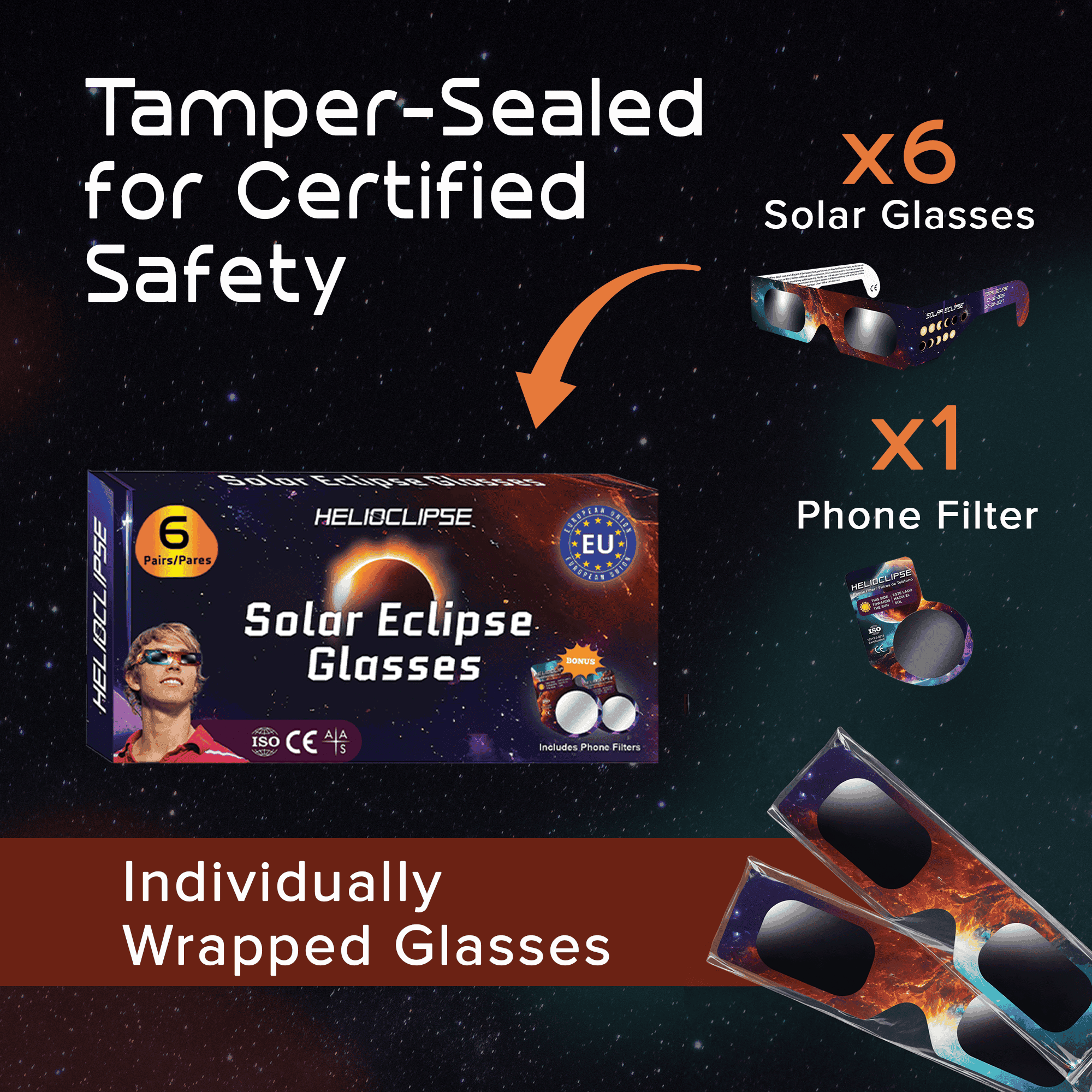
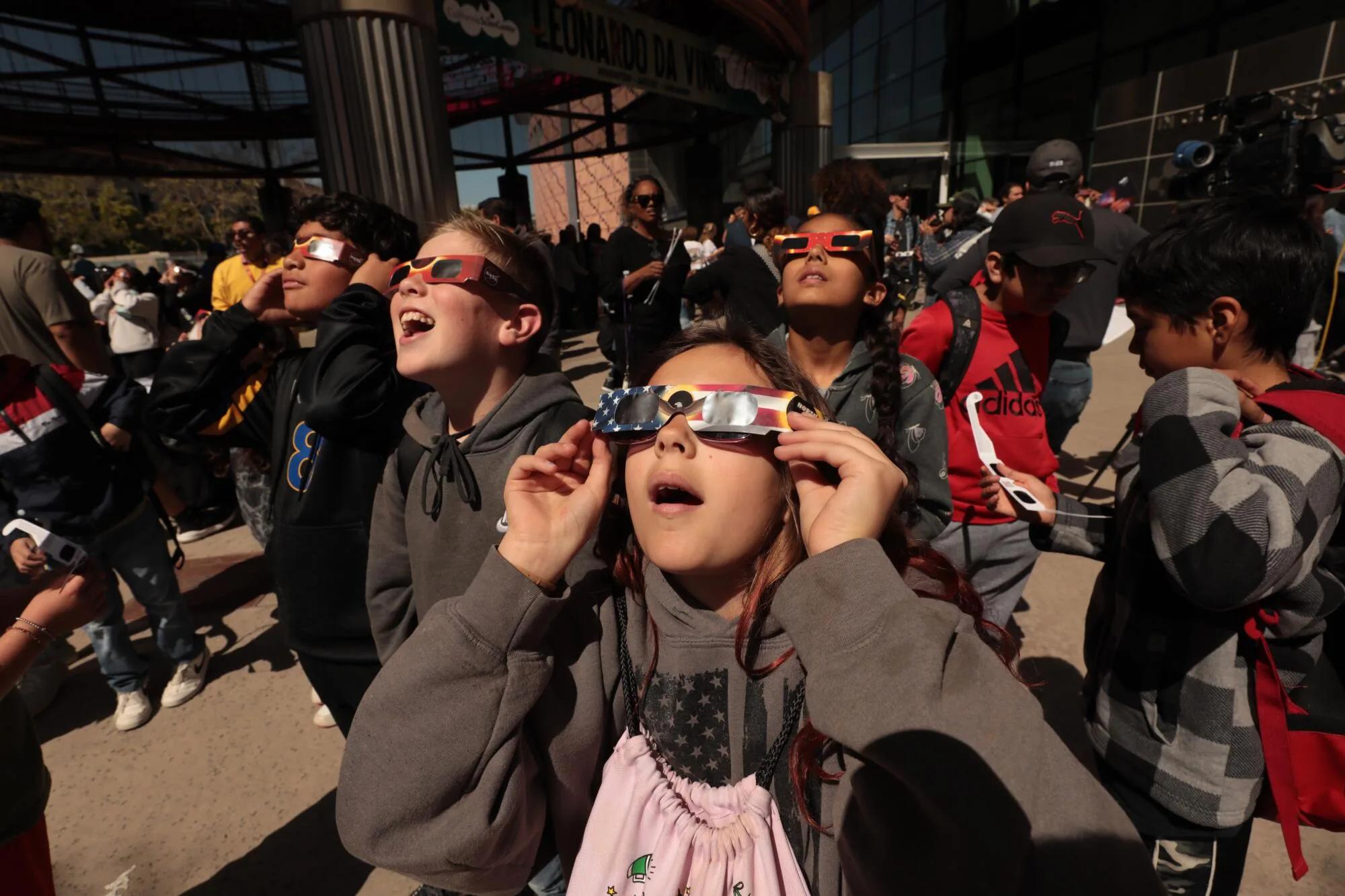
A classroom doing a supervised 20-minute outdoor session has different needs from a museum selling viewers at the front desk. A corporate campus where people step outside in waves can share some stock. A public event with an open lawn and no controlled entry usually cannot. The American Astronomical Society notes that not every person in a group necessarily needs their own viewer if people are taking brief looks during the slow partial phases, but that is only practical when the group is supervised and the sharing process is deliberate.
So before you count units, define the format:
- One-per-person distribution: best for schools, large public events, and any setting with children or moving crowds.
- Shared pool distribution: workable for small staff teams, club events, or guided observing where people rotate through brief looks.
- Retail or resale stock: best for museums, visitor centers, hotels, tourism desks, and campus stores.
- Mixed model: common for districts and organizations that need some free distribution plus some retail-ready inventory.
This is where many buyers lose money or create stress. They search phrases like bulk eclipse glasses schools organizations or bulk solar eclipse glasses for schools, but the useful answer is not just “buy more.” It is “match the quantity to the way people will actually use them.”
How many viewers should you order?
For most institutions, a simple planning rule works well: start with your expected participant count, then add a buffer for staff, losses, and late additions.
Helioclipse wholesale guidance recommends that schools and districts plan roughly one pair per student plus 10 to 15 percent spares for staff and handling loss. That is a strong baseline because it reflects real-world friction: a few viewers arrive at the wrong building, a teacher needs extras for a second class period, some units get bent or misplaced, and attendance is never exactly what the spreadsheet predicted.
Here is a practical framework:
Schools and districts
- Students: 1 viewer each
- Teachers and staff outdoors: 1 viewer each
- Spares: 10% to 15%
- Add more if you expect family attendance, after-school events, or district redistribution
A school with 480 students and 45 staff planning a shared outdoor event is not a 525-unit order. It is more like 580 to 605 once you add a realistic spare margin.
Offices and workplaces
- Expected participants on site: 1 viewer each if you want a simple handout
- If people will observe in shifts: 60% to 80% of headcount may work
- Add 5% to 10% spares for visitors, contractors, and damaged units
An office of 300 people may not need 300 if only part of the team will be outside at once. But if you want a clean, no-debate distribution table, one-per-person is usually worth it.
Museums, libraries, camps, and public programs
- Registered attendees: 1 viewer each
- Walk-ins: estimate separately
- Volunteers and staff: 1 each
- Public reserve: 10% to 20%, sometimes more for open events
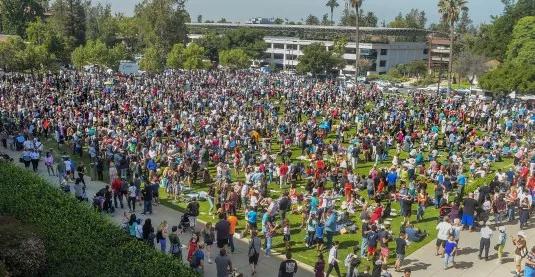
Public-facing organizations should be conservative. If your event is advertised, people bring friends.
Retail and hospitality programs
Hotels, tour operators, gift shops, and visitor centers need a different model: forecast both guaranteed internal use and resale demand. If you are in or near a high-interest viewing area, especially for a major event like August 2026, the question is not only “How many guests do we have?” but “How many extra people will ask at the desk?”
For these buyers, the best places and timing for bulk eclipse glasses schools organizations is really shorthand for a broader planning truth: demand is local, seasonal, and event-driven. A hotel in a strong eclipse market may need stock for guests, staff, and last-minute purchase requests all at once.
When sharing works — and when it does not
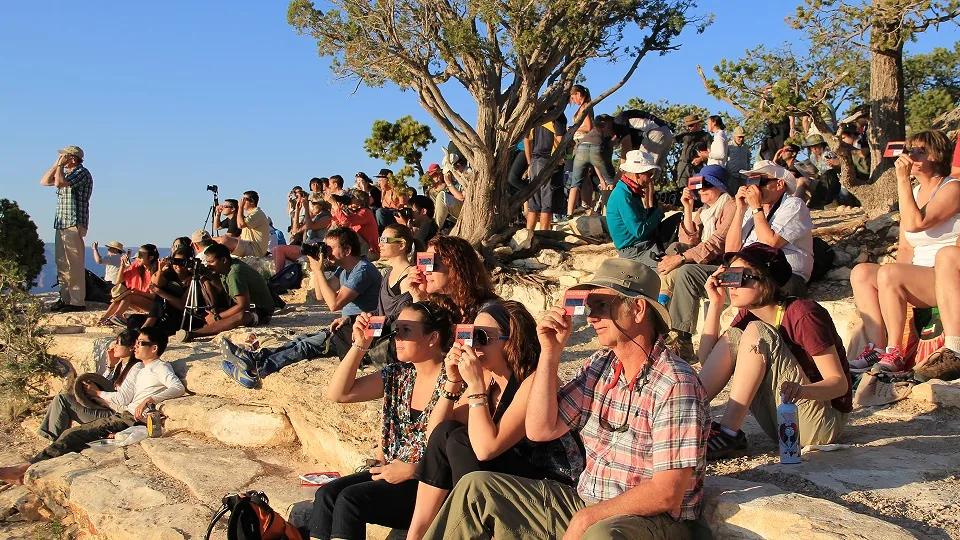
The AAS safety guidance makes an important point that many buyers miss: during the partial phases, the eclipse changes slowly enough that people do not need to stare continuously. In a controlled setting, a small number of viewers can be shared among a larger group.
That is useful, but only under the right conditions.
Sharing works when:
- the group is small or supervised,
- people are stationary,
- an adult or event lead explains the rules,
- viewers can be inspected between users,
- and nobody is rushing.
Sharing does not work well when:
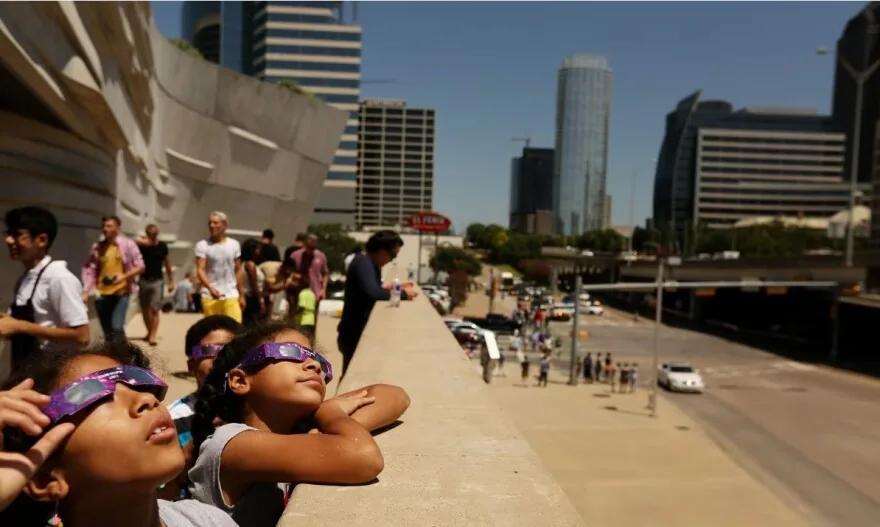
- children are moving around a playground or field,
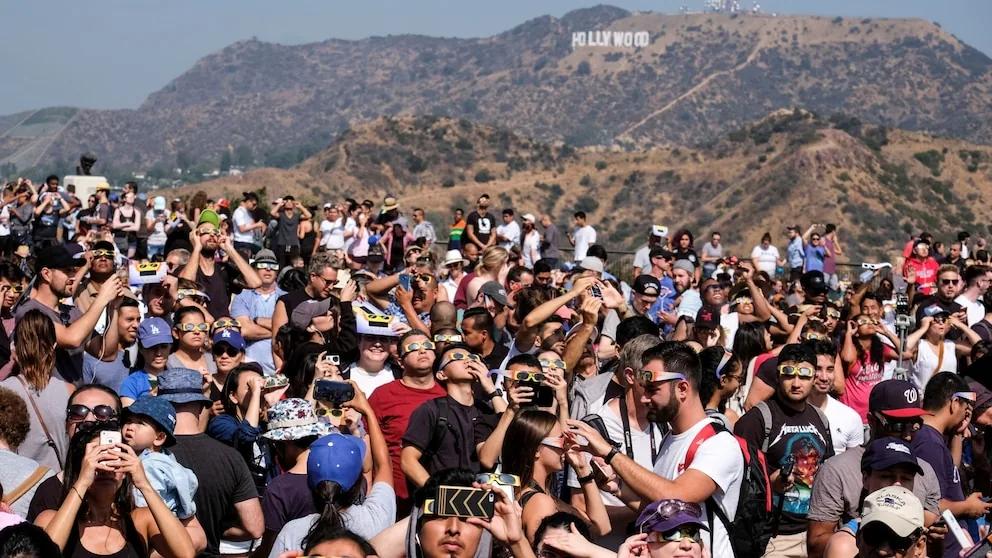
- the event is crowded,
- there is no clear line or handoff process,
- people are excited and trying to grab a quick look,
- or your staff cannot monitor safe use.
For many schools, the safest operational choice is still one viewer per person. It reduces confusion, shortens instructions, and avoids the awkward moment when a child takes glasses off too early because they are waiting for someone else’s turn. If your group is new to eclipse viewing, our guide When glasses on, when glasses off: eclipse phases explained for first-time viewers is a useful companion for staff briefings.
What “ISO 12312-2” should mean in practice
This is the part buyers should take seriously.
The relevant standard for handheld eclipse viewers and eclipse glasses is ISO 12312-2:2015, the international standard for filters for direct observation of the Sun. The AAS explains that this standard applies to nonmagnifying viewers used directly with the eyes. It does not mean ordinary sunglasses are acceptable, and it does not automatically cover every solar filter sold for cameras, telescopes, or binoculars.
That distinction matters because group buyers often see vague language online and assume it is enough. It is not. A product page that merely says “safe for eclipse viewing” or “NASA style” is not the same as credible documentation.
For procurement teams, iso standard context and volume planning primary eclipse planning answers begin with a simple rule: verify the product, the supplier, and the paperwork together. Do not rely on one printed phrase alone.
Look for:
- a clear claim of conformity to ISO 12312-2,
- manufacturer identification,
- usage instructions and warnings,
- packaging or product labeling appropriate to the market where it is sold,
- and supporting documentation when you are buying in volume.
The AAS also emphasizes that ISO standards are not magic words. They describe requirements, but buyers still need confidence that the product was actually tested and that the seller can trace it to a legitimate manufacturer or authorized channel.
If you want the deeper standards background, our explainer ISO 12312-2 and eclipse viewers: what the standard means for your family is worth sharing with administrators and parents.
How to verify a bulk order before you distribute it
For a team purchase, verification should happen in layers.
1. Vet the source before you buy
The AAS recommends buying directly from known manufacturers or from authorized dealers those manufacturers publicly identify. That is especially important now that the AAS no longer tries to maintain giant lists of every reseller and marketplace listing. The burden is on buyers to trace the product back to a trustworthy source.
This is why “cheap and available” is not a procurement standard.
If you are comparing bulk eclipse glasses for sale, ask the seller for more than a marketing promise. Ask what documentation ships with the order, whether they can identify the manufacturer, and whether they can provide pre-purchase paperwork for institutional review.
2. Check the labeling and instructions
According to AAS guidance, labeling should include the manufacturer name and address, instructions for safe use, and warnings about improper use. If the product or packaging is vague, anonymous, or oddly generic, that is a red flag.
3. Inspect samples when they arrive
Before distribution, inspect a sample from each carton or batch. The AAS says viewers should be discarded if scratched, punctured, torn, or otherwise damaged. Space.com’s safety coverage also notes that lenses should be securely fastened to the frame.
For cardboard viewers, check for:
- loose filters,
- bent frames that expose gaps,
- punctures or pinholes beyond acceptable manufacturing tolerances,
- water damage,
- and obvious surface defects.
4. Keep the paperwork
Institutional buyers often need a file, not just a box. Helioclipse wholesale orders can include the ISO test report, EU Declaration of Conformity, CE certificate where relevant, multilingual instructions, invoice, packing list, and customs documentation. Even if your organization never asks for those documents, having them available is part of responsible procurement.
5. Brief your staff before the event
A verified product can still be used badly. Staff should know the basic script: put viewers on before looking up, remove them only after looking away, never use them with unfiltered binoculars or telescopes, and supervise children.
If you are worried about counterfeits or sloppy listings, read our guide Fake and low-quality eclipse glasses: how to sanity-check what you are about to trust.
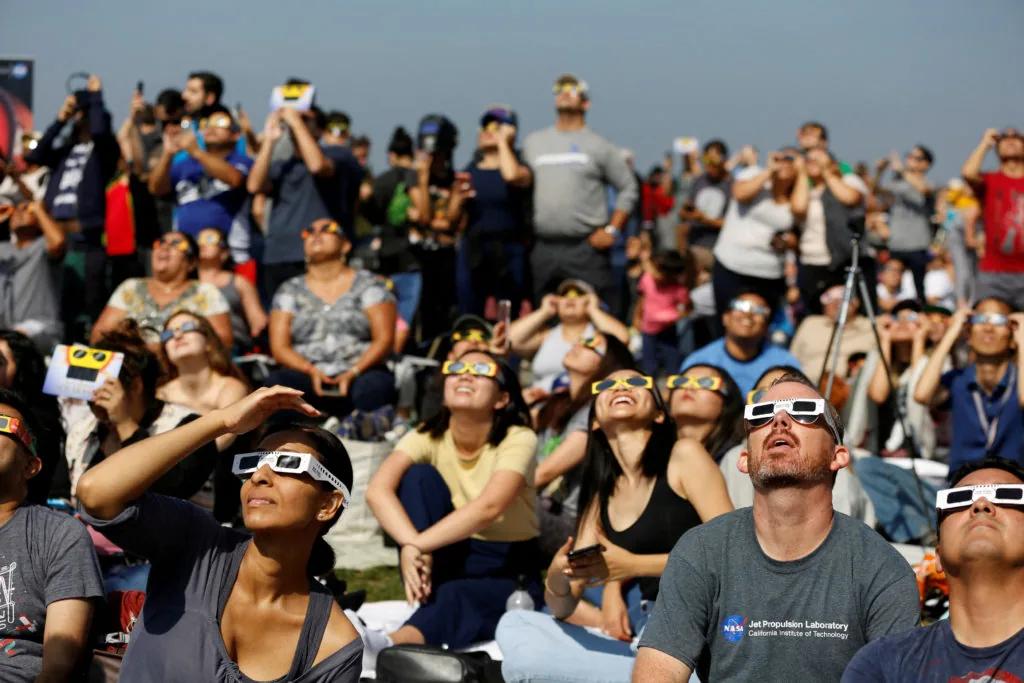
Lead times: the quiet factor that decides whether your plan works
Most bulk-order problems are not optical problems. They are calendar problems.
Space.com covered this clearly during earlier eclipse rushes: once the event is close, shipping uncertainty becomes part of the risk. Some buyers end up scrambling through local retail channels, changing event plans, or telling families to source their own viewers. That is survivable for a small club. It is messy for a district or employer.
Helioclipse wholesale guidance says smaller wholesale runs often ship in about one to two weeks, while very large or customized programs can take several weeks. For the 12 August 2026 eclipse, we recommend treating May 2026 as a sensible target for locking in supply if your program is substantial.
That is not because every order placed later will fail. It is because late orders have fewer good outcomes available:
- fewer pack-size choices,
- less time for internal approvals,
- less room for replacement if something arrives damaged,
- and less flexibility if your event grows.
This is especially true for bulk eclipse glasses schools organizations usa buyers who may be planning around summer programs, district purchasing cycles, or multi-site distribution. The same logic applies elsewhere: the closer you get to eclipse day, the more your plan depends on luck.
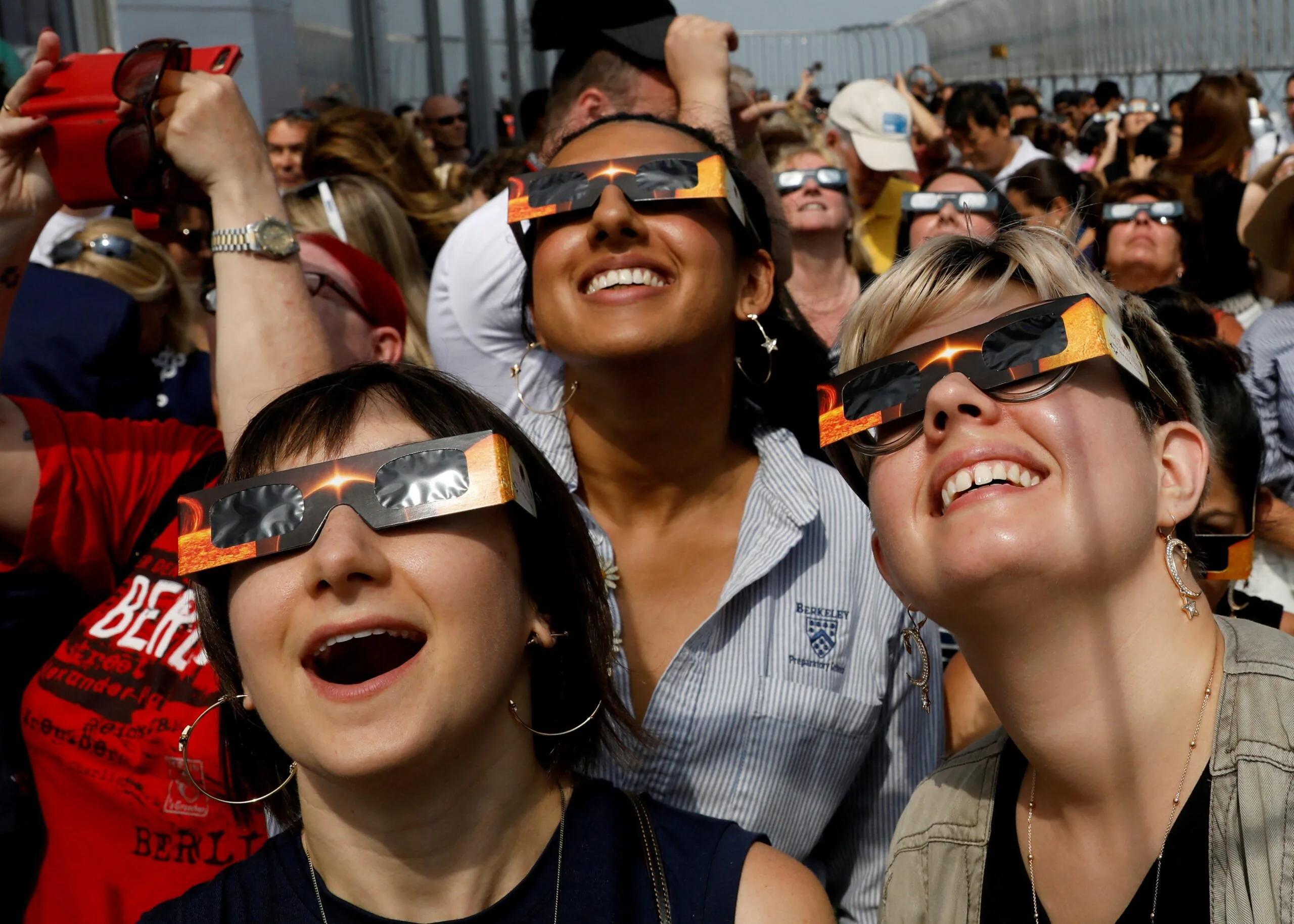
Pack sizes and distribution design
The right pack size can save hours of work.
Helioclipse offers retail multi-packs and wholesale cartons with different use cases. In practice, the choice is operational:
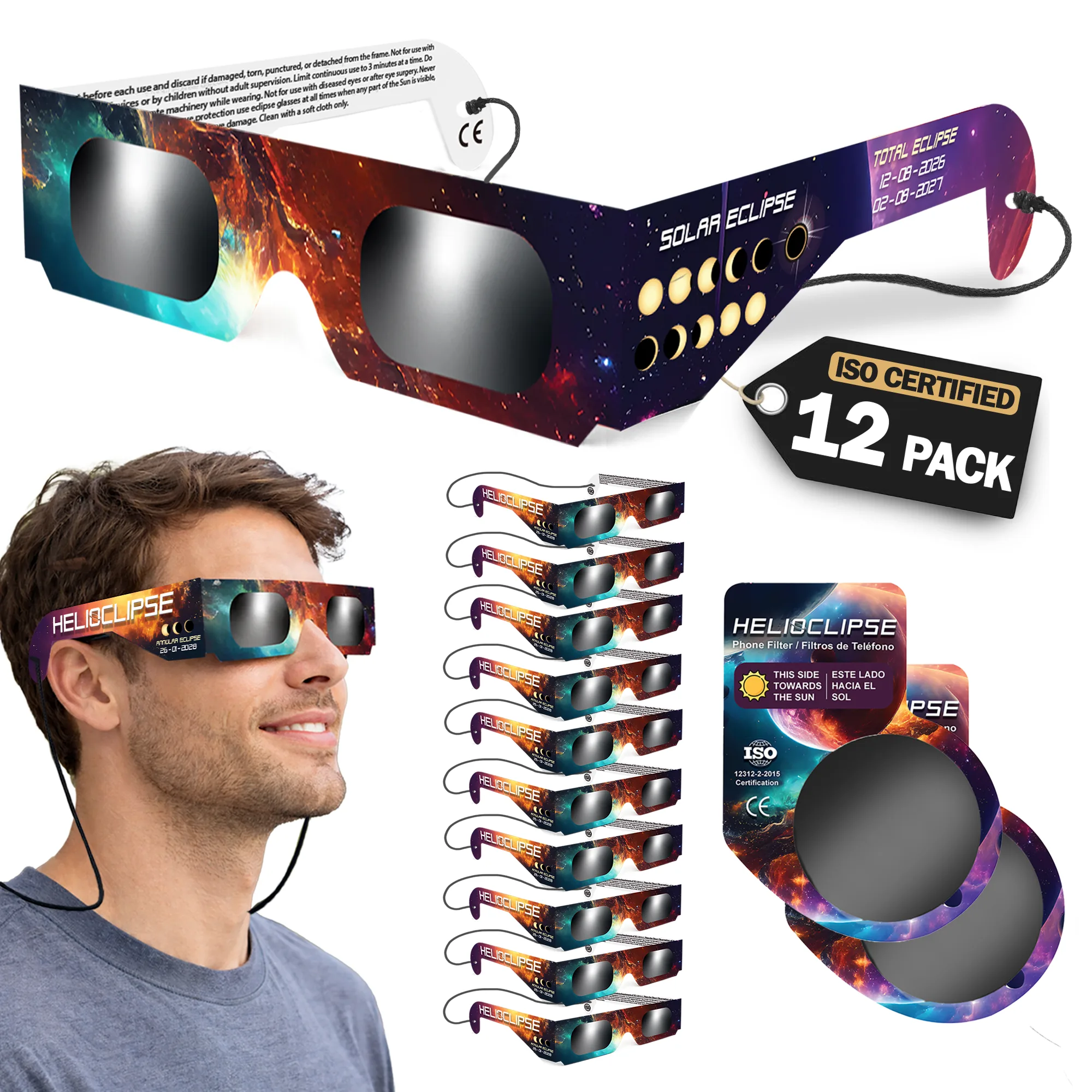
- 6-packs and 12-packs work for small teams, families, and compact office groups.
- 25-packs fit single classrooms and modest community groups.
- 50-packs and 100-packs are better for district-level distribution, front-desk programs, retail shelves, and high-throughput events.
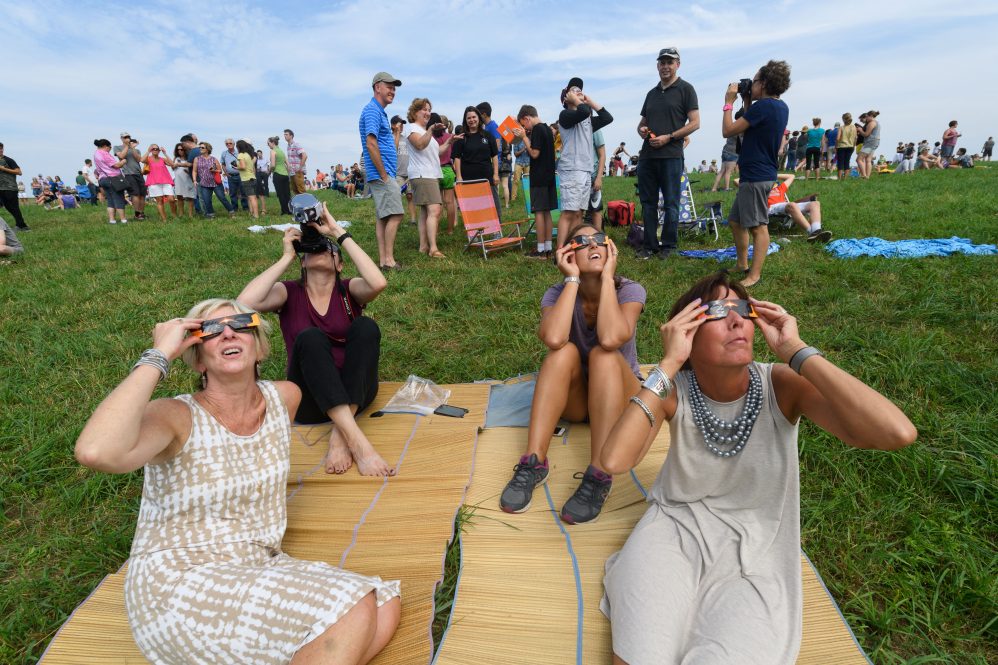
Individually wrapped viewers are especially useful for schools and public programs because they reduce transit damage and make handout tables cleaner and faster. They also make it easier to pre-sort by classroom, bus group, or event station.
For buyers comparing solar eclipse glasses bulk options, this is where the real value often sits. The cheapest unit price is not always the cheapest program. If a better pack format saves staff time, reduces damage, and simplifies distribution, it can be the better buy.
A simple distribution model for schools
- Receive and inspect cartons early.
- Count by classroom, not by total building population.
- Add a labeled spare envelope for each teacher.
- Keep a central reserve with the office or event lead.
- Send family instructions in advance.
- Do a five-minute staff briefing the day before.
A simple distribution model for public events
- Separate “staff stock,” “public handout stock,” and “reserve stock.”
- Assign one person to monitor usage and one to manage replenishment.
- Do not open every carton at once.
- Keep damaged-unit replacements at the table.
- Post one clear safety sign where the line forms.
That is the kind of iso standard context and volume planning primary eclipse planning example that actually helps: not abstract compliance language, but a process that turns safe products into a safe event.
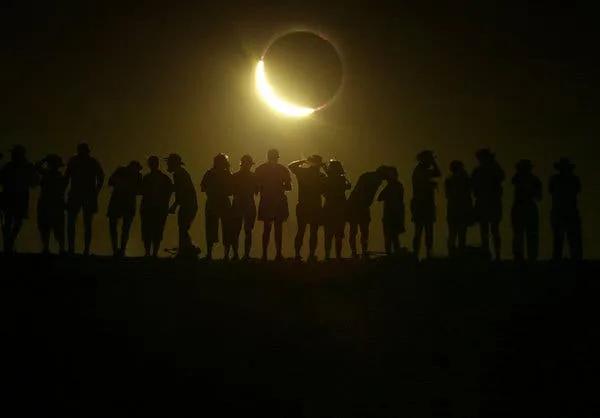
What to tell your group on eclipse day
A short script beats a long lecture.
The AAS safety page is clear: during any partial eclipse, and during all partial phases of a total eclipse, it is safe to look directly at the Sun only through special-purpose solar filters that conform to ISO 12312-2. Only people inside the path of totality may remove their viewers, and only during the brief total phase when the Sun’s bright face is completely covered.
That means many organizations should keep the message simple:
- Put your viewer on before looking up.
- Look briefly, then look away before removing it.
- Never use damaged viewers.
- Never use viewers with unfiltered optics.
- Children should be supervised.
If your audience may be in the path of totality, do not improvise the explanation. Use a clear, rehearsed script, and make sure staff understand the difference between totality and a deep partial eclipse. A Sun that is 99% covered is still not safe to view without protection. If you need a plain-English explanation of why that matters, our guide Why staring at the Sun without protection is never “just a quick look” is a good staff resource.
Common buyer questions that deserve straight answers
Do eclipse glasses expire?
Usually, no—not in the old simplistic way people still repeat online. The AAS says that if eclipse viewers are less than 10 years old, were properly tested, and remain undamaged, they may be reused. Helioclipse wholesale guidance also notes that ISO 12312-2 removed the old three-year shelf-life guidance in 2015. Condition matters more than a stale blanket rule.
So when people ask do eclipse glasses expire, the useful answer is: inspect them, verify the source, and store them properly.
What should we do with leftover eclipse glasses?
If they remain undamaged, keep them flat, dry, and protected from scratches. Future eclipses are coming. For many organizations, the best answer to what to do with leftover eclipse glasses? is not disposal but inventory control.
If you truly have excess stock, some groups choose to donate eclipse glasses to outreach programs or partner institutions, but only if the viewers are traceable, in good condition, and still accompanied by correct safety information.
Should we try to source free viewers instead?
Sometimes libraries, museums, universities, or local outreach events distribute them. That can help families, but it is not a reliable procurement strategy for a large institution. Questions like where can i get solar eclipse glasses for free? or free solar eclipse glasses near me make sense for individuals; they are not a serious plan for a district or employer with a duty of care.
What about “eclipse glasses nasa approved” language?
Be careful. Buyers often search phrases like approved solar eclipse glasses, eclipse glasses nasa approved, or nasa certified solar eclipse glasses, but NASA does not run a consumer product certification program for eclipse glasses. The more useful standard language is traceable conformity to ISO 12312-2 and alignment with AAS safety guidance. Product wording such as solar eclipse glasses iso 12312-2 certified or certified solar eclipse glasses is only meaningful when backed by real documentation and a trustworthy supply chain.
Why do weird ISO 9001 phrases show up in search results?
Because search data is messy. Terms like context of the organization iso 9001 belong to quality-management systems, not eclipse eye safety. If you are buying viewers, the relevant standard is ISO 12312-2 for direct solar viewing products—not ISO 9001 clauses about organizational management.
That is also why phrases such as iso standard context and volume planning primary eclipse planning qui can appear in keyword tools without being useful procurement language. Treat them as noise unless a real buyer question sits underneath them.
Buying for 2026 without overbuying or underbuying
The 2026 cycle will reward buyers who think in phases.
Phase one is internal planning: who is included, what format you are running, and whether you need retail-ready stock, classroom packs, or wholesale cartons. Phase two is verification: source, labeling, documentation, sample inspection. Phase three is distribution: who receives what, when, and with what instructions.
That is the practical heart of a bulk eclipse glasses schools organizations 2026 guide. It is not just about finding bulk eclipse glasses schools organizations near me or comparing unit prices. It is about reducing failure points before the sky gets interesting.
For many buyers, the cleanest route is to split the order into two buckets:
- Committed need: the number you know you will use.
- Operational reserve: the number that protects you from growth, damage, and late additions.
If your event is public-facing, your reserve should be larger. If it is tightly controlled, it can be smaller. But almost nobody regrets having a modest spare margin. Plenty of people regret ordering to the exact headcount.
And if your team is also planning where people will watch from, especially for August 2026, pair your viewer order with route and site planning early. Our August 12, 2026 total solar eclipse: what to expect and how to plan ahead guide is a good next read for the bigger event picture.
A procurement checklist you can actually use
Before you place the order:
- Confirm your event format.
- Estimate headcount realistically.
- Add spares.
- Decide whether sharing is truly workable.
- Check lead times against your event calendar.
- Confirm whether your institution needs documentation before purchase.
Before you distribute:
- Inspect samples from each batch.
- Separate stock by location or group.
- Prepare a short safety script.
- Train staff on totality vs partial phases.
- Keep a reserve for replacements.
After the event:
- Count leftovers.
- Store undamaged viewers flat, dry, and protected.
- Record what quantity you actually used.
- Note what went wrong while it is still fresh.
That last step matters more than people think. The best iso standard context and volume planning primary eclipse planning example is often your own post-event note for the next eclipse.
Are your eclipse glasses safe? Local optometrist explains ...
WTOL11
Frequently asked questions
Can our organization hand out eclipse viewers at no cost, and when does that make sense?
Yes, free distribution can make sense for schools, large public events, and other settings where people need a simple one-per-person handout. The excerpt also notes that shared viewing can work in small, supervised groups, but free handouts are usually the calmest option when crowds are moving or children are involved.
If we order more viewers than we need, what should we do with the extras?
The excerpt suggests using a mixed model when some stock is meant for free distribution and some is meant for retail or resale. Leftover viewers can be kept as retail-ready inventory for museums, visitor centers, hotels, tourism desks, or campus stores, rather than being treated as a one-time purchase.
How can we tell whether a supplier’s quality and safety paperwork is actually reliable?
The excerpt says team orders should include checking that the safety claims are real and that any paperwork your institution may ask for is in order. It does not give a specific standard number, but it clearly recommends verification before you commit to a large order.
What should we check in our ordering process if our institution needs formal purchasing details?
The article says bulk orders often require paperwork that an institution may ask for, so buyers should plan for that early. It also recommends thinking through quantities, spares, and timelines in advance so the order fits the organization’s process instead of creating last-minute problems.
What kind of staff preparation is needed before handing out viewers to a group?
The excerpt emphasizes that team orders are really a small safety operation, so staff should know who needs a pair, who can share, how many spares are available, and how distribution will work on the day. It also notes that supervised sharing can be practical in some settings, but only when the process is deliberate and controlled.
On-site next steps
- Browse our solar eclipse glasses if you need retail packs for classrooms, office teams, or family groups.
- If you are planning a larger program, visit Wholesale Solar Eclipse Glasses to discuss quantity, timeline, packaging, and documentation.
- Use the Eclipse Explorer / 3D map to confirm whether your group will be in totality or viewing a partial eclipse, because that changes the safety briefing.
- Explore more planning and safety explainers in our blog.
Sources & further reading
- Wholesale Solar Eclipse Glasses
- About the ISO 12312-2 Standard for Solar Viewers
- How to View a Solar Eclipse Safely
- Suppliers of Safe Solar Viewers & Filters
- Information for...
- AAS Solar Eclipse Task Force Working Groups
- Fake Solar Eclipse Glasses Are Flooding the Market: How to Stay Safe
- What To Do If Your Solar Eclipse Glasses Won't Arrive in Time
- Solar eclipse glasses: How to check safety and use them correctly
- Never look directly at the Sun without proper eye protection, seriously