August 2, 2027 total solar eclipse: what to expect and how to plan ahead
For a little over six minutes near Luxor, Egypt, the Moon will completely cover the Sun. The solar corona will surround a black lunar silhouette, daylight will collapse into an uncanny twilight, and the brightest planets and stars may emerge in a sky that looked ordinary moments earlier.
That is the headline version of the August 2 2027 total solar eclipse. The more useful version is that totality will be visible only from a relatively narrow corridor crossing southern Spain, North Africa and parts of the Middle East. Your exact position inside that corridor will determine whether you see more than six minutes of totality, roughly four minutes, a few seconds—or no totality at all.
This is an eclipse worth planning early with family, friends or a school group, but it is not necessary to chase the maximum duration at any cost. Start by placing candidate locations on our Eclipse Explorer and 3D map. Check whether each site is inside the path, how far it lies from the edge, the local circumstances and the Sun’s position. Then compare access, heat, cloud risk and the quality of the wider trip.
Why the 2027 eclipse is so unusual
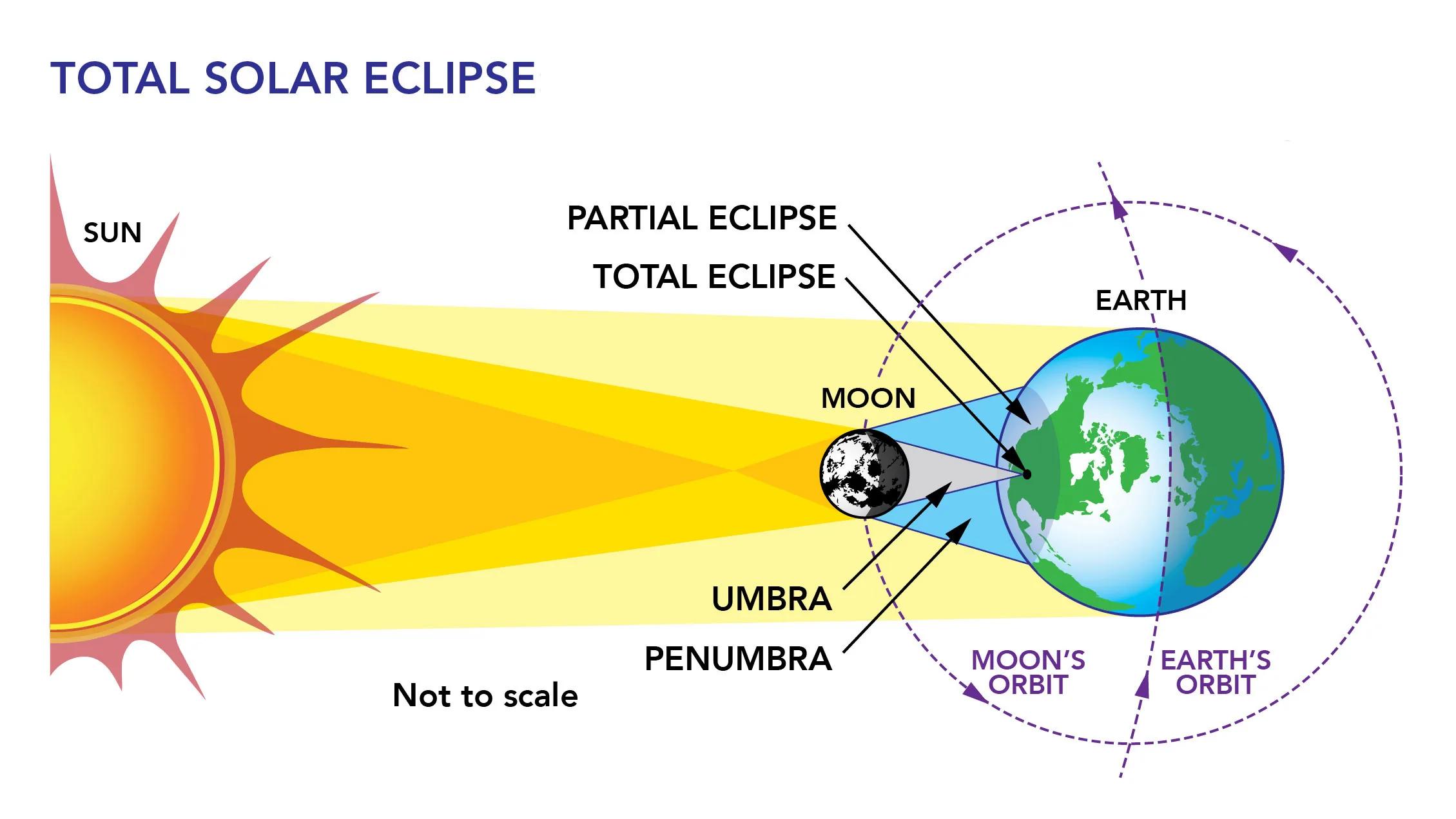
A total solar eclipse occurs when the new Moon passes directly between Earth and the Sun and appears large enough to hide the Sun’s bright face. The geometry is possible because the Sun is about 400 times wider than the Moon but also roughly 400 times farther away. From Earth, the two therefore appear almost the same size.
On August 2, the Moon’s dark inner shadow—the umbra—will sweep across part of Earth. Only observers reached by that shadow will experience totality. The path is expected to be about 260 kilometres (160 miles) wide around its broadest portions, yet its boundary is absolute: just inside it, the Sun is completely covered for a time; just outside it, a thin piece of the photosphere remains visible.
The maximum duration is approximately 6 minutes 23 seconds, with greatest eclipse about 64 kilometres (40 miles) southeast of Luxor. The Sun will stand roughly 82° high there, only about 8° from directly overhead. That combination of exceptional duration and a high Sun is why the event has acquired the “eclipse of the century” nickname.
The phrase longest solar eclipse 2027 should not be misunderstood to mean the longest possible eclipse or the longest total eclipse in history. It means that this is an extraordinarily long event by modern human standards—and, according to Astronomy Magazine’s comparison of upcoming eclipses, the longest totality anyone alive today is likely to witness. Our deeper guide explains why totality exceeds six minutes near Luxor.
Where the path of totality goes
The August 2 2027 total eclipse path begins over the Atlantic before reaching the region around the Strait of Gibraltar. It then crosses or touches southern Spain and northern Morocco before continuing east through Algeria, Tunisia, Libya and Egypt. After crossing the Red Sea, the shadow reaches Saudi Arabia, Yemen and the Horn of Africa, including Somaliland and Somalia, before heading out over the Indian Ocean.
Different references may format the country list differently because of borders, territorial terminology and whether a very small intersection is counted. That is one reason a path map is more useful than a country checklist. The August 2027 total solar eclipse path is a band, not a promise that every location in a named country will see totality.
Southern Spain, Gibraltar and Morocco
In southern Spain and around Gibraltar, totality occurs in the morning with the Sun already well above the horizon. Gibraltar is expected to receive about 4 minutes 26 seconds of totality. That is nearly two minutes shorter than the maximum near Luxor, but still a remarkably long total eclipse.
Spain offers relatively straightforward access for many European travellers, while the terrain and coastline create meaningful local choices. A hotel in the right province is not enough: the observing field, beach or hillside itself must be inside the path. Mountains can generate local cloud, coastal air can differ from inland conditions, and traffic may make a last-minute relocation difficult.
Northern Morocco lies under the same advancing shadow shortly before it moves deeper into North Africa. Compare actual coordinates rather than assuming that any city near the Strait has the same duration. A 2027 solar eclipse interactive map should show the path boundaries, central line, local duration and Sun altitude—not merely shade an entire country.
Algeria, Tunisia and Libya
Across Algeria, Tunisia and Libya, the shadow moves over a mixture of Mediterranean, inland and desert environments. Totality generally lengthens as the track approaches Egypt, but duration alone cannot identify the best observing site. Border procedures, road access, medical support, accommodation, communications and current official travel advice all belong in the decision.
August conditions may favour low average cloud in some desert areas, but climate is not a forecast. Dust, haze and isolated cloud can still obscure the Sun. A reachable site offering several minutes beneath a clear sky is better than an inaccessible centreline location with a slightly longer theoretical duration.
Egypt and Luxor
Egypt contains the most famous portion of the august 2 2027 total solar eclipse path. Greatest eclipse occurs southeast of Luxor, while Luxor itself loses only a couple of seconds compared with the roughly 6-minute-23-second maximum. Cairo and Alexandria are outside the path of totality, so travellers based there cannot remain in those cities and expect the full event.
Near Luxor, the Sun will be almost overhead and summer heat may approach or exceed 40°C. The partial phases and totality together occupy far longer than the six-minute climax; planning guidance puts the broader sequence at roughly 2 hours 45 minutes. Shade, drinking water, sun-protective clothing, toilets, transport and a safe surface from which to look almost vertically upward are practical requirements, not luxuries.
If Luxor is your goal, read our location-specific Luxor eclipse guide and verify what any hotel, cruise or tour actually includes. A booking in the city does not automatically guarantee access to a suitable observing site, unrestricted views or transport flexibility on eclipse morning.
Saudi Arabia, Yemen and the Horn of Africa
The umbra crosses the Red Sea into western Saudi Arabia. Astronomy Magazine estimates more than six minutes of totality in Jeddah, placing a major city under one of the longest portions of the track. The path then continues through Yemen and the Horn of Africa. Near Somalia’s northern coast, centreline totality is expected to last about 5 minutes 32 seconds.
Those impressive numbers do not override logistics or safety. Entry requirements, transport, accommodation, local restrictions, weather, heat and government travel advice may change before 2027. Treat every itinerary as provisional until it has been checked against current official information.

Totality is not the same as a 99% partial eclipse
A common planning mistake is to choose a location just outside the path because its partial eclipse percentage looks close enough. It is not. Even at 99%, a brilliant sliver of the Sun remains exposed. The sky may dim and the light may become strange, but the corona does not appear in the same way and there is no safe naked-eye viewing interval.
Inside the path, the final seconds before totality produce a rapidly changing scene. The remaining sunlight contracts into bright points along the Moon’s rugged edge, the landscape darkens, and the corona appears only when the photosphere is completely hidden. Temperature can fall, the horizon may glow in sunset colours all around, and people often react audibly when the shadow arrives.
Move away from the path edge if you can. Totality increases relatively slowly across much of the corridor and then falls sharply near the boundary. You do not need to stand exactly on the central line, but a site comfortably inside the path gives you a buffer against mapping errors, uncertain boundaries and an accidental last-minute move to the wrong side.
What time will the eclipse happen?
There is no single august 2 2027 total solar eclipse time for every observer. The Moon’s shadow moves eastward, so local contact times change continuously from Spain to Somalia. Time zones add another layer: two locations can experience the same moving shadow only minutes apart while their clocks display substantially different local times.
In southern Spain and Gibraltar, totality comes during the local morning. Farther east, the event occurs progressively later by the clock, with the Sun very high near Luxor and western Saudi Arabia. For example, Gibraltar’s circumstances differ from Luxor’s not only in duration—about 4 minutes 26 seconds versus more than 6 minutes—but also in solar altitude and heat exposure.
Use the August 2 2027 total solar eclipse map in Eclipse Explorer to look up these quantities for your exact coordinates:
- first contact, when the partial eclipse begins;
- second contact, when totality begins;
- maximum eclipse;
- third contact, when totality ends;
- fourth contact, when the final partial phase ends;
- totality duration, Sun altitude and path-edge distance;
- the stated time zone and whether daylight-saving time applies.
Save the coordinates and record times in both the displayed local zone and UTC if your group is travelling across borders. Recheck the schedule close to departure. Do not copy a city time from an unlabeled graphic and assume it applies to a remote viewing site.
What you will see, phase by phase
During the long opening partial phase, the Moon appears to take an ever-larger bite from the Sun. Through safe viewers, the change is obvious every few minutes. On the ground, gaps between tree leaves or the holes in a colander can project hundreds of tiny crescent Suns.
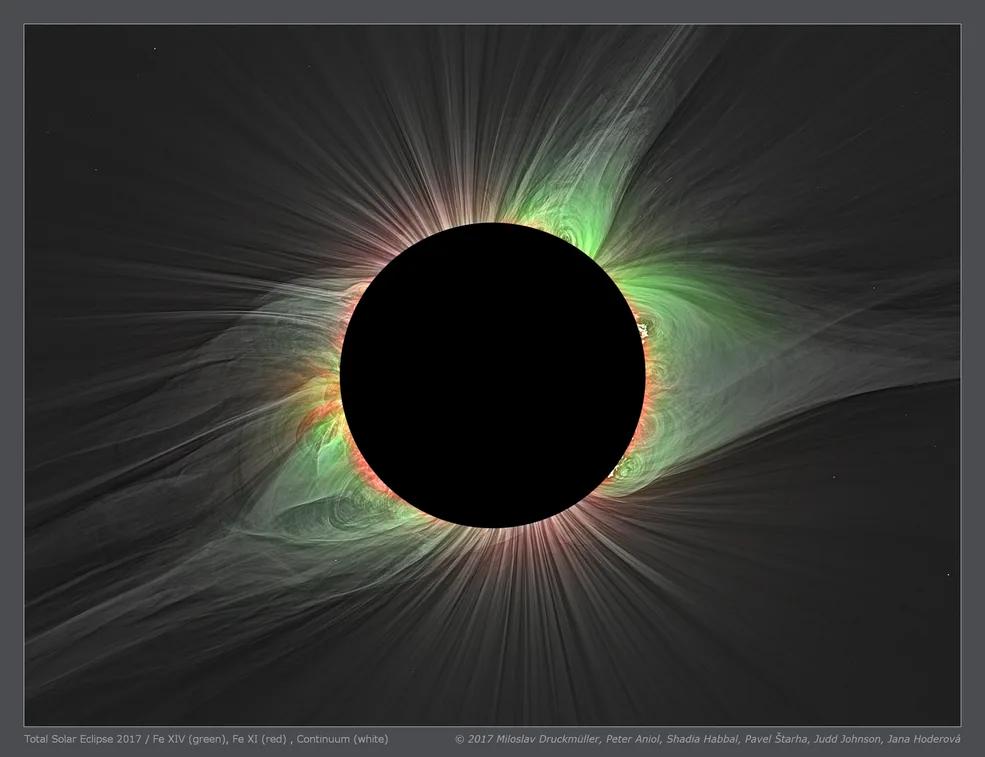
As second contact approaches inside the path, daylight begins changing rapidly. Shadows sharpen, the temperature may drop and the final exposed arc of photosphere breaks into brilliant points. Only when the bright face of the Sun is completely covered does totality begin. The corona then becomes visible around the Moon, often with delicate streamers extending far beyond the black disk. Bright planets may appear, although the exact corona and sky appearance cannot be predicted like contact times.
Totality ends at third contact when the first point of direct sunlight reappears. That moment can be intensely bright. Solar viewers must go back on immediately, and they remain necessary throughout the departing partial phase.
Our dedicated guide to when glasses stay on and when they may come off is worth sharing with every person in your group before eclipse day. Agree on one experienced adult or guide to call the transitions, especially when children are present.

Eye safety: one rule changes only during totality
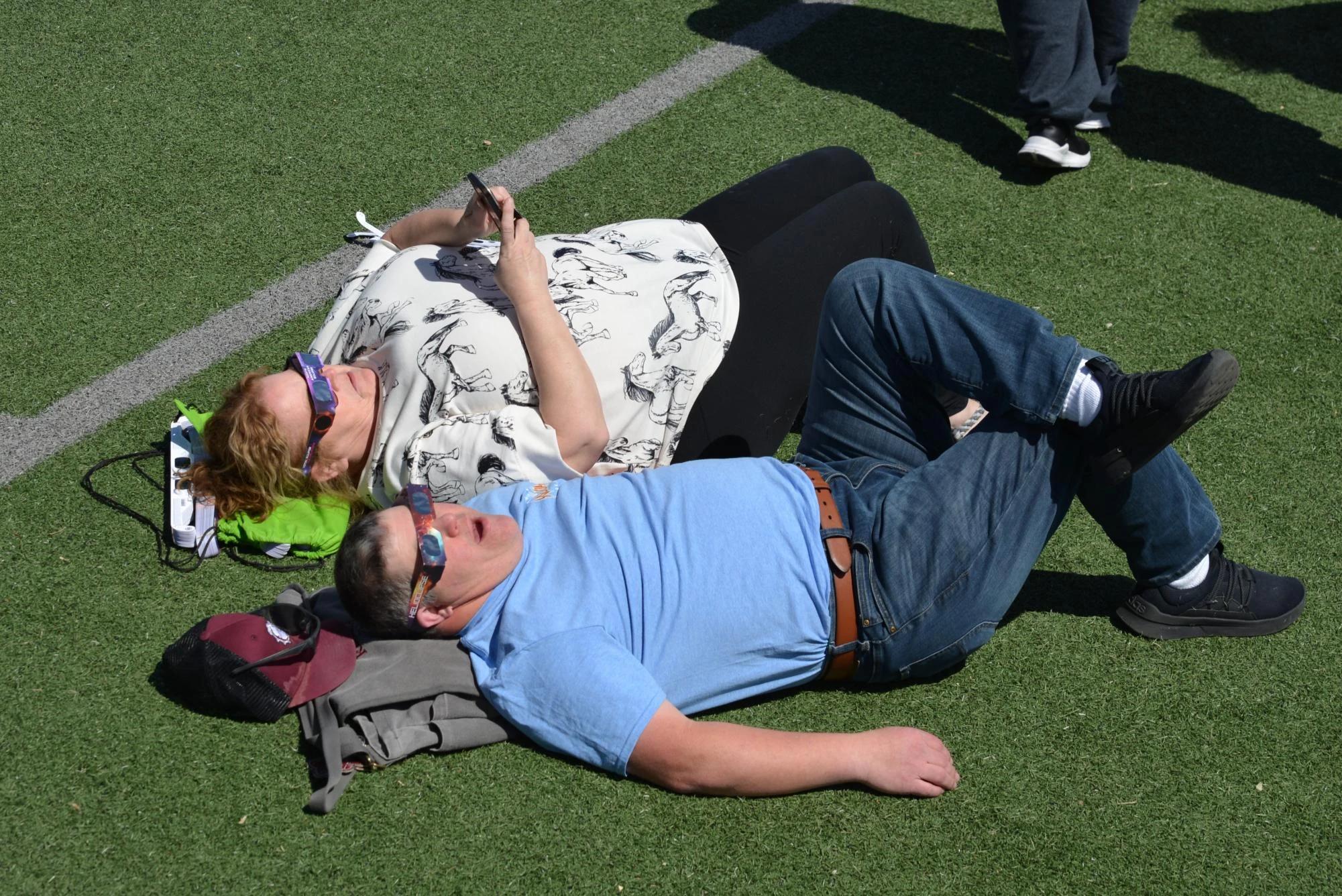
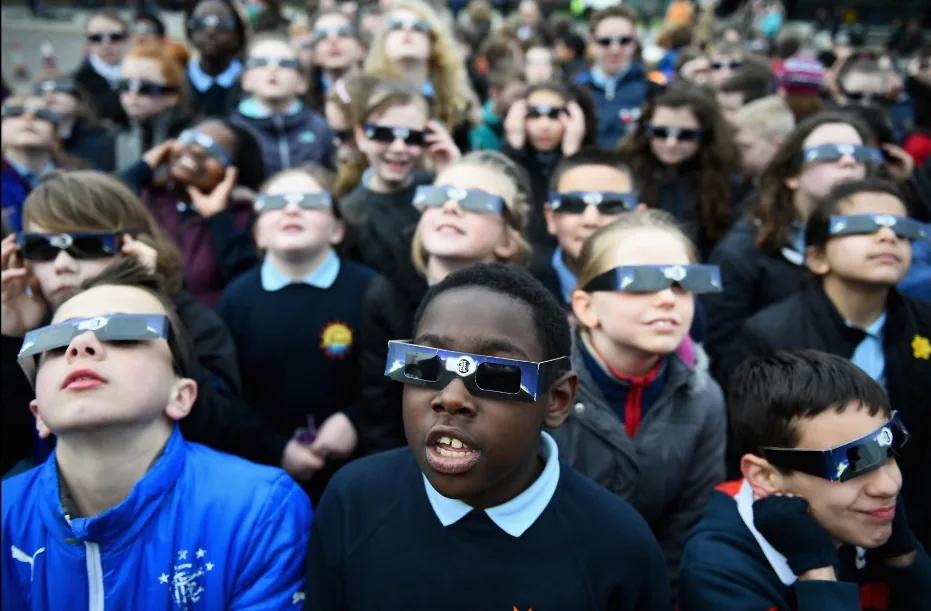
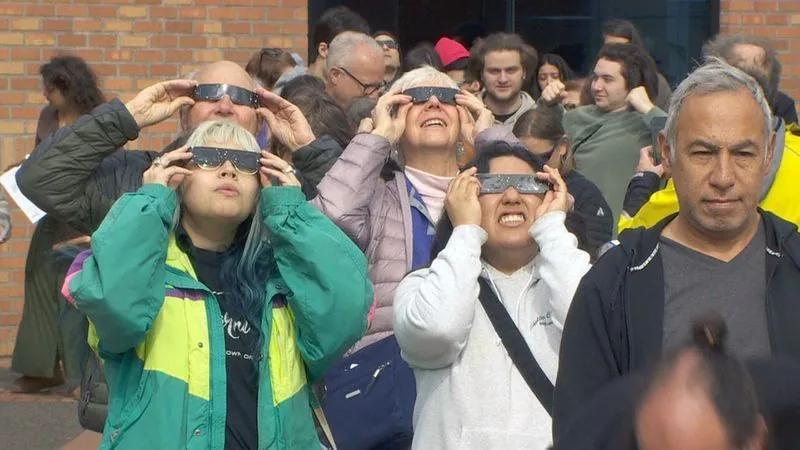
During every partial phase, look at the Sun only through special-purpose solar viewers that conform to ISO 12312-2. Ordinary sunglasses are not adequate, regardless of how dark they appear. Inspect every viewer before use and discard it if the filter is scratched, punctured, torn or separating from its frame.
If—and only if—you are inside the path and the Sun’s bright face is completely covered, you may view totality directly without eclipse glasses. Put the viewers back on as soon as any bright part of the Sun returns. Outside the path there is no glasses-off interval at all.
Cameras, binoculars and telescopes require securely mounted solar filters over the front of their optics. Eclipse glasses worn over your eyes do not make it safe to look through unfiltered magnifying equipment; concentrated sunlight can damage the viewer and your eyes. Ask an experienced solar observer for help rather than improvising.
Product descriptions sometimes use phrases such as “solar eclipse glasses iso 12312-2 certified” or “certified solar eclipse glasses.” The wording alone is not proof of quality. Check the manufacturer and seller, instructions, physical condition and credible conformity information. NASA provides safety guidance but does not approve individual viewer brands, so claims such as “NASA approved” should not replace those checks. Our guide to ISO 12312-2 and eclipse viewers explains what the standard does—and does not—tell you.
Order Helioclipse solar eclipse glasses early enough to inspect them and practise with your group. Keep spares in a rigid, dry container rather than loose in a pocket or hot vehicle.
How to choose an observing location
The best site is not automatically the point with the longest duration. A reliable plan balances five factors: path position, cloud prospects, access, physical conditions and the value of the wider trip.
1. Confirm the geometry
Place the exact observing coordinates on the august 2 2027 total solar eclipse path. Aim comfortably inside the boundary, then note totality duration and the Sun’s altitude. Do this for the field, rooftop, ship position or desert site—not only for the nearest city.
2. Compare weather without pretending it is guaranteed
Long-term cloud statistics help compare regions, but they cannot predict one morning years ahead. Build a mobile option where roads and local rules permit it. During the final week, shift attention from climate averages to reputable short-range forecasts, satellite imagery and dust forecasts.
3. Plan for heat and human needs
The high Sun simplifies horizon visibility across much of the route, but it increases exposure. Bring more water than you expect to need, shade that will not block others, sunscreen, a hat and any required medication. Arrive early enough to avoid setting up in the hottest rush, and never block an emergency route.
4. Give yourself a transport margin
Eclipse traffic can turn an ordinary drive into hours of delay. Avoid a plan that depends on crossing the path boundary shortly before totality. Download offline maps, refuel or charge early, identify multiple legal sites and agree on a meeting point in case mobile networks become congested.
5. Choose a trip worth taking even if clouds intervene
No astronomer or tour operator can guarantee a clear Sun. Southern Spain, Morocco, Tunisia, Egypt and the other path regions offer very different cultures, landscapes and practical constraints. Select somewhere your group genuinely wants to visit, then optimise the eclipse plan within that choice.
An August 2 2027 total solar eclipse cruise can provide an open horizon and some ability to reposition, but the word “cruise” does not guarantee clear weather or centreline access. Ask for the planned coordinates, duration, decision-making process, deck capacity, eye-protection provision and whether the captain can alter course for cloud.
A practical planning timeline
Now through 2026
- Form your group and agree on budget, accessibility needs and acceptable travel complexity.
- Compare several path regions rather than booking solely around Luxor’s maximum.
- Check passport validity, entry rules, health needs and official travel advice.
- Reserve cancellable accommodation where possible.
- Acquire safe viewers for everyone and store them properly.
The total solar eclipse 2026 on August 12 crosses Greenland, Iceland and Spain, with a maximum totality of about 2 minutes 18 seconds. It is a separate event with a much lower Sun from Spain. For some readers it will be the next total solar eclipse they can reach; for others, 2027 will be more practical. Do not mix its maps or contact times with the 2027 event.
Six to twelve months before August 2027
- Confirm that your booked property and observing site remain inside the path.
- Arrange transport that does not depend on an untested same-day connection.
- Ask tours exactly what they provide: observing access, water, shade, toilets, guides and backup sites.
- Practise using viewers with children and anyone who needs assistance.
- Decide whether photography will enhance your experience or distract from it.
The final month and week
- Inspect every viewer and pack spares separately.
- Print contact times, coordinates and emergency details.
- Monitor heat, cloud, dust and transport advisories.
- Agree on a weather decision deadline instead of debating until the roads clog.
- Charge devices, but keep the plan usable without mobile service.
The calendar makes August 2 2027 a total solar eclipse date across a vast partial-eclipse region, but only the mapped central corridor receives totality. That distinction should guide every booking and every last-minute move.

How 2027 compares with nearby total eclipses
The August 2nd 2027 total solar eclipse sits between two other events that can cause planning confusion. The 2026 total eclipse reaches parts of Greenland, Iceland and Spain, while the total solar eclipse 2030 on November 25 crosses parts of southern Africa and Australia and reaches a maximum duration of about 3 minutes 44 seconds.
For UK observers, the phrase august 2 2027 total solar eclipse uk needs an important qualification: the United Kingdom is outside the path of totality. A partial eclipse will be visible, subject to local weather, but there will be no safe glasses-off phase. Anyone seeking totality must travel into the path and verify the exact destination.
Likewise, the august 2 2027 total eclipse path must not be confused with the 2026 route through northern Spain. The 2027 track crosses much farther south, around the Strait of Gibraltar and onward through North Africa. Separate maps, separate bookings and separate local times are required.
The compact plan to remember
First, get inside the path—not merely near it. Second, favour a clear and workable location over a few extra theoretical seconds. Third, prepare for heat and a multi-hour outdoor event. Fourth, use ISO 12312-2 solar viewers during every partial phase and remove them only during complete totality. Finally, tell your group the plan early enough that nobody is improvising on August 2.
The august 2 2027 total solar eclipse map gives you the geometry, but a successful day also depends on people: who is driving, who is supervising children, who is watching the weather, and who will call second and third contact. Sort out those roles in advance. When the shadow arrives, everyone should be looking up—not searching for a missing pair of glasses or arguing over directions.
Frequently asked questions
Is a total solar eclipse scheduled for August 2, 2027?
Yes. On August 2, 2027, a total solar eclipse will cross a narrow corridor through southern Spain, North Africa, and parts of the Middle East. Totality will be visible only from within that path.
What happened during the solar eclipse in August 2017?
The excerpt does not provide details about an eclipse in August 2017. It explains that totality occurs only when the Moon’s inner shadow reaches an observer on Earth.
What time will the solar eclipse occur on August 12, 2026?
The excerpt does not give a time or other circumstances for an eclipse on August 12, 2026. For the August 2, 2027 eclipse, it advises checking local circumstances for each potential viewing location.
What should I know when planning for the 2026 total solar eclipse?
The excerpt does not contain planning information specific to a total solar eclipse in 2026. Its general advice for eclipse travel is to confirm that a site lies inside the path of totality and compare access, heat, cloud risk, and the wider trip.
What should I know about the next total solar eclipse described here?
The August 2, 2027 total solar eclipse is expected to offer a maximum totality of about 6 minutes 23 seconds near a point southeast of Luxor, Egypt. Your location matters: sites near the path edge may receive only seconds of totality, while locations outside the path will not see totality at all.
On-site next steps
- Open the Helioclipse Eclipse Explorer and compare exact sites in Spain, North Africa and the Middle East. Check path position, duration, local timing and Sun altitude.
- Save at least one backup location that remains comfortably inside totality and is legally accessible.
- Read our eclipse planning and safety guides with your group.
- Order ISO 12312-2 certified Helioclipse viewers early, inspect them on arrival and store them safely until eclipse day.
Sources & further reading
- Path of Total Solar Eclipse of 2027 Aug 02 — EclipseWise — centreline coordinates, path width, solar altitude and duration tables.
- Total Eclipse 2027 — ESA CESAR — a Europe-focused overview of the eclipse and its passage through southern Spain.
- August 2, 2027 Total Solar Eclipse in Gibraltar — Timeanddate — local circumstances and contact times for Gibraltar.
- Where to See the Next Solar Eclipse — Astronomy Magazine — comparisons of upcoming total eclipses and notable 2027 locations.
- 8 Things You Need to Know Before Booking the 2027 “Eclipse of the Century” — Space.com — practical discussion of path position, weather, duration, heat and tour logistics.
- Eclipses and the Moon — NASA Science — eclipse mechanics, terminology and upcoming-event visibility.
- Eclipse Viewing Safety — NASA Science — direct, indirect and optical viewing precautions.
- How to View a Solar Eclipse Safely — American Astronomical Society — detailed solar-viewer guidance and the totality exception.
- Eclipse Basics — American Astronomical Society — the Moon’s shadow, eclipse cycles and the geometry behind totality.
- ISO 12312-2:2015 — Eye and Face Protection for Sunglare — ISO — the official catalogue record for the international standard associated with direct solar viewing filters.