The last total solar eclipse in Europe before 2026: what 1999 can—and cannot—teach planners
For many Europeans, a question about the 1999 eclipse is really a question about whether the continent has done this before at modern scale — and whether those memories are still useful now. The short answer is yes, but only if we use them carefully. August 11, 1999, was the last total solar eclipse in Europe before 2026: a narrow path of totality crossing heavily populated regions, millions of partial-eclipse viewers outside the umbra, huge media attention, and a public mood that mixed science, travel, superstition, weather anxiety, and wonder.
If you are planning for 2026, the best modern tool is not nostalgia. It is a precise path check. Start with the Eclipse Explorer / 3D map so you can see whether your exact location is inside totality, near the centerline, or only in a partial zone. That one distinction matters more than almost any romantic memory from 1999.
Still, 1999 matters. It was, for many people, the last total solar eclipse in Europe experienced as a shared public event on this scale. It also happened before smartphones, before live map apps in everyone’s pocket, before today’s wider public awareness of ISO 12312-2 viewer standards, and before social media could amplify both good guidance and bad rumors at full speed. That makes it a useful comparison point for 2026 — if we resist the urge to turn it into myth.
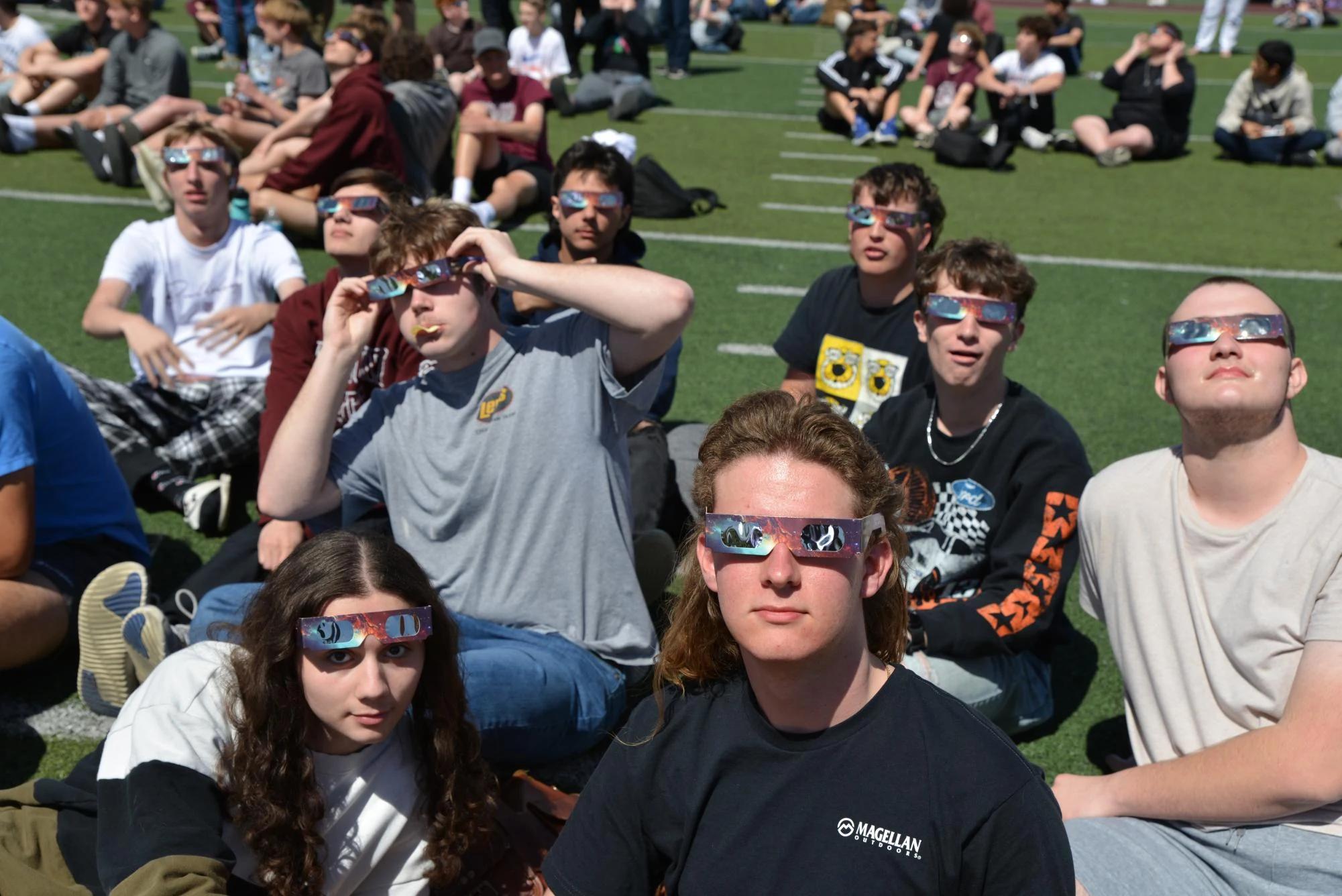
When was the last total solar eclipse in Europe?
Yes. The 1999 solar eclipse occurred on 11 August, with a path of totality crossing the Atlantic, southern UK, northern France, Belgium, Luxembourg, southern Germany, Austria, Hungary, Romania, Bulgaria, Turkey, and onward into the Middle East and India. Outside that narrow track, a much larger part of Europe saw a deep partial eclipse.
That is why memories of the 1999 eclipse are so widespread even among people who did not actually experience totality. In places just outside the path, the Sun was still covered by a very large fraction, daylight dimmed noticeably, and the event felt culturally huge. But a deep partial eclipse is not totality. That distinction was true in 1999 and it will be true again in 2026.
The path itself was narrow, because all total eclipses are. NASA notes that the Moon’s umbral shadow on Earth is only about 300 miles, or roughly 480 kilometers, wide at most; often the path is narrower than that. So when people remember “the whole of Europe going dark,” memory is compressing a more precise reality: a thin corridor got the full experience, while a much larger region got an impressive but incomplete one.
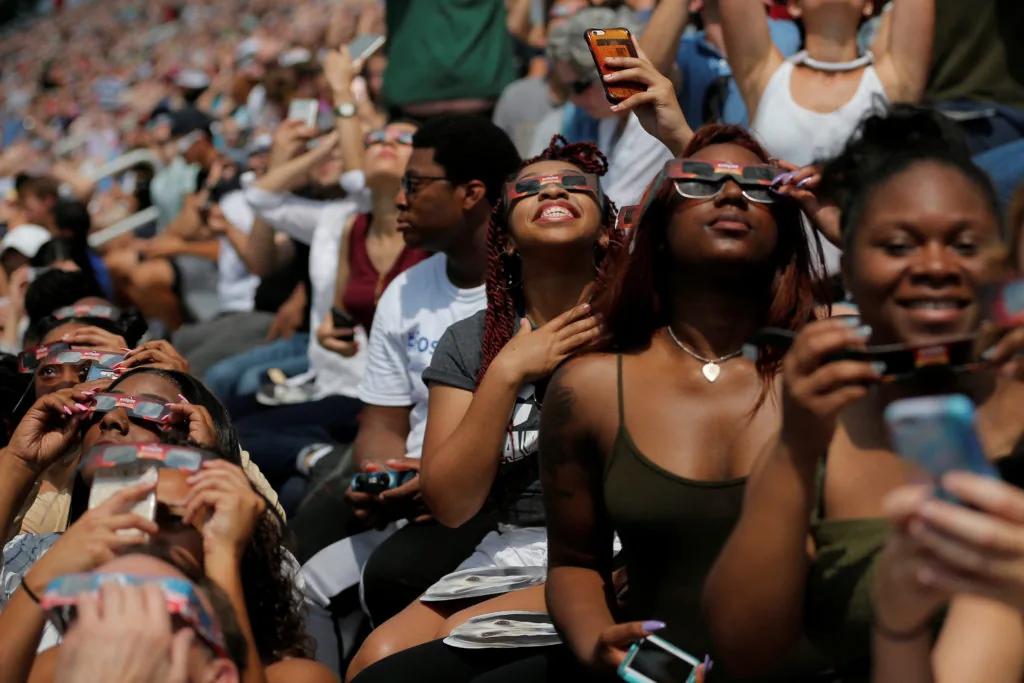
Why 1999 became such a continental memory
The story of the total solar eclipse 1999 is not just astronomy — it is also media history. In 1999, many households still encountered eclipse planning through newspapers, TV bulletins, radio, school handouts, astronomy clubs, and printed timetables. You could find a path map in a paper, magazine, or TV graphic, but you could not casually pinch-zoom your exact street and compare centerline duration with a backup site two hours away.
That changed the emotional texture of planning. People committed earlier, often with less precise local information. They drove long distances based on broad path maps. They relied on regional weather forecasts that were much coarser than what many travelers expect now. And when cloud ruined a chosen site, there was less chance of a last-minute, data-driven relocation.
That helps explain why memories of the 1999 eclipse are so vivid. The event felt harder won. You either got under the shadow or you did not. There was less digital cushioning between anticipation and outcome.
There is also a generational effect. For many adults planning 2026, the 1999 solar eclipse was their first encounter with the idea that an eclipse is not a classroom diagram but a real, physical event with traffic, weather, crowds, and a clock that does not wait for you. That memory is valuable. But it can also mislead if it makes people assume 2026 will unfold in exactly the same social or meteorological way.
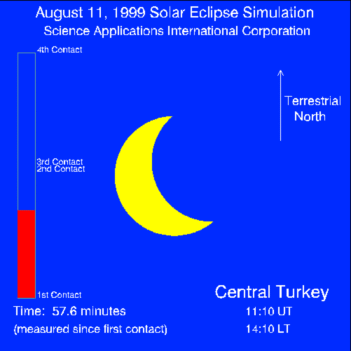
What 1999 really teaches about totality
One lesson from 1999 is timeless: people who were inside totality and people who were outside it did not experience the same event.
The American Astronomical Society’s description of the total eclipse experience is useful here, especially because it explicitly reflects on a first total eclipse in 1999. Inside the path, observers can experience the rapid environmental changes, the approach of the Moon’s shadow, Baily’s Beads, the diamond ring, the sudden drop into twilight, the corona, and the strange horizon glow all around them. Outside the path, even at very high partial coverage, you do not get totality itself.
That is why we keep telling readers to check geometry, not vibes. If you are planning Spain for 2026, our guide to August 12, 2026 total solar eclipse: what to expect and how to plan ahead is a better planning foundation than any generalized memory from 1999. And if you are new to the difference between the partial phases and the brief safe window during totality, read When glasses on, when glasses off: eclipse phases explained for first-time viewers.
This is also where memory can become unfair to reality. Some people remember 1999 as “a bit disappointing” because their site was cloudy, or because they were just outside the path, or because they expected the whole sky to behave like midnight. None of that means total eclipses are overhyped. It means location and expectations matter.
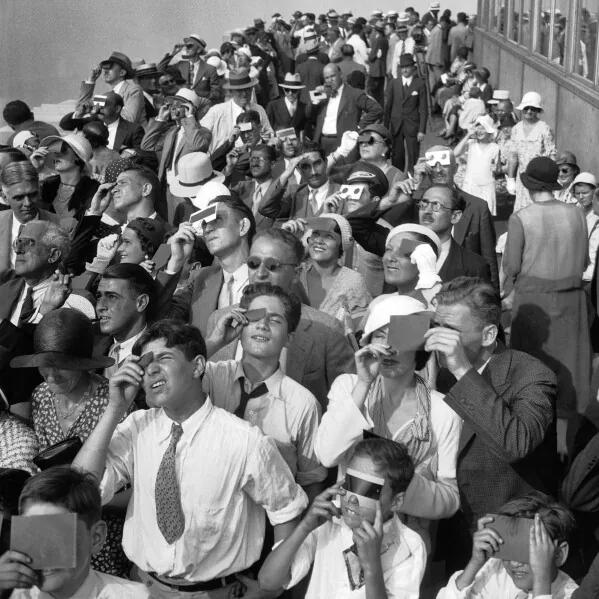
The weather lesson: respect it, don’t mythologize it
If there is one bad habit in eclipse storytelling, it is turning one weather outcome into folklore. The 1999 event is full of that temptation.
In the UK, for example, thousands traveled to Cornwall and Devon because they were in the path of totality. Some observers were clouded out. That disappointment became part of the public memory. But the scientific takeaway is not “coastal eclipses always fail” or “Europe is too cloudy for serious planning.” It is that weather is local, mobile, and probabilistic.
Research highlighted by Phys.org on the total eclipse of the sun 1999 also showed that some reported atmospheric effects — such as the so-called eclipse wind — can be investigated scientifically rather than left as folklore. Using observations from 121 sites and improved modeling, researchers found subtle regional wind changes associated with eclipse cooling. That is a good model for 2026 planning: keep the wonder, but separate measurable effects from campfire exaggeration.
For 2026, the practical lesson is not to borrow someone else’s 1999 weather trauma. It is to build a weather plan. Know your fixed site, your movable backup radius, your road constraints, and your decision time. Our guide to Cloud cover and eclipse day: how to read the sky and when to move goes deeper on that, and our Eclipse Explorer / 3D map helps you compare nearby locations inside and outside the path.
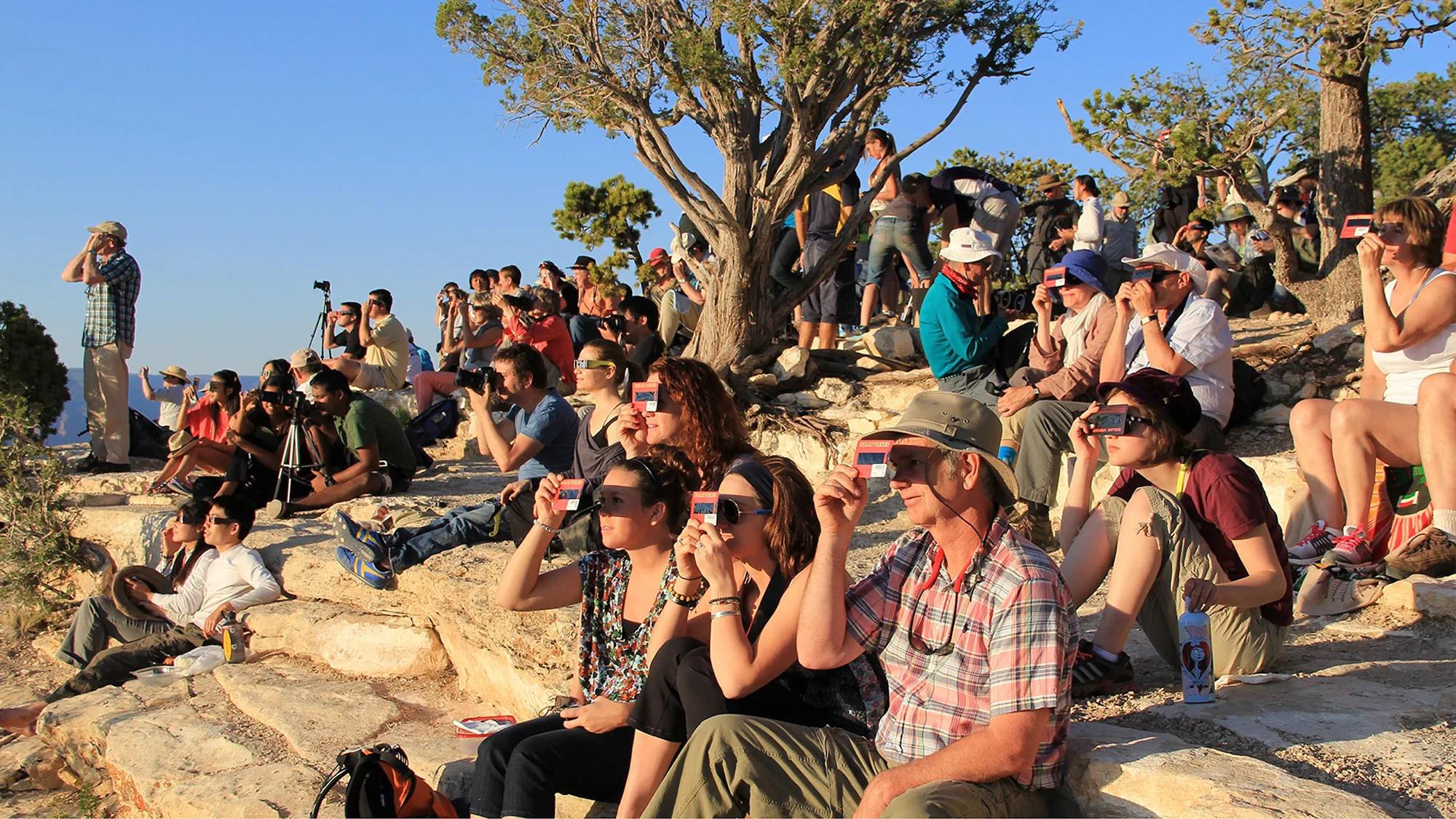
Crowds in 1999 versus crowds in 2026
1999 proved that a total eclipse over populated parts of Europe is not a niche hobbyist event. It becomes a public event.
That matters because 2026 planners sometimes make two opposite mistakes. One group assumes Europe has never handled eclipse crowds before. Another assumes that because 1999 happened, the crowd story is already known and manageable. Both are too simple.
What 1999 teaches well is the basic human pattern: people travel late, roads bunch up near the path, accommodation close to totality becomes precious, and many viewers underestimate how much better totality is than a 95% or 99% partial eclipse. That last point drives a lot of same-day movement.
What 1999 does not teach cleanly is the exact scale or shape of 2026 crowd behavior. Today, route planning is more dynamic. Messaging spreads faster. Group chats can mobilize a family or school trip in minutes. Viral clips can suddenly make one town look like the place to be. At the same time, modern map tools let more people distribute themselves intelligently instead of piling into the most famous name on the path.
So yes, use 1999 as a warning that eclipse traffic is real. But do not use it as a fixed template. Build a modern plan instead. Our eclipse travel without the chaos: routes, crowds, and backup plans for 2026 guide is the right bridge between historical memory and current logistics.
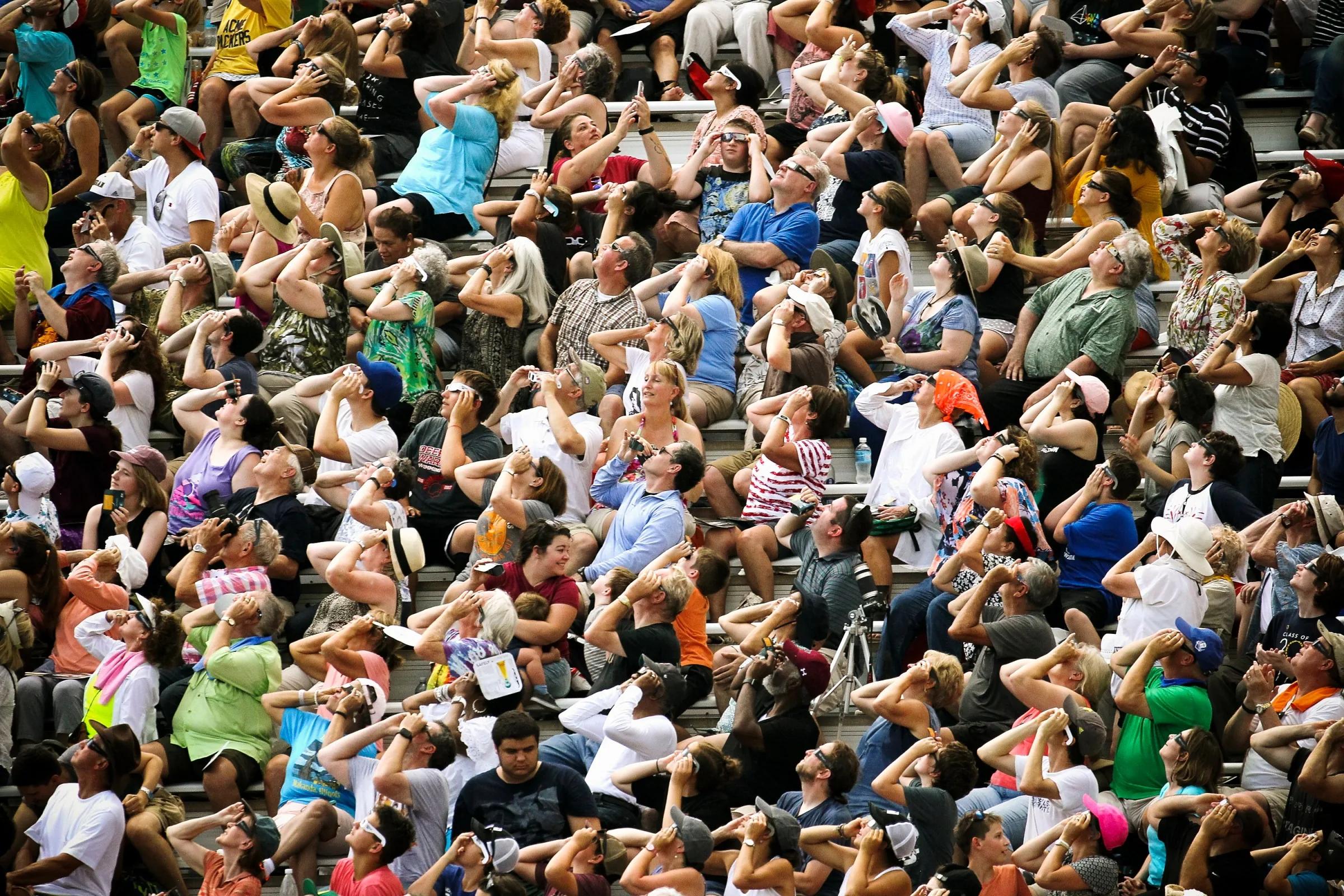
Communication has changed more than the sky has
One of the strongest comparisons between 1999 and 2026 is not astronomical at all. It is informational.
In 1999, public guidance could still be fragmented, delayed, or distorted by local media culture. A striking example comes from Serbia, where research later described an informational risk cascade around the eclipse. As summarized by Phys.org, false and sensational claims about health dangers and faulty viewing products contributed to official advice that pushed many people indoors. That was not a science-based response to the eclipse itself. It was a case study in how fear, politics, and rumor can overwhelm evidence.
That matters now because we like to imagine misinformation as a purely social-media-age problem. It is not. 1999 shows that bad eclipse communication existed before algorithmic feeds. The difference in 2026 is speed and scale. Good guidance can spread faster—but so can nonsense.
The planning lesson is simple: decide in advance which sources you trust. For eye safety and eclipse basics, the AAS and NASA are strong anchors. For exact local geometry, use a precise map tool rather than a vague social post. For Helioclipse readers, that means checking the Eclipse Explorer / 3D map and then reading from reputable science and safety sources, not forwarding every dramatic claim that lands in the family chat.
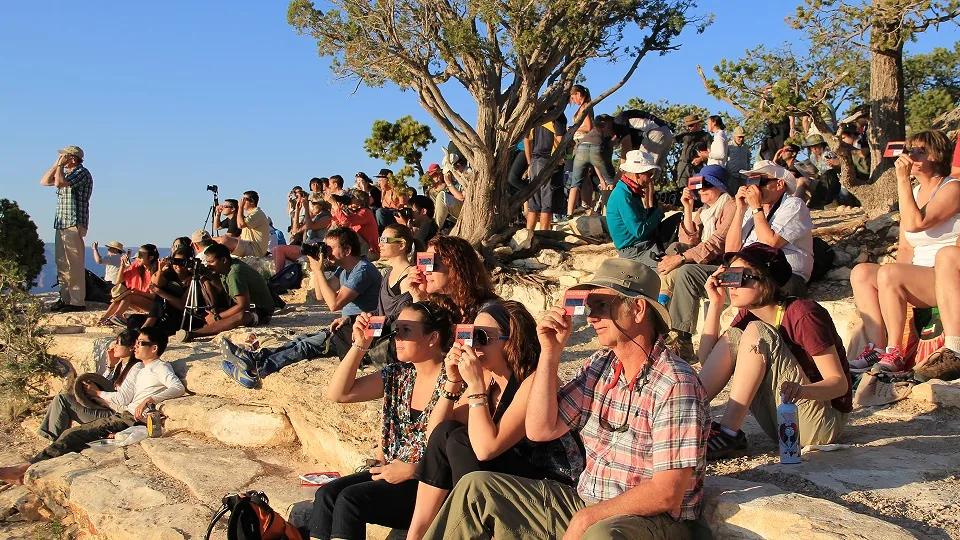
Safety culture: 1999 was not the ISO era most people imagine
Another thing 1999 can teach us is how much eclipse safety language has matured.
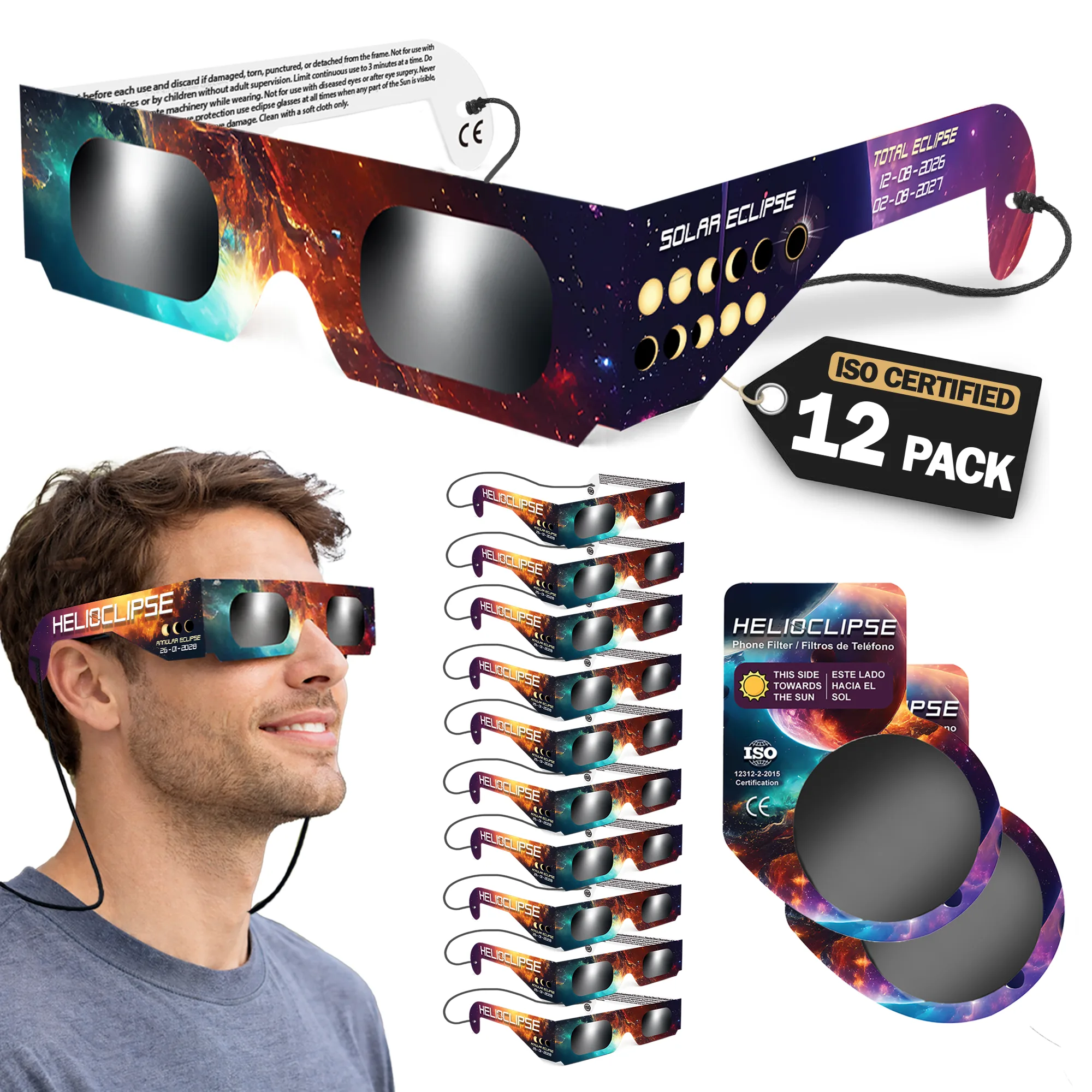
People often remember the late-1990s eclipse culture as a blur of cardboard viewers, improvised advice, and warnings about not using ordinary sunglasses. That part is real. But the modern public vocabulary around standards is much clearer now. In 2026, many buyers will specifically look for approved solar eclipse glasses, eclipse viewing glasses, or ISO 12312-2 certified products. Those phrases reflect a healthier safety culture than the looser, more improvised consumer environment many people remember from 1999.
The AAS explains that ISO 12312-2 is the relevant international standard for direct viewing of the Sun with nonmagnifying handheld or wearable viewers. It also makes an important distinction that still trips people up: ordinary sunglasses are not safe for looking at the Sun, and ISO 12312-2 is not the same thing as the standard for everyday sunglasses. That may sound technical, but it changes real buying behavior.
For 2026, we want families to be much more deliberate than many viewers were in 1999. If you are buying viewers early, use our shop eclipse glasses page and read ISO 12312-2 and eclipse viewers: what the standard means for your family. If you already have older viewers, inspect them carefully and compare them against current guidance before trusting them.
And one more point that 1999 did not teach clearly enough: outside the path of totality, there is no safe “quick look” phase. During a partial eclipse, and during the partial phases before and after totality, you need proper solar viewing protection.
The technology gap: from printed maps to live path decisions
If you compare eclipse path mapping from 1999 with what we can do now, the difference is enormous.
In 1999, a map often answered the big question—am I broadly in or out?—but not always the practical one: how much totality do I gain by moving 20, 40, or 80 kilometers? For many travelers, that meant choosing a famous region rather than an optimized site.
Now we can plan with much finer granularity. A modern interactive map can show whether you are near the centerline or near the edge, where totality duration increases, and how a backup site changes your odds. That does not eliminate weather risk, but it turns planning from a rough guess into a strategic choice.
This is one of the biggest reasons not to over-romanticize 1999. The old uncertainty felt dramatic, but it was not inherently better. For 2026, use the tools. If you are comparing sites in Spain, for example, the difference between being just inside the path and being closer to the centerline can mean a noticeably longer total phase. That is not trivia. It changes what you see, how rushed the experience feels, and whether a long drive is worth it.
The same goes for timing. Many readers arrive with a single headline time in mind, because memory tends to flatten the event into one continental moment. In reality, eclipse timing always varies by location as the shadow races along the path. The same will be true in 2026. Do not rely on a country-level headline time. Check your exact site.
What memory gets wrong
The internet is full of personal recollections of the 1999 eclipse — people remembering eerie light, traffic jams, strange animal behavior, disappointing clouds, or a life-changing few minutes. Those stories are useful because they remind us that eclipses are lived events, not just diagrams.
But memory also compresses and edits.
People often misremember whether they were actually in totality. They remember the day as darker than it was, or less dark than they expected. They forget how much of their experience was shaped by cloud. They merge TV coverage with what they saw with their own eyes. They remember a national mood and mistake it for a local observation.
That is why 1999 eclipse memory should be treated as a starting point, not a planning document. The emotional truth can be real while the logistical details are fuzzy.
A good rule for 2026 is this: trust memory for motivation, not for geometry.
What the last total eclipse in Europe can teach 2026 planners
Here is where 1999 becomes genuinely useful — and where its limits start to show.
What it can teach
- Totality is worth real effort.
- Crowds are real, especially near famous path locations.
- Weather can make or break a site, so backup thinking matters.
- Public communication shapes the event almost as much as the sky does.
- Families, schools, and friend groups should plan early, not the week before.
What it cannot teach
- It cannot tell you which 2026 site will have the best sky on the day.
- It cannot replace a modern path check.
- It cannot justify sloppy safety habits.
- It cannot tell you that your 99% partial eclipse will “basically be the same.” It will not.
That is the heart of the argument. Historical comparison is useful when it sharpens planning. It is harmful when it becomes nostalgia with a calendar attached.
So how should you use 1999 when planning 2026?
Use it as a reminder that Europe knows how big this can feel.
Use it to explain to younger relatives why you are making a real plan now, not casually hoping for a good view on the day. Use it to persuade your group that being inside totality matters. Use it to justify ordering safe viewers early and checking your route before everyone else does. Use it to remember that a total eclipse is one of the few natural events that can still stop conversations cold.
But do not use 1999 as a script.
The better approach is: pick your likely region, check exact path geometry, understand the eclipse phases, build a weather backup, and make sure everyone in your group has safe viewing sorted. Europe’s last total eclipse before 2026 produced enormous crowds and shaped a generation’s expectations — use that history for motivation, not as a logistical script. If you are outside totality, be honest about that too. A serious partial eclipse can still be worth seeing — but it is not the same event.
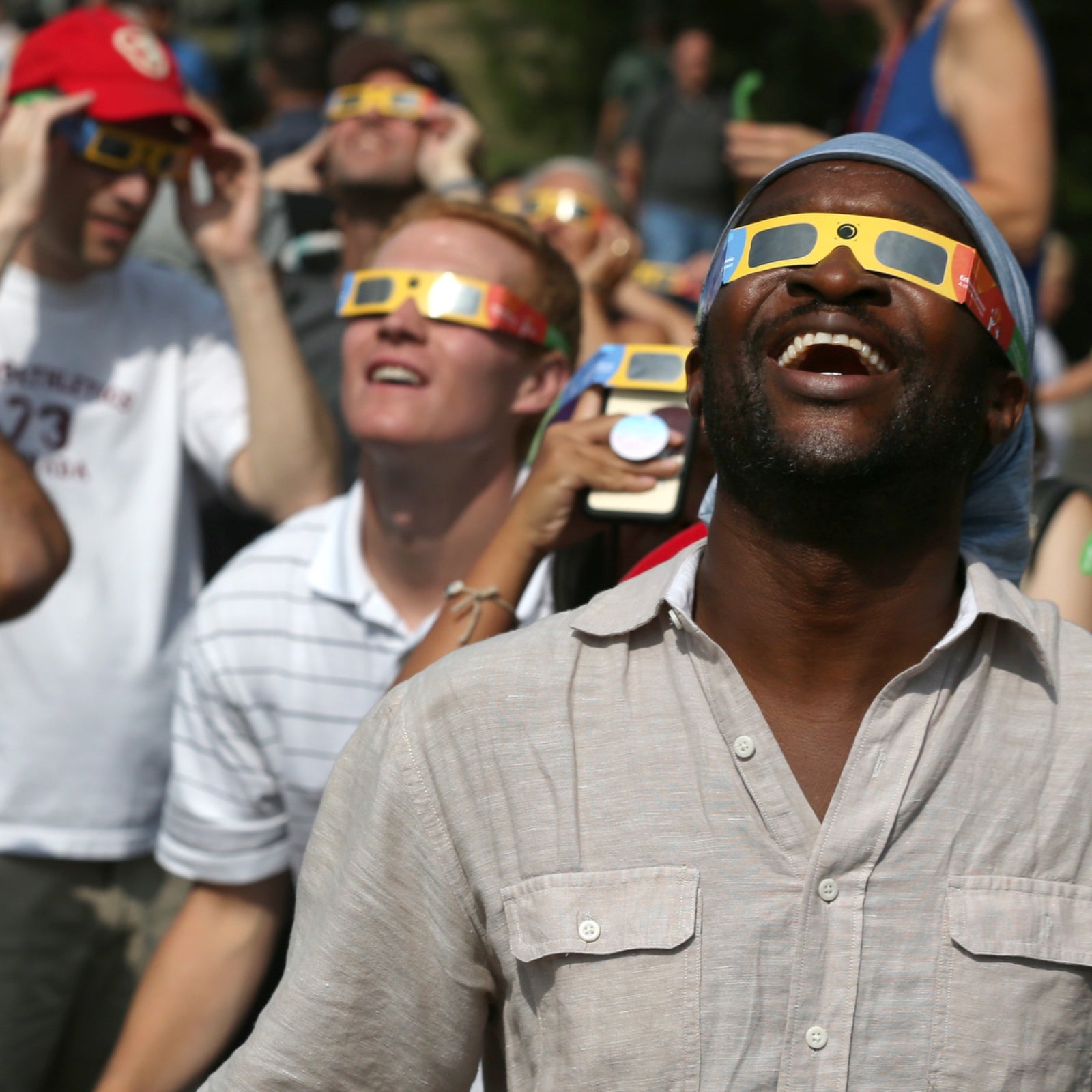
BBC News report of 11th August 1999 Total Solar Eclipse from ...
Kevin Bradshaw
Frequently asked questions
When was the last total solar eclipse in Europe?
The last total solar eclipse in Europe took place on 11 August 1999. Its path of totality crossed the southern UK, northern France, Belgium, Luxembourg, southern Germany, Austria, Hungary, Romania, Bulgaria, and Turkey. Much of the rest of Europe saw a deep partial eclipse instead, which explains why the event is remembered so widely even outside the path of totality.
Was the 1999 eclipse a true total solar eclipse?
Yes. The 1999 eclipse was a genuine total solar eclipse, with totality confined to a narrow corridor and a much larger region seeing only partial coverage. That difference matters, because a deep partial eclipse is not the same as totality.
How useful are memories of 1999 when planning for 2026?
They are useful as a comparison, but only if you use them carefully. The best modern planning tool is a precise path check, because whether a location is inside totality, near the centerline, or only in a partial zone matters more than broad memories of 1999. It also helps to remember that 1999 happened before smartphones, live map apps, and wider public awareness of current viewer standards.
Can online discussions about the 1999 eclipse replace a proper path check for 2026?
No. Nostalgia and shared memories can be misleading, because people often remember “the whole of Europe going dark” when the reality was a narrow totality path and a much larger partial zone. For 2026, the key step is to check your exact location on a detailed eclipse map rather than relying on secondhand recollections.
What does a map of the 1999 eclipse show that people often forget?
It shows that totality was limited to a thin corridor, not all of Europe. The Moon’s shadow on Earth is only about 300 miles, or roughly 480 kilometers, wide at most, so many places that felt the eclipse strongly still were not in the total path. That is why a map is essential for separating totality from a deep partial eclipse.
On-site next steps
- Explore your exact viewing options with the Eclipse Explorer / 3D map. Check whether you are inside totality, how close you are to the centerline, and what nearby backup sites look like.
- Build your knowledge base in our blog hub, especially the planning, safety, and weather guides linked above.
- If your group still needs viewers, visit our shop eclipse glasses page and buy early enough to inspect and pack them calmly.
Sources & further reading
- The Total Solar Eclipse Experience — American Astronomical Society
- Faulty sunglasses and fake news—how a solar eclipse shut down Serbia — Phys.org
- New evidence to solve the mystery of the "eclipse wind" — Phys.org
- How photos of the April 8 solar eclipse will help us understand the sun’s atmosphere — Space.com
- About the ISO 12312-2 Standard for Solar Viewers — American Astronomical Society
- How to View a Solar Eclipse Safely — American Astronomical Society
- Total Solar Eclipse FAQ — NASA Science
- Eclipses and the Moon — NASA Science
- History of Eclipses — NASA Science
- Total Solar Eclipse of 199-08-11 — Sky & Telescope