Eclipse stories across cultures: curiosity with clear fact versus legend
Few sky events feel as dramatic, sudden, and emotionally charged as an eclipse. Daylight thins. Shadows sharpen. Birds can go quiet. The familiar sky does something it is not supposed to do. It is no surprise that eclipse folklore appears in cultures across the world, often with strikingly similar themes: something is swallowing the Sun, the Moon is in danger, the heavens are sending a warning, or the world has slipped briefly out of balance.
That shared human reaction is worth taking seriously. Not because the legends are astronomy, but because they tell us how people made meaning from a rare and unsettling sight long before orbital mechanics, eclipse maps, and live streams. If you are planning to watch a future eclipse, our Eclipse Explorer / 3D map can show you where totality or a partial eclipse will actually be visible, while our blog hub goes deeper on safety and eclipse basics.
This guide is about eclipse stories across cultures: curiosity with clear fact versus legend. We are not treating folklore as scientific explanation. We are treating it as cultural memory, symbolism, ritual, and storytelling—often beautiful, sometimes fearful, always revealing.
Why eclipses inspired stories almost everywhere
A solar eclipse interrupts one of the most dependable patterns in human life: the Sun rises, crosses the sky, and lights the world. A lunar eclipse changes the appearance of the full Moon, sometimes turning it deep red. For societies that tracked seasons, planting, travel, ceremony, and timekeeping by the sky, that disruption could feel enormous.
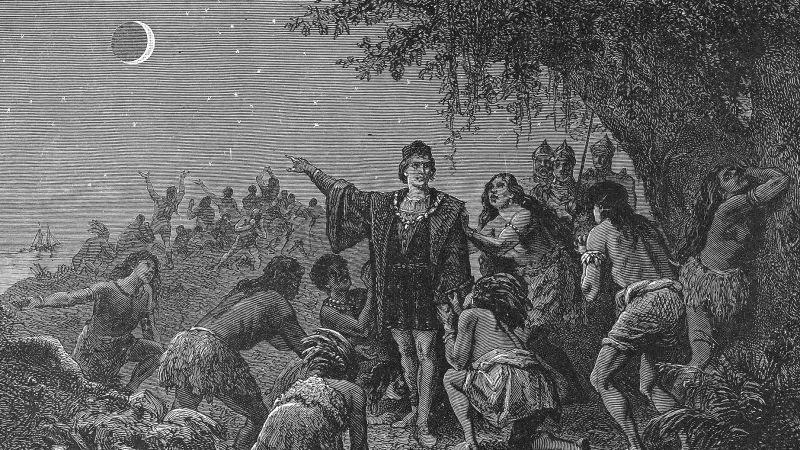
Anthropologists, historians, and folklorists have long noted that many eclipse traditions around the world cluster around a few recurring ideas. One is devouring: dragons, wolves, jaguars, frogs, serpents, bears, or demons bite or swallow the Sun or Moon. Another is moral warning: the gods are angry, cosmic order has been disturbed, or human conflict is reflected in the sky. A third is renewal or reverence: the eclipse is not a monster attack at all, but a sacred moment that calls for quiet, prayer, or withdrawal from ordinary activity.
That does not mean all cultures believed the same thing, or that every community treated eclipses as fearsome omens. In fact, flattening diverse traditions into one global “people used to be scared” story misses the point. Some communities responded with noise and collective action. Others responded with stillness. Some folded eclipse stories into living religious traditions even after learning the geometry behind eclipses. Human beings are very good at holding symbolic meaning and scientific understanding at the same time.
The science is simple, even when the experience is not
Before we go deeper into solar eclipse folklore traditions and lunar eclipse folklore traditions, it helps to keep the astronomy clear.
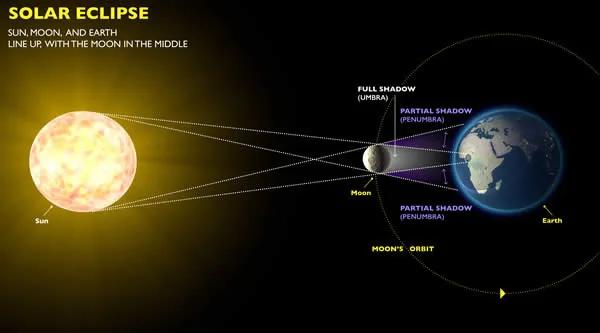
A solar eclipse happens when the Moon passes between Earth and the Sun. A lunar eclipse happens when Earth passes between the Sun and the Moon, and Earth’s shadow falls on the Moon. That is the whole physical mechanism. NASA and the American Astronomical Society explain it plainly: eclipses are alignment events, not signs of danger from the sky.
But “simple” does not mean emotionally small. Total solar eclipses are rare for any one location. The AAS notes that a given spot on Earth experiences totality only on average once every few centuries, even though a total eclipse happens somewhere on Earth roughly every year or two. That rarity matters. If your community saw only one or two truly dramatic eclipses in many generations, it makes sense that the event would gather stories, taboos, and ritual weight.
This is also where modern planning changes everything. We can now predict eclipses with extraordinary accuracy. Ancient observers could recognize patterns, and some cultures tracked eclipse cycles impressively well, but precise local prediction of total solar eclipses is a modern achievement. If you want the practical side of that difference, see our guide to August 12, 2026 total solar eclipse: what to expect and how to plan ahead.
The “something is eating the Sun” pattern
One of the most widespread motifs in eclipse folklore traditions is devouring. Ancient Chinese records described the Sun as being eaten. Stories from different parts of Asia, the Americas, and northern Europe imagine dragons, frogs, wolves, jaguars, squirrels, or bears attacking the Sun or Moon.
That repetition is fascinating because the cultures are not identical, yet the visual logic is easy to understand. During a solar eclipse, the Sun appears to lose a bite. During a lunar eclipse, the Moon darkens and can redden dramatically. If you do not know the orbital geometry, “something is taking it away” is a very human conclusion.
Exploratorium’s roundup of eclipse traditions includes examples from Vietnam, Java, the Andes, ancient China, Norse tradition, and Indigenous communities in North America. In some stories, people beat drums or make loud noises to drive the creature away. In others, the community cries out, shoots arrows, or gathers together to help restore order.
This is one reason the phrase traditions eclipse sounds awkward in English but points to something real: traditions around eclipses were often active, not passive. People did not just tell stories after the fact. They did things during the event. Noise-making, prayer, fasting, staying indoors, or communal gathering were ways of participating in a cosmic crisis—or a cosmic ceremony.
Eclipse in Greek mythology, and what the word itself tells us
When people search for eclipse in greek mythology, they often expect a single famous monster story. Greek material is a little different. Ancient Greek writers often framed eclipses as omens or signs of divine displeasure rather than a beast physically eating the Sun.
There is also a linguistic clue here. The word “eclipse” comes from the Greek ekleipsis, usually understood as “abandonment” or “failure to appear.” That is revealing. In this frame, the Sun is not necessarily being chewed by a dragon; it is withdrawing, deserting, or failing the world.
That idea shows up in later retellings too: eclipses as signs that rulers should worry, armies should stop, or the gods are displeased. Historical accounts from the ancient Mediterranean helped cement the reputation of eclipses as politically meaningful omens. One famous story, repeated by Herodotus, says an eclipse helped halt a war between the Medes and the Lydians in 585 BCE. Whether every detail of that story is perfect history is less important than the larger point: eclipses were treated as events that could interrupt human conflict because they seemed to interrupt the order of the cosmos itself.
Solar eclipse mythology in Hindu religion: living tradition, not a museum piece
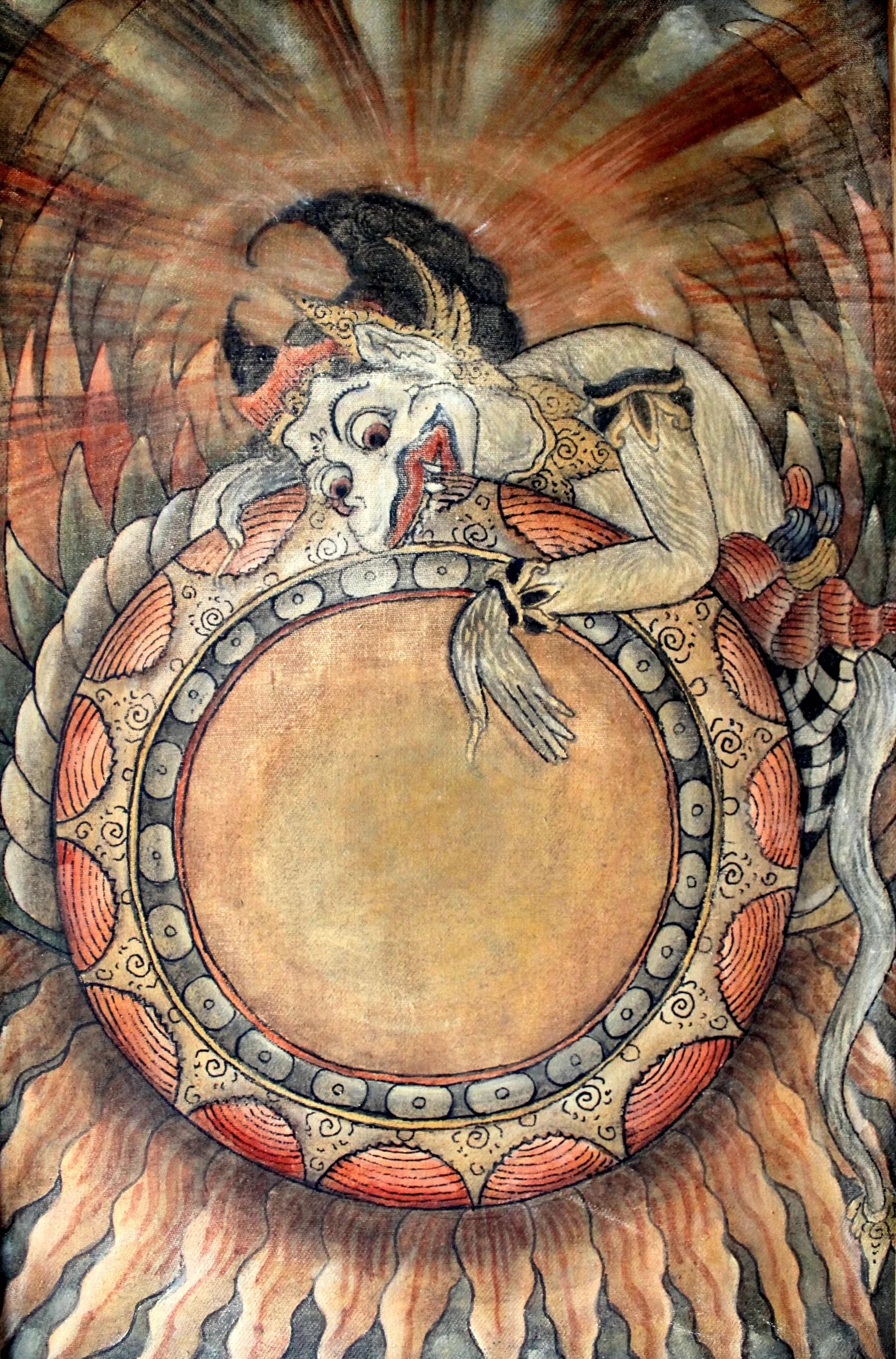
One of the richest and most widely discussed examples of solar eclipse mythology in hindu religion involves Rahu. In the simplified version, the demon Rahu steals a taste of the gods’ elixir of immortality, is exposed by the Sun and Moon, and is beheaded. Because he has become immortal, he survives as a severed head and pursues the Sun and Moon in revenge. When he catches one, an eclipse occurs—but because he has no body, the Sun or Moon emerges again.
This story matters for two reasons. First, it is vivid and memorable. Second, it shows how myth and astronomy can coexist rather than cancel each other out. As Space.com notes, South Asian astronomical traditions eventually connected Rahu and Ketu with the eclipse nodes—the points where the Moon’s orbit crosses the Sun’s apparent path. In other words, the symbolic story remained alive even as mathematical astronomy advanced.
That is a useful reminder for modern readers. Respecting a tradition does not require pretending it is a physics textbook. And understanding the orbital geometry does not require mocking the tradition. Both can exist in the same culture, even in the same person.
Indigenous teachings deserve more care than a list of “myths”
A lot of low-quality eclipse content online lumps Indigenous teachings into a grab bag of “weird beliefs.” We should do better than that.
Smithsonian’s coverage, drawing on folklorists and cultural historians, makes an important point: Indigenous cultures are not one thing, and their eclipse teachings are not interchangeable. Some traditions frame eclipses as danger or foreboding. Some treat them as moments of renewal, reverence, or altered balance. Some include specific instructions about behavior during an eclipse.
For example, Exploratorium describes Navajo teachings that treat eclipses as a time of renewal and respect. In that account, many elders instruct community members to remain indoors, quiet, and reverent during the event. That is not just “fear of the sky.” It is a disciplined relationship to cosmic order.
This is also where modern readers need humility. Questions like “what cultures don't look at the eclipse?” can be too blunt to be useful. The better question is: which communities have teachings about how one should behave during an eclipse, and what do those teachings mean within that community? Sometimes the answer is not “never look.” Sometimes it is “approach with reverence,” “avoid casual behavior,” or “follow family and ceremonial guidance.”
And if you are attending a public event near Indigenous lands or in a place where local cultural interpretation is part of the program, listen first. Not every eclipse gathering needs to become an all-purpose festival of borrowed symbolism.
Lunar eclipse folklore traditions are often darker—and redder
Lunar eclipses are physically safer to watch than solar eclipses—you can always look at a lunar eclipse with the naked eye—but culturally they have often carried heavy symbolism. The reddening of the Moon during totality has inspired stories of blood, injury, predation, and omen.
That is why lunar eclipse folklore traditions often sound more apocalyptic than solar ones. A red Moon is visually stranger than a crescent Sun glimpsed through cloud or projection. In some traditions, the Moon is wounded. In others, it is being attacked by jaguars or other beings. Space.com notes that many stories about lunar eclipses, like solar ones, revolve around biting, eating, or danger.
If you have seen the phrase 5 myths about lunar eclipse floating around online, it usually mixes very different kinds of claims: ancient stories, modern superstition, astrology, and outright misinformation. Those should not be treated as one category. A respectful cultural story is not the same thing as a false health claim. A traditional ritual is not the same thing as a fake scientific warning.
Here are five clear distinctions worth making:
1. A lunar eclipse is not physically dangerous to your eyes
Unlike a solar eclipse, a lunar eclipse is safe to watch without eye protection at every stage.
2. A red Moon is not blood on the Moon
The reddish color comes from sunlight filtered through Earth’s atmosphere, not from injury or supernatural attack.
3. Traditional stories are not failed science
They are cultural interpretations, often tied to ethics, ritual, memory, and identity.
4. Modern viral claims are not ancient wisdom by default
A social-media post that says a lunar eclipse is toxic, medically dangerous, or cosmically guaranteed to ruin your life is not automatically rooted in authentic tradition.
5. Symbolic meaning can be real without being astronomical fact
People can find spiritual or communal meaning in an eclipse without changing the physics of what causes it.
Eclipse 2024 folklore, eclipse 2026 festival, and the modern return of communal eclipse culture
The recent surge of interest around eclipse 2024 folklore shows something important: modern people still want more than a timetable. They want story, symbolism, memory, and a sense that they are part of something larger than a technical event.
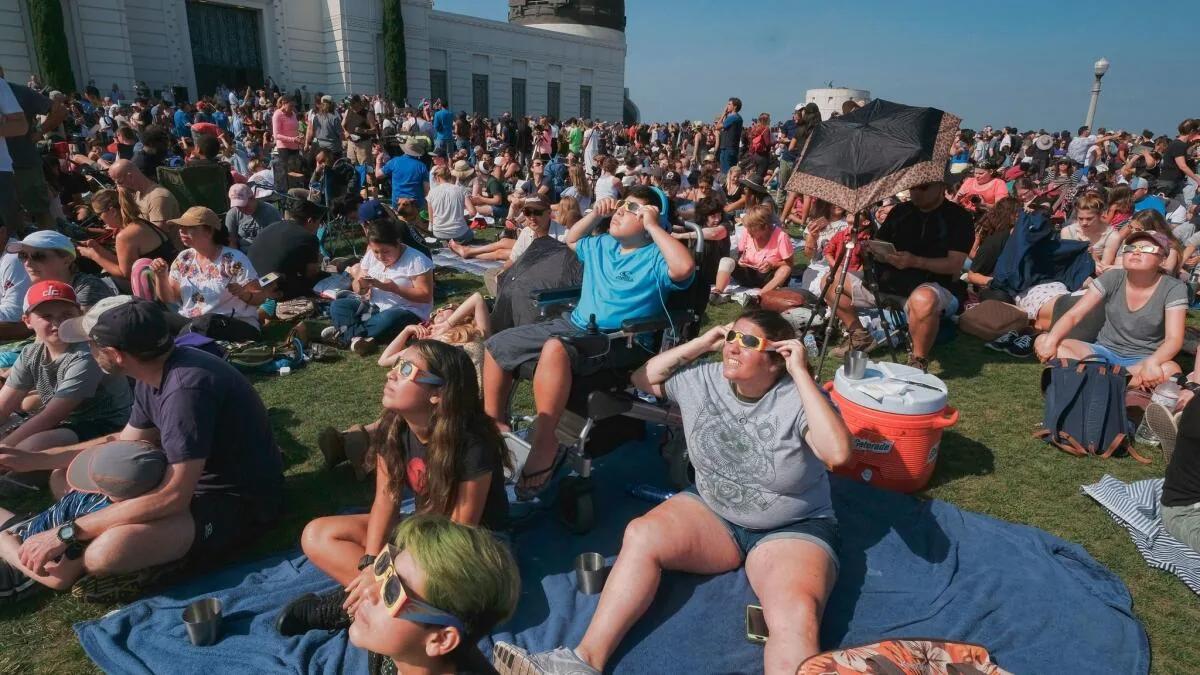
That does not mean we have gone back to fearing dragons. It means eclipses still create a social atmosphere. Families plan road trips. Schools build lessons around them. Museums, parks, and cities host public events. In 2017 and 2024, millions of people in North America treated eclipse day as both a science event and a shared cultural moment.
That is also why you now see searches for eclipse 2026 festival. Some of those events will be straightforward public astronomy gatherings. Others will mix music, art, local heritage, and community celebration. There is nothing wrong with that. Eclipses have always been social. The key is to keep the layers clear: celebration is celebration, folklore is folklore, and astronomy is astronomy.
If you are planning ahead for 2026, especially in Europe, tell your group early. Totality rewards preparation. Lodging, transport, and good viewing locations can become difficult fast. Our cloud cover and eclipse day guide and eclipse travel without the chaos guide can help you think like a calm adult instead of a last-minute panicker.
Solar eclipse myths and facts: the line we should keep bright
A good culture-and-history article should still leave readers with clean boundaries. So here is the simplest version of solar eclipse myths and facts.
Myth: An eclipse means the Sun is being attacked.
Fact: A solar eclipse happens because the Moon moves between Earth and the Sun.
Myth: Every culture saw eclipses as evil.
Fact: Many did treat them as ominous, but others framed them as sacred, cyclical, relational, or renewing.
Myth: Ancient people were simply ignorant.
Fact: Many societies kept careful sky records, noticed repeating cycles, and integrated observation with ritual and storytelling.
Myth: If a partial eclipse makes the sky dim, it is safe to look up briefly.
Fact: No. For any partial solar eclipse, and for all partial phases of a total eclipse, you need proper solar protection. Our explainer on when glasses on, when glasses off covers the difference clearly.
Myth: Regular sunglasses are enough.
Fact: They are not. If you are buying viewers, look for approved solar eclipse glasses or solar eclipse glasses iso 12312-2 certified from a source you trust. Plenty of shoppers also search for eclipse viewing glasses or eclipse glasses iso 12312-2, but the important part is not the phrase—it is whether the product genuinely conforms to the standard and arrives in good condition.
That last point matters because cultural fascination can drive rushed buying. If a big eclipse is coming and you are organizing for family, school, or a neighborhood watch party, do not leave eye protection to the final week.
Why stories still matter even when we know the physics
Once you know the mechanics, it can be tempting to treat all eclipse traditions around the world as charming leftovers. That is too dismissive.
Stories do real work. They preserve memory. They encode values. They tell children how to behave during unusual events. They turn a frightening interruption into a shared script. They connect the sky to ethics, kinship, agriculture, kingship, or ceremony. Even when they are not astronomy, they are still knowledge of a kind—social knowledge, symbolic knowledge, historical knowledge.
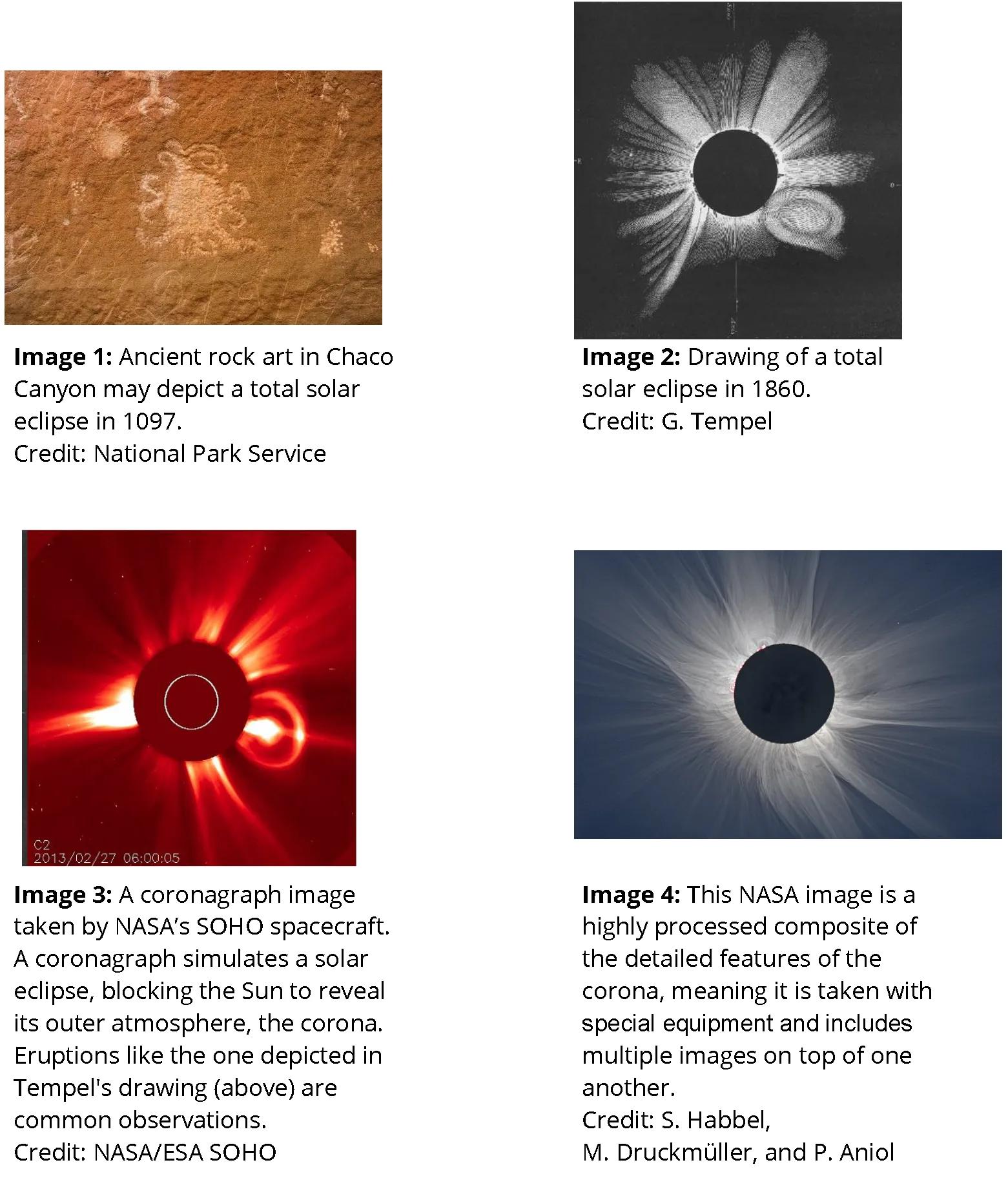
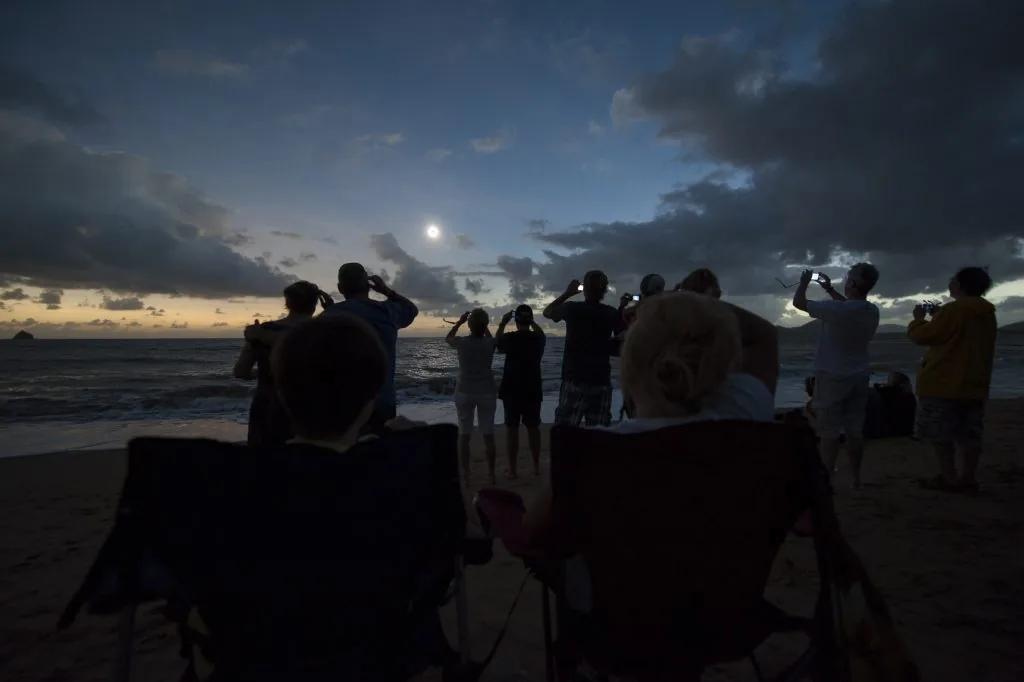
And modern science has not made eclipses emotionally ordinary. Ask anyone who has stood in the path of totality. The drop in light, the sudden cold edge in the air, the black disk, the corona: it still feels uncanny. NASA’s eclipse history material and modern eyewitness accounts both make the same point in different ways. Totality can unsettle even people who know exactly what is happening.
That continuity is part of the wonder. We are not smarter because we feel less. We are luckier because we can feel the awe and still understand the geometry.
How to enjoy the cultural side without spreading nonsense
If you want an eclipse experience that includes history, symbolism, and story, great. Bring that curiosity with you. But keep a few habits in place.
First, name stories as stories. Say “In this tradition…” or “According to this account…” rather than presenting folklore as a literal explanation.
Second, avoid turning one source into “what everyone believed.” Even within a single region, beliefs changed across time, language, and community.
Third, separate respectful tradition from modern misinformation. A ceremonial practice is not the same thing as a fake medical warning. A mythic being swallowing the Sun is not the same thing as a viral post claiming eclipse light is uniquely poisonous.
Fourth, keep safety boring and firm. Solar eclipses are culturally rich, but your retina does not care about symbolism. Outside the brief total phase of a total solar eclipse, direct viewing requires proper solar filters. If you want the standards side explained clearly, read our guide to ISO 12312-2 and eclipse viewers and, if you are shopping carefully, our post on fake and low-quality eclipse glasses.
What to carry forward into the next eclipse
The best version of an eclipse gathering is not stripped of meaning. It is informed.
Bring the kids the dragon stories, the wolf stories, the Rahu story, the stories of lovers, warnings, and renewal. Tell them people across centuries looked up at the same darkening sky and tried to explain what they saw. Tell them some communities made noise, some prayed, some stayed indoors, some recorded the event carefully, and some turned it into science that changed the world.
Then give them the modern gift too: a map, a plan, and safe viewers.
That combination—story plus evidence, wonder plus preparation—is what makes an eclipse feel fully human.
How different cultures have explained eclipses throughout ...
NBC DFW
Frequently asked questions
Is there a traditional ritual people should do during a lunar eclipse?
The excerpt says some communities responded to eclipses with stillness, prayer, or withdrawal from ordinary activity. It also notes that other communities used noise and collective action, so there is no single universal ritual described here. The key point is that eclipse folklore traditions vary widely by culture.
Why do some Native American traditions say not to look at a lunar eclipse?
The excerpt does not give a specific Native American explanation for avoiding eye contact with a lunar eclipse. It only says that many cultures treated eclipses as meaningful events, sometimes as warnings, disturbances of cosmic order, or sacred moments that called for quiet or reverence. So any specific rule about looking or not looking would need a source beyond this excerpt.
How have different cultures interpreted eclipses over time?
Across cultures, eclipses have often been understood as something swallowing the Sun or Moon, a sign of danger, or a warning that cosmic order has been disturbed. The excerpt also says some traditions saw eclipses as sacred moments that called for prayer or withdrawal, rather than fear alone. These meanings are cultural and symbolic, not scientific explanations.
Do any cultures avoid looking at an eclipse?
Yes, some communities have treated eclipses as moments for quiet, prayer, or withdrawal from ordinary activity rather than direct viewing. The excerpt also says other communities responded with noise and collective action, so practices are not the same everywhere. It does not identify a single rule that applies to all cultures.
What should readers understand about eclipse folklore in 2024?
Readers should understand that eclipse folklore traditions are part of cultural memory and storytelling, not astronomy. The excerpt emphasizes that people can hold symbolic meaning and scientific understanding at the same time, so folklore can be appreciated without confusing it with the actual mechanics of an eclipse. It also points readers toward safety and eclipse basics for practical viewing guidance.
On-site next steps
- Explore our Eclipse Explorer / 3D map to see where future eclipses are total, partial, or not visible at all.
- Browse the Helioclipse blog hub for practical guides on eclipse phases, weather, travel, and family viewing.
- If you are planning a group watch, order Helioclipse solar eclipse glasses early so you are not scrambling for safe viewers at the last minute.
Sources & further reading
- Eclipse Stories from Around the World
- Eclipse Superstitions Are a Thing of the Past, and the Present
- A short history of eclipses
- Humans have been predicting eclipses for thousands of years, but it’s harder than you might think
- What Indigenous Cultures From Around the World Believe About Eclipses
- History of Eclipses — NASA Science
- Eclipses — NASA Science
- Eclipse Fact Sheet — NASA
- How to view a solar eclipse safely — AAS
- Eclipse basics — AAS