Sky stories worth hearing: indigenous and local traditions around eclipses—without stealing voice
An eclipse can be explained with orbital geometry: the Moon passes between Earth and the Sun, and its shadow crosses part of our planet. But that physical description is not the only way people know the sky. Communities have also understood eclipses through relationships, responsibilities, histories, ceremonies, seasonal knowledge, and rules for living.
Those traditions are worth hearing. They are not, however, raw material waiting to be collected and repackaged as a list of “eclipse myths.” When knowledge belongs to a living community, respectful curiosity begins by asking who chose to share it, how they identified themselves, what context came with it, and what should not be repeated.
That is the foundation of indigenous astronomy solar eclipse respectful storytelling: listen to named knowledge holders, preserve distinctions between nations, and treat silence or restriction as meaningful rather than inconvenient. You can explore more eclipse science and cultural context through our blog and learning guides, but no general guide—including this one—can speak for every community.
A sky tradition is not just a story about the sky
The label “folklore” can make cultural knowledge sound like an entertaining tale detached from everyday life. That framing is often too small. Indigenous star knowledge may connect celestial observations with agriculture, navigation, weather, kinship, ceremony, law, education, or the timing of seasonal activities. The meaning lies partly in those relationships, not merely in a plot that can be retold in three sentences.
The same caution applies to indigenous constellations. Different peoples can organize the same visible stars into different figures, and those figures may belong to particular seasons or teaching settings. A Space.com overview of Native North American sky traditions, for example, notes that the Big Dipper is interpreted differently in Diné, Dakota, and Ojibwe knowledge systems. Those differences are not alternate decorations placed over a universal Western star chart. They reflect distinct intellectual traditions.
Nor should Indigenous astronomy be trapped in the past tense. Community-led projects are revitalizing languages, star maps, teaching practices, and relationships with the sky now. NASA’s Native Earth | Native Sky program, developed through work with Native American nations in Oklahoma, offers one model: collaboration is built into the educational process rather than added as an acknowledgment after the material has already been produced.
That distinction changes the central question. Instead of asking, “What story can we take from this culture?” ask, “Who is teaching, for whom, under what conditions, and how can we direct attention back to their work?”
There is no single “Native American eclipse belief”
Questions such as “what do native americans believe about solar eclipses?” treat hundreds of sovereign nations, languages, histories, and contemporary communities as though they formed one culture. They do not. Even the broad term “Native American” is not interchangeable with Indigenous peoples elsewhere in the Americas, and it certainly cannot stand in for Aboriginal and Torres Strait Islander peoples in Australia, Māori knowledge in Aotearoa New Zealand, Inuit communities across the Arctic, or other peoples around the world.
The assumptions inside “why can't native americans see the eclipse?” and “why can't native americans go outside during an eclipse?” are equally misleading. There is no universal prohibition. Some people follow community- or family-specific protocols involving staying indoors, quiet reflection, fasting, prayer, or avoiding direct observation. Others may observe with modern solar viewers. Practice can differ between nations, communities, families, generations, and individuals.
A better account therefore names the people whose knowledge is being discussed. It distinguishes a teaching shared by a Diné knowledge holder from one shared by a Cherokee educator, an Anishinaabe institution, or a citizen of another nation. It also avoids turning one person’s explanation into a rule supposedly binding everyone in that community.
Capitalization and naming matter too. Use Indigenous, Diné, Cherokee, Anishinaabe, or another community’s preferred name where appropriate. “Navajo” remains common in institutional names and reporting, while many people use Diné for themselves. Follow the terminology used by the named speaker or organization, and do not silently collapse specific identities into a generic category.
What Diné knowledge holders have chosen to share
The blunt question “what is the navajo belief about eclipses?” still implies that one short answer can represent every Diné person. Community-led and carefully attributed resources offer a more responsible starting point.
In reporting around the April 8, 2024 total solar eclipse, Diné educators Nancy C. Maryboy and David Begay described a worldview in which the Sun, Moon, Earth, and human life are interrelated. Their explanations presented an eclipse as a period associated with reverence, renewal, balance, and reflection—not simply as a spectacle for loud celebration. They also stressed that choices about fasting, remaining inside, observing, or following other protocols can depend on the person, family, and community.
NASA’s Indigenous Eclipse Teachings video is especially useful because NASA explicitly says its Diné and Cherokee material was carefully curated by Native people who chose to share it. That statement is not a decorative credit line. It tells us something crucial about the source: the knowledge was selected for public teaching through a process involving people with the standing to share it.
We should preserve that chain of attribution. Rather than writing “the Navajo believe eclipses are…” and presenting the sentence as timeless fact, identify the knowledge holders, link to the community-informed resource, summarize only what they made public, and acknowledge variation. Do not embellish the account with invented ritual details or combine it with teachings from unrelated nations to create a smoother story.
Respect also means accepting that some knowledge may be private, ceremonial, seasonal, gender-specific, family-held, or otherwise restricted. An online mention does not automatically grant permission to reproduce a complete teaching, record a ceremony, make merchandise from an image, or use sacred language in promotional copy.
Ancient records and living knowledge require different handling
The question “what were some ancient cultural stories that describe eclipses?” can lead to useful history, but “ancient” is not a synonym for culturally unowned. Some archaeological interpretations remain debated, while communities connected to historical sites and records are very much alive.
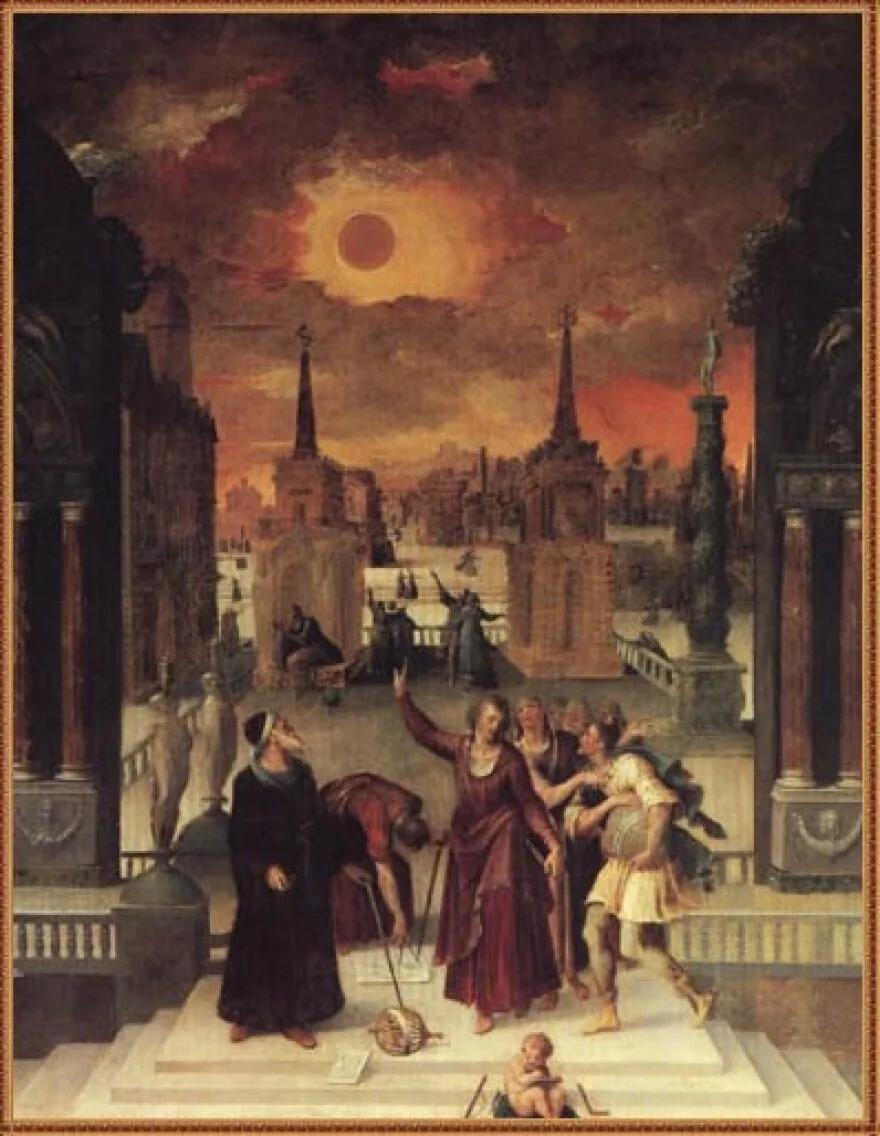
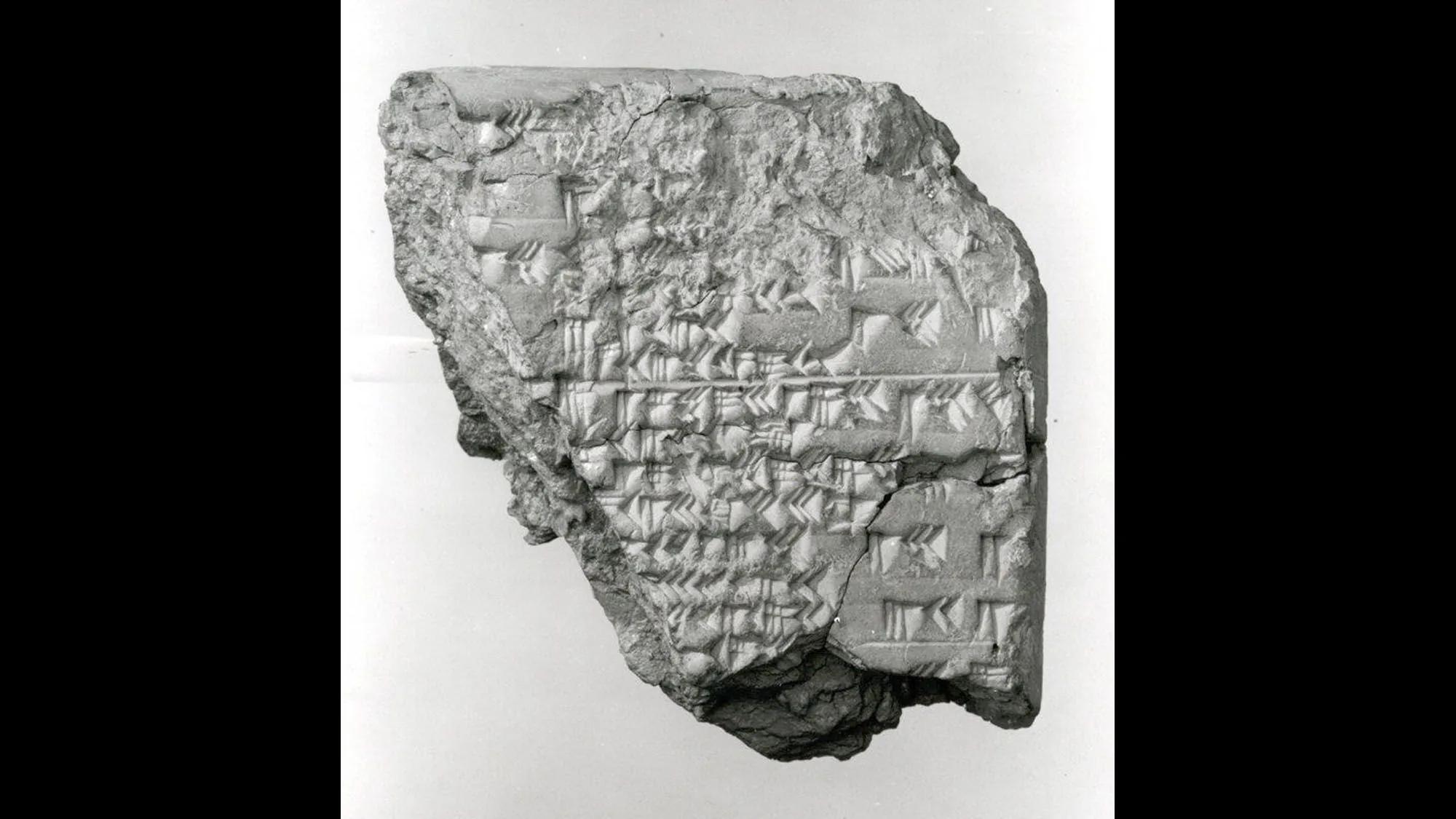
NASA’s history overview describes eclipse records written on oracle bones at Anyang, China, around 1200 BCE. Those records used imagery translated as the Sun being eaten. Centuries later, astronomers used the location and estimated dates of several such eclipses to investigate changes in Earth’s rotation. That is a striking example of historical documentation contributing to modern astronomy—but it does not prove that every “Sun-eating creature” story around the world has the same origin or meaning.
Maya codices contain sophisticated astronomical records, including eclipse tables. Maya astronomical knowledge also continues through living communities in Mesoamerica. Writing only about a vanished “ancient Maya civilization” can erase that continuity. A careful account distinguishes what scholars infer from surviving documents from what contemporary Maya knowledge holders teach today.
NASA also discusses a petroglyph at Chaco Canyon that may represent the total solar eclipse of July 11, 1097, perhaps including a feature resembling solar activity. The interpretation is intriguing, not certain. “May represent” must not quietly become “proves.” Archaeological uncertainty deserves to remain visible, and descendant communities should not be treated as optional background to interpretations of ancestral places.
The related question “what did the bible say about solar eclipses?” belongs to a different category. Biblical passages describe the Sun darkening and the Moon appearing bloodlike, but identifying those passages with particular astronomical events is a matter of textual and historical interpretation. A “blood moon” usually refers in modern popular language to the reddish appearance of the Moon during a total lunar eclipse, not a solar eclipse. Religious texts can be studied alongside astronomy without forcing every image into a one-to-one scientific event or mixing Christian traditions into an article presented as Indigenous knowledge.
Consent is a method, not a disclaimer
Good attribution answers more than “Where did this fact come from?” For living cultural knowledge, it should also help answer:
- Who shared it? Name the person, nation, community organization, museum partnership, or educational project.
- Did they intend it for a public audience? A community-produced lesson or recorded public talk provides a clearer basis than a decontextualized social post.
- What scope did they give it? A speaker may describe a family practice, a regional teaching, or their own experience—not a universal rule.
- Is the source current? Community names, permissions, and preferred framing can change.
- What remains restricted? Do not pressure a source to reveal ceremonial material or fill a deliberate gap with speculation.
- Where should attention and benefit flow? Link to the original project, compensate contributors where appropriate, and credit intellectual leadership rather than describing community partners as colorful supporting voices.
Museums and universities can help, but institutional hosting is not proof of community consent. Look for named curators, knowledge holders, advisory groups, co-authors, nation-specific partnerships, and an explanation of how the material was developed. A collection page that says only “Native legend” is a weak source even when it belongs to a respected institution.
File format is not authority either. A downloadable resource labeled indigenous astronomy solar eclipse respectful storytelling pdf may look classroom-ready while omitting authorship, nation, date, or permission. Before distributing it, verify who produced it, whether the community is identified correctly, and whether the material was meant to be reused.
Even broken metadata should trigger care rather than improvisation. A clipped catalog label such as “sky stories worth hearing: indigenous and local traditions around eclipses—witho” cannot tell you who spoke, what was omitted, or whether the underlying item is suitable for publication. Find the complete record and the responsible organization before quoting or teaching from it.
How to build an eclipse program without extracting culture
A school, museum, library, astronomy club, or family gathering can include cultural perspectives without turning them into a sampler platter of exotic beliefs. Start by separating three strands that are often carelessly blended: eclipse mechanics, eye safety, and community-specific cultural teaching.
Teach the mechanics directly. A solar eclipse occurs when the Moon’s shadow falls on Earth. Totality is visible only inside the narrow umbral path; outside it, observers see a partial eclipse. This scientific account does not need a cultural story to make it valid, and a cultural teaching does not need to be rewritten as hidden Western science to deserve respect.
Then invite or feature community-led expertise on its own terms. Use a talk, film, lesson, or exhibition made with named knowledge holders. If you want a local speaker, approach the relevant nation or cultural organization early, explain the audience and recording plans, ask about compensation, and accept “no” without negotiation. Do not ask one Indigenous guest to represent all Indigenous peoples.
Finally, create time for listening. The strongest program may use one carefully contextualized teaching rather than ten disconnected stories. Introduce who is speaking, retain their nation-specific language, explain how the resource was created, and send participants to the original work. Avoid costumes, invented ceremonies, audience reenactments, or “spiritual eclipse experiences” assembled by outsiders.
For planners preparing for August 12, 2026, an indigenous astronomy solar eclipse respectful storytelling 2026 guide should also acknowledge geography without assuming that a path on a map grants access to local knowledge. NASA identifies totality across parts of Greenland, Iceland, northern Russia, the Atlantic, Spain, and a small corner of Portugal, with a partial eclipse across much of Europe and other Northern Hemisphere regions. Use our Eclipse Explorer to establish what the Sun and Moon will physically do at your location; then seek locally led cultural resources through the relevant communities and institutions. Do not manufacture a place-based tradition because an event needs a theme.
Respectful storytelling also means planning a safe gathering
Cultural respect and physical safety belong in the same plan. Staying indoors during an eclipse can be a cultural protocol for some people, but it should not be presented as a biological requirement for all Indigenous people. Conversely, following a cultural teaching does not make unfiltered solar observation safe.
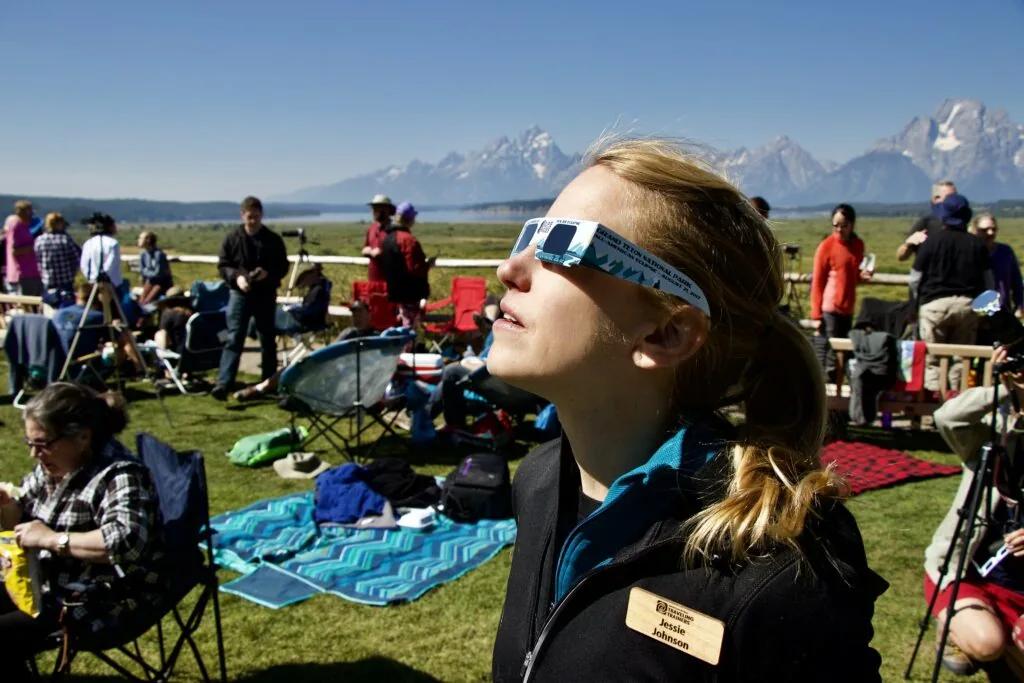
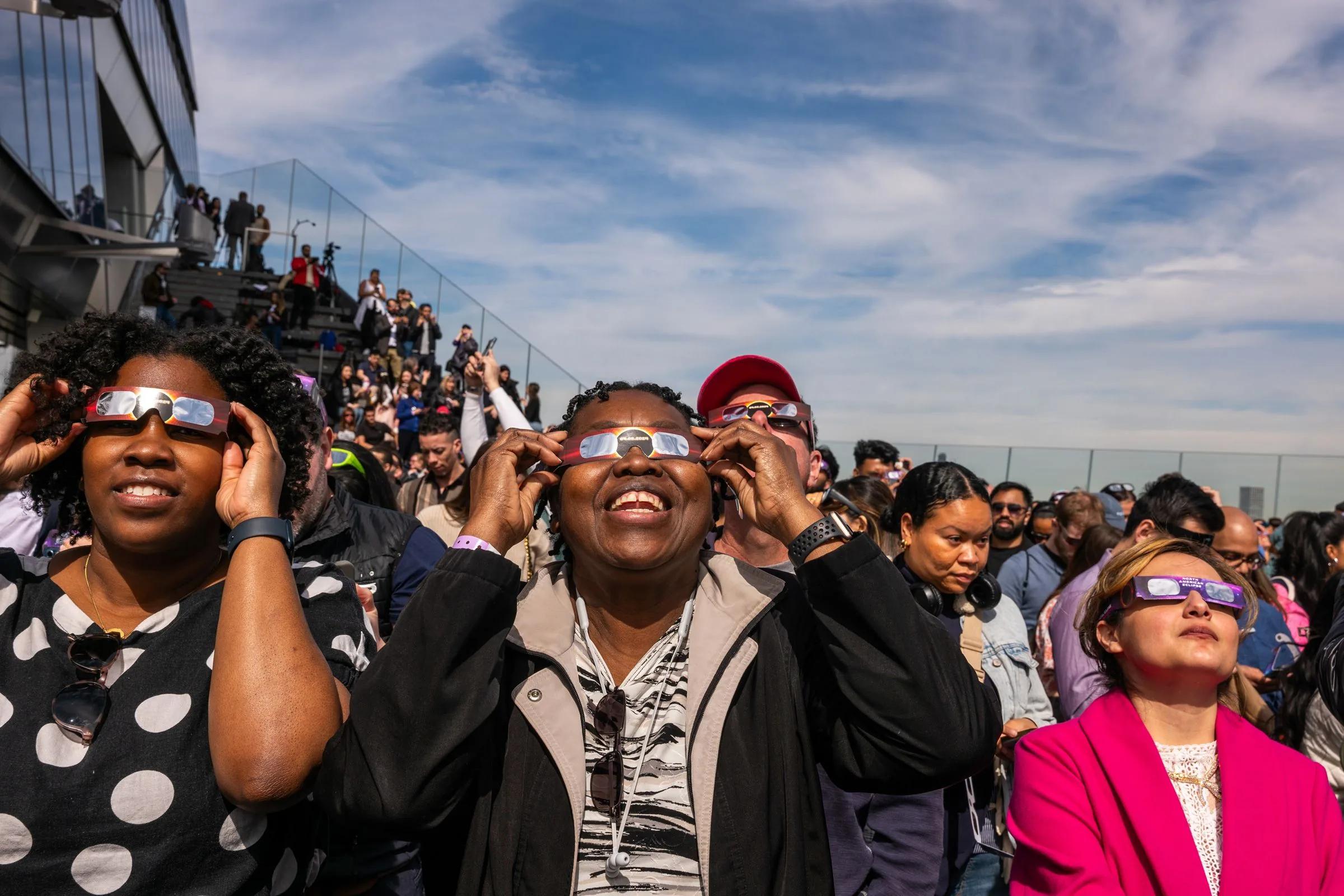
During every partial phase, viewers must use special-purpose solar filters that meet the ISO 12312-2 requirements. Ordinary sunglasses are not sufficient. Certified viewers may be removed only during the brief interval of totality, when the Moon completely covers the Sun’s bright face, and only from a location inside the path of totality. They must go back on as soon as the bright photosphere begins to reappear. Outside the path, there is no glasses-off phase; our guide to eclipse phases and when to use solar glasses explains that boundary in practical terms.
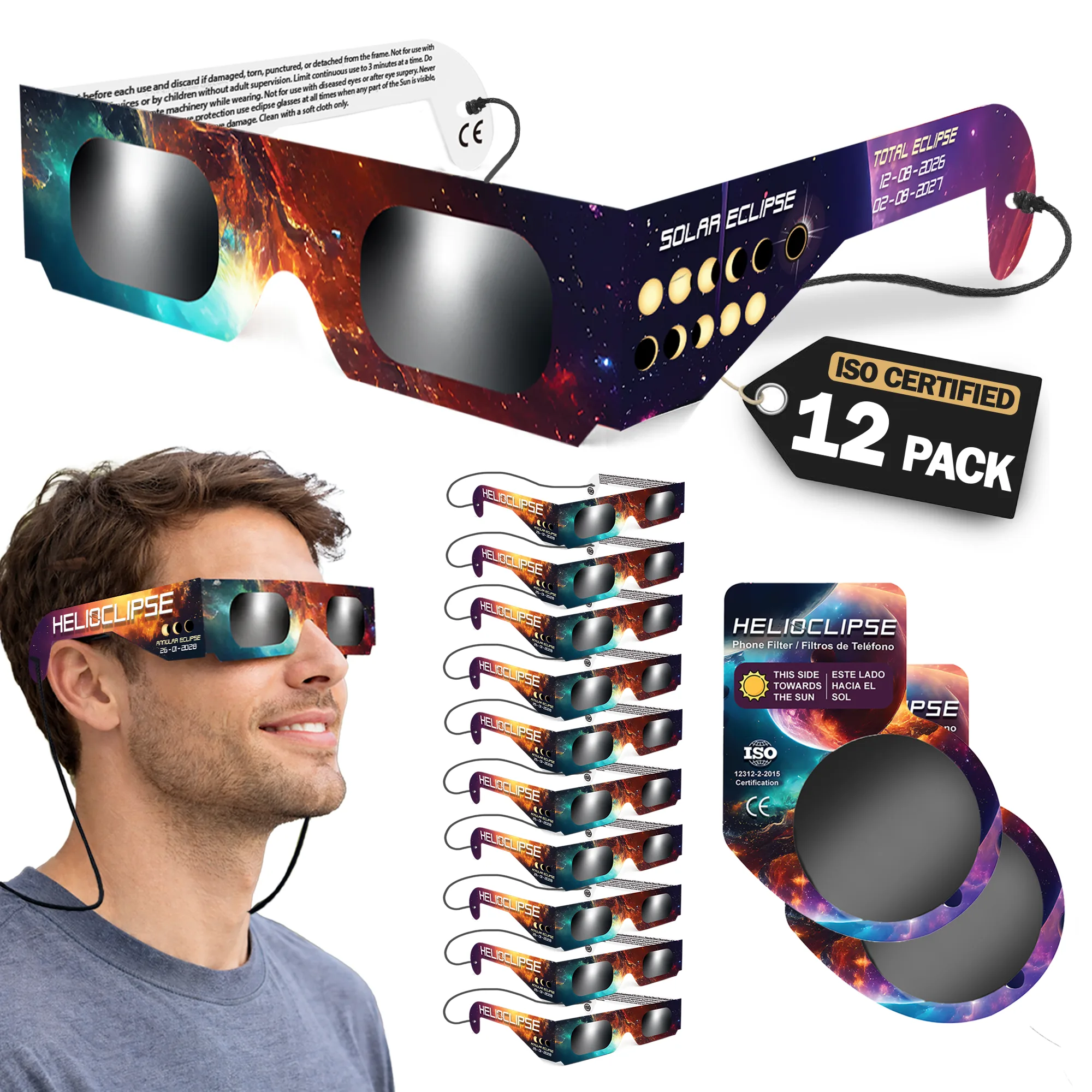
Product language deserves scrutiny. Labels such as approved solar eclipse glasses, eclipse viewing glasses, or certified solar eclipse glasses can sound reassuring without identifying who tested the filters or what standard applies. NASA does not certify or approve consumer eclipse glasses. Check the manufacturer information, instructions, condition of the filters, and evidence of conformity with ISO 12312-2 rather than trusting an official-sounding phrase alone.
If your group needs viewers, arrange them early through the Helioclipse solar eclipse glasses shop. Inspect every viewer before use, supervise children, and provide an indirect method such as pinhole projection for anyone who prefers not to look toward the Sun. Safety planning should make participation possible without pressuring people to disregard personal or cultural choices.
A practical editorial test before you publish
Before sharing an eclipse tradition in an article, lesson, video, caption, or social post, pause over these questions:
- Have we named the specific people or nation? “Indigenous people say” is almost never adequate attribution.
- Is the source community-led or community-reviewed? Prefer a named knowledge holder, tribal or nation-based organization, or a documented partnership.
- Was this knowledge deliberately made public? Availability and permission are not identical.
- Have we preserved the source’s limits? Do not turn “some families” into “the whole nation.”
- Are we distinguishing reporting from inference? Mark archaeological interpretations and historical identifications as uncertain when scholars do.
- Have we avoided ranking knowledge systems? Do not call one tradition primitive, quaint, mystical, or surprisingly scientific.
- Are we directing readers back to the people who did the work? Link, credit, compensate, and invite further learning from the original source.
- Would we revise or remove the material if the community asked? Respect continues after publication.
This is also why “what is the story of the sun and moon in aboriginal?” cannot responsibly receive one generic answer. “Aboriginal” should not be used as though Indigenous Australia had a single sky tradition. Aboriginal and Torres Strait Islander peoples comprise many nations and language groups, with distinct bodies of knowledge and different permissions governing their transmission. Use the community’s name, follow community-led sources, and do not blend separate teachings into a universal Australian story.
The goal is not to make every sentence so cautious that living knowledge disappears. It is to be precise enough that readers can encounter a real voice rather than an anonymous cultural collage. Specificity creates a richer story: a named teacher, a defined community, a stated context, and an honest boundary tell us far more than a list of supposedly universal beliefs.
A Time for Renewal - Navajo (Diné) Knowledge of Eclipses
Exploratorium
Frequently asked questions
Is there one shared Indigenous view of a solar eclipse?
No. The excerpt explains that there is no single Indigenous or Native American eclipse belief, because knowledge, responsibilities, ceremonies, and rules differ among living communities. Respectful reporting preserves those distinctions instead of presenting many nations as one voice.
Do Indigenous traditions generally say that people cannot see an eclipse?
The excerpt does not make a universal claim that Indigenous people cannot view an eclipse. It emphasizes that guidance and restrictions, where they exist, belong to particular communities and should not be generalized or repeated without context and permission.
Are there universal Indigenous rules against going outdoors during an eclipse?
No universal rule is described in the excerpt. Some sky knowledge may include ceremonies, responsibilities, or restrictions, but readers should treat those as community-specific and respect silence or limits on what may be shared.
Does this article explain what the Bible says about solar eclipses?
No. The excerpt does not discuss biblical teachings or interpretations of solar eclipses. Its focus is on approaching Indigenous and local sky traditions without treating them as material to collect or simplify.
What is the main guidance for respectful storytelling about Indigenous astronomy and solar eclipses?
Start by asking who chose to share the knowledge, how they identify themselves, what context they provided, and what should not be repeated. Listen to named knowledge holders, distinguish among nations, and direct readers toward community-led work rather than speaking for every community.
On-site next steps
- Continue through the Helioclipse blog and learning hub for eclipse science, history, planning, and safety guides.
- Check the Eclipse Explorer for the path and local circumstances of an upcoming eclipse. A map establishes the astronomy; it does not assign a cultural interpretation to a place.
- If you are organizing a school or community event, identify local partners early, budget for contributors, document permissions, and prepare safe ISO 12312-2 viewers or an indirect observation activity.
Sources & further reading
- Indigenous Eclipse Teachings Video — NASA Science
- “Everything is interrelated.” For the Navajo Nation, the April 8 solar eclipse is a spiritual experience — Space.com
- Native Earth | Native Sky Solar Eclipse Professional Development — NASA Science
- Navajo (Diné) Knowledge of the Cosmos — Exploratorium
- The Native American night sky: 7 starry sights to see — Space.com
- Eclipses — NASA Science
- History of Eclipses — NASA Science
- Eclipse Basics — American Astronomical Society
- How to View a Solar Eclipse Safely — American Astronomical Society
- About the ISO 12312-2 Standard for Solar Viewers — American Astronomical Society
Editors and educators should verify current community terminology, permissions, attribution, and media rights before reuse. Online availability does not establish consent to reproduce ceremonial, restricted, or community-held knowledge.