Glass plates and impossible journeys: how eclipse expeditions wired modern eclipse culture
Imagine spending two years raising money, calculating a path across an imperfect map, packing fragile optical glass into wooden crates and crossing an ocean—all for a celestial alignment lasting perhaps two minutes. One cloud at the wrong moment could erase the entire experiment.
That was the wager behind the great eclipse expeditions of the 19th century. Astronomers, photographers, instrument makers and assistants carried telescopes, clocks, chemicals and glass plates into the Moon’s narrow shadow. Their journeys helped turn eclipses from local spectacles into coordinated scientific events, then into global media occasions. They also depended on imperial transport systems, unequal access and local work that official accounts did not always name.
The equipment has changed, but the culture they built is still visible. We calculate where totality will fall, compare weather prospects, assemble teams and rehearse what to do during a few unrepeatable seconds. You can see that inheritance at work by opening our Eclipse Explorer and following the path toward Greenland, Iceland and Spain on August 12, 2026.
A useful historic solar eclipse expedition photography 19th century 2026 guide book therefore needs to do more than display sepia photographs. It must explain why the images were difficult to make, whose infrastructure made the journeys possible and why the same narrow-shadow logic still governs your plans today. A historic solar eclipse expedition photography 19th century 2026 guide free of heroic mythology also leaves room for failed observations, unnamed labor and cultures that never needed European astronomy to tell them the sky mattered.
Why a moving shadow demanded an expedition
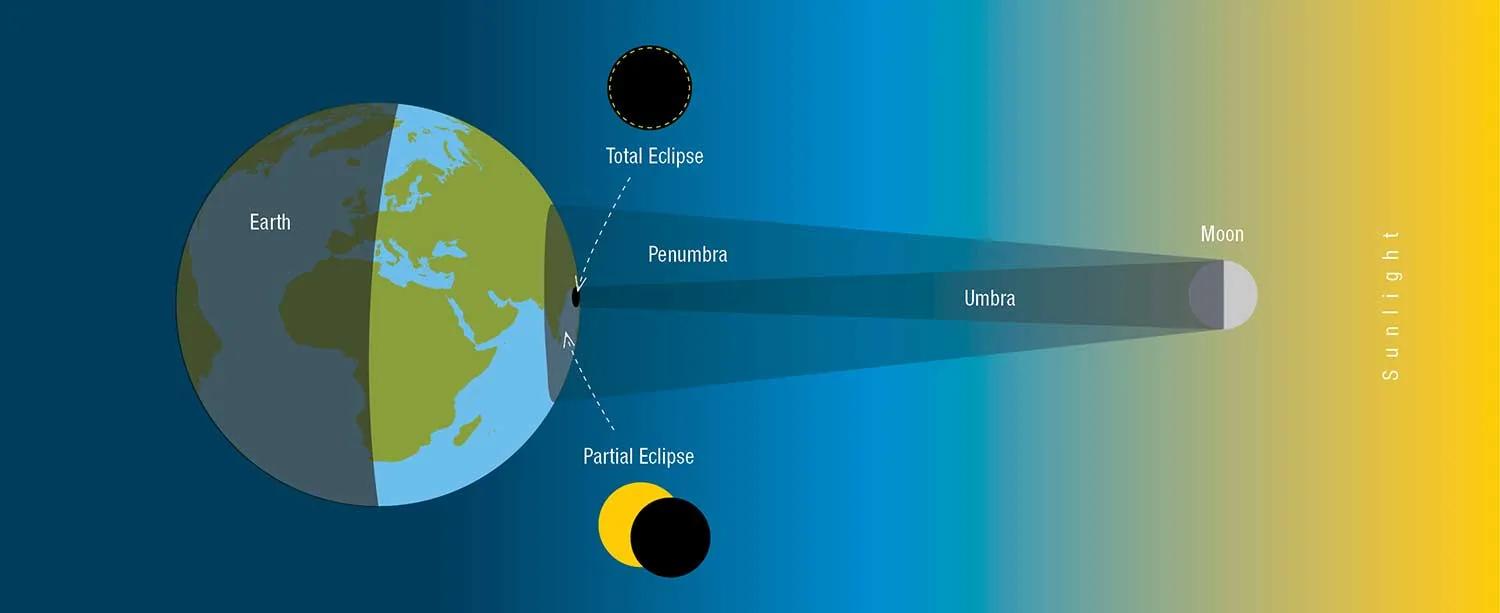
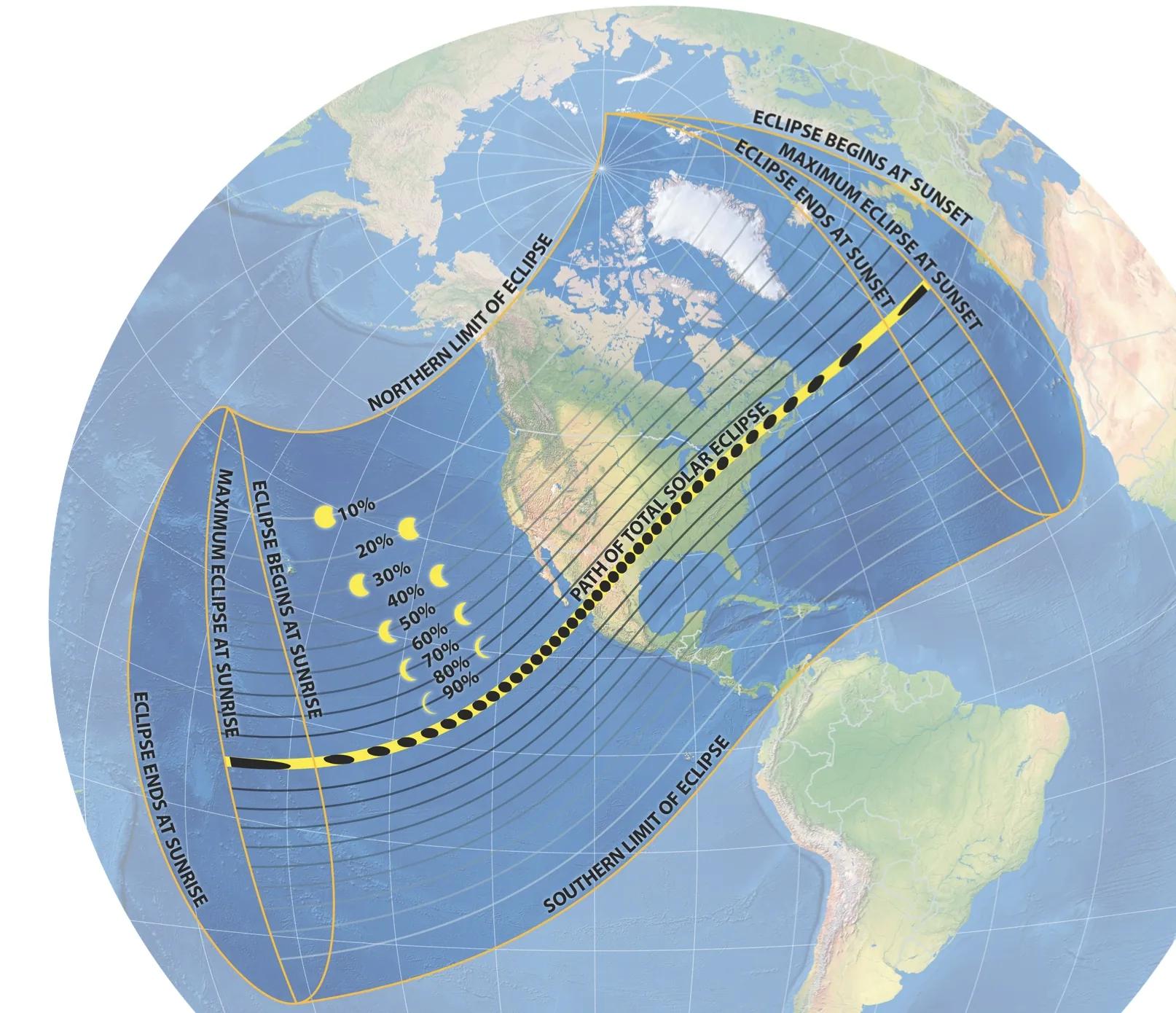
A total solar eclipse is geographically unforgiving. The Moon’s umbra touches only a narrow strip of Earth, while the much broader penumbra produces a partial eclipse. A difference of tens of kilometres can separate a view of the corona from a brilliant sliver of exposed photosphere. Even 99% coverage is not totality.
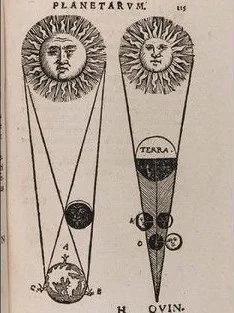
The underlying geometry is a remarkable coincidence. The Sun is roughly 400 times wider than the Moon but also about 400 times farther away, so both appear close to half a degree wide in our sky. Because the Moon’s orbit is tilted by about 5 degrees to Earth’s orbital plane, its shadow usually misses our planet at new Moon. When the alignment does work, totality returns to the same location only rarely; the American Astronomical Society gives a global-location average of roughly once every 366 years.
Nineteenth-century astronomers could predict eclipses, but turning a calculated track into a viable observing site was another problem. They needed a position inside totality with firm ground, a clear horizon and some hope of good weather. Photographic work also required clean water and a place to handle chemicals. Heavy instruments favoured sites near ports or railways, while haze, smoke and vibration pushed camps away from dense settlements.
This made an eclipse party part observatory, part field laboratory and part logistics operation. Months or years of effort converged on a sequence that could not be paused or repeated.
From a fleeting sketch to a fixed image
Before photography, observers drew the corona and prominences by hand. Skilled sketches remain valuable historical records, but totality forced every observer to make immediate choices: which streamer to follow, which colour to note and which change to ignore. Two honest witnesses could produce substantially different drawings.
Photography promised a record that could be measured after the Sun returned. It did not initially promise ease. The first successful photograph of a total solar eclipse is generally credited to Johann Julius Friedrich Berkowski, who made a daguerreotype at the Royal Observatory in Königsberg during the eclipse of July 28, 1851. The exposure captured the eclipsed Sun and part of the corona.
That answer requires a distinction when asking what is the oldest photograph ever taken of a solar eclipse? Berkowski’s 1851 image is the standard landmark for a successfully exposed total eclipse. In the same year, John Adams Whipple photographed a partial eclipse from Harvard. Later glass negatives produced different kinds of records and were easier to reproduce than a unique daguerreotype, which is one reason surviving plate collections loom so large in eclipse history.
Glass plates were both powerful and unforgiving. A team might have to prepare or load plates, control shutters, call out time, track the Sun, move exposed plates and develop them under field conditions. Exposure settings that revealed the inner corona could lose its faint outer streamers; settings that reached the outer corona could overexpose brighter structure. A photograph was not simply a neutral copy of the sky. It was the result of chemistry, optics, timing and judgment.
A camp that worked like a machine
Harvard’s 1869 expedition to Shelbyville, Kentucky, used a sequence of glass plates to record totality. The images were impressive, but later astronomers still found the corona too visually flat. That dissatisfaction mattered: it drove changes in instruments, exposure strategies and photographic technique. William Pickering sought a more convincing record and obtained stronger coronal detail during the 1889 eclipse at Willows, California.
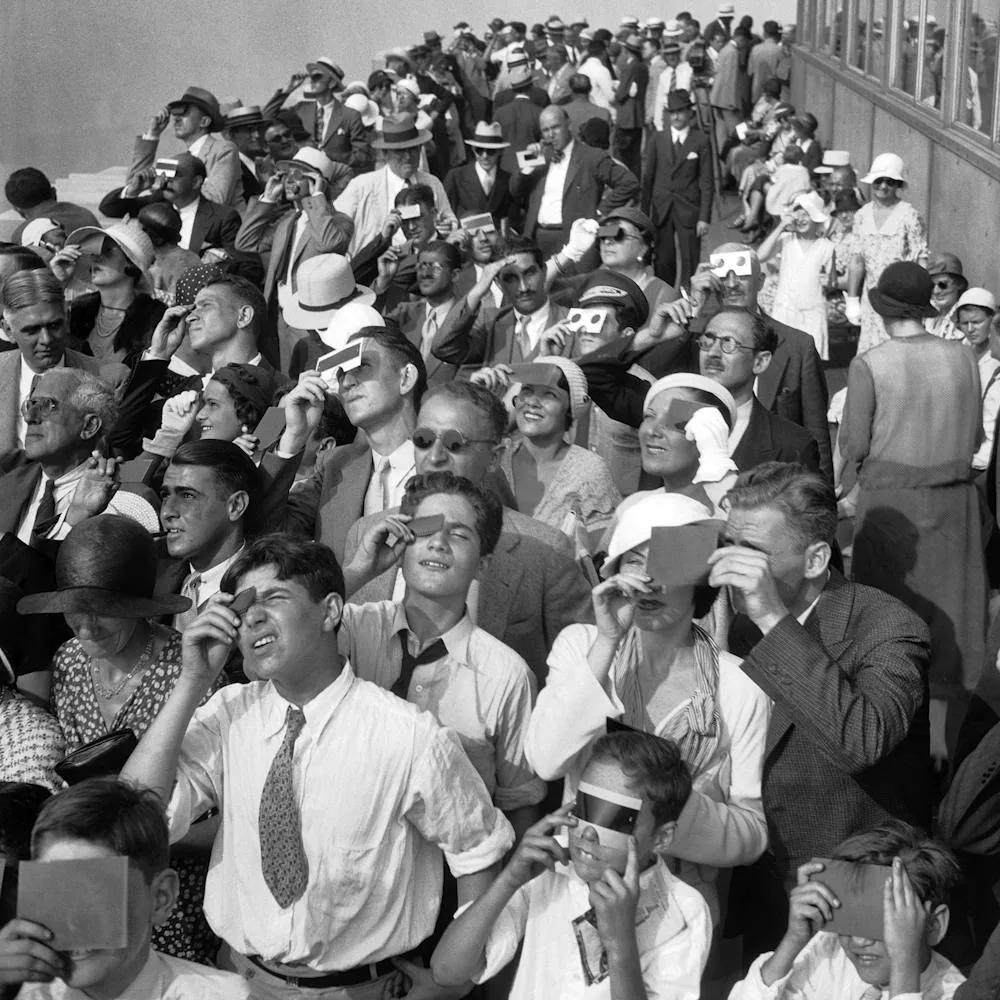
By then, an expedition could require 15 or 20 people, with each telescope or camera assigned an operator. Camps took days to establish. Observers levelled mounts, aligned instruments and practised their timed sequence before the real event. Someone might count down contacts; another might change plates; another might record visual structure or colours. The choreography resembled a launch checklist more than a leisurely afternoon with a camera.
The May 28, 1900 eclipse at Wadesboro, North Carolina, shows how extensive the preparation had become. A multiyear U.S. Weather Bureau study informed site selection, while rail and telegraph connections helped bring large teams and equipment to the town. Smithsonian astronomer Thomas Smillie used seven telescopes and produced eight glass-plate negatives that recorded the corona. Other parties arrived from Princeton, Yerkes Observatory and the British Astronomical Association.
Weather retained the final vote. An expedition could choose a statistically promising site, arrive on schedule and execute every rehearsal perfectly—then watch cloud cover the Sun at totality. Historical archives are full of that scientific heartbreak. Failure did not necessarily mean incompetence; it often revealed the hard limit between planning and the atmosphere.
Who was a significant astronomical photographer in the 19th century?
There is no single sufficient answer. Berkowski deserves recognition for the 1851 total-eclipse daguerreotype. Whipple was a major early astronomical photographer whose work with Harvard helped establish photography as a scientific tool. Smillie demonstrated what a coordinated, multi-instrument plate program could achieve in 1900. Pickering pushed eclipse photography toward a more detailed representation of the corona.
The question who was a significant astronomical photographer in the 19th century? also exposes a problem in the historical record: photographs are often attached to a famous astronomer or observatory even when many hands produced them. Instrument makers built the apparatus. Assistants tracked the Sun and changed plates. Timekeepers called the sequence. Local workers transported crates, prepared camps and solved practical problems. Some participants appear only as a surname, a job title or an unidentified figure at the edge of a group portrait.
The surviving plate may look like one person’s decisive exposure. In practice, it was often the output of a temporary technical network.
How eclipse work built scientific institutions
Eclipse expeditions did more than collect solar images. They gave observatories, universities, government offices and scientific societies a reason to coordinate budgets, instruments, transport and publicity. A successful campaign demonstrated institutional competence. Even an unsuccessful one could refine equipment, train observers and generate reports that shaped the next expedition.
Photography also changed what counted as persuasive evidence. A drawing relied heavily on the observer’s eye and reputation. A plate could circulate, be enlarged and be measured by people who had never visited the field site. That did not eliminate interpretation, but it moved part of the argument from eyewitness authority to a durable physical record.
Spectroscopy expanded the stakes further. During the 1868 eclipse, observers detected a previously unidentified spectral line associated with what would become known as helium. In 1919, British teams observed an eclipse from Sobral in Brazil and the island of Príncipe, then under Portuguese colonial rule, to test whether the Sun’s gravity displaced the apparent positions of background stars. Arthur Eddington observed from Príncipe, while Andrew Crommelin and Charles Davidson worked at Sobral. The published result was celebrated as evidence for Einstein’s general theory of relativity and helped turn Einstein into an international public figure.
The 1919 measurements have since received careful historical scrutiny, including discussion of their uncertainties and plate selection. Their cultural effect is nevertheless clear: a difficult eclipse expedition had become front-page evidence that the structure of the universe could be tested in the field.
The colonial map beneath the eclipse map
Many celebrated expeditions unfolded during an era of European empire. Scientific travellers could use steamship routes, railways, telegraph lines, diplomatic contacts and administrative permissions built for colonial government and trade. Those systems made distant sites legible and reachable to well-funded institutions, but they were neither politically neutral nor equally available to everyone.
An honest history cannot describe West Africa, India, the Pacific or the Caribbean as empty stages waiting for visiting astronomers. These were inhabited places with governments, communities, knowledge systems and conflicts of their own. Expeditions relied on local transport, food, construction, translation and geographical knowledge, even when published narratives concentrated on the visiting scientific leaders.
Nor should every expedition be reduced to the same colonial story. Political circumstances differed by place and year, and historians need archives from both the institution that travelled and the society that hosted it. The responsible approach is to ask specific questions: Who authorized access? Who built and supplied the camp? Whose names appear in payrolls, correspondence, photographs and local newspapers? Who could travel, and who was expected to serve the travellers?
This complexity does not erase the science. It explains the conditions under which the science was produced—and why some contributors became famous while others disappeared from the caption.
Why can’t Native Americans see the eclipse?
The premise of why can't native americans see the eclipse? is false. Native Americans can physically observe an eclipse like anyone else. What differs among Indigenous nations and communities are cultural teachings, responsibilities and choices about whether and how to engage with the event.
There is no single Native American eclipse tradition. Some communities have practices that favour remaining indoors, avoiding direct observation, reflecting quietly or following particular ceremonial guidance. Others may observe or teach about eclipses in different ways. Treating a culturally chosen practice as an inability misunderstands both the astronomy and Indigenous agency.
Indigenous peoples in the Americas also maintained sophisticated astronomical knowledge long before European expeditions arrived. Maya records include eclipse calculations, while traditions associated with Ancestral Pueblo sites preserve evidence of sustained attention to the Sun. NASA’s historical overview stresses that Indigenous interpretations across North America are varied, not interchangeable.
For schools, museums and event organisers, respect starts with listening to the relevant community rather than inventing a universal rule. Invitation is not obligation, and participation in a public viewing event should never be presented as the only informed response to the sky.
How expeditions created modern eclipse culture
The title phrase glass plates and impossible journeys: how eclipse expeditions wired modern points to more than old technology. Expeditions connected prediction, transportation, standardised observation, photography, news distribution and public anticipation. That network is recognisably modern.
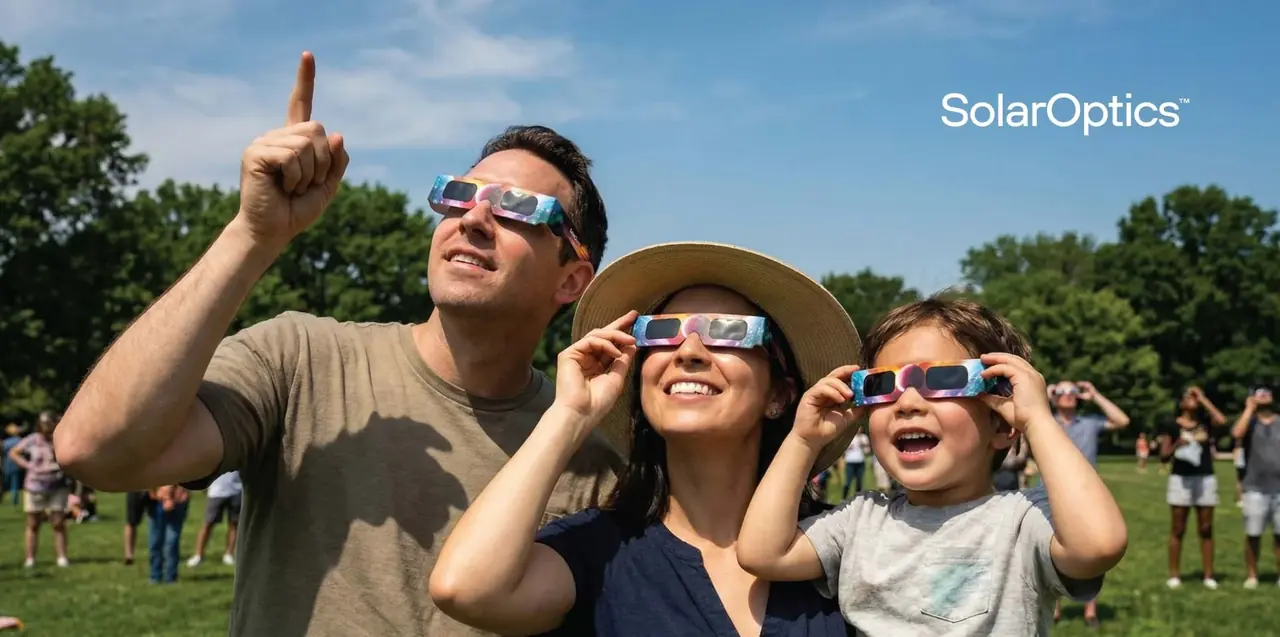
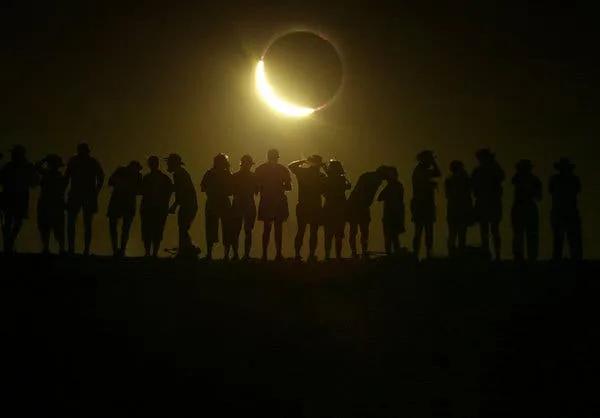
We still study path maps because totality remains narrow. We still compare climate data because a cloud can hide the corona. Photographers still rehearse exposure sequences because totality will not wait for a menu setting. Families and schools still assign roles: one person watches the time, another helps children with viewers, and someone remembers to stop fussing with the camera and actually look.
The biggest change is accessibility. A modern traveller can carry more computing and imaging power in a pocket than an entire Victorian camp possessed. Interactive maps replace hand-plotted tracks, forecasts update during the journey, and digital cameras can record hundreds of exposures without a darkroom.
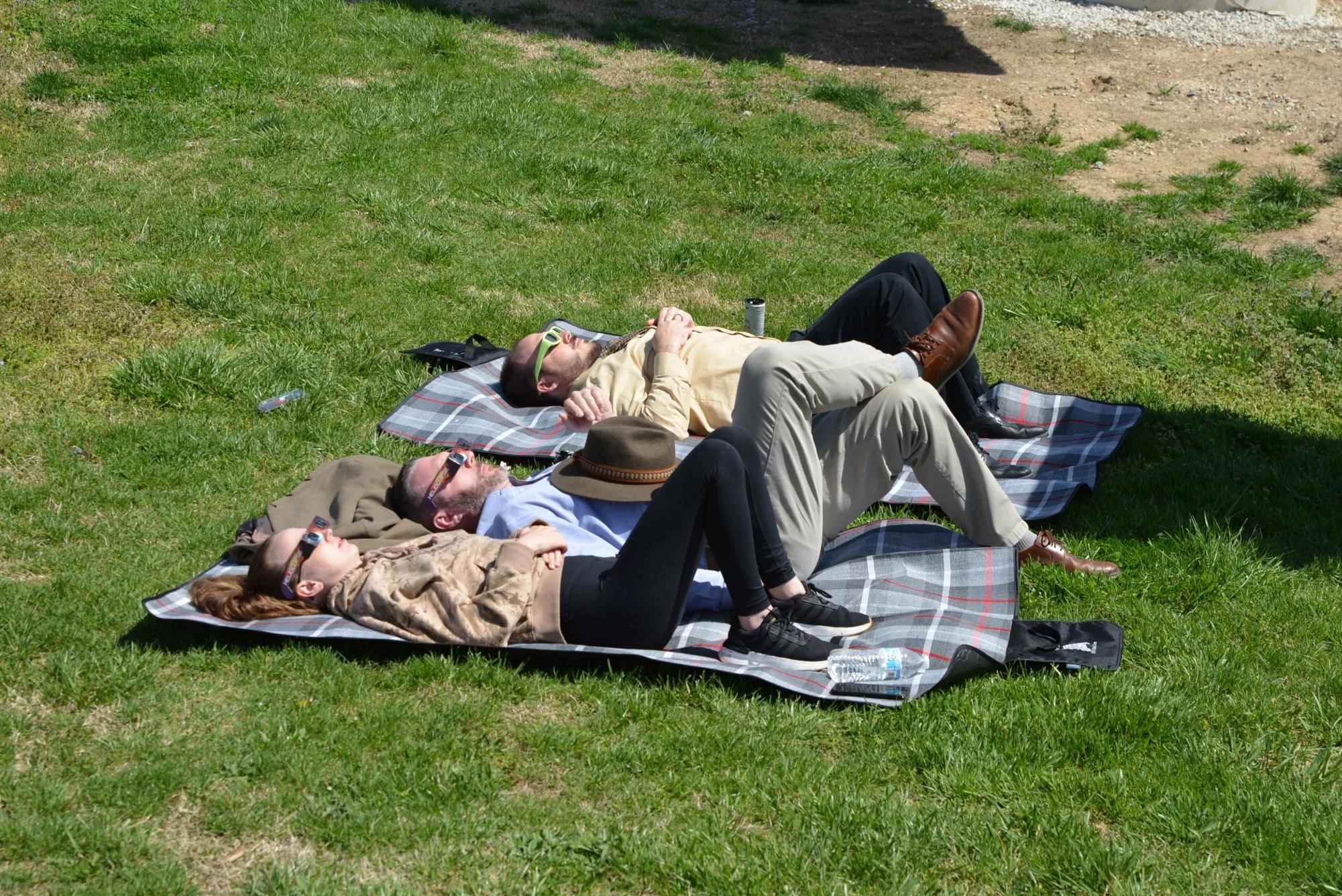
Yet smaller equipment can create false confidence. A phone does not change solar radiation, and a filter intended for your eyes is not automatically safe for a camera, binoculars or telescope. Magnifying optics require a securely mounted solar filter over the front aperture and expert guidance. Never look through unfiltered optics while wearing ordinary eclipse viewers; concentrated sunlight can damage the viewer and your eyes.
The 2026 expedition is closer than it sounds
On August 12, 2026, the umbra will cross Greenland, Iceland, the North Atlantic, Spain and a small corner of Portugal. Most locations in the path will receive less than two minutes of totality; near the central portion over Greenland, northern Russia or the North Atlantic, the maximum remains under two and a half minutes.
NASA’s city table illustrates how sharply circumstances vary. In Reykjavík, the listed local times place totality at approximately 5:48–5:49 p.m. In León, Spain, it runs approximately 8:28–8:30 p.m. Zaragoza and Valencia receive about a minute in NASA’s rounded table, with totality near 8:29–8:30 p.m. and 8:32–8:33 p.m. respectively. In mainland Spain the Sun will be low in the west, and at some locations it sets before the partial phase finishes. A clear line of sight toward the sunset horizon is therefore part of the observing equipment.
Madrid and Barcelona demonstrate why percentages can mislead. NASA lists both at about 99% solar-disk coverage, but they remain outside totality in its city table. The photosphere never disappears completely there, so the corona does not emerge as it does inside the umbra, and certified viewers stay on throughout. Before committing to a site, use the 2026 total-eclipse planning guide and check your exact pin on the map rather than relying on the nearest city name.
That preparation is the direct descendant of the old expedition camp: verify geometry, check the horizon, make a weather backup, tell your group where to meet and rehearse the safety sequence. The difference is that you can now do much of it from a kitchen table instead of an observatory office.

The safety standard the plate pioneers never had
Historical observers developed specialised methods, but modern families have a clear international benchmark for direct, unmagnified solar viewing. ISO 12312-2 covers handheld and wearable filters designed for looking at the Sun without magnification. It does not cover ordinary sunglasses, and it is not the standard for filters attached to telescopes, binoculars or camera lenses.
Commercial wording can be confusing. The phrase approved solar eclipse glasses may suggest a government endorsement that does not exist; NASA does not approve retail products. More useful product language identifies eclipse glasses ISO 12312-2 conformity, the manufacturer and clear instructions, backed by appropriate testing rather than a logo alone. When choosing eclipse viewing glasses, inspect the filter and mounting before use and discard anything scratched, punctured, torn or separating from its frame.
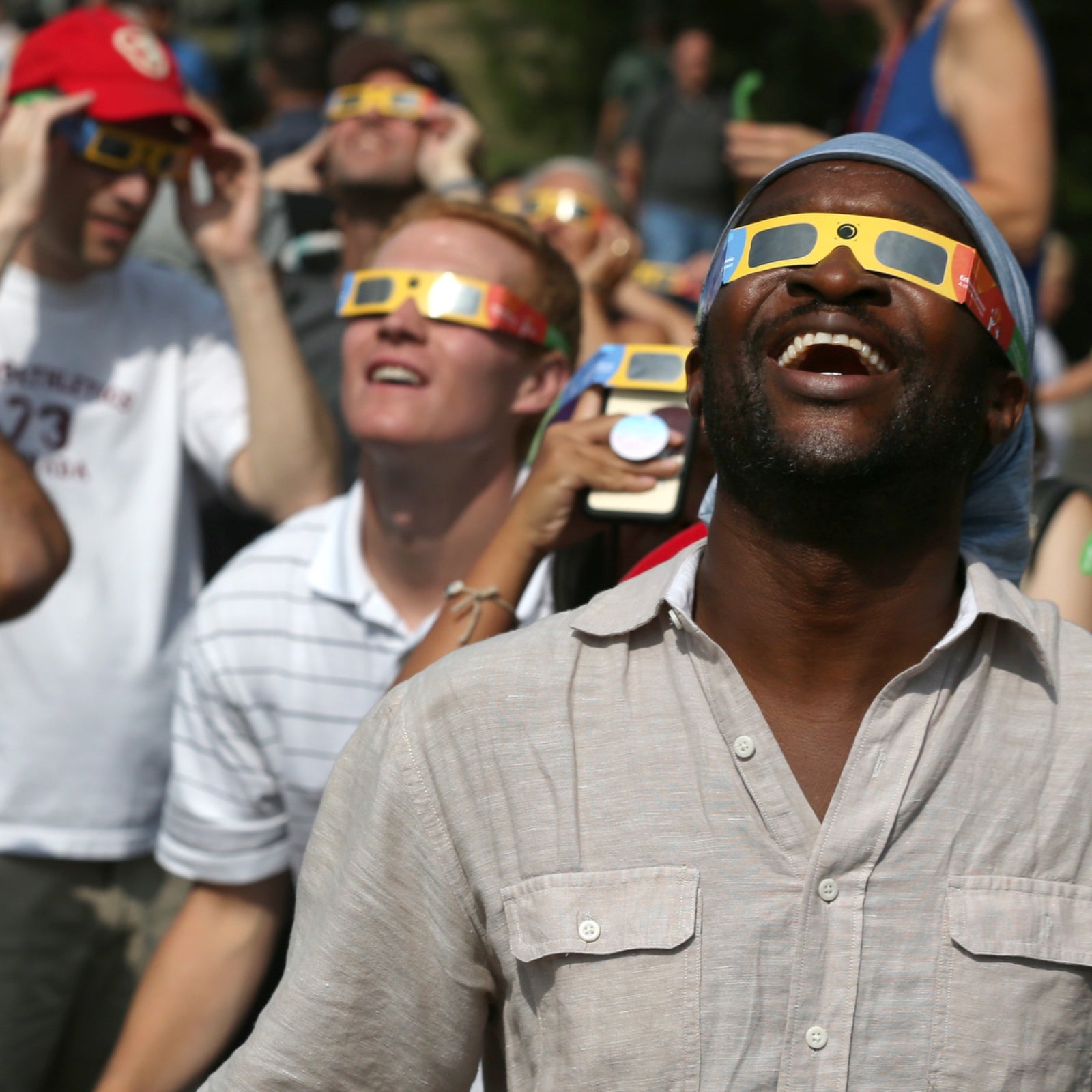
During every partial phase, use a suitable solar viewer. Remove it only during the brief interval of totality, only when you are physically inside the path and the Moon has completely covered the Sun’s bright face. Put it back on immediately when the first bright point of photosphere returns. Outside the path—including a location with 99% coverage—there is no glasses-off interval. Our guide to eclipse phases and when to use solar glasses makes that sequence easy to practise with children and first-time viewers.
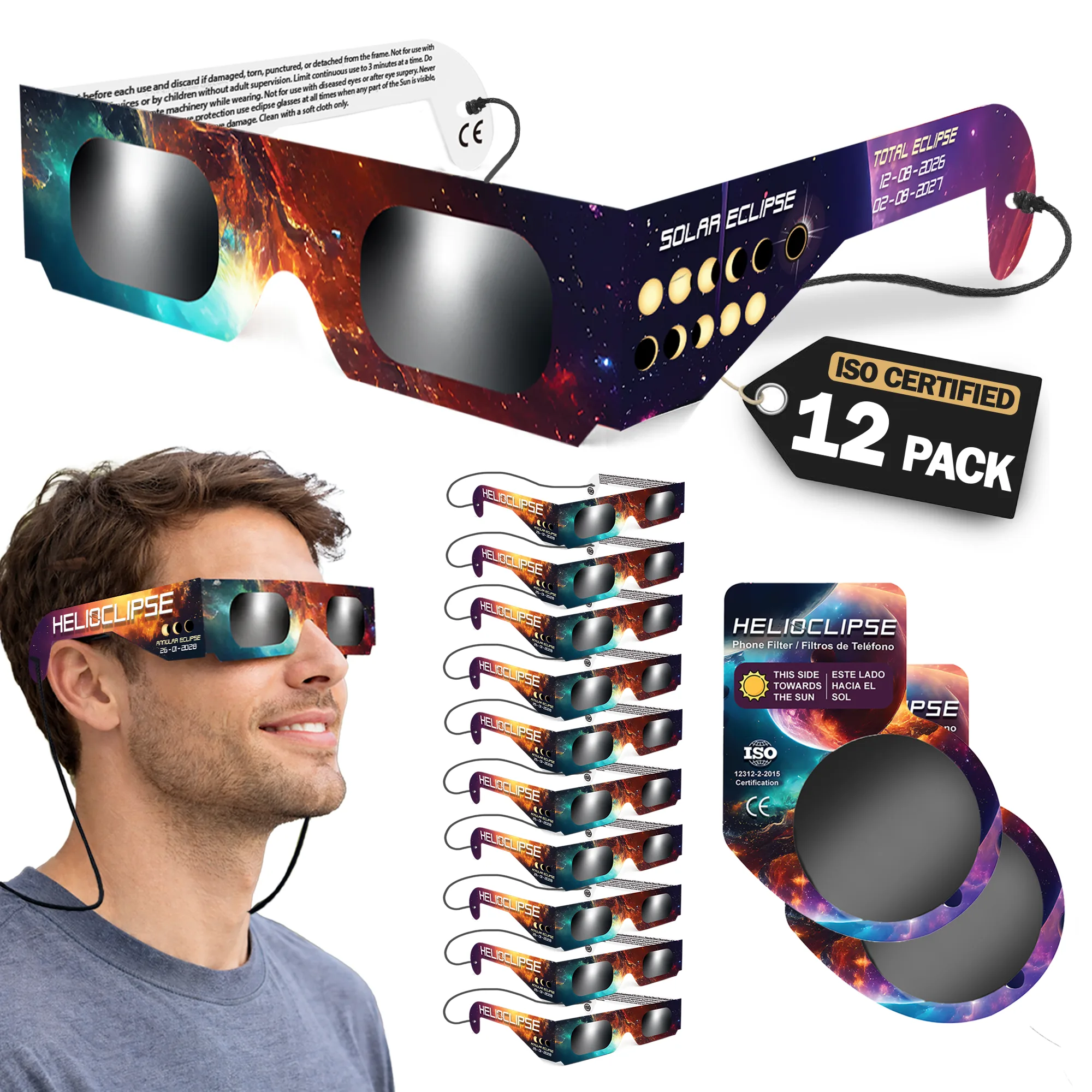
You can browse our ISO 12312-2 certified solar eclipse glasses early enough to equip your family, class or viewing group without a last-minute scramble. The goal is not to reproduce a Victorian equipment train. It is to borrow its best habit: prepare before the shadow arrives.
What the glass plates still teach us
Historic solar eclipse expedition photography 19th century collections are compelling because every plate contains two stories. One is celestial: the corona, a prominence or the position of a star near the eclipsed Sun. The other is human: a temporary organisation built to capture light during an interval that could not be repeated.
The plates also warn us against a simple march-of-progress story. Better instruments did not eliminate weather. Photography did not eliminate judgment. Prestigious institutions did not document every contributor fairly. International science could produce genuine discovery while moving through profoundly unequal political systems.
But the expeditions left a generous inheritance too. They made preparation part of the pleasure. They taught generations to share predictions, gather teams, compare observations and treat a few minutes of darkness as something worth crossing a map to meet. In 2026, our cases will be lighter and our maps will glow on screens, but the countdown will feel familiar.
Polar Discovery Guide Part 2: Expeditions & World-Class ...
Scenic Luxury Cruises & Tours
Frequently asked questions
What was the earliest photograph of a solar eclipse?
The excerpt does not identify the earliest solar-eclipse photograph or give a date for it. It explains that nineteenth-century expeditions carried fragile glass plates and photographic chemicals to sites within the Moon’s narrow shadow.
Are Indigenous communities unable to see a solar eclipse?
No. The excerpt gives no basis for saying that Indigenous communities cannot see an eclipse; visibility depends on whether a location lies within the eclipse path and on local conditions. It also notes that official expedition accounts did not always name local work and that cultures did not need European astronomy to recognize the sky’s importance.
What is the safest way to watch a solar eclipse?
The excerpt does not provide eye-safety instructions or identify a safe viewing method. It does stress that a partial eclipse is not totality: even 99% coverage leaves a bright sliver of the Sun’s photosphere exposed.
How should I account for weather when choosing an eclipse-viewing site?
Choose a location inside the path of totality with a clear horizon and the best available prospect of good weather. Historical observers also needed firm ground, while photographic work required clean water and a place to handle chemicals.
What should first-time eclipse viewers avoid getting wrong?
Do not assume that being near the path, or seeing a 99% partial eclipse, is the same as experiencing totality. A difference of tens of kilometres can separate a view of the corona from a remaining bright sliver of exposed photosphere, so confirm your location and rehearse your plan before the brief event.
On-site next steps
- Explore more eclipse science and history in the Helioclipse blog and guides.
- Trace the August 12, 2026 umbra and check whether your exact site is inside totality with the Helioclipse 3D map.
- Review the difference between the centre, edge and outside of Spain’s path in our 2026 Spain totality guide.
- Share the plan with your family, school or travel group now: location, western-horizon check, weather backup and viewer practice all become easier before eclipse week.
Sources & further reading
- Eclipse Expeditions 101: How to Plan a Solar Eclipse Expedition in the 19th and 20th Century — American Institute of Physics, Niels Bohr Library & Archives.
- Failing to See: The United States Eclipse Expedition to West Africa — Library of Congress.
- Harvard Photos of Eclipses Through the Years — Harvard Gazette.
- 19th Century Eclipse Explorations Helped Build U.S. Scientific Institutions — American Association for the Advancement of Science.
- The Evolution of Solar Eclipse Photography in Photos — Space.com.
- History of Eclipses — NASA Science.
- How & Why Solar Eclipses Happen — American Astronomical Society.
- How to View a Solar Eclipse Safely — American Astronomical Society.
- About the ISO 12312-2 Standard for Solar Viewers — American Astronomical Society.
- Total Solar Eclipse on August 12, 2026 — NASA Science.