SASO, EOS, and ISO 12312-2: reading eclipse-viewer marks in the Middle East
On August 2, 2027, the Moon will hide the Sun’s bright face for about six minutes and 20 seconds in Luxor. Outside the path of totality, even a thin crescent of Sun still requires proper eye protection. If you’re buying eclipse glasses in the Middle East, SASO, EOS, and ISO 12312-2 answer different questions: Saudi and Egyptian authorities are where you check local requirements, while the ISO standard tells you what a filter for direct solar viewing must do. A logo on its own proves neither.
Start by dropping a pin for your hotel, school, or viewing site in our Eclipse Explorer map. Once your group knows whether to expect a total or partial eclipse, give someone the job of sourcing viewers early. That gives you time to check the model and seller before you’re handing glasses out to a busload of people.
SASO and EOS: what eclipse-glasses marks mean in the Middle East
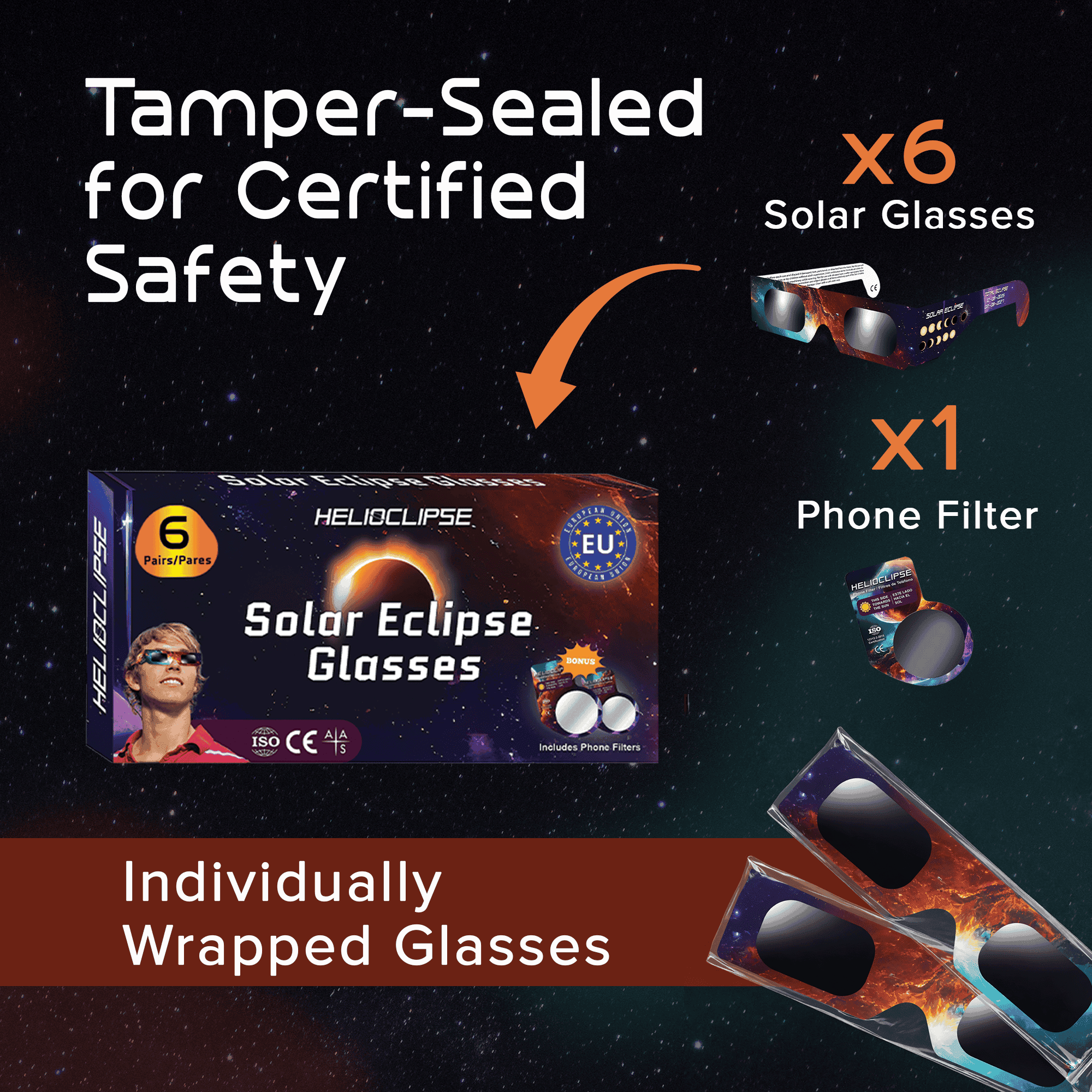
SASO is the Saudi Standards, Metrology and Quality Organization. EOS is the Egyptian Organization for Standardization and Quality. They’re national bodies, not names for two kinds of solar filter. A national standard may adopt an international standard, but adoption alone doesn’t tell you whether a rule is mandatory, whether a mark is required, or whether a particular product is authorized to carry it.
| What you see | What to check | | --- | --- | | ISO 12312-2:2015 | This is a reference to the 2015 edition of the direct solar-viewing standard. Ask for evidence that applies to the exact viewer being sold. ISO writes standards; it does not certify or approve eclipse glasses. | | SASO reference or Saudi conformity claim | Ask for the regulation or scheme name, document reference, and model covered. Check with SASO which requirements apply to the product classification. Where relevant, Saber is the Saudi platform for product and shipment conformity procedures. | | EOS reference or Egyptian quality-mark claim | Ask whether the seller is citing an Egyptian standard or claiming authorization to use a mark. Check the applicable standard or scheme, and the scope of any claimed authorization, with EOS. |
A lab report and a market-access document are not interchangeable. A lab report can show what was tested and how it performed. A conformity document can establish what a particular scheme covers, which may be a product or a shipment. Neither tells you more than its stated scope. The official portals below are starting points, not evidence that a specific rule applies to every eclipse viewer or that Helioclipse holds a SASO or EOS mark.
How ISO 12312-2 glasses protect your eyes
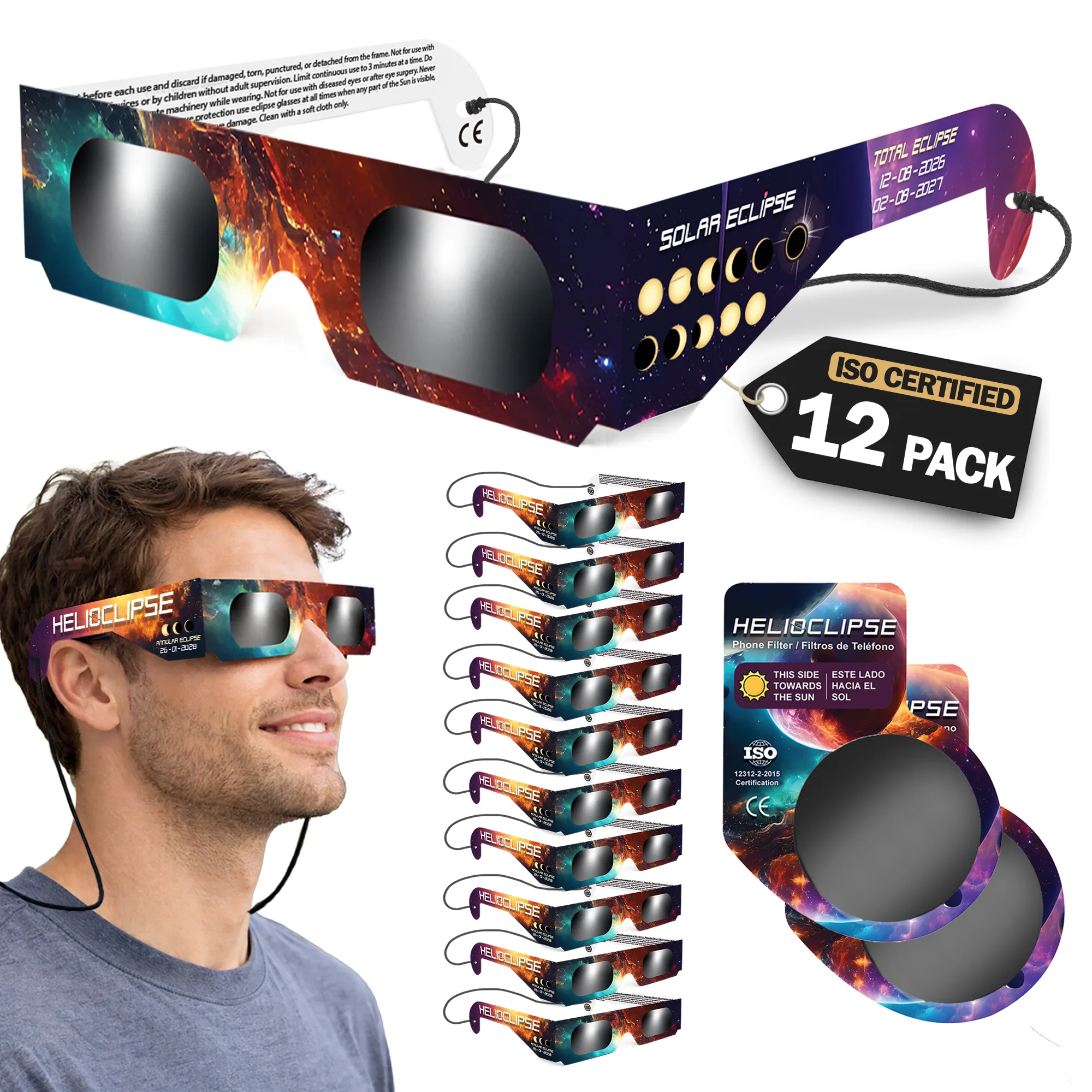
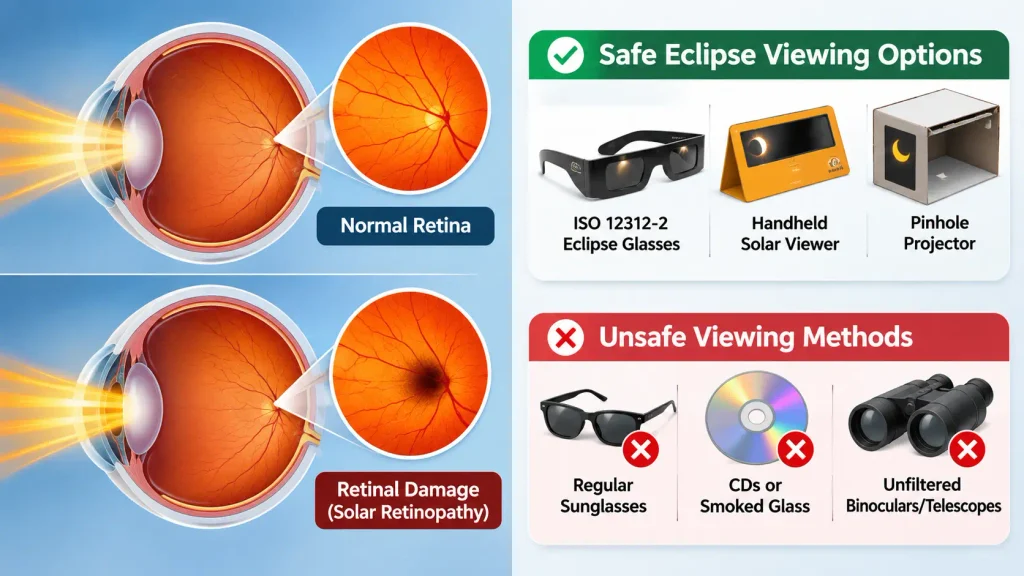
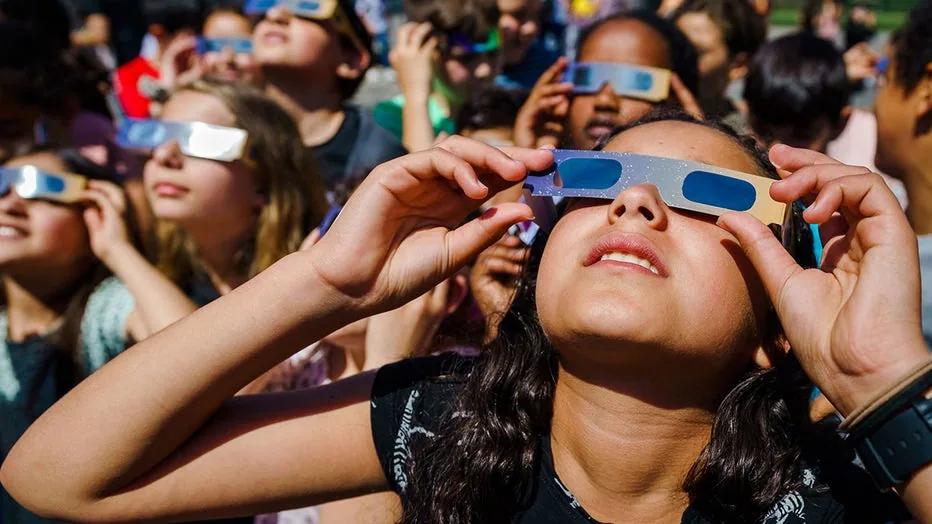
An eclipse viewer lets only a tiny fraction of visible sunlight through and limits ultraviolet and infrared radiation, which you can’t judge by looking. ISO 12312-2 also addresses how evenly the filter transmits light, the quality of its surface, how securely it’s mounted, and what the labeling tells the user. That’s why a sheet advertised as ISO 12312-2 filter material doesn’t, by itself, show that the finished glasses meet the standard.
The part number matters. ISO 12312-1 is for general-use sunglasses; ISO 12312-2 is for nonmagnifying viewers intended for direct observation of the Sun. Ordinary sunglasses, even very dark ones, aren’t safe for direct solar viewing. A fragment such as “ISO 123” or an unexplained “SAE,” “ASO,” or “ASA” on a listing isn’t a substitute for the full standard reference and evidence for the model. And NASA publishes safety guidance; it doesn’t approve viewer brands. Our guide to ISO 12312-2 goes deeper into what the testing measures.
How to check a pair before you buy
Start with the seller, then match the model. Whether you’re buying locally in Cairo or picking up a pair on New York’s Lower East Side before you fly, choose a seller who can identify the maker and the exact model. If the seller cites a test report, look for the lab’s name, accreditation for the relevant tests, the standard and edition tested, and a product identifier you can match to the glasses you’ll receive. A report for a different model or an unnamed roll of film doesn’t settle the question. For a school or tour group, ask for those details before placing the full order.
Treat the print as a claim, not proof. A seller can copy a genuine maker’s name along with an ISO number, as reporting ahead of the April 2024 eclipse showed. That’s a reason to check the supply chain, not a claim about what’s on shelves in Saudi Arabia or Egypt today. If there’s a local conformity claim, ask for its reference separately. If the seller can’t explain either claim, choose a traceable alternative rather than trying the glasses on the Sun. Our guide to spotting questionable eclipse glasses walks through what to look for.
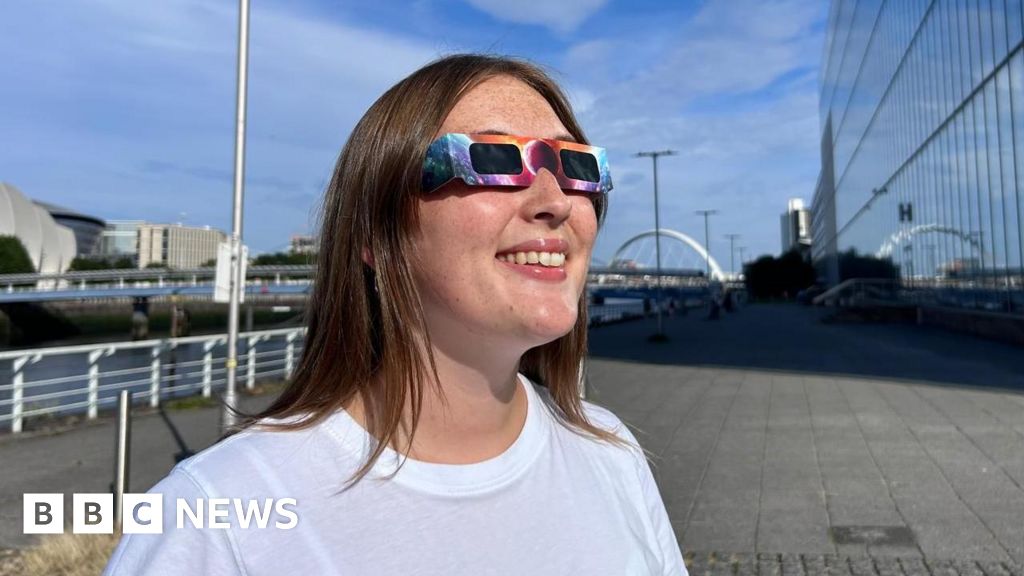
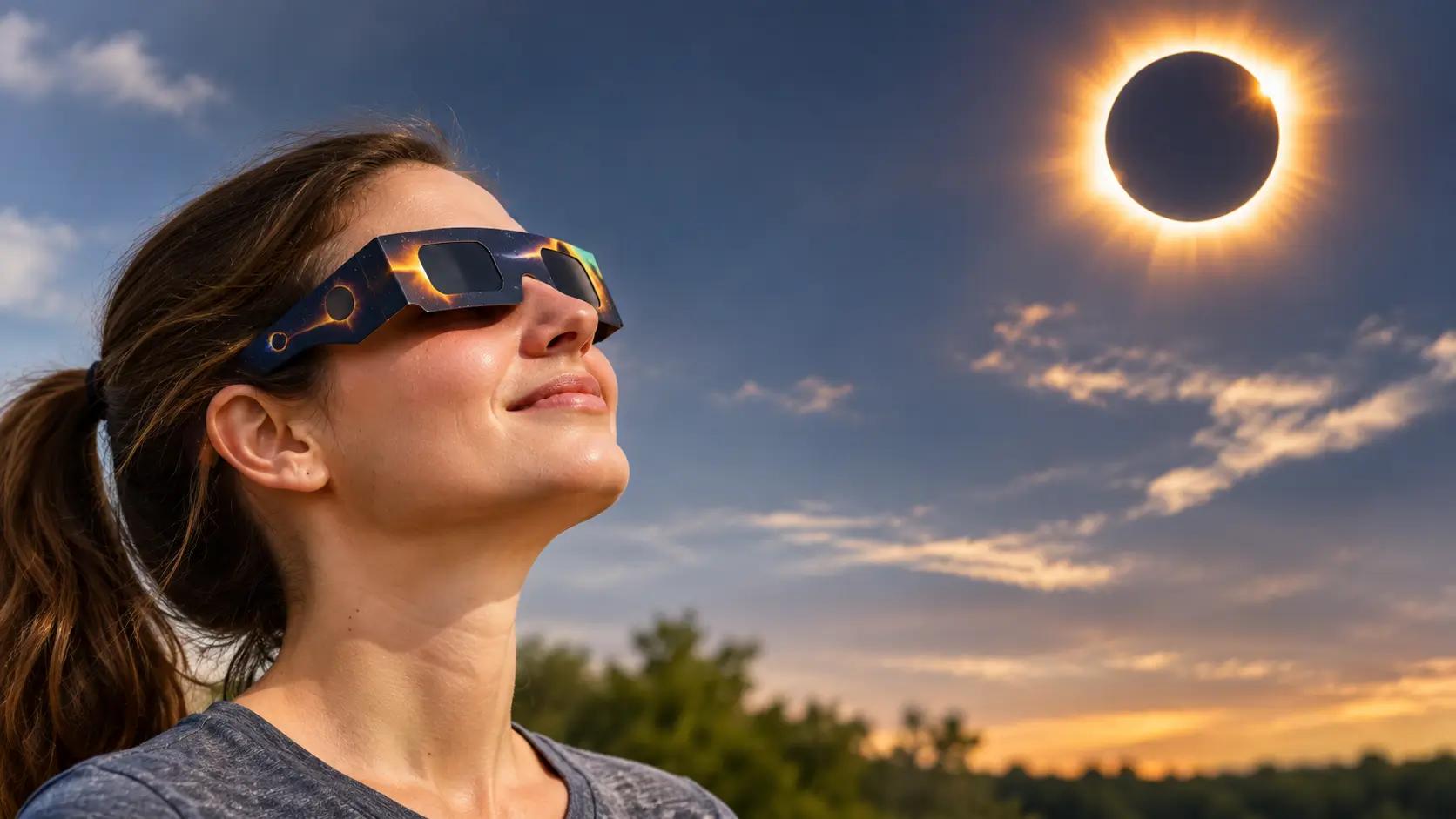
Inspect every pair when it arrives and again before use. Discard viewers with scratched, punctured, torn, or loose filters. Check that each viewer stays in place and covers both eyes, especially on children, and supervise them while they use it. Inspection can catch damage; it can’t measure whether the filter blocks enough radiation. No home brightness check can establish conformity.
What changes between Luxor, Cairo, and the Saudi Red Sea coast
In Luxor, expect around 6 minutes 20 seconds of totality on August 2, with the Sun high in the sky. Cairo is outside the path and gets a partial eclipse: there’s no glasses-off interval for direct viewing. After crossing the Red Sea, the shadow brings totality to part of western Saudi Arabia. If you’re planning a coastal stop, check the exact pin rather than assuming the whole coast is inside the path. Look up whether your site gets totality, when it starts and ends in local time, and how long it lasts. For a partial site, look up the time of maximum eclipse instead.
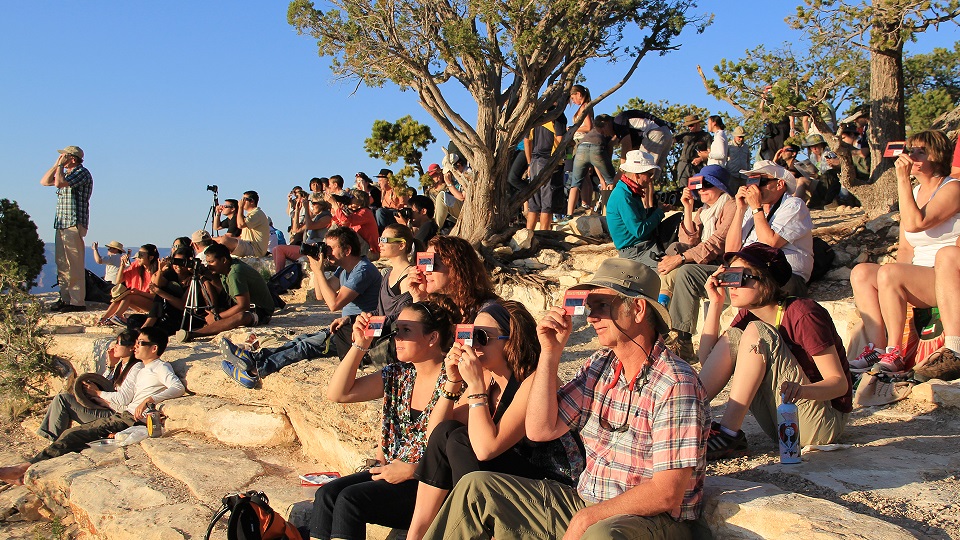
For direct viewing without magnifying optics, put your eclipse glasses on before looking up. Keep them on whenever any part of the bright solar face is visible. Only if you’re inside the path and the Moon has completely covered that bright face may you remove them to see the corona. Put them back on before the bright Sun reappears. If you’re uncertain whether totality has begun or is about to end, keep them on. Share our glasses-on, glasses-off phase guide with your group so everyone knows the plan before eclipse day.
What to do if you can’t verify your viewers
Try pinhole projection for the partial phases. With the Sun behind you, hold a card with a small hole above a second white card and adjust the spacing until you see the solar crescent on the white surface. A kitchen colander can project a whole cluster of crescents. Look at the projected images, never through the holes toward the Sun. It’s a useful backup for a school group even if everyone has glasses.
Don’t wear eclipse glasses to look through binoculars, a telescope, or an optical camera viewfinder. Those instruments concentrate sunlight and need a solar filter designed for the instrument and secured over the front of the optics. For a first family viewing, we’d keep it simple: verified viewers for direct looks and a projector to share.
Safe Solar Eclipse Glasses? Three Ways To Spot A Dangerous ...
Astronomy Garage with Reflactor
Frequently asked questions
How can I tell whether eclipse glasses are safe to use?
Ask the seller for evidence that the exact model meets ISO 12312-2:2015; a printed logo alone isn't proof, and ISO doesn't certify eclipse glasses. For a SASO or EOS claim, ask which rule or scheme the seller is citing and check with the relevant authority to see what it covers.
How can I make a pinhole projector to watch the eclipse?
The article doesn't provide instructions for building a pinhole projector. If you plan to look directly at the Sun during a partial eclipse, use a filter designed for direct solar viewing.
How do the Sun and Moon need to line up for me to see a total eclipse?
From your viewing location, the Moon must line up with the Sun closely enough to hide its entire bright face. Check whether your exact viewing site is in the path of totality; outside it, even a thin crescent of sunlight requires proper eye protection.
What do eclipse glasses filter out?
Eclipse glasses let through only a tiny fraction of visible sunlight and limit ultraviolet and infrared radiation. You can't tell by looking how well a filter limits ultraviolet and infrared radiation.
Can I watch a partial eclipse with regular sunglasses?
No. Even if only a thin crescent of the Sun is visible, you need a filter designed for direct solar viewing, not ordinary sunglasses.
On-site next steps
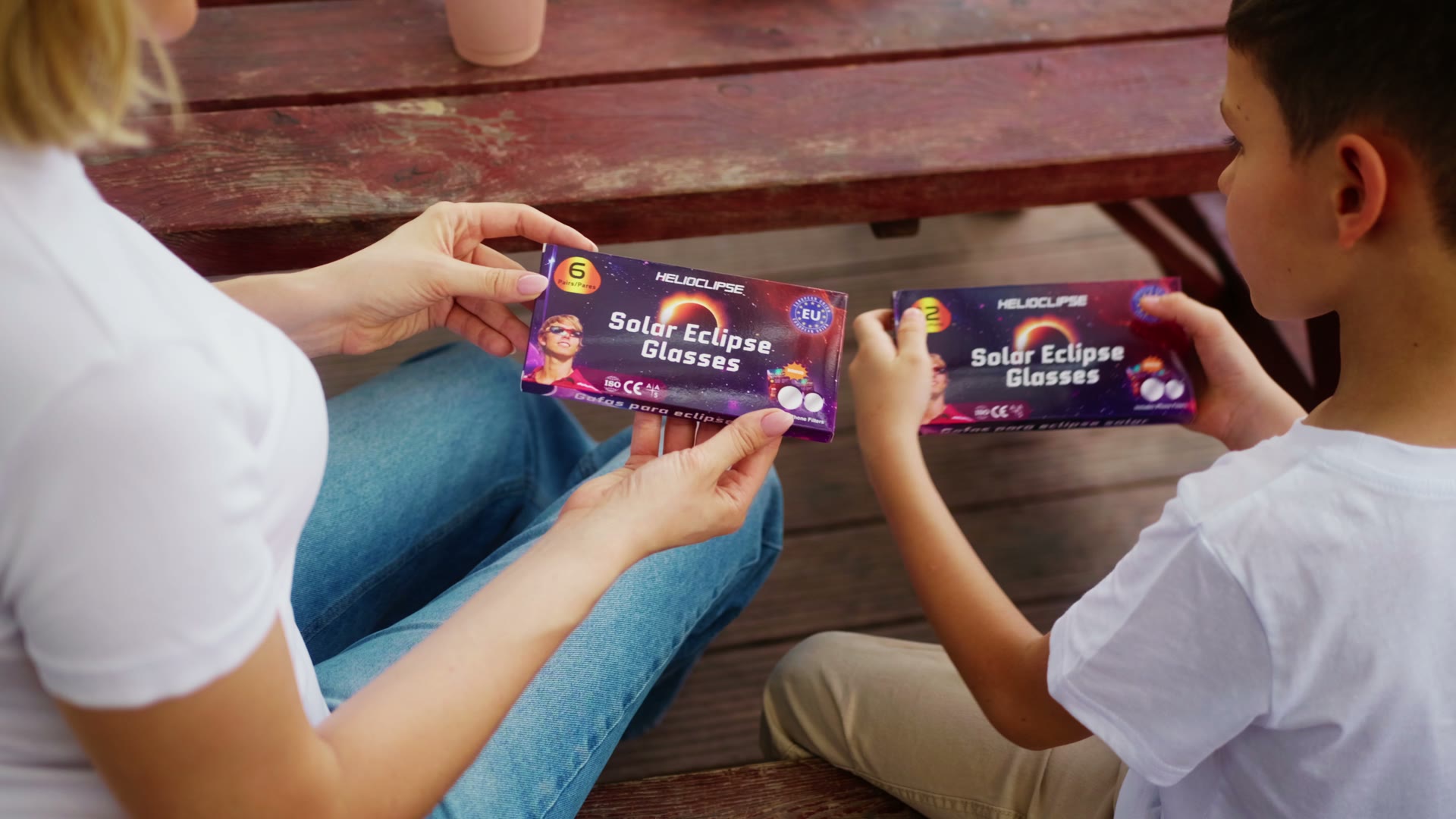
Start with our certified solar eclipse glasses. Count how many people need eclipse viewing glasses, allow time for delivery and inspection, and keep the product instructions with the viewers. If you’re buying for an institution or importing a batch, confirm any applicable local requirements for the exact product before you commit.
Sources & further reading
Saudi and Egyptian conformity resources
- Saudi Standards, Metrology and Quality Organization (SASO)
- Egyptian Organization for Standardization and Quality (EOS)
- Saber — Saudi product conformity platform
Solar-viewer standards and eye safety
- How to enjoy a solar eclipse in total safety — ISO
- About the ISO 12312-2 Standard for Solar Viewers — American Astronomical Society
- How Can You Tell If Your Eclipse Glasses or Handheld Solar Viewers Are Safe? — American Astronomical Society
- How to View a Solar Eclipse Safely — American Astronomical Society
- Eclipse Viewing Safety — NASA
Reporting and eclipse planning