What to look for in the sky during totality—beyond the corona
The Sun disappears, the corona unfurls around a black Moon, and suddenly someone nearby shouts, “Venus!” A bright planet in a daytime sky is a thrilling sight—but during totality, it is only one part of a much stranger scene.
The planets visible during total solar eclipse events are not the same every time. Their positions change, the eclipse occurs against a different part of the sky, and local conditions determine how many faint objects break through the deep twilight. Even your position inside the path of totality matters.
So begin with realistic expectations: totality does not usually turn midday into a fully dark, star-filled night. It creates a fast-moving twilight in which the brightest planets and perhaps a few bright stars may emerge. The corona, chromosphere, prominences, changing horizon and human reaction around you are likely to be far more memorable than counting planets.
Before eclipse day, use our Eclipse Explorer and 3D map to confirm that your observing site is genuinely inside the path of totality. A location experiencing 99% partial coverage does not receive the same dark sky, exposed corona or safe glasses-off interval as a location under the Moon’s umbra.
Totality is deep twilight, not ordinary night
What will the sky look like during totality? Imagine a dark blue or blue-gray vault overhead, with the eclipsed Sun appearing as a black disk surrounded by a pale, structured corona. Near the horizon, sunlight from outside the Moon’s shadow can produce bands of orange, pink or yellow in multiple directions—the famous 360-degree sunset effect.
How dark the sky becomes depends on several variables. A wider lunar shadow generally creates deeper darkness than a narrow one. Clouds can darken the scene, but they may also scatter light from beyond the umbra. Artificial lights can switch on automatically, while haze near the horizon may hide a low planet that would be obvious in a cleaner sky.
Your place across the path also matters. Near the center, totality generally lasts longer and the surrounding bright edge of the umbra is farther away. Near the path boundary, totality is shorter and the sky may remain brighter. That is one reason what the sky looks like during a total solar eclipse cannot be reduced to a universal planet count.
The transformation accelerates in the final minutes. The remaining solar crescent becomes extremely thin, ordinary shadows sharpen, the temperature may fall, and daylight takes on an unfamiliar silvery quality. Totality then arrives abruptly when the last direct photospheric light disappears.
Give the corona your first uninterrupted look
What to look for in the sky during totality—beyond the corona—is a useful question, but it should not push the main spectacle into second place. The corona is the Sun’s outer atmosphere, normally overwhelmed by the brilliant photosphere. A total solar eclipse is the only occasion on Earth when you can see its broad structure directly with the unaided eye.
For your first 10 or 15 seconds, simply look. Notice whether the corona appears rounded or stretched into long streamers. Look for fine, brush-like detail close to the Moon and fainter extensions farther out. Its shape reflects the Sun’s magnetic field and changes across the solar activity cycle, so no two eclipses present precisely the same corona.
Near the Moon’s edge, you may see vivid pink or red points and loops. These are solar prominences—clouds of plasma held above the Sun by magnetic fields. A thin reddish arc may also briefly reveal the chromosphere just after totality begins or just before it ends.
Trying to photograph, narrate, identify planets and adjust equipment at the same time can make a two-minute totality feel like 20 seconds. Give each person in your group one simple job before the eclipse. One person can call the safety transitions, while everyone else keeps a short mental list: corona, prominences, one bright planet, horizon, then back to the corona.
Which planets may appear on August 12, 2026?
The total solar eclipse of August 12, 2026 crosses parts of Greenland, Iceland and northern Spain before ending near sunset. The Sun’s altitude and the orientation of the sky will differ substantially along that path, so apparent directions and the ease of seeing low objects will vary by location.
A professional preview cited in our research places Jupiter roughly 11 degrees west-northwest of the Sun during the eclipse, with Mercury about another 4 degrees beyond it. Venus lies much farther away—approximately 46 degrees east-southeast of the Sun—and should be easier to separate from the corona’s glare. Mars is low in the west and is expected to be a considerably more difficult naked-eye target.
Those angular separations are more useful than a promise that you “will see” a particular planet. At arm’s length, a clenched fist spans roughly 10 degrees, so Jupiter’s predicted separation is a little more than one fist from the eclipsed Sun. Mercury is close enough to Jupiter in angular terms to be worth knowing about, but its lower brightness and the intense visual competition around totality make it much less certain.
Venus is usually the easiest planet to notice because it is exceptionally bright. Its large separation from the Sun in 2026 means you will need to turn your head and deliberately scan the appropriate part of the sky rather than expect it beside the corona. Jupiter may also become conspicuous as the light falls. Mercury and Mars should be treated as bonuses, not targets on which to spend the whole total phase.
Bright planet visibility depends on geometry and eclipse planning: a planet must be above your local horizon, sufficiently separated from the Sun, bright enough to pierce the eclipse twilight and unobstructed by cloud or haze. The most responsible planets visible during total solar eclipse 2026 guide therefore describes probabilities and positions, not guarantees.
A planets visible during total solar eclipse 2026 guide PDF can preserve a handy sky diagram, but a static file cannot account for your precise coordinates, horizon or last-minute cloud. Check an up-to-date ephemeris or professional eclipse summary close to the date, then orient yourself before totality begins.
Why a planet can appear before totality
Waiting for complete darkness is not always the best strategy. As the Sun narrows to a slender crescent, your eyes gradually adapt and the brightest planet may emerge several minutes before second contact. The 2026 professional preview suggests beginning to look for the brightest candidates about 15 minutes before totality rather than sacrificing the brief total phase to a prolonged search.
Keep your solar viewers on whenever you turn toward the partially eclipsed Sun. You can look around the landscape and away from the Sun without them, but any direct view of the solar crescent requires proper protection. If you locate Venus in advance and remember its position relative to a landmark, finding it again during totality becomes much easier.
Planet brightness is not determined by distance from Earth alone. Apparent brightness also depends on a planet’s size, reflectivity, distance from the Sun and phase as seen from Earth. Venus can outshine Jupiter even though Venus may show only part of its illuminated hemisphere. Mercury, meanwhile, can be physically present in the right area yet remain difficult against a bright twilight background.
There is no meaningful fixed answer to “in what order are the planets visible during a solar eclipse?” Objects emerge according to brightness, contrast, altitude, cloud and where you happen to look. Venus often wins, but the sky does not reveal planets in a scheduled procession.
Stars, horizon color and the world around you
The brightest stars may become visible if the eclipse is dark enough and the sky is clear. Which ones have a realistic chance depends on the date and the Sun’s position among the constellations. A star chart prepared for the specific eclipse is therefore more useful than a generic list of famous stars.
Even when no star appears, look toward the horizon. You are standing inside the Moon’s dark umbra while places beyond it remain in sunlight. That geometry creates the warm band around the edge of the shadow. Mountain ridges, clouds or a broad sea horizon can make the contrast especially clear.
Then look down and listen. Just before and after totality, faint shadow bands may ripple across a white sheet, pale wall or light-colored ground. Birds and insects may change their calls. People’s faces take on the strange color of eclipse light, and the arrival of the Moon’s shadow can trigger gasps before anyone consciously identifies what has changed.
If you are asking what to look for in the sky during the eclipse, remember that some of the best phenomena are not overhead. Crescent projections under trees appear during the partial phases. The approaching shadow may be detectable from an elevated site. The sudden horizon glow and the reactions of your group give the event its scale.
A simple naked-eye sequence for totality
You do not need an ambitious checklist. A calm sequence protects the rarest experience from being lost to frantic planet hunting:
- Start with the eclipsed Sun. Take in the black lunar disk and the corona with your unaided eyes.
- Inspect the lunar edge. Look for pink prominences and the thin color of the chromosphere.
- Find one bright planet. Try the easiest predicted target first—likely Venus or Jupiter—using a position learned beforehand.
- Sweep the horizon. Notice the sunset-like colors around the Moon’s shadow.
- Look at the landscape and your companions. Absorb the darkness, temperature, sound and human reaction.
- Return to the corona. Be ready for the end of totality and replace your viewers as soon as direct sunlight returns.
For a very short totality, trim that list rather than moving faster. The corona, horizon and one planet are enough. Children may enjoy being assigned a single target—such as finding Venus or watching for pink prominences—while an adult remains responsible for the glasses-on call.
Why planet lists from other eclipses do not transfer
Accounts of planets visible during total eclipse 2024 and planets visible during totality 2024 provide a useful real-world comparison, not a reusable forecast. During the April 8, 2024 eclipse in Dallas, NASA documented Venus and Jupiter shining brightly during totality. That observation confirms what is possible when luminous planets, clear conditions and favorable geometry come together.
NASA’s photographic record of planets visible during total solar eclipse NASA observers saw in Dallas does not establish what every observer saw elsewhere along the path. Cloud cover varied dramatically across North America, and local sky brightness and viewing attention differed from one site to another.
Likewise, reports of planets visible during total solar eclipse 2022 describe an entirely different date, alignment and observing geography. The planets continue moving along their orbits between eclipses, while Earth’s rotation changes which objects are above the horizon for a given observer.
Any statement about planets visible during total solar eclipse today must therefore identify the eclipse, location and time. The phrase planets visible during total eclipse is incomplete without that context. Even a perfectly calculated planet position cannot promise a sighting through cloud, haze or a blocked horizon.
Eye safety while you look around
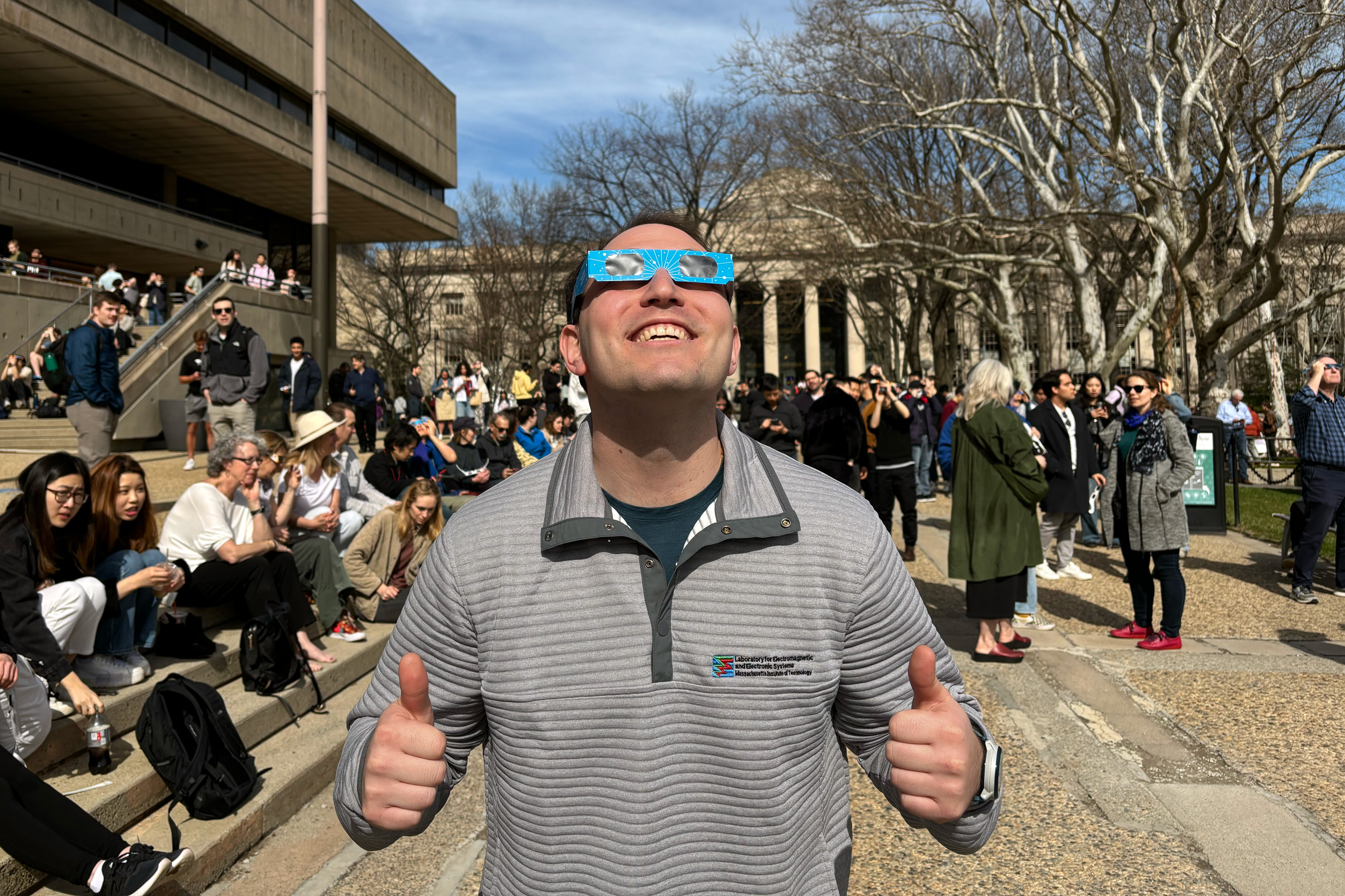
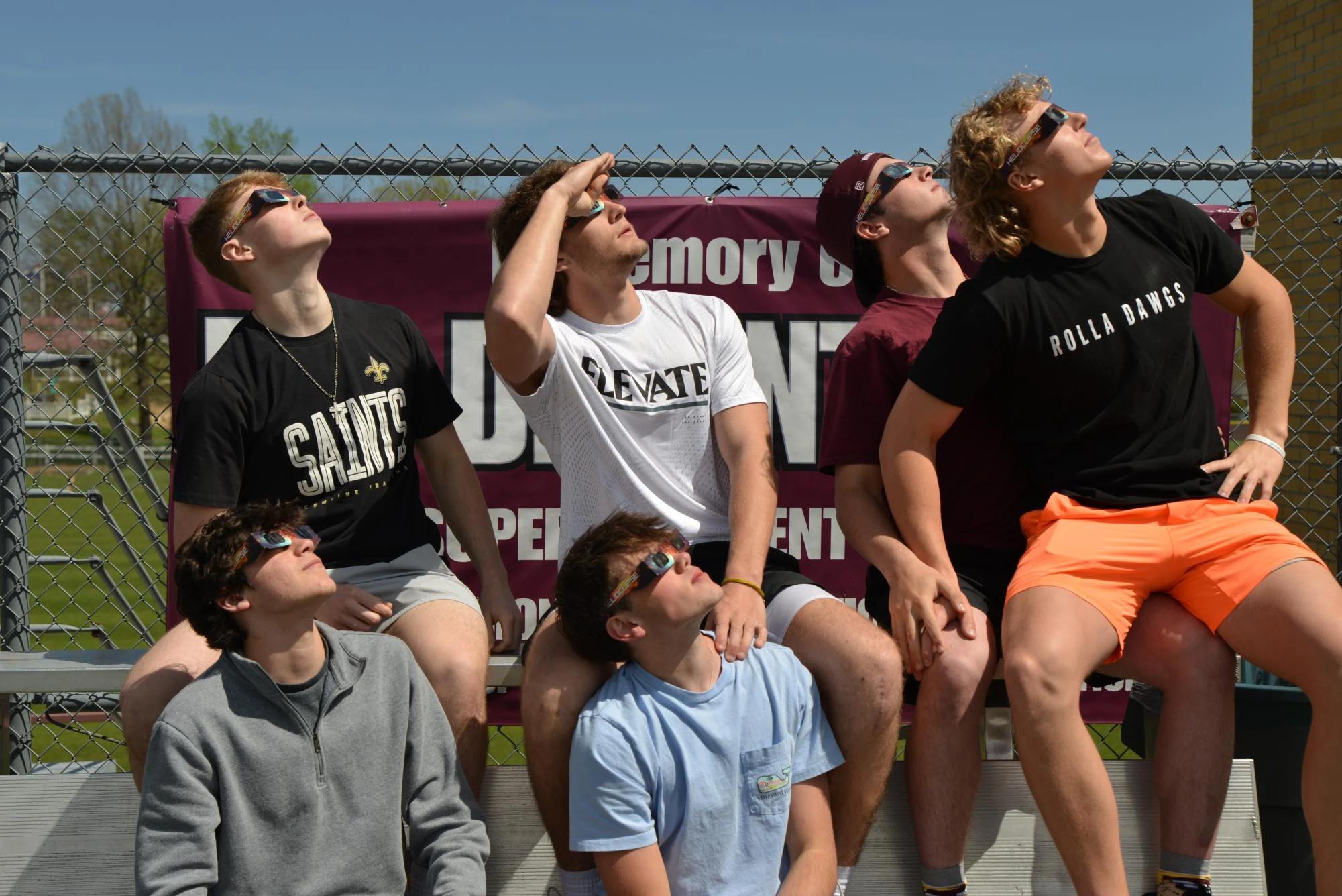
Certified solar viewers are required throughout every partial phase. Only observers inside the path of totality may remove them, and only after the Moon has completely covered the Sun’s bright face. The moment any direct sunlight returns, put them back on. During a partial or annular eclipse, there is no glasses-off phase at all.
Our detailed guide to when glasses stay on and when they can come off is worth sharing with your family or school group before the event. Do not improvise the transition in the excitement of second contact.
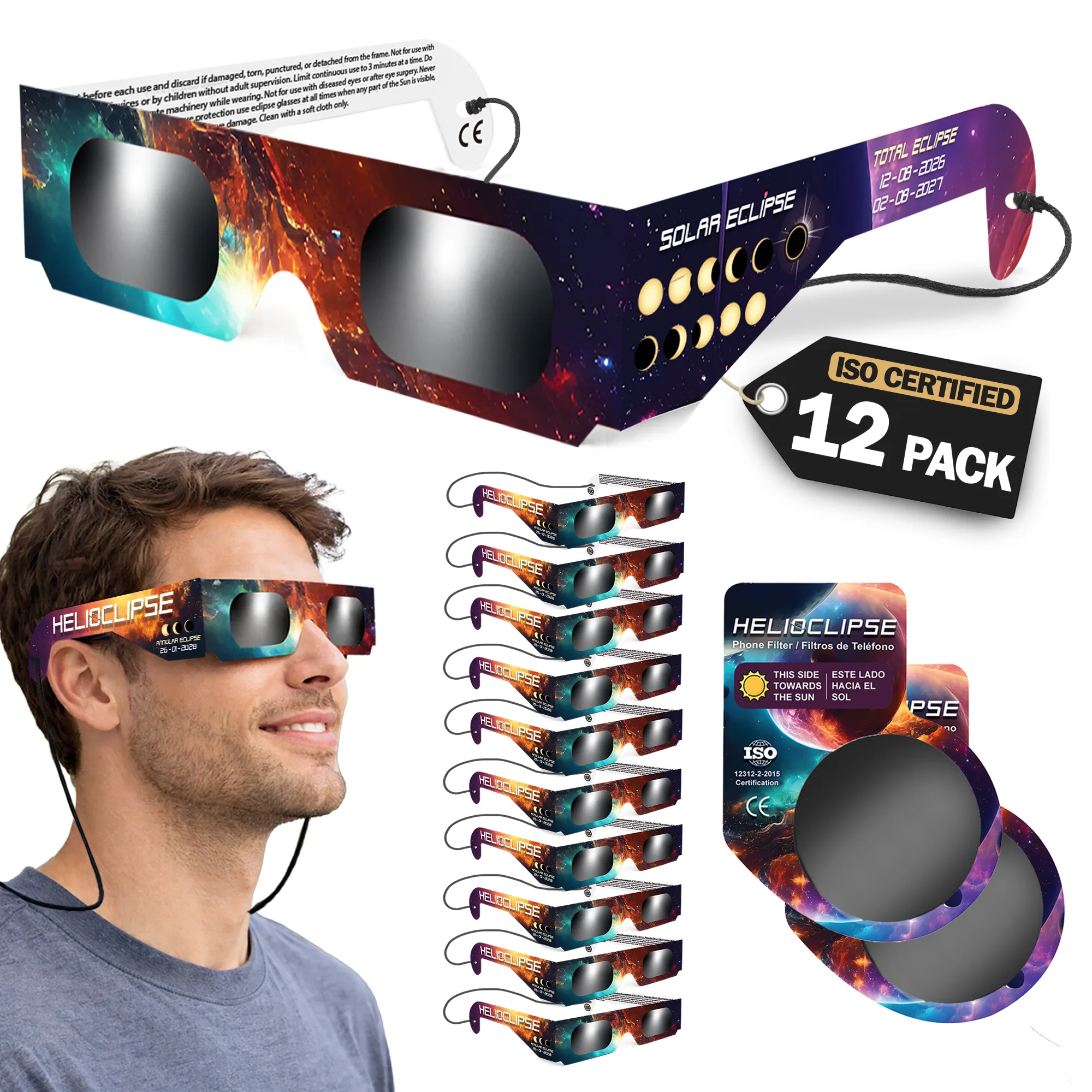
When choosing eclipse viewing glasses, use products intended for direct solar observation and inspect every filter for scratches, tears, punctures or separation from the frame. Product wording such as solar eclipse glasses iso 12312-2 certified or eclipse glasses iso 12312-2 should be supported by credible manufacturing, testing and traceability information; printing a standard number is not proof by itself. NASA does not approve commercial viewer brands.
Eclipse glasses are not filters for binoculars, telescopes or camera lenses. Magnifying optics concentrate sunlight and require a correctly fitted solar filter secured over the front aperture. Do not look through unfiltered optics while wearing eclipse glasses—the concentrated light can damage the viewer and your eyes.
If your goal is a relaxed first totality, prioritize unaided viewing rather than introducing magnified equipment. Certified viewers handle the partial phases; your naked eyes handle the fully eclipsed Sun during genuine totality.
Set expectations, then let the sky surprise you
A good plan identifies likely objects without turning totality into a test. You may see two bright planets and no stars. You may catch a prominence that becomes the image you remember for life. Thin cloud might erase the planets but deepen the horizon colors, while a clear atmosphere could reveal more than expected.
The practical answer to what will the sky look like during totality is therefore a range: profound twilight rather than midnight, an exposed corona around a black Moon, possible bright planets and stars, and a luminous horizon marking the edge of the umbra. Conditions determine the details.
Tell your group in advance which two or three sights matter most. Agree that nobody needs to find everything. That small conversation prevents a family member from spending all of totality staring at a phone or searching the wrong side of the sky.
The best planets visible during total solar eclipse planning leaves room for astonishment. Know where Venus and Jupiter should be, but give the corona your attention first. The rare event is not that planets exist in the daytime sky; it is that the Moon briefly removes the sunlight that normally hides the entire scene.
Frequently asked questions
Where can I view the August 2 solar eclipse from within the path of totality?
The excerpt does not identify locations for an August 2 eclipse. To experience totality, confirm that your observing site lies inside the path of totality; even 99% partial coverage does not provide the same dark sky, visible corona, or glasses-off interval.
Which type of eclipse is considered the rarest on Earth?
The excerpt does not classify eclipse types by rarity. It does explain that totality is distinct from a partial eclipse because the Moon’s umbra creates a darker, rapidly changing twilight and reveals the corona.
Will a planetary eclipse occur in 2026?
The excerpt does not provide predictions for 2026 or describe planetary eclipses. It notes that the planets visible during a total solar eclipse vary from one event to another because planetary positions and observing conditions change.
What could observers have expected to see among the planets during the 2024 total eclipse?
The excerpt does not list which planets were visible during the 2024 eclipse. During totality, the brightest planets and possibly a few bright stars may appear, but haze, clouds, horizon conditions, and a viewer’s position within the path can limit what is visible.
How reliable is a planet count during totality in 2024?
A fixed planet count is not reliable, because totality does not create a fully dark, star-filled night. The sky is more like deep twilight, and the corona, changing horizon colors, and other solar features may be more noticeable than faint planets.
On-site next steps
- Confirm whether your exact site is inside the path and inspect local circumstances with the Helioclipse Eclipse Explorer.
- Read our August 12, 2026 total solar eclipse planning guide and make a short observing plan with your family or friends.
- Order ISO 12312-2 certified solar eclipse glasses early enough to inspect them, explain the rules and practise with children before eclipse day.
Sources & further reading
- What Will We See in the Sky During Totality? — Sky & Telescope
- 13 amazing things to see during the total solar eclipse on Aug. 12 — Space.com
- How Dark Does It Get During a Total Solar Eclipse? — Sky & Telescope
- What to Expect: A Solar Eclipse Guide — NASA Science
- The April 8 Total Solar Eclipse: Through the Eyes of NASA
- Phenomena You'll Experience at a Total or Annular Eclipse — American Astronomical Society
- How to View a Solar Eclipse Safely — American Astronomical Society
- Eclipse Viewing Safety — NASA Science
- About the ISO 12312-2 Standard for Solar Viewers — American Astronomical Society
- Why Do Eclipses Happen? — NASA Science