Ireland in 2026: partial eclipse basics for island planners comparing short hops
On Wednesday, 12 August 2026, the Moon will cover most—but not all—of the Sun across the island of Ireland. Dublin is expected to reach about 94% solar-disc obscuration near 7:11 p.m. local time, while parts of Cork and Kerry may approach 97.5%. That is a striking partial eclipse, capable of reducing the Sun to a narrow crescent, but it is not totality.
The distinction matters. Ireland remains outside the Moon’s dark central shadow, so there will be no safe glasses-off interval and no naked-eye view of the solar corona. Anyone considering a ferry, flight or longer journey must compare a convenient deep partial eclipse at home with the very different experience available inside the path through western Iceland and northern Spain.
Start by entering your actual viewing point in our Eclipse Explorer and 3D map. An island-wide percentage is not precise enough: the eclipse circumstances change from Dublin to Galway, from Belfast to Cork, and even between two sites with different western horizons.
The essential Ireland eclipse facts
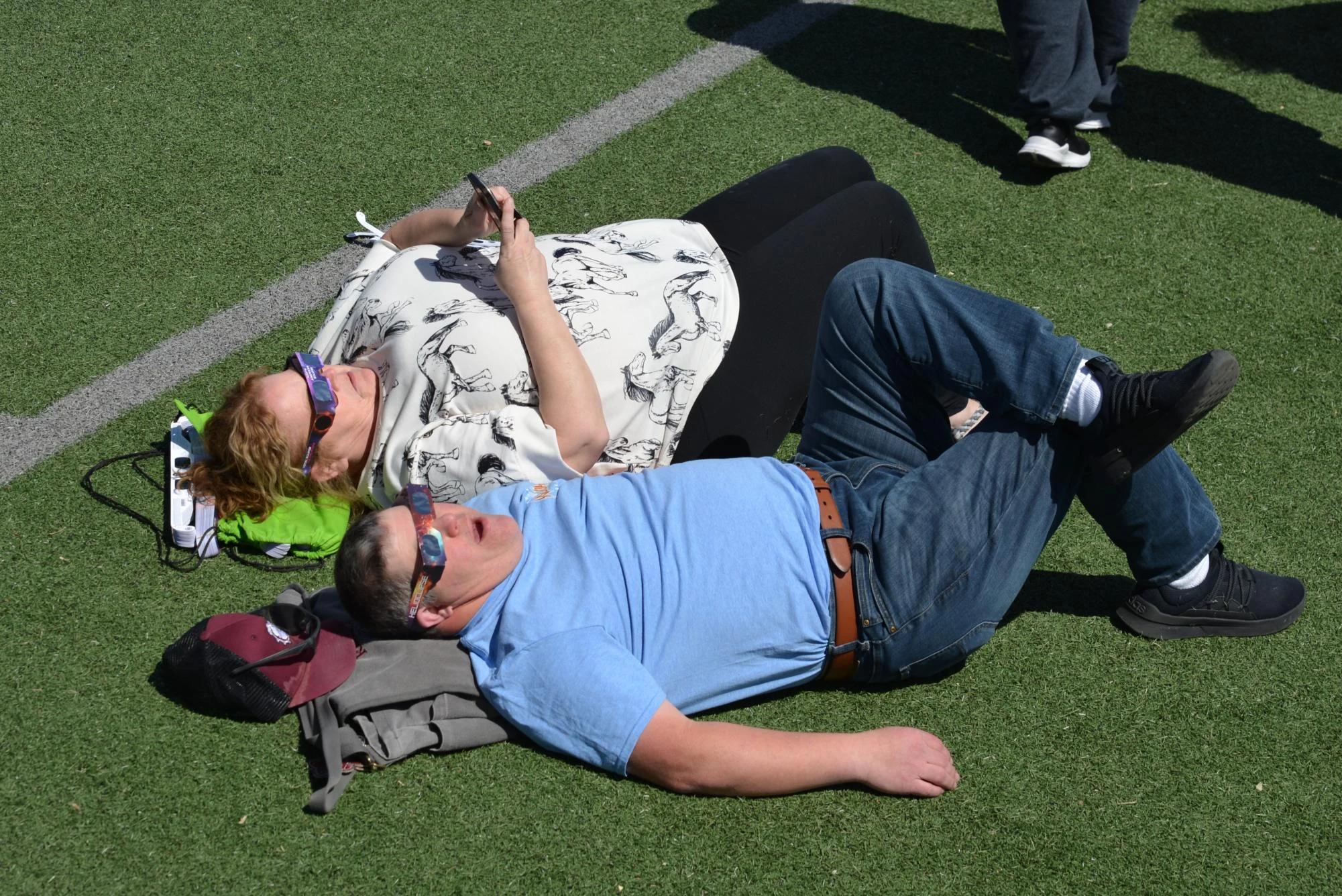
The partial solar eclipse Ireland August 2026 date is 12 August 2026. From Ireland, the event unfolds during the evening, broadly from shortly after 6 p.m. until shortly after 8 p.m. Irish Summer Time, with maximum eclipse around 7:10–7:11 p.m. in the Dublin and Galway examples supplied by current references.
For Dublin, published planning figures place first contact at approximately 6:12 p.m., maximum near 7:11 p.m., and the end near 8:05 p.m. local time. Treat those as city-level approximations, not an all-island timetable. For partial solar eclipse Ireland August 2026 time planning in Belfast, Derry/Londonderry, Galway, Limerick, Cork or a rural coastal site, look up the contacts for the exact coordinates and confirm the timezone shown by the map.
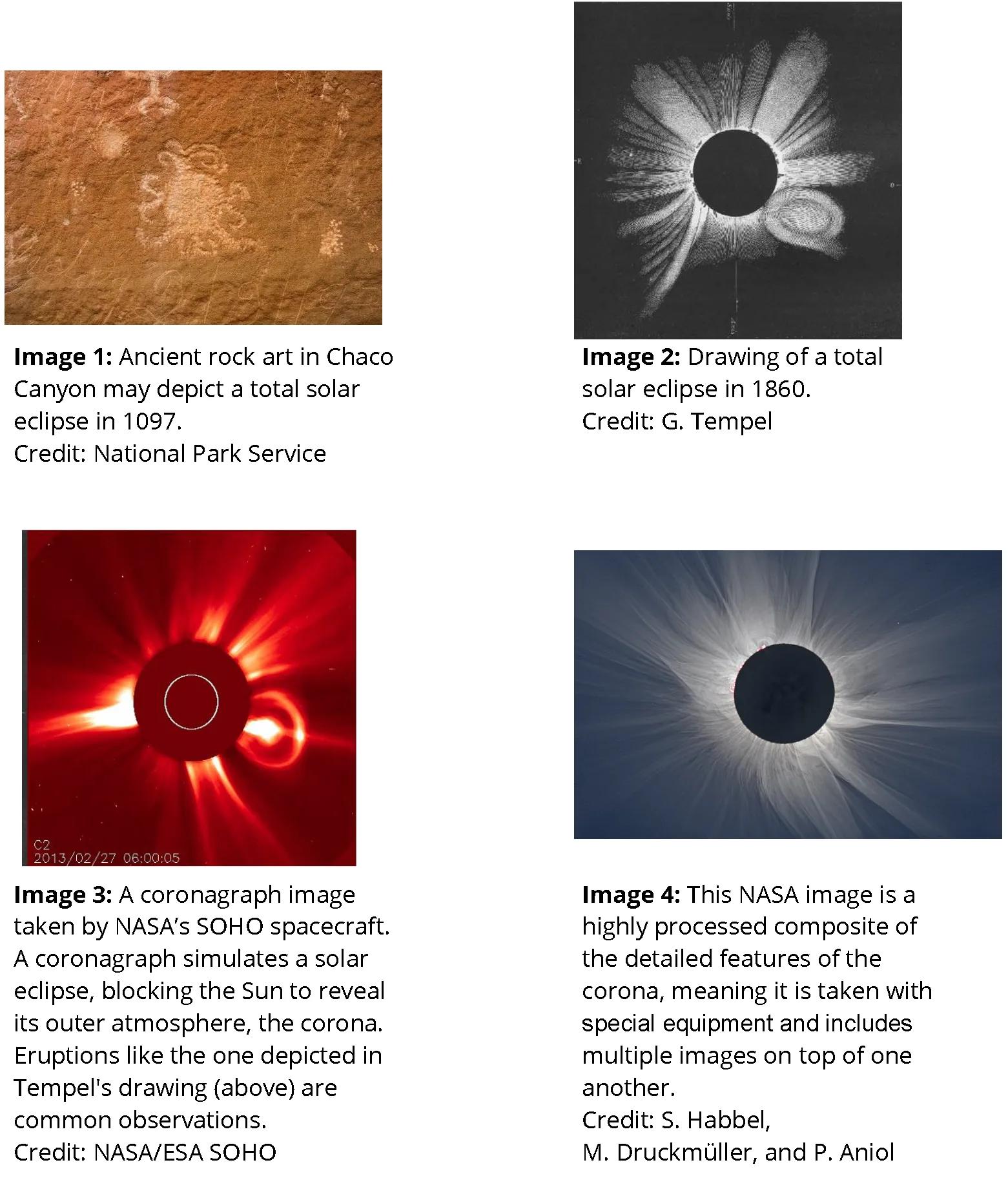
The solar eclipse August 2026 Ireland will experience is part of a total solar eclipse whose central shadow crosses Greenland, western Iceland, northern Spain and a tiny part of northeastern Portugal. Across Ireland, observers remain in the penumbra—the lighter outer part of the Moon’s shadow—so the event is partial everywhere on the island.
This is the central fact behind any Ireland solar eclipse 2026 plan: a coverage figure in the mid-to-high 90s is visually dramatic, but 94% or 97.5% obscuration is not “almost the same” as totality. A surviving sliver of the Sun’s photosphere remains intensely bright. It prevents the corona from appearing and means certified viewers must stay on whenever you look directly at the Sun.
What the eclipse will look and feel like
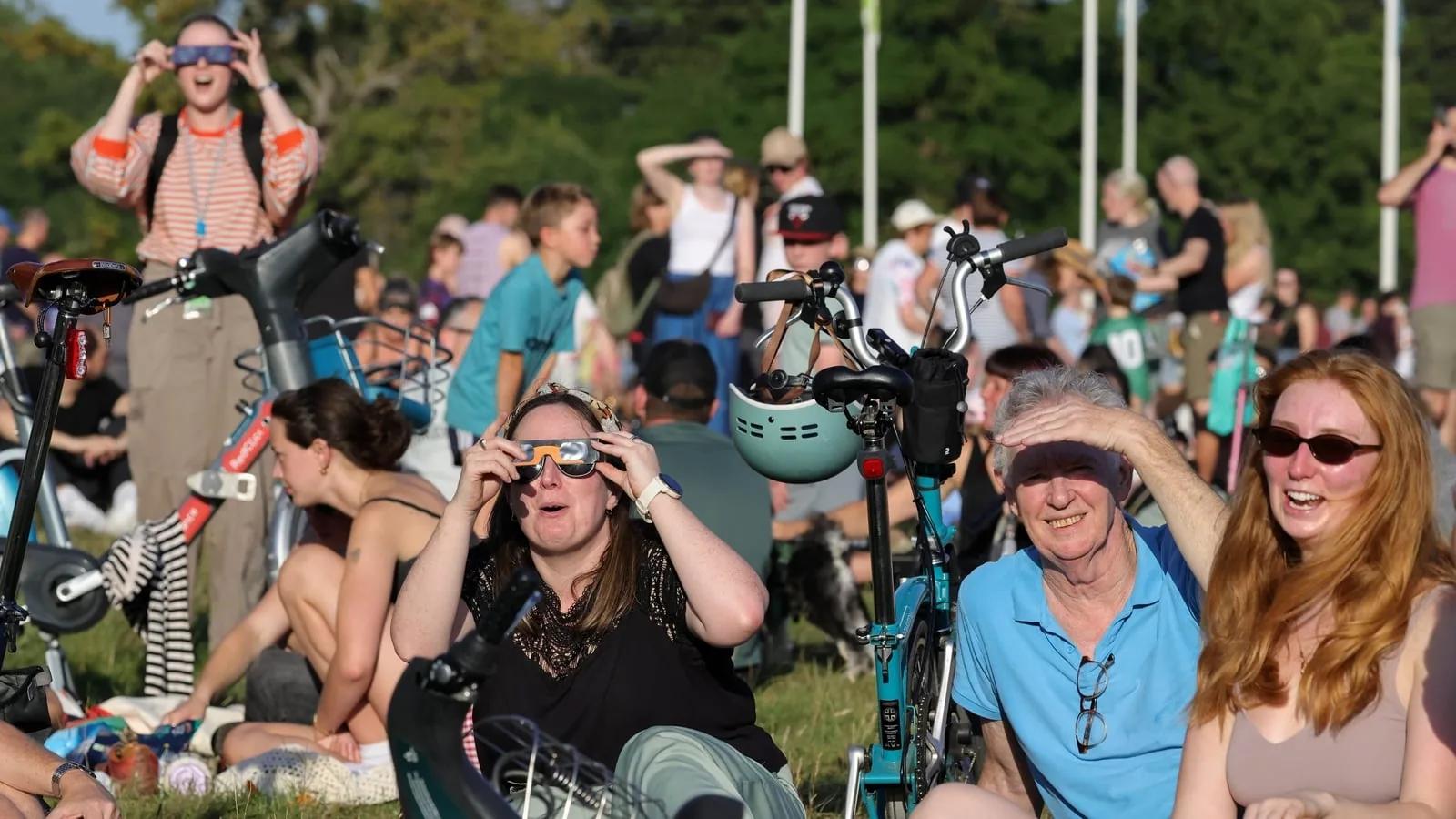
At the beginning, a small notch will appear on the Sun’s edge. Over roughly an hour, that bite will deepen until the visible Sun becomes a slender crescent. The shape will be obvious through proper eclipse viewers, but the landscape may continue to look deceptively normal for much of the partial phase because human vision adapts to slowly changing light.
Near maximum, the light may feel flatter and less warm, and shadows can look unusually sharp. Gaps between leaves, crossed fingers or the holes in a colander can project multiple crescent Suns onto a pale surface. This indirect projection is especially good for children because several people can watch the changing shape without taking turns looking upward.
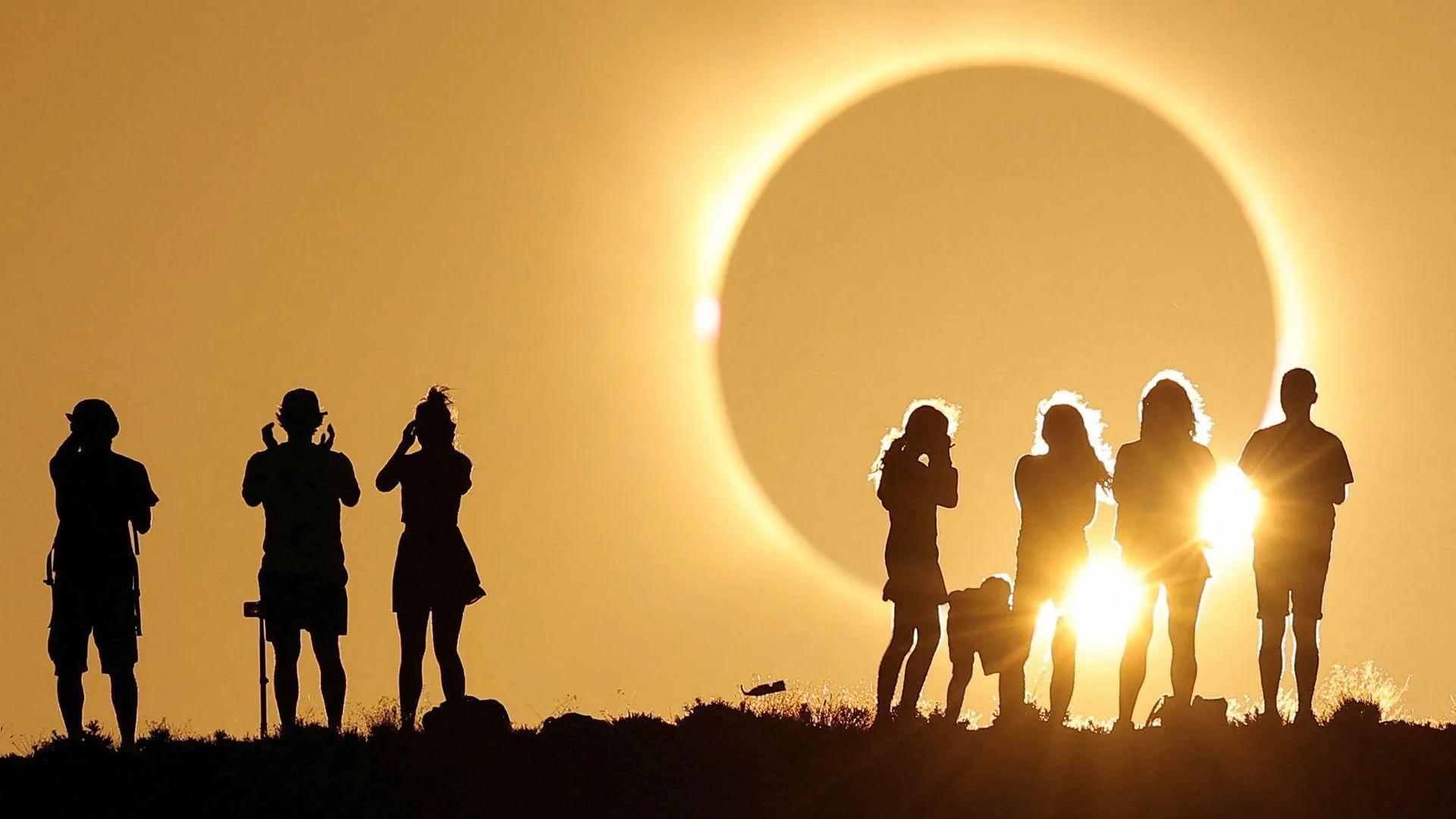
Dublin’s approximately 94% obscuration means only around 6% of the Sun’s apparent disc area remains visible at maximum. That is still enough direct sunlight to injure an unprotected eye. In southwestern Ireland, coverage approaching 97.5% leaves a still smaller luminous crescent, but it does not create a few seconds of totality. The difference between 99.9% partial and 100% total is not merely numerical; crossing into the umbra changes the phenomenon itself.
Our broader August 12, 2026 eclipse planning guide explains that change in more detail. From Ireland, however, the simple rule is glasses on for every direct look.
Where to observe across the island
Southwestern Ireland has the geometric advantage. Parts of County Cork and County Kerry are expected to see close to 97.5% of the Sun’s disc obscured, compared with about 94% in Dublin. That is a real difference in the width of the remaining solar crescent, although both locations still see a partial eclipse.
A western or southwestern move should not be judged by coverage alone. The Sun will be in the western part of the sky during this evening event, so a clear line of sight can matter more than gaining another percentage point. A field outside Galway with an open western horizon may outperform a nominally higher-coverage site in Kerry if a ridge, building or bank of cloud hides the Sun near maximum.
For Dublin, the appeal is logistical simplicity: a large population can observe without travelling, and the approximately 7:11 p.m. maximum is accessible for families and community groups. Scout parks and open ground in advance, but stand where trees and buildings do not block the west.
For Cork and Kerry, the deeper partial phase is the attraction. Coastal viewpoints can offer a clean horizon, but exposed headlands are not automatically superior; wind, sea fog, parking pressure and a single low cloud bank can erase the geometric advantage. Keep an inland alternative and avoid relying on one famous viewpoint.
For Belfast, Derry/Londonderry and the rest of Northern Ireland, the national border has no astronomical significance. The entire island lies outside totality, and each place receives its own partial-eclipse circumstances according to its coordinates. Because the supplied inventory does not provide verified city figures for Northern Ireland, use the solar eclipse 2026 interactive map to check maximum obscuration, local contact times and Sun altitude for your chosen site rather than borrowing Dublin’s numbers.
Why the western horizon belongs in your plan
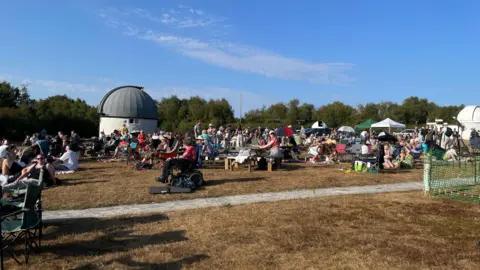
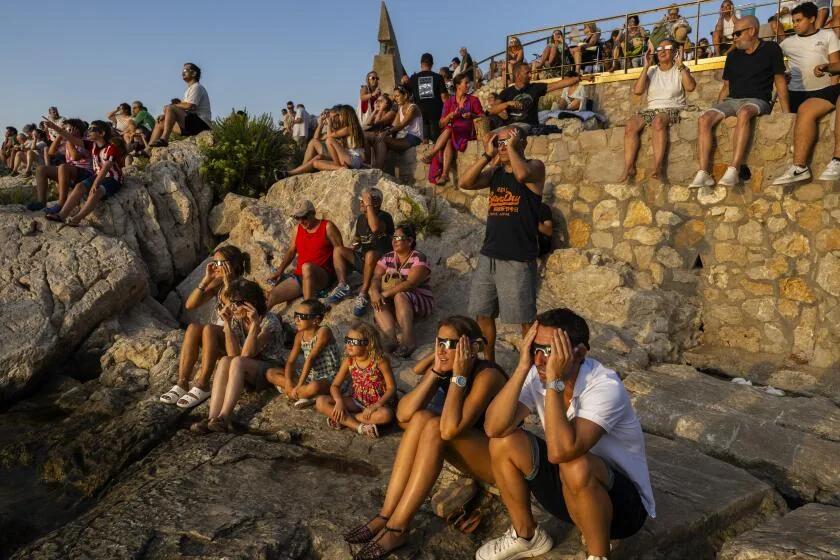
This eclipse happens late enough in the day that horizon planning is not optional. A site can have excellent calculated obscuration and still fail if the eclipsed Sun slips behind a hill, apartment block or dense line of trees. Visit your proposed location on an earlier evening at roughly the same time and note where the Sun sits.
When examining a partial solar eclipse Ireland August 2026 map, do not stop at the coverage layer. Check the direction and altitude of the Sun near maximum, then compare that bearing with local terrain. Smartphone compasses are useful for orientation, but a real site inspection is better because they do not show the height of a nearby ridge or hedge.
Ireland’s maritime weather adds another layer. A national forecast cannot tell you whether a narrow clearing will reach one headland at 7 p.m. Make a primary site and one or two realistic backups within a distance your group can actually cover. The morning forecast, satellite imagery and visible conditions should guide the final choice; a frantic cross-country drive based on tiny percentage differences should not.
This is also a social event worth planning early. Tell relatives, neighbours, a school group or your local astronomy club where the primary and backup sites are. Agree on a decision time, distribute viewers before setting out, and make sure the driver is not expected to study cloud imagery while moving.
Staying in Ireland or travelling toward totality
The Ireland eclipse 2026 creates a genuine travel choice. Remaining on the island offers a deep partial eclipse without airports, unfamiliar roads or the pressure of reaching a narrow corridor. Travelling into the path can deliver totality, but only if your exact destination lies inside the umbra and the weather cooperates.
A ferry crossing to Great Britain does not automatically move you into totality. Cornwall is expected to see around 95% obscuration, broadly comparable with parts of Ireland and less than the highest figures cited for Cork and Kerry. Our guide to the 2026 partial eclipse in the UK helps compare British locations, while the Helioclipse blog collects wider British Isles planning coverage.
For totality, two relatively accessible European directions stand out:
- Western Iceland: Reykjavík is expected to receive roughly one minute of totality, while parts of the Reykjanes and Snæfellsnes peninsulas can receive substantially longer—about 1 minute 42 seconds near Garður and just over two minutes around Snæfellsjökull in published examples. The eclipsed Sun is approximately 25° above the western horizon, but cloud risk is a serious planning factor.
- Northern Spain: The path crosses Galicia and continues through northern and north-central Spain. Examples such as A Coruña, Gijón, Palencia and Burgos receive roughly one to nearly two minutes of totality, depending on position. The Sun is much lower, around 7°–12° high in several western and central examples, so terrain and buildings can block it.
Do not book “Spain” or “Iceland” as if the country name guarantees totality. Much of each country lies outside the central shadow. Madrid and Barcelona, for example, are just outside the path and see extremely deep partial eclipses rather than totality. Check the accommodation coordinates against the 2026 eclipse path before paying a non-refundable rate.
Flights and ferries also need to be treated realistically. Routes may be seasonal, a nominally short flight can involve a connection, and an arrival airport may be hours from a suitable observing site. Build in time for delays, ground transport and a weather-driven move. The partial solar eclipse Ireland August 2026 tickets phrase sometimes conflates two separate needs: no ticket is required to see the eclipse from an ordinary lawful public location, but transport, accommodation, observatory events and managed venues may require advance booking.

Safety: Ireland never gets a glasses-off phase
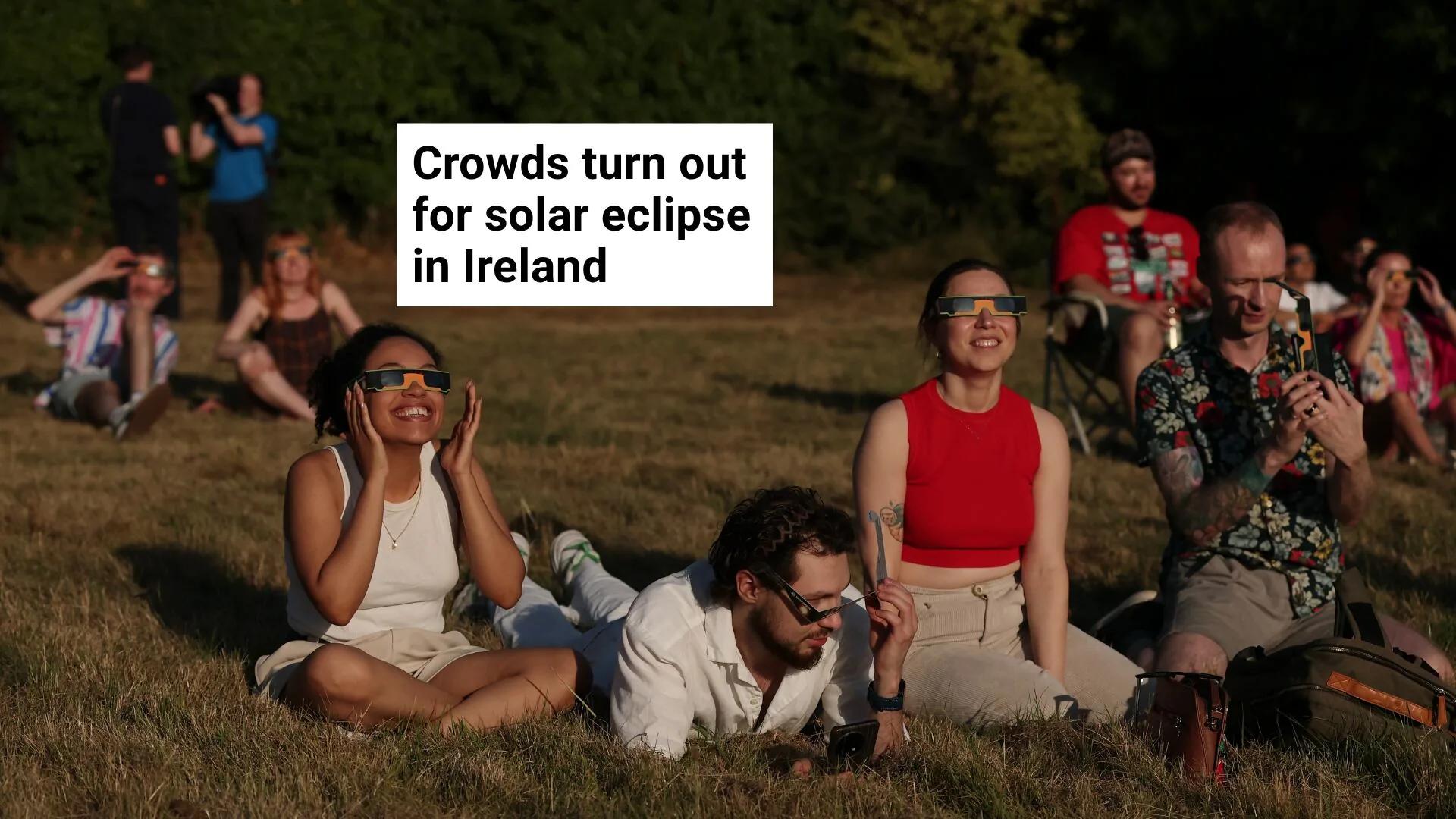
Ireland’s view is partial from beginning to end. Keep proper solar viewers on for every direct look, including at maximum. Ordinary sunglasses, stacked sunglasses, smoked glass and 3D cinema glasses are not safe substitutes.
Choose viewers that conform to ISO 12312-2, inspect the filter for tears, punctures or scratches, and supervise children. Product wording such as solar eclipse glasses ISO 12312-2 certified, certified solar eclipse glasses or eclipse viewing glasses should lead you to verify the standard, supplier and condition rather than trust a vague marketing claim. NASA itself does not approve particular viewer brands.
Put the viewers on before turning toward the Sun. Look briefly, turn away, and only then remove them. If you normally wear prescription glasses, keep them on and place the eclipse viewers over them. Our guide to eclipse phases and when glasses stay on gives families a simple rehearsal for eclipse day.
Cameras, binoculars and telescopes require purpose-made solar filters fixed securely over the front of the optics. Never look through an unfiltered optical device while wearing eclipse glasses: concentrated sunlight can damage the filter and your eyes. If you are not already experienced with solar equipment, use direct viewing glasses or projection instead of improvising a camera setup.
Clearing up dates and misleading labels
The partial solar eclipse 2026 discussed here occurs on 12 August. It should not be confused with a partial solar eclipse in 2025, including the European partial eclipse of 29 March 2025, or with archive labels such as partial solar eclipse Ireland 2024. Those refer to different alignments, visibility regions and local circumstances.
Likewise, Ireland total eclipse 2026 is an inaccurate description of what happens on the island. The global event is a total solar eclipse, but it appears partial from Ireland because the umbra passes elsewhere. The wording partial solar eclipse Ireland August 2026 is the accurate local description.
For reference, our partial solar eclipse Ireland August 2026 2026 guide uses obscuration when discussing the percentage of the Sun’s apparent area hidden by the Moon. That is not always the same as eclipse magnitude, which measures the fraction of the Sun’s diameter covered. When comparing maps or tables, check which quantity is being reported before assuming two percentages mean the same thing.
A practical plan for families and groups
A useful plan does not need to be elaborate:
- Save Wednesday, 12 August 2026 and record the exact local contact times from the map.
- Choose a primary site with an open western horizon and at least one nearby backup.
- Arrange certified viewers for everyone who wants to look directly, then inspect them before the event.
- Bring a colander or simple pinhole projector so children can follow the crescent indirectly.
- Check the weather and satellite picture on the day, but set a deadline for moving.
- Arrive early enough to park lawfully and explain the safety rule before first contact.
You do not need to stare continuously. The partial phase develops slowly, so brief looks every few minutes will clearly show the Moon’s progress. That also makes a limited number of viewers easier to share, although giving each child their own inspected pair reduces confusion in a busy group.
Most importantly, decide what experience you actually want. A convenient 94% partial eclipse in Dublin can be a memorable evening shared with friends. A journey to Cork or Kerry can narrow the solar crescent further. A trip to western Iceland or northern Spain can reach totality—but only with much more exact geography, more expense and greater exposure to travel and weather risk.
Frequently asked questions
When will the August 2026 eclipse begin in Ireland?
It will begin shortly after 6 p.m. Irish Summer Time on 12 August 2026. In Dublin, first contact is approximately 6:12 p.m., but timings vary by location, so check the circumstances for your exact viewing site.
Where should I go for the strongest eclipse view in 2026?
Within Ireland, parts of Cork and Kerry may approach 97.5% solar-disc obscuration, compared with about 94% in Dublin. However, Ireland is outside the central shadow; totality is available only within the path crossing Greenland, western Iceland, northern Spain, and a tiny part of northeastern Portugal.
Can people in North America see the 2026 solar eclipse?
The excerpt does not provide visibility information for North America. It states that the central shadow crosses Greenland, western Iceland, northern Spain, and a tiny part of northeastern Portugal, while Ireland sees a partial eclipse.
Will the 12 August 2026 solar eclipse be visible from Ireland?
Yes. The eclipse will be partial everywhere on the island of Ireland, with the Moon covering most but not all of the Sun during the evening. Dublin is expected to reach about 94% obscuration near 7:11 p.m., while some areas in Cork and Kerry may approach 97.5%.
What are the key safety and planning points for Ireland's August 2026 partial eclipse?
This will be a dramatic partial eclipse, not totality: a bright sliver of the Sun will remain visible even at maximum coverage. There is no safe glasses-off interval, so certified solar viewers must remain on whenever you look directly at the Sun, and local timing should be checked for the exact viewing coordinates.
On-site next steps
- Enter your home, hotel or proposed viewpoint in the Helioclipse Eclipse Explorer and record maximum obscuration, local contact times, Sun altitude and the direction of the western horizon.
- If crossing to totality, confirm that the exact coordinates sit inside the central path; a nearby city or regional label is not enough.
- Arrange Helioclipse solar eclipse glasses early enough to inspect them and practise with children before the event.
Sources & further reading
- Total solar eclipse 2026 — Everything you need to know — Space.com
- Rare Total Solar Eclipse–Perseid Meteor Shower Double-Header August 12th — Sky & Telescope
- Where can I see the total solar eclipse on Aug. 12, 2026? — Space.com
- Plan Now for the 2026 Total Solar Eclipse in Europe — Sky & Telescope
- How to Best Watch the Rare Solar Eclipse From the U.K., Ireland, and Europe — TIME
- Future Eclipses — NASA Science
- Eclipse Viewing Safety — NASA Science
- How to View a Solar Eclipse Safely — American Astronomical Society
- Types of Solar Eclipses — NASA Science
- Why Do Eclipses Happen? — NASA Science