Ocean and mobility: why some viewers plan around water and movement
For a total solar eclipse, a few minutes of darkness can justify months of planning. That is especially true in 2026, when the path runs across Greenland, Iceland, the Atlantic, Portugal, and northern Spain—and a large share of that track is over water. If you have been hearing phrases like eclipse atlantic, eclipse atlantic ocean, or north atlantic eclipse viewing ship, the real idea underneath them is simple: some people want the freedom to move if clouds threaten the view.
That instinct is not irrational, and it is not just romance about being at sea. Mobility can be a real weather strategy. But it is also easy to oversell. Water does not magically create clear skies, and a ship is not automatically a better eclipse platform than land. What matters is where the eclipse path lies, how clouds behave in that region, how quickly you can reposition, and whether you still have a safe, unobstructed view when the moment arrives.
If you are planning for August 12, 2026, start with the Helioclipse Eclipse Explorer / 3D map so you can see exactly where totality falls, how far you are from the centerline, and what “inside the path” really means. Then build your weather and mobility plan around the actual geometry—not wishful thinking.
Why mobility matters more in 2026 than in many eclipses
The August 12, 2026 total solar eclipse is unusually ocean-heavy. Space.com notes that roughly two-thirds of the path of totality lies over open water. That alone explains why so much discussion around the event has a maritime flavor.
On land, the headline locations are eastern Greenland, western Iceland, parts of Portugal, and a diagonal track across northern Spain. At sea, the path crosses large stretches of the North Atlantic. That means the 2026 event naturally generates interest in a north atlantic eclipse viewing ship 2026 guide, because many observers are trying to solve the same problem: how do you maximize your odds when cloud cover could make or break the day?
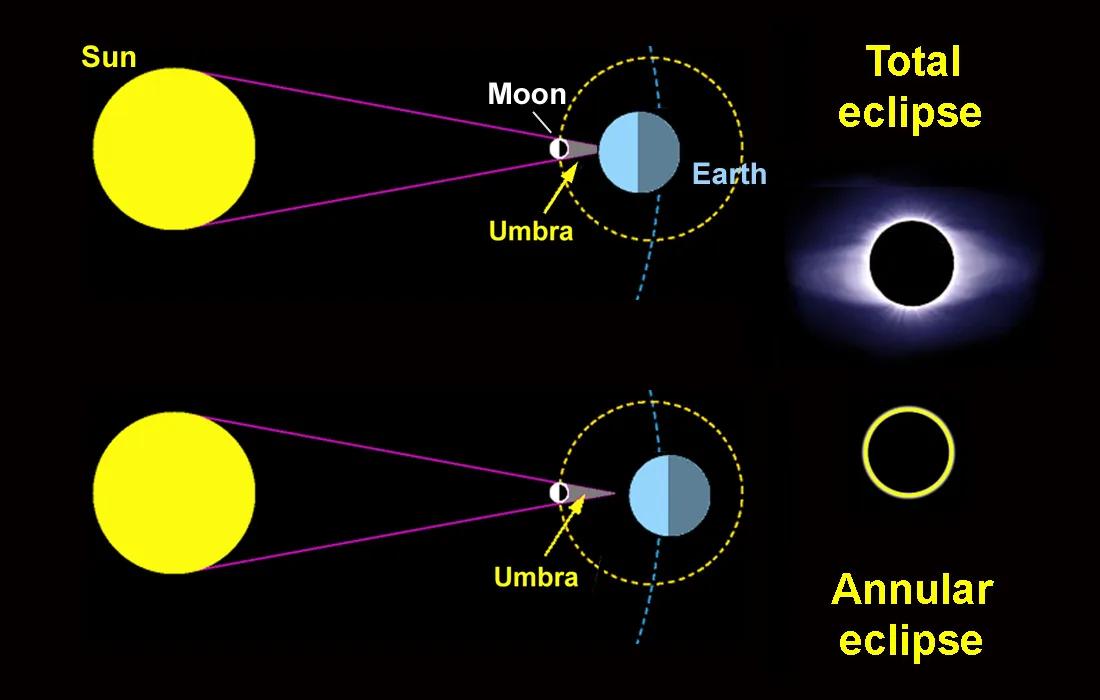
For totality, being almost in the path is not enough. NASA’s eclipse guidance is blunt on this point: if you are outside the narrow path of totality, you get a partial eclipse, not the full experience of the corona and the sudden drop into eclipse darkness. A 99% partial eclipse is still not totality. So mobility only helps if it keeps you both under clearer sky and still inside the umbra.
That is why experienced eclipse chasers often think in layers. First: get into the path. Second: stay where the local horizon works for the Sun’s altitude. Third: keep enough flexibility to react to weather. Our guide on cloud cover and eclipse day goes deeper on that decision-making, but the short version is that movement is useful only when it is disciplined.
Water is not magic. It is a different meteorological playing field.
A lot of people hear “ship” and imagine guaranteed clear horizons. That is too neat. The ocean can offer cleaner horizons and fewer terrain problems, but marine weather can also be stubborn, layered, and extensive.
For the 2026 eclipse, Space.com’s reporting on expert advice captures the tradeoff well. Veteran meteorologist Jay Anderson said the cloudiest parts of the track are likely to include the Greenland coast and parts of the Atlantic, while prospects improve off northern Spain and become stronger in the Mediterranean. That is a much more useful framing than generic hype about “viewing from the sea.”
So when readers search best places and timing for north atlantic eclipse viewing ship, the honest answer is not one perfect spot. It is a set of weather regimes. Scoresby Sund in Greenland can benefit from dry air flowing off the ice sheet, which may help break up cloud. But a large weather system can also blanket the region for days. Off northern Spain, the eclipse occurs late in the day and weather may be more favorable than farther north, but the low Sun creates its own challenge: you need a clean western horizon.
That is the real value of mobility. It does not erase risk. It gives you options inside a risky environment.
What a ship can do that a fixed site cannot
A ship’s advantage is not that it floats. Its advantage is that, if the operator is willing and able, it can reposition toward a better forecast. Space.com quoted eclipse chaser Joe Rao saying that the key to any eclipse cruise is mobility: the ability to make a last-minute move from unsettled weather toward a more favorable zone.
That is the core logic behind interest in north atlantic eclipse viewing ship tours. Not luxury. Not novelty. Forecast flexibility.
A land observer can also be mobile, of course. In western Iceland, for example, some viewers may be able to drive a couple of hours on eclipse day if forecasts favor one peninsula over another. In Spain, many people will do exactly that. But roads can jam, mountain terrain can block horizons, and late movement can fail if everyone makes the same decision at once. A ship avoids some of those problems while introducing others, including motion, sea state, and the limits of maritime routing.
There is also a geometry benefit. On water, you are less likely to lose the eclipsed Sun behind a ridge, hill, or urban skyline. That matters in places where the 2026 eclipse happens with the Sun lower in the sky, especially near Spain late in the afternoon toward sunset. In northern Spain, totality is short—about 1 minute 44 seconds near the best parts of the Spanish track, according to Space.com’s reporting—and the Sun is low enough that local topography matters. A ship offshore may solve the horizon problem even if it cannot solve the cloud problem.

The 2026 geography: Greenland, Iceland, Atlantic, Spain
This is where the article needs numbers, not mood.
Greenland
In eastern Greenland, expedition-style voyages in or near Scoresby Sund are a major part of the 2026 conversation because the region sits inside totality and is difficult to reach by ordinary road travel. Space.com reports that some voyages are targeting around 2 minutes 17 seconds of totality near the centerline. The Sun there is roughly 25 degrees above the western horizon, which is high enough to avoid the low-Sun stress you get in Spain.
That is a serious eclipse setup. It is also remote, expensive, and weather-sensitive. If you are thinking about Greenland, think of it as an expedition first and an eclipse second. The eclipse is extraordinary, but logistics are not casual.
Iceland
Iceland offers the longest totality on land for many travelers in 2026: about 2 minutes 13.7 seconds in the best western parts of the path, according to Space.com’s eclipse travel reporting. Only the west of the country is in totality, including parts of the Reykjanes Peninsula, Snæfellsnes, and the Westfjords. The eclipse occurs with the Sun about 25 degrees above the southwest horizon, so sight lines are generally forgiving.
That makes Iceland attractive for people who want a land plan with some mobility. But it is not a free-for-all. Roads in some areas are narrow, traffic could be heavy, and weather can change quickly. In other words: Iceland may be one of the strongest places for eclipse viewing northeast of the main European tourist flow, but only if you arrive early and keep your backup options realistic.
Northern Spain and nearby waters
The phrase 2026 eclipse northern spain matters because Spain will likely absorb a huge share of public attention. The path crosses the north and northeast of the country, while major cities such as Madrid and Barcelona are outside totality. That distinction matters. Madrid gets a serious partial eclipse, but not totality; we cover that separately in our Madrid partial-eclipse guide.
For totality in Spain, the best duration is around 1 minute 44 seconds near the centerline, and the eclipse happens late in the day, shortly before sunset. That timing is dramatic but unforgiving. A ridge, hill, or coastal haze bank in the wrong place can ruin the view. Offshore mobility can help with horizon clearance, but it cannot guarantee a cloud-free western sky.
If Spain is your focus, our 2026 totality in Spain guide is the better place to compare centerline versus edge-of-path tradeoffs on land.

Can the eclipse itself change the clouds?
Sometimes, yes—but not in the way people imagine.
Live Science summarized research showing that low-level cumulus clouds can dissipate during an eclipse as the land surface cools and rising warm air weakens. In one study of an annular eclipse, cloud cover dropped dramatically as solar obscuration increased, with changes beginning once a modest fraction of the Sun was covered.
That is fascinating science, and it helps explain why some eclipse days produce surprising last-minute improvements over land. But it is not a planning guarantee. First, the effect is strongest for certain low clouds, not every cloud type. Second, it depends on local surface heating, which is a land story more than an open-ocean story. Third, if a broad frontal system or thick layered cloud deck is in place, the eclipse will not simply “burn a hole” through it.
So yes, the atmosphere can respond to the eclipse. No, you should not bet your trip on that response.
Why ocean routes are meteorologically interesting at all
There is another reason the ocean keeps coming up in eclipse planning: marine cloud fields behave differently from clouds over land. Over the sea, you do not have the same patchwork of heated valleys, urban surfaces, forests, and mountains driving local convection. That can make the sky more uniform—but uniform can mean uniformly cloudy as well as uniformly clear.
NASA-related reporting on ship tracks also shows that ships themselves can interact with marine cloud fields through aerosol emissions, leaving visible cloud streaks from space in the right conditions. That does not mean ships create their own eclipse weather, and it definitely does not mean you can engineer a clear patch by being on a vessel. It simply reminds us that the ocean atmosphere is its own system, with fewer land-based complications and plenty of marine ones.
This is one reason the phrase ocean and mobility: why some viewers plan around water and movement is more than a poetic title. Water changes the horizon, the route options, the traffic problem, and the weather context all at once.
What this article is not saying
Let’s clear out a few bad assumptions.
It is not saying that a ship is always better than land. In some years, the best strategy is a simple inland drive under a stable forecast. It is not saying that all maritime plans are serious eclipse plans; some itineraries merely happen to include the eclipse without meaningful weather flexibility. And it is not saying that every Atlantic location is relevant just because it has “Atlantic” in the name.
Search traffic can blur that distinction. Terms like eclipse atlantic city or eclipse atlantic beach nc may reflect curiosity, but they are not the same planning question as the 2026 North Atlantic totality track. Likewise, north american eclipse 2026 is a broad phrase that can mislead readers into assuming a continent-wide total-eclipse opportunity. The actual August 12, 2026 path is concentrated in the North Atlantic sector and parts of Europe, with Greenland and Iceland in the high-latitude portion and northern Spain as the big land-based draw for many travelers.
And while people already search future phrases like solar eclipse cruise 2027, that is a different event with different geometry and weather logic. Do not let a generic “eclipse cruise” idea substitute for the specifics of this eclipse.
The practical questions to ask before you trust mobility
If you are considering a mobile plan—whether by ship, rental car, or a coastal base with backup routes—ask practical questions instead of romantic ones.
First: how far can you actually move on eclipse day? A ship may have freedom, but not infinite freedom. A car may have roads, but not empty roads.
Second: what forecast tools will matter? For the North Atlantic and Europe, satellite imagery and national meteorological forecasts are often more useful than a generic weather app screenshot. On a marginal day, the difference between broken cloud and solid overcast is everything.
Third: what is your horizon situation? In Spain, the late-day Sun makes this critical. In Greenland and Iceland, the Sun is higher, but local terrain and fjord walls can still matter depending on your exact position.
Fourth: are you actually in totality where you plan to be? This sounds obvious, but it is where many first-timers slip. Use the Helioclipse Eclipse Explorer / 3D map to check whether your chosen point is on the centerline, near the edge, or outside the path entirely.
Fifth: what is your fallback if movement fails? A smart plan is not “we’ll just move.” A smart plan is “we can move 50 to 150 kilometers if the forecast supports it, and if not, we still have a viable observing site.”
Safety does not become optional on a ship deck
Mobility changes weather odds. It does not change solar safety.
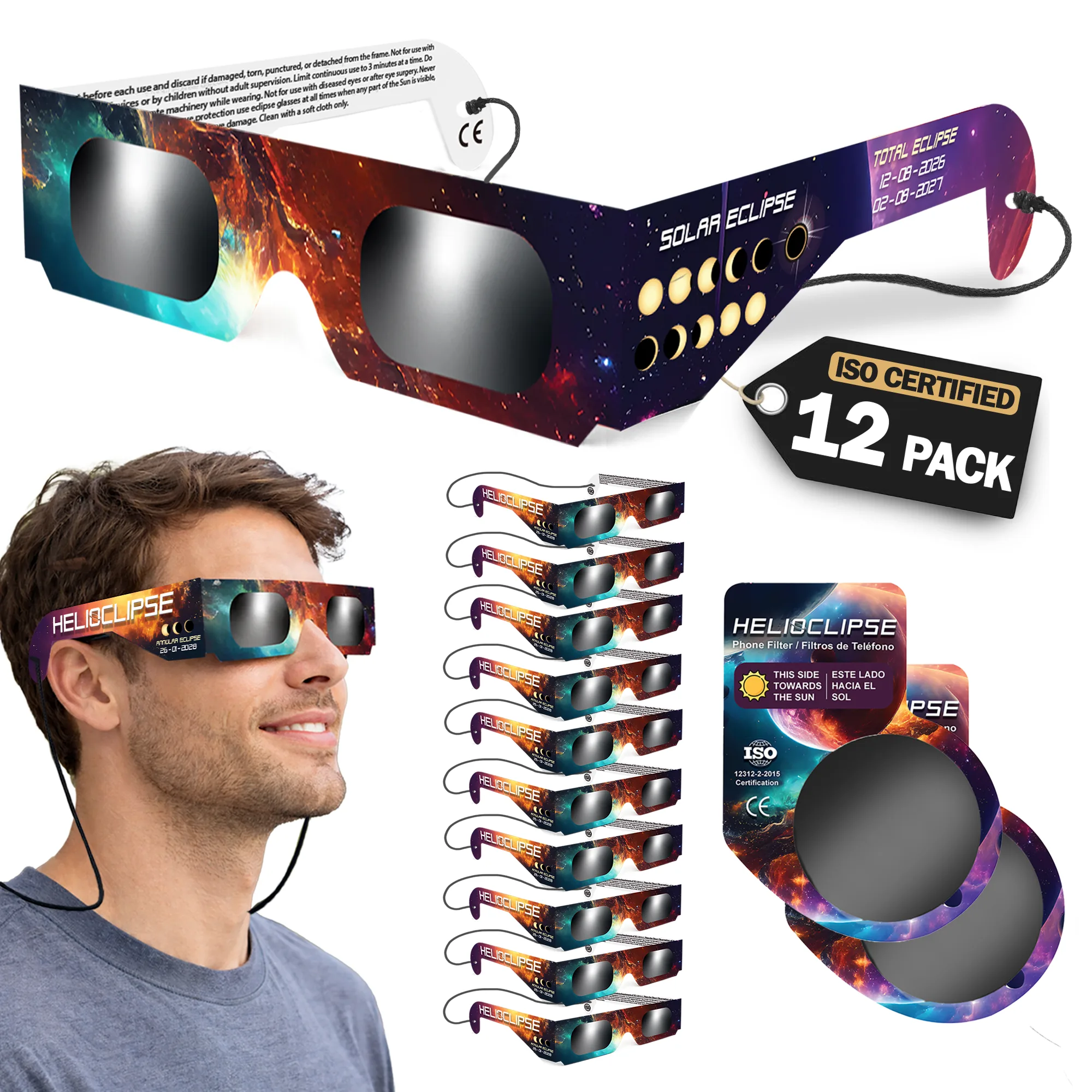
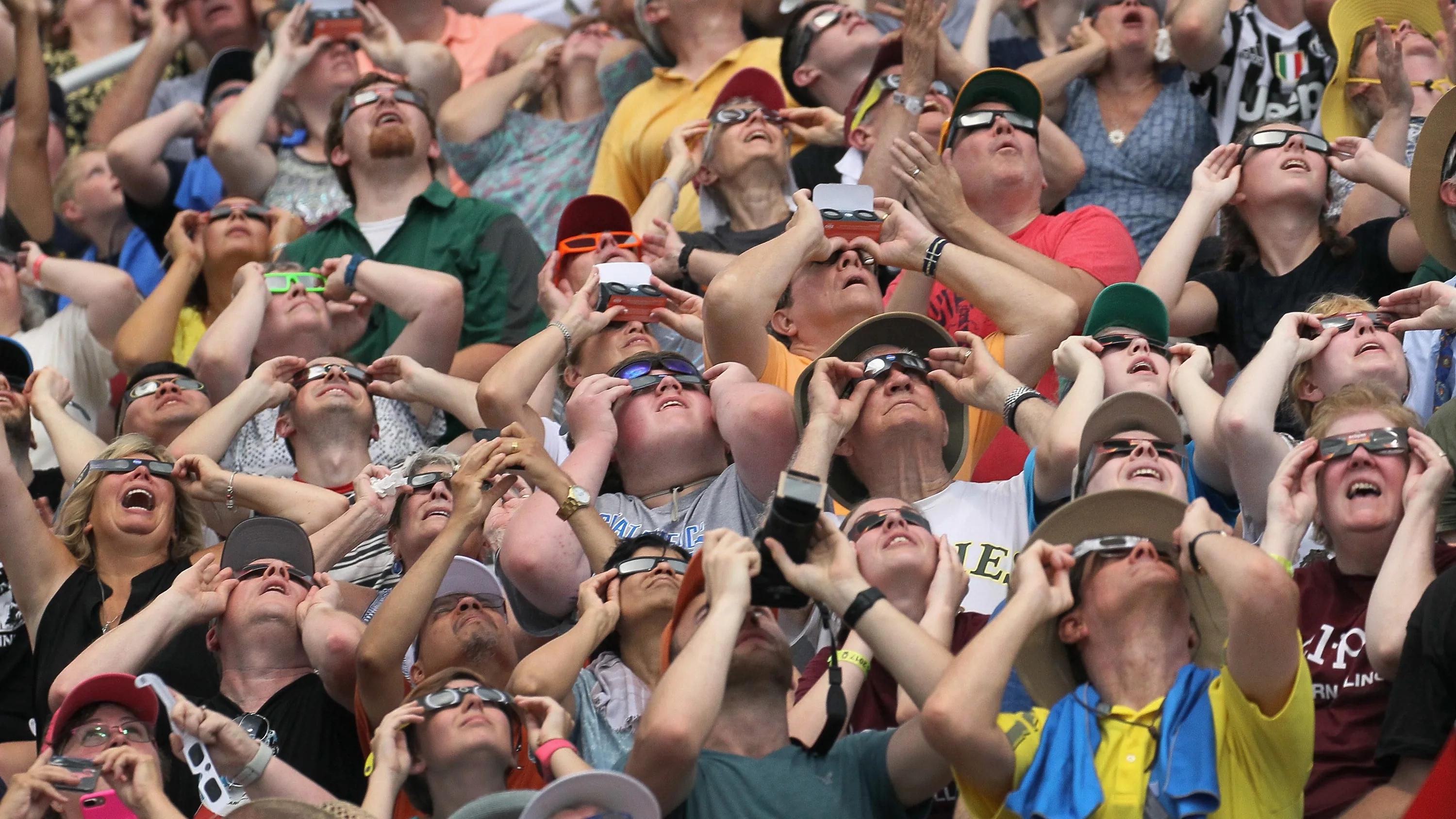
NASA’s safety guidance is clear: except during the brief total phase of a total solar eclipse, when the Sun’s bright face is completely covered, you need proper solar viewing protection. That means certified viewers that meet the ISO 12312-2 standard, or an indirect method such as projection. Regular sunglasses are never enough.
If you are traveling with friends or family, especially on a long-planned group trip, sort this out early. Do not wait until the week of departure and hope the internet is full of trustworthy stock. When people shop for approved solar eclipse glasses, solar eclipse glasses iso 12312-2 certified, or eclipse viewing glasses, what matters is not a marketing phrase but whether the product is genuinely appropriate for direct solar viewing and in good condition. We explain the standard in more detail in ISO 12312-2 and eclipse viewers: what the standard means for your family, and we also recommend reading the AAS page on safe solar viewers.
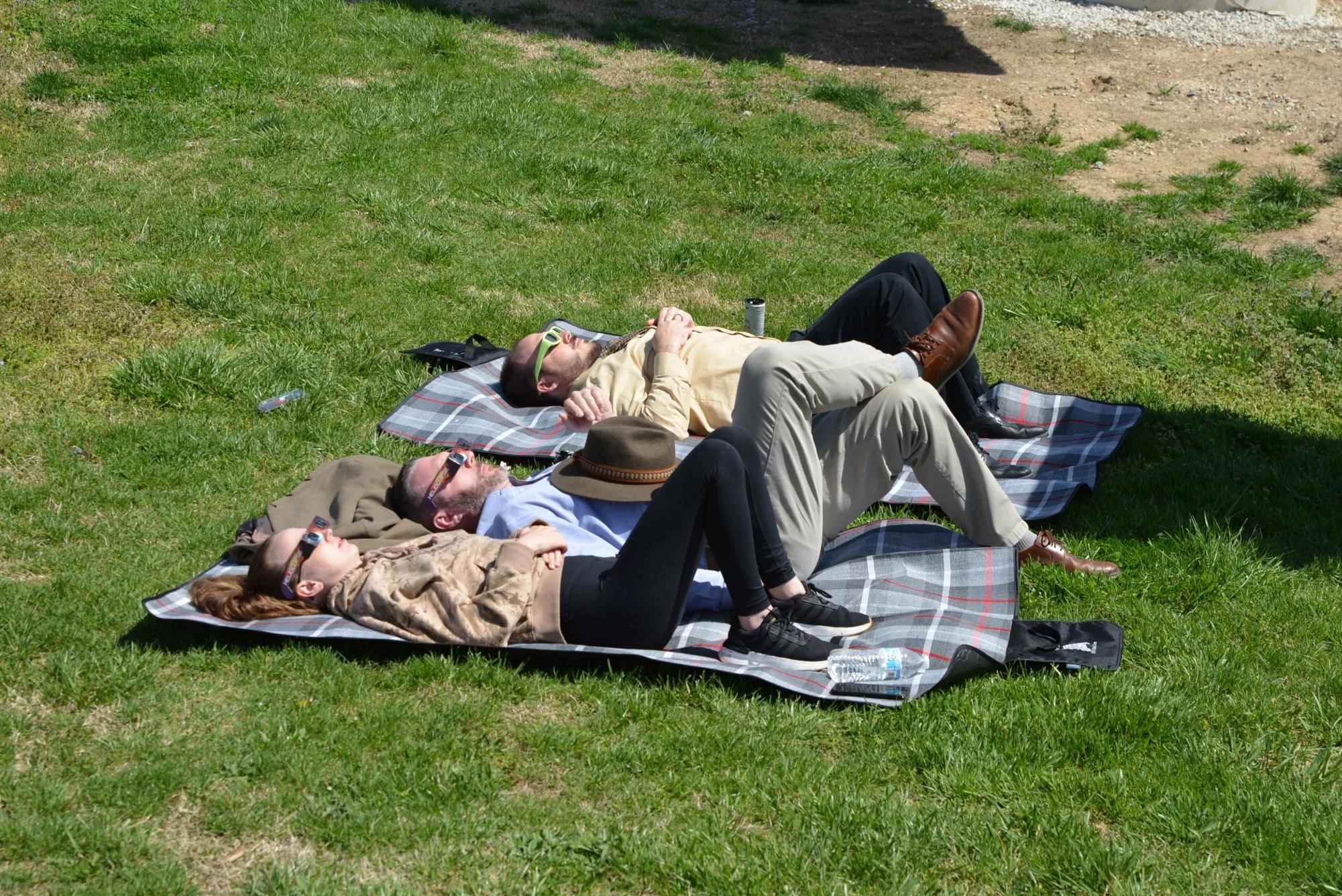
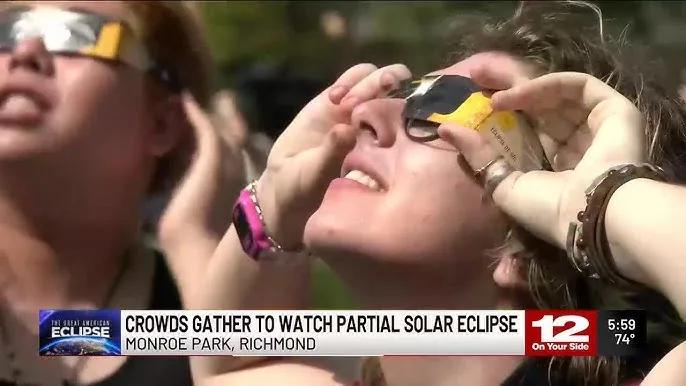
For first-timers, one more rule matters: during a total eclipse, glasses stay on through the partial phases, come off only during totality itself, and go back on the instant bright sunlight reappears. Our guide to when glasses on, when glasses off walks through that sequence clearly.
Why people are drawn to water in the first place
There is a softer human reason this topic keeps surfacing, and it is worth acknowledging without drifting into nonsense. Some people are simply calmer near open water. Search suggestions like why is water so calming or even the odd phrase ocean and mobility why some viewers plan around water and brain point to that emotional layer.
For eclipse planning, though, the useful version of that feeling is not mystical. Water can mean a cleaner horizon, fewer roadside bottlenecks, and a stronger sense that you still have options. On a stressful weather day, that matters. It can help a group stay patient, keep watching the forecast, and avoid the panicked last-hour dash that ruins many eclipse attempts.
But the ocean is not therapy if the logistics are wrong. Seasickness, fatigue, poor deck access, or a vessel that cannot reposition are all real drawbacks. The best mobility plan is the one that matches your tolerance for uncertainty.
So, should you plan around water and movement?
Sometimes, yes.
If your 2026 goal is Greenland, a ship may be the most realistic way to reach a strong totality zone at all. If your goal is Iceland, a land base with road flexibility may beat a vessel, depending on your budget and appetite for fast weather decisions. If your goal is northern Spain, coastal or offshore positioning can help with the low western horizon, but inland land-based plans may still offer better overall weather odds depending on the forecast.
The deeper lesson is that mobility is a tool, not a promise. The best eclipse chasers do not worship movement; they use it carefully. They know the path, know the weather regime, know the horizon, and know when not to chase one more speculative patch of blue.
If you are planning with family or friends, tell them early what kind of trip this is. A total eclipse is not a casual sunset stop. It is a narrow-track event with a clock, a weather problem, and a payoff that can be unforgettable when you get it right.
Understanding the Ocean: Tides and Currents with Laura ...
California Watersport Collective
Frequently asked questions
Is this a ship built for eclipse viewing, or just a regular cruise vessel?
The excerpt does not identify any specific vessel or describe its design, so it does not support calling it a dedicated eclipse platform. What it does say is that a ship can be useful only if it helps you stay inside the path of totality and reposition around clouds while keeping a safe, unobstructed view.
What should people understand before booking an eclipse tour at sea in the North Atlantic?
A tour at sea is not automatically better than land, because water does not guarantee clear skies. The key is whether the route keeps you inside totality, gives you enough flexibility to move if clouds threaten, and still leaves you with a safe view at the moment of eclipse.
How should I think about the cost of an eclipse cruise in the North Atlantic?
The excerpt does not give any pricing information, so it does not support a specific cost estimate. It does make clear that the value of any trip depends on whether it actually improves your odds of seeing totality, since being outside the narrow path means you only get a partial eclipse.
What is the most important planning advice for a North Atlantic eclipse trip in 2026?
Start by checking the eclipse geometry first, not the travel package. The article recommends using a 3D eclipse map to see exactly where totality falls, how far you are from the centerline, and whether movement can realistically help you stay under clearer sky while remaining in the path.
What should viewers know about the 2026 eclipse in North America?
The excerpt does not discuss North America specifically, so it does not provide guidance for that region. It does say the August 12, 2026 total eclipse is especially ocean-heavy and that totality requires being inside the narrow path, not just close to it.
On-site next steps
- Explore the Helioclipse Eclipse Explorer / 3D map to compare Greenland, Iceland, Atlantic, and Spain viewing positions, and to check whether your site is on the centerline or near the edge of totality.
- If you will watch any partial phase directly, get your viewers sorted early in the Helioclipse shop for eclipse glasses. For families and groups, this is the moment to buy before stock tightens—not the night before departure.
- For broader planning, read our blog hub and especially the guides on weather mobility, eclipse phases, Spain’s 2026 path, and travel backup plans.
Sources & further reading
- Best total solar eclipse 2026 cruises for the ultimate adventure
- Eclipse chasers share insider tips, travel advice and skywatching secrets for the 2026 total solar eclipse
- Why low-level clouds vanish during a solar eclipse
- Pollution from Ships Creates Massive Clouds Visible from Space
- Trail from Ship Exhaust Leaves 'A' in the Sky
- Eclipse Viewing Safety — NASA
- About the ISO 12312-2 Standard for Solar Viewers — AAS
- Types of Solar Eclipses — NASA
- What to Expect: A Solar Eclipse Guide — NASA
- So Many Ways to View an Eclipse — NASA Earth Observatory