Green flash, diamond ring, and the moment your brain wants a souvenir image
The Sun narrows to a brilliant point. Someone shouts that it looks green. Your camera screen shows a colored flare, and a luminous spot follows your gaze when you look away. In the emotional seconds around totality, several different optical effects can arrive almost on top of one another—and your brain is eager to turn them into one extraordinary souvenir.
They are not all the same phenomenon. The diamond ring is produced by eclipse geometry: the Moon has almost covered, or has just begun to uncover, the Sun’s intensely bright photosphere. A green flash is an atmospheric effect associated with a low Sun and a sharply defined horizon. A green spot that remains after you look away may instead be an afterimage created inside your own visual system.
That distinction matters for more than vocabulary. Chasing a flash is never a reason to look at a partially eclipsed Sun without protection. Before planning where you will stand, use our Eclipse Explorer and 3D map to confirm whether your location is inside the path of totality. Outside that narrow path, there is no glasses-off moment at all.
The diamond ring is a piece of the Sun, not a trick of the air
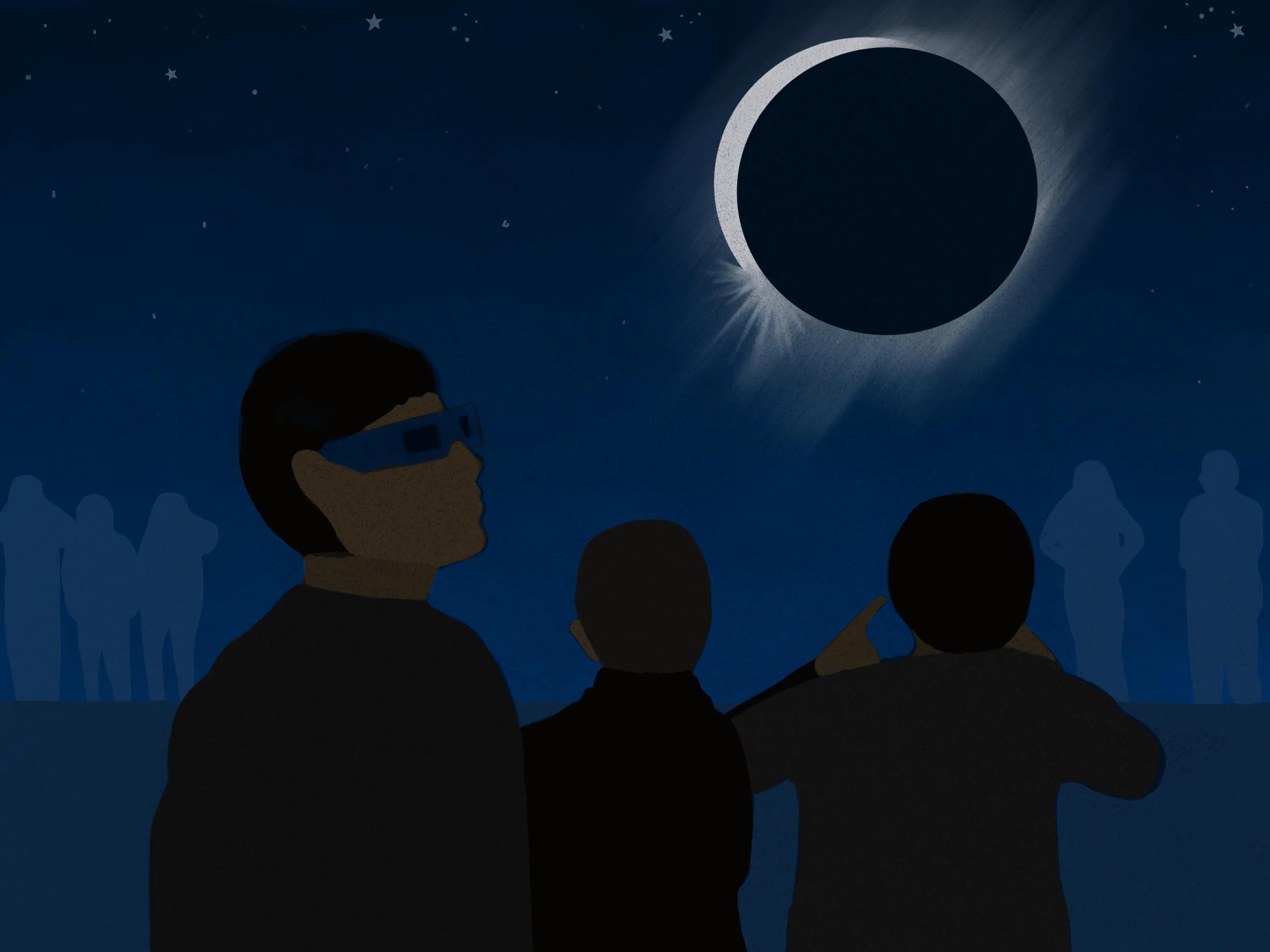
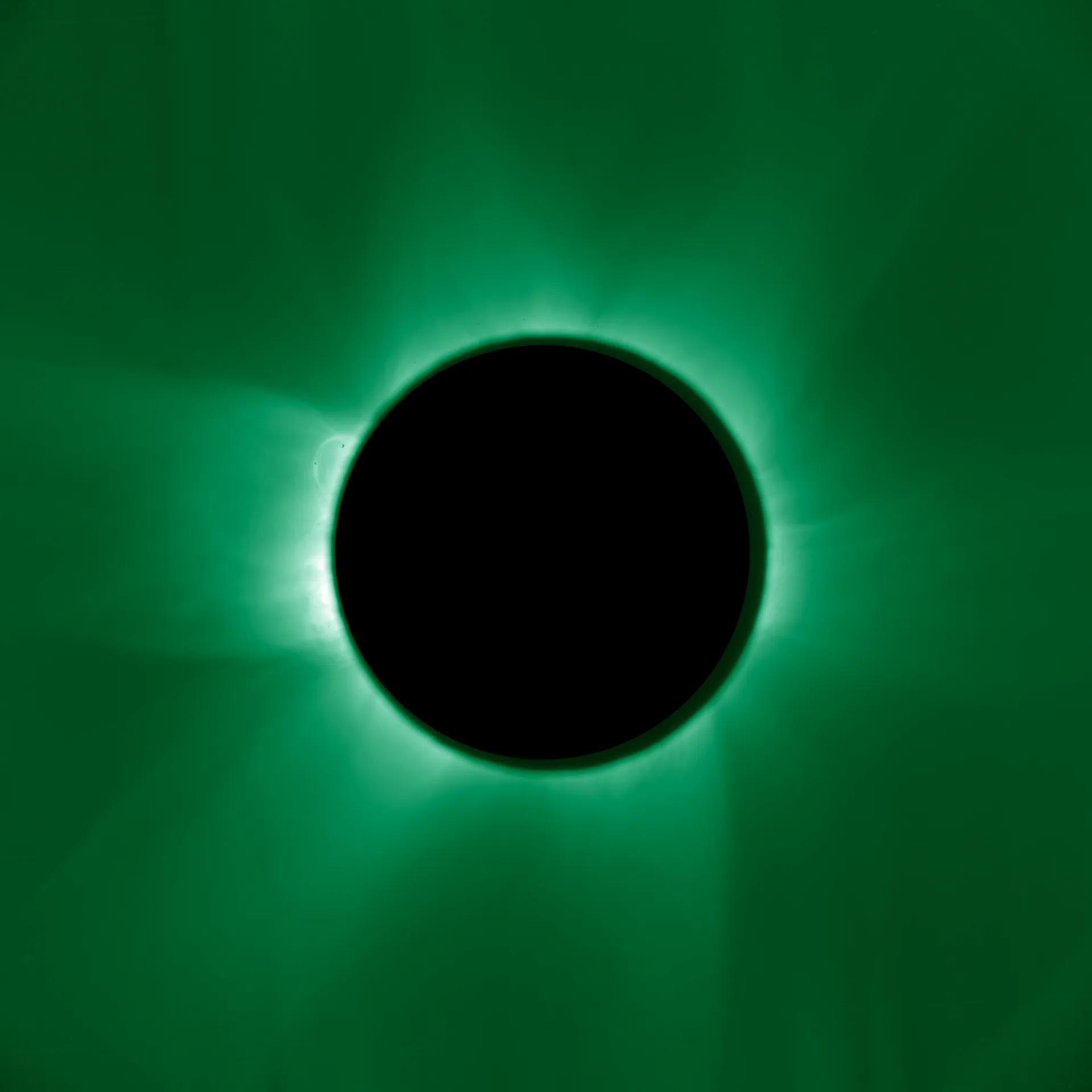
The questions what is the diamond ring effect during solar eclipse?, what is the diamond ring on the solar eclipse, and what is the diamond ring of the solar eclipse? all point to the same physical event. Near the beginning or end of totality, nearly all the Sun’s bright face is hidden by the Moon. One concentrated point of photospheric sunlight remains beside the faint corona, producing the appearance of a gemstone attached to a pale ring.
The Moon’s edge looks smooth from a distance, but it is a rugged horizon of mountains, crater rims and valleys. As the two apparent disks converge, sunlight passes through separate lunar valleys. These points are called Baily’s beads. The beads dwindle until one especially bright region dominates, creating the diamond ring. After totality, the sequence runs in reverse: a point of direct sunlight appears, more beads follow, and the expanding solar crescent returns.
This is why “diamond flash solar eclipse” is an understandable description but not a separate scientific phenomenon. The flash is direct photospheric light emerging through or beside the Moon’s uneven limb. NASA’s high-precision eclipse mapping work shows that lunar topography can alter local contact timing and totality duration by several seconds. Your exact position therefore affects which lunar valleys transmit the final points of light and precisely when they appear.
The diamond ring is broadly predictable within the path of totality. Its exact appearance is not. Thin cloud can soften it, atmospheric haze can spread the light, and camera optics can add spikes, colored ghosts or flare. Two observers a few kilometres apart may also see a slightly different progression of beads because their lines of sight meet different parts of the lunar limb.
A green flash belongs to the atmosphere
White sunlight contains a spectrum of wavelengths. When light travels through a long, low path in Earth’s atmosphere, refraction bends it, and dispersion separates its colours slightly. Shorter blue and green wavelengths are bent more strongly than red wavelengths, although blue light is also scattered more efficiently by the atmosphere. Under favourable conditions, a thin green rim or fleeting green point can remain visible at the upper edge of a rising or setting Sun.
A genuine green flash normally lasts only a moment. It favours a distant, sharply defined horizon—often an ocean horizon—and clean, stable air. Temperature layers can create mirages that stretch or multiply the coloured edge. Even when the geometry looks promising, haze, cloud or turbulence may erase the effect. It is a possibility, not an item on an eclipse timetable.
Green flashes can occur at sunrise as well as sunset. They do not require an eclipse, and most eclipses do not produce one. An eclipse occurring with the Sun close to the horizon can place both sets of conditions in the same scene, but that coincidence does not make the green flash part of the eclipse sequence.
This is the central answer to green flash vs diamond ring solar eclipse: the diamond ring comes from the last or first direct photospheric sunlight passing the Moon’s irregular edge, while the green flash comes from wavelength-dependent refraction and dispersion in Earth’s atmosphere. One is tied to the contact geometry of a total eclipse; the other is tied to the condition and shape of the horizon air.

Why green sometimes appears when no green flash occurred
Colour near the Sun is easy to misread. Camera lenses can create green flare when intense light reflects between optical surfaces. Phone image processing may exaggerate a narrow colour fringe. A poorly aligned optical system can place different colours on opposite sides of a bright object. None of these artefacts proves that the atmosphere produced a green flash.
Your eyes can make their own version. After looking at a bright red or orange source—even through a suitable solar viewer—you may notice a complementary greenish spot against a neutral background. This is an afterimage, caused by temporary adaptation in the visual system. It moves with your gaze and can linger after the original scene has gone. A real atmospheric flash remains attached to the Sun’s apparent edge and ends with the relevant horizon geometry.
That is the moment your brain wants a souvenir image. Eclipse light changes quickly, the crowd reacts, and your attention is under pressure. Memory then combines genuine features with camera artefacts, reflections and afterimages. This is normal perception, not carelessness, but it is a good reason to record observations calmly: note whether the colour was seen directly, through a certified viewer or only on a screen; whether it stayed on the solar limb; and whether another observer independently noticed it.
Never perform repeated unfiltered checks to settle the question. An apparent green point during a partial phase is still sunlight. Retinal injury does not need to announce itself with immediate pain, and no chromatic curiosity is worth testing how quickly you can turn away.
The safe boundary is totality, not colour
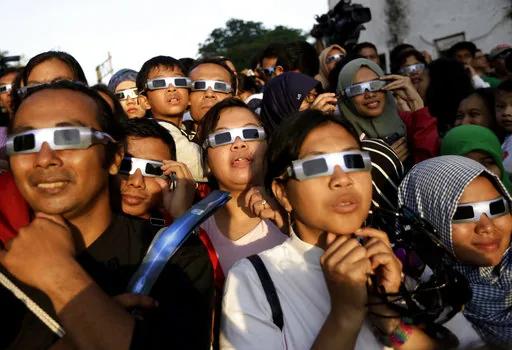
During every partial phase, keep proper solar protection over your eyes. That includes the thin crescent before totality, Baily’s beads and the bright point commonly described as the diamond ring. Remove viewers only after the photosphere is completely covered—when no bright portion of the Sun remains visible through them and totality has actually begun at your location.
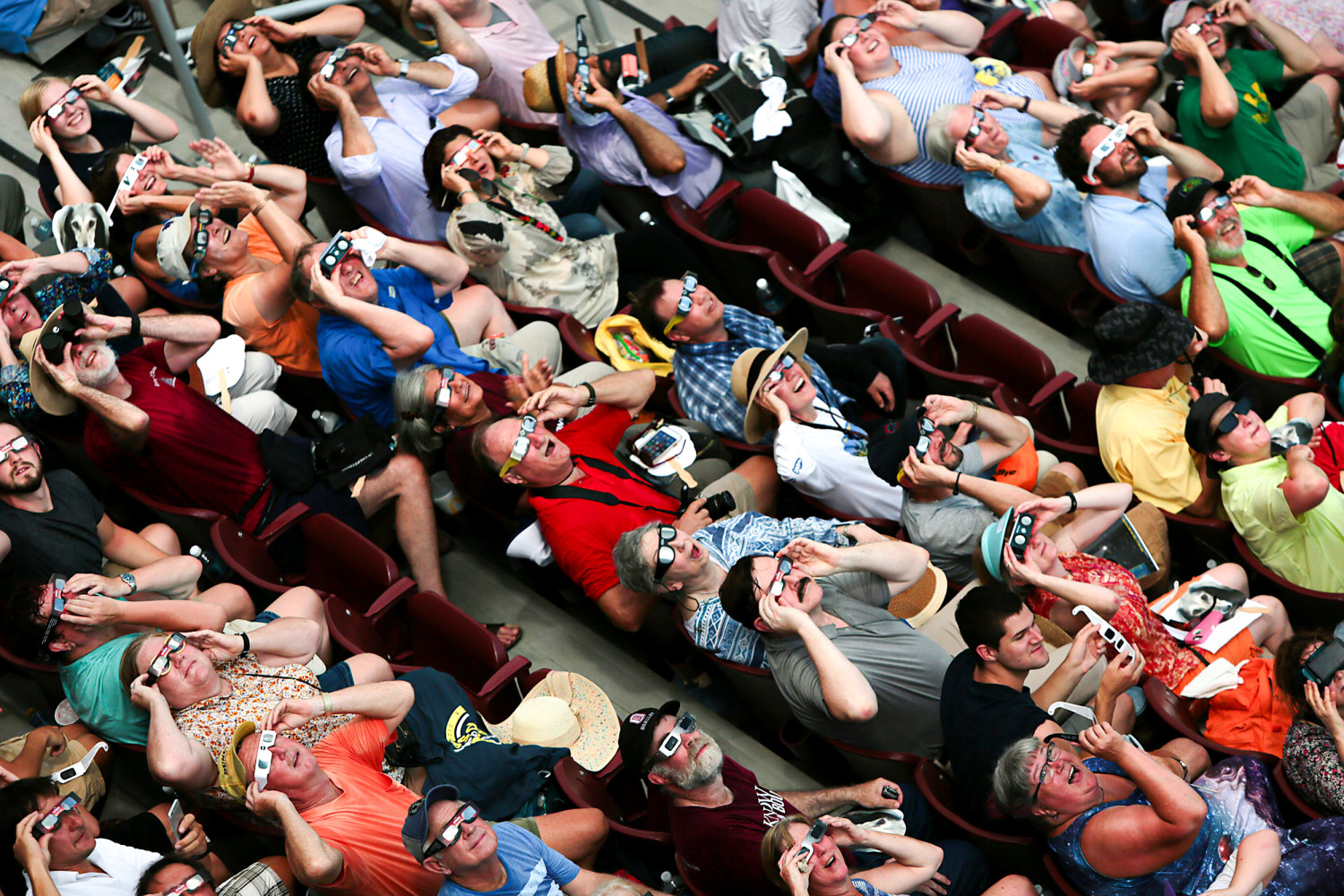
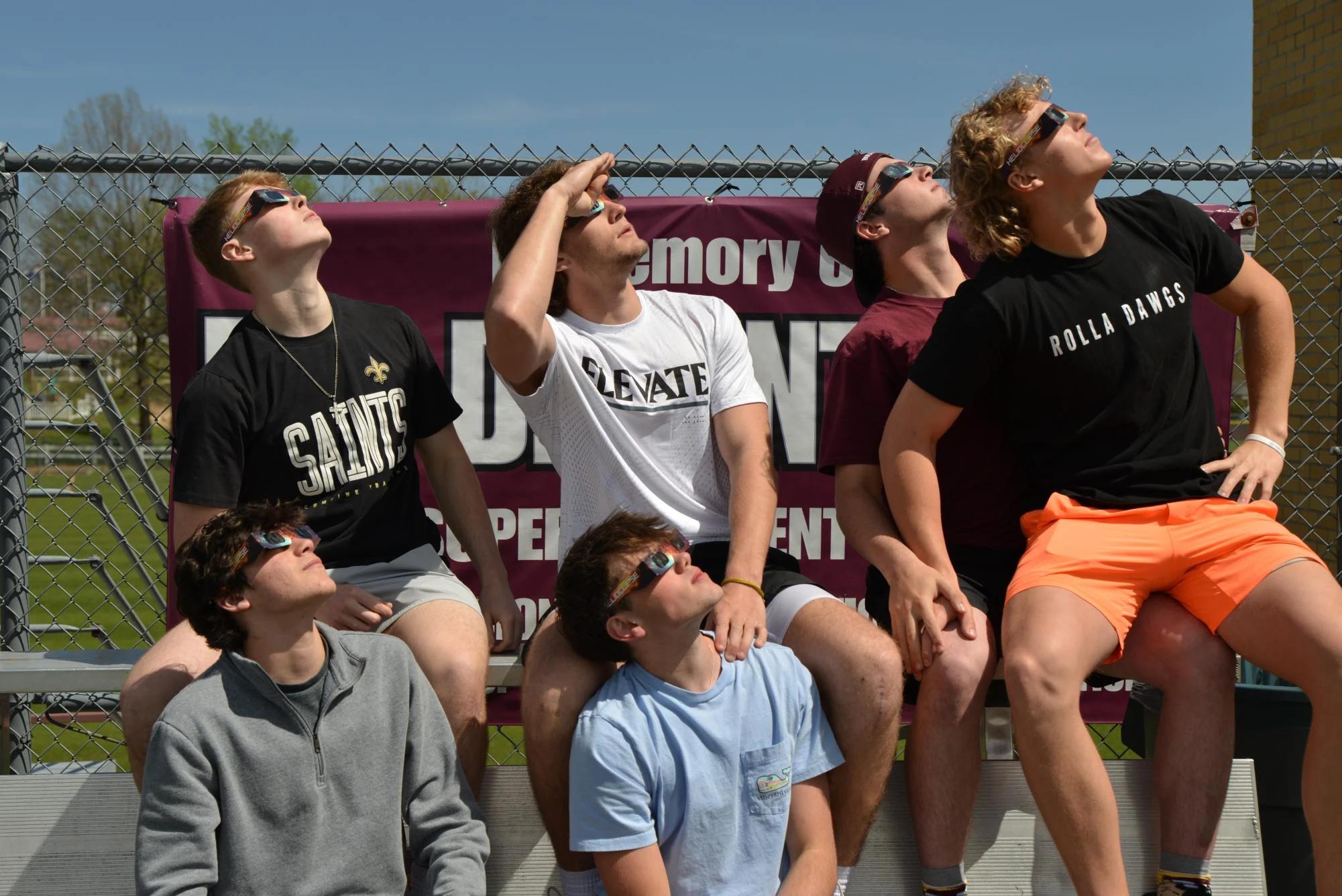
At the end of totality, replace your viewers as soon as the first bright photospheric point reappears. A simple group plan helps: choose one informed adult to call “glasses on” and “glasses off,” but require everyone to follow what is physically visible through their own viewer. Our detailed guide to eclipse phases and when to use solar glasses walks first-time observers through that sequence.
The exception applies only inside the path of a total solar eclipse. A partial eclipse never becomes safe for unprotected direct viewing, even at maximum coverage. An annular eclipse also has no safe glasses-off interval because a bright ring of photosphere remains exposed. If you are near a path boundary, do not assume that darkness or crowd behaviour means totality has reached you—verify your exact observing point on a map.
Cameras, binoculars and telescopes need correctly fitted solar filters secured over the front aperture during partial phases. Eclipse glasses worn on your face do not make it safe to look through an unfiltered magnifying instrument; concentrated sunlight can damage the filter and your eye. Imaging totality and its contacts requires its own rehearsed filter procedure, so a first-time observer may have a better experience leaving the close-up work to skilled photographers.
What the August 12, 2026 eclipse can—and cannot—promise
The total solar eclipse of August 12, 2026 crosses parts of Greenland, Iceland and northern Spain before ending near sunset. The maximum possible totality is roughly two minutes and 18 seconds, but local duration varies with position in the path. Near the path edge it can shrink dramatically, while outside the umbra the event remains partial. Use the Helioclipse 3D eclipse map to check your pin rather than relying on a country name.
Spain gives this optics question special relevance because the Sun will be low in the west. Northern mainland locations in the path experience totality late in the day, while the path continues toward eastern Spain and the Balearic Islands with sunset increasingly close. That low altitude means haze, terrain and an obstructed western horizon can matter as much as being near the centreline. It also creates atmospheric-dispersion possibilities, but no location can promise a green flash.
A green flash vs diamond ring solar eclipse 2026 guide should therefore separate the predictable from the conditional. Totality and its approximate contact sequence can be calculated for a precise coordinate. The diamond ring follows from those contacts if clouds allow it to be seen. A green flash depends on the atmosphere in front of you at that instant and may not occur even above a seemingly clear sea horizon.
Labels can also conceal bad geography. A page presented as a green flash vs diamond ring solar eclipse 2026 guide usa would need to make clear that the August 2026 path of totality does not cross the contiguous United States. Likewise, total solar eclipse 2026 usa is not an accurate description of where totality occurs. NASA identifies 2044 as the next total solar eclipse visible from the contiguous United States; other eclipses and partial views occur on different dates and from different territories.
A reliable green flash vs diamond ring solar eclipse 2026 guide map should show the path boundary and local circumstances, not merely shade whole countries. A green flash vs diamond ring solar eclipse 2026 guide time must identify the location and time zone because there is no single worldwide local clock time. A static green flash vs diamond ring solar eclipse 2026 guide pdf can be useful as a backup, but it cannot respond to a changed observing coordinate or a late move for cloud. A green flash vs diamond ring solar eclipse 2026 guide free is only as useful as its data provenance and safety guidance.
Rare does not mean unpredictable
The diamond ring is brief, but it is an expected transition at a total solar eclipse. Its rarity in an individual life comes mainly from geography: totality occupies a narrow track, and any fixed location waits a long and irregular time between visits by the Moon’s umbral shadow. Weather can then hide an event whose celestial timing was predicted years ahead.
The green flash is rare in a different sense. Sunrises and sunsets happen every day, yet the necessary horizon clarity, refraction profile and observer geometry do not reliably align. It is less schedulable than the diamond ring and should be treated as a bonus rather than a planning target.
So, what makes the 2026 total solar eclipse so rare? Not a new type of ring or an inherently green Sun. Its value lies in the specific alignment of Sun, Moon and Earth and in where the resulting narrow shadow crosses accessible land on August 12, 2026. For any one town, that combination is uncommon; for travellers, the low western Sun in Spain adds both visual drama and serious horizon constraints.
The next diamond ring eclipse depends on where you are willing and able to travel. Every total solar eclipse can produce diamond-ring transitions, but only observers inside its totality path can experience them around a genuine glasses-off total phase. Annular and partial eclipses do not substitute for that geometry.
How to watch without turning the final seconds into a scramble
First, decide whether your location is total or partial. Then look up the local start and end of totality, expected Sun altitude and direction, and distance from the path edge. Save the information offline and identify a western horizon that is free of buildings, ridges or trees if you are observing the 2026 event from Spain. Our 2026 planning guide can help you turn those numbers into a practical day plan.
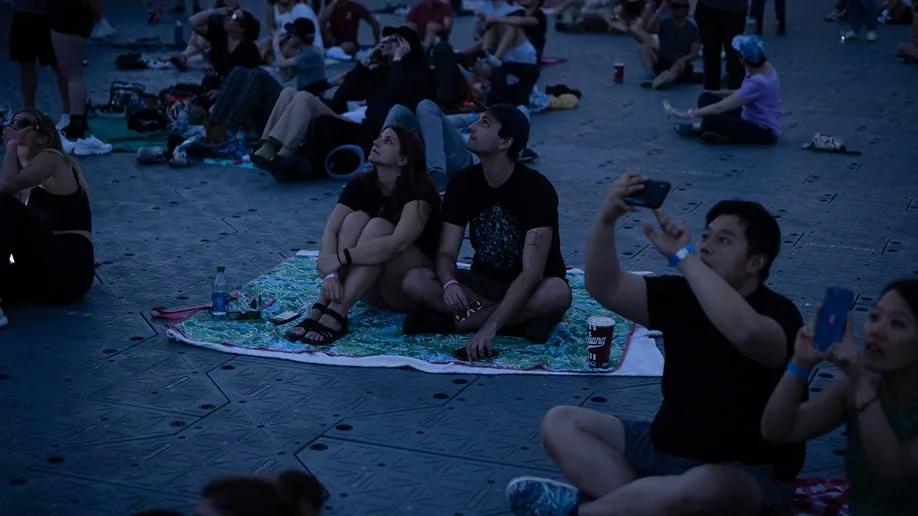
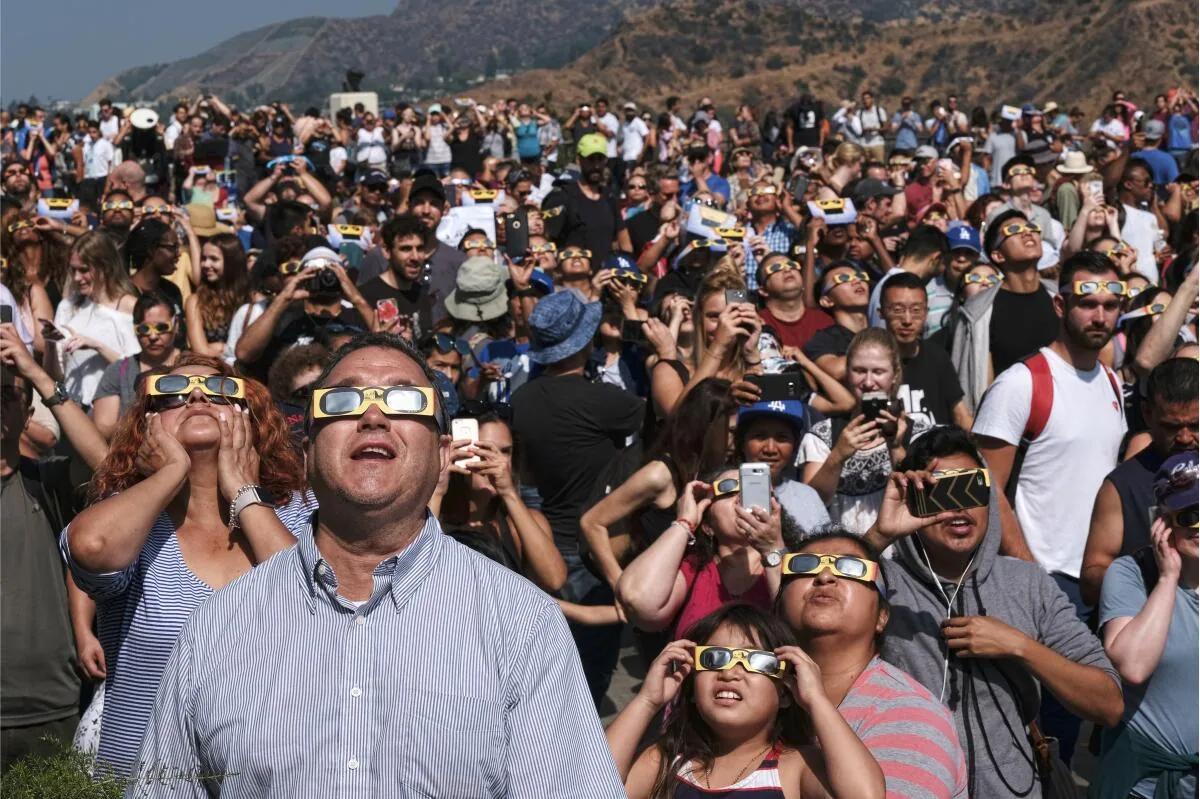
Tell your family or group what the diamond ring actually is before eclipse day. Agree that nobody will remove a viewer merely because a camera screen looks dark, the light turns strange or somebody nearby starts cheering. Children should practise putting viewers on while looking down, raising their heads only after the filters cover both eyes, and turning away before removing them.
Keep the experience simple enough to remember. During the last partial minutes, notice the sharpening shadows, cooling air and changing colour of the landscape through safe methods. During totality, look at the corona and the horizon rather than spending every second wrestling with a phone. At the first returning point of direct sunlight, viewers go back on.
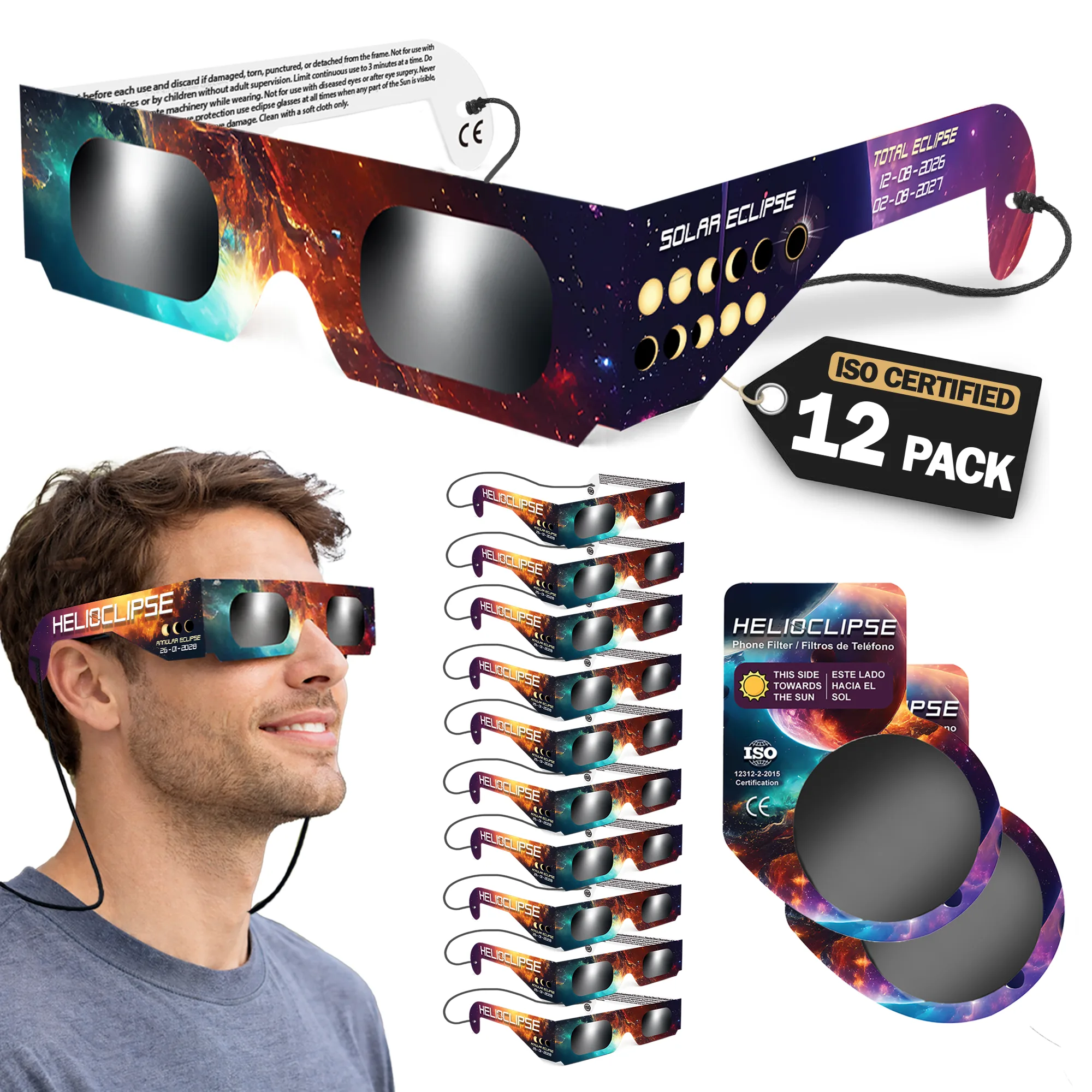
Product wording deserves the same discipline as eclipse timing. NASA does not approve commercial brands, so claims such as eclipse glasses nasa approved should not be treated as an official endorsement. When selecting eclipse viewing glasses, check the manufacturer information, instructions, condition of the filters and evidence that the product conforms to ISO 12312-2. Our solar eclipse glasses shop provides Helioclipse viewing options for planning with friends, families and school groups; order early enough to inspect every viewer and rehearse safe use.
Keep the memory, not the retinal afterimage
A powerful eclipse memory is not a perfect internal photograph. It is a sequence: the last protected glimpse of the crescent, the sudden absence of direct sunlight, the corona around a black Moon, the group’s reaction, and the unmistakable return of the photosphere. Trying to stare harder does not preserve any of it.
If you notice a green spot after observing, ask where it appears. Does it stay fixed to the solar edge, or does it follow your gaze after you turn away? Was it visible to other people? Did it exist only in a photograph? Those questions can distinguish an atmospheric observation from adaptation or lens flare without encouraging another direct look.
Persistent central blur, dark or coloured spots, light sensitivity or distorted vision after possible unprotected solar exposure should not be dismissed as an ordinary souvenir. Stop observing and seek prompt advice from a qualified eye-care professional. The calm way to avoid that uncertainty is to keep certified viewers on through every partial phase and reserve unfiltered viewing strictly for confirmed totality.
How To Watch A Solar Eclipse Safely - Don't Go Blind!
Dr. EyeGuy
Frequently asked questions
How does the diamond ring effect form during a solar eclipse?
The diamond ring appears near the beginning or end of totality, when one concentrated point of the Sun’s bright photosphere remains visible beside the faint corona. Sunlight passing through lunar valleys creates Baily’s beads, and one especially bright bead can produce the ring-like appearance.
Is the diamond ring considered the rarest type of eclipse?
The excerpt does not identify any eclipse type as the rarest. It describes the diamond ring as a brief effect caused by eclipse geometry near the start or end of totality.
What am I seeing when the eclipse looks like a bright jewel next to a pale ring?
You are seeing direct photospheric sunlight beside the faint solar corona, with the Moon covering nearly all of the Sun’s bright face. The exact appearance can vary with your position, lunar terrain, cloud, haze, and camera optics.
How can I tell a green flash from the diamond ring during a solar eclipse?
The diamond ring is direct sunlight shaped by the Moon’s position during the eclipse, while a green flash is an atmospheric effect associated with a low Sun and a sharply defined horizon. A green spot that persists after you look away may be an afterimage rather than either phenomenon.
What safety guidance applies when watching for a green flash or diamond ring in the United States?
Do not look at a partially eclipsed Sun without protection while trying to see either effect. Confirm that your viewing location is inside the path of totality, because outside that narrow path there is no glasses-off moment.
On-site next steps
- Check your exact coordinate in the Helioclipse Eclipse Explorer, including whether it is inside totality, its distance from the path edge, local timing and the Sun’s direction.
- Read the phase-by-phase glasses guide and share the safety plan with everyone in your group.
- Prepare ISO 12312-2 viewers early through the Helioclipse solar eclipse glasses shop, then inspect them for scratches, punctures, tears or loose filter material before eclipse day.
Sources & further reading
- How to See the Diamond Ring Effect During a Total Solar Eclipse — Sky & Telescope
- What causes the strange green flash at sunset and sunrise on Earth? — Space.com
- Quest for the Green Flash — Sky & Telescope
- What to Expect: A Solar Eclipse Guide — NASA Science
- NASA Develops Process to Create Very Accurate Eclipse Maps — NASA Science
- Eclipse Viewing Safety — NASA Science
- How to View a Solar Eclipse Safely — American Astronomical Society
- About the ISO 12312-2 Standard for Solar Viewers — American Astronomical Society
- The Heliopedia — NASA Science
- Total Solar Eclipse FAQ — NASA Science