First contact to fourth: what those terms mean and how to use them in 2026 planning
If you have ever opened an eclipse table and seen C1, C2, C3, and C4, you were looking at the skeleton of the event. Those four “contacts” are the key moments when the apparent edges of the Moon and Sun line up in specific ways. Learn them once, and a confusing page of timings suddenly becomes useful.
That matters for 2026. Whether you are checking a total solar eclipse 2026 map time, comparing sites along the total solar eclipse 2026 path, or trying to decide when your family actually needs glasses on, contact times are the practical language of eclipse planning. Our Eclipse Explorer / 3D map is the easiest place to check your own site, because exact times depend on where you stand, not just which country you are in.
And that dependence is the whole point of this guide. We will define first through fourth contact, explain what changes between total and partial locations, and show you how to use those terms without pretending one published time works for everyone.
The short version: what the four contacts mean
Here is the cleanest way to think about them.
- First contact (C1): the Moon first appears to touch the Sun’s disk. The partial phase begins.
- Second contact (C2): totality begins in a total solar eclipse, or annularity begins in an annular eclipse.
- Third contact (C3): totality ends in a total solar eclipse, or annularity ends in an annular eclipse.
- Fourth contact (C4): the Moon leaves the Sun’s disk completely. The eclipse is over.
For a total eclipse, the interval from C2 to C3 is totality. That is the brief stretch when the Sun’s bright photosphere is fully covered and, if you are actually inside the path of totality, direct naked-eye viewing becomes safe. Everywhere else, and at all other times, you need proper solar viewing protection.
That is why the phrase second contact third contact total solar eclipse timing matters so much: it is not trivia. It tells you when the extraordinary part starts and stops.
What you actually see at each contact
Definitions are useful, but eclipse day is visual and fast-moving. Here is what those contacts feel like in real life.
First contact: the eclipse begins quietly
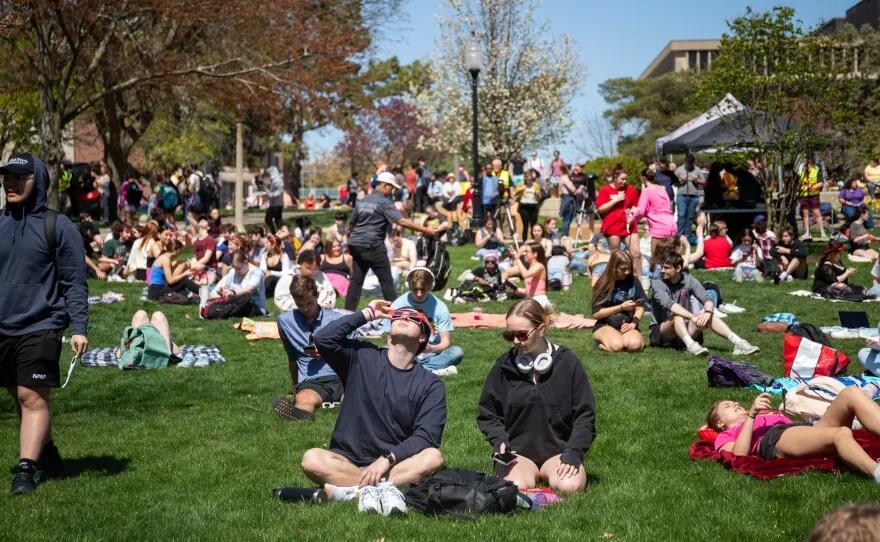
At first contact, the Moon takes a tiny bite from the Sun. If you are not already watching through a safe solar viewer or properly filtered optics, you can miss it. There is no dramatic darkening at that instant. The event has begun, but the world still looks normal.
Then the partial phase stretches out for a long time. NASA notes that the partial stages around a total eclipse often last on the order of 70 to 80 minutes on either side of totality, though the exact duration varies by event and location. This is why eclipse day can feel leisurely right up until it suddenly does not.
Second contact: totality starts
Second contact is the big threshold. In a total eclipse, it is the instant the last bit of the Sun’s bright surface disappears. The diamond ring vanishes. The corona comes out. The sky drops toward deep twilight. If you are inside the umbra, this is when totality begins.
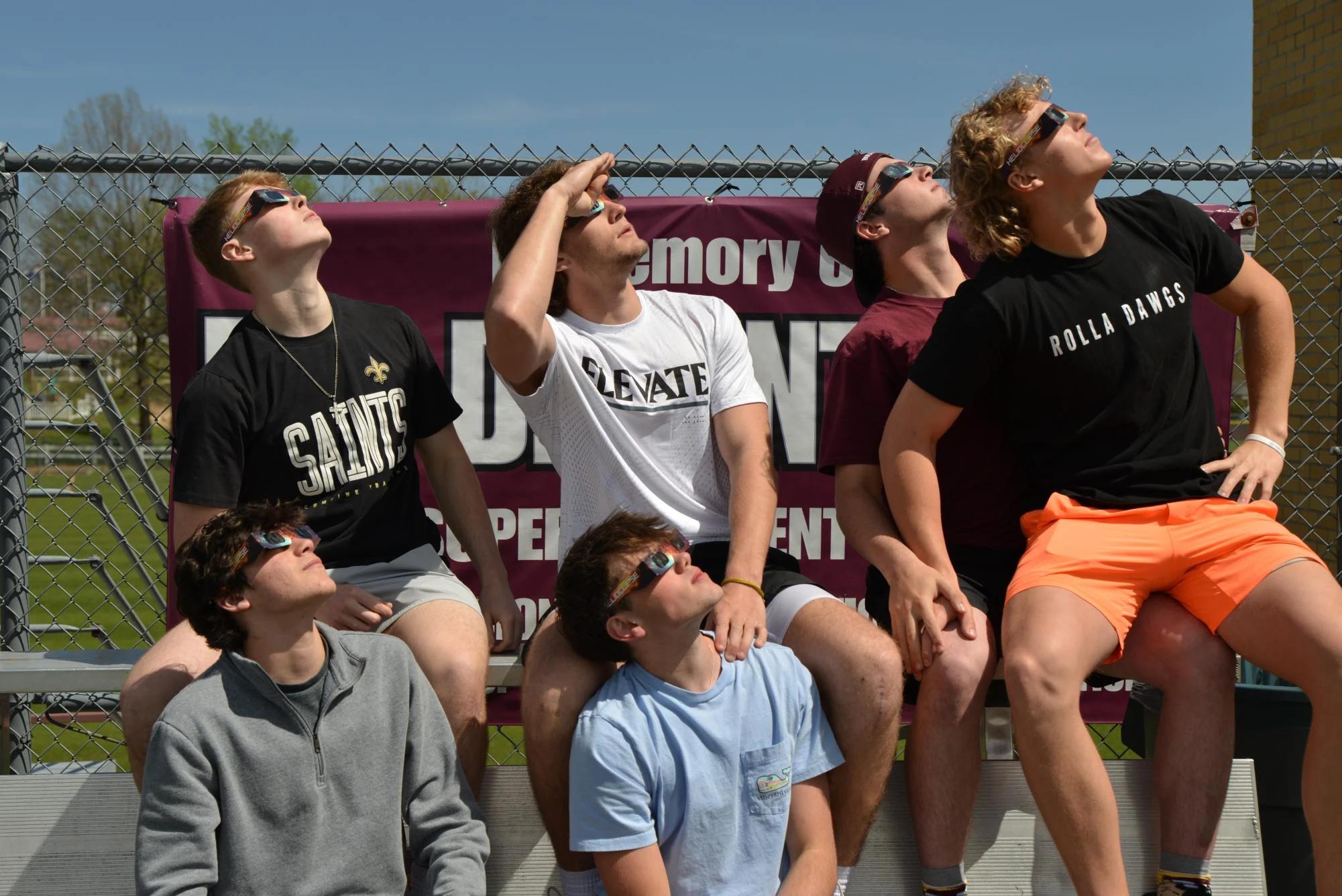
This is also the moment that changes the safety rules. During a total solar eclipse, only between second and third contact may you remove eclipse glasses, and only if no part of the bright Sun remains visible. If you are outside totality, there is no equivalent safe glasses-off moment.
Third contact: totality ends
Third contact is the return of direct sunlight. A brilliant bead appears on the opposite side, the second diamond ring flashes, and the safe naked-eye interval is over. Glasses back on immediately.
People often underestimate how abrupt this is. Totality can feel suspended, but its ending is sharp. If you want one timing in your head on eclipse day, make it C3.
Fourth contact: the event is finished
Fourth contact is the formal end. The Moon no longer covers any part of the Sun. The partial phase is done, the geometry has separated, and the eclipse is over.
By then, many people are already talking, packing, or texting photos to friends. But if you are reading tables or planning observations, C4 matters because it tells you how long the full event lasts at your site, not just the dramatic middle.
Why contact times vary by location
This is where many first-time viewers get tripped up. They find one article, one chart, or one social post and assume those times apply across a whole region. They do not.
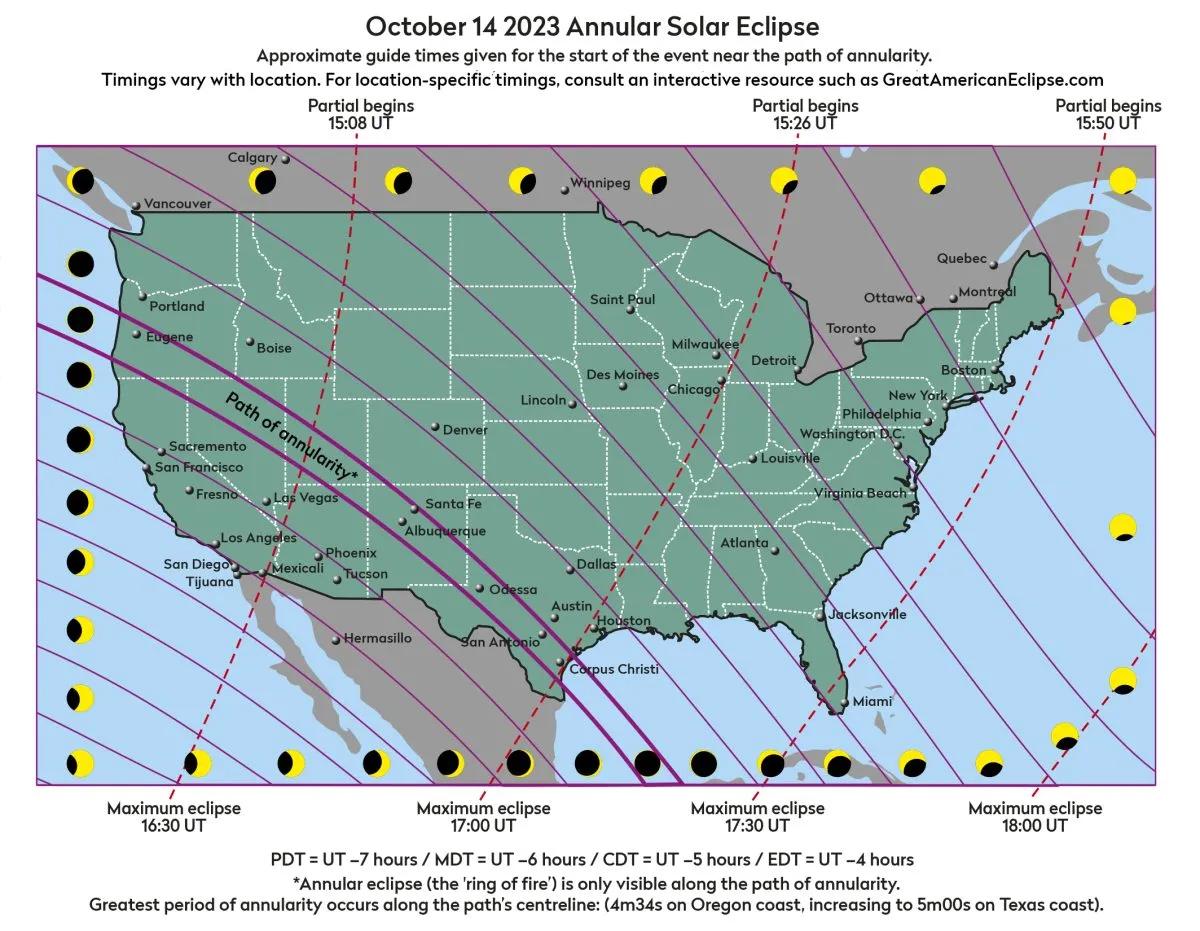
The Moon’s shadow is moving across Earth, and Earth is rotating underneath it. Your local geometry changes with latitude, longitude, elevation, and distance from the center of the shadow path. Even small shifts can change the clock time of each contact. Larger shifts can change the kind of eclipse you get at all.
That is the heart of contact definitions and why timing varies by eclipse planning. The terms stay fixed; your circumstances do not.
If you are on the centerline of a total eclipse, you usually get the longest totality available near that stretch of path. Move toward the edge of the path and totality shortens, sometimes dramatically, until it disappears entirely and your site becomes partial only. At that point, C2 and C3 no longer mean “start and end of totality” for you, because you are not experiencing totality at all.
So when readers ask versions of what is the path of totality in 2026 solar eclipse?, the practical answer is: it is the narrow track where second and third contact bracket true totality. Outside that track, you still have first and fourth contact for the partial eclipse, but not the same total-eclipse experience.
Why one city’s timing is not your timing
A useful mental model: contact times are site-specific, not event-wide.
Take the August 12, 2026 total solar eclipse. Broadly, the path crosses parts of the Arctic, Greenland, Iceland, the Atlantic, and northern Spain. But a timing table for one point in northern Spain is not a timing table for all of Spain. A viewer inside totality near the centerline gets a different C2-C3 interval than someone near the path edge, and someone in Madrid is not in totality at all. That is exactly why we built the Eclipse Explorer / 3D map and why our planning coverage for August 12, 2026 total solar eclipse: what to expect and how to plan ahead keeps pushing readers back to map-based checks.
For 2026, northern Spain is a good example of how much geometry matters. Some locations in the path get only a short totality, while sites closer to the centerline get noticeably longer. The difference may be measured in tens of seconds, not hours, but during totality tens of seconds are huge. That is enough time to go from “barely process the corona” to “look up, look around, and still have a moment left.”
Outside the path, the event is still real but fundamentally different. In places such as Madrid, the eclipse is serious and visually striking as a partial, yet there is no safe glasses-off interval because the Sun is never fully covered. That distinction matters more than hype, and it is why we recommend reading When glasses on, when glasses off: eclipse phases explained for first-time viewers before you lock in your plan.

The timing you care about depends on what kind of viewer you are
Different people need different contact times.
If you are a casual viewer, C1 and C4 tell you the broad window, while C2 and C3 tell you when to be fully present. If you are bringing children, grandparents, or a school group, that is often enough: know when the eclipse starts, know when the dramatic part happens, and know when eye protection rules change.
If you are photographing, sketching, or trying to catch Baily’s beads, shadow bands, prominences, or the diamond ring, then the seconds around C2 and C3 matter intensely. Those phenomena cluster around the transitions. You do not need invented second-by-second prose from us; you need the exact local numbers from a map or ephemeris for your observing spot.
If you are traveling, contact times also shape logistics. A site with totality in local late afternoon may mean lower Sun altitude, different horizon concerns, and a different traffic pattern than a site with midday totality. That is one reason broad phrases like best places and timing for second contact third contact total solar eclipse timi only become meaningful when attached to a specific place on a specific date.
Totality duration: the number between second and third contact
The American Astronomical Society’s eclipse glossary defines duration, for a total eclipse, as the time between second and third contact. That sounds simple, but it is one of the most emotionally important numbers in eclipse planning.
Why? Because totality is short. NASA’s eclipse FAQ notes that total solar eclipses can last from only seconds to about 7.5 minutes in the most favorable cases, with the all-time maximum a little over seven and a half minutes. Most people’s actual experience is much shorter than that.
So when you compare sites, do not just ask whether a place is “in the path.” Ask how long totality lasts there. A one-minute totality and a three-minute totality are both real total eclipses, but they do not feel the same. In one, the moment can seem to vanish almost before your brain catches up. In the other, you have time to look at the corona, scan the horizon, notice the temperature drop, and hear the crowd react.
That is why a second contact third contact total solar eclipse timing 2026 guide should never stop at definitions. The useful question is not only “what is C2?” but “how much time do I have between C2 and C3 at my exact site?”
Safety rules tied to the contacts
This is the section to share in the family group chat.
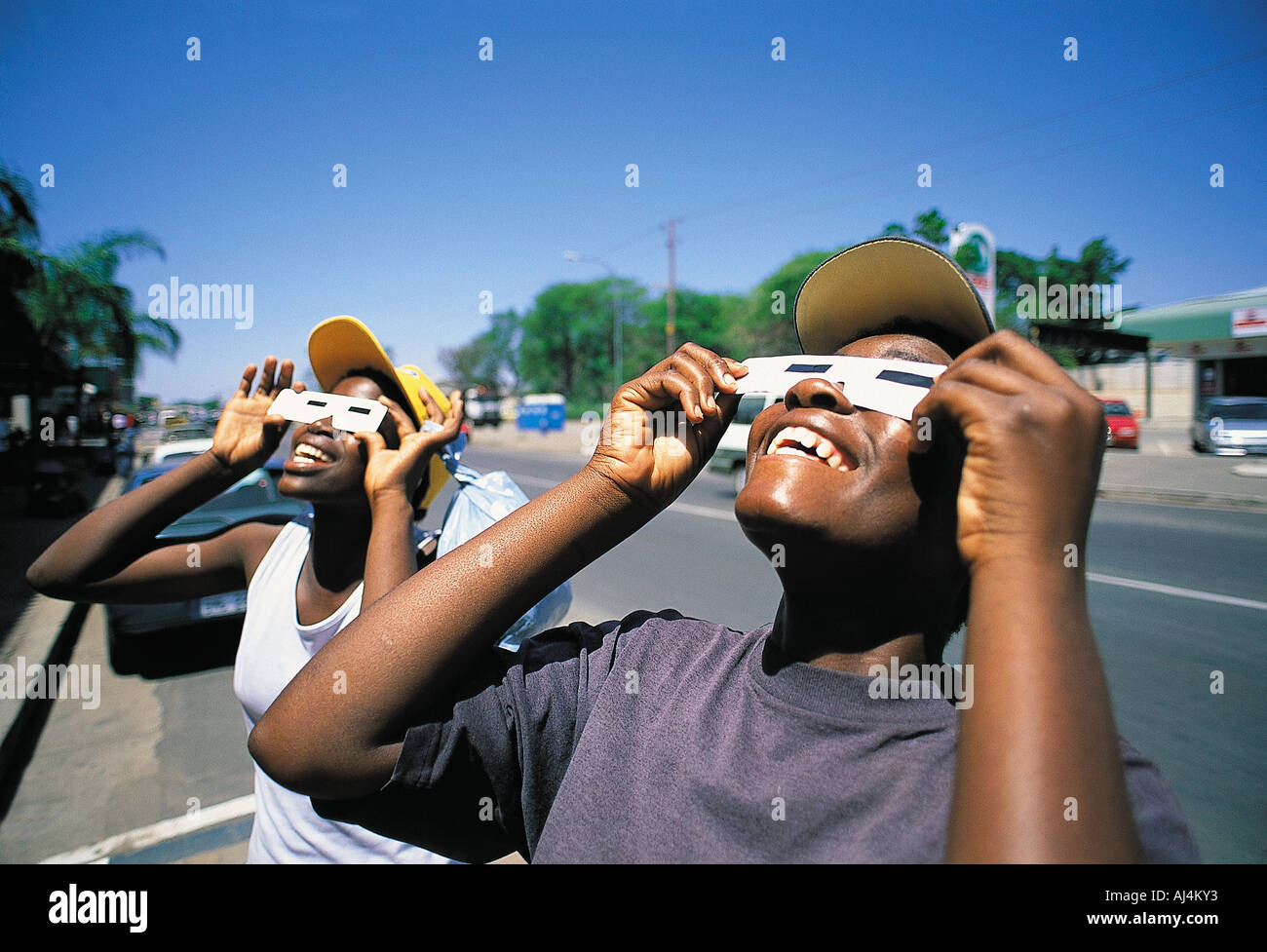
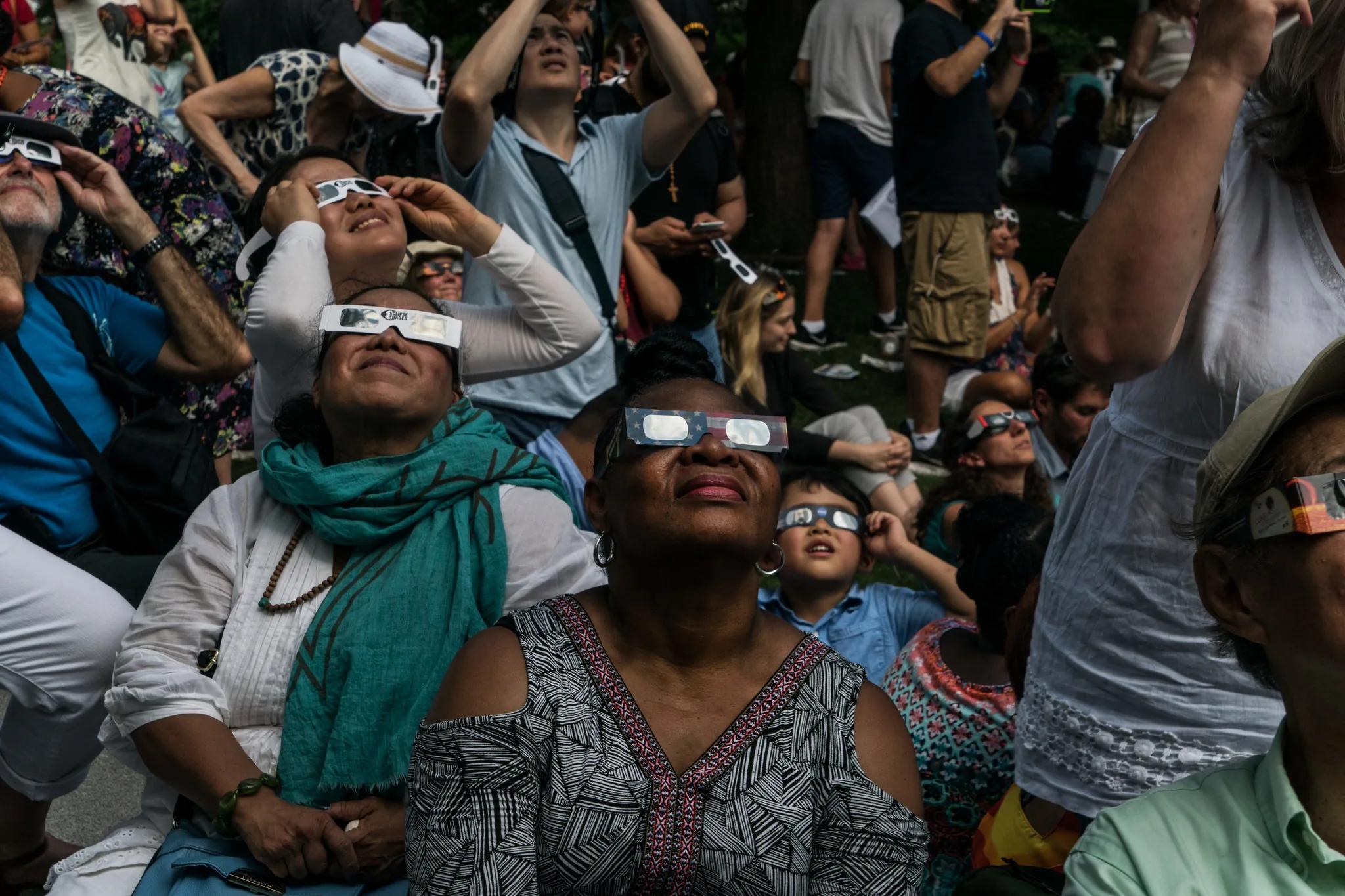
For any partial eclipse, and for all partial phases of a total eclipse, use proper solar viewing protection. Regular sunglasses are not safe. Looking through binoculars, a telescope, or a camera without a proper front-mounted solar filter is dangerous.
For a total solar eclipse, the rule is precise:
- Before second contact: glasses on.
- Between second and third contact, only if the Sun’s bright face is completely covered and you are inside totality: glasses may come off for naked-eye viewing.
- At third contact, or the instant any bright sunlight reappears: glasses back on.
- After that until fourth contact: glasses on.
If you are outside the path of totality, there is no glasses-off moment. None.
That is why we are careful with product language too. People search for approved solar eclipse glasses, eclipse viewing glasses, and solar eclipse glasses iso 12312-2 certified, but the important thing is understanding what those words are supposed to signal. NASA does not approve a particular brand of viewers; the relevant benchmark is compliance with ISO 12312-2 and buying from a trustworthy source. If you need viewers for your group, our Shop eclipse glasses is built around that standard and around plain-language guidance for real households, not last-minute guesswork.
If you want a deeper safety explainer before buying, read ISO 12312-2 and eclipse viewers: what the standard means for your family and Why staring at the Sun without protection is never “just a quick look”.
How to use contact times in your 2026 plan
Here is the practical workflow we recommend.
1. Start with the map, not a generic article
Use a site-specific tool first. For 2026, that means checking the Helioclipse Eclipse Explorer / 3D map for your exact location or shortlist of locations. This is the right answer whether you are in Spain, Iceland, Greenland, at sea, or comparing a partial view from elsewhere in Europe.
A generic article can tell you the event date and broad path. It cannot replace your local circumstances.
2. Identify whether your site is total or partial
This is the decision that changes everything else. If your site is outside the umbra, you are planning a partial eclipse day, not a totality day, no matter how high the obscuration gets.
That distinction also helps with common search confusion around phrases like second contact third contact total solar eclipse timing usa, second contact third contact total solar eclipse timing today, or second contact third contact total solar eclipse timing 2022. Those phrases may lead people to old events, different countries, or pages that are accurate for one eclipse but irrelevant for another. The contact definitions are stable across years; the actual times are not.
3. Note four numbers, not one
For your chosen site, write down C1, C2, C3, and C4 if they exist there. If your site is partial only, note the start, maximum eclipse, and end instead. Do not rely on memory for the middle.
4. Build your day around C2 and C3
If you are in totality, be set up early. Filters on. Camera plan simplified. Kids briefed. Then treat the C2-C3 interval as sacred time. Do not spend it fiddling with gear you could have tested the week before.
5. Plan for weather and mobility
Clouds can ruin a perfect timing plan. If your site allows mobility, keep a backup option and know how far you can realistically move. Our guide to Cloud cover and eclipse day: how to read the sky and when to move is worth reading well before eclipse week.
Common misunderstandings about contact times
A few myths show up every eclipse cycle.
“Second contact is just another name for maximum eclipse.”
Not necessarily. In a total eclipse, second contact is the start of totality. In a partial eclipse, you do not have second contact in that same sense because the Moon never fully covers the Sun. Maximum eclipse is a different concept: it is the moment of greatest coverage at your site.
“If I know the national timing, I know my timing.”
No. National summaries are broad. Your local timing can differ by minutes, and your duration can differ sharply depending on where you are relative to the centerline.
“Near-total is basically total.”
It is not. A 90% or even 99% partial eclipse is still partial in the safety sense and in the visual sense. The corona does not come out the same way, the sky does not behave the same way, and the glasses rule does not change.
“Fourth contact is not important.”
It may be less dramatic, but it matters for planning the full observing window, especially for outreach events, school sessions, and public viewing setups.
Where 2026 fits in the bigger eclipse calendar
People often arrive at contact terminology while trying to place one event in a longer timeline: the next total solar eclipse, broader total solar eclipse dates, or future milestones like the 2045 solar eclipse.
For European readers, August 12, 2026 is the headline total eclipse to plan around now. For North American readers, the phrase solar eclipse north america 2026 can be misleading if it suggests a continent-wide total eclipse experience; what matters is the actual visibility map for that specific event. And if you are searching for the next total solar eclipse in usa, that is a different planning question from the 2026 Europe-focused event.
NASA’s FAQ is useful here: after the April 8, 2024 total eclipse, the next total eclipse visible from any point in the contiguous United States is in 2044, and the next coast-to-coast U.S. total eclipse is in 2045. Those are exciting milestones, but they should not blur the fact that 2026 has its own geography, its own path, and its own local contact times.
A simple way to remember the sequence
If you want the memory trick, use this:
- C1: first bite
- C2: totality starts
- C3: totality stops
- C4: Sun fully back
Or, if you prefer the more formal version:
- C1 = partial begins
- C2 = total or annular phase begins
- C3 = total or annular phase ends
- C4 = partial ends
That is the whole structure. Everything else on eclipse day hangs from it.
What Are 1st, 2nd, 3rd and 4th Contact?
EarthSky
Frequently asked questions
What time does the September 21 eclipse happen at my location?
There is no single universal time for it. The excerpt says eclipse contact times depend on where you stand, so you need to check your own location rather than rely on one published time for everyone.
How much time passes between the main eclipse stages?
The exact spacing varies by event and location, but the partial stages around a total eclipse often last about 70 to 80 minutes on either side of totality. In a total eclipse, the key interval is between second contact and third contact, which is the totality itself.
Where should I go to get the best view of the 2026 total eclipse?
The best place is inside the path of totality if you want to see the full event. The excerpt also notes that exact contact times depend on your specific location, so checking your site on a map or location-based tool is the practical way to plan.
How many solar eclipses are expected in 2026?
The excerpt does not give a number of solar eclipses for 2026. It focuses instead on how to read eclipse contact times and how those times vary by location.
What should I understand about second and third contact when planning for 2026?
Second contact is when totality begins, and third contact is when totality ends. For a total eclipse, the time between them is the brief period when the Sun’s bright photosphere is fully covered, and direct naked-eye viewing is safe only if you are inside the path of totality.
On-site next steps
- Check your exact site on our Eclipse Explorer / 3D map so your contact times match your real location, not a generic city list.
- If you are watching any partial phase, get your viewers sorted early in our Shop eclipse glasses. Waiting until the week of the eclipse is a bad way to discover what you forgot.
- For more planning help, browse the Helioclipse blog and share the relevant guides with the people you are watching with. Eclipse day goes better when everyone knows the plan before the sky starts changing.
Sources & further reading
- What to Expect - NASA Science
- A Solar Eclipse Glossary | Solar Eclipse Across America
- Phenomena You'll Experience at a Total or Annular Eclipse | Solar Eclipse Across America
- Solar eclipse guide: what they are and how to watch safely - Natural History Museum
- Eclipse Viewing Safety - NASA Science
- Eclipse Glossary - NASA Science
- How to View a Solar Eclipse Safely | Solar Eclipse Across America
- Solar Filters for Optics: Telescopes, Binoculars & Cameras | Solar Eclipse Across America
- Eclipses Frequently Asked Questions - NASA Science
- What to Look For & When During a Total Solar Eclipse - Sky & Telescope