Why the Sun looks oval near the horizon—and what that means for low-totality eclipse timing
A setting Sun can look as though someone has pressed down on its top. Its width remains almost normal, but its height shrinks, turning the familiar circle into a glowing oval. During an eclipse near sunset, that distortion can make an already unfamiliar solar crescent look positively strange.
The Sun has not changed shape. Earth’s atmosphere has changed the path its light takes to your eyes. That same bending can make the Sun appear slightly higher than its geometric position, complicating the seemingly simple question: will the eclipse still be visible above my horizon?
This matters on August 12, 2026, when a total solar eclipse crosses Greenland, Iceland and northern Spain before continuing toward sunset. In parts of Spain, the eclipsed Sun will be low in the western sky. Our Eclipse Explorer and 3D map can show the calculated path and circumstances for your location, but interpreting a low-altitude event also requires an honest look at hills, buildings, haze and atmospheric uncertainty.
Think of this as our atmospheric refraction sunset solar disk flattened 2026 guide: not a promise of a universal timing correction, but a practical explanation of what the atmosphere does, what an eclipse map calculates and what you may actually see.
The atmosphere acts like a gently changing lens
Refraction is the bending of light as it travels through material whose optical properties vary. A glass lens produces a controlled version of this effect. Earth’s atmosphere produces a less tidy one because its density changes continuously with height, pressure and temperature.
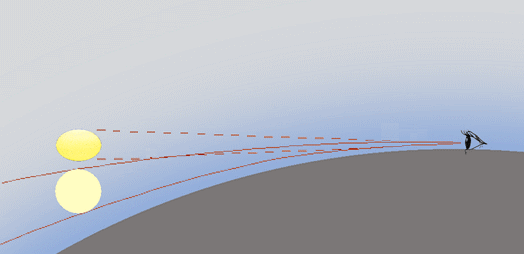
Air is generally denser closer to the ground. Light arriving from a low celestial object passes obliquely through many atmospheric layers, and its path curves slightly. To an observer, the object therefore appears higher than its unrefracted, geometric position. NASA notes that the apparent displacement of a source at the horizon can be on the order of half a degree under representative conditions—comparable to the apparent diameter of the Sun itself.
That does not mean every horizon gains exactly half a degree of visibility. Refraction becomes extremely sensitive close to the horizon. Temperature inversions, elevation, pressure and the structure of air above land or sea can all change it. Layered air may also create mirages, detached strips or rippled edges rather than one clean oval.
The underlying rule is related to Snell’s law in physics, but you do not need to calculate refractive indices to plan an eclipse. The useful idea is simpler: the lower the light ray passes through the atmosphere, the more strongly its apparent direction can be changed.
Why the disk becomes flattened instead of merely lifted
The whole solar image is lifted by refraction near the horizon, but it is not lifted uniformly. Light from the Sun’s lower limb travels through a slightly denser and longer atmospheric path than light from its upper limb. The lower edge is displaced upward more strongly, compressing the disk vertically.
Its left and right edges are at nearly the same altitude, so they experience nearly the same refraction. The horizontal diameter changes much less. The result is a Sun that looks wider than it is tall—not because it expanded sideways, but because its apparent height was squeezed.
Atmospheric Optics reports that flattening can approach roughly 20% under a normal atmospheric temperature profile for an observer near sea level, although the amount varies. Unusual temperature gradients can produce much stronger or more complicated distortions. That variability is precisely why a photograph from one evening cannot supply an exact correction for another place and date.
Several common questions are different ways of asking about this same effect: what is the flattened sun phenomenon? Why does the sun look flat? And why does the sun look oval in shape? In each case, the primary physical answer is differential atmospheric refraction—the lower and upper edges are displaced by different amounts.
The compact phrase atmospheric refraction sunset solar disk flattened describes this chain of cause and appearance. It should not be confused with the horizon illusion that can make the Sun or Moon seem unusually large. The flattening is an optical distortion that can be photographed and measured. The apparent enlargement of a horizon Moon is principally a perceptual illusion; a simple angular-size comparison shows that the Moon has not suddenly swollen.
What refraction does to apparent sunset
A geometric ephemeris describes where the center of the Sun should be relative to an ideal horizon. The sunset you witness is the disappearance of the Sun’s upper edge behind your actual horizon, after its light has passed through the real atmosphere.
Those are related moments, but they are not interchangeable. Refraction lets you see the solar disk when its geometric position is somewhat lower than its apparent position. NASA’s educational material notes that refraction adds about five minutes to apparent daylight at equatorial latitudes. That figure is a broad illustration, not a five-minute correction to apply to every eclipse. The conversion from angular displacement to clock time depends on latitude, season, the Sun’s angle of descent and atmospheric conditions.
Terrain often matters more than a refined refraction estimate. A ridge two degrees high can hide the Sun well before a mathematical sea-level sunset. A building, tree line or bank of low cloud can do the same. Conversely, a high viewpoint with a clean sea horizon may preserve the view much longer than a nearby street-level site.
This is the planning answer behind understanding why the sun looks oval near the horizon—and what that appearance means: refraction can change apparent altitude and the visible shape of the disk, but it cannot see through a mountain or guarantee clear air.
Eclipse contact times and visible-horizon times are different
Published eclipse contacts are calculated from the geometry of the Sun, Moon and observer. They describe events such as first contact, the beginning of totality, maximum eclipse and the end of totality. Atmospheric refraction does not move the Moon’s shadow across Earth by several minutes or add a fixed bonus to totality.
The Sun and Moon are almost in the same direction during a solar eclipse, so much of their atmospheric displacement is shared. Both apparent disks can also be vertically compressed. The exact distortion across their closely overlapping images is more subtle than shifting the entire eclipse later by a standard amount.
For planning, separate three questions:
- When do the geometric eclipse contacts occur at my coordinates? Use a location-specific map or authoritative table.
- What is the Sun’s calculated altitude and azimuth at those contacts? A low positive altitude signals that horizon reconnaissance is essential.
- Is that direction visibly clear from my exact observing position? Measure or inspect the real skyline, including terrain, structures and likely cloud or haze.
If totality begins while the Sun is geometrically above the horizon but your western skyline is higher than the Sun, you will not see it. If the Sun is extremely close to a flat astronomical horizon, refraction may affect whether a distorted edge remains visible—but this is the least reliable situation on which to base an all-or-nothing plan.
Do not subtract a generic number of minutes from sunset and declare the problem solved. Check contact times and solar altitude for the actual coordinates, then build in a horizon margin rather than trying to exploit the last refracted sliver of Sun.
The August 12, 2026 eclipse makes the distinction practical
NASA lists the August 12, 2026 event as a total solar eclipse visible in totality from Greenland, Iceland, Spain, Russia and a small part of Portugal, with a partial eclipse across a much larger region. In Spain, totality occurs in the local evening, with the Sun descending toward the western horizon. The exact duration and altitude vary sharply by location.
That produces different planning problems within the same national path. A site in Asturias or another part of northern mainland Spain may be geometrically inside totality yet still need a clear western gap through mountainous terrain. Farther east, including path locations in and around the Balearic Islands, the remaining altitude can be especially consequential because the eclipse occurs later along the shadow’s track and closer to sunset. We are not assigning a universal contact time or altitude to either region: you need to inspect the figures for your coordinates on the 2026 totality map.
Madrid illustrates a different distinction. It is outside the path of totality and receives a deep partial eclipse, not a short or low version of totality. Atmospheric distortion cannot turn a partial eclipse into a total one. Our guide to the 2026 eclipse path in Spain explains why the boundary of the Moon’s umbra is decisive.
When comparing candidate sites, record the calculated altitude and azimuth at the start and end of totality—not merely the city name or nominal sunset time. Then visit the site at a similar time of day if possible. A phone compass can help with orientation, but do not rely on it alone near cars, railings or other metal objects. Identify the actual western sightline and estimate how high obstructions rise above it.
The safest plan includes a backup site with a better horizon. Share both locations with your family or group before eclipse day, along with a decision time for moving. A beautiful viewpoint that traps you behind a ridge is not better than a plain open field with an unobstructed line to the Sun.
Why the low Sun may look especially strange during partial phases
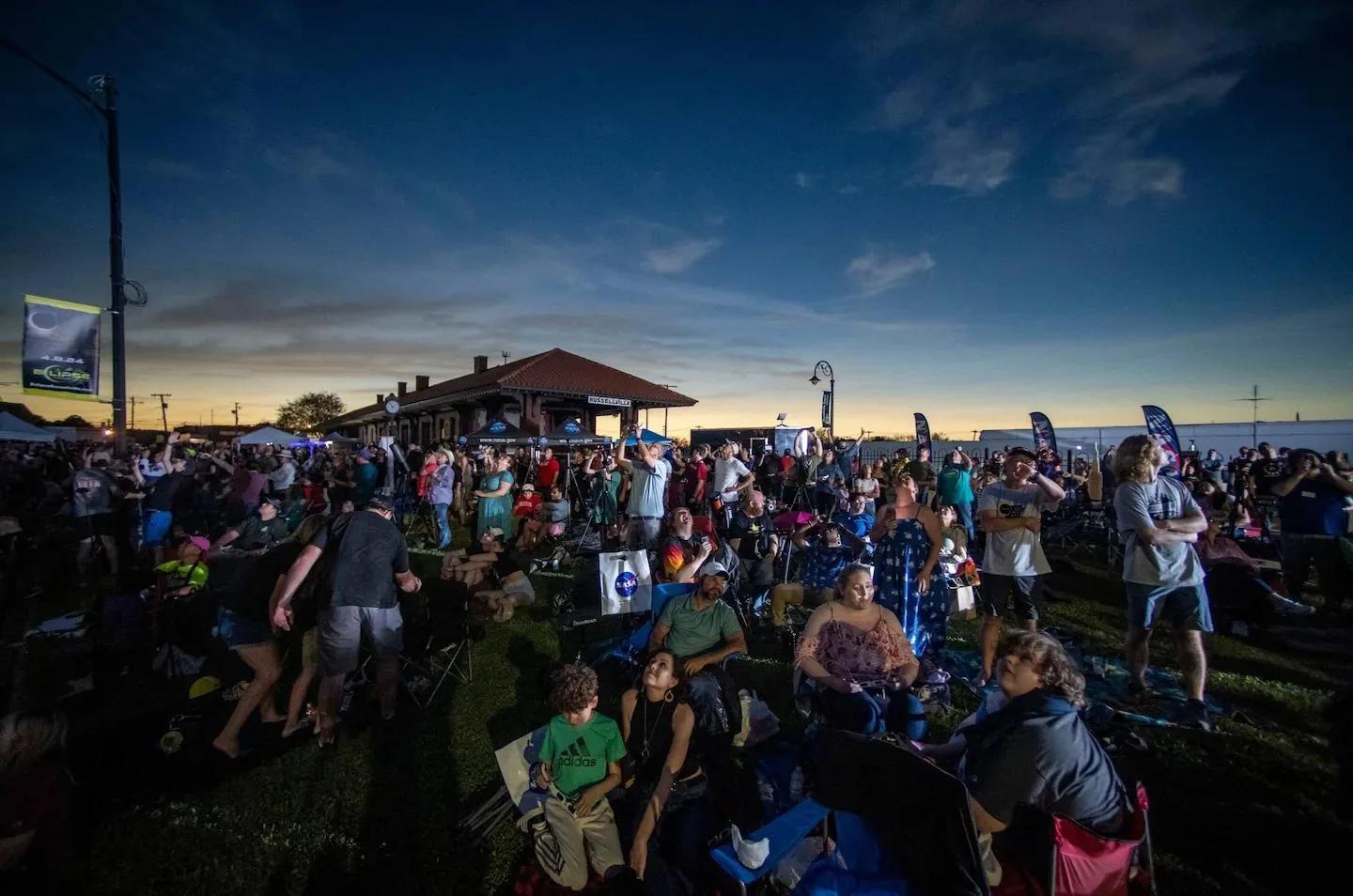
Before and after totality, the Moon leaves a narrowing solar crescent. Near the horizon, atmospheric compression can make that crescent appear shorter, thicker or uneven compared with a clean simulation. Turbulence may cause its tips to shimmer, and layered refraction may divide the edge into bands.
Reddening is related but not identical. Low-angle sunlight follows a much longer path through the atmosphere, allowing more short-wavelength blue light to be scattered out of the direct beam. Aerosols and haze can deepen the orange or red appearance. Flattening, reddening and mirage structure therefore often arrive together, but they arise from different combinations of refraction, scattering and absorption.
A low Sun can also appear larger than it did at midday. That impression is mostly the horizon-size illusion, not a genuine atmospheric magnification of the whole disk. The measurable flattening may actually reduce its vertical angular extent even while your brain judges the object to be enormous.
Educational teams sometimes inherit malformed research labels such as “lay refraction from reputable physics education pages eclipse planning answer” or the truncated “lay refraction from reputable physics education pages eclipse planning qui”. Neither is scientific terminology. A sound plain-language explanation should instead connect a reputable refraction source to three usable quantities: contact time, solar altitude and the height of the real horizon.
A dim or red Sun is still unsafe to view
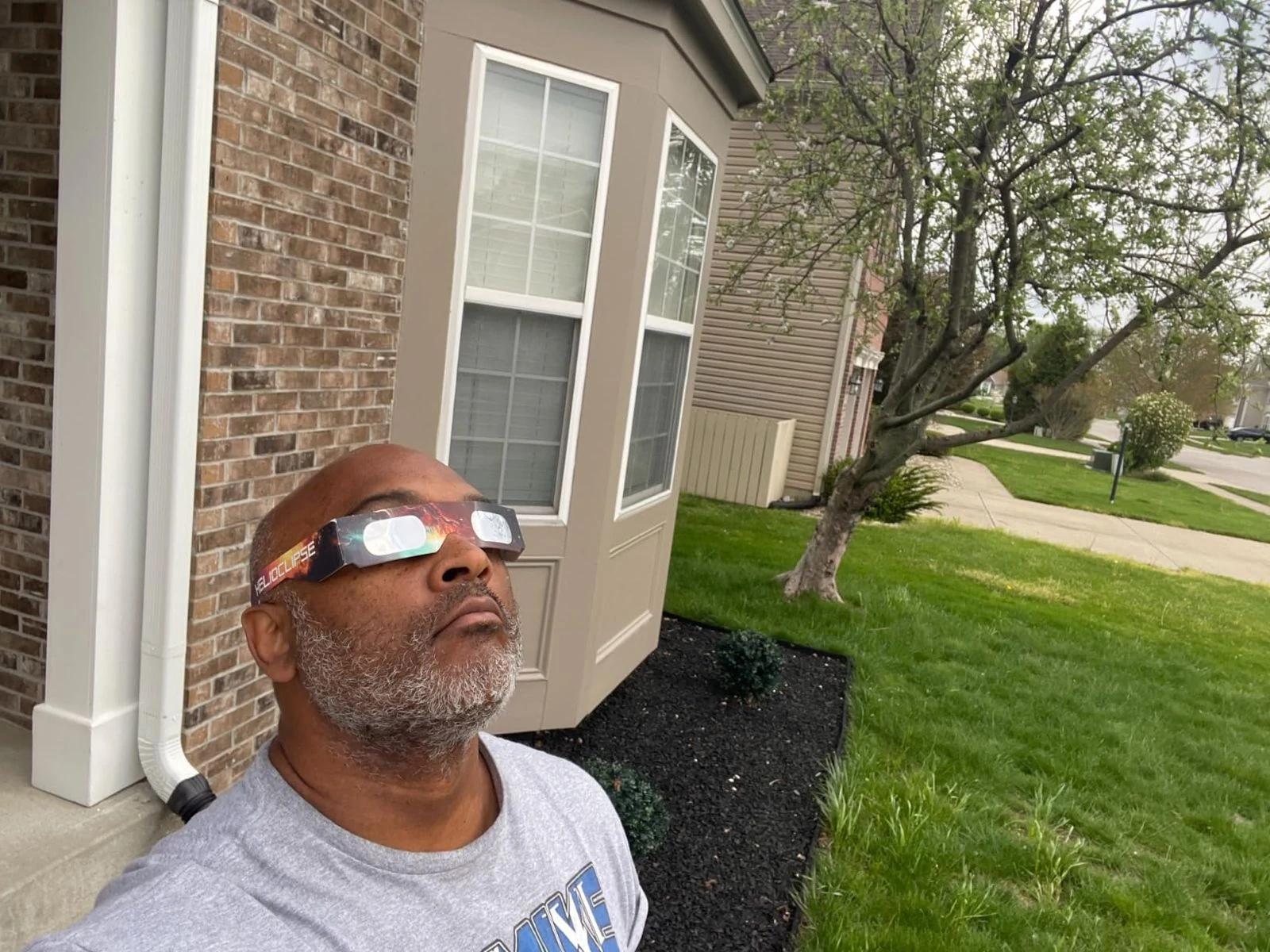
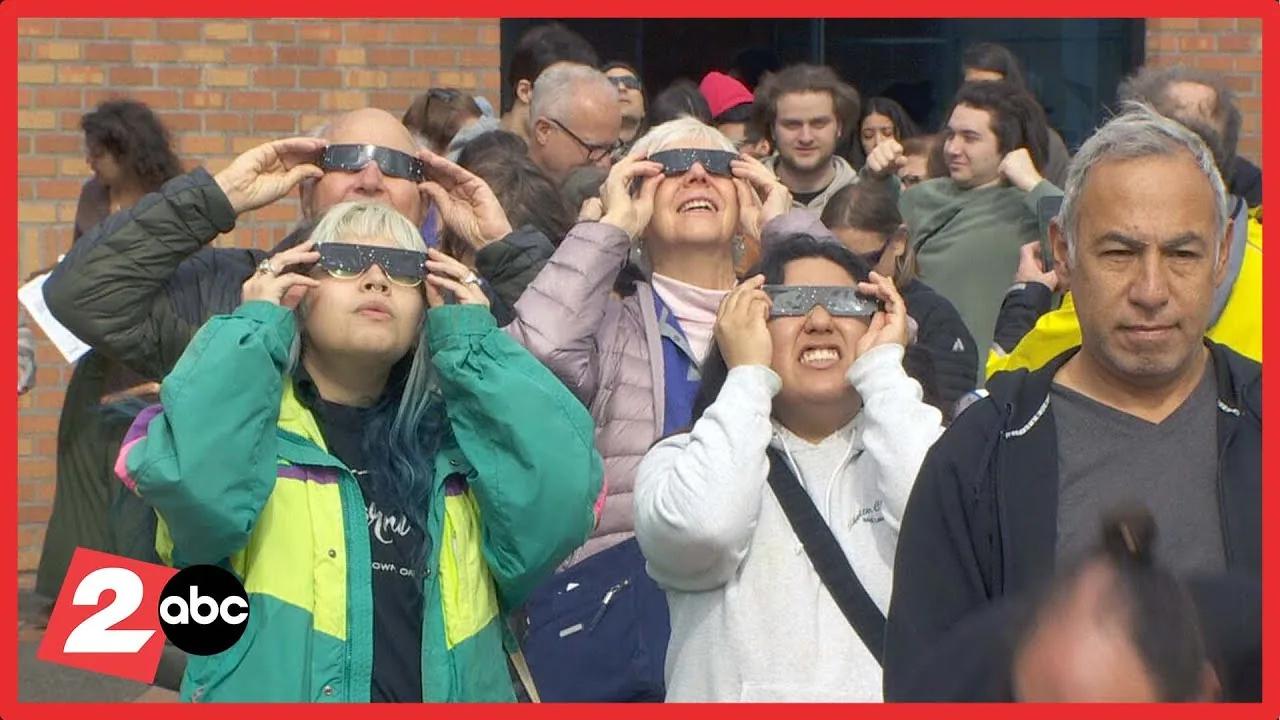
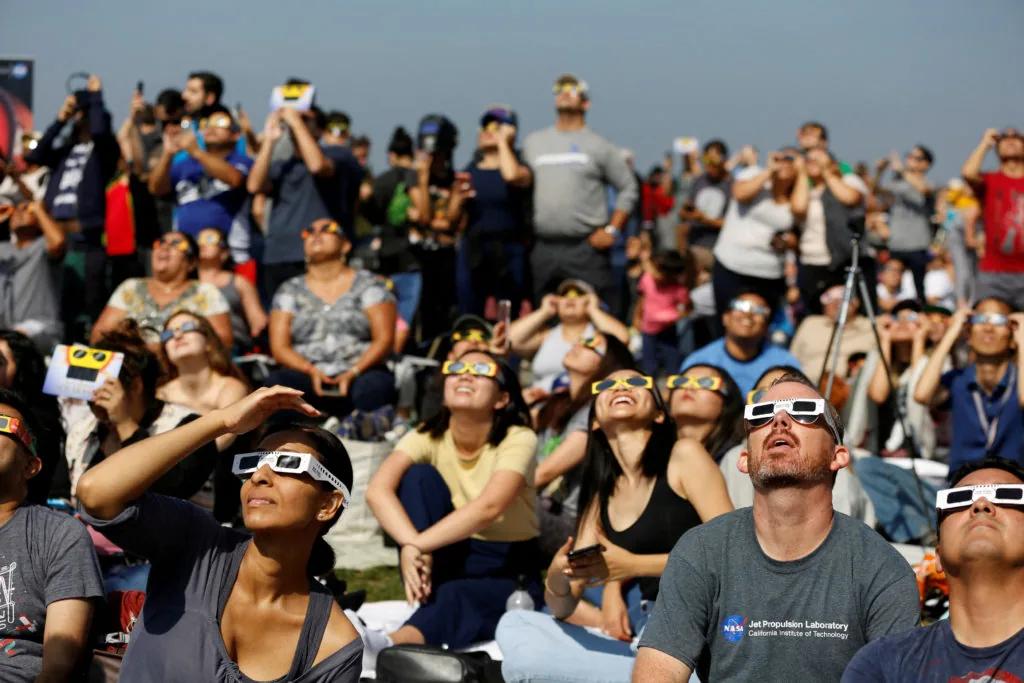
The atmosphere may make a setting Sun look soft, red or weak enough to watch. That appearance is not a safety test. During every partial phase, including a deep crescent immediately before or after totality, direct viewing requires a suitable solar viewer that conforms to ISO 12312-2.
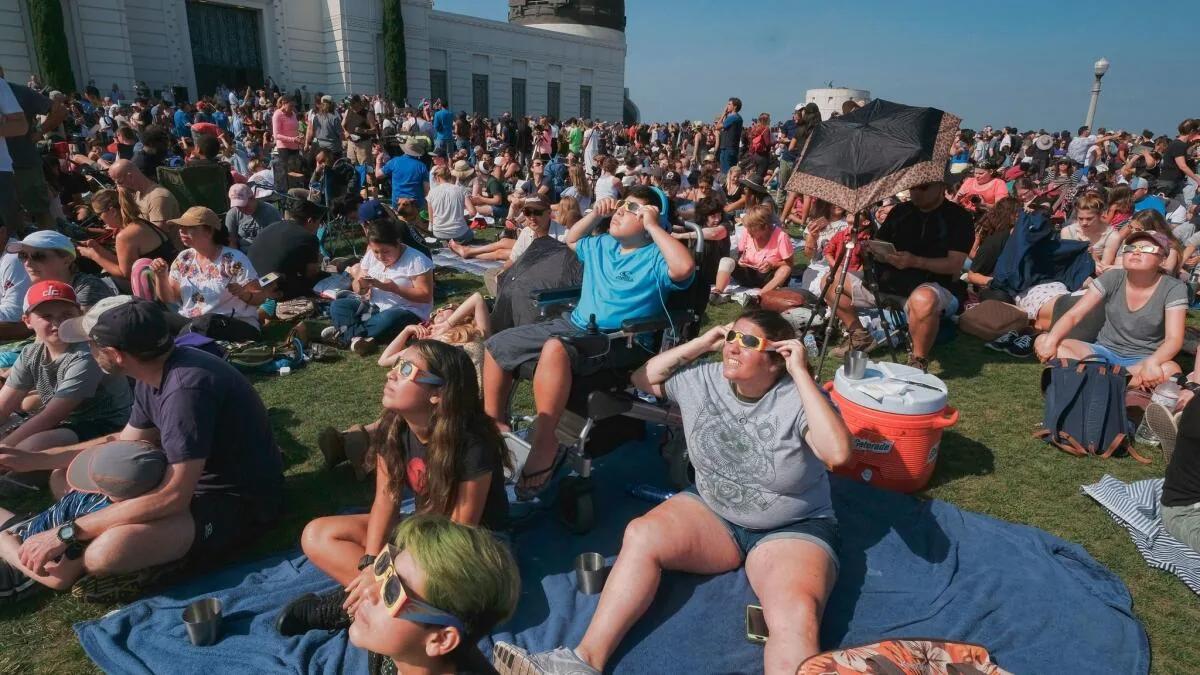
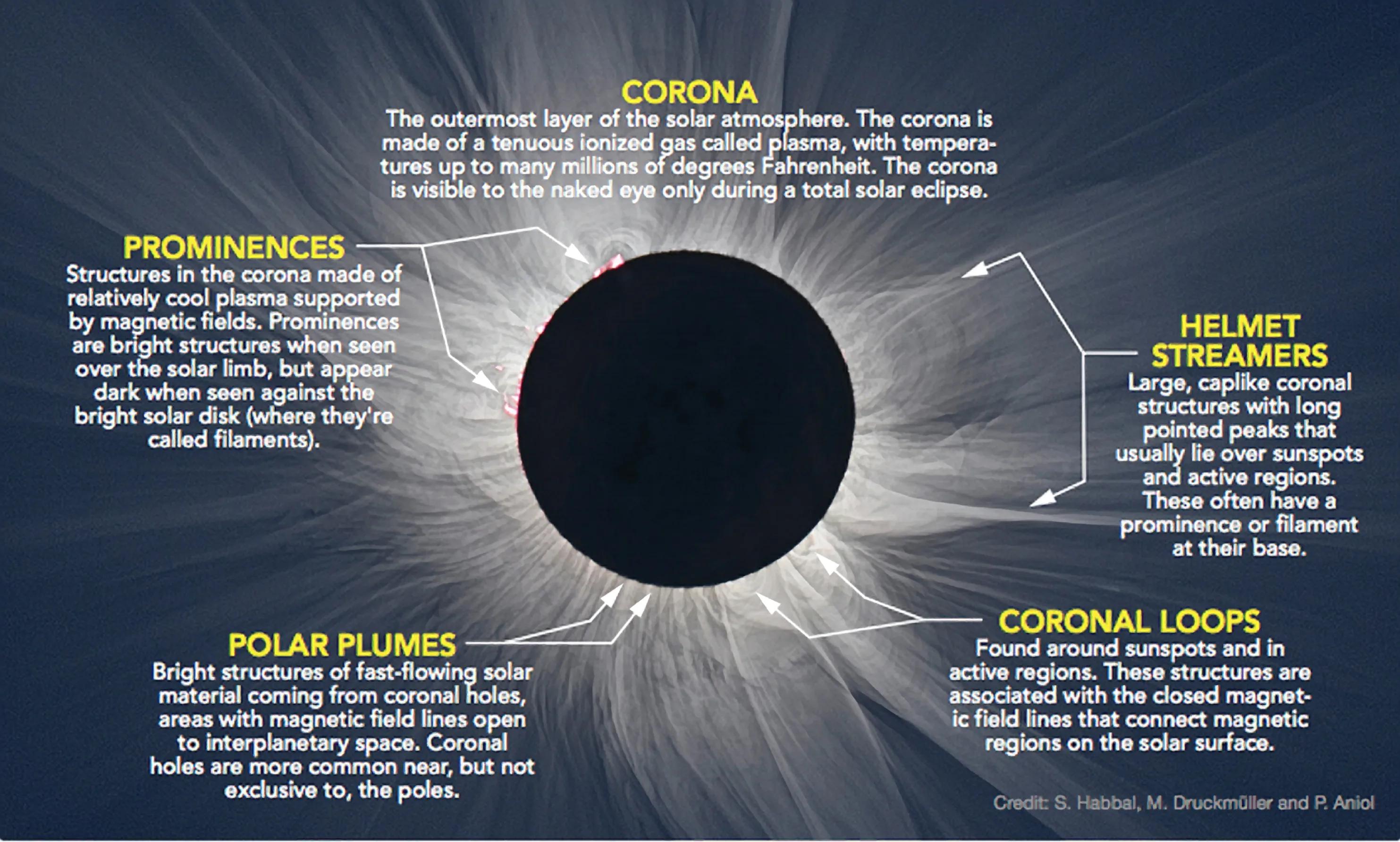
Only observers inside the path of totality may remove their viewers, and only when the Moon completely covers the Sun’s bright face. The instant bright sunlight begins to return, viewers go back on. Outside the totality path—including Madrid in 2026—there is no glasses-off phase. Our first-timer guide explains when eclipse glasses stay on and when they can come off.
Ordinary sunglasses are not solar filters. Nor should eclipse glasses be placed between your eyes and binoculars, a telescope or a camera lens: concentrated sunlight can damage the filter and your eyes. Magnifying optics require a correctly fitted solar filter over the front aperture and expert setup.
Product language can be confusing. Phrases such as approved solar eclipse glasses and eclipse glasses nasa approved imply an approval program that NASA does not operate. More meaningful wording identifies the applicable standard, although even a printed claim such as solar eclipse glasses iso 12312-2 certified should be supported by a trustworthy seller, appropriate testing and clear manufacturer information. Inspect every viewer for tears, punctures, loose film or scratches before use.
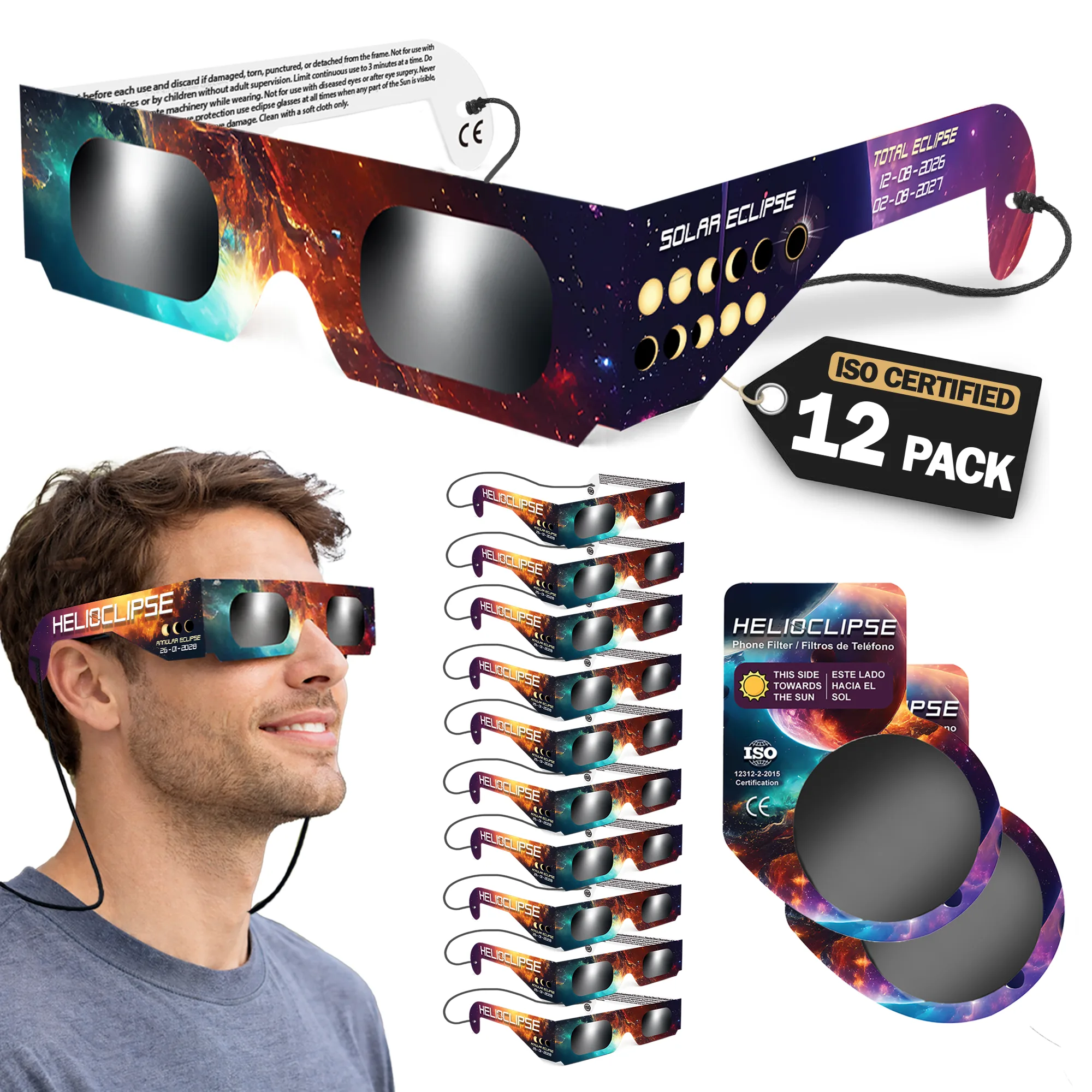
You can prepare your group early with Helioclipse solar eclipse glasses and review the instructions together before eclipse day. Children should be supervised, and everyone should practise covering their eyes before turning toward the Sun, then turning away before removing the viewer.
A practical low-horizon planning checklist
Start with geometry, then test reality:
- Enter your exact observing coordinates in the Helioclipse map rather than relying on the nearest city.
- Confirm whether the site is inside or outside the path of totality.
- Record local contact times, with the stated time zone, plus solar altitude and azimuth at totality.
- Inspect the horizon in the correct direction; account for hills, buildings, trees and restricted access.
- Prefer a meaningful clearance above the skyline instead of depending on uncertain near-horizon refraction.
- Build a weather and mobility plan, especially where coastal haze or mountain cloud could block a low Sun.
- Bring ISO 12312-2 solar viewers for every partial phase, along with spares protected from bending and scratches.
- Brief friends, family or pupils on the glasses-on and glasses-off sequence before attention becomes divided.
A diagram or app may show a perfectly smooth horizon. Your site will not have one. Take a photograph of the western skyline from the intended viewing position, note the compass direction and compare it with the eclipse azimuth. If access permits, repeat the check in the evening when shadows and glare reveal obstructions that were easy to miss at midday.
Most importantly, treat refraction as part of the viewing experience rather than a rescue plan. A compressed eclipsed Sun could be spectacular. Depending on a volatile atmospheric layer to lift totality clear of a ridge is not robust planning.
Why do the sun appear oval or flattened at sunrise and sunset ...
Science Seekho!
Frequently asked questions
Why does the Sun look flattened near sunset, and how can that affect a low eclipse in 2026?
Atmospheric refraction bends light from the low Sun and lifts its apparent image, but not uniformly across the disk, so the Sun can look oval rather than circular. Near sunset during the 2026 eclipse, this can make the eclipsed Sun’s apparent position and shape differ from a simple geometric expectation, without providing a universal timing correction.
What is atmospheric refraction in simple terms for eclipse planning?
Atmospheric refraction is the bending of sunlight as it passes through air layers whose density changes with height. It makes a low Sun appear higher than its unrefracted geometric position, and the effect becomes especially sensitive close to the horizon.
Can a basic explanation of refraction tell me exactly when a low eclipse will disappear?
No. Conditions near the horizon can vary with temperature inversions, elevation, pressure, and the air structure above land or sea, so refraction is not a fixed correction for every location. Hills, buildings, haze, and other local horizon obstructions can also determine whether the eclipsed Sun is actually visible.
What is the safest way to observe a solar eclipse?
This excerpt does not provide instructions for safe solar-eclipse viewing. It addresses atmospheric refraction, the Sun’s apparent position near the horizon, and the limitations of low-altitude visibility estimates.
How should I plan for weather and horizon visibility during a sunset eclipse?
Check the calculated eclipse circumstances for your location, then assess the actual western horizon for hills, buildings, and haze. Allow for atmospheric uncertainty near the horizon, because changing air conditions can alter the apparent position and shape of the low Sun.
On-site next steps
- Explore your coordinates in the Helioclipse Eclipse Explorer and note totality status, contact times, altitude and azimuth.
- Compare at least two observing sites, giving priority to a clear horizon and a workable route between them.
- Read our August 12, 2026 planning guide with your group, then assign transport, weather and safety roles.
- Order ISO 12312-2 eclipse viewers from Helioclipse early enough to inspect them and practise safe use before eclipse day.
Sources & further reading
- Find a Horizon and Savor the Bending of Light — Sky & Telescope
- Sunrise Solar Eclipse on March 29th for Eastern North America — Sky & Telescope
- Mysteries of the Sun — Space.com
- Flattened Suns — Atmospheric Optics
- Chapter 6: Electromagnetics — NASA Science
- Types of Solar Eclipses — NASA Science
- Eclipses and the Moon — NASA Science
- How to View a Solar Eclipse Safely — American Astronomical Society
- About the ISO 12312-2 Standard for Solar Viewers — American Astronomical Society
- Phenomena You’ll Experience at a Total or Annular Eclipse — American Astronomical Society