Mobility access on eclipse day: terrain, shuttles, and advocating for a workable plan
A solar eclipse can be one of the most emotional things you will ever see in the sky. It can also be one of the most logistically messy days you will ever try to navigate on the ground.
That matters if you use a wheelchair, scooter, cane, walker, or simply need a plan that does not depend on sprinting across a field, standing in a long line, or improvising in a traffic jam. Good eclipse planning is not only about clouds and maps. It is about whether you can actually get from the car or shuttle to a viewing spot, whether the surface is firm enough to roll on, whether the restroom is reachable, and whether the crowd around you will stay manageable when the light changes and everyone gets excited.
This is our eclipse viewing wheelchair mobility access crowds 2026 guide in the most practical sense: not a promise that every site will be easy, but a way to judge sites honestly before eclipse day. Start with the Helioclipse Eclipse Explorer / 3D map to confirm whether your location is in totality or only a partial eclipse, then build a ground plan that works for your body, your equipment, and your stress level.
The first access question is not “Is there an event?” but “Can I use the site?”
Public eclipse events often sound great on paper: park viewing, museum lawn, school grounds, observatory open house, downtown festival. But mobility access on eclipse day: terrain, shuttles, and advocating for a workable plan starts with a more specific question: what happens between arrival and the actual place where you will watch the Sun?
A site can be technically open to the public and still be a poor fit if it requires a long push over grass, a steep gravel shoulder, a curb cut that disappears into mud, or a shuttle drop-off that leaves you far from the viewing area. On eclipse day, small frictions get amplified. A 200-meter uneven path can feel much longer when you are carrying water, viewers, medication, sun protection, and backup layers while thousands of other people are arriving at once.
NASA’s eclipse planning guidance repeatedly emphasizes arriving early, choosing your exact viewing spot in advance, and thinking through comfort logistics rather than only the celestial event. That advice is even more important for eclipse for mobility planning. If you can, ask organizers for specifics instead of general reassurance. “Accessible parking available” is not enough by itself. You want to know surface type, slope, distance, queue expectations, restroom setup, and whether the accessible route remains usable if the crowd doubles.
If you are still choosing between sites, the best places and timing for eclipse viewing wheelchair mobility access crowds are often not the biggest headline events. A smaller library lawn, community college lot, science center terrace, or reserved paved overlook may beat a famous hilltop if the famous site means rough ground and chaotic departure.
Terrain is the hidden deal-breaker
The sky does not care whether you are on asphalt, packed dirt, or a grassy field. Your day absolutely does.
For solar eclipse viewing wheelchair mobility access crowds, terrain is usually the first thing that turns a theoretically good plan into a bad one. Grass can be fine when it is dry and closely cut, but miserable after rain. Gravel can range from compact and manageable to deep and wheel-stopping. Dirt lots can harden like concrete in one season and turn soft in another. Even paved sites can fail if the viewing area is separated by broken curbs, steep cambers, or long stretches without shade or seating.
A useful way to think about terrain is to break it into five checks:
Surface
Is it pavement, boardwalk, packed path, short grass, loose gravel, sand, or mixed ground? Ask for photos taken at ground level, not only aerial event posters.
Slope
A gentle incline may be fine on a normal day and exhausting in heat with crowds. Ask whether the route is flat, rolling, or steep.
Distance
How far is it from parking or shuttle drop-off to the actual viewing area? “Close by” is not a measurement.
Bottlenecks
Are there gates, narrow paths, curb cuts, bridges, or single-entry points where people will bunch up before and after totality?
Weather sensitivity
Will the route still work if there is dew, rain the night before, or irrigation on the field?
This is where an eclipse viewing wheelchair mobility access crowds map becomes more than a sky map. You need two maps in your head at once: the eclipse geometry above you and the site geometry under you. The Helioclipse map tells you whether you are inside or outside totality. Your local site notes should tell you whether you can actually stay there comfortably long enough to experience it.
Totality changes crowd behavior fast
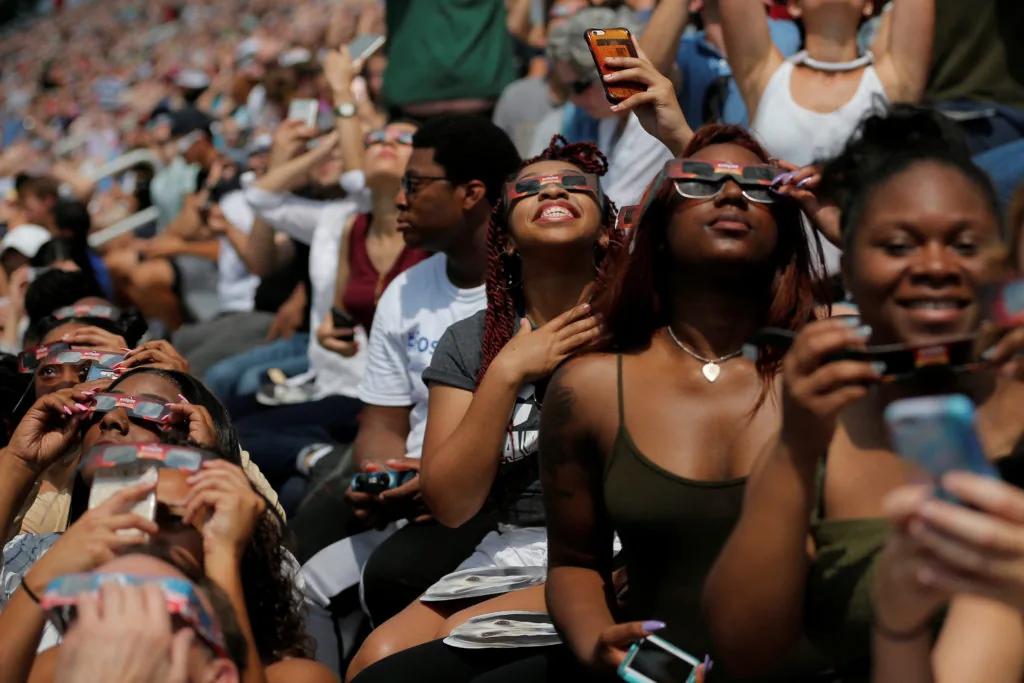
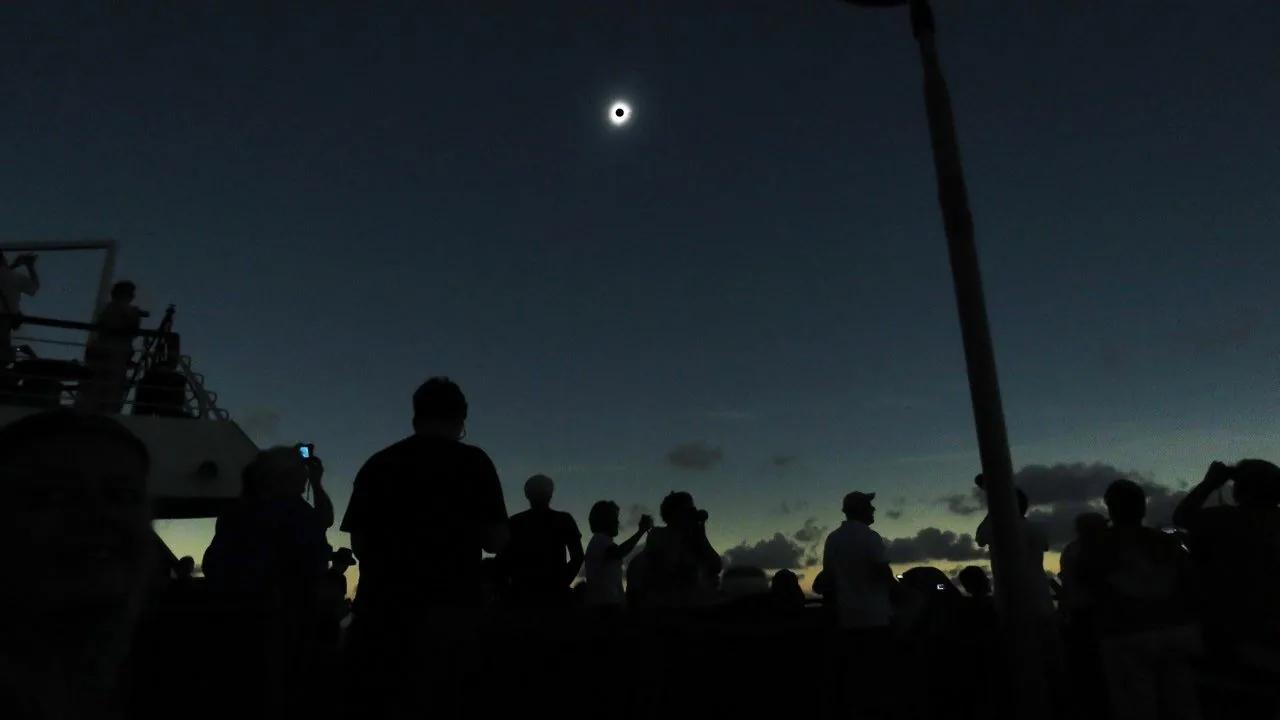
If you are planning for a total solar eclipse rather than a partial one, crowd energy can shift dramatically in the last 15 minutes before totality and in the first minutes after it ends. The American Astronomical Society’s eclipse phenomena guide describes the sensory ramp-up clearly: the light changes, shadows sharpen, people start reacting, and then totality itself can trigger cheering, movement, and a sudden burst of emotion.
That is beautiful. It can also be overwhelming.
For eclipse viewing wheelchair mobility access crowds, the key is to avoid needing to move during the most intense part of the event. If you are in the path of totality, the partial phases last roughly an hour or more on either side, and the final run-up is not the moment to discover that your line of sight is blocked, your chair is angled on a slope, or the crowd behind you has compressed into your space.
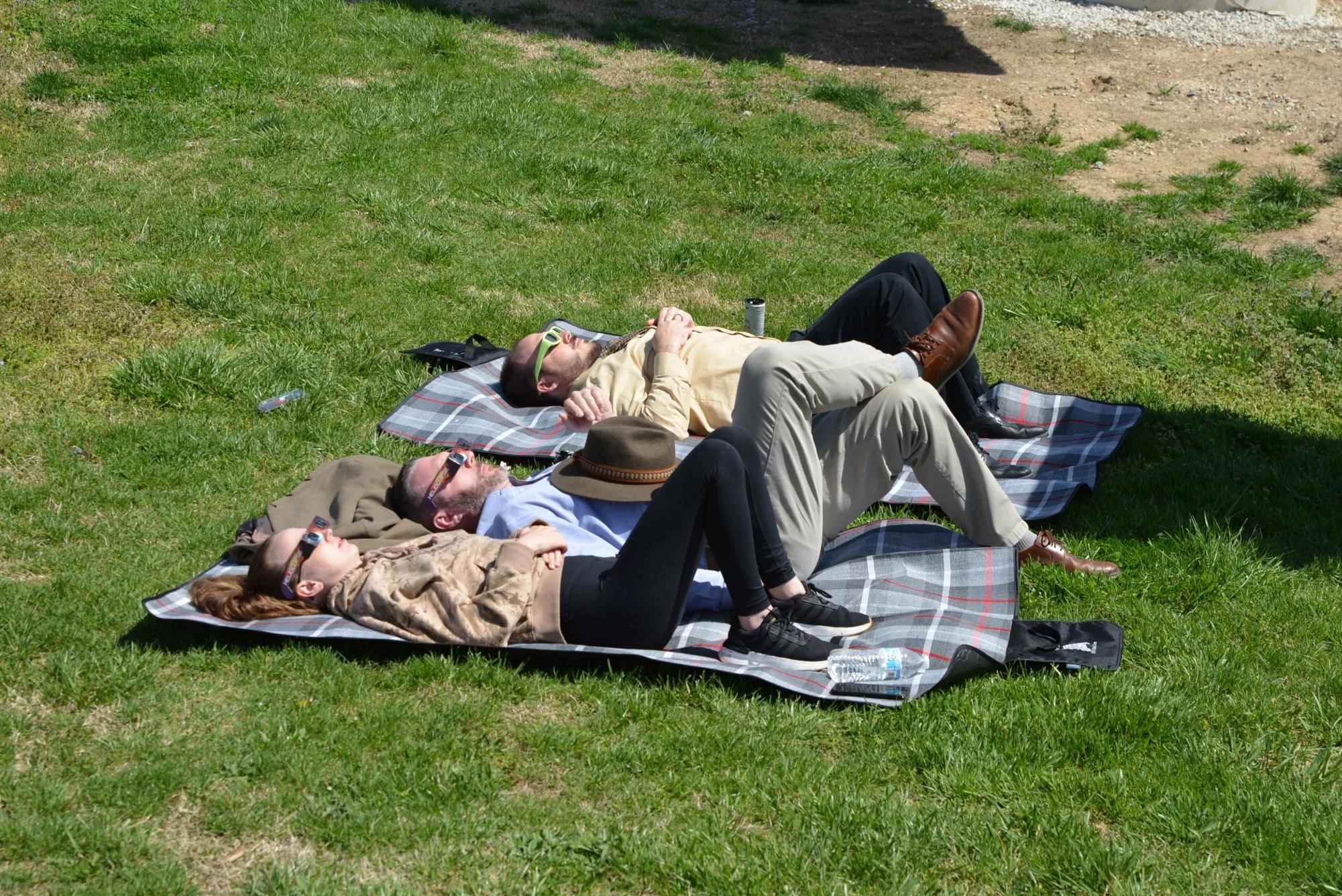
Try to set up early enough that your position is stable before the site gets loud and compressed. If you need personal space, a clear side exit, or room for a companion to assist you, build that into your choice of spot. Edge-of-crowd positions are often better than center-of-crowd positions, even if the view of the horizon is slightly less dramatic.
And remember the astronomy: if you are outside the path of totality, there is no safe glasses-off moment. If you want a plain-language refresher, our guide to when glasses are on and when glasses are off during eclipse phases is worth reading before the day itself.
Arrive earlier than you think you need to
NASA’s planning advice and eclipse travel reporting from Astronomy Magazine both point to the same reality: eclipse traffic can be severe before and especially after the event, and small towns can be overwhelmed by visitors. For mobility planning, “arrive early” is not generic advice. It is how you preserve options.
Early arrival gives you time to test the route from parking to viewing, identify the nearest restroom, check whether the accessible shuttle is actually running as described, and decide whether the site is workable before the crowd locks it in. It also gives you time to change plans while roads and lots are still moving.
For eclipse viewing 2026 and eclipse travel 2026, we would treat these as separate clocks:
- the sky clock: when the partial eclipse starts, when totality happens if applicable, and when the event ends
- the ground clock: when parking fills, when shuttles start backing up, when heat becomes a factor, and when departure traffic becomes punishing
If a site says the eclipse event begins at noon, that does not mean noon is a good arrival time. For many mobility users, the better strategy is to be in place well before the partial phases begin, not merely before maximum eclipse.
Astronomy Magazine’s eclipse guidance also makes an important point about backup movement: if clouds are patchy, decisions to relocate need to happen early, not at the last second. That matters even more if moving is physically difficult or if you depend on a van, lift, or organized shuttle. A “mobile backup plan” that requires instant relocation may not be a real backup plan for you at all.
Shuttles, drop-offs, and the difference between mobility and accessibility transportation
One of the most useful questions in this whole topic is: what is the difference between mobility and accessibility transportation? In everyday eclipse planning, mobility often means your ability to move through the site and manage the day physically. Accessibility transportation is the system the site provides to help make that movement possible: accessible parking, lift-equipped shuttles, curbside drop-off, golf-cart assistance, or a route that avoids stairs and rough ground.
In other words, your mobility needs are personal; the transportation access is infrastructural.
That distinction helps when you contact organizers, because it leads to better questions:
- Is there an accessible shuttle, and if so, what is the boarding process?
- Where exactly is the accessible drop-off?
- Is the shuttle lift or ramp in service all day, including after the eclipse?
- Can companions ride with the person who needs the accessible vehicle?
- Is there a separate queue, timed reservation, or first-come system?
- What happens if the shuttle line becomes very long after totality?
If you are wondering what is an accessible shuttle?, the practical answer is simple: it is not just a bus someone says you can use. It is a vehicle and boarding process that can actually accommodate the rider safely and predictably, with enough staffing and enough frequency that you are not stranded by the crowd surge.
Ask organizers for the return plan, not only the arrival plan. Many events think carefully about getting people in and much less carefully about getting them out. Yet the post-eclipse rush is often when the system breaks down.
Advocate early, and ask for specifics in writing
A lot of eclipse access problems are not caused by bad intent. They are caused by vague planning language that nobody stress-tested.
That is why advocating for yourself before eclipse day matters. You do not need to be confrontational. You do need to be specific.
A useful message to an organizer might include:
- the mobility device or support you use
- whether you need step-free access
- the maximum workable distance from drop-off to viewing
- whether you need an accessible restroom nearby
- whether you need a companion to remain with you
- whether you need a quiet edge position rather than a dense central crowd
- whether you need to know the exact surface type in advance
Then ask for concrete answers, ideally by email. If the reply is still vague, that is information. “We should be able to accommodate everyone” is not a plan. “Accessible parking is on paved Lot B, 80 meters from the viewing terrace, with two accessible portable toilets on the same level and lift-equipped shuttle service from overflow Lot D every 20 minutes” is a plan.
This is the heart of mobility access on eclipse day: terrain, shuttles, and advocating for a day you can actually enjoy. You are not asking for special cosmic treatment. You are asking whether the event design matches the public invitation.
Build a low-stress viewing setup, not a heroic one
The best eclipse setup is often the one that asks the least of you.
That can mean choosing a site with a slightly less dramatic horizon but a much better surface. It can mean watching from a hotel lot inside totality instead of a scenic ridge outside it. It can mean accepting a shorter totality duration near the edge of the path if the centerline option is too chaotic to reach safely. Astronomy Magazine notes that totality lasts longest on the centerline and shortens toward the path edges, but being somewhere workable inside totality is far better than chasing a theoretically perfect site you cannot use comfortably.
For many readers, that is the real answer to eclipse viewing wheelchair mobility access crowds: reduce variables. Fewer transfers. Fewer long pushes. Fewer assumptions about last-minute movement. More water, shade, battery, and time.
A practical setup checklist might include:
Positioning
Choose a spot where you can see the Sun without needing to keep repositioning as people stand up around you.
Heat and exposure
Bring sun protection for the waiting period. The eclipse itself may cool the air briefly, but the hours around it can still be hot.
Power
If you use a powered chair or scooter, start fully charged and know where your charger is. Do not assume you will find power on site.
Restroom reality
Know the nearest accessible restroom before the partial phases begin.
Companion roles
If you are attending with others, assign jobs. One person handles crowd questions. One watches timing. One keeps water and viewers accessible.
Exit timing
Decide in advance whether you will leave immediately after totality or stay through the final partial phases to let the first traffic wave pass.
NASA explicitly notes that lingering after the eclipse can reduce the worst of the departure crush. That can be a very good strategy if your site remains comfortable and safe after the main moment.
Safe viewing still matters when logistics are the main challenge
Accessibility planning does not replace eye safety. It sits beside it.
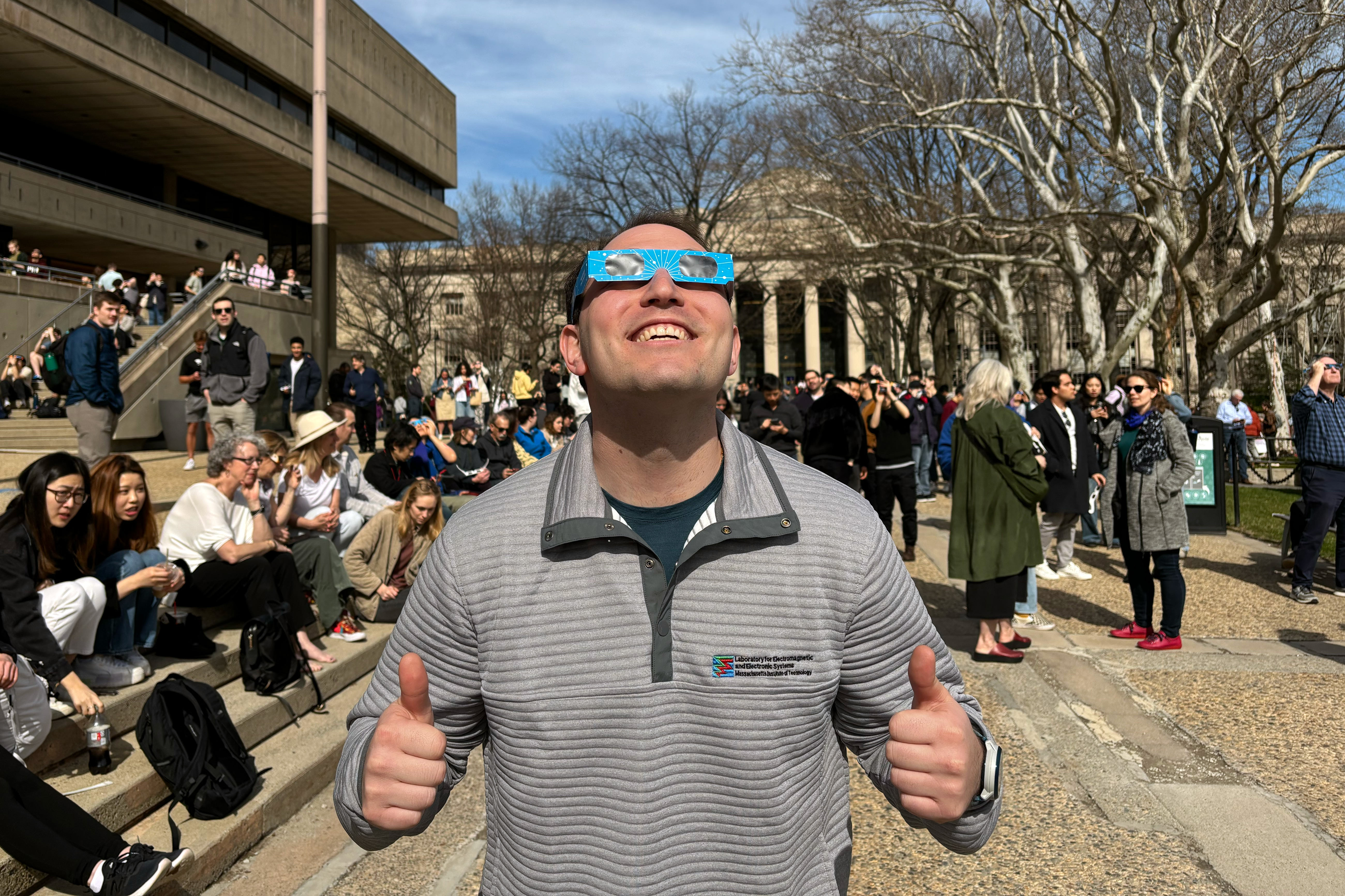
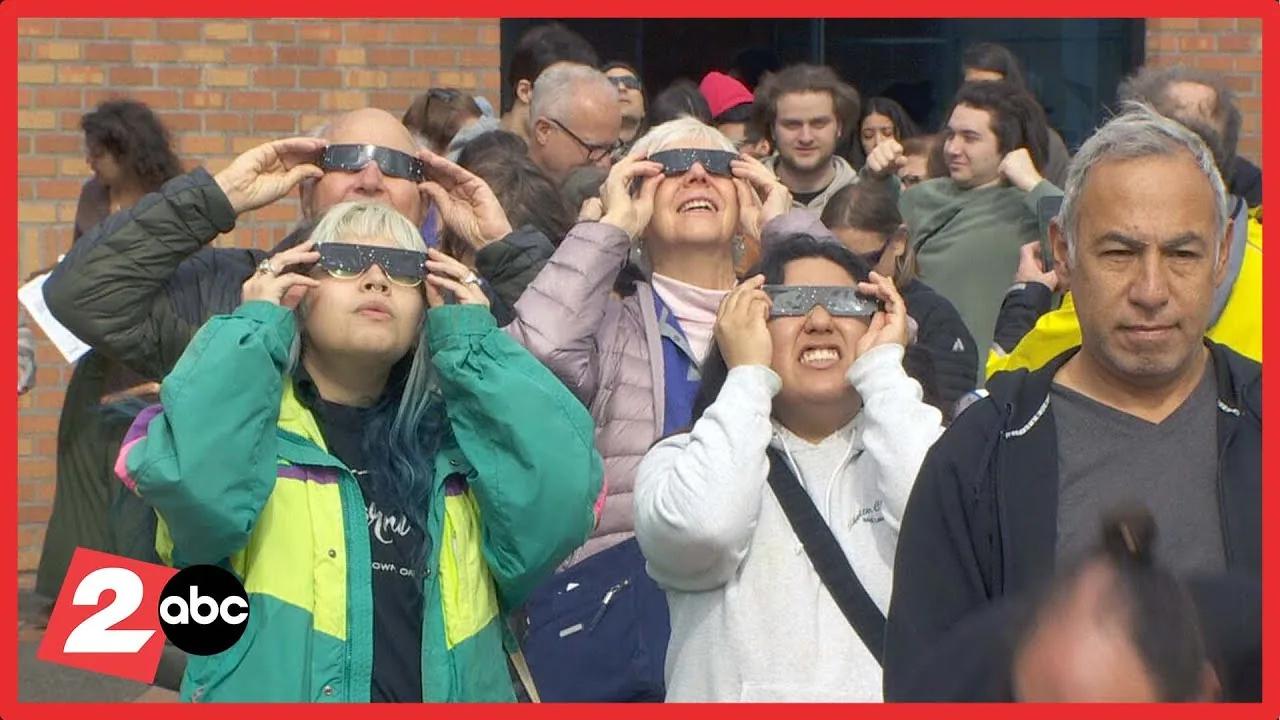
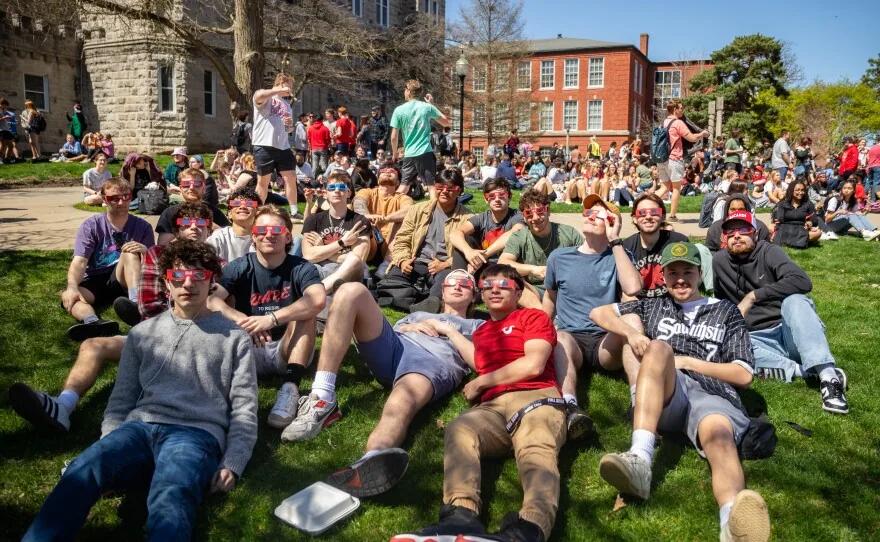
The AAS guidance is straightforward: for any partial eclipse, and for all partial phases of a total eclipse, direct viewing requires special-purpose solar filters that conform to ISO 12312-2. Ordinary sunglasses are not safe. Only during the brief total phase, and only if you are actually inside the path of totality, can you remove your viewers to look directly at the eclipsed Sun with the unaided eye.
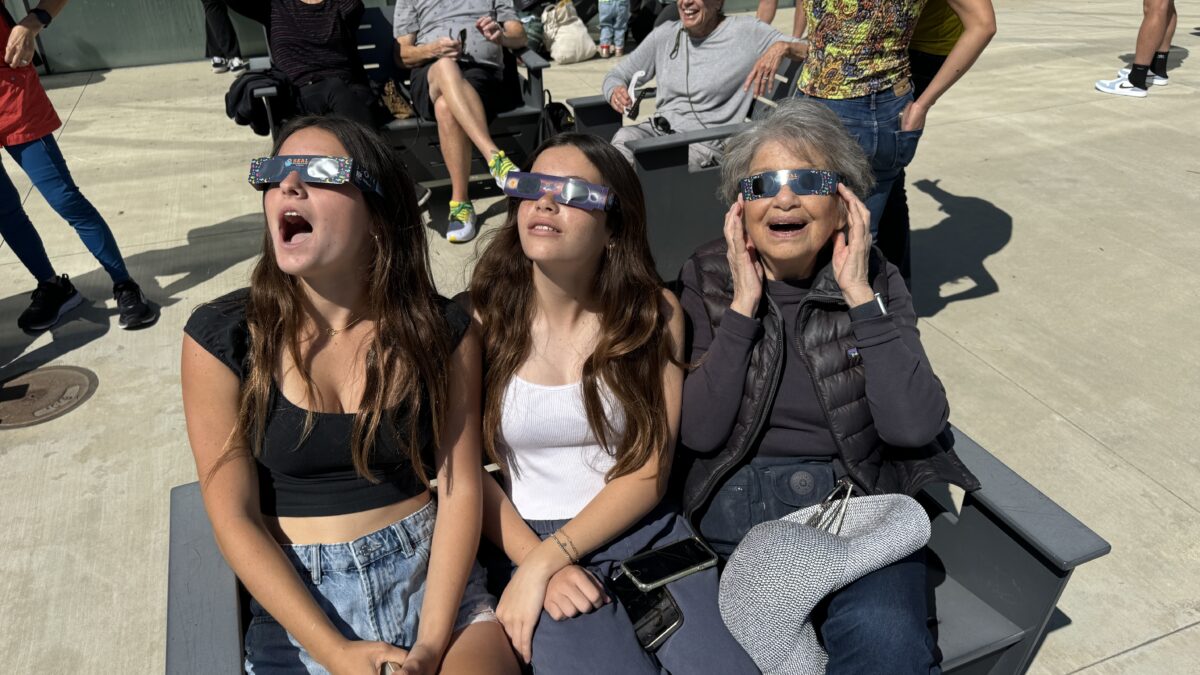
If you are organizing for a family or group, remember another useful AAS point: not every person needs to stare continuously. The eclipse changes slowly during the partial phases, so people can share viewers and take turns. That can help if you are managing bags, mobility equipment, or children.
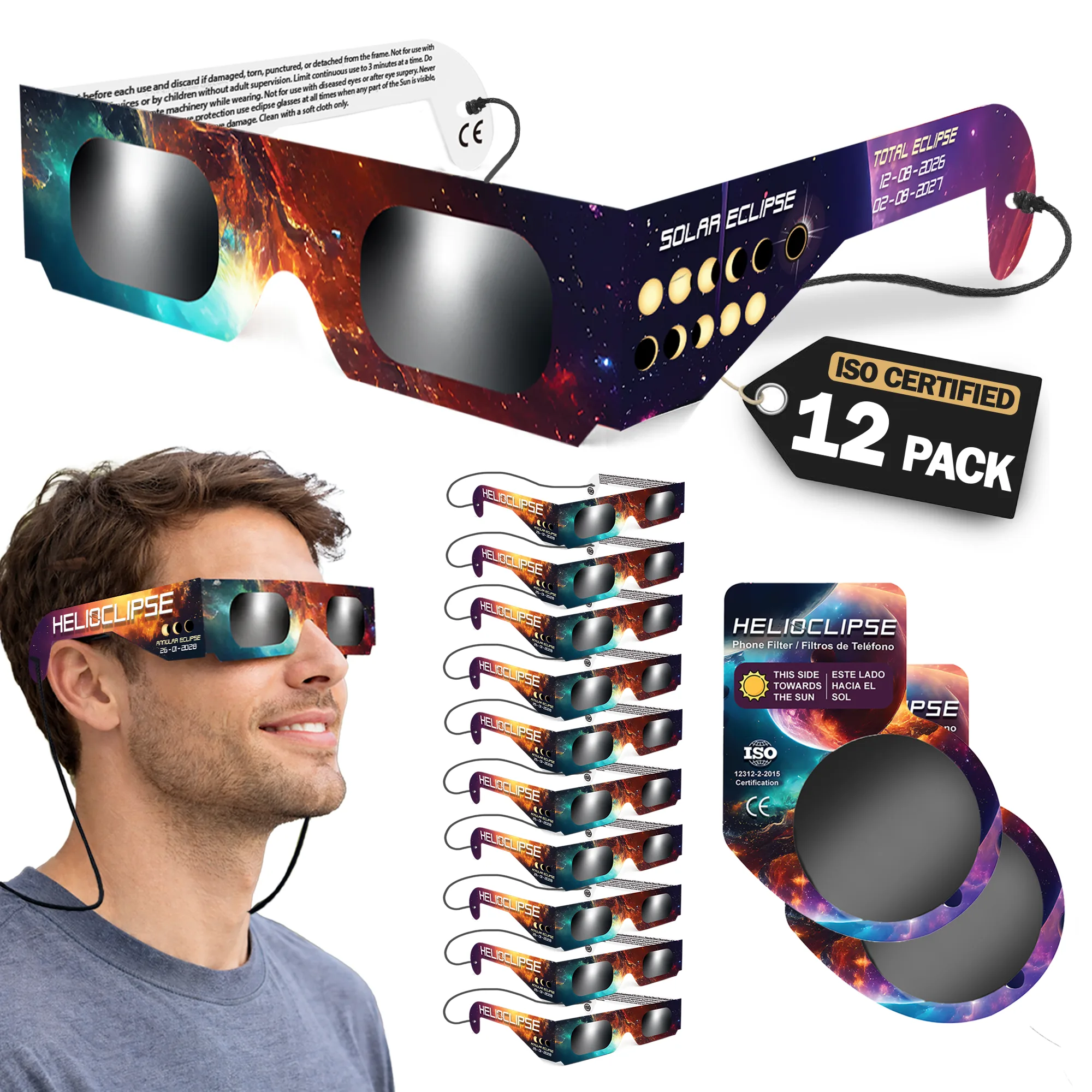
When you are ready to buy, keep the language practical and standards-based. Look for approved solar eclipse glasses, solar eclipse glasses iso 12312-2 certified, or certified solar eclipse glasses from a source you trust, and buy early enough that you are not scrambling in the final week. Our shop for eclipse glasses is built for exactly that kind of calm prep, and our explainer on ISO 12312-2 and eclipse viewers can help you sanity-check what the standard actually means.
One more note because confusion spreads every eclipse cycle: phrases like eclipse glasses nasa approved or nasa certified solar eclipse glasses show up constantly in search and marketplace language, but NASA does not approve a particular consumer brand. What matters is whether the viewer conforms to ISO 12312-2 and comes from a trustworthy source.
You can design the experience for more than eyesight alone
Mobility planning often overlaps with sensory planning. A crowded eclipse site can be joyful, but it can also be loud, unpredictable, and emotionally intense.
That is why it helps to decide what kind of eclipse memory you want. Do you want the communal roar when totality hits? Or do you want a quieter site where you can notice the temperature drop, the strange light, the bird behavior, and the horizon glow without being jostled?
Sky & Telescope’s outreach advice makes a strong point that astronomy events should forecast accessibility needs rather than treat them as an afterthought. Astronomy Magazine’s coverage of tactile eclipse resources also reminds us that an eclipse is not only a visual event. People can experience changing temperature, wind, sound, crowd reaction, and the unusual quality of light even when direct visual observation is limited.
That broader framing helps everyone. It makes the day less brittle. If clouds interfere, or if your line of sight is imperfect, the event is still real. You are still there for the atmosphere, the darkening sky, the human reaction, and the physical sensation of the world changing for a few minutes.
A few questions that come up around eclipse access
How many people can view a solar eclipse?
In principle, everyone on the day side of Earth can be under the sky while an eclipse is happening, but not everyone sees the same thing. A partial solar eclipse can be visible across a very large region. Totality, by contrast, happens only inside a narrow path, often less than about 150 miles wide according to NASA’s general eclipse guidance. So the better question is not just how many people can view a solar eclipse? It is: how many can reach a workable site inside the specific kind of eclipse they want to experience.
Which type of eclipse may be visible to all the people on one side of Earth?
A solar eclipse does not usually cover the entire day side of Earth in the same way. Partial visibility can extend across a broad area, but totality or annularity is confined to a much narrower track. For planning, that means your exact location matters far more than many first-time viewers expect.
What is the eclipse treatment planning system?
This phrase refers to a medical radiation-therapy software platform, not to solar eclipses. If you have seen searches like what is the eclipse treatment planning system?, how to use geud in eclipse?, or how to add clinical goals in eclipse?, those belong to a completely different professional context. Here, we are talking about eclipse day skywatching and public-event logistics, not medical software.
Can people standing in the penumbra region see the total eclipse?
No. If you are in the penumbra, you see a partial eclipse, not totality. This is one of the most important planning truths in all of eclipse travel. Even a very deep partial eclipse is not the same experience as standing inside the umbra, where the Sun’s bright face is fully covered and totality occurs.
If your trip depends on seeing totality, confirm your exact location on the Helioclipse Eclipse Explorer / 3D map and do not assume that “close to the path” is good enough. For broader route and backup thinking, our guide to eclipse travel without the chaos pairs well with this one.
A workable plan beats a glamorous plan
The most memorable eclipse stories are not always from the most famous sites. They are often from the places where people arrived with time, knew where to sit, had water and shade, understood the safety rules, and did not spend the best two minutes of the day fighting a curb, a muddy field, or a panicked parking exit.
That is the spirit of eclipse viewing wheelchair mobility access crowds map planning and of solar eclipse viewing wheelchair mobility access crowds more broadly. You are not trying to win eclipse day. You are trying to make it usable, calm, and worth the effort.
If you are helping a friend or family member plan, do not wait for them to raise every concern. Ask now. What surface works? How far is too far? Is a shuttle acceptable or stressful? Is a smaller crowd worth a longer drive? Would a paved partial-eclipse site be better than a chaotic totality site, or is totality important enough that you should keep searching for a better-access totality location?
Those are good questions. Ask them early, and the whole day gets better.
No eclipse shades? Other ways to watch safely
CBC News
Frequently asked questions
If I’m in the lighter outer shadow, can I expect to see the full eclipse?
No. The excerpt says you should first confirm whether your location is in totality or only a partial eclipse, because that determines what you will actually see. It also emphasizes checking the site itself, since access and crowd conditions can affect whether you can comfortably reach a viewing spot.
How many people can realistically watch the eclipse from one site?
The excerpt does not give a number. It suggests that the practical limit depends on whether the site has firm surfaces, workable shuttle drop-off, reachable restrooms, and a crowd level that stays manageable when everyone arrives at once.
Is there a kind of eclipse that can be seen by everyone on one side of Earth?
The excerpt does not answer that directly. What it does say is that you should confirm whether your chosen location is in totality or only a partial eclipse, because visibility depends on where you are on the ground.
What does an eclipse planning system need to account for if I use a wheelchair or mobility aid?
It should account for more than the sky view. The excerpt says to plan for the route from the car or shuttle to the viewing area, the firmness and slope of the surface, restroom access, and whether the crowd will still be manageable when the eclipse begins.
How do I build a practical access plan for eclipse day?
Start by checking whether the site is actually in totality, then ask organizers for specific details about surface type, slope, distance, queue expectations, restroom setup, and the accessible route. The article also recommends arriving early and choosing your exact viewing spot in advance so you are not improvising in a traffic jam or crowd.
On-site next steps
- Use the Helioclipse Eclipse Explorer / 3D map to confirm whether your chosen site is in totality or only a partial eclipse, then compare nearby alternatives with easier parking or paved access.
- If you still need viewers, visit our shop for eclipse glasses and order ISO 12312-2 compliant options before the last-minute rush.
- For related planning, keep our blog hub handy, especially the guides on eclipse phases and safe glasses use, ISO 12312-2 viewers, and crowds, routes, and backup plans.
Sources & further reading
- What to Expect: A Solar Eclipse Guide — NASA practical planning advice on site choice, timing, supplies, and crowd realities.
- A guide to the 2024 eclipse from Astronomy Magazine — strong discussion of totality, centerline versus path edge, weather backups, and traffic.
- How to Do Eclipse Outreach On and Off the Path — useful thinking on public-event design, adaptability, and accessibility.
- A genius use of Spanish moss can help all get a feel for an eclipse — a good example of designing eclipse experiences beyond direct visual viewing.
- How to View a Solar Eclipse Safely — the AAS’s canonical public guidance on safe viewing and ISO 12312-2 filters.
- Indirect Solar Viewing: Pinhole & Optical Projection — low-barrier indirect viewing methods that can work well in group settings.
- Phenomena You'll Experience at a Total or Annular Eclipse — a clear guide to the sensory and timing arc of eclipse day.
- Eclipse Resources — NASA’s broader hub for eclipse education and planning materials.
- Community — community eclipse planning white paper with useful public-event context.
- Where Will You Be on Eclipse Day: April 8, 2024? — additional perspective on viewing environments and crowd tradeoffs.