Bikes and eclipse day: last-mile freedom, new failure modes, and why helmets are not solar filters
A bicycle can be brilliant on eclipse day. It slips past parking bottlenecks, turns a locked-up road shoulder into a manageable last mile, and gives you options when thousands of people all decide to leave at once.
It can also get you into trouble fast.
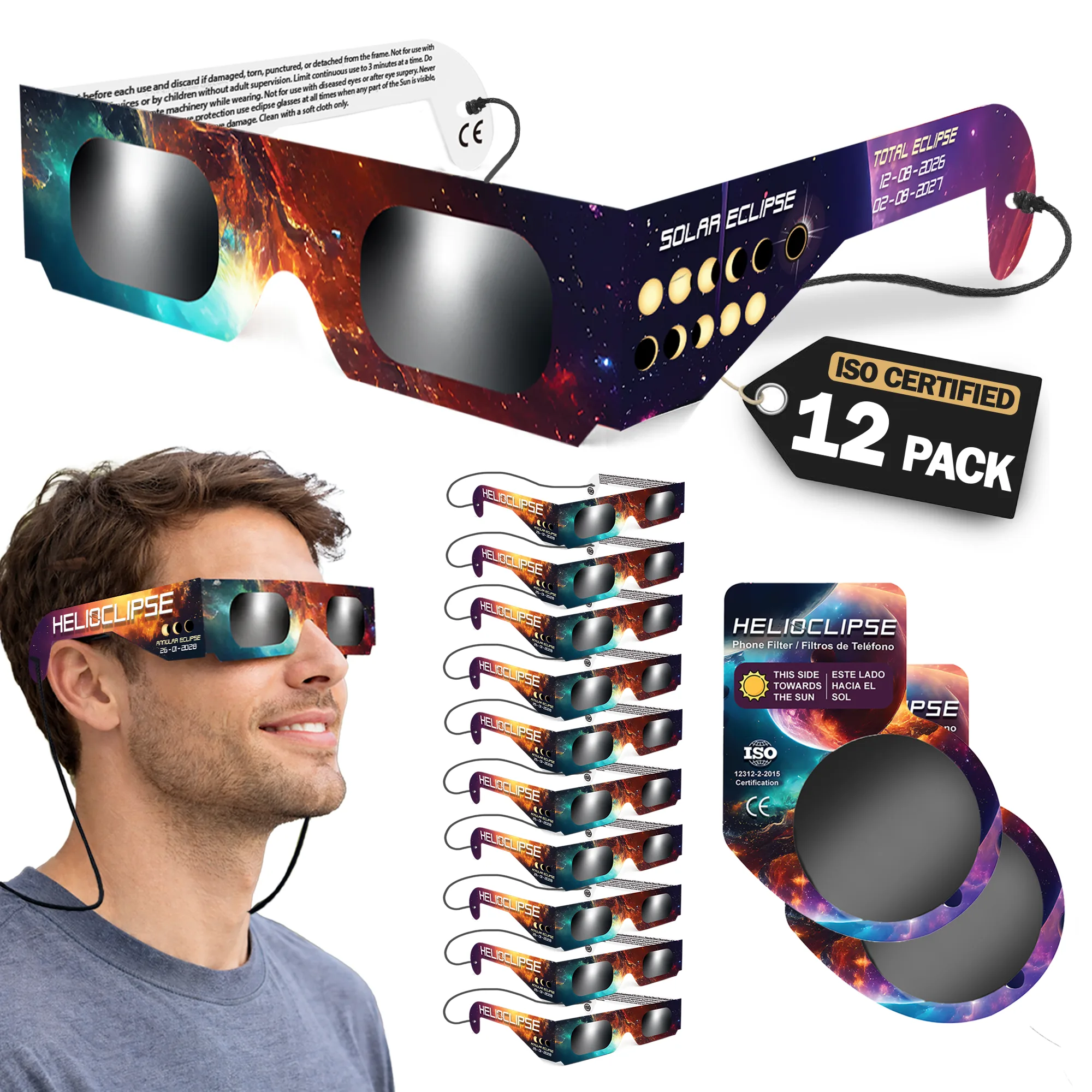
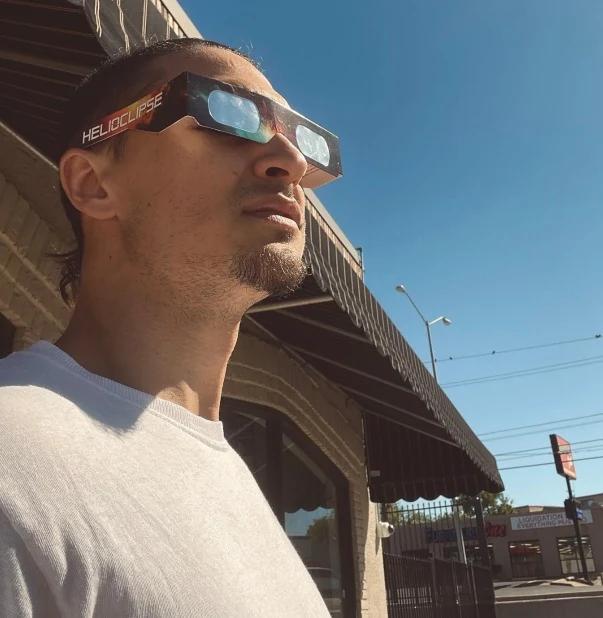
That is the real heart of cycling eclipse planning: a bike is transportation, not magic. It helps with congestion, but it does not make clouds disappear, it does not make unsafe roads safe, and it absolutely does not change the rules for looking at the Sun. If you are moving, you should not be looking up. If the Sun is not fully covered during totality, you need proper solar viewing protection that meets ISO 12312-2. A helmet visor, sunglasses, tinted goggles, and a bike helmet peak are not solar filters.
If you are building your day around mobility, start with the Helioclipse Eclipse Explorer / 3D map so you know whether your chosen stop is actually in totality or only in a deep partial eclipse. That single distinction matters more than almost any gear choice. For a refresher on exactly when glasses stay on and when they can come off during a total eclipse, our guide to eclipse phases and when to use solar glasses is worth reading before you roll out.
Why bikes help on eclipse day
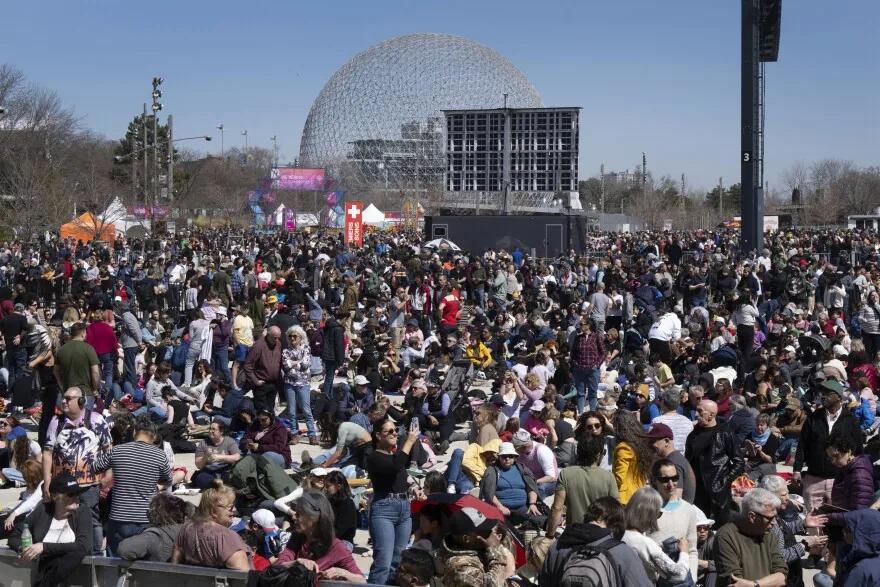
The best argument for a bike is simple: eclipse traffic is weird. It is not just “busy roads.” It is a short, intense surge of people trying to reach a narrow path, often through rural roads, small towns, and limited parking areas. Reporting around the 2024 total solar eclipse repeatedly highlighted the same pattern: roads jammed, parking lots filled, and the worst delays often came after totality, when everyone tried to leave together.
That is where bikes shine. If you can get close by train, bus, car drop-off, or overnight lodging, a bicycle gives you last-mile freedom. You may be able to cover the final 2 to 10 kilometers faster than a car stuck in a queue. In a city or town inside the path, it can be the difference between circling for parking and simply arriving.
This is the practical core of cycling bike eclipse path logistics. We are not talking about sport marketing, race culture, or pretending every eclipse trip should become an endurance ride. We are talking about the bicycle as a travel mode: a tool for reaching a safe viewing site, carrying water and layers, and leaving without joining the worst vehicle choke points.
There is also a psychological advantage. When roads are clogged, people start making bad decisions: illegal U-turns, shoulder parking, rushed lane changes, distracted walking, and last-second stops. A bike can reduce your dependence on that chaos. But only if you plan for the bike-specific risks too.
The new failure modes a bike introduces
A car stuck in traffic is frustrating. A cyclist on the wrong road, low on water, with nowhere safe to lock up, can miss the eclipse entirely.
That is why bikes and eclipse day: last-mile freedom, new failure modes, and real planning belong in the same sentence. The bike solves one problem by creating several smaller ones:
- You may arrive faster than drivers, but you are more exposed to heat, wind, and fatigue.
- You may avoid parking lots, but you now need a secure place to lock the bike.
- You may be more mobile before the event, but after totality you may be riding among distracted pedestrians and impatient drivers.
- You may think you can “just move if clouds build,” but cloud strategy on a bike is much more limited than cloud strategy in a car.
The theft issue is easy to underestimate. Eclipse crowds create temporary high-value clutter: bikes, camera bags, backpacks, and people who are all looking at the sky at the same moment. If your viewing plan depends on leaving a bike unattended in a busy public area, you need to think like it is a festival or stadium event, not a casual café stop.
The route issue matters too. A road that feels fine on a normal Wednesday can become miserable on eclipse day if it turns into an overflow parking lane, a police-managed one-way corridor, or a shoulder full of stopped vehicles. The safest route for your outbound ride may not be the safest route home.
The biggest safety rule: never look while moving
This should be obvious, but eclipse excitement makes people do foolish things.
Do not look at the Sun while riding. Do not glance up through eclipse glasses while coasting. Do not try to film yourself riding under the partial phases. Do not trust peripheral vision to keep you upright while your attention is on the sky. Stand still first, cover your eyes with proper eclipse viewers, then look up.
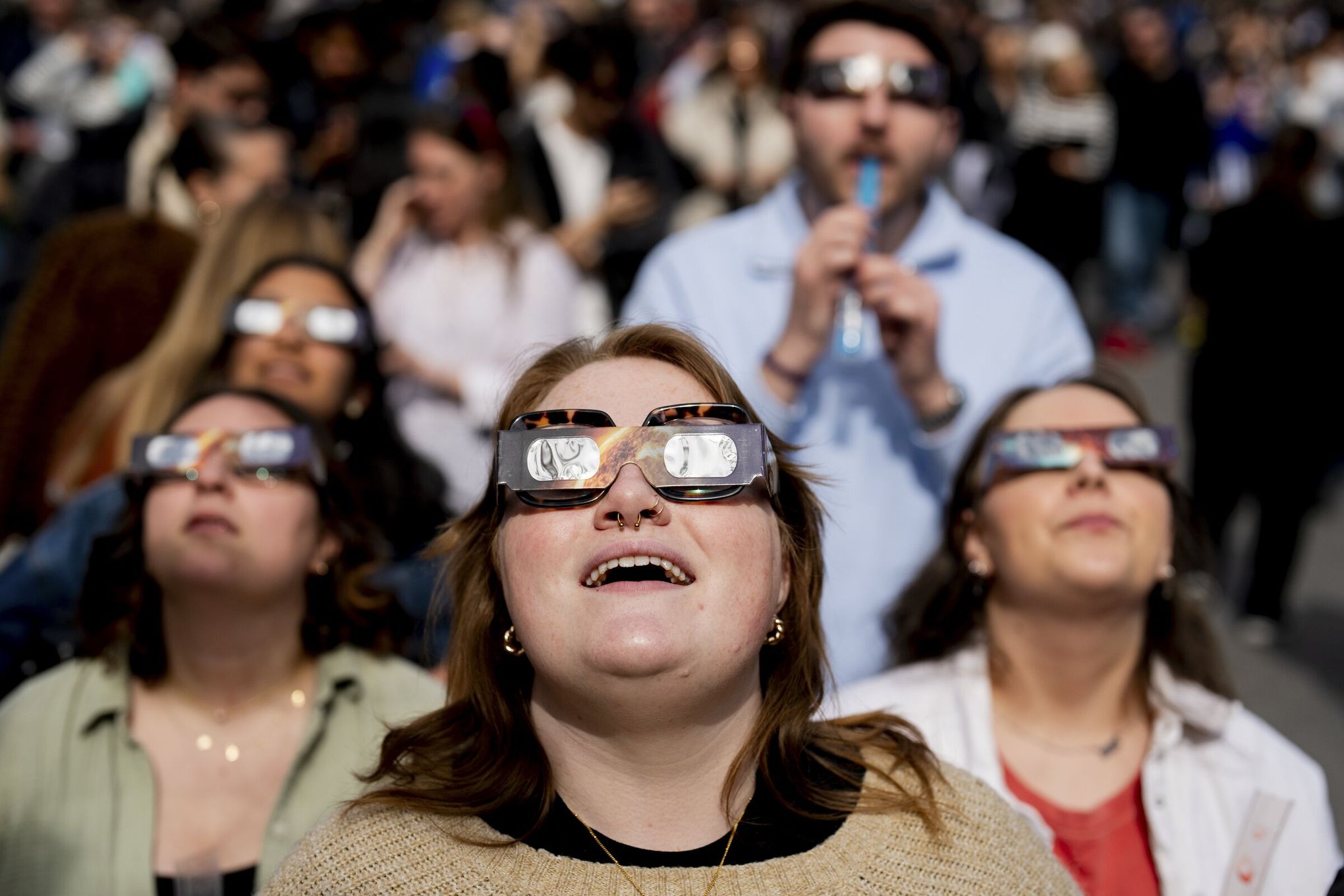
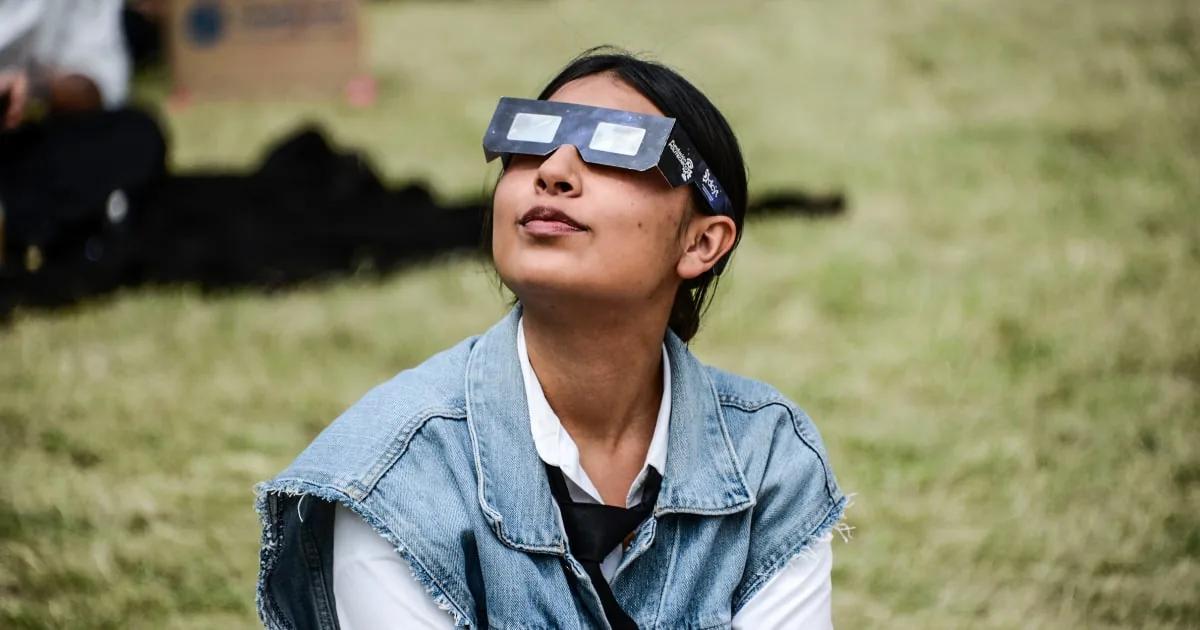
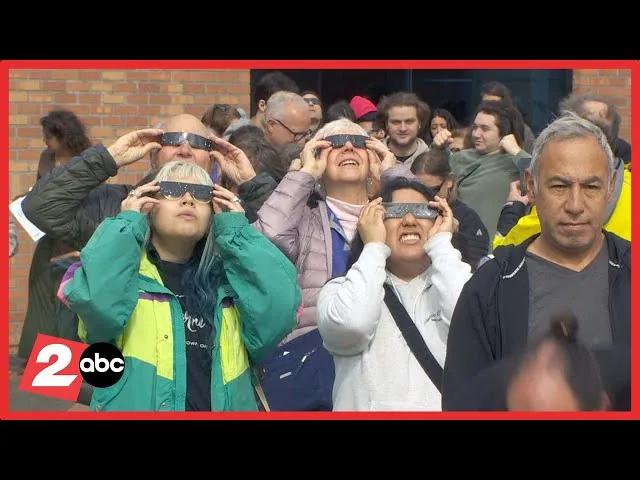
The American Astronomical Society’s eye-safety guidance is very clear: for direct viewing of the uneclipsed, partially eclipsed, or annularly eclipsed Sun, you need special-purpose solar filters that conform to ISO 12312-2. It also advises people to put viewers on before looking up and to turn away before removing them. That advice is perfect for cyclists because it matches what road safety already demands: stop, stabilize, then observe.
And yes, this needs saying plainly: helmets are not solar filters. Neither are sunglasses, photochromic lenses, mirrored sports glasses, ski goggles, tinted visors, or a hand in front of your face. If you want the standard explained in plain English, our guide to ISO 12312-2 and eclipse viewers covers what the label means and what it does not.
A related trap is optics. If you carry binoculars or a camera, eclipse glasses are not enough protection for looking through them. AAS and NASA both warn that unfiltered optics can cause severe eye injury, and the solar filter must go on the front of the optical device, not at your eye.
Bikes do not solve cloud risk
This is where a lot of optimistic planning falls apart.
A bike gives you local mobility. It does not give you regional mobility at eclipse timescales. If the weather problem is a small patch of low cloud a few kilometers wide, a bicycle might help. If the issue is a broad cloud deck, haze, or a line of storms across a whole region, your range is limited by speed, terrain, and the simple fact that you still need to arrive before first contact becomes maximum eclipse becomes totality.
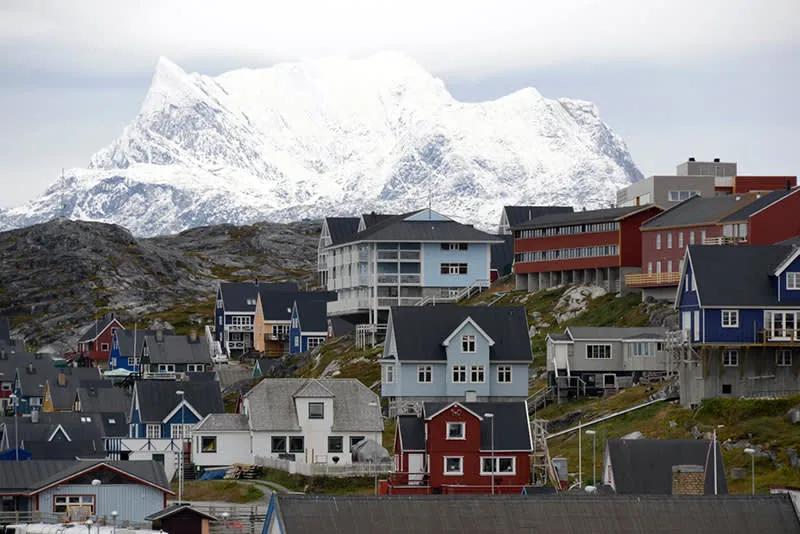
That matters for 2026. NASA’s eclipse hub notes that the Aug. 12, 2026 total solar eclipse will cross Greenland, Iceland, northern Russia, the Atlantic, Spain, and a small corner of Portugal, with many more places seeing a partial eclipse. In Spain, experienced eclipse reporting has emphasized a late-day event near sunset; in Iceland, the west of the country is in the path and weather can change quickly. Those are very different mobility problems.
Take Iceland as an example. Reporting ahead of 2026 has noted that west Iceland includes the path, that the most populated areas are involved, and that heavy traffic is expected on single-lane roads. Reykjavik is in the path, while places farther out on the Reykjanes Peninsula or Snæfellsnes may offer different sky prospects depending on the day. A bike could be useful inside a town, between lodging and a local viewpoint, or for avoiding a parking crunch near a known stop. It is not a realistic substitute for a two-hour weather-driven relocation across western Iceland.
Spain presents a different version of the same truth. The eclipse track crosses the northeast of the country late in the day, and terrain matters because the Sun will be low. A bike may help you reach an open western horizon from a village or edge-of-town lodging. It will not rescue a plan built around the wrong side of a ridge, or a site where hills block the low Sun. For that kind of planning, the Helioclipse Eclipse Explorer / 3D map is more important than any drivetrain choice.
The science of clouds adds one more wrinkle. Research discussed by Live Science found that low-level cumulus clouds can dissipate as the ground cools during an eclipse, but that does not mean “the eclipse clears the sky.” It is a real atmospheric effect, not a guarantee. Treat it as an interesting bonus, not a forecast strategy.
Choosing a bike-friendly viewing site
The best places and timing for cycling bike eclipse path logistics are usually not the most dramatic-sounding places on social media. They are the places where five practical conditions line up:
- You are actually inside the path you want — total or partial.
- You have a safe, legal route in and out.
- You have a clear view of the Sun’s position in the sky.
- You have somewhere secure to keep the bike.
- You can stay put after maximum eclipse instead of joining an immediate rush.
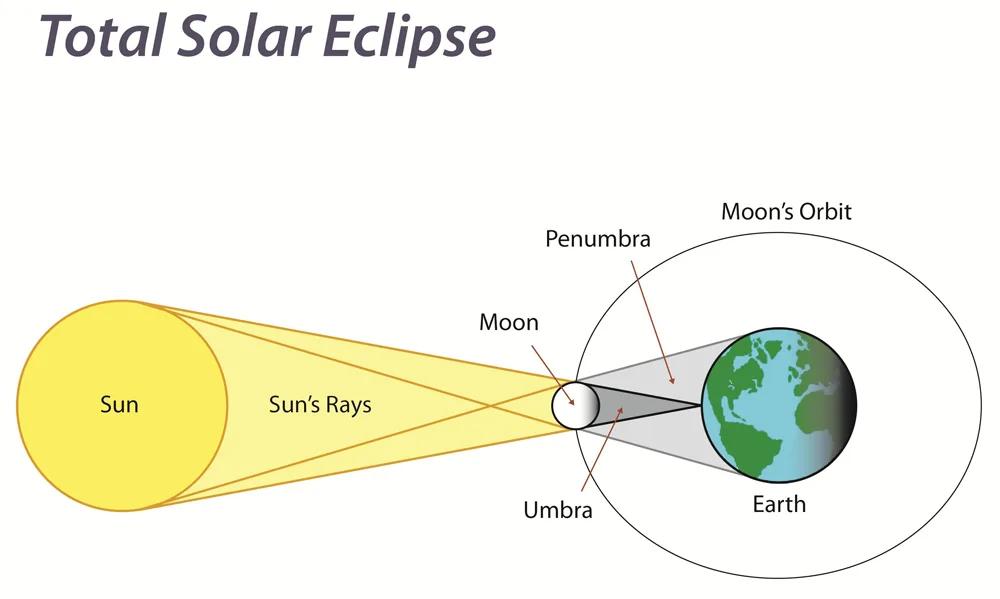
For a total eclipse, being inside totality matters more than shaving a few seconds off your ride. A location near the centerline may offer longer totality than one near the edge, but a calm, accessible site with a safe horizon often beats a theoretically better spot that becomes a mess. Space.com’s 2024 traffic reporting made this point in a different way: sacrificing some duration can be smarter than chasing the absolute maximum and getting trapped in chaos.
For 2026, that logic will matter in both Spain and Iceland. In Spain, the path geometry means some places will get only a short total phase near the edge while others closer to the centerline get longer darkness, but the low-Sun angle means horizon quality may matter just as much as duration. In Iceland, the longest totality on land is about 2 minutes 13.7 seconds, but a site with safe access and a workable sky view may be the better choice than a theoretically perfect point that everyone else also targets.
If you are outside totality, be honest about that too. A deep partial eclipse can still be memorable, but it is not totality. We see too many plans built on vague phrases instead of geometry. Use the map, check your exact location, and tell your group clearly what you are going to see.
Locking, theft, and crowd behavior
A bike is only freeing if it is still there when you are ready to leave.
Bring a real lock. Not a café stop lock. Not a “this will do for two minutes” cable. Eclipse crowds create long dwell times, distracted owners, and plenty of visual clutter. If you can, lock the frame and at least one wheel to fixed infrastructure in a place with natural foot traffic but not crush-level congestion.
Keep your essentials on your body, not in a pannier you plan to leave behind. That means phone, wallet, ID, eclipse viewers, medications, and keys. If you are carrying camera gear, treat it like festival gear: either it stays attached to you or it stays in your hands.
Also think about what happens during the peak moment. At totality, or at maximum partial eclipse in a big crowd, people stop moving predictably. They drift into bike lanes, step backward for photos, and forget where they left bags and children. That is not the time to be threading through a plaza or trying to reclaim a bike from a rack in the middle of a crowd surge.
A good rule: park early, lock early, and make your viewing position your final position. If you are still repositioning the bike in the last 10 to 15 minutes before a major phase, your plan is too fragile.
E-bikes, range, and the “I can always move” illusion
A path ebike can be excellent eclipse transport, especially if your last mile includes hills, heat, or a return ride after a long day. But e-bikes create their own planning traps.
Battery range estimates are not eclipse-day estimates. Headwinds, stop-start riding, extra cargo, cold or hot conditions, and repeated detours all eat range. If you are counting on the top end of the manufacturer’s number, you are not planning; you are hoping.
Charging can also be awkward. Public outlets may be unavailable, cafés may be packed, and event sites may not want cords crossing walkways. If your whole mobility strategy depends on topping up in public, assume that plan may fail.
The deeper issue is psychological. E-bikes make people think they have car-like flexibility. They do not. They are fantastic for local repositioning, but they do not turn a regional weather chase into a trivial decision. That is especially true late in the day, when the eclipse clock is running and every “maybe we should move” discussion costs real minutes.
Group planning: families, friends, and the not-a-race mindset
The smartest eclipse bike ride is usually the least heroic one.
If you are going with children, mixed-ability adults, or friends who do not ride often, plan around the slowest and least confident rider. Eclipse day is not the day to discover that someone hates gravel, cannot fix a flat, or panics in traffic. A short, boring, successful ride to a safe viewing field beats a dramatic route that leaves half the group stressed before first contact.
This is also where the phrase eclipse cycling team can mislead people. Unless you are literally traveling with an organized, experienced group, do not assume group riding habits will hold under eclipse conditions. People spread out. Some stop for photos. Some rush. Some forget water. Some become fixated on “just one better spot.” Build in regroup points and a hard cutoff time after which nobody relocates.
If you are the planner, send one simple message the day before: where to meet, when to stop riding, where the viewers are, and what the rule is for looking up. Make it explicit that nobody removes eye protection except during true totality, and only if you are actually in the path of totality. If anyone in your group is fuzzy on that distinction, send them our guide on why staring at the Sun without protection is never just a quick look.
What to carry on the bike
Pack for waiting, not just riding.
That means water, a basic repair kit, lights if you may return near dusk, a layer for wind, sunscreen, and food that does not melt into a useless brick. NASA’s eclipse safety guidance also reminds people that eclipse watching can mean hours in direct sunlight, so skin protection matters too.
For viewing, keep certified solar viewers easy to reach and protected from damage. Scratched, torn, or punctured viewers should be discarded. Near the product side of planning, this is where it helps to buy early and buy clearly labeled gear. When readers are comparing terms like approved solar eclipse glasses, solar eclipse glasses iso 12312-2 certified, or certified solar eclipse glasses, the point is not branding theater. The point is that the product should be intended for direct solar viewing and should match the safety standard you are trusting with your eyes.
We also recommend checking your viewers before eclipse week, not in the field. If you want extras for family or a small group, our shop eclipse glasses page is the straightforward place to sort that out before travel stress takes over.
What “reviews” should mean for eclipse bike planning
The phrase cycling bike eclipse path logistics reviews sounds like it should be about gear scores and product rankings. For eclipse travel, that is too narrow.
A useful review is really a post-event debrief. Did the route stay safe when cars backed up? Was there secure bike parking? Did the site have toilets, shade, and enough room to stop moving well before the key phases? Could you leave calmly an hour later, or did the whole area become a funnel of pedestrians and vehicles?
That is the standard we would use for any cycling bike eclipse path logistics 2026 guide. Not “fastest bike,” not “coolest kit,” but whether the transport plan actually improved the day. The same goes for phrases like bike path bikes or proshop bikes floating around search results. The eclipse question is not what bike culture finds aspirational. The eclipse question is whether your setup gets you to a safe, legal, comfortable viewing site and back again.
And if you are wondering whether why is the bicycle regarded as the best mode of transportation? applies here, the honest answer is: sometimes. For short urban or semi-urban access on a crowded eclipse day, yes, a bicycle can be the best mode. For a long weather chase across a region, no. For a family with young children and lots of gear, maybe only for the final segment. Context matters more than ideology.
2026 examples: where bikes may help, and where they will not
Let’s make this concrete with the 2026 eclipse.
NASA identifies Aug. 12, 2026 as the date, and the eclipse 2026 trajectory crosses Greenland, Iceland, the Atlantic, Spain, and a small corner of Portugal. In Iceland, west-coast areas are the key totality zone. Reporting ahead of the event notes that Reykjavik is in the path, and that western peninsulas may draw heavy movement depending on weather. A bike could be excellent for hotel-to-viewpoint movement inside Reykjavik or another town, especially if roads clog with late arrivals. It is much less useful if your plan depends on making a major weather relocation across western Iceland after lunch.
In Spain, the late-day geometry is the headline. The total eclipse arrives shortly before sunset, and experienced reporting has stressed that hills and ridges can block the view entirely in some places. That means a bike may be ideal for the final approach from lodging to an open western horizon, but only if you have already chosen the right side of the terrain. This is where our broader August 12, 2026 total solar eclipse planning guide and our Spain-specific path guide at 2026 totality in Spain help more than generic mobility advice.
You may also see odd search phrasing like 2026 eclipse cross attached to route planning. The useful interpretation is not the phrase itself but the geometry behind it: where the shadow track crosses roads, towns, and terrain, and whether your chosen crossing point leaves you with safe access and a clear horizon.
The best bike plan is the one that ends with you standing still
This is the simplest way to judge your plan.
A good eclipse bike strategy gets you to the right place early enough that the bike becomes irrelevant before the important part starts. You lock it, drink water, check your viewers, confirm whether you are in totality or partial, and stop making transport decisions.
That is success.
If you are still negotiating traffic, debating a cloud move, searching for a rack, or trying to watch while rolling, the bike has stopped being a solution and started being the problem.
The "Brutal Truth" About the Bike Market Collapse (And How they may Survive It)
I Know A Guy Bicycles
Frequently asked questions
What should I check in bike route reviews before planning eclipse-day travel?
Look for whether the route actually gets you into totality or only a deep partial eclipse, and whether the last few kilometers are realistic on eclipse day. The excerpt emphasizes that a bike helps with congestion, but it does not make unsafe roads safe or remove the need to plan for parking, traffic, and a reliable viewing location.
How should I think about the 2026 eclipse path when choosing where to ride?
Start by confirming that your destination is inside the path of totality, because that single detail matters more than almost any gear choice. If you are not in totality, you still need proper solar viewing protection, and you should not assume a bike will solve the logistics of reaching a good viewing spot.
What does the 2026 eclipse crossing mean for travel planning?
It means you should plan for a short, intense surge of people moving into and out of a narrow viewing path. The excerpt notes that roads can jam and parking can fill quickly, so a bicycle can be useful for the last mile, especially when car traffic slows to a crawl.
What is the safest way to watch a solar eclipse?
If the Sun is not fully covered during totality, use proper solar viewing protection that meets ISO 12312-2. Do not rely on a helmet visor, sunglasses, tinted goggles, or a bike helmet peak, and if you are moving, you should not be looking up at the Sun.
How should I plan if clouds or poor visibility are possible on eclipse day?
Plan for the possibility that weather may limit what you can see, because a bike does not make clouds disappear or improve visibility. The excerpt suggests confirming your viewing location in advance and using the eclipse phases guide so you know when glasses stay on and when they can come off during totality.
On-site next steps
- Use the Helioclipse Eclipse Explorer / 3D map to check whether your bike-accessible site is in totality or only partial eclipse, and to compare centerline versus edge-of-path tradeoffs.
- If you are planning for family or group viewing, get your solar eclipse glasses sorted early so you are not improvising with damaged or questionable viewers on eclipse week.
- For the bigger travel picture, browse the Helioclipse blog and especially our guides on eclipse travel without the chaos and cloud cover and when to move.
Sources & further reading
- Solar eclipse jam — how to avoid getting stuck in traffic on April 8, 2024
- Eclipse chasers share insider tips, travel advice and skywatching secrets for the 2026 total solar eclipse
- Where Will You Be on Eclipse Day: April 8, 2024?
- Huge crowds await a total solar eclipse in North America. Clouds may spoil the view
- Why low-level clouds vanish during a solar eclipse
- How to View a Solar Eclipse Safely
- About the ISO 12312-2 Standard for Solar Viewers
- Solar Filters for Optics: Telescopes, Binoculars & Cameras
- Eclipse Viewing Safety
- Eclipses