Flying with eclipse gear: carry-ons, power banks, and the TSA/ECAC reality check
Eclipse glasses weigh almost nothing, yet they may be the most important items in your suitcase. A crushed viewer, a forgotten camera battery or a power bank packed in the wrong bag can turn a carefully planned eclipse flight into an unnecessary airport scramble.
The reassuring part is that ordinary eclipse viewers are generally straightforward carry-on items. They contain no liquid, blade or battery. The complications begin with lithium power banks, large tripods, tools and specialized camera equipment—and with the assumption that one airport’s rules automatically apply everywhere else.
For the total solar eclipse on August 12, 2026, travelers may fly toward Greenland, Iceland, Spain or the small portion of Portugal crossed by totality; many others will watch a partial eclipse across Europe, northern North America and northwestern Africa. Before choosing an airport, use our Eclipse Explorer to confirm whether your final observing site is inside the path of totality. Then protect your certified solar eclipse glasses as carefully as your passport.

The short answer: carry eclipse glasses with you
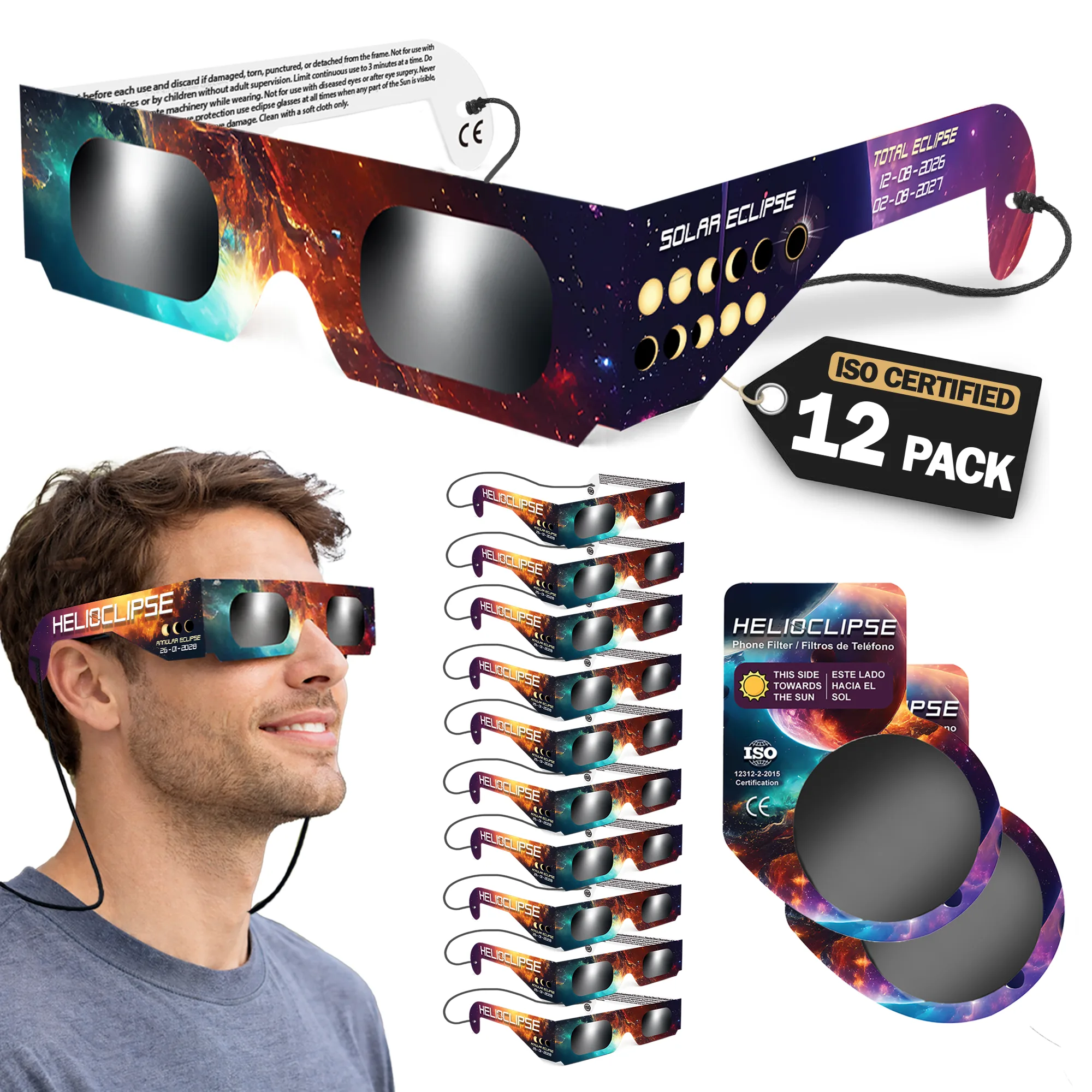
The practical airport security solar eclipse glasses carry on rule is simple: keep the viewers in your cabin baggage, preferably in a rigid document wallet or protective envelope. There is no special TSA category for eclipse glasses, but their ordinary materials do not normally trigger the restrictions that apply to liquids, weapons or dangerous goods.
That does not create a universal guarantee. A security officer can inspect an unfamiliar object, and the final decision at a checkpoint belongs to the responsible authority. Rules may also change before your flight. Check the current official prohibited-item database for every country on your itinerary, along with your airline’s baggage conditions.
Two common questions—can solar eclipse glasses go through airport security and can eclipse glasses go through airport security—therefore have the same practical answer: normally, yes, but pack them so they are easy to identify and inspect. Leave them in their original Helioclipse packaging if possible, rather than hiding loose viewers among cables, metal adapters and camera parts.
The airport security solar eclipse glasses carry on 2026 guide principle is not about shielding the viewers from the checkpoint scanner. The greater everyday threat is physical damage: creasing, abrasion, puncture, moisture or a heavy laptop pressing against the filter material. Carrying viewers with you also avoids the rough handling and delayed-baggage risk associated with a checked suitcase.
There is no official rule class called “eclipse glasses airport” or “solar eclipse glasses airport.” Equally, a label such as airport security solar eclipse glasses carry on 2026 guide near does not become location-specific just because a nearby terminal is named. The applicable rules come from the departure country, transfer airports, airline and aircraft—not from your distance to the checkpoint.
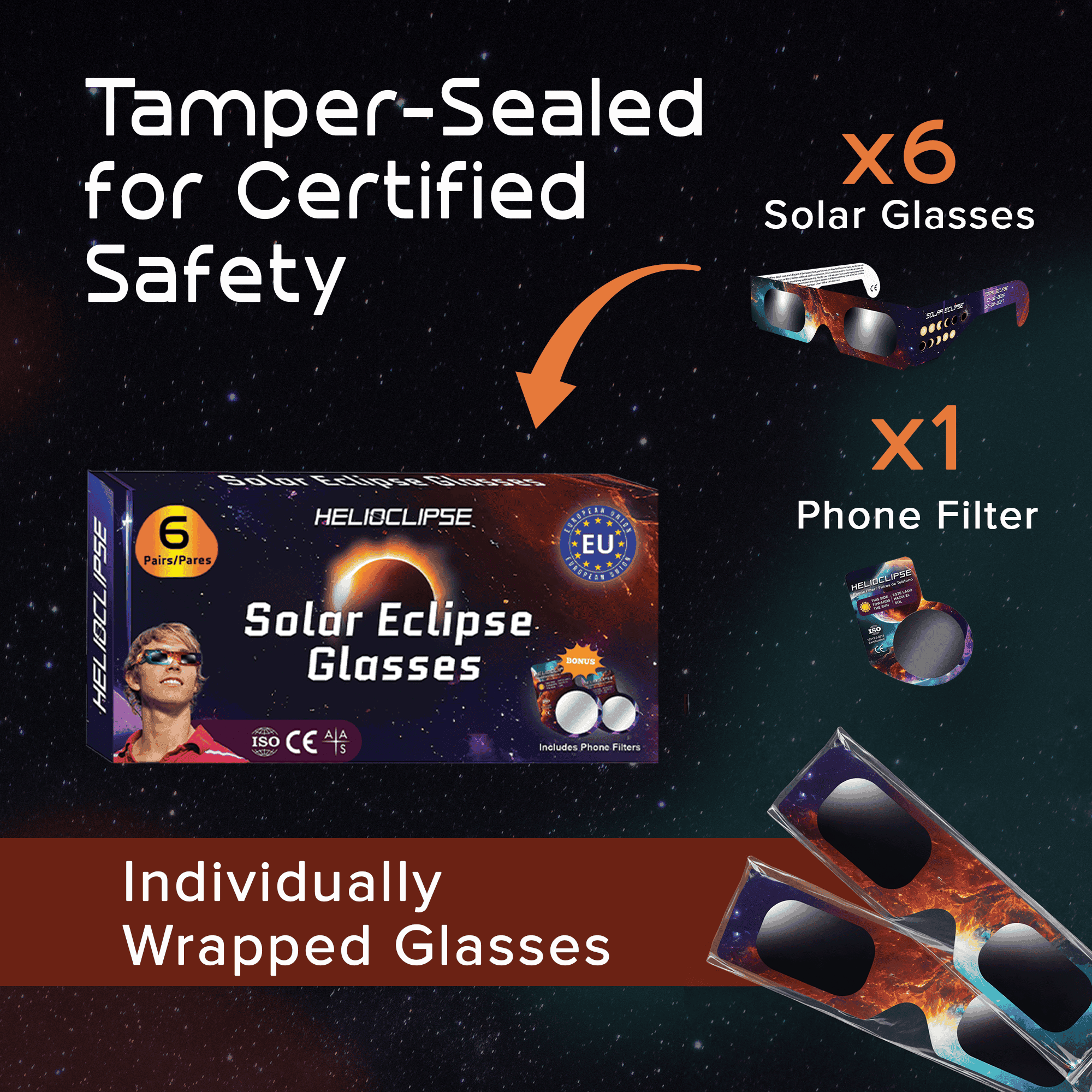
TSA and ECAC do different jobs
TSA rules govern screening for departures from airports in the United States. The TSA’s “What Can I Bring?” database is useful for checking individual objects, while FAA hazardous-material guidance covers the aviation risks posed by lithium batteries and other regulated items.
ECAC—the European Civil Aviation Conference—helps develop common aviation-security policies among its member states, but it is not a single Europe-wide checkpoint operator. National authorities, airport security teams and airlines implement the rules. A traveler leaving Madrid, transferring in London and returning from Reykjavík can encounter different agencies and carrier conditions on the same journey.
That is the TSA/ECAC reality check: compliance at one checkpoint is not a promise of acceptance at every later one. Treat flying with eclipse gear: carry-ons, power banks, and the tsa/ecac as three connected questions:
- Is the object allowed through security in the departure or transfer country?
- Is it permitted as dangerous goods aboard the aircraft?
- Does it fit the airline’s size, weight and cabin-baggage limits?
An airport solar eclipse trip can involve all three even when the optical equipment itself is harmless. A compact tripod may be acceptable to security but too long for your cabin allowance. A power bank may fit easily in a pocket but still be forbidden from checked baggage. A screwdriver useful for a telescope mount may face tool restrictions at the checkpoint.
Consult the official rule pages again shortly before departure. Screenshots can help when mobile service is poor, but they do not override an officer’s decision or a carrier’s updated conditions.

Power banks belong in the cabin, not the hold
A power bank is treated as a spare lithium battery because its purpose is to supply power to another device. Under standard U.S. aviation guidance, spare lithium batteries and power banks must travel in carry-on baggage, with their terminals protected against short circuits. If cabin bags are taken at the gate and placed in the hold, remove the power bank first.
The phrase tsa-approved power bank can be misleading. TSA does not provide a universal product endorsement that makes a particular battery acceptable on every airline. What matters is the battery chemistry, watt-hour rating, condition, packing method and current carrier rules.
For typical lithium-ion batteries, the widely used thresholds are:
- Up to 100 watt-hours (Wh): generally permitted in carry-on baggage for personal use, subject to airline and national rules.
- More than 100 Wh but no more than 160 Wh: usually requires advance airline approval; limits on the number of spare batteries commonly apply.
- More than 160 Wh: generally not permitted as ordinary passenger baggage.
Do not rely only on milliamp-hours. Convert the capacity using:
Watt-hours = amp-hours × nominal voltage
A 20,000 mAh power bank is 20 Ah. If its nominal cell voltage is 3.7 V, its energy is about 74 Wh, placing it below the usual 100 Wh threshold. The calculation needs the actual voltage printed by the manufacturer; multiplying by a USB output voltage without understanding the label can produce the wrong result.
Keep the rating legible. Protect exposed terminals, prevent accidental activation and do not fly with a swollen, leaking, recalled or visibly damaged battery. Pack power banks where cabin crew can reach them rather than burying them under the contents of an overfilled bag. For tsa power bank rules 2026, the current TSA, FAA and airline pages—not an old packing graphic—should be your final reference.


Treat solar viewers as fragile optical equipment
Certified viewers may be made from lightweight card or polymer, but the filter area is precision safety material. The American Astronomical Society recommends inspecting every viewer before use and discarding one that is scratched, punctured, torn or otherwise damaged.
A calm packing routine protects them better than an elaborate case:
- Keep viewers flat in their original packaging or a clean, rigid envelope.
- Place that envelope beside a book or document folder, not against keys or charging plugs.
- Keep cardboard viewers dry; do not clean them with water, wet wipes or glass cleaner.
- Carry a few spares for damage, loss or a friend who arrives unprepared.
- Inspect every filter in daylight before eclipse day.
- Supervise children when they put viewers on and take them off.
For the trip, choose certified solar eclipse glasses and make sure the filter and frame are undamaged. Some product descriptions call them eclipse viewing glasses; the meaningful checks are traceable sourcing, suitable instructions and conformity with ISO 12312-2—not a dramatic “NASA approved” claim. NASA explicitly says it does not approve individual solar-viewer brands.
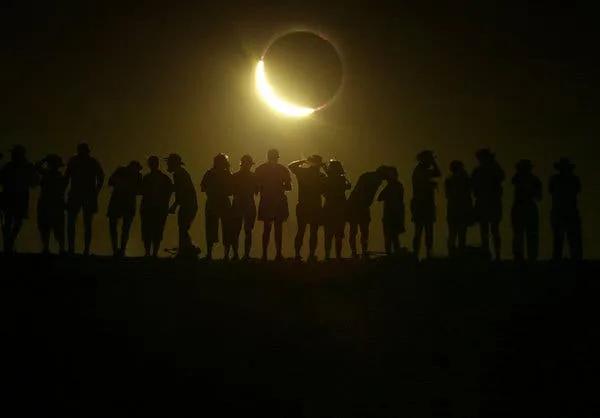
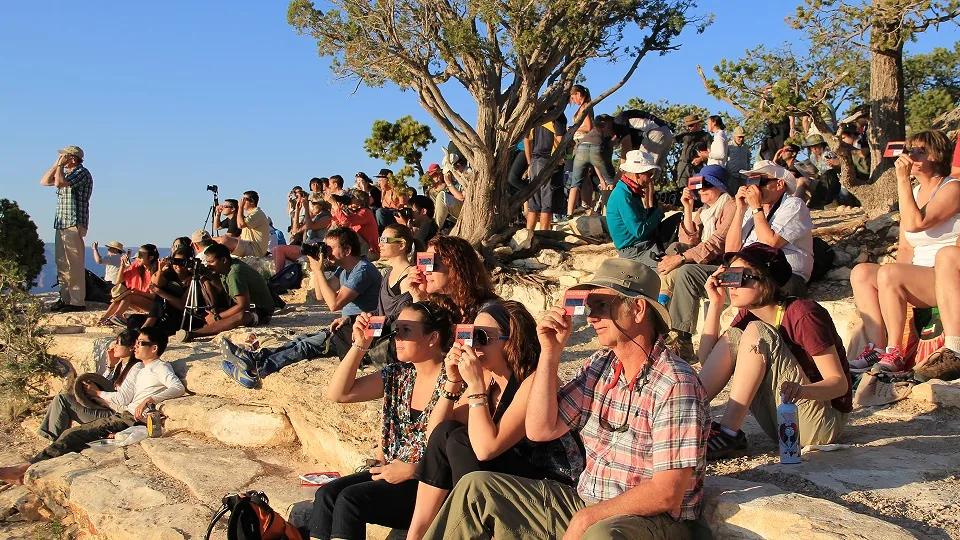
This distinction also resolves do you need glasses for solar eclipse 2026? During every partial phase, yes, you need suitable solar viewers to look directly at the Sun. If you are outside the path of totality, the event remains partial and viewers stay on throughout. Inside the path, unaided viewing without them is safe only during the brief interval when the Moon completely covers the Sun’s bright face. Put them back on as soon as bright sunlight begins to reappear. Our guide to eclipse phases and when to use solar glasses explains that transition in detail.
The related question what can i use for solar eclipse glasses? needs a precise answer: use special-purpose solar viewers that conform to ISO 12312-2, or watch indirectly with a pinhole projection method. Ordinary sunglasses—even very dark ones—are not a substitute. You can learn what the standard does and does not mean in our ISO 12312-2 explainer.
Cameras, binoculars and telescopes need their own filters
Eclipse glasses protect eyes during direct, unmagnified viewing. They are not camera filters, and you must never look through unfiltered binoculars or a telescope while wearing eclipse glasses. Magnifying optics concentrate sunlight strongly enough to damage the viewer and your eye.
A telescope, binocular or camera lens used for the partial phases needs an appropriate solar filter secured over the front of the instrument, before sunlight enters the optics. Keep each filter in a rigid, clearly labeled case during travel. Do not let retaining screws, lens caps or metal adapters rub against its surface.
If you are photographing totality, rehearse the setup at home. Know which filter fits which lens, how it attaches and how you will remove and replace it without dropping it. Pack charged batteries, empty memory cards and the correct cable in the same organized kit. Totality is too short for discovering that a mounting ring is in checked luggage.
Optical equipment can also attract additional screening simply because a dense collection of lenses, wires and metal components is difficult to interpret on an X-ray image. That is not a ban. A tidy bag with accessible compartments is easier to inspect than a tangle of parts. Be prepared to explain, plainly, that you are carrying camera or astronomy equipment for the eclipse.
Tripods, counterweights, large mounts and tools deserve separate checks. Security and airline limits vary, particularly for long or heavy objects. Remove nonessential tools from the cabin bag, confirm whether any necessary tool is permitted, and place robust equipment in a properly protected checked case when required. Never check loose lithium power banks with it.
A checkpoint-friendly eclipse carry-on
The best carry-on is not the one containing every possible accessory. It is the one that preserves the equipment you cannot easily replace and lets you pass through screening without dismantling your entire trip.
Keep these with you
- Passport, boarding documents and accommodation details
- Eclipse glasses in a rigid sleeve, plus a few protected spares
- Prescription medicine and ordinary eyeglasses
- Phone, camera body and delicate lenses
- Power banks and spare lithium camera batteries, packed under current rules
- Memory cards and essential charging cables
- Custom-fit or fragile front-mounted solar filters
- A printed or offline copy of the viewing-site coordinates and timing
Check before deciding where they go
- Tripods and monopods, especially long or spiked models
- Telescope mounts, counterweights and large optical tubes
- Screwdrivers, multitools, hex keys and repair blades
- Large battery packs above 100 Wh
- Aerosols, sunscreen, lens-cleaning fluids and other liquids
- Camping equipment, stakes and cooking gear
In the United States, sunscreen, creams, gels and liquid lens cleaners in cabin baggage must follow the current TSA liquids rule unless an exemption applies. Other countries may use similar limits but different procedures. A dry microfiber cloth is simpler for routine lens care, while cardboard eclipse viewers should remain dry.
If your airline has a strict cabin-weight allowance, prioritize viewers, batteries and hard-to-replace filters. A common commercial tripod may be replaceable after arrival; a custom solar filter matched to your lens may not be. Share the packing plan with your family or observing group so that everyone knows who is carrying the viewers, batteries and backup memory cards.
The 24-hour reality check
Run this checklist the day before each flight, including the return journey:
- Recheck the departure authority’s prohibited-item guidance.
- Review the airline’s cabin dimensions, weight limit and battery policy.
- Confirm the Wh rating of every power bank and spare battery.
- Move all spare lithium batteries out of checked luggage.
- Protect battery terminals and separate loose cells.
- Remove unnecessary tools, blades and bulky metal parts.
- Put liquids into the required transparent bag where applicable.
- Keep eclipse viewers flat, dry and easy to inspect.
- Photograph your checked equipment and record serial numbers.
- Download eclipse coordinates, local timing and weather information for offline use.
Leave time for an additional inspection, but do not assume every airport will have an eclipse-driven queue. Passenger volume, staffing, local events and ordinary holiday traffic can matter more than the astronomy. The practical goal is resilience: arrive early enough that a bag check does not threaten your flight, without treating delay predictions as certainty.
The same discipline helps on eclipse day. Tell friends and family where the spare viewers are, agree on a meeting point in case mobile networks become congested, and avoid splitting a unique filter from the instrument it fits. A small written inventory can save the observation when excitement rises and several people start opening bags at once.
Can You Bring a Power Bank on a Plane The Complete 2026 ...
Hewie Poplock
Frequently asked questions
Can I take solar eclipse glasses through airport security in my carry-on bag?
Yes, ordinary eclipse viewers are generally straightforward carry-on items because they contain no liquid, blade, or battery. Keep them easy to identify for inspection, and check the current official prohibited-item rules for every country on your itinerary as well as your airline’s baggage conditions.
Do local airport rules change whether eclipse glasses are allowed in cabin baggage?
They can. There is no special airport-security category for eclipse glasses, and the responsible authority at the checkpoint makes the final decision; a label or guide title does not establish rules for a particular location.
What is the safest way to prepare eclipse glasses for viewing after a flight?
Use certified solar eclipse glasses and protect them from creasing, abrasion, puncture, moisture, and pressure from heavy items. Carry them in cabin baggage, preferably in a rigid document wallet or protective envelope, rather than placing them in checked luggage.
How should I plan my eclipse trip if weather and visibility are concerns?
The excerpt does not provide weather forecasts or visibility-planning advice. It does recommend confirming that your final observing site is inside the path of totality before choosing an airport, then checking current travel and baggage rules for the full itinerary.
What packing mistakes should first-time eclipse travelers avoid?
Avoid packing viewers loose among cables, metal adapters, camera parts, or beneath a heavy laptop, where they can be damaged or become harder to inspect. Do not assume that rules at one airport apply everywhere, and avoid putting the viewers in checked baggage because of rough handling and delayed-baggage risk.
On-site next steps
- Shop Helioclipse eclipse glasses early enough to inspect them, practice with children and pack protected spares.
- Use the Helioclipse 3D eclipse map to confirm whether your airport and final viewing site are inside or outside totality.
- Review our 2026 total solar eclipse planning guide before locking in flights, ground transport and backup plans.
Sources & further reading
- Transportation Security Administration: Complete List (Alphabetical)—What Can I Bring?
- Transportation Security Administration: Lithium Batteries
- Federal Aviation Administration: PackSafe for Passengers
- Sky & Telescope: Tips for Photographing a Total Solar Eclipse
- Astronomy Magazine: 25 Things to Bring to the Eclipse
- American Astronomical Society: How to View a Solar Eclipse Safely
- American Astronomical Society: Solar Filters for Optics: Telescopes, Binoculars & Cameras
- NASA Science: Eclipses Frequently Asked Questions
- NASA Science: Eclipses
- Transportation Security Administration: Liquids, Aerosols, Gels, Creams and Pastes
Aviation-security and dangerous-goods rules can change. Verify every item with the relevant national authority and operating airline immediately before travel, especially on itineraries involving transfers or more than one carrier.