RVs and camper vans on the path: parking ethics, power, and the mobility trade-off
A van on eclipse day sounds like the perfect answer: your bed, your snacks, your backup layers, your own timetable, and the freedom to move if clouds build in the wrong place. For the August 12, 2026 total solar eclipse, that instinct is not wrong. The europe solar eclipse 2026 really does reward flexibility.
But vehicle-based viewing has a catch. A camper van can save your trip, or it can trap you on a blocked lane, under a bad horizon, outside totality, or in a place where local residents wake up to a line of overflowing bins and illegally dumped wastewater. If you are planning a 2026 solar eclipse travel day around four wheels, the best strategy is not “drive until it feels right.” It is to choose a legal stopping plan, verify the horizon, and know exactly what kind of eclipse your coordinates will get on the Helioclipse Eclipse Explorer / 3D map.
This is especially true in Spain, where the 2026 eclipse happens late in the day with the Sun low in the west-northwest. Mobility helps, but only if you use it to reach a clean sightline. A van parked in a scenic but obstructed place can be worse than a small car in a plain field with the right view.

Why a vehicle helps for this eclipse — and why it can still fail you
The big advantage of a motorhome eclipse plan is obvious: you can react. If forecasts shift 24 to 48 hours before eclipse day, you are not locked into one hotel car park or one expensive coastal booking. That matters because the 2026 european solar eclipse crosses Greenland, Iceland, and Spain on August 12, 2026, and each region comes with different weather and access trade-offs.
Spain is where many road-based viewers will focus. It is accessible, it has a large path of totality, and August climatology is generally more favorable than in many eclipse destinations. But this is not a noon eclipse high overhead. In northern and eastern Spain, the eclipsed Sun will sit low above the west-northwest horizon late in the afternoon and toward sunset. Space.com notes that in northwestern Spain totality happens with the Sun roughly 10 to 12 degrees high, while in eastern Spain and the Balearic area it can be only 2 to 5 degrees high. That is a huge practical constraint for anyone in a tall vehicle.
A van helps if you need to move away from cloud, crowds, or a poor skyline. It fails if you assume that “inside the path” is enough. It is not. For this eclipse, horizon geometry matters almost as much as path geometry.
If you are new to the event itself, read our guide to August 12, 2026 total solar eclipse: what to expect and how to plan ahead and keep our eclipse phases explainer handy. The mobility question only makes sense once you know whether your chosen stop is in totality or only in a deep partial eclipse.
The path is wide enough to matter, but not wide enough to guess
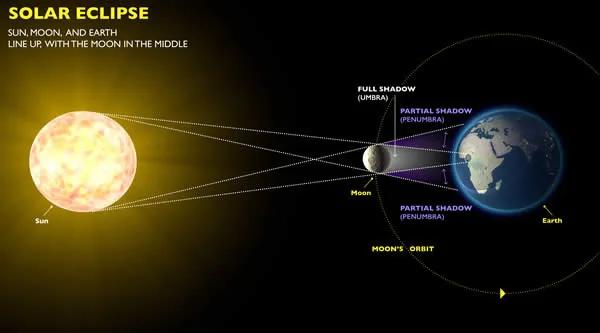
The total solar eclipse 2026 path is broad by eclipse standards, but it is still narrow enough that a casual parking decision can cost you the main event. Sky & Telescope describes the path as about 293 kilometers (182 miles) wide overall, crossing Greenland, clipping western Iceland including Reykjavík, then sweeping across northern Spain before leaving near the Balearic region. Over 15 million people live under the path, and many more visitors are likely to travel into it.
That sounds forgiving, and in one sense it is. You do not need to sit exactly on the centerline to have a life-changing experience. Space.com gives a useful Spain example: Burgos gets about 1 minute 44 seconds of totality, while Valladolid, farther from the centerline, still gets about 1 minute 29 seconds. That is a real difference, but not the difference between “worth it” and “not worth it.”
The bigger mistake is missing totality entirely. Madrid and Barcelona are both outside the path, despite seeing very deep partial phases. A van parked just outside the umbra does not get a “nearly total” version of the corona. It gets a partial eclipse, and partial is a different event.
So before you think about hookups, batteries, or where to make coffee, lock down three facts for your exact stop:
- Are you inside totality or outside it?
- How long is totality there, approximately?
- Where on the horizon will the Sun be at that moment?
That is what a real motorhome campervan solar eclipse europe 2026 map is for. Use the Helioclipse 3D map to compare candidate stops, not just towns. A lay-by 8 kilometers away can change your duration, your traffic exposure, and your horizon.
Spain is the classic van-chaser case study
For many readers, motorhome campervan solar eclipse europe 2026 really means Spain. That is understandable. Spain offers road access, a large domestic transport network, and multiple inland options with better climatology than some coastal or mountainous zones.
But Spain also punishes lazy positioning. The Sun is low. The terrain is uneven. Coastal development can block the exact direction you need. A beautiful overnight stop that faces sunrise over the sea may be useless if the eclipse happens low to the west-northwest behind hotels, trees, ridges, or apartment blocks.
A few concrete examples show why this matters:
- Galicia and Asturias: totality arrives with the Sun higher than in the east, roughly around 10 to 12 degrees above the horizon. That is still low enough that hills, tree lines, and even roadside embankments matter.
- Valladolid / Castile and León corridor: inland plains are often discussed because they combine decent sky prospects with open sightlines. Valladolid is not on the centerline, but still gets roughly 1 minute 29 seconds of totality.
- Burgos area: closer to centerline, with about 1 minute 44 seconds in the Space.com comparison, but traffic pressure may be stronger if too many people converge on the same “best” label.
- Aragón and toward Zaragoza / Teruel: the Sun is lower, but some inland open terrain can still work well if the west-northwest horizon is genuinely clear.
- Balearic Islands: potentially dramatic, but much riskier for horizon blockage and haze because totality can occur only a few degrees above the horizon.
If you want a deeper Spain-specific breakdown, our guide to 2026 totality in Spain: path basics, timing, and what “on the centerline” really means is the right companion piece.
Parking ethics are not a side issue
On eclipse week, a van is not just your transport. It is a large object competing for scarce public space in places that may already be under summer tourism pressure. That means parking ethics are part of eclipse planning, not a nice extra.
The basic rule is simple: if a municipality says no overnighting, no camping behavior, no blocking access, or no oversized vehicles in a certain area, believe it. Do not assume that “everyone will do it anyway” is a workable plan. On a normal weekend, one illegally parked van may be tolerated. On eclipse day, dozens or hundreds can trigger closures, fines, towing, or last-minute police dispersal.
What counts as bad behavior? More than many travelers admit:
- Taking multiple spaces with leveling blocks and chairs spread outside the vehicle
- Blocking farm gates, service roads, trailheads, or emergency access
- Occupying beach or viewpoint car parks that post length or height limits
- Running generators in tightly packed public parking areas
- Emptying grey water or toilet waste anywhere except a legal dump point
- Treating a scenic roadside stop as a campsite when local rules clearly separate parking from camping
If you want local residents on your side, leave less trace than a day visitor in a hatchback. That means arriving with water already topped up, toilet cassette capacity managed, and a realistic plan for rubbish. The eclipse lasts minutes; the social memory of bad visitor behavior lasts much longer.
Length limits, turning radius, and the myth of the “perfect hidden spot”
A lot of 2026 solar eclipse trip fantasies involve finding a secret overlook at the last minute. In a small car, maybe. In a long motorhome, that fantasy can become a three-point-turn nightmare on a narrow rural road with ten vehicles behind you.
Before eclipse day, check the boring details that save real trips:
- posted vehicle length limits
- width restrictions in old town streets
- low branches or height barriers
- whether a pull-off is truly paved and public
- whether you can leave without reversing into traffic after the eclipse
- whether the shoulder is stable enough for your vehicle weight
This is where the mobility trade-off becomes real. A bigger RV gives you comfort, shade, food storage, and maybe a toilet. It also reduces the number of legal, low-stress places you can use. A compact camper van can pivot faster and fit more ordinary parking spaces, but may leave you short on battery, water, or rest if you plan to wait all day.
For many families, the sweet spot is not the largest vehicle you can rent. It is the smallest one that still lets everyone arrive rested and stay patient through a long partial phase.
Power: useful, but not the point
Power planning matters, just not in the way many first-time eclipse travelers think.
You do not need a rolling apartment to watch a solar eclipse. You do need enough power to avoid stupid decisions: a dead phone when you need weather updates, a flat starter battery after running accessories, or no way to charge navigation if you must relocate. If your plan depends on a generator, ask whether you are solving the wrong problem.
For most eclipse-day van setups, the power priorities are:
- keeping the vehicle able to start and move
- keeping phones charged for map, weather, and emergency use
- keeping a small fridge or cooler functioning if you are out all day
- avoiding noisy systems that make you unpopular in a crowded viewing area
A generator may be normal at a formal campsite, but in a packed public parking area it can be antisocial fast. If you need air conditioning, medical-device power, or heavy charging, book a legal serviced stop for the night before and accept that you may need to drive out to a separate viewing site on eclipse afternoon.
And remember the obvious thing people forget: if you are parked in full summer sun for hours, your van can become the least comfortable place at the site. Shade, ventilation, water, and a plan to spend most of the wait outside matter more than having every appliance available.
Waste, water, and the unglamorous logistics that decide whether your plan is ethical
The phrase vehicle-based viewing logistics—length limits, dump stations, respecting eclipse sounds dry, but this is exactly where good eclipse travel separates itself from selfish eclipse travel.
If you are staying mobile on August 12, assume that some service points will be busy, some village facilities will be overwhelmed, and some towns will be less welcoming to self-contained vehicles if previous visitors behaved badly. That means you should not roll into eclipse day needing urgent fresh water, a last-minute cassette empty, or a miracle place to dispose of rubbish.
Do the practical work early:
- empty waste tanks and toilet cassettes before the final approach day
- refill fresh water before you enter crowded viewing regions
- carry rubbish bags you can seal and store
- keep toilet chemicals and cleaning supplies secured
- know where your next legal dump station is after the event, not just before it
This is also why “wild” overnighting right on the path can be a false economy. A legal campsite or service area 30 to 60 minutes away may be the smarter base, even if you do not watch from there. You start eclipse day with power, water, and waste handled, then drive to a simple legal viewing stop with a clear horizon.
The horizon problem: your van cannot fix a blocked sky
This is the part many road-trippers underestimate. For the 2026 eclipse in Spain, a clean west-northwest horizon is not a luxury. It is the event.
Space.com’s reporting on Spain’s low-Sun geometry is blunt: in some eastern locations the eclipsed Sun may be only 2 to 5 degrees above the horizon. Sky & Telescope similarly notes about 12 degrees in parts of Spain, dropping to around 2 degrees over the Balearic Sea. At those altitudes, distant hills, tree belts, apartment blocks, roadside signs, and haze layers all become serious threats.
A tall vehicle can even create its own small problems. If you park among other vans in a crowded lot, your neighbors may block your low-angle view, and you may block theirs. The ethical move is to think in sightlines, not just parking bays.
A good eclipse stop for this event is often surprisingly plain:
- open farmland edge
- reservoir shoreline with legal access
- broad pull-off with a clear west-northwest view
- flat ground away from tree canopies and ridge crests
A bad stop can look photogenic at noon and fail at eclipse time. If possible, scout the exact site the evening before at roughly the same solar direction. In Spain, that one habit may save your whole trip.
Safety from inside a vehicle is still safety
A van window does not make the Sun safe.
This needs saying clearly because people improvise when they feel comfortable. During the partial phases, and during any partial eclipse outside totality, you still need proper solar viewing protection. Looking “just through the windscreen,” “through tinted glass,” or “through sunglasses” is not safe. Neither is using improvised dark material. The AAS and NASA are explicit: ordinary sunglasses are not safe for solar viewing, and partial phases require special-purpose solar filters that conform to ISO 12312-2.
That also means no casual welding-helmet myths. The AAS notes that only certain welding filters with suitable shade numbers can be safe, and adjustable or auto-darkening helmets should not be used for viewing the Sun. For families and first-time viewers, the practical answer is much simpler: bring proper eclipse viewers and use them correctly.
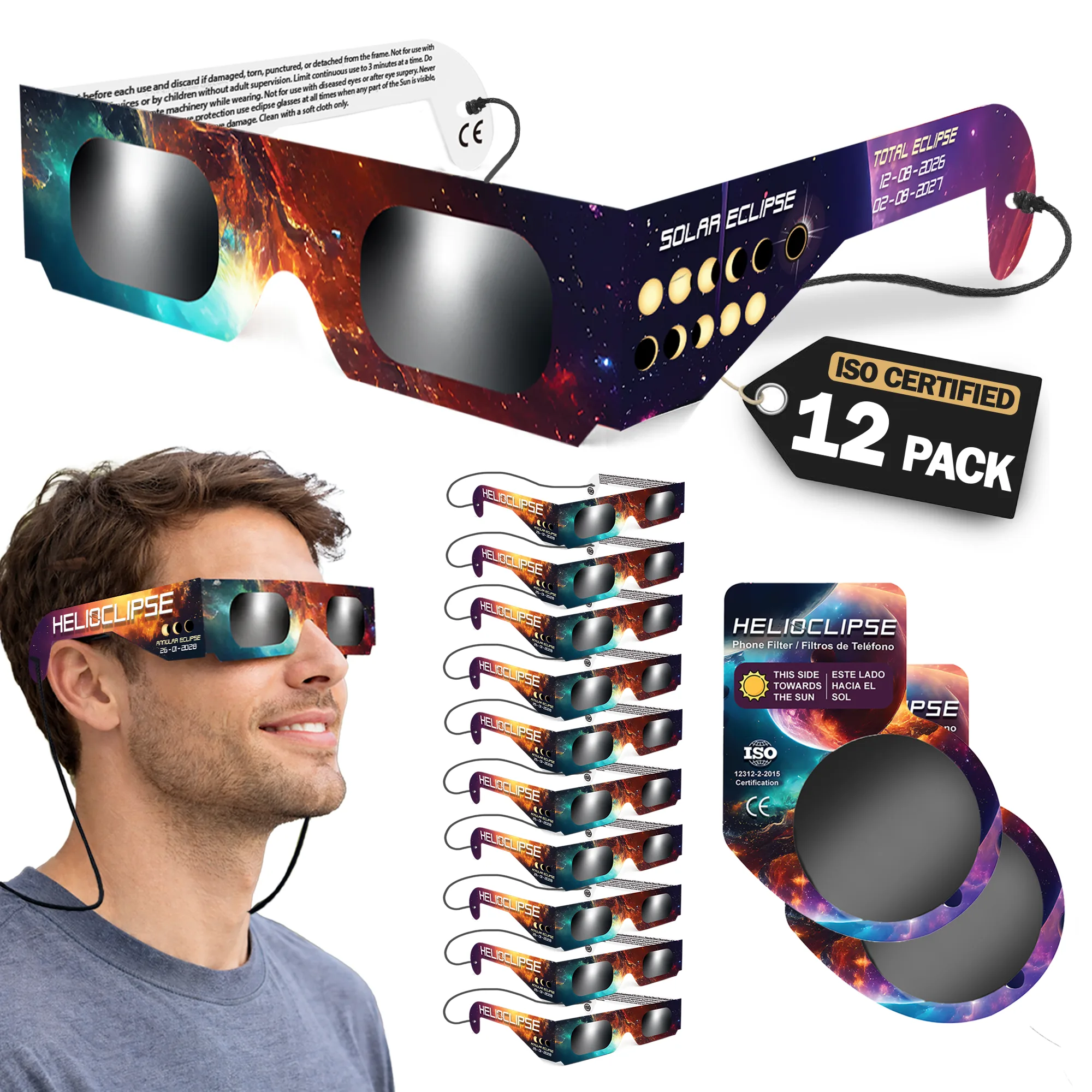
If you are buying for a group, look for approved solar eclipse glasses or solar eclipse glasses iso 12312-2 certified from a source you trust, and inspect them before the trip. We explain the labeling and standard in ISO 12312-2 and eclipse viewers: what the standard means for your family and cover red flags in Fake and low-quality eclipse glasses: how to sanity-check what you are about to trust.
You may also see shoppers use phrases like eclipse glasses nasa approved or certified solar eclipse glasses. The important correction is that NASA does not approve particular brands; what matters is using properly made viewers that meet the relevant standard and are in good condition. If you need viewers for your group, our solar eclipse glasses shop is the straightforward place to start.
And if you are using binoculars, a camera, or a telescope from a van stop, remember the stricter rule: eclipse glasses on your face are not enough. Optics need proper solar filters secured over the front of the instrument.
Mobility is a weather tool, not a lifestyle badge
The strongest case for a van in the european solar eclipse 2026 is weather flexibility. Sky & Telescope and Space.com both emphasize staying mobile, especially in Iceland and in Spain where final decisions may be best made close to eclipse day.
But mobility only helps if you preserve it. That means not wedging yourself into a famous viewpoint with one exit road, not arriving so late that every legal option is gone, and not committing to a coastal beauty spot if inland plains are showing better cloud prospects.
For Spain, many experienced chasers will likely make their final call the day before, or even the morning of the eclipse, based on cloud forecasts and horizon checks. For Iceland, the advice is even more weather-driven: stay flexible along the west coast, but watch for hills and local terrain.
The best mobile plan usually has three layers:
Primary site
A legal, easy-to-reach place with a proven horizon and acceptable traffic risk.
Secondary site
A backup within practical driving distance if cloud or local congestion ruins the first choice.
Abort rule
A time after which you stop moving and commit, because chasing one more gap in the cloud can make you miss first contact or arrive stressed and unsafe.
If you want help thinking through that decision, our guide to Cloud cover and eclipse day: how to read the sky and when to move goes deeper.
What about Iceland and Greenland for van-based viewers?
The phrase motorhome campervan solar eclipse europe 2026 location often gets treated as if Europe means only Spain, but the 2026 path also crosses western Iceland and Greenland. Those are very different road-trip propositions.
In Iceland, mobility can be valuable because weather can change quickly and the west coast offers multiple possible observing areas. Reykjavík is in the path, and Sky & Telescope notes that the greatest duration of the eclipse overall is about 2 minutes 18 seconds, seen off the coast of Iceland. But Icelandic road access, summer tourism pressure, and local terrain mean you should be realistic about what a van can and cannot do. A small camper may be practical; a large motorhome on narrow or crowded routes is less carefree than the brochure version suggests.
In Greenland, the eclipse is extraordinary, but for most readers this is not really a self-drive camper-van problem in the same way Spain is. Access is more specialized, distances are harsher, and logistics are less forgiving. If your dream is simply to experience totality with the least friction, Spain is the more straightforward vehicle-based option.
Ignore weird keyword noise and focus on the real questions
Search data can be messy, and some phrases floating around the web are plainly mismatched to the event. You may stumble across strings like motorhome campervan solar eclipse europe 2026 california, motorhome campervan solar eclipse europe 2026 2026 guide, motorhome campervan solar eclipse europe 2026 2026 guide map, motorhome campervan solar eclipse europe 2026 2026 guide california, or even motorhome campervan solar eclipse europe 2026 dates presented as if they all describe one coherent trip planner.
The useful parts are simple. The motorhome campervan solar eclipse europe 2026 dates question has a clean answer: the total eclipse is on August 12, 2026. The motorhome campervan solar eclipse europe 2026 location question matters only when you pin it to exact coordinates inside the path. And the motorhome campervan solar eclipse europe 2026 map question is the one that actually decides whether your van is an advantage or a liability.
So if you are building your own motorhome campervan solar eclipse europe 2026 plan, strip it down to reality: date, path, horizon, legality, weather, and safe viewing gear. Everything else is decoration.
A practical eclipse-day checklist for vans and motorhomes
Here is the version we would actually trust on the road for a 2026 solar eclipse trip:
The day before
- Confirm you are inside the path of totality if totality is your goal.
- Check approximate duration at your exact stop.
- Verify the Sun’s direction and altitude at eclipse time.
- Top up fuel or charge early.
- Empty waste and refill fresh water.
- Charge phones, power banks, and any essential batteries.
- Inspect your eclipse viewers for damage.
- Decide on a backup site.
The morning of eclipse day
- Leave early enough that traffic does not force a rushed final choice.
- Buy food and water before small local shops get slammed.
- Recheck cloud forecasts.
- Park legally and think about how you will exit.
- Avoid setting up in a way that turns parking into camping if local rules forbid it.
During the eclipse
- Use certified viewers for all partial phases.
- Do not look through the van window without proper protection.
- Keep children supervised; excitement makes shortcuts tempting.
- If you are in totality, remove viewers only during the brief fully total phase, then put them back on as soon as the bright Sun reappears.
After totality
- Do not sprint for the road unless you truly must.
- Consider staying through the remaining partial phases.
- Leave the site cleaner than you found it.
- Use legal service points later rather than improvising waste disposal.
The real mobility trade-off
A camper van gives you options. It does not give you immunity from bad planning.
For the 2026 european solar eclipse, the best vehicle strategy is usually modest and disciplined: stay flexible, stay legal, stay light enough to maneuver, and choose horizon over romance. A dramatic cliff-top overnight stop is worthless if the Sun disappears behind a ridge at the crucial minute. A plain agricultural edge road can deliver the memory of a lifetime if it is legal, safe, and pointed at the right patch of sky.
That is the trade-off in one line: comfort and mobility help only when they serve the eclipse itself.
The Government Is Quietly Targeting Vanlifers
Vanovia
Frequently asked questions
Where in Spain should I aim to park for the 2026 total solar eclipse?
Aim for a legal stopping place with a clear western or west-northwestern horizon, because the Sun will be low late in the day. The excerpt says northwestern Spain has the Sun about 10 to 12 degrees high at totality, while eastern Spain and the Balearic area may only have 2 to 5 degrees, so an unobstructed view matters as much as being inside the path.
Which countries are on the eclipse path in 2026?
The excerpt says the August 12, 2026 total solar eclipse crosses Greenland, Iceland, and Spain. It does not list any other countries, so those are the only ones supported by this source.
What should I know before using a camper van to follow the 2026 eclipse in Europe?
A camper van can give you flexibility to move if clouds or crowds shift, but it can also leave you stuck on a blocked lane or in a place with a poor horizon. The article stresses that you should choose a legal stopping plan, verify the horizon, and confirm exactly what eclipse conditions your coordinates will get.
What is the main advice for planning a camper van trip around the 2026 European eclipse?
The key point is not to drive around until it feels right. Instead, plan where you can stop legally, check the view to the west-northwest, and use a map or explorer to confirm whether your location will actually give you totality.
What is important to understand about the 2026 eclipse in Europe overall?
The eclipse on August 12, 2026 rewards flexibility, but it also depends heavily on local horizon conditions. In Spain especially, the low late-day Sun means a tall vehicle or an obstructed site can be a serious problem even if you are technically inside the path of totality.
On-site next steps
- Explore your exact viewing options on the Helioclipse Eclipse Explorer / 3D map. Compare centerline vs edge, check whether you are truly in totality, and look for sites with a clean west-northwest horizon.
- If your group still needs viewers, order them early from our solar eclipse glasses shop. For a van trip, pack enough for everyone so nobody improvises at the window.
- For more planning help, browse the Helioclipse blog and build your route, safety plan, and weather backup together before eclipse week.
Sources & further reading
- 10 tips for planning your 2026 solar eclipse trip
- Spain’s total solar eclipse 2026 comes with a catch - here's how to avoid ruining your view
- Plan Now for the 2026 Total Solar Eclipse in Europe
- Spanish Total Eclipse Adventure 2026
- Witness darkness at midday
- How to View a Solar Eclipse Safely
- About the ISO 12312-2 Standard for Solar Viewers
- Solar Filters for Optics: Telescopes, Binoculars & Cameras
- Eclipse Viewing Safety
- What to Expect: A Solar Eclipse Guide