After totality: the quiet letdown (and why it does not mean you did it wrong)
The Sun returns with astonishing speed. Someone shouts, “Glasses on!” The corona disappears, the landscape brightens, and a few minutes later people are checking photographs, folding chairs, finding the car, or trying to explain what just happened.
Then the ordinary day resumes—and you may feel unexpectedly flat.
That response can be confusing after months or years of planning. Perhaps you expected tears but felt calm. Perhaps totality overwhelmed you, yet the emotional high vanished by dinner. Perhaps clouds intervened, your camera distracted you, or the experience simply did not transform your life. None of those reactions means you watched incorrectly.
Think of this as an after eclipse blues letdown post totality emotions 2026 guide—not a diagnosis and not a promise that everyone will feel the same way. We are making room for emotional variation around the August 12, 2026 total solar eclipse and every eclipse after it. You can also continue exploring the science and practical planning in our eclipse blog and guide hub.
A huge build-up can end in a very quiet hour
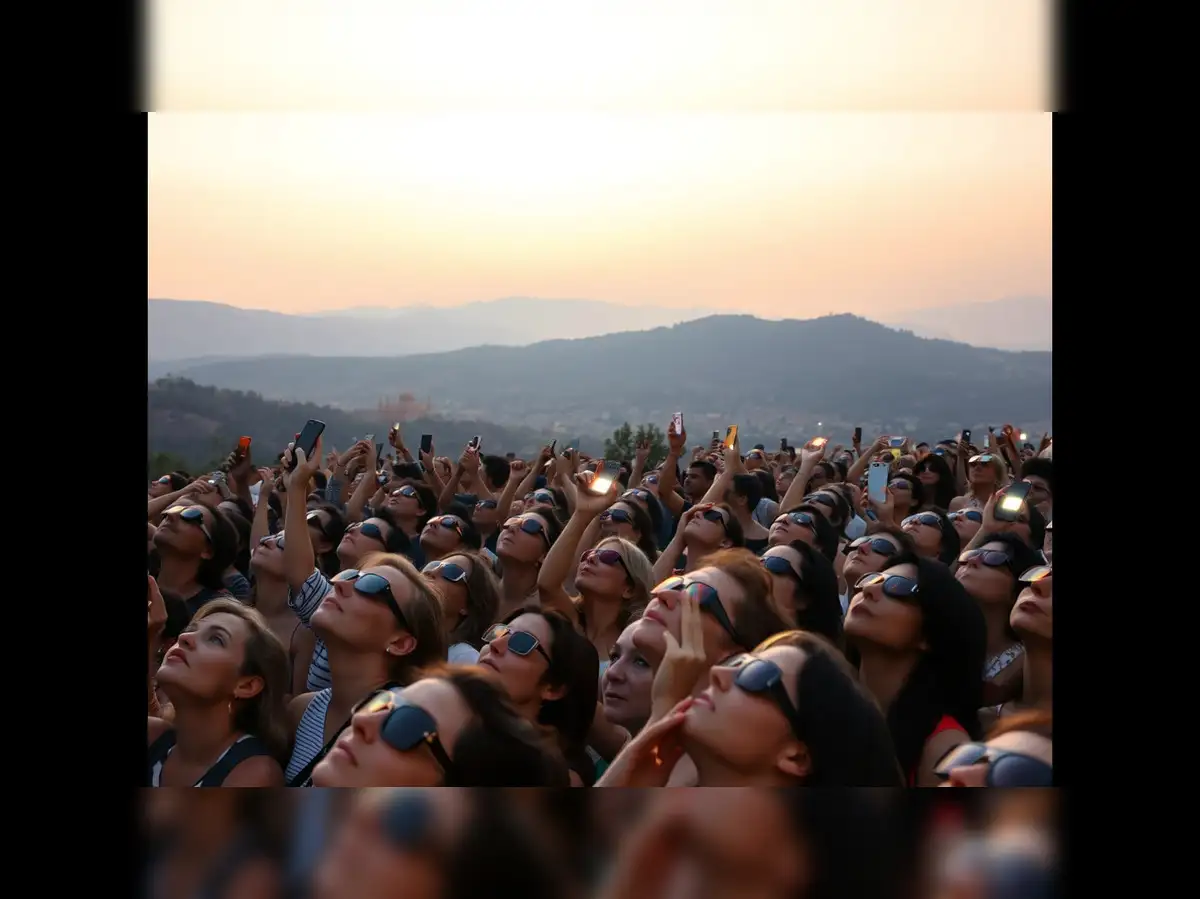
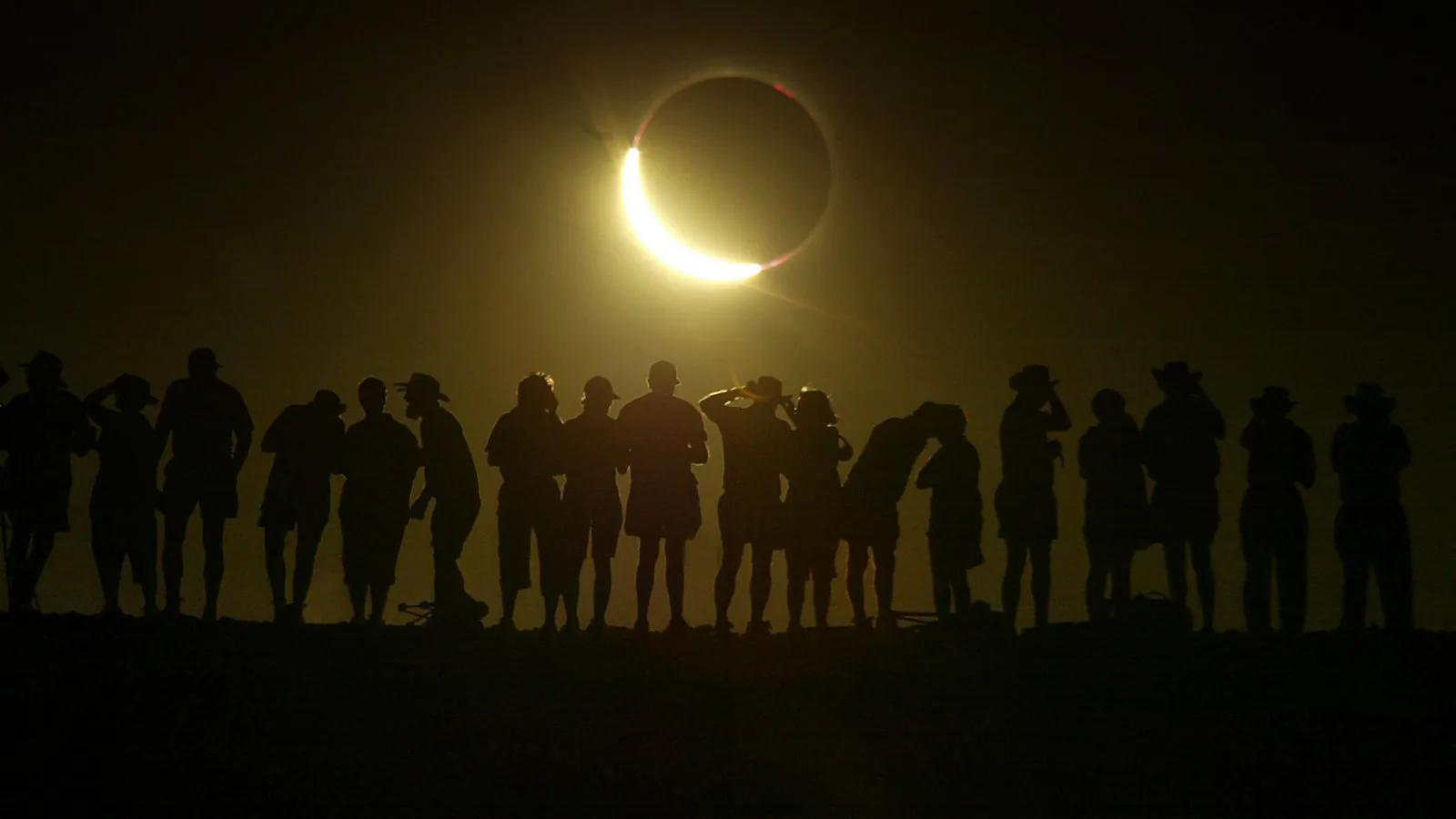
A total solar eclipse has an unusual emotional shape. The partial phase unfolds gradually, often for more than an hour. Light becomes strange, shadows sharpen, the temperature may fall, and a crowd that was chatting begins to watch the clock. Then totality arrives abruptly and lasts only minutes—or even seconds near the edge of the path.
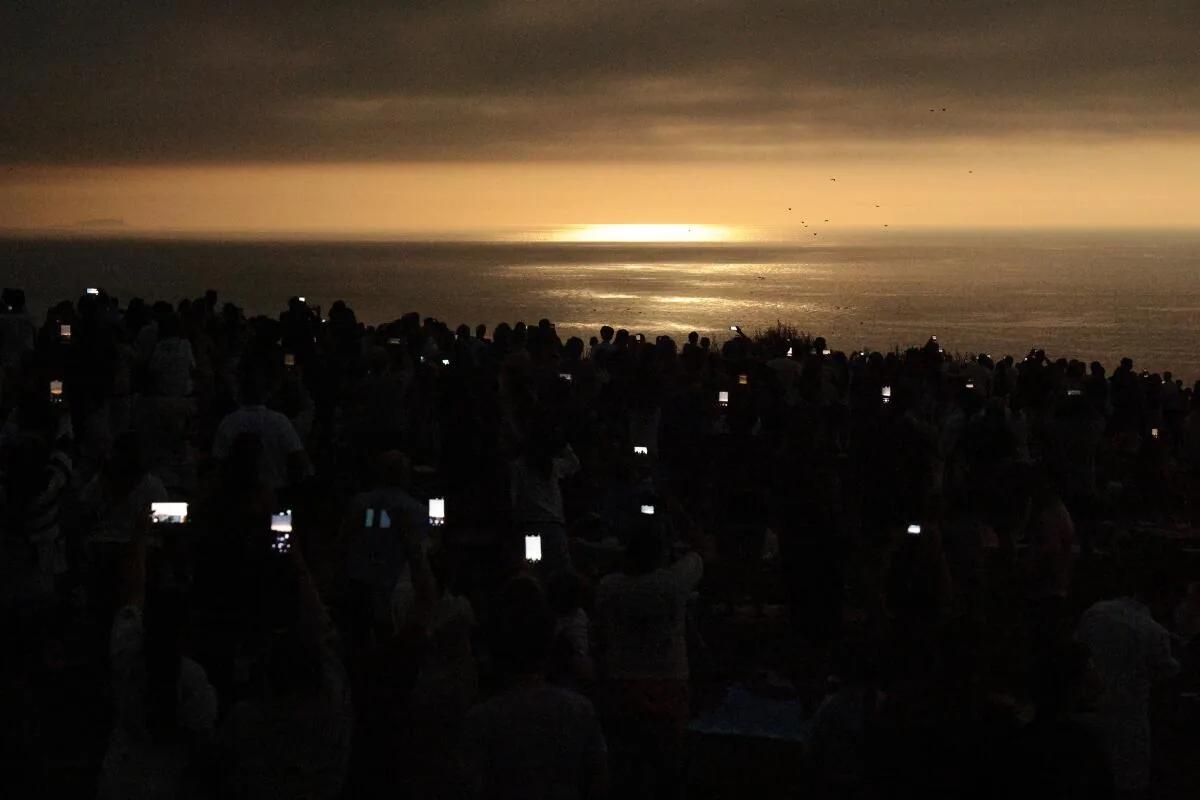
During that short interval, there is more to notice than anyone can absorb: the black lunar silhouette, the corona, bright planets, the horizon glow, changing wind, other people’s voices, and the knowledge that the moment is already ending. NASA’s accounts from the April 8, 2024 eclipse include racing hearts, tears, sensory changes, shared excitement, and silent awe. Those are real responses, but they are not requirements.
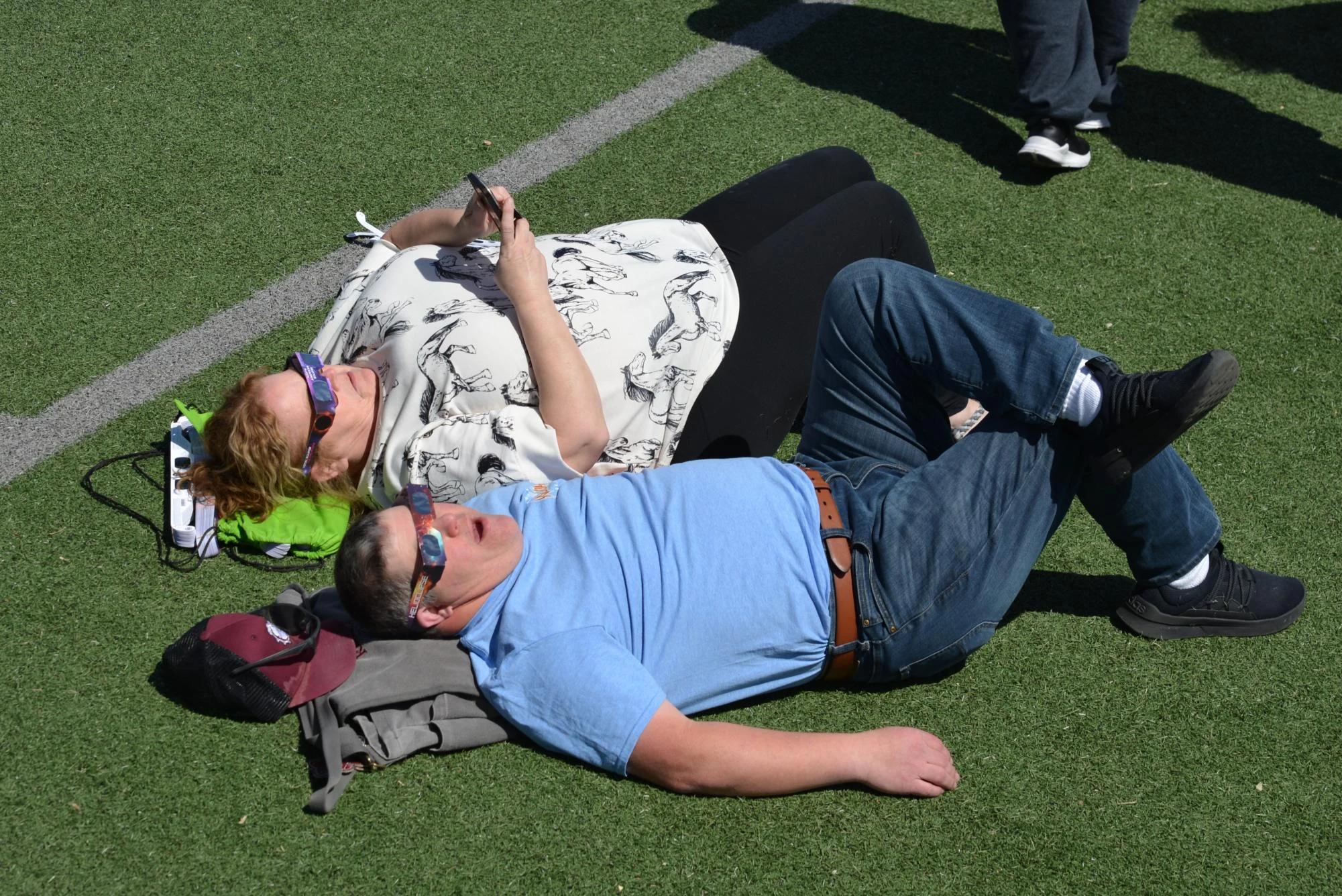
After third contact, a brilliant point of sunlight ends totality. Eye protection goes back on, daylight returns, and the nervous energy that carried the group toward the event has nowhere obvious to go. The contrast can produce what people casually call post eclipse blues: sadness, restlessness, anticlimax, irritability, or a wish to replay the experience immediately.
Other people feel satisfied and steady. Some are mostly hungry, tired, or worried about traffic. In New England after the 2024 eclipse, motorists encountered hours of congestion; one report described drivers covering only about 50 miles in nine hours. A transcendent sky does not cancel an exhausting journey home.

There is no emotionally correct way to experience totality
The emotions after the eclipse may be intense, muted, mixed, or delayed. One person may cry when the corona appears. Another may concentrate so hard on a camera that the emotional impact arrives while reviewing photographs that evening. A child may be more interested in the sudden darkness than in the Sun. Someone who planned the trip may feel relief that everyone stayed safe rather than awe.
Even the question “why am i feeling weird after the solar eclipse?” can refer to several ordinary experiences: coming down from anticipation, losing a shared goal, being overtired, returning from travel, or struggling to put an unfamiliar sensory event into words. A brief emotional dip is not evidence that the eclipse exerted a mysterious force on your mind.
So, does the eclipse affect emotions? It certainly can as an experience. Sudden darkness, unusual light, crowd reactions, anticipation, uncertainty, and the sight of the solar corona can all be powerful. That is different from claiming that the astronomical alignment directly controls moods, personalities, or particular zodiac signs. Science supports the first explanation, not the second.
The phrase feelings after the eclipse also covers disappointment. You may have seen totality clearly but expected it to feel longer. You may have missed the approaching lunar shadow because you were adjusting a tripod. You may have heard someone else describe a life-changing revelation and wondered why your reaction was quieter. Their story does not invalidate yours, and yours does not need embellishment to count.
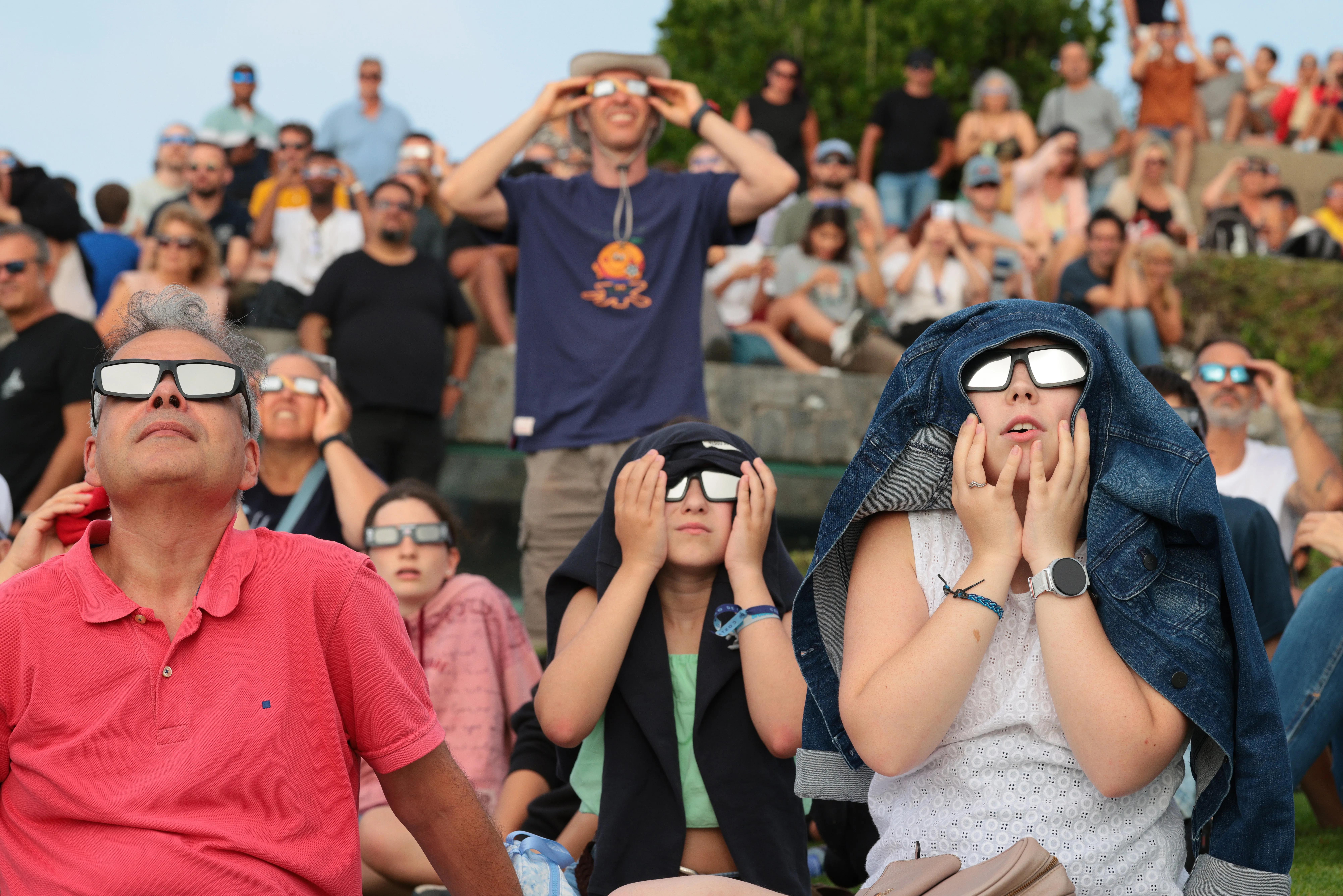
When the event did not match the picture in your head
Totality is routinely described with superlatives, and for good reason: it is one of the most visually extraordinary events available from Earth. But years of spectacular photographs can create an expectation no human eye can reproduce. Cameras combine focal length, exposure, processing, and carefully selected frames. Your eyes receive a wider, more dynamic scene, but the corona may initially look smaller or subtler than an enlarged photograph suggested.
Weather adds another layer. Clouds can conceal the corona while still allowing you to experience the plunging light level, horizon colors, temperature change, animal sounds, and crowd response. In Rochester during the 2024 eclipse, thick cloud prevented a direct view of the eclipsed Sun, while the racing shadow and sudden darkness still produced a striking scene. Security lights then switched on, compromising even that darkness. It is entirely reasonable for someone to value parts of such an experience and still feel disappointed.
Cloud is not a moral verdict on your preparation. Climate statistics can guide a destination choice, but a forecast remains uncertain until very close to eclipse day. Our guide to cloud cover, forecasts, and deciding when to move treats weather as a planning variable rather than a test of commitment.
Online discussions sometimes compress all this nuance into awkward labels. An after eclipse blues letdown post totality emotions reddit thread may contain genuine companionship, but it can also amplify the loudest reactions. Likewise, the after eclipse blues letdown post totality emotions meaning is not a recognized medical condition with a standard course. It is informal language for a wide range of responses after a rare, heavily anticipated event.
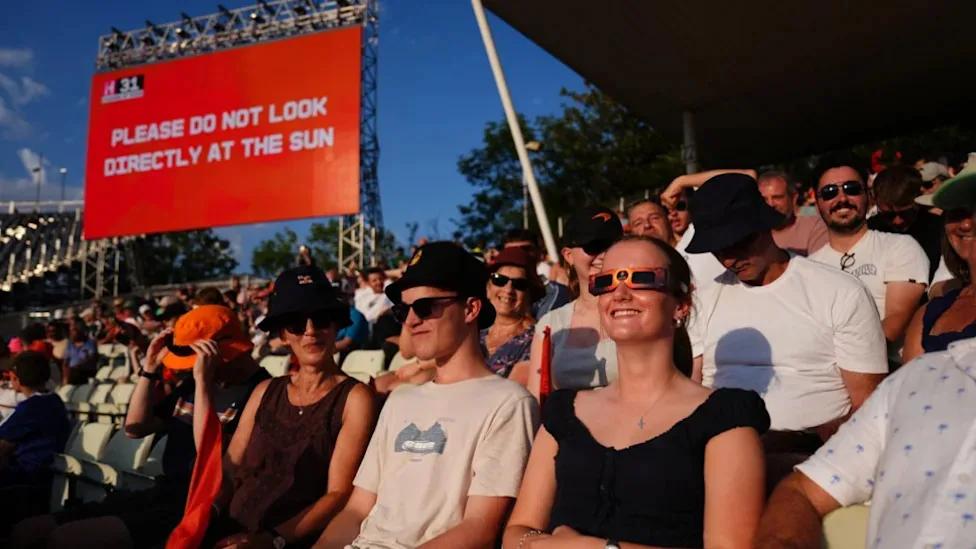
Do not grade your memory against someone else’s video
In the hours after totality, social feeds fill with sharp corona images and ecstatic reactions. That can be joyful: millions of people compare views taken under different clouds, from different parts of the path. It can also turn a personal memory into an unwanted competition.
Start with description rather than judgment. Write down what the light looked like, which sound you noticed first, whether the horizon changed color, what someone beside you said, and what surprised you. “I wish I had looked away from the camera sooner” preserves useful truth. “I ruined the eclipse” turns one imperfect choice into a verdict on the whole day.
Photographs can help, but you do not need to publish everything immediately. Save the original files before editing. Record a short voice note while sensory details are fresh. Ask family members separately what they remember; children often notice different parts of the scene. The resulting accounts do not have to agree perfectly because memory is selective and reconstructive, especially during a fast, emotionally charged event.
Sharing also has an ethical dimension. Ask permission before posting close photographs of strangers, visible tears, private conversations, or identifiable children. Do not frame someone’s quiet response as indifference, and do not pressure a clouded-out friend to describe the day as magical. A photograph of grief or awe can feel intimate even when it was taken in a public crowd.
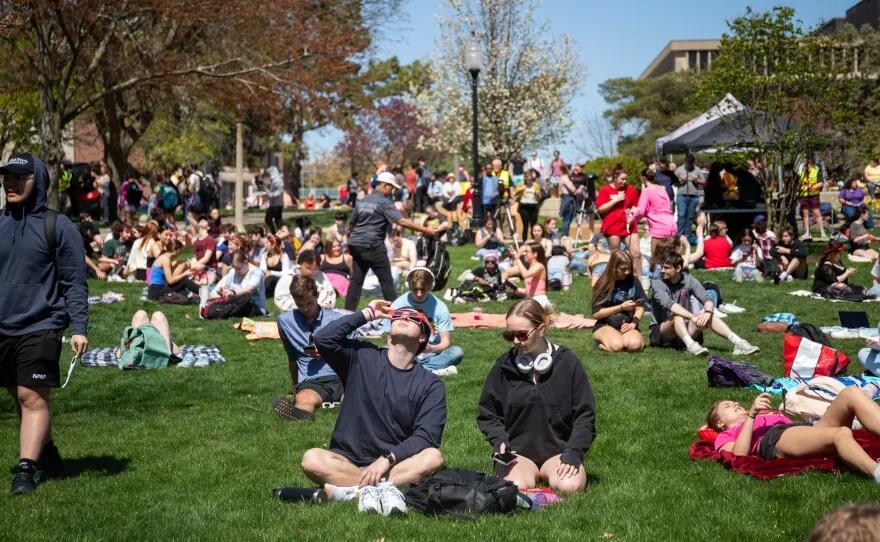
Give the experience a gentle landing
There is no seven-stage process you must complete, and an ordinary post-event lull does not automatically call for therapy. A few modest actions are often more useful than trying to manufacture a profound conclusion.
- Meet physical needs first. Eat, drink water, rest, and allow extra time after a long drive or crowded event.
- Name the contrast. You spent months moving toward one date; now that date is behind you. Anticlimax is understandable.
- Keep one small record. Write five details, save a sound recording, or choose one photograph rather than processing hundreds at once.
- Compare experiences with curiosity. Ask “What did you notice?” instead of “Wasn’t it life-changing?”
- Wait before making a verdict. The importance of an event may become clearer over days or months.
- Plan a modest follow-up. Revisit the location, attend an astronomy night, learn about the corona, or watch the next lunar eclipse. The follow-up need not equal totality in scale.
If persistent low mood, anxiety, sleep disruption, or distress is affecting everyday life, speak with a qualified health professional. That is not because eclipse letdown is a special disorder; it is because continuing distress deserves the same care it would at any other time.
Emotional letdown is not the same as an eye symptom
The expression after eclipse symptoms is dangerously vague because it can mix emotional reactions with physical warning signs. Feeling wistful or restless after a long-awaited event is not the same issue as blurred vision, a dark or distorted central spot, altered color vision, light sensitivity, or eye pain after unsafe solar viewing.
People sometimes reduce the medical concern to “how long after eclipse eye damage?” Solar retinal injury may be painless, and visual changes can be noticed within hours or later rather than at the exact moment of exposure. Do not wait for an internet timetable if your vision changes after looking at the Sun. Stop solar viewing and seek prompt advice from a qualified eye-care professional or an appropriate medical service.
The practical safety answer to “what should you not do during a solar eclipse?” is straightforward: never look at the bright or partially eclipsed Sun without suitable solar protection, and never aim unfiltered binoculars, a telescope, or a camera lens at it. Concentrated sunlight through optics can cause severe injury and requires a correctly fitted filter over the front of the instrument.
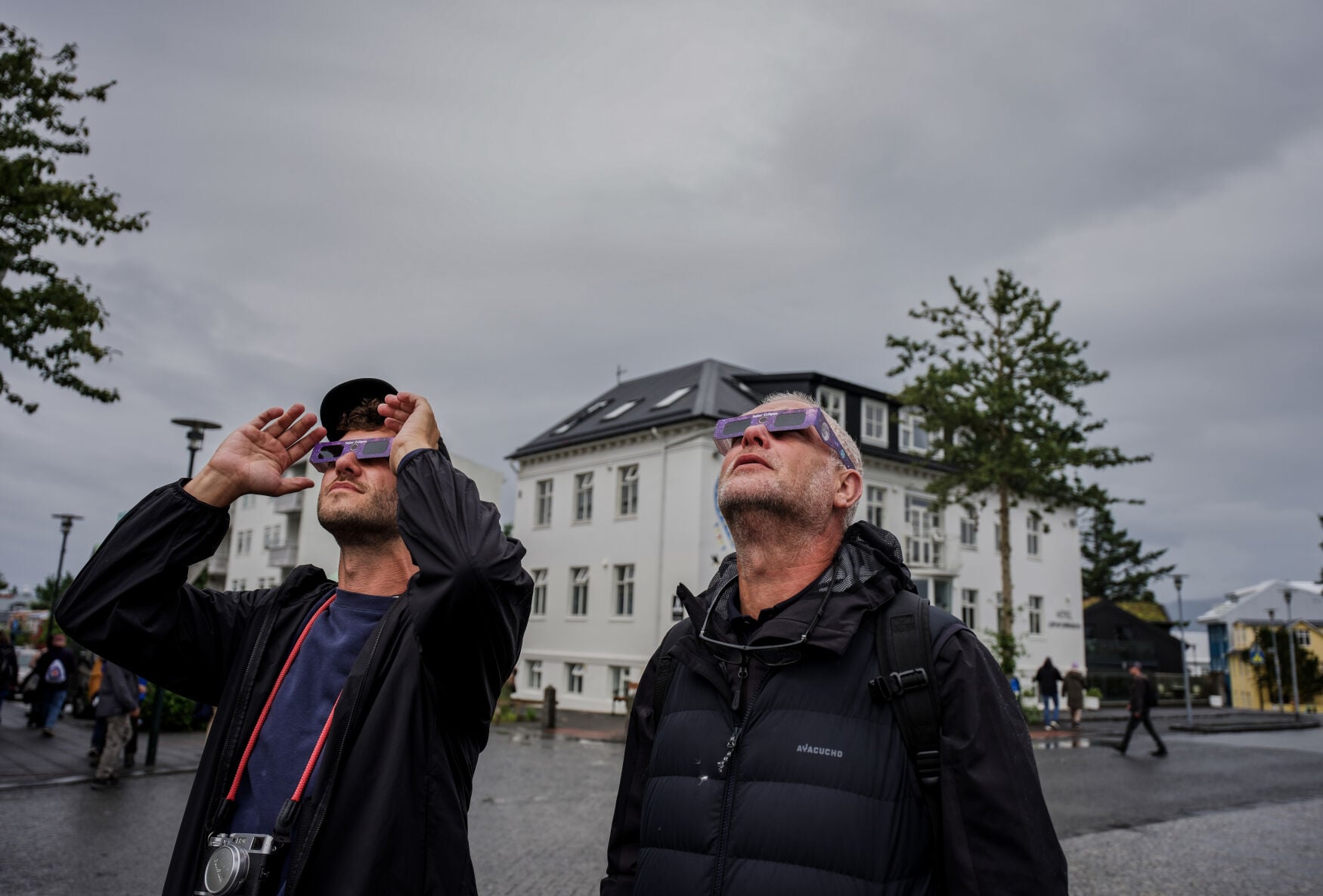
Only observers inside the path of totality may look without eclipse viewers during the brief interval when the Moon completely covers the Sun’s bright face. The instant bright sunlight returns, viewers go back on. There is no glasses-off interval during a partial or annular eclipse. Our guide to eclipse phases and exactly when viewers stay on is worth sharing with your group before eclipse day.
Plan for the ending before eclipse day begins
Good eclipse planning usually concentrates on arrival: route, weather, equipment, contact times, and the path of totality. Planning the departure can protect both safety and the emotional texture of the day.
For August 12, 2026, totality crosses parts of Greenland, Iceland, and northern Spain. Spain’s total phase occurs with the Sun low in the evening sky, so an unobstructed western horizon matters as much as being inside the path. Use our Eclipse Explorer and 3D map to check whether a specific site lies inside totality, how close it is to the path edge, and when each phase occurs locally. Totality duration changes across the path; a place near the edge may receive dramatically less time than one nearer the center.
Tell your group in advance what happens after third contact. Agree that nobody drives until equipment is packed and the driver has had a few quiet minutes. Bring food and water for the return journey. Expect mobile networks and roads to be busy. If practical, stay for the remaining partial phase instead of joining the first wave of departing traffic.
You can also schedule a low-pressure debrief: one meal, a shared album the next day, or a family conversation in which everyone gets to describe one detail. Avoid demanding instant gratitude from children or travel companions. They may need sleep before they know what the day meant to them.
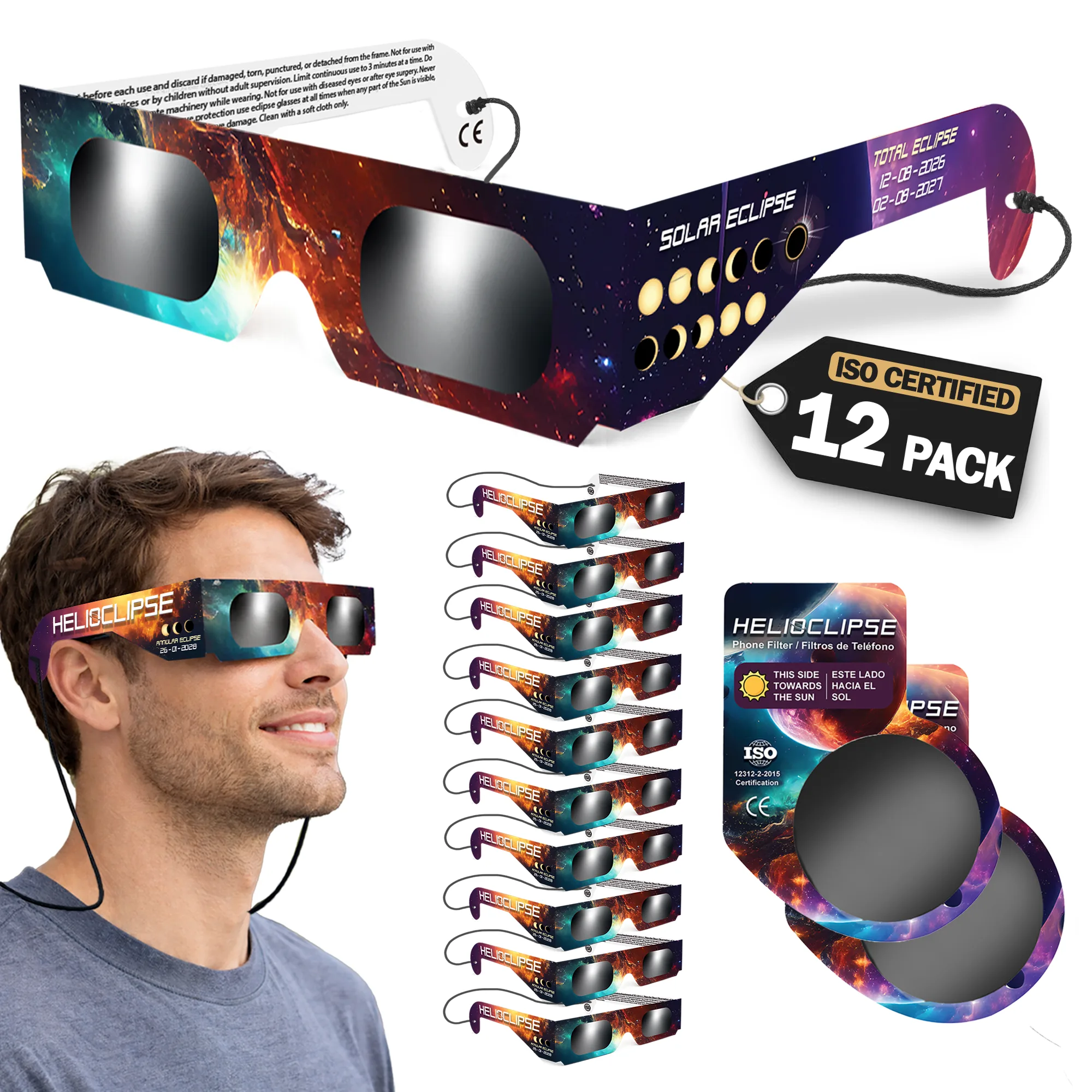
Preparation still includes suitable eye protection for every partial phase. Product language such as approved solar eclipse glasses or eclipse glasses nasa approved can be misleading because NASA does not approve individual viewer brands. Look instead for clear product information about conformity with ISO 12312-2, inspect every viewer for damage, and follow its instructions. When choosing solar eclipse glasses iso 12312-2 certified for your group, buy early enough to check them calmly rather than improvising on eclipse day. Helioclipse offers ISO 12312-2 eclipse viewers for families and groups preparing ahead.

Let the memory remain unfinished
A total eclipse does not owe anyone personal transformation. It may become one of your clearest memories, or it may sit beside the road trip, the cloud forecast, the people you met, and the sandwich eaten in a car park afterward. Sometimes the meaning arrives later. Sometimes the event remains beautiful but not life-altering.
That is enough.
The broad phrase after eclipse blues letdown post totality emotions can describe a real emotional contrast without turning it into pathology. You anticipated something enormous; it happened quickly; now the calendar has moved on. Give the memory room to settle instead of forcing it to perform.
And if you feel excited rather than low, that is normal too. Tell your friends what you saw. Learn the names of the phenomena you missed. Make a plan for another sky event. The end of totality is not the end of being curious.
All About Breastmilk Letdowns | What is the milk ejection reflex?
New Little Life - Breast Pump Education
Frequently asked questions
Why do I feel unsettled or disappointed after the eclipse is over?
Feeling flat, restless, sad, irritable, or simply tired afterward can be a normal response to the sharp contrast between a long buildup and a very short totality. It does not mean you experienced the eclipse incorrectly; emotions may be intense, muted, mixed, or delayed.
Can a total solar eclipse change how people feel afterward?
Yes. The event can bring excitement, awe, tears, sensory changes, or a quieter reaction, followed by an anticlimax once daylight returns and the trip home begins. These reactions vary from person to person, and none is required.
How soon would eye damage appear after looking at an eclipse?
The excerpt does not say how quickly eye damage may appear or describe symptoms to watch for. It states that eye protection should go back on after third contact, when a bright point of sunlight ends totality.
What should I do to view the eclipse safely once totality ends?
Put eye protection back on after third contact, when sunlight reappears and totality has ended. The excerpt does not provide further observation-safety instructions.
How should I prepare if clouds might block the eclipse?
The excerpt notes that clouds can intervene and may affect how the experience feels, but it does not give specific weather-planning steps. It also emphasizes that a cloud-affected or less-than-expected experience does not mean you did anything wrong.
On-site next steps
- Explore more eclipse science, safety, and first-time planning in the Helioclipse blog hub.
- Reconstruct your viewing location and local circumstances with the Helioclipse 3D eclipse map.
- If 2026 is your next totality, begin with our August 12, 2026 planning guide, then share the plan with your travel group early.
Sources & further reading
- NASA Science: The April 8 Total Solar Eclipse: Through the Eyes of NASA
- Space.com: Totality was a total bust for me—but not for the reason you may think
- Sky & Telescope: The Totality Experience: S&T’s Eclipse Stories
- Sky & Telescope: Will Monday’s Total Eclipse Change Your Life?
- Phys.org: Total solar eclipse wows North America. Clouds part just in time for most
- American Astronomical Society: Phenomena You’ll Experience at a Total or Annular Eclipse
- American Astronomical Society: How to Shoot Solar-Eclipse Images & Videos
- American Astronomical Society: Solar Eclipse Climate & Weather Data
- NASA Science: Eclipse Viewing Safety
- American Astronomical Society: How to View a Solar Eclipse Safely