Welding glass, stacked sunglasses, and Mylar myths: why improvised filters fail in 2027
A pair of sunglasses can make the world look dim. A scrap of shiny film can make the Sun look dim. Neither tells you whether it’s safe to look at the Sun. As the August 2, 2027, solar eclipse approaches, the myths about welding glass, stacked sunglasses, and Mylar all come back to that mistake: judging a filter by what you can see rather than by what it lets through.
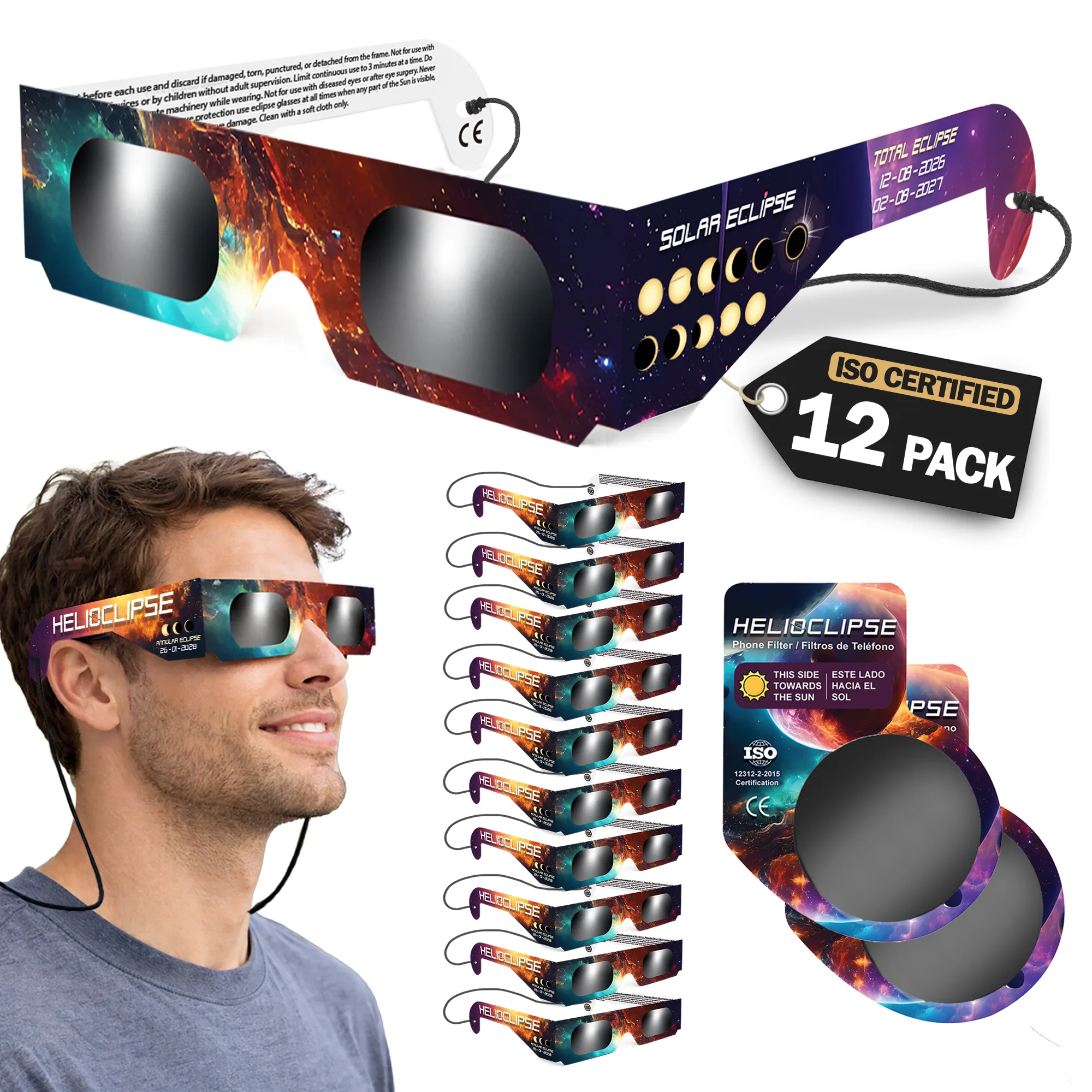
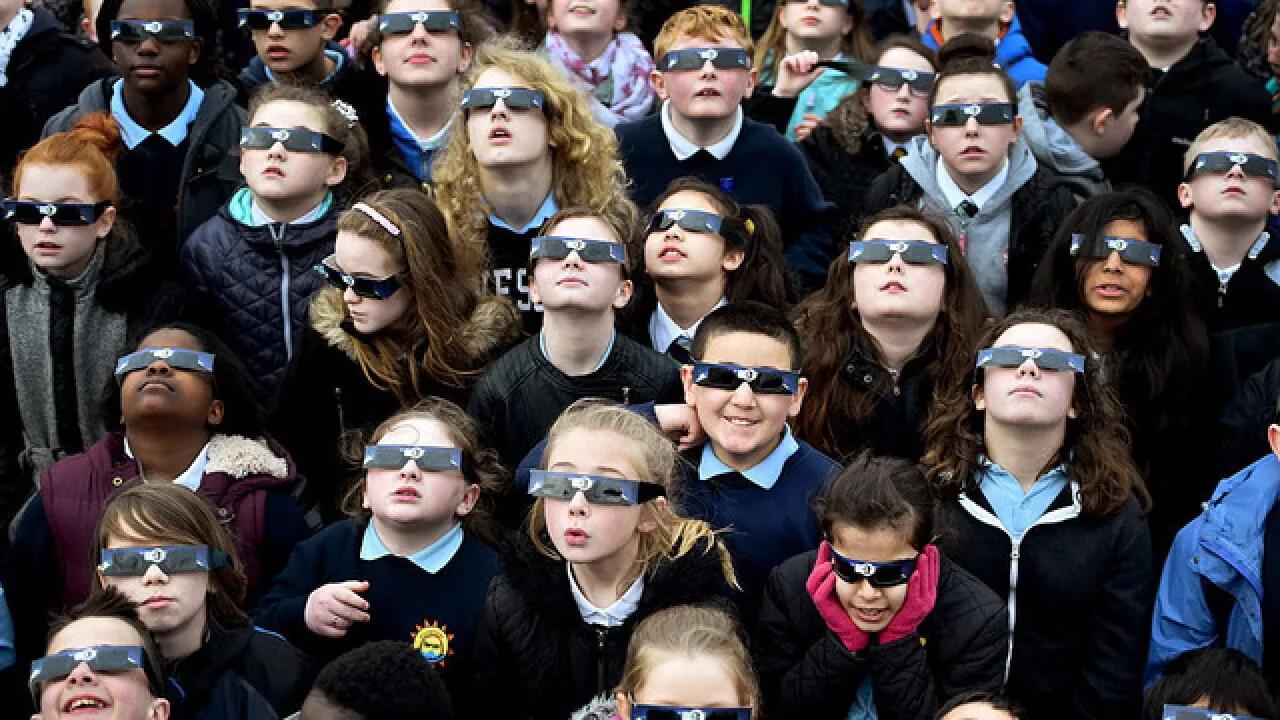
For direct viewing during any partial phase, use intact eclipse glasses or a handheld solar viewer that meets ISO 12312-2. A verified fixed-shade welding filter is a narrow exception, not a reason to improvise. If you’re getting a family or school group ready, line up ISO 12312-2 certified eclipse glasses before the day. If you don’t have a trusted viewer, you can still watch the Moon’s progress safely by projection.
What the 2027 eclipse myths get wrong about welding glass and sunglasses
A solar filter has to control how much radiation passes through in the ultraviolet, visible, and infrared parts of the spectrum. Your eyes can tell you whether the image looks bright, but not how much ultraviolet or infrared is getting through. And even in visible light, a tolerable-looking Sun isn’t proof that the filter reduces its intensity enough. Too much sunlight can injure the retina without giving you a reliable warning while you’re looking.
There’s a second question: does the filter work across its entire surface? An uneven coating, a scratch, or a gap at the frame can compromise protection. That’s why ISO 12312-2 addresses more than light transmission: it also sets requirements for uniformity, surface quality, mounting, and labeling. The difference between a tested viewer and a dark-looking material isn’t something you can settle by holding it up to a lamp.
Shade 14 welding glass: a real but narrow exception
The American Astronomical Society (AAS) says a genuine fixed welding filter rated shade 12 or higher can provide adequate protection for direct, unmagnified solar viewing. Shade 14 welding glass gets singled out in many eclipse guides, but it isn’t the only fixed shade the AAS considers suitable. Shade 12 meets the safety threshold but often looks uncomfortably bright. Fixed shades 13 and 14 are the AAS’s preferred range for a comfortable view; shade 15 and above can make the image too dim to enjoy. A green solar image is typical of many welding filters, but its color is not evidence of the shade rating.
The key words are fixed and verified. An unmarked pane from a toolbox isn’t a known shade 14 filter, and stacking lighter welding plates isn’t a substitute for one with a verified rating. Don’t use an adjustable or auto-darkening welding helmet for solar viewing, even if the dial goes to 14. The AAS warns that it can be set too light or fail to darken quickly enough when you look at the Sun.
If you’re calling a local welding supply shop, ask for a documented fixed shade rather than just ‘dark welding glass.’ The AAS notes that shades 13 and 14 are rarely stocked at welding suppliers. For most families, purpose-made eclipse glasses are simpler to identify, fit, and hand out. A welding shade rating describes a welding filter; it is not an ISO 12312-2 certification for a finished solar viewer.
Why stacked sunglasses, smoked glass, and Mylar fail
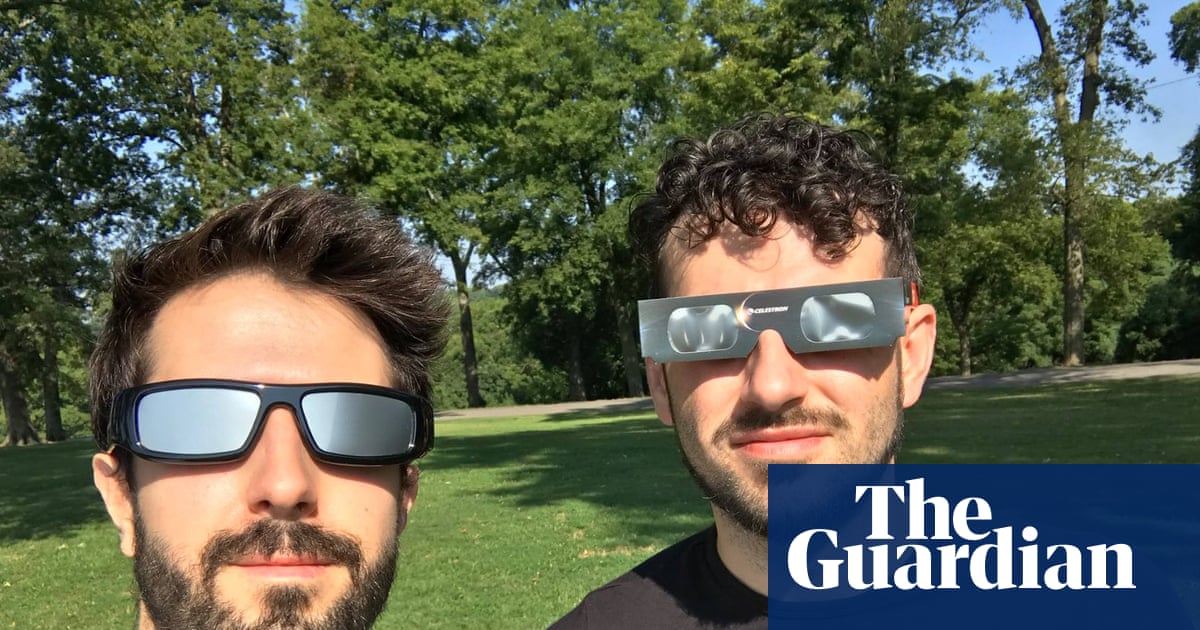
Stacked sunglasses. A second pair can make the Sun look darker, but that doesn’t make the combination a tested solar filter. Polarization mainly helps with reflected glare, such as light off water. A UV-protection label doesn’t tell you whether the lenses sufficiently reduce the Sun’s visible and infrared radiation. Everyday sunglasses have their own standard, ISO 12312-1, for a different job. Neither a polarized pair nor a stack belongs between your eyes and the Sun during a partial phase.
Smoked glass. A soot coating can look uniformly dark at a glance while letting more light through thinner patches. It can also rub off or scratch. There’s no reliable way to establish safe transmission from its appearance. Old photographic film isn’t a dependable substitute either: films and emulsions vary, and a dark negative doesn’t tell you what wavelengths it lets through.
Mylar and other shiny films. Mylar is a trade name for polyester film, not a solar-safety rating. Some purpose-made, tested solar viewers use aluminized polyester. That doesn’t make a space blanket, metallic gift wrap, or an unidentified reflective sheet equivalent. The finished viewer’s measured transmission and construction are what matter, not whether the material looks like something you’ve seen in eclipse glasses.
What to look for in eclipse glasses
‘AAS-approved’ and ‘NASA-approved’ can sound like official product certifications, but NASA does not approve individual brands, and the AAS does not certify eclipse glasses. The AAS reviews evidence that suppliers’ products were tested by appropriately accredited labs. What you want is a viewer that meets ISO 12312-2, from a source you can trace. A printed standard number alone is not proof. Our guide to ISO 12312-2 eclipse glasses explains what the standard covers and what the label can’t establish by itself.
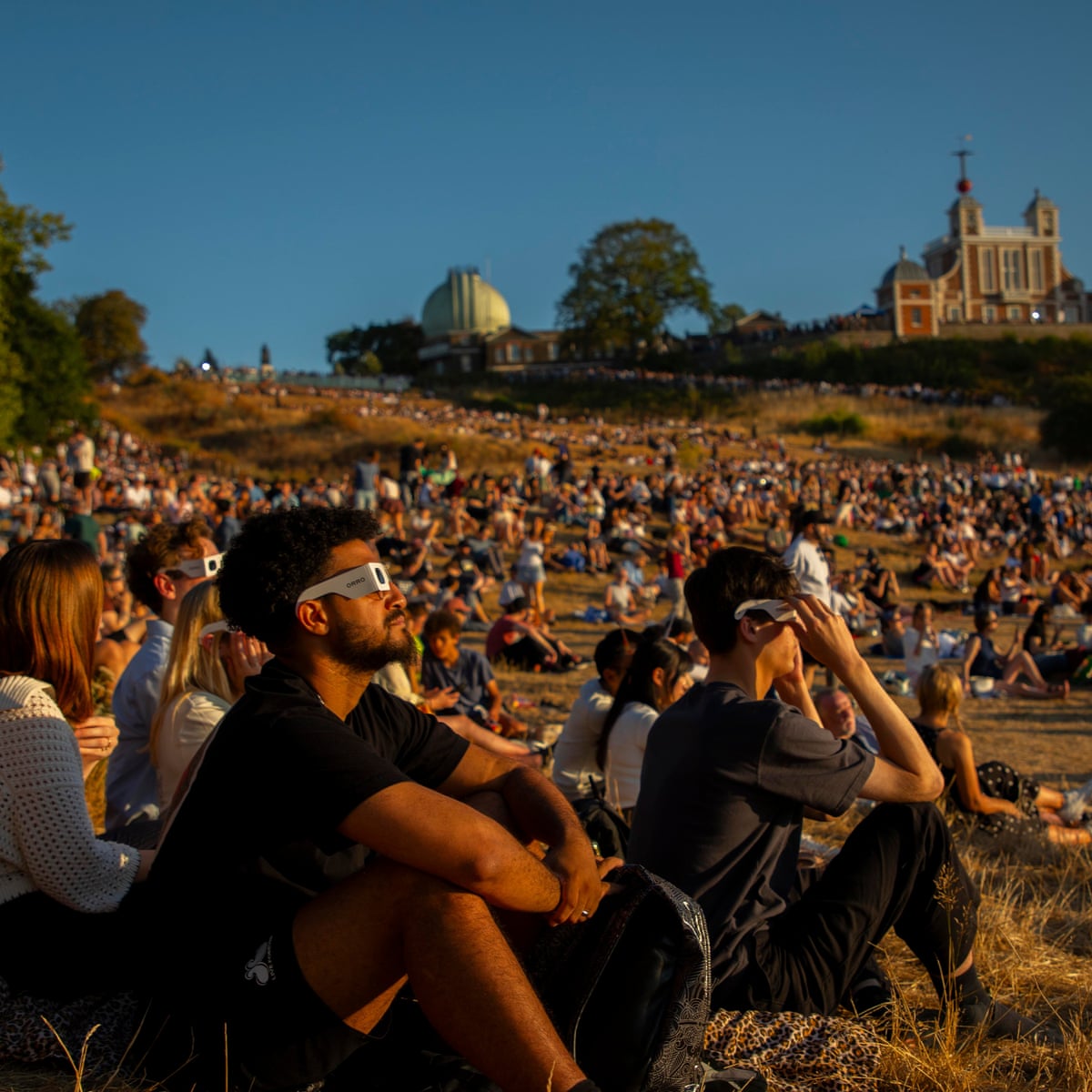
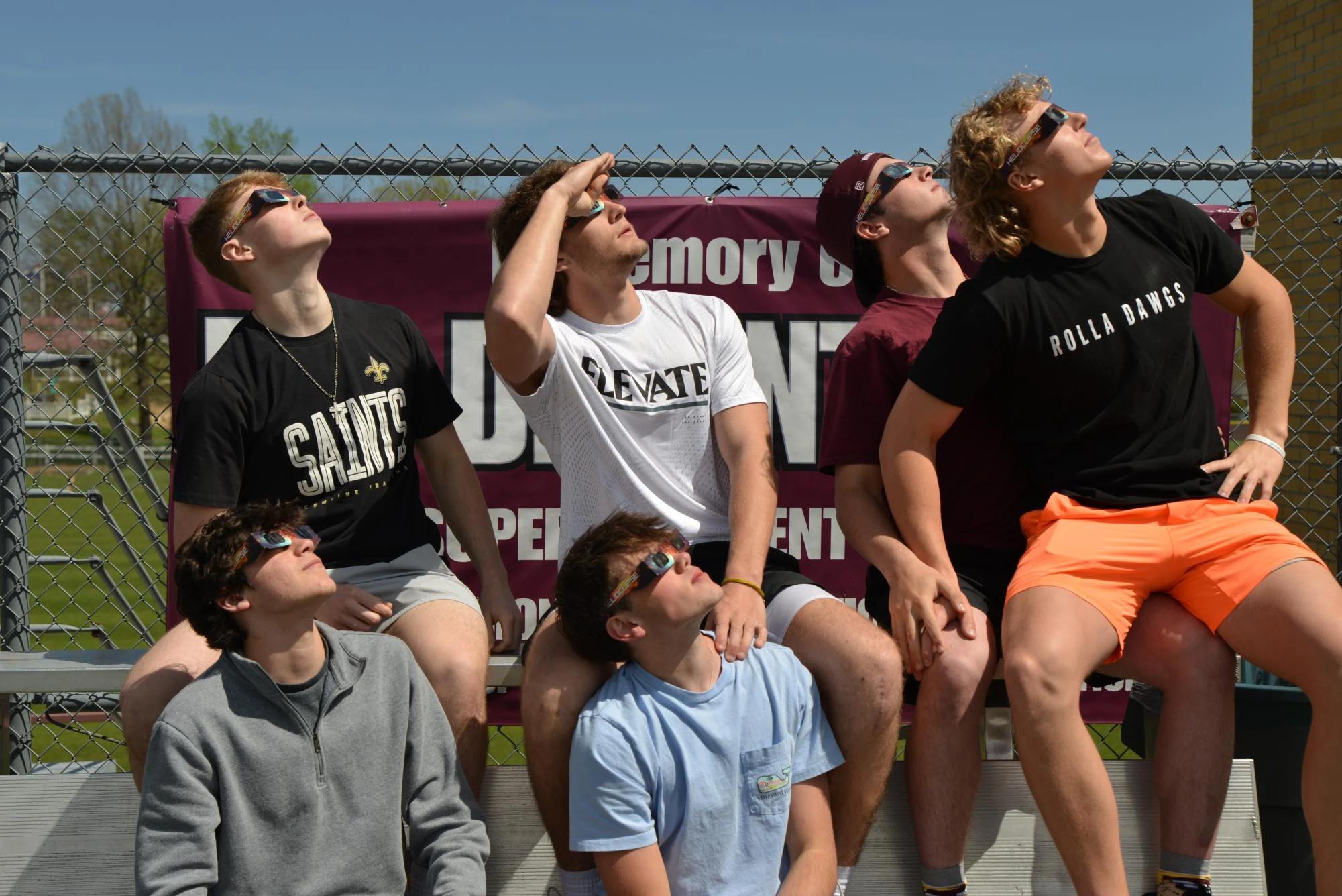
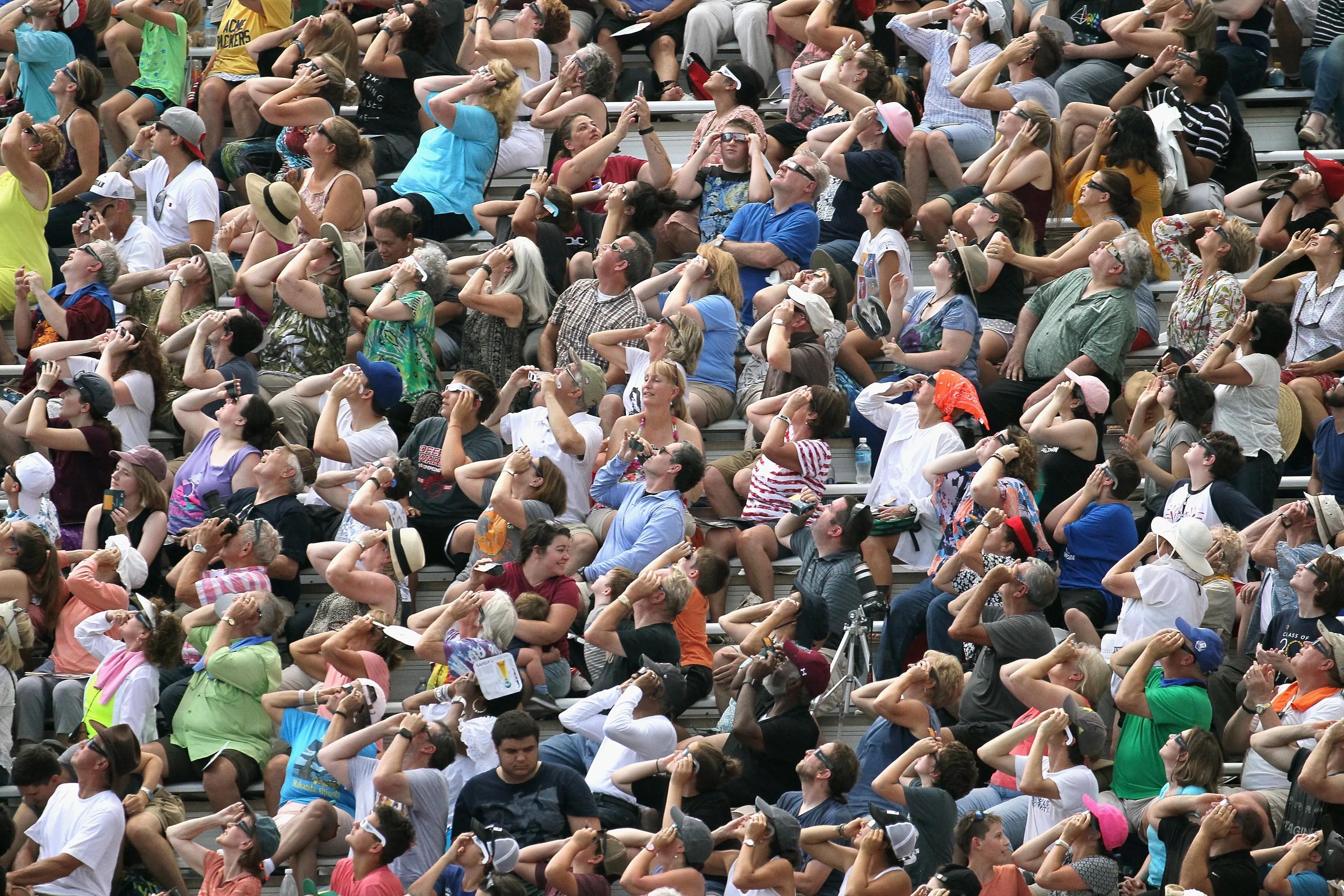
You can spot reasons to reject a viewer at home, but you can’t establish that a mystery filter is safe by looking through it. Don’t test an unknown material on the Sun. Before using a trusted viewer, check for scratches, tears, punctures, or filters lifting from the frame. Replace damaged viewers rather than patching them. Ordinary prescription glasses can stay on beneath eclipse glasses; help children fit their viewers and supervise them. Cover your eyes before looking up, and turn away before taking the viewer off.
Eclipse glasses and handheld viewers are for unmagnified viewing. Never look through an unfiltered camera viewfinder, binoculars, or telescope while wearing eclipse glasses. The optics concentrate sunlight and can damage the viewer. Those devices need a suitable solar filter secured over the front of the optics; seek expert advice before setting one up.
On August 2, your exact spot decides when glasses come off
In Tarifa, Spain, totality lasts about 4 minutes 39 seconds, with maximum eclipse around 10:45 a.m. CEST. In Luxor, Egypt, it lasts about 6 minutes 19 seconds, with maximum around 1:02 p.m. EEST. Cairo, by contrast, sees about 95% of the Sun’s face covered at maximum but no totality. That remaining sliver means you need a solar viewer every time you look directly at the Sun from Cairo. In the U.S., NASA lists northern Maine for a partial view, not totality.
If you’re inside the path of totality, keep your viewer on during the partial phase and remove it only once the Moon has completely covered the Sun’s bright face. Put it back on before the bright Sun returns, or turn away. Don’t use dimming daylight, clouds, or a countdown for a nearby city as your cue. Use the Helioclipse Eclipse Explorer to check your exact viewing spot and its local start and end times for totality, then share those times with your group. Our 2027 viewing phases guide walks through the transitions.
The February 6, 2027, annular eclipse has no glasses-off phase, even in the center of its path. The bright ring is part of the Sun’s exposed face, not the faint corona you see during totality.

No trusted viewer? Watch the crescents on the ground
Hold a colander with the Sun behind you and look at its shadow on the ground or on a sheet of paper. During the partial phase, the holes project little images of the Sun. As the Moon covers more of its face, those images narrow into crescents. You can show an entire group what’s happening without anyone having to look up. Look at the projected images, never through the holes.
If you’re organizing a viewing party, set up projection even if you have glasses. It gives children something to observe between filtered looks and gives anyone without a trusted viewer a way to follow the eclipse. A few minutes between looks makes the Moon’s movement easier to notice than watching continuously.
WELDING GOGGLES: Are they safe for SOLAR ECLIPSES?
AstroViktor
Frequently asked questions
Does a purple tint tell me anything about a welding filter’s shade?
No. The excerpt doesn’t explain why some welding lenses look purple, and tint isn’t proof of a filter’s shade rating. For direct, unmagnified solar viewing, use only a verified fixed welding filter rated shade 12 or higher.
Can I tell whether a blue welding lens is safe for eclipse viewing?
Not by its color. A blue tint doesn’t tell you how much ultraviolet or infrared radiation gets through, and a dim-looking Sun doesn’t prove the lens blocks enough visible light.
Can regular sunglasses take the place of a welding filter?
Don’t treat regular sunglasses as a substitute for a welding filter. The excerpt doesn’t specify what protection welding requires, but it does explain that darkness alone doesn’t tell you how much radiation a lens lets through.
What makes a welding filter different from an ordinary tinted lens?
A verified fixed welding filter has a known shade rating; a lens that merely looks dark doesn’t tell you how much radiation it blocks. For direct, unmagnified solar viewing, a verified fixed shade of 12 or higher is a narrow exception, not a reason to improvise.
Can I use an old pair of eclipse glasses for the 2027 eclipse?
The excerpt doesn’t give a shelf life, but it says to use eclipse glasses that are intact and meet ISO 12312-2. A scratch or a gap at the frame can compromise protection, so use projection if you don’t have a trusted viewer.
On-site next steps
Order certified solar eclipse glasses from Helioclipse early enough to check the fit and condition before your group meets. If you’re hosting, keep a spare pair of eclipse viewing glasses with your supplies so a torn filter or a last-minute guest doesn’t leave anyone looking for a substitute.
Sources & further reading
- American Astronomical Society: How to View a Solar Eclipse Safely
- American Astronomical Society: About the ISO 12312-2 Standard for Solar Viewers
- American Astronomical Society: How Can You Tell If Your Eclipse Glasses or Handheld Solar Viewers Are Safe?
- B. Ralph Chou, American Astronomical Society technical report: Solar Eclipse Eye Safety
- NASA Science: Eclipse Viewing Safety
- NASA Science: Future Eclipses
- Sky & Telescope: How to Safely See a Solar Eclipse
- Sky & Telescope: Solar Filters for Safe Sun Observing
- Astronomy: Seeking Shade
- Space.com: Total Solar Eclipse 2027: Everything You Need to Know About the ‘Eclipse of the Century’