Counterfeit eclipse glasses in souks and marketplaces: how fakes travel before the 2027 eclipse
The counterfeit eclipse glasses, souk, and marketplace problem in 2027 will not begin on eclipse morning. It will build quietly through copied product listings, unverifiable resellers, rushed wholesale orders, pop-up stalls, hotel counters, and boxes whose printed claims are much easier to reproduce than their safety performance.
That matters because the total solar eclipse of 2 August 2027 crosses southern Spain and Gibraltar before sweeping across North Africa, Egypt, Saudi Arabia, and Yemen. Near Luxor, totality lasts about 6 minutes 23 seconds—an extraordinary duration that will draw international visitors as well as millions of local observers. Most of Europe, much of Africa, the Middle East, and parts of Asia will see a partial eclipse instead. In every one of those places, certified solar viewers are required whenever any bright part of the Sun remains visible.
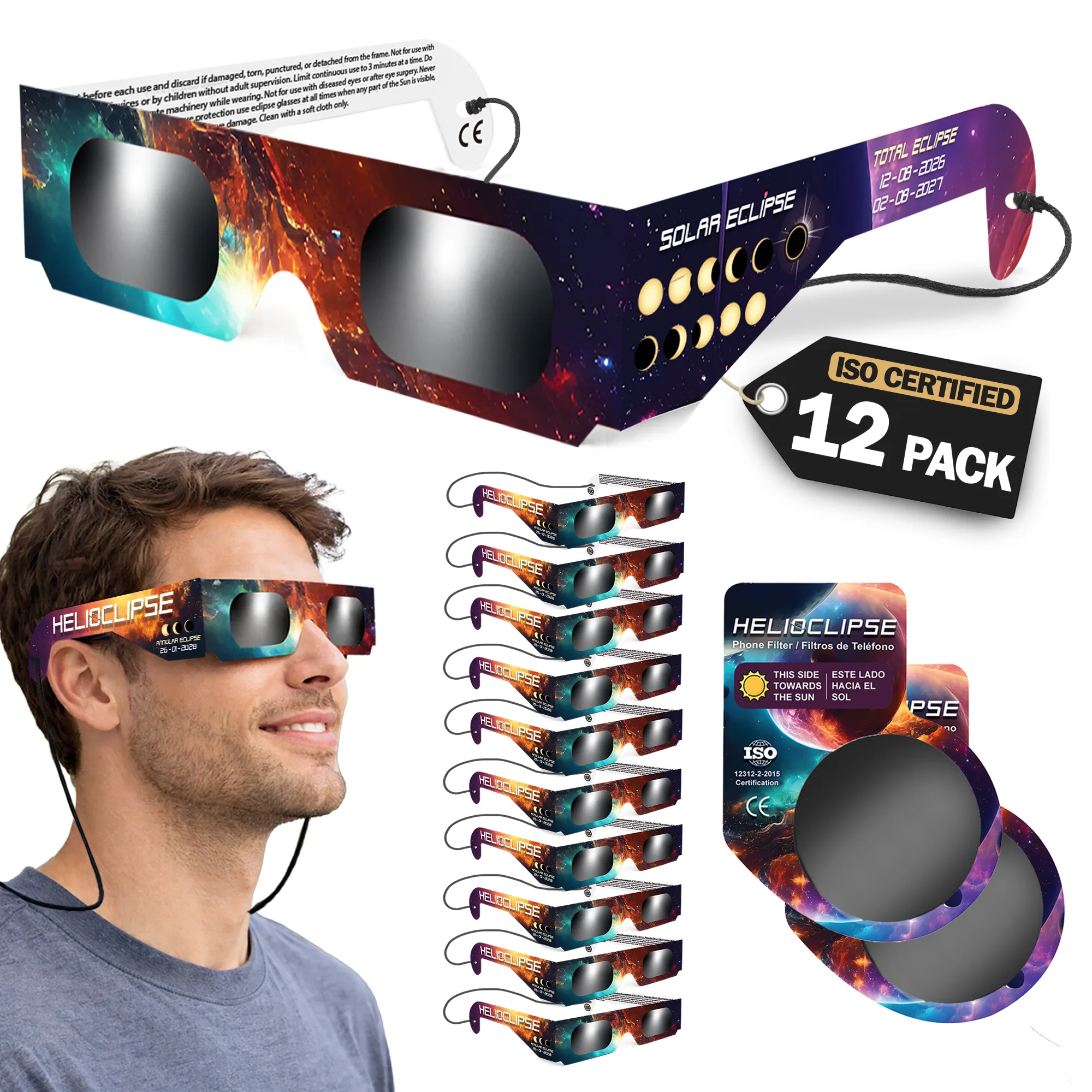
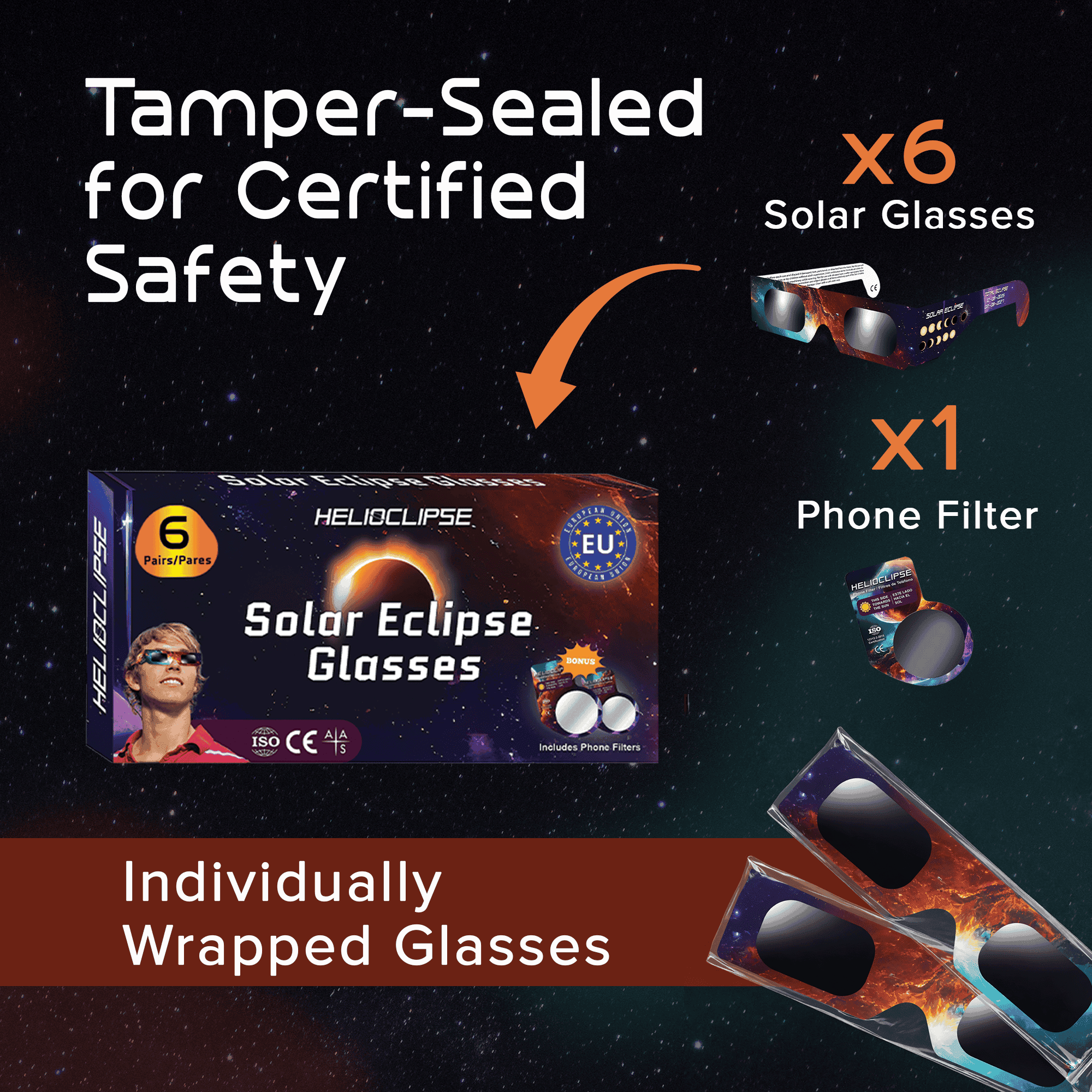
The safest move is simple: organise your group early, confirm what you are buying, and obtain Helioclipse solar eclipse glasses before travel compresses your choices. A souvenir stall may be perfect for spices, textiles, or a hat. It is not where you want to conduct an improvised investigation into optical-filter documentation.
The counterfeit eclipse glasses souk marketplace risk in 2027
A souk is not inherently unsafe, and neither is an online marketplace. The problem is traceability. A specialist manufacturer can identify the product, the relevant filter material, the laboratory testing behind its conformity claim, and the businesses authorised to resell it. At the end of a long informal supply chain, the person taking your money may know only what was printed on the carton.
Counterfeits travel well because eclipse viewers are small, inexpensive to ship, and visually simple. A copier can imitate cardboard frames, an ISO statement, instructions, a company name, or even a test-report image. Products from several origins may be consolidated by a wholesaler, split among local distributors, repackaged, and then sold through online listings or temporary stalls. By the time they reach a traveller, their origin may be impossible to reconstruct.
The pattern is not confined to North African souks. The same vulnerability applies to marketplace fulfilment in the USA, social-commerce advertisements in Europe, street vendors near an observing site, and anonymous sellers operating through large e-commerce platforms. The storefront changes; the missing chain of custody does not.
Reddit threads and other community discussions about counterfeit eclipse glasses can help expose suspicious listings, sudden seller-name changes, or inconsistent packaging. They cannot establish that a filter controls visible, ultraviolet, and infrared transmission within the required limits. Treat crowdsourced reports as leads to investigate, not as laboratory evidence or a substitute for identifying the actual manufacturer and authorised seller.
Why the 2027 eclipse creates ideal conditions for last-minute fakes
Demand will be geographically enormous. NASA lists totality across southern Spain, Morocco, Algeria, Tunisia, Libya, Egypt, Saudi Arabia, and Yemen. Outside that narrow corridor, a partial eclipse will be visible across most of Europe and much of Africa and the Middle East. That means the market is not limited to travellers standing under the Moon’s central shadow.
The experience will vary dramatically by location. Luxor lies near the most celebrated part of the path, with more than six minutes of totality and a high August Sun. Southern Spain receives totality earlier along the track but for a shorter period. London, Paris, Rome, and many other cities outside the path get a partial eclipse, so there is no glasses-off moment at all there. Use our 2027 eclipse planning guide and Eclipse Explorer to check whether your exact observing point is inside totality and to look up local circumstances.
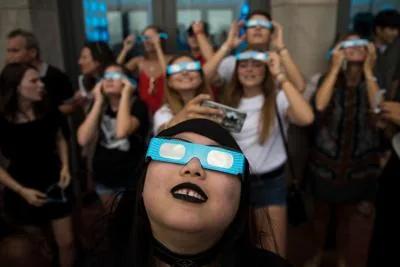
Long eclipses also encourage a misleading thought: if totality lasts several minutes, perhaps the glasses barely matter. In reality, the partial phases unfold for much longer on both sides of totality. Viewers are needed before the Sun is completely covered and immediately when its bright face begins to return. Everyone outside totality needs them for every direct look throughout the event.
The 12 August 2026 European eclipse offered a practical planning lesson. Coverage published before that event warned travellers that late demand could narrow delivery and retail options. That does not prove a measured Europe-wide stock-out, but it illustrates a recurring pattern: when an eclipse becomes a mainstream news story, buyers who waited suddenly compete for the remaining legitimate stock while opportunistic listings multiply.
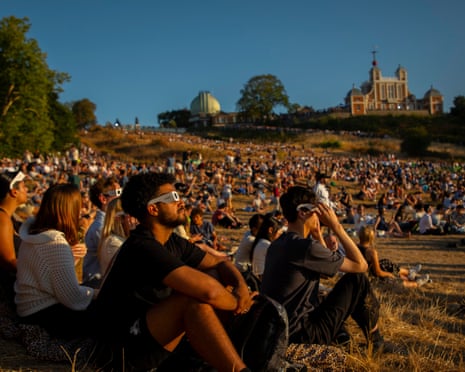
For 2027, the pressure could be especially visible around airports, cruise itineraries, hotels, tour departures, archaeological sites, and transport hubs serving the path. Tell your family, school, or travel group early. Count the people who need viewers, add a few spares, and settle the safety question before anyone is standing in August heat with a countdown running.
An ISO statement is not the same as ISO evidence
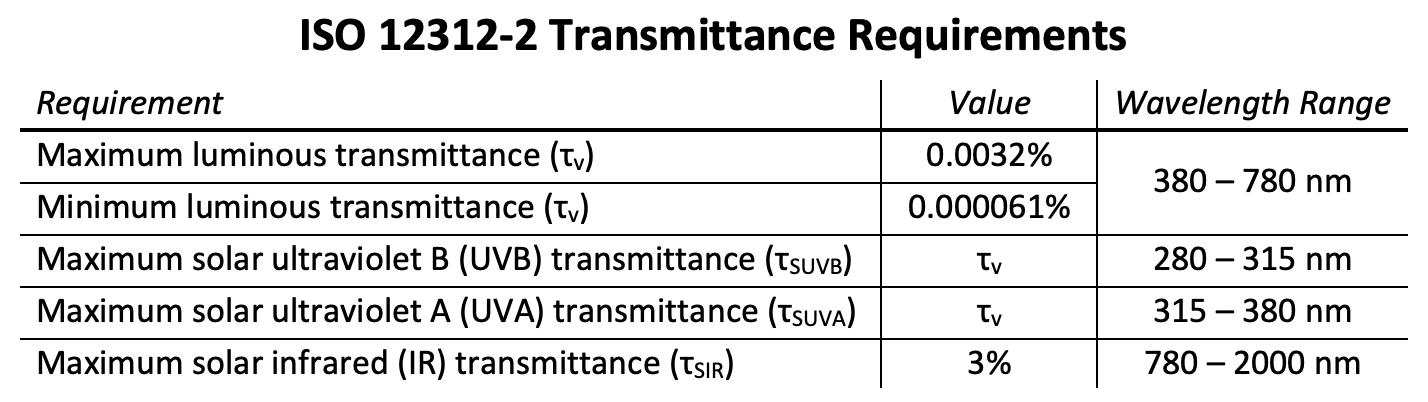
The relevant international standard is ISO 12312-2, which covers filters intended for direct, unmagnified observation of the Sun. It addresses more than whether a lens looks dark. Requirements include transmission across visible, ultraviolet, and infrared wavelengths, the quality and consistency of the filter, secure mounting, and product information.
A genuine conformity claim should rest on testing performed by a suitably accredited laboratory. Yet the text “ISO 12312-2” is not protected by a force field. Anyone can print it on cardboard, add it to a marketplace description, or place it beside a generic certificate icon. A street seller’s assurance that a product is “ISO approved” does not reveal who made it, which product was tested, whether the report is authentic, or whether the item in your hand came from the tested production line.
The same caution applies to phrases such as AAS approved eclipse glasses. The American Astronomical Society does not function as a product-certification laboratory, and its supplier page is not a blanket approval of every listing carrying a familiar name. The AAS evaluates evidence and identifies manufacturers it considers trustworthy; it now advises manufacturers to publish their own authorised-reseller lists. Buyers still need to connect the product and seller to that traceable chain.
NASA likewise says it does not approve individual brands of solar viewers. Labels such as “NASA approved,” “NASA certified,” or “eclipse glasses nasa approved” are therefore warning signs when presented as official product endorsements. NASA provides safety guidance; it does not award a special NASA certification to retail eclipse glasses.
For a deeper look at what the standard does and does not establish, read our guide to ISO 12312-2 and eclipse viewers.
What eclipse glasses are made of—and why appearance proves little
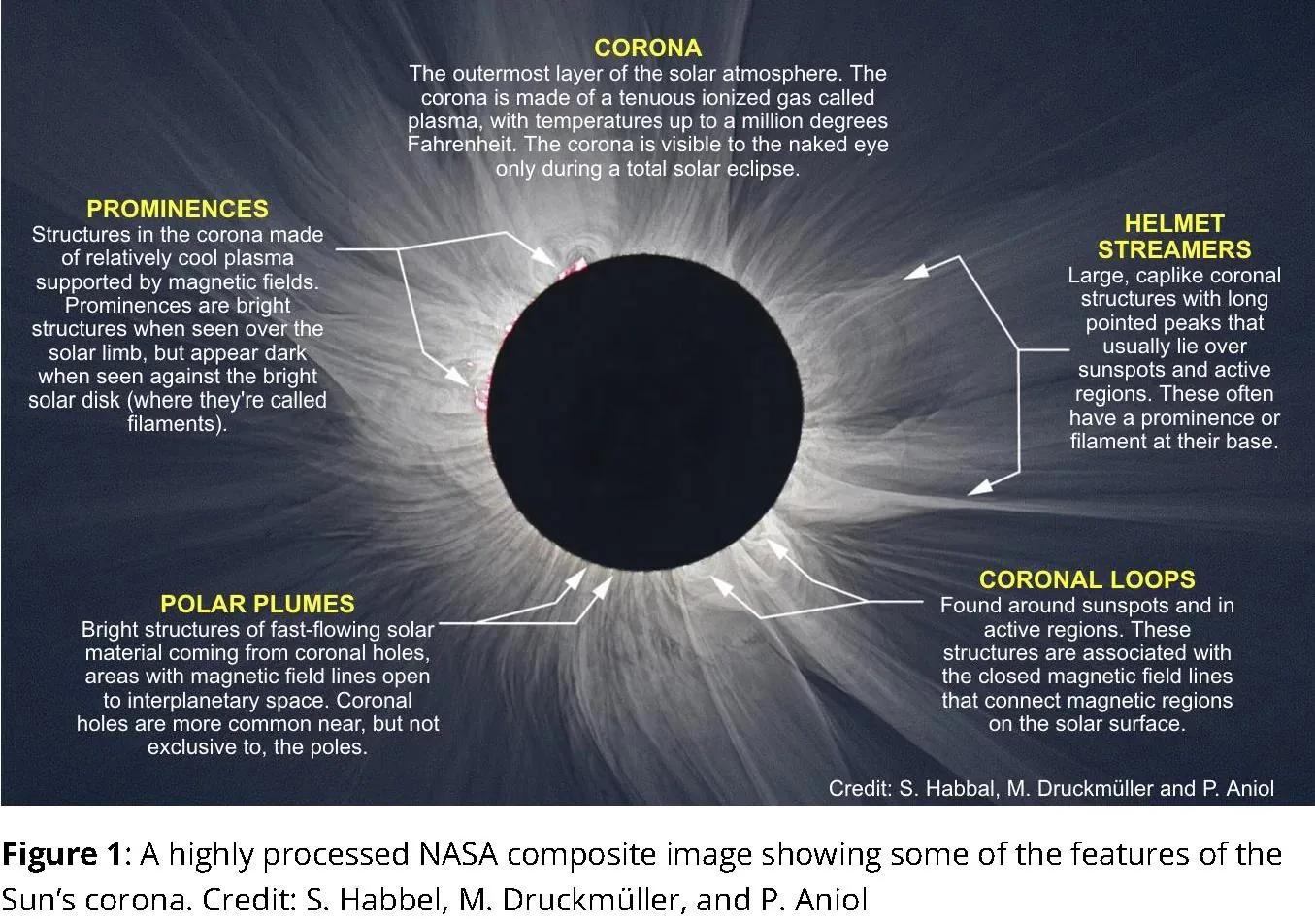
Eclipse viewers generally use a specialised polymer film or another filter substrate engineered to reduce solar radiation to safe levels. Depending on the design, the material may incorporate absorptive components or a reflective metallic coating. The filter is then mounted in a cardboard or plastic frame or installed in a handheld viewer.
That construction explains why safe products do not all show the Sun in precisely the same colour. Through different compliant filters, the solar disk may appear white, bluish white, yellow, or orange. Colour alone is not a pass-or-fail test, and neither is the apparent shininess of the material.
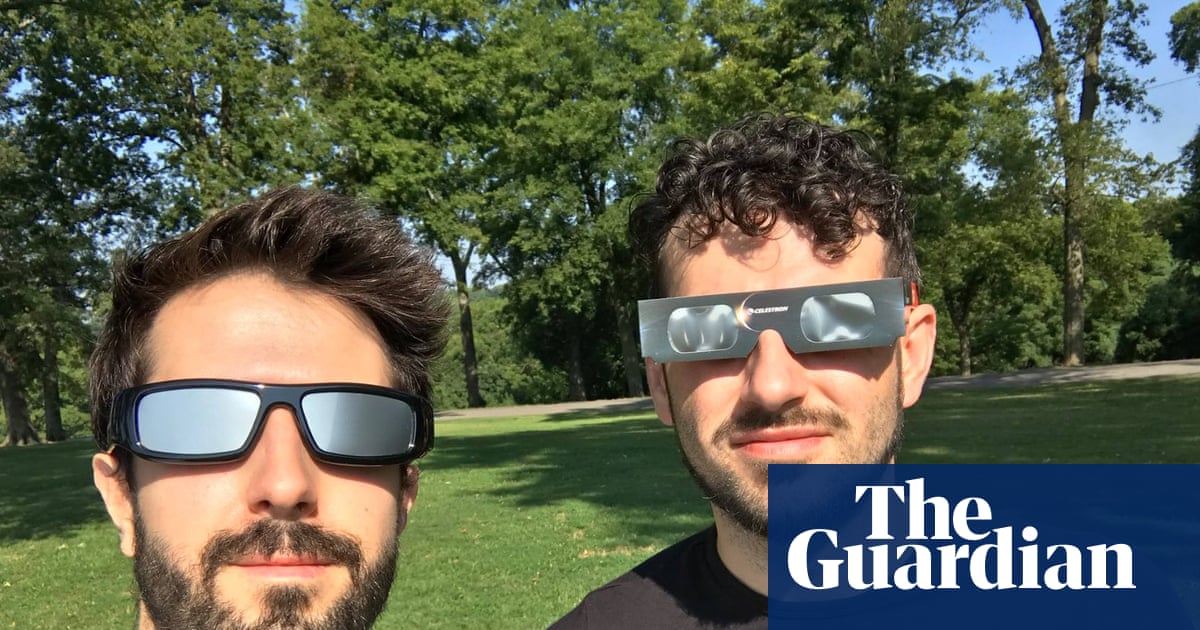
Ordinary sunglasses are completely different. Even very dark sunglasses transmit far too much light for direct solar viewing. Stacking several pairs does not transform them into a solar filter. Smoked glass, exposed photographic film, CDs, food wrappers, and improvised tinted plastic are also unsuitable.
Nor can you authenticate an unknown product by comparing its darkness with a genuine pair. A counterfeit filter might suppress enough visible light to feel comfortable while failing to control invisible radiation properly. Conversely, a competent-looking frame can contain damaged or substituted material. The decisive question is not “Does it look like eclipse glass?” but “Can I trace this exact viewer to a trustworthy source?”
A last-minute authenticity checklist
You cannot prove full compliance at home; the necessary spectral measurements require laboratory equipment. You can, however, reject obvious failures and investigate the supply chain before trusting a viewer.
1. Identify the manufacturer
Look for a specific manufacturer name and contact information—not only the marketplace seller, importer, event organiser, or travel company. Search the manufacturer’s own site independently rather than following a QR code printed on suspicious packaging.
2. Verify the seller’s relationship to that manufacturer
Buy directly or confirm that the manufacturer publicly identifies the business as an authorised reseller. A familiar manufacturer name printed on the frame is not enough, because counterfeiters have copied legitimate names.
3. Examine the conformity evidence
The product should state that it conforms to ISO 12312-2, but the claim must connect to credible testing and a traceable product. Be suspicious of cropped certificates, reports with a different model number, missing laboratory details, altered dates, or documents supplied only as low-resolution marketplace images.
4. Inspect every viewer physically
Discard any viewer with scratches, punctures, tears, creases through the filter, light leaks, water damage, or filter material separating from its frame. Individually inspect glasses given to children rather than assuming every item in a pack is identical and undamaged.
5. Perform a rejection check indoors
When you put safe viewers on indoors, you should normally see nothing except perhaps an extremely bright light, appearing very faint. If you can see furniture, wall art, your phone screen, or ordinary room lighting clearly, the viewer is not dark enough and must not be used.
Passing this check does not certify an unknown viewer. It only helps identify an obvious failure. The AAS describes additional cautious checks, but provenance remains more informative than a home experiment. If you are uncertain, do not use the product to look at the Sun.
6. Read the instructions before eclipse day
Check how the viewer should be worn, whether it fits over prescription glasses, and how children will be supervised. Practise the safe sequence: put the viewer on before looking up, look briefly, turn away, and only then remove it.
7. Keep eclipse glasses away from unfiltered optics
Never look through binoculars, a telescope, or a camera lens while wearing eclipse glasses. Magnifying optics concentrate sunlight and require a correctly designed solar filter secured over the front aperture. A small viewer at your eyes is not a substitute and can be damaged by the concentrated beam.
Price, scarcity, and the false bargain
How much are solar eclipse glasses worth? Their retail price depends on quantity, materials, packaging, distribution, and location, but price alone tells you almost nothing about compliance. A cheap viewer is not automatically counterfeit, and an expensive one is not automatically safe. What has value is a documented product from a traceable source, in undamaged condition, available before your group needs it.
Last-minute scarcity distorts judgement. A traveller who rejected an anonymous listing in May may accept the same unknown product at three times the price on 1 August because the hotel shop has only one box left. High prices can create an illusion of quality, while very low prices encourage bulk impulse purchases without checking the supplier.
Commercial wording also needs interpretation. Phrases such as solar eclipse glasses iso 12312-2 certified, eclipse viewing glasses, or solar eclipse glasses bulk describe what a buyer wants; they do not independently verify the item delivered. When ordering for a family, school, workplace, or tour group, start with the documented manufacturer and seller, then choose the pack size that matches your headcount.
Ask group organisers direct questions: Who manufactured the viewers? Where is the conformity documentation? Did the organiser buy directly or through an authorised reseller? Are the glasses being stored dry and flat? A travel agent’s inability to answer does not prove the entire trip is fraudulent, but it does mean you should bring viewers whose origin you have verified yourself.
What to do if the only glasses available look suspicious
Do not let the countdown pressure you into using an unknown filter. The eclipse does not become safe because the alternative is missing a direct view.
For the partial phases, use indirect projection instead. Stand with your back to the Sun and let a pinhole project its image onto a shaded surface. The gaps between crossed fingers, the holes in a colander, or spaces between leaves can create dozens of tiny crescent Suns. Look at the projected images—not through the holes and not back toward the Sun.
If you are inside the path of totality, direct naked-eye viewing is safe only while the Moon completely covers the Sun’s bright face. Remove certified viewers only when totality has unquestionably begun. Put them back on as soon as any bright point of the photosphere returns. If you are outside the totality path, keep certified viewers on for every direct look; a 99% partial eclipse is still a partial eclipse.
Our guide to when glasses go on and off during the 2027 eclipse explains the sequence for first-time viewers. Review it with children and friends before the event, not while everyone is reacting to the darkening sky.
Build a safer group plan now
Choose one person in your family or travel group to manage viewer procurement. Record the order confirmation and seller, keep the original packaging, and photograph any identifying information before distributing the glasses. Store them flat, dry, and protected from scratches.
Count more carefully than “one pack should be enough.” Include children, guides, drivers, relatives joining at the last minute, and a few replacements for viewers that become bent or damaged. Sharing is possible because the partial phases progress slowly, but a pair per person makes supervision easier at the most intense moments.
Before departure, send the group three facts: ordinary sunglasses are not solar filters; viewers stay on whenever any bright part of the Sun is visible; and cameras or binoculars need their own front-mounted filters. That short message can prevent a surprising amount of confusion.
Most importantly, do not make eclipse morning a shopping mission. Souks and marketplaces are wonderful parts of travel, but the six-minute spectacle near Luxor—and the shorter totalities elsewhere along the path—deserve preparation that began long before the shadow arrived.

Frequently asked questions
How can I tell whether a travel agent is selling trustworthy eclipse viewers?
Ask whether the agent can identify the product, the filter material, the laboratory testing supporting its conformity claim, and the authorised reseller chain. If those details cannot be verified, do not rely on the glasses simply because they are included in a travel package.
What checks can help me assess whether eclipse glasses are genuine?
Look for a traceable supply chain: the seller should be able to identify the product, relevant filter material, testing behind the conformity claim, and authorised resellers. Printed ISO statements, company names, instructions, and report images can be copied, so packaging alone does not prove safety performance.
Which sales locations present the greatest risk when buying eclipse glasses?
Risk is higher wherever traceability is missing, including informal market stalls, pop-up sellers, hotel counters, anonymous online listings, social-commerce adverts, and street vendors near observing sites. A souk or online marketplace is not inherently unsafe, but an unverifiable seller may not know more than what is printed on the carton.
Should I choose eclipse glasses based on the lowest price?
No. The excerpt does not provide reliable price guidance, and a low price does not establish that a viewer controls visible, ultraviolet, and infrared transmission within required limits. Prioritise verifiable product information and a documented reseller chain rather than price alone.
What should travellers understand about counterfeit eclipse glasses before the 2027 eclipse?
Counterfeit viewers can move through copied listings, wholesalers, repackaging, temporary stalls, and anonymous online sellers long before eclipse day, making their origin difficult or impossible to reconstruct. For the 2 August 2027 eclipse, certified solar viewers are required whenever any bright part of the Sun remains visible, so obtain and verify them before travel reduces your options.
On-site next steps
- Order Helioclipse ISO 12312-2 solar eclipse glasses early enough to inspect them and equip your whole group before travel.
- Use the Helioclipse Eclipse Explorer to confirm whether your exact location is inside totality and to check the local phase sequence.
- Keep learning through the Helioclipse eclipse guides, especially if you are coordinating children, a school, or a large travel party.
Sources & further reading
- Heading to Europe or the U.K. for the Aug. 12 solar eclipse? Best eclipse glasses to buy before you leave—or after you arrive — Space.com
- Fake solar eclipse glasses are everywhere ahead of the total solar eclipse. Here's how to check yours are safe — Space.com
- Fake Solar Eclipse Glasses Are Flooding the Market: How to Stay Safe — Space.com
- How to Tell if Your Eclipse Glasses Are Unsafe (and What To Do About It) — Space.com
- Future Eclipses — NASA Science
- Suppliers of Safe Solar Viewers & Filters — American Astronomical Society
- How Can You Tell If Your Eclipse Glasses or Handheld Solar Viewers Are Safe? — American Astronomical Society
- About the ISO 12312-2 Standard for Solar Viewers — American Astronomical Society
- How to View a Solar Eclipse Safely — American Astronomical Society
- Eclipse Viewing Safety — NASA Science