Pregnancy and a long outdoor eclipse day: pacing, shade, and when to call your clinician
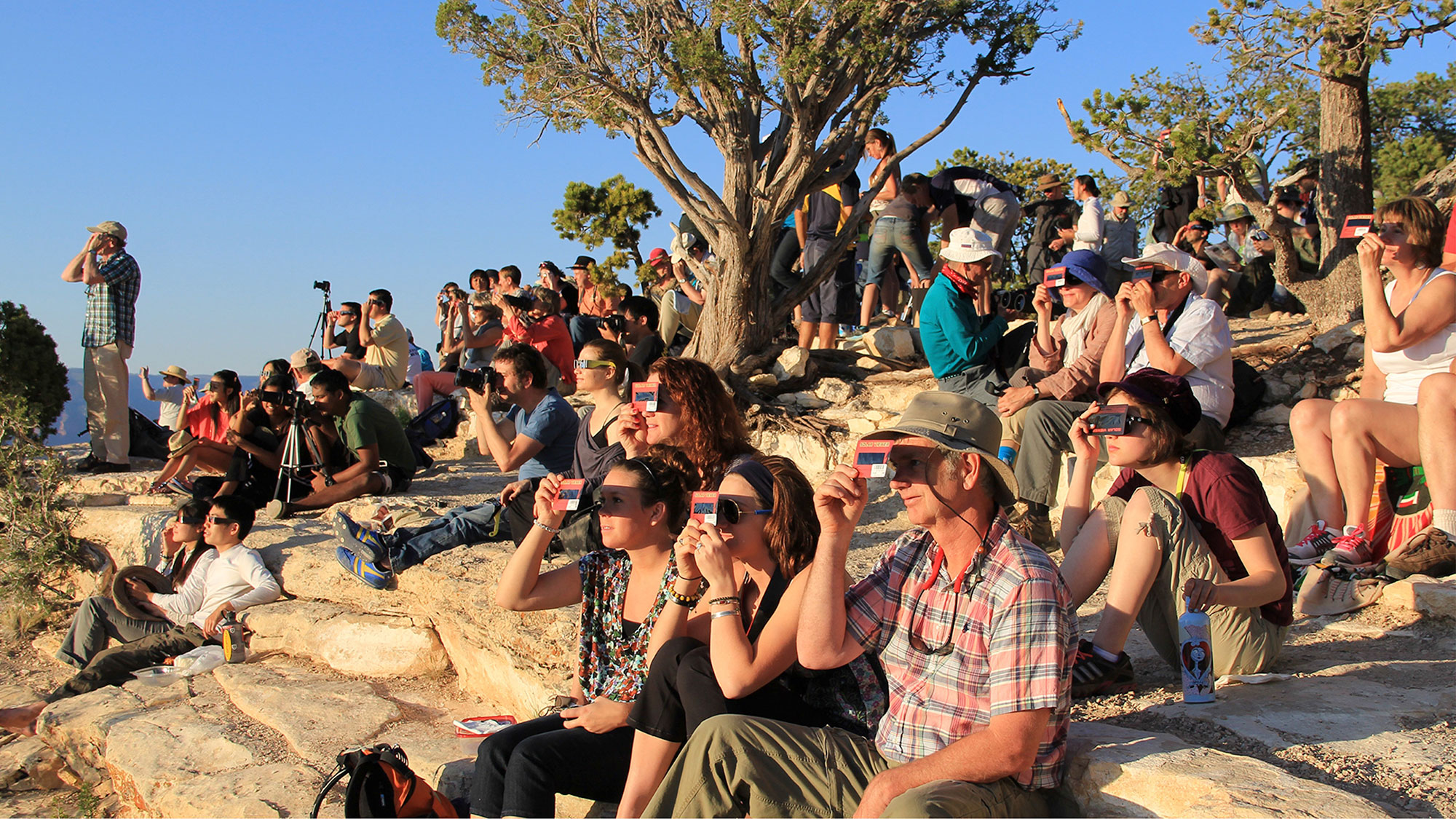
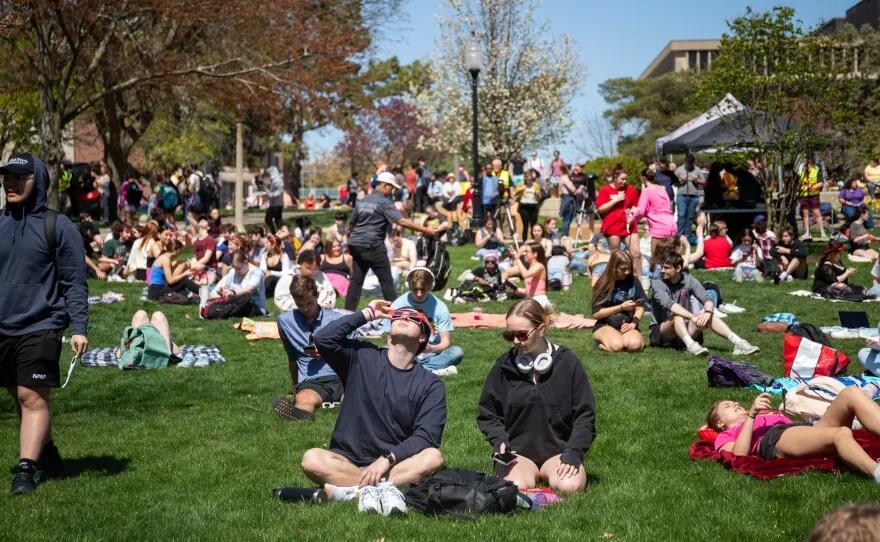
The eclipse itself may last a few hours from first contact to last, even though totality—if you are inside the path—lasts only minutes. Add an early arrival, queues, traffic and the walk from your parking place, and a memorable skywatching event can quietly become a long day in the sun.
Being pregnant does not create a special astronomical danger. The practical concerns are familiar outdoor ones: heat, prolonged standing, dehydration, sun exposure, air quality, crowded transport and being too far from a comfortable place to rest. The difference is that pregnancy can change how you tolerate those conditions, so your plan should leave room to slow down or leave without debate.
This is a non-clinical planning guide, not individualized medical advice. Use the Helioclipse Eclipse Explorer to check what type of eclipse your location will experience and when its phases occur. Then discuss any pregnancy-specific limits, symptoms or medical conditions with your own clinician before committing to a remote or demanding viewing site.
The eclipse is not the pregnancy risk—the outdoor day can be
Questions about pregnancy and a solar eclipse often mix two very different subjects. One is whether an eclipse has a unique physical effect on pregnancy. There is no established medical mechanism by which the Moon passing in front of the Sun harms a pregnancy. The other subject is whether spending hours outside in heat, standing in a crowd or sitting far from water and toilets is sensible for a particular person. That deserves real planning.
A useful pregnant solar eclipse plan therefore begins with ordinary conditions, not celestial myths. Check the forecast temperature, heat index or local heat-risk level, humidity, shade, air quality, walking distance and expected traffic. The CDC notes that heat can affect health during any trimester and advises pregnant people to take protective action on hot days, including staying cool, maintaining regular fluid and food intake, and discussing individual risk factors with a clinician.
There is no universal temperature at which an outdoor event suddenly becomes unsafe for every pregnancy. Personal health, trimester, medications, humidity, direct sun, duration and access to cooling all matter. A forecast that might feel manageable for a 20-minute walk can be a very different proposition when the day includes two hours on an exposed field and another hour waiting for traffic to move.
That is why a pregnant solar eclipse heat standing outdoors 2026 guide should never offer one magic temperature or one fixed quantity of water. Your clinician can help you account for conditions such as asthma, high blood pressure, diabetes, persistent nausea or any restriction affecting fluids or activity. Do not stop or change medication because of hot weather unless the clinician responsible for it tells you to do so.
Design the day around the short moment that matters
For the total solar eclipse of August 12, 2026, the spectacle at any one location will be concentrated around a precise local maximum. The partial phases develop much more slowly. You do not need to stare at the Sun continuously, and you do not need to stand throughout the entire event.
Use the map to note four times for your exact site: the beginning of the partial eclipse, the start and end of totality if your location is inside the path, and the end of the final partial phase. Outside the path of totality, there is no glasses-off interval at all. Our guide to eclipse phases and when to use solar glasses explains that distinction in more detail.
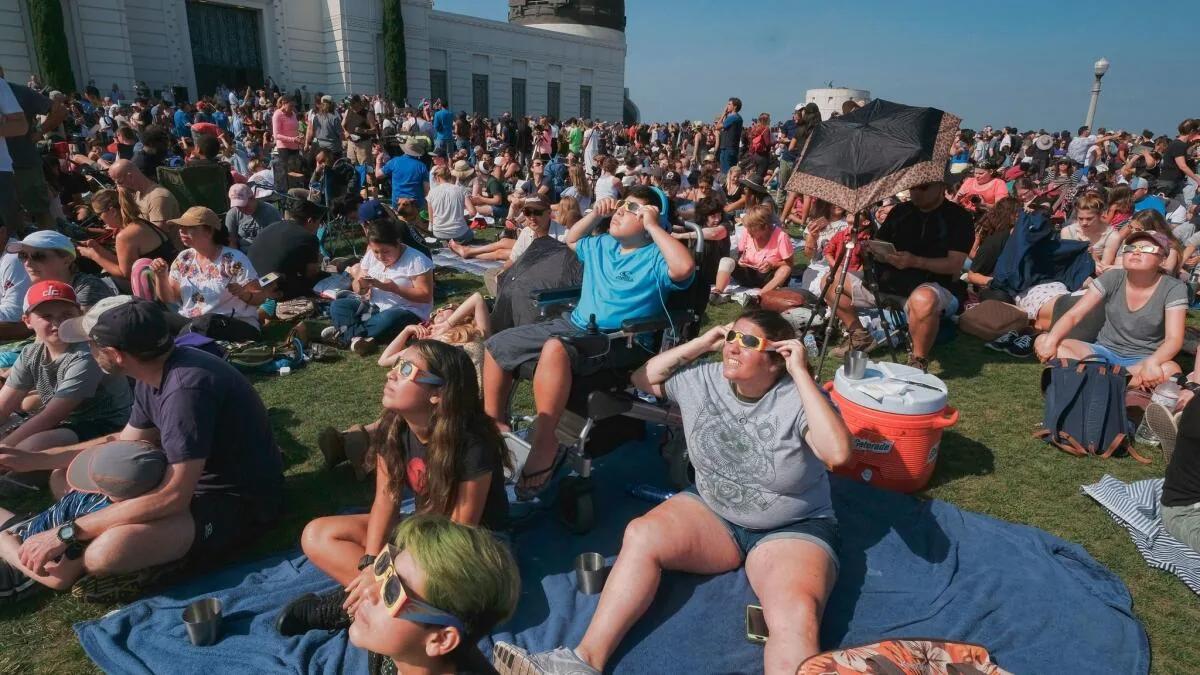
Now build a shorter attendance window around what you most want to experience. You might arrive early enough to find a seat and watch the Moon take its first visible “bite” from the Sun, then spend much of the partial phase resting in deep shade. If you are in the path of totality, return your attention to the sky well before totality so that you can notice the light changing and the landscape dimming. If the day becomes uncomfortable, viewing only part of the event is still a real eclipse experience.
Do not let the group turn an optional dawn-to-dusk outing into the default. Tell friends or family before eclipse day that you may arrive later, sit while they explore, or leave early. Agree on who will carry supplies and who can accompany you back to the car, hotel or indoor space.
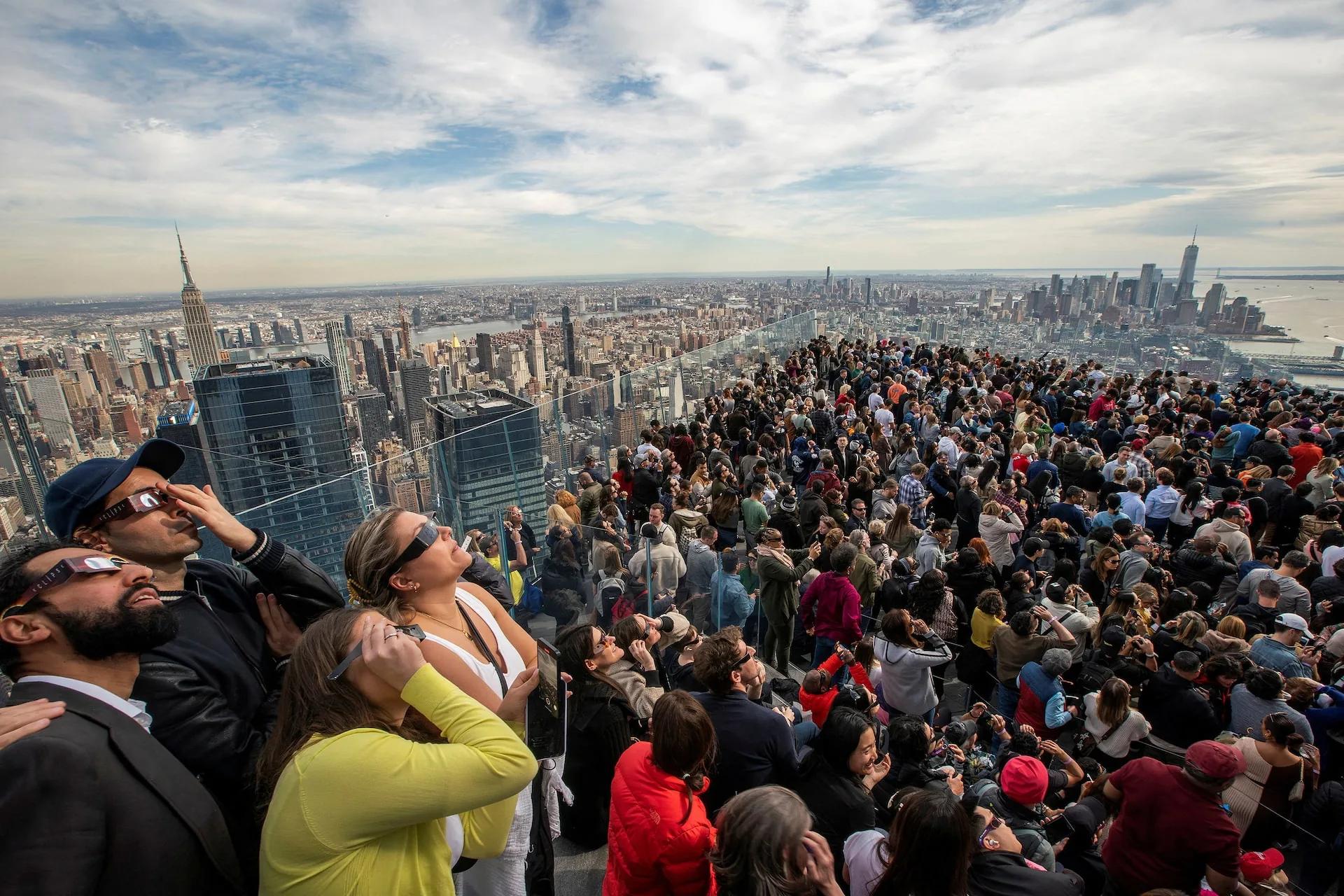
Choose shade, a chair and toilets before chasing a few more seconds
The center of a total-eclipse path generally offers longer totality than its edges, but the site with the longest possible duration is not automatically the best site for you. A shaded town park with toilets, drinking water and nearby air conditioning may be a much better choice than an exposed field reached by a long walk.
Before settling on a location, answer these questions:
- Is there dependable shade, or may you bring a sun umbrella or canopy?
- Can you sit in a supportive chair with a back rather than on the ground?
- How far is the nearest toilet, and will queues be likely?
- Is drinking water available if your supply runs low?
- Can you reach an air-conditioned building or vehicle quickly?
- Is the route suitable if you feel tired, dizzy or unsteady?
- Can you leave before the crowd without being trapped by parked cars?
- Is mobile service likely, and does someone have an offline map?
A seat is not an afterthought. Bring a chair you can get into and out of comfortably, and avoid assuming that a blanket on uneven ground will work. Change position periodically rather than remaining on your feet because everyone else is standing. Comfortable, supportive shoes matter more than creating the perfect eclipse-day photograph.
Think about toilets early as well. Regular drinking is easier when you know a bathroom is available, and leaving for a queue just before maximum eclipse creates unnecessary stress. A venue with permanent facilities is more predictable than a remote roadside pull-off.
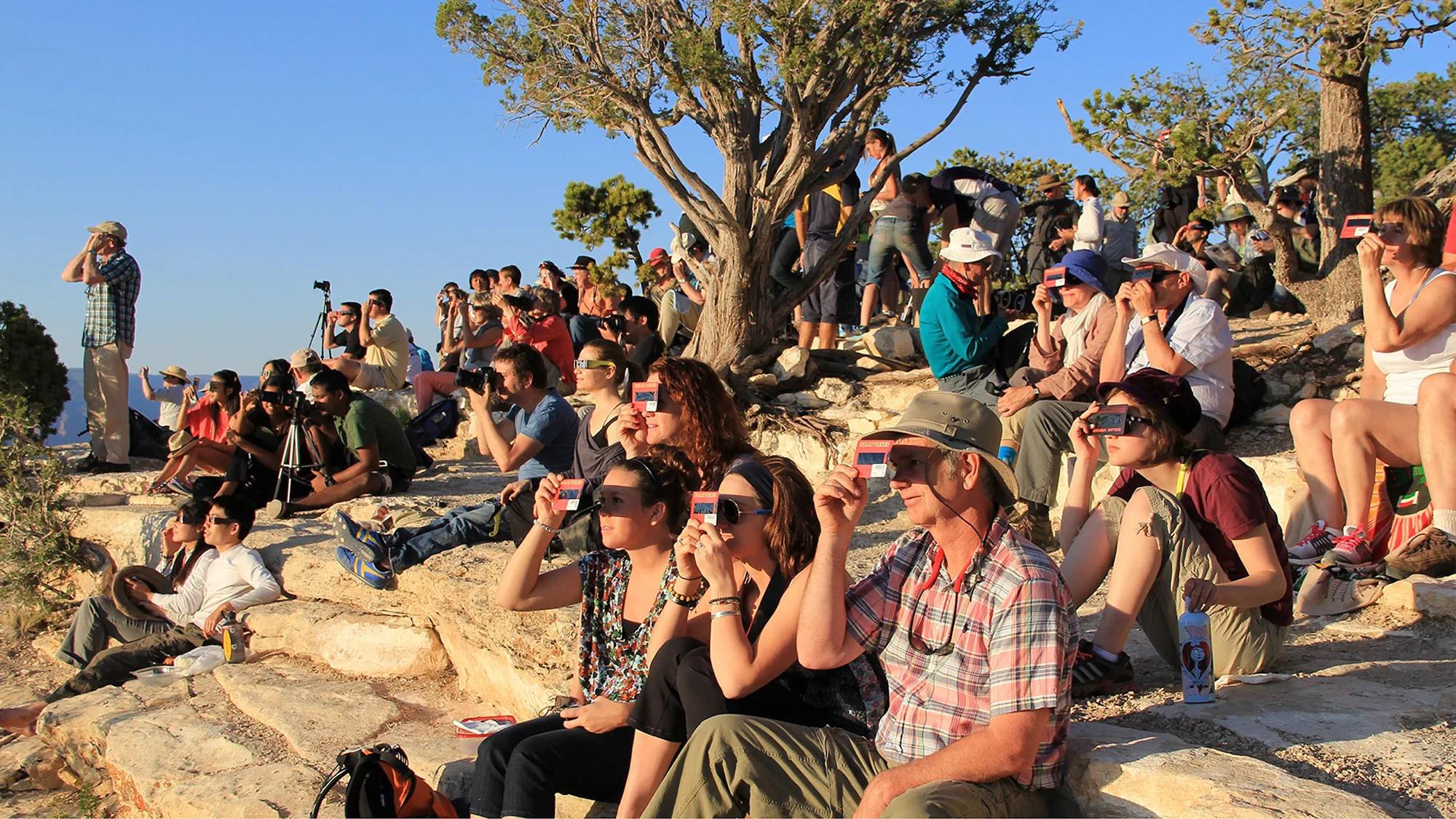
Build a simple heat and hydration plan
Start with the official forecast for the actual observing site, not the nearest famous city. Check the local heat-risk information and air-quality index again on eclipse morning. Hot conditions can coincide with ozone, particulate pollution or wildfire smoke, and those factors may change whether an outdoor plan remains appropriate—particularly if you have asthma or another condition affected by air quality.
Pack for regular, small opportunities to drink and eat rather than relying on a single large bottle at the end of the day. Water is usually the practical default, but your personal fluid needs and the role of electrolyte drinks should be discussed with your clinician if you have prolonged sweating, vomiting, a medical condition or instructions affecting sodium or fluid intake. Alcohol is not a hydration strategy.
Use physical cooling before you feel overwhelmed: move into shade, sit down, loosen unnecessary layers and use a cool damp cloth or water mist. Loose, breathable clothing, a broad-brimmed hat and broad-spectrum SPF 30 or higher sunscreen help with ordinary sun exposure. Remember that the Sun remains bright during the partial phases; an eclipse does not turn a hot, exposed site into shade for most of the afternoon.
Online labels can create false confidence. Pregnant solar eclipse heat standing outdoors nhs wording does not automatically mean a page contains current NHS advice, while pregnant solar eclipse heat standing outdoors reddit and pregnant solar eclipse reddit discussions are personal anecdotes rather than assessments of your health. Similarly, pregnant solar eclipse heat standing outdoors california and pregnant solar eclipse heat standing outdoors 2026 guide usa attach a location to the question, but local forecasts, air quality and clinical guidance still need to be checked directly. California summer heat advice also cannot simply be transferred to the August 12, 2026 totality path in Spain, Iceland or Greenland.
Pack for comfort, not endurance
A small, organized kit reduces the temptation to “push through” because the thing you need is back in the car. Share the load with your viewing partner.
Comfort and cooling checklist
- A supportive folding chair
- A sun umbrella or permission-compliant shade canopy
- Loose, breathable layers and comfortable shoes
- A broad-brimmed hat and sunglasses for general daylight
- Broad-spectrum SPF 30 or higher sunscreen
- Water and familiar snacks
- A cooling towel, damp cloth or water mister
- Any medications taken exactly as directed, stored according to their instructions
- Your clinician’s contact details and relevant local emergency number
- A charged phone, power bank and offline directions
- A light extra layer if the temperature is expected to fall around totality
Eclipse-viewing checklist
- Undamaged solar viewers that conform to ISO 12312-2
- A spare viewer kept dry and protected from scratches
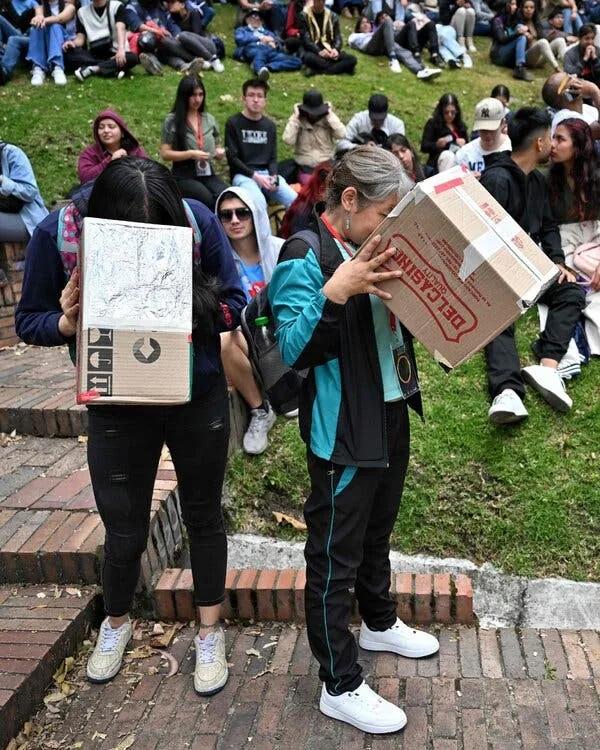
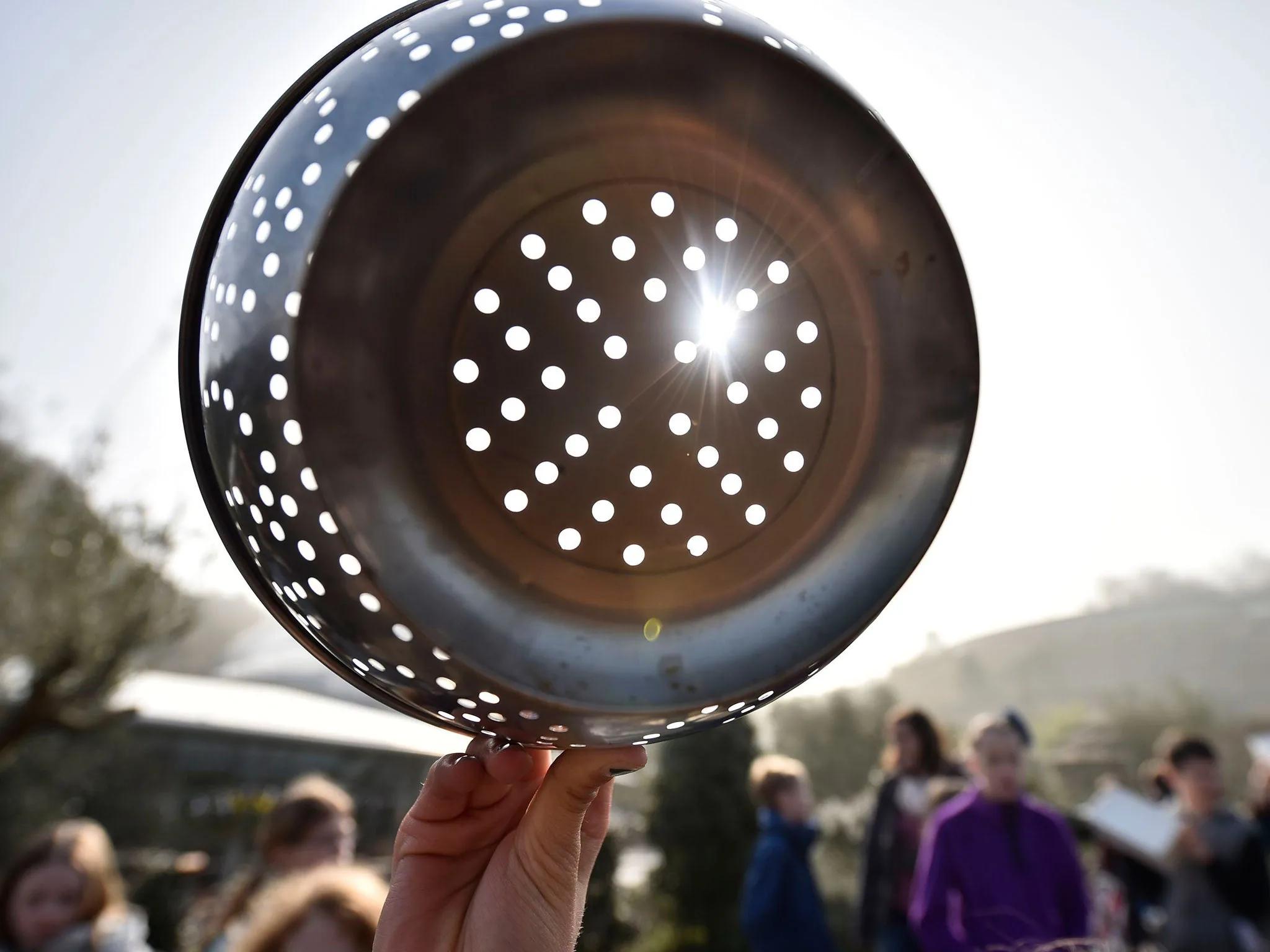
- A pinhole projector for relaxed indirect viewing
- The local eclipse timings saved as a screenshot
- A simple alarm before totality or maximum eclipse
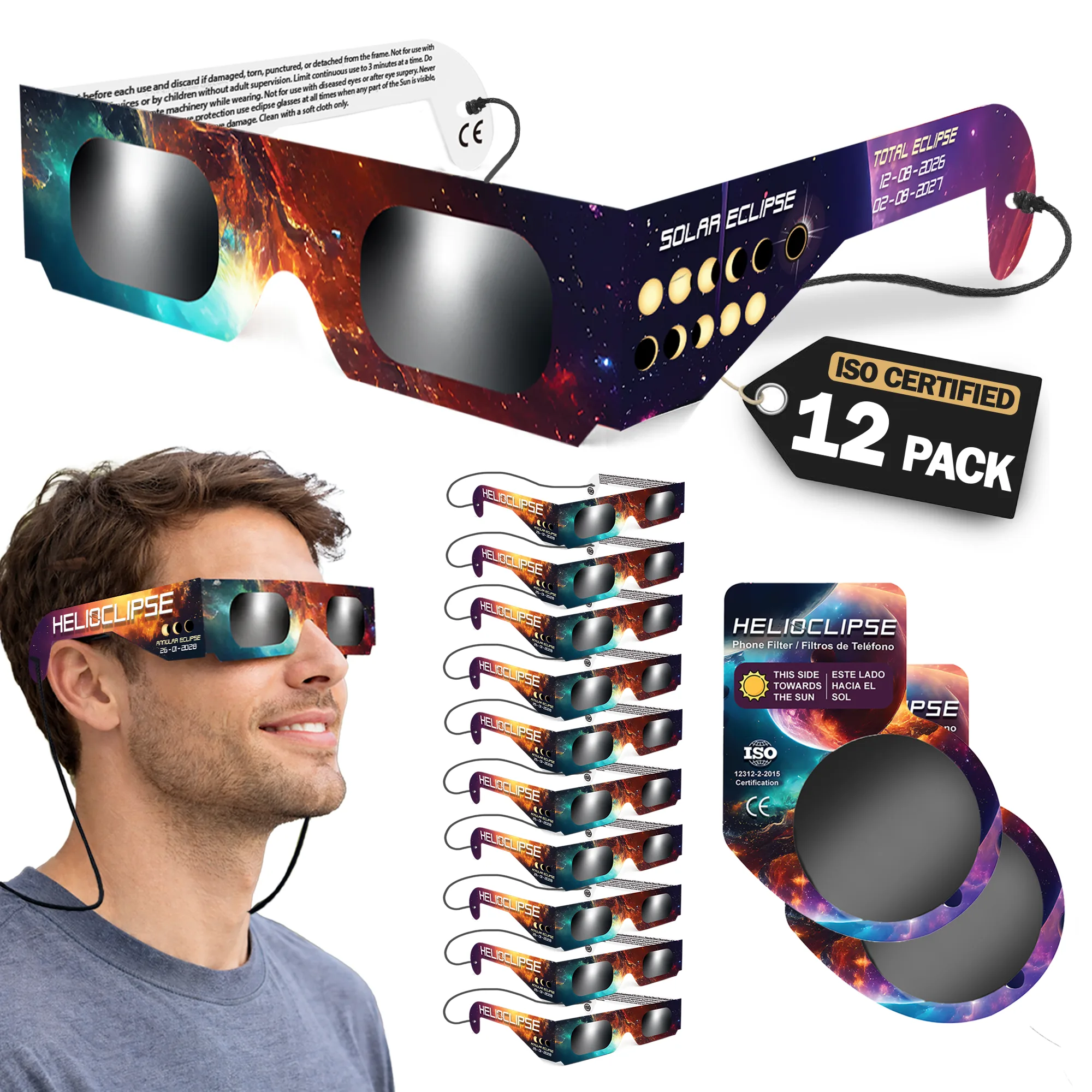
Shopping language needs care. Phrases such as approved solar eclipse glasses and eclipse glasses nasa approved can imply an endorsement that NASA does not provide to individual products. What matters is reliable sourcing, intact filters, clear instructions and conformity with ISO 12312-2. You can order Helioclipse solar eclipse glasses in advance rather than relying on last-minute stock; the relevant product description is solar eclipse glasses iso 12312-2 certified, not ordinary sunglasses with very dark lenses.
Inspect every viewer before the event. Discard it if the filter is scratched, punctured, torn or separating from its frame. Eclipse glasses are for direct, unaided viewing; they must not be placed behind binoculars, a telescope or a camera lens. Magnifying optics require a correctly fitted solar filter over the front and expert guidance.
Know when the glasses stay on
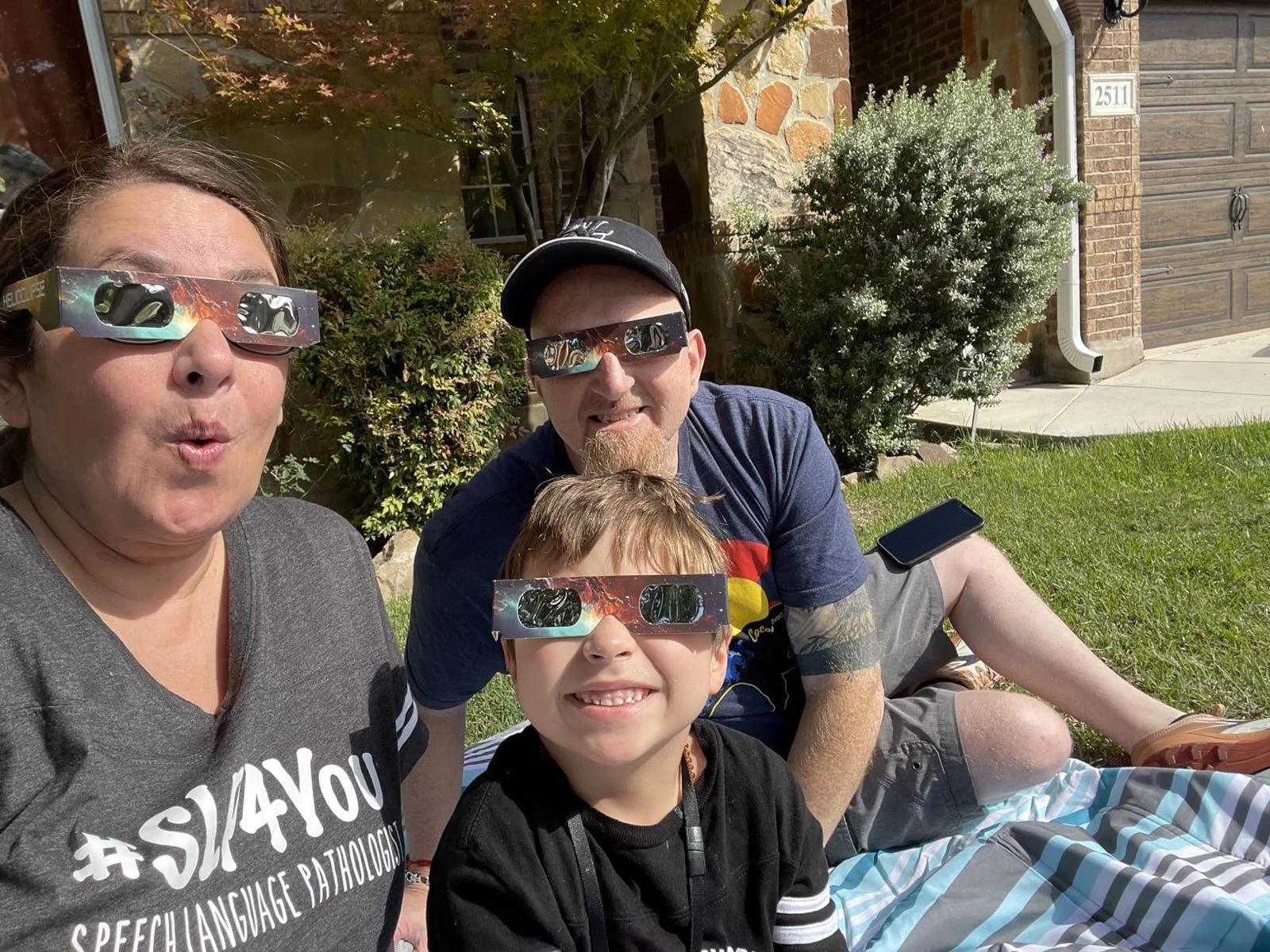
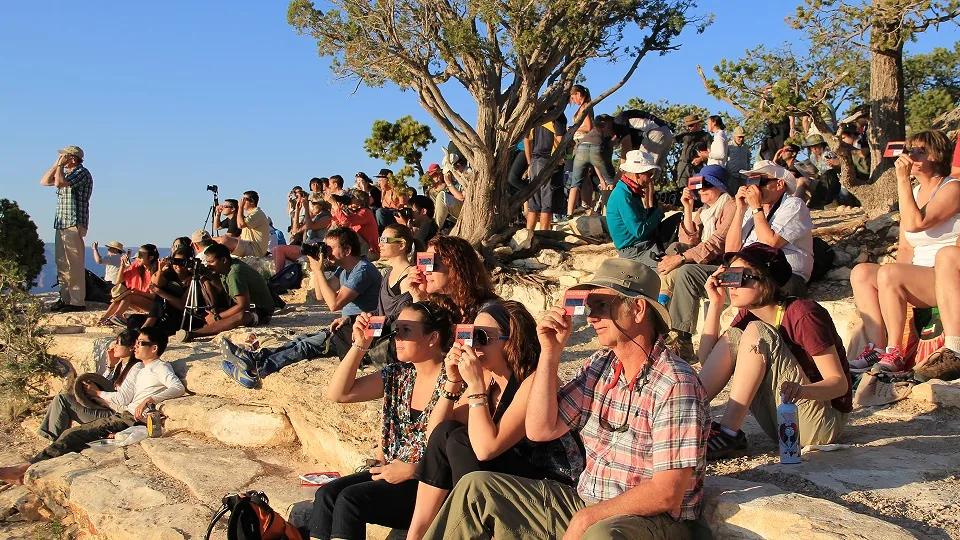
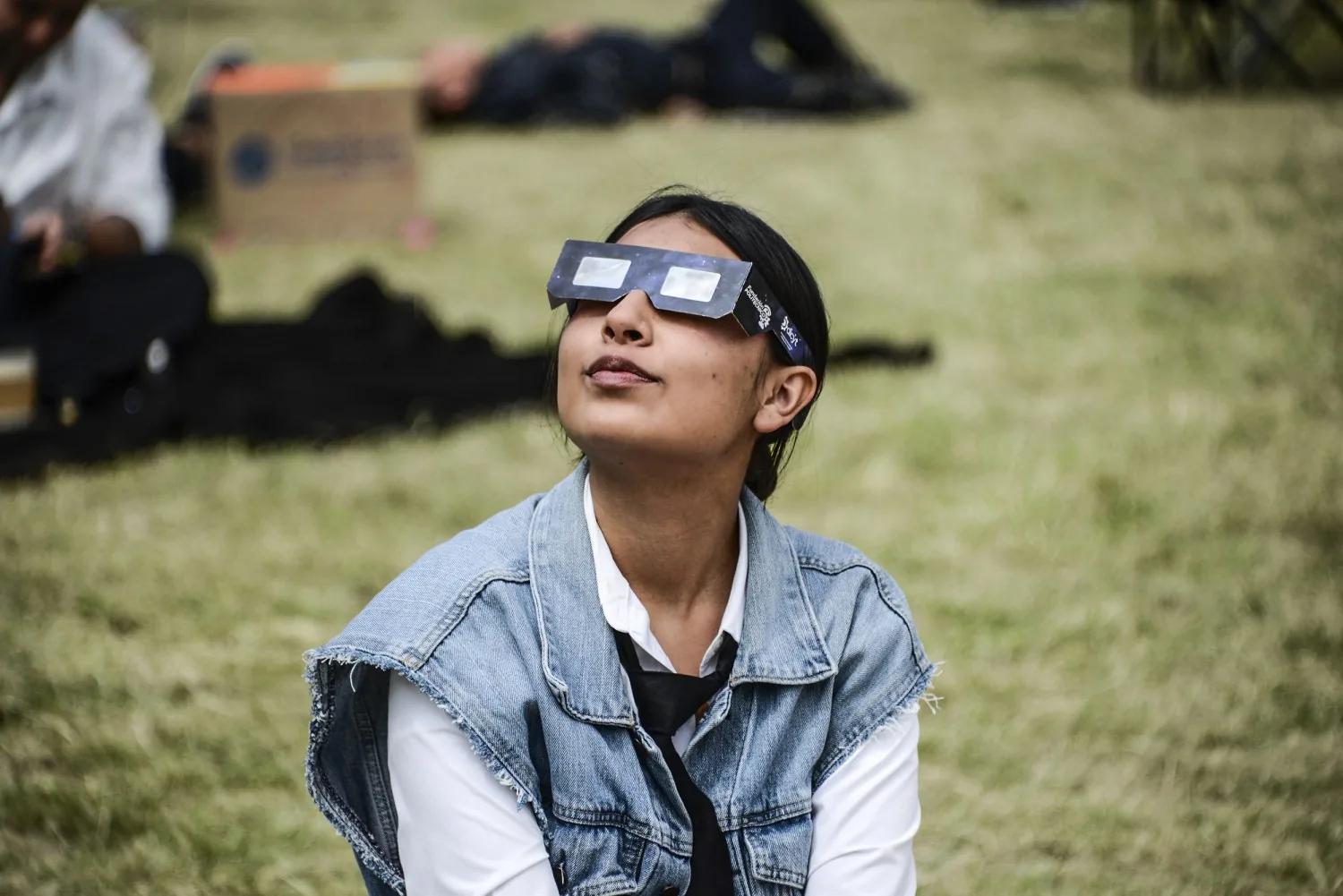
Pregnancy does not alter eye-safety rules. During every partial phase, look directly at the Sun only through a safe solar viewer. Ordinary sunglasses are not adequate, regardless of how dark they appear.
If—and only if—you are inside the path of a total solar eclipse, you may remove the viewer when the Moon has completely covered the Sun’s bright face and totality has begun. Put it back on as soon as any bright part of the Sun reappears. At a partial or annular eclipse, and at every location outside the path of totality, viewers stay on for every direct look.
The safest low-effort rhythm is to sit in the shade and take short, filtered looks every few minutes. The Moon’s movement will still be obvious. A pinhole projector also lets you follow the changing crescent with your back to the Sun, which can be more comfortable than repeatedly tilting your head upward.
Make the exit route part of the observing plan
An escape route is not pessimism. It is what allows you to enjoy the event without feeling trapped.
Park facing the exit if the venue permits it. Avoid placing chairs, coolers or a canopy where they will need a complicated breakdown. Keep essential medication, water, your phone and keys within reach rather than under several layers of luggage. If you are relying on a shuttle, confirm its operating hours and whether you can leave before the eclipse ends.
Crowds often begin moving immediately after totality, even though the final partial phase continues for roughly another hour in a typical total-eclipse sequence. That creates two possible strategies: leave before the surge if you need to, or remain seated in a comfortable place until traffic eases. The wrong strategy is discovering that your vehicle is blocked while you are already unwell.
Weather mobility also has limits. Experienced eclipse chasers may drive long distances to escape cloud, but a late, uncertain chase can replace a shaded, serviced site with roadside heat, traffic and no toilets. Decide in advance how far you are willing to move and what conditions cancel the move. Our guide to eclipse travel, crowds and backup plans for 2026 can help the whole group make that decision before emotions take over.
When to stop and when to call your clinician
Ask your clinician before eclipse day which symptoms or circumstances should change your plan, especially if your pregnancy is high risk, you have an underlying condition, you take medication that may affect heat tolerance or fluid balance, or you have been advised to limit activity. Personal instructions from your care team take priority over a general outdoor checklist.
Heat-related symptoms can include unusual sweating, muscle cramps, weakness, lightheadedness, headache, nausea, vomiting or a rapid heartbeat. The CDC’s pregnancy guidance also includes preterm contractions among symptoms that require attention. These signs are not a challenge to overcome so you can reach totality. Stop the activity, move to a cooler place, sit or lie down safely, and follow the action plan agreed with your clinician.
Contact your maternity team or clinician promptly if you develop symptoms they have told you to report, if symptoms do not improve with cooling and rest, or if you are uncertain about what you are experiencing. Use local emergency services for an emergency. Do not rely on an article, a group chat or another observer to diagnose the cause.
It is worth writing these thresholds down. In the excitement of an eclipse, “we will decide when we get there” often turns into waiting longer than intended.
Eclipse myths do not need to control your day
Pregnancy and an eclipse are linked by traditions in many cultures, but cultural meaning is not the same thing as medical evidence. A pregnant solar eclipse superstition may advise staying indoors, avoiding food, wearing a particular color or carrying an object. Pregnancy solar eclipse superstitions vary widely and sometimes contradict one another, which is a clue that they arise from tradition rather than a common physical effect.
An eclipse pregnancy superstition can still matter emotionally or within a family. You do not have to mock a relative’s concern, and you do not have to present folklore as clinical fact. A calm response is that solar eclipses do not emit a special form of harmful radiation: the eye hazard is the ordinary bright Sun, while the pregnancy-related planning issues are heat, comfort, exertion and access to care.
Discussions of pregnancy and solar eclipse spiritual meaning belong to personal belief, not medical risk assessment. If observing would create serious anxiety or family conflict, watching an official stream from a cool indoor space is a valid choice. Pregnancy and a solar eclipse should not become a test of courage, endurance or loyalty to either science or tradition.
A calm plan for August 12, 2026
The most useful pregnant solar eclipse heat standing outdoors 2026 guide usa readers can take from this event is not a promise that one plan fits everyone. The August 12, 2026 total eclipse does not cross the contiguous United States; the central path instead reaches areas including Greenland, Iceland and northern Spain, while a wider region sees a partial eclipse. Conditions and local clock times differ substantially across that route.
For readers traveling to Spain, the eclipse occurs late in the day, making a clear western horizon important while summer heat may still shape the afternoon. Iceland offers a very different weather problem: cooler, changeable conditions, wind and limited shelter at remote sites. In either setting, use the exact map pin for your accommodation or observing field rather than planning from a country-level description.
The same method applies to any event described broadly as pregnant solar eclipse heat standing outdoors: verify the phase and local timing, examine the walking route, check heat and air quality, identify shade and toilets, and preserve an easy exit. The spectacle is in the sky; the quality of your day is determined on the ground.
Safe Solar Eclipse Glasses? Three Ways To Spot A Dangerous ...
Astronomy Garage with Reflactor
Frequently asked questions
Can watching a solar eclipse harm my pregnancy?
No established medical mechanism shows that the Moon passing in front of the Sun harms a pregnancy. The practical concerns are the demands of a long outdoor day, such as heat, dehydration, prolonged standing, sun exposure, crowds, and limited access to rest.
Is it okay to attend an outdoor eclipse viewing event while pregnant?
It can be, but the decision should depend on the conditions and your individual health needs. Check the forecast, humidity, shade, air quality, walking distance, and access to water, food, toilets, cooling, and a place to rest; discuss pregnancy-specific limits with your clinician before choosing a remote or demanding site.
Are there special activities I need to avoid during a lunar eclipse while pregnant?
A lunar eclipse does not create a known pregnancy-specific hazard. Focus instead on ordinary outdoor risks, including heat, dehydration, prolonged standing, sun exposure, poor air quality, and being far from a comfortable place to rest.
How should I plan for an eclipse day if I am pregnant?
Plan around pacing and flexibility: allow time to sit, seek shade or cooling, eat and drink regularly, and leave if you need to. Consider the full day—including travel, queues, walking, and traffic—not just the few minutes of the eclipse’s peak phase, and ask your clinician about any personal medical limits.
Should I stay outdoors for the whole solar eclipse if I am pregnant?
Not necessarily. An eclipse can last hours from first contact to last, and early arrival, queues, and travel can make the outing much longer; choose a plan that lets you slow down, rest, get out of the sun, or leave without difficulty.
On-site next steps
- Open the Helioclipse Eclipse Explorer and save the phase times for your exact viewing location.
- Choose a site with seating, shade, toilets, water and a straightforward route back indoors or to your vehicle.
- Discuss personal heat limits, warning signs, medications and hydration questions with your clinician.
- Order ISO 12312-2 eclipse viewers from Helioclipse early, inspect them before use and pack a protected spare.
- Share the plan with your group—including the conditions under which you will shorten the day or leave.
Sources & further reading
- Clinical Overview of Heat and Pregnancy — CDC
- Summer Pregnancy Tips: Heat, Sun, and Swelling — University of Rochester Medical Center
- Eclipse Viewing Safety — NASA Science
- 25 tips to help you prepare for the total solar eclipse — Astronomy
- Solar Eclipse Climate & Weather Data — American Astronomical Society
- How to View a Solar Eclipse Safely — American Astronomical Society
- Eclipse Basics — American Astronomical Society
- Types of Solar Eclipses — NASA Science
- What to Expect: A Solar Eclipse Guide — NASA Science
- Heat and Health — CDC