Horses, herds, and eclipse day: calm handling beats folklore panic
An eclipse can turn an ordinary afternoon on a farm into something genuinely strange. The light thins, shadows sharpen, the air may cool, birds change their calls, and—inside the path of totality—daylight briefly collapses into deep twilight. Your horse may lift its head. Cattle may drift toward a gate or barn. Chickens may prepare to roost. Or the whole herd may continue grazing as if the Moon has failed to impress anyone.
That range of responses is normal. The useful lesson from veterinary and wildlife guidance is not that animals follow one dramatic eclipse script, but that they respond to changing environmental cues, familiar routines and the behavior of people around them.
This livestock animals solar eclipse behavior horses 2026 guide therefore begins with a reassuring point: the eclipse itself is less likely to cause trouble than an excited crowd, an unfamiliar dog, a flapping temporary sign, a blocked lane or a handler who abandons the usual routine at the most distracting moment. Use our Eclipse Explorer and 3D map to establish whether your property will experience totality or only a partial eclipse, then plan animal care around the actual local circumstances.
What animals may notice when daylight changes
How do animals behave during a solar eclipse? There is no single answer for every species, herd or individual. Animals can respond to light level, temperature, sound, wind and the behavior of nearby animals. During totality, the rapid onset of darkness may resemble an unusually abrupt dusk. Birds can quiet or head toward roosts, insects associated with evening may begin calling, and farm animals may move toward places connected with feeding, milking or night shelter.
NASA’s Eclipse Soundscapes work emphasizes that these responses remain a subject of research. Reports of birds falling silent, crickets chirping and bees returning to hives are valuable observations, but anecdotes do not establish a universal rule. Even animals of the same species may behave differently depending on time of day, housing, training, weather and previous disturbance.
The distinction between total and partial eclipse conditions matters. During a total solar eclipse, the Moon completely covers the Sun’s bright face for observers inside a narrow path. The resulting environmental shift can be strong enough to trigger dusk-like behavior. During a partial eclipse, some of the Sun remains visible, so daylight usually changes less dramatically. An annular eclipse also leaves a bright ring of sunlight exposed. The American Astronomical Society notes that animals settling as if night is falling is much more likely during totality than during annularity.
So, how do animals typically behave during a solar eclipse? Most display either no obvious change or a brief adjustment to the false dusk. A few may become alert, vocal, restless or inclined to follow an evening routine. That is a reason to observe and prepare—not evidence that mass panic is inevitable.
Horses read the whole scene, not an astronomical forecast
For horses, context often matters more than celestial geometry. A horse does not know that totality begins at a calculated instant, but it notices the owner walking differently, unfamiliar vehicles arriving, children running near a paddock, camera tripods beside a gate and neighboring animals calling. A reactive horse may respond to that combined scene before the light changes at all.
Keep the day recognizable. Use the horse’s normal feeding and turnout schedule unless your veterinarian or facility manager has a specific reason to change it. Decide in advance whether a particular animal is calmer in its regular field, stall or yard. There is no responsible blanket rule that every horse should be locked inside—or that every horse should remain outside.
Check permanent fences, gates, latches and electric-fence function well before visitors arrive. Remove loose tarps, dangling decorations and temporary objects that could flap or fall. Do not tether a horse to crowd-control fencing, a vehicle or any barrier that was never designed to hold an animal. If your horse is known to bolt, kick, crowd gates or become distressed by abrupt changes, discuss the plan with your veterinarian or an experienced equine professional familiar with that individual.
During the strongest light change, have a capable handler in a safe position if supervision is warranted. That does not necessarily mean standing inside a group of loose horses. It may mean observing from outside a secure paddock with a clear route away from the fence. Avoid introducing a new training exercise, transport routine or medication on eclipse day. Sedation is a veterinary decision, not an all-purpose eclipse precaution.
Herds may follow routine—or each other
Discussion of livestock and eclipse events often focuses on whether cattle, sheep or goats will suddenly stampede. That is not a useful default assumption. Herd animals frequently take cues from one another, and a movement toward shelter, a water point or a familiar gate can spread through the group without becoming panic.
The practical question is what happens if many animals arrive at the same narrow space. Make sure gateways are unobstructed, feeding areas are not creating unnecessary competition, and machinery is not parked where it constricts normal movement. If animals regularly return to a barn near dusk, a total eclipse may encourage that routine to begin early. Letting them encounter a closed or crowded entrance can create more agitation than the darkness itself.
A livestock solar eclipse plan should also account for working operations. Milking, feeding, veterinary treatment and loading may overlap with the event. If possible, avoid arranging a complicated movement through public viewing areas during maximum eclipse. Brief staff in advance so nobody has to choose between watching the sky and holding an unsecured gate.
For poultry, insects and other light-sensitive animals, a change in vocalization or roosting behavior may be especially noticeable. Treat it as an observation rather than a crisis. Once sunlight returns, many animals resume daytime activity quickly, although individuals may take longer to settle.
The 2026 eclipse: identify your property’s real exposure
The relevant date is August 12, 2026. The path of totality crosses Greenland, Iceland, northern Russia, the Atlantic, Spain and a small corner of Portugal. Much of Europe, northwestern Africa, most of Canada and parts of the United States will see a partial eclipse instead. A partial eclipse can still be visually impressive for people, but it does not reproduce the darkness of totality.
For a farm, stable or rural event in Spain, the difference between being inside and outside the totality path is fundamental. Properties in the totality corridor may experience a brief, pronounced false dusk, while places such as Madrid remain outside totality and see a deep partial eclipse. Our 2026 Spain path guide explains why the centerline, path edge and land beyond the path produce different experiences.
Do not use a country-level forecast as your operational plan. Enter the precise property or field location in the Helioclipse map and record whether it is inside totality, when the partial phases begin, when maximum eclipse occurs and when the event ends. If the location is within totality, note the predicted duration there. Recheck the plan with the local time zone clearly labeled; do not rely on a screenshot whose times may be displayed in UTC or another zone.
Will america see the solar eclipse in 2026? Parts of the United States and most of Canada will see a partial eclipse on August 12, while the path of totality does not cross the contiguous United States. Greenland, geographically part of North America, is crossed by totality. For animal management, the more important answer is property-specific: determine how much of the Sun will be covered and how large the local light change is expected to be.
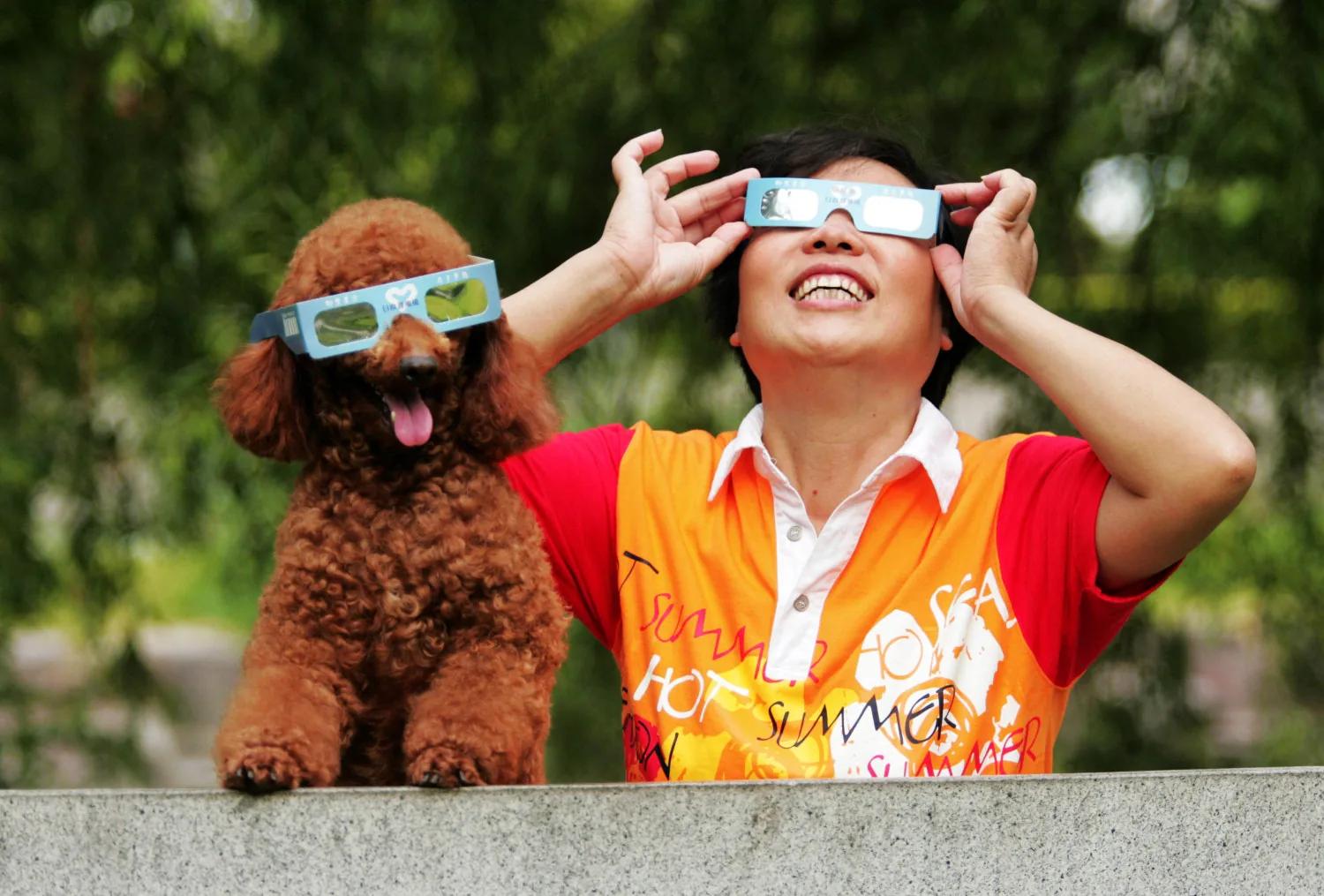
Animals do not need eclipse glasses
Eclipse viewers are designed for people who deliberately look toward the Sun. ISO 12312-2 applies to nonmagnifying, direct solar viewers intended to protect human eyes. It is not a standard for equine masks, livestock equipment, pet goggles, camera filters, binocular filters or veterinary devices.
Horses and other livestock do not normally stare at the Sun, and an eclipse does not give them a new reason to do so. Do not strap cardboard viewers made for human faces onto an animal. They may obstruct vision, slip, startle the animal or become something it tries to rub off. Keeping an animal indoors may be sensible for crowd control or because that individual is calmer there, but it is not necessary simply because the animal lacks ISO viewers.
The underlying biology still deserves accurate wording: direct solar viewing can injure an eye, whether human or animal. The practical difference is behavioral. People know an eclipse is happening and intentionally look up; livestock generally do not. Never force an animal to face the Sun for a photograph, and keep reflective or distracting equipment out of its space.
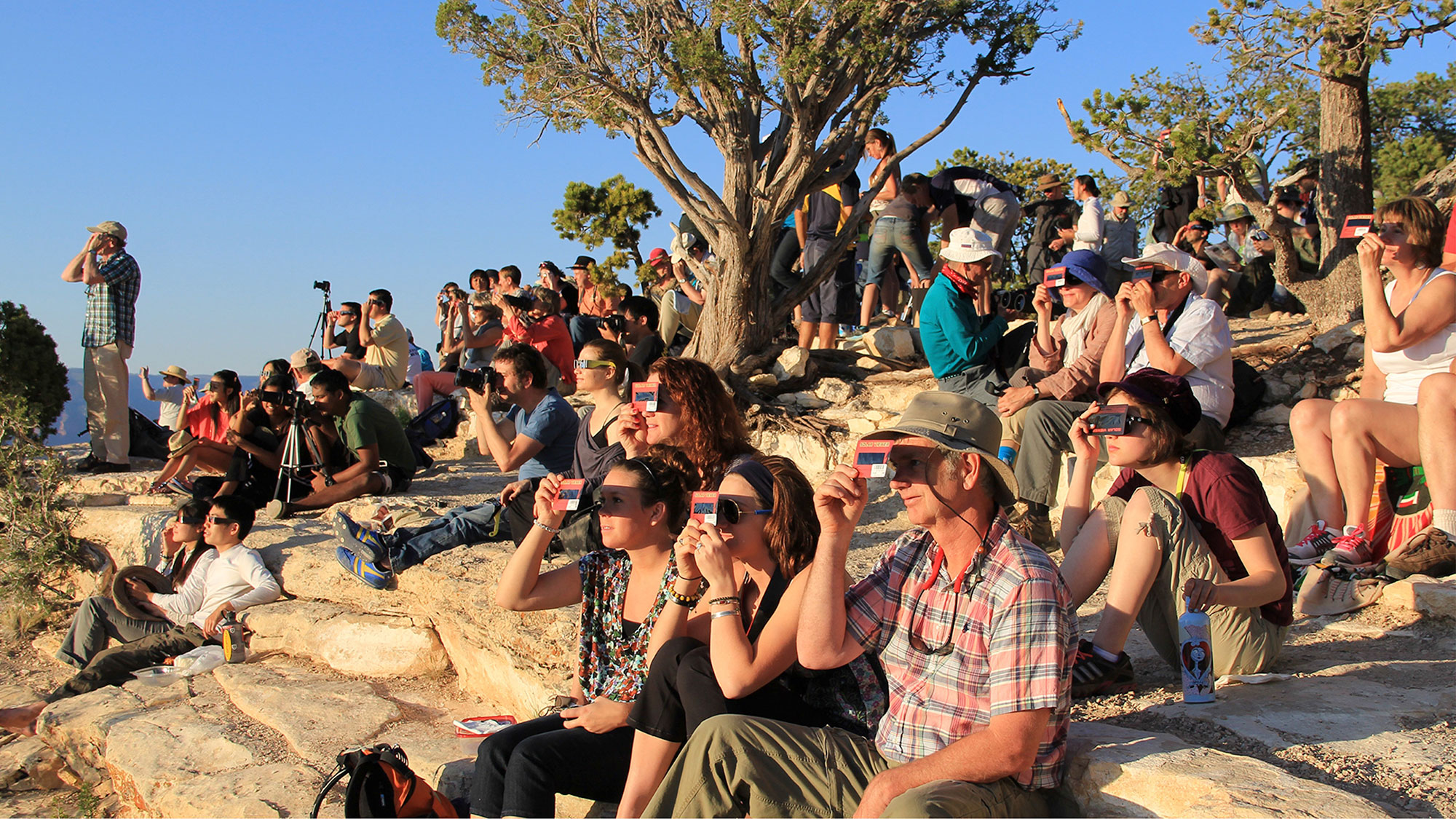
Humans absolutely do need suitable protection whenever any part of the Sun’s bright face remains visible. That includes every stage of a partial or annular eclipse and the partial phases before and after totality. Our guide to eclipse phases and when to use solar glasses gives first-time viewers a clear sequence to follow.
Visitors, vehicles and biosecurity are the bigger management challenge
A farm with a clear western horizon can suddenly look like a public viewing site, especially if friends, clients or neighbors hear about it. Decide early whether visitors are permitted, where they will park and which areas are completely off limits. Keep spectators away from handling alleys, feed storage, water supplies, electric fencing and gates that must remain accessible to staff or emergency vehicles.
Use a physical separation between the viewing group and animals. Ask visitors not to feed, touch or enter pens, even if the animals appear friendly. Children should remain with adults, and visiting dogs are best left at home unless the property has explicitly planned for them. A barking dog running a fence line is a much more plausible trigger for livestock agitation than the Moon’s shadow.
Apply the same biosecurity rules you would use for any gathering. Do not share buckets, brushes, halters or other equipment between visiting and resident animals. Avoid unnecessary nose-to-nose contact. Provide suitable footwear guidance or cleaning arrangements where local disease-control practice calls for them, and keep visitor vehicles out of animal traffic routes. Requirements vary by species, jurisdiction and current disease conditions, so consult your veterinarian, agricultural extension service and local animal-health authority.
Tell people the rules before eclipse day. A short message covering parking, arrival time, closed gates, toilets, dogs, smoking and animal-contact restrictions prevents hurried negotiations when the partial phase is already underway.
A calm eclipse-day checklist
A useful plan can fit on one page:
- Confirm the property’s eclipse type and local timing on a reliable map.
- Keep feeding, turnout, milking and other routines as familiar as practical.
- Inspect fences, gates, latches, water access and backup power where relevant.
- Remove loose or unfamiliar objects from animal areas.
- Assign animal supervision and gate responsibilities to named people.
- Separate viewing areas, parking and pedestrian routes from livestock operations.
- Tell visitors not to feed, touch or enter enclosures.
- Keep unfamiliar dogs and other animals away.
- Have veterinarian and emergency contact details available.
- Observe behavior without crowding, chasing or staging animals for photographs.
If you want to record what happens, write down conditions rather than relying on memory. Note the species, number of animals, housing, weather, approximate time, eclipse phase and what the animals were doing beforehand. “Three cows walked to the usual evening gate shortly before maximum eclipse” is useful. “All animals went crazy” is not.
Video or audio can capture changes in movement and vocalization, but place equipment before the event and outside animal traffic. Do not introduce drones, flashes or unfamiliar machinery to obtain a dramatic clip.
Folklore, human excitement and one famous horse
Does the eclipse affect people's behavior? It certainly changes what people do: they travel, gather, look upward, cheer, move equipment and alter normal schedules. There is no good evidence that the eclipse exerts a mysterious force that makes people or livestock irrational. On a working property, human excitement is simply another environmental variable to manage.
The odd question are all race horses related to eclipse? comes from a name collision, not eclipse science. Eclipse was a famous 18th-century Thoroughbred stallion, and his bloodline became highly influential. Many modern Thoroughbreds trace ancestry to him, but “racehorse” includes multiple breeds and traditions, so the literal claim that every racehorse is related to that one stallion is too broad. His name does not imply that astronomical eclipses alter equine temperament or performance.
The phrase livestock animals solar eclipse behavior horses covers several different questions that should not be collapsed into one myth: what changing light can cue, how an individual animal handles novelty, and how people should manage a busy property. Horses, herds, and eclipse day: calm handling beats folklore panic because preparation addresses the hazards we can actually identify.
What not to do
What should you not do during a solar eclipse? Around livestock, do not abandon open gates, move animals merely to create a better photograph, invite an unmanaged crowd into working areas or test an animal’s reaction with artificial noise and light. Do not assume unusual behavior is supernatural, but do not dismiss genuine distress either. Persistent sweating, trembling, escape attempts, breathing difficulty, injury or abnormal behavior after the event warrants appropriate veterinary attention.
For people, do not look directly at the partially eclipsed Sun through ordinary sunglasses. Do not use eclipse glasses behind binoculars, a telescope or a camera lens; concentrated sunlight can damage the viewer and your eyes. Optical equipment requires a correctly fitted solar filter over the front aperture and expert guidance.
Marketplace wording can also be misleading. Phrases such as eclipse glasses nasa approved suggest an endorsement NASA does not provide for individual brands. Instead, look for solar eclipse glasses iso 12312-2 certified from a responsible seller, inspect every viewer for damage and follow its instructions. Proper eclipse viewing glasses are for your family, staff and guests—not for your horses.
Frequently asked questions
What changes might livestock show during a solar eclipse?
Most animals show no obvious change or make a brief adjustment to the false dusk. Some may become alert, vocal, restless, or move toward familiar feeding, milking, or night-shelter areas, especially during totality.
Are racehorses connected to or uniquely affected by an eclipse?
No evidence in the excerpt suggests that racehorses have any special connection to eclipses. Horses, like other livestock, may respond differently based on light changes, routine, training, weather, and nearby disturbance.
Can an eclipse change how people behave around animals?
Yes. Excited crowds, unfamiliar dogs, blocked lanes, temporary signs, and handlers abandoning normal routines may be more troubling to animals than the eclipse itself. Calm handling and familiar routines can help limit unnecessary disturbance.
What should I avoid doing with horses or livestock during an eclipse?
Avoid creating extra disruption, such as bringing unfamiliar dogs near animals, blocking access routes, or changing normal handling routines at a distracting time. Plan care around local eclipse conditions and keep the environment calm and predictable.
Do all animals react the same way when the sky darkens during an eclipse?
No. Animal responses vary by species, herd, individual, housing, time of day, weather, training, and previous disturbance. Dusk-like behavior is more likely during totality, while a partial eclipse usually produces a less dramatic change in daylight.
On-site next steps
- Check your exact stable, pasture or event location with the Helioclipse Eclipse Explorer. Record the local phases, maximum eclipse and whether totality occurs there.
- Share the animal-management and visitor rules with staff, family and guests well before August 12, 2026.
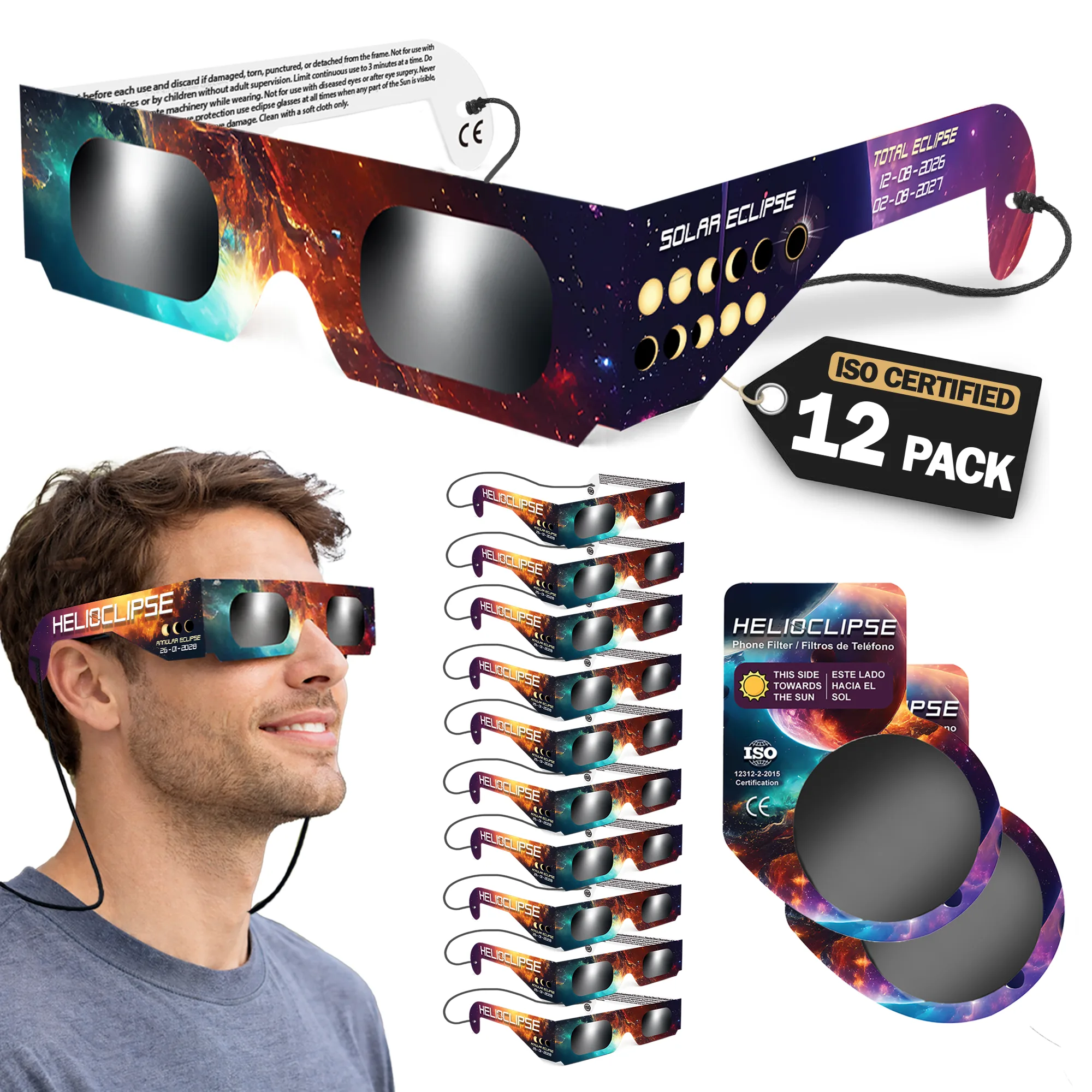
- Once the site plan is settled, order enough Helioclipse solar eclipse glasses for the people who will be watching. Inspect them before use and keep them away from moisture, scratches and animal mouths.
Sources & further reading
- Animal Behavior During Solar Eclipses: What to Expect — Texas A&M Veterinary Medicine
- Wildlife Behavior and a Solar Eclipse — U.S. Fish and Wildlife Service
- Sense the Solar Eclipse with NASA’s Eclipse Soundscapes Project — NASA Science
- Phenomena You’ll Experience at a Total or Annular Eclipse — American Astronomical Society
- Can Your Pet Go Blind from the Solar Eclipse? — Space.com
- How to View a Solar Eclipse Safely — American Astronomical Society
- About the ISO 12312-2 Standard for Solar Viewers — American Astronomical Society
- Eclipse Viewing Safety — NASA Science
- Eclipse Basics — American Astronomical Society
- Eclipses — NASA Science