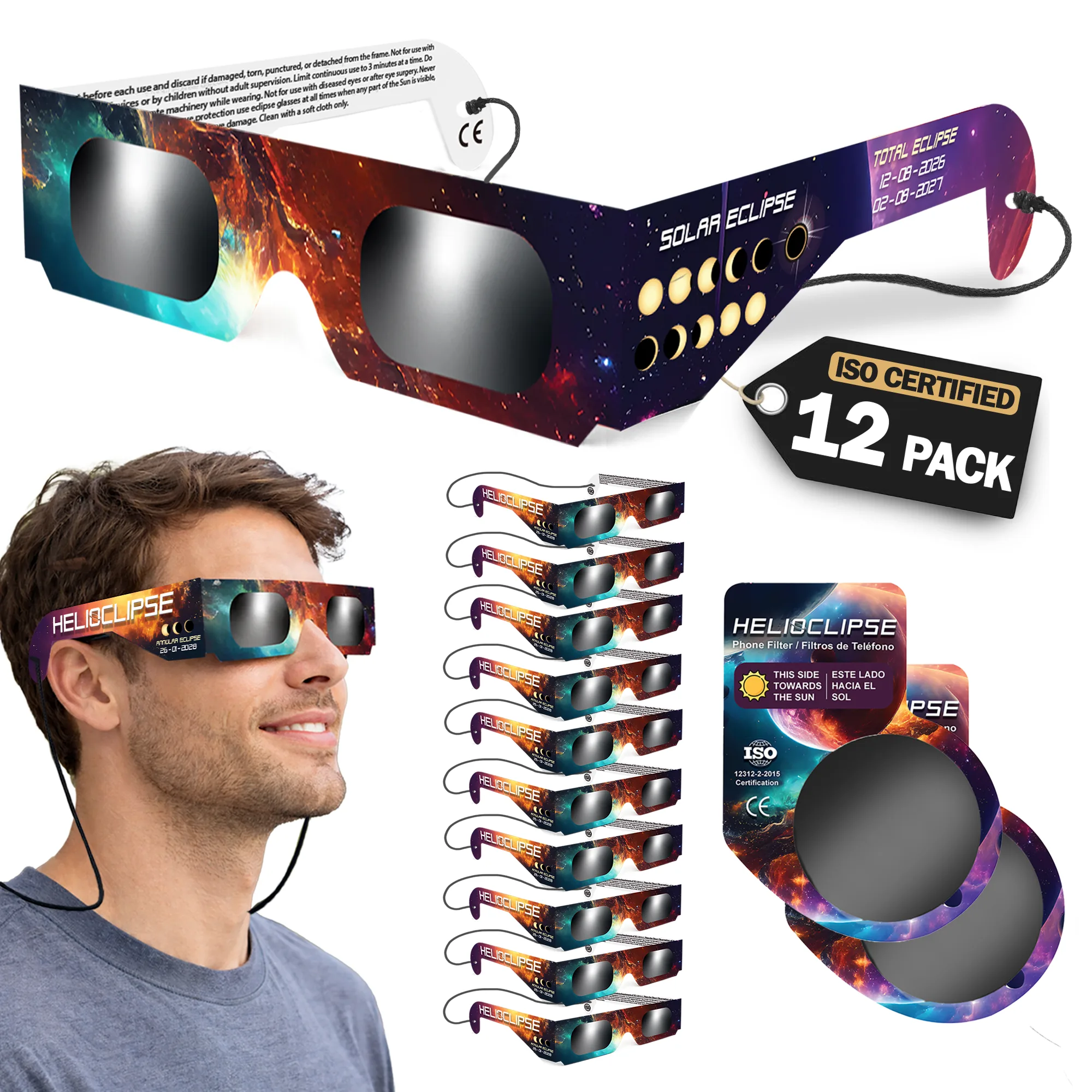
Schools and groups: organizing a safe eclipse viewing plan
A solar eclipse can be one of the best science days a school ever has. It turns the sky into a live lesson in motion, light, geometry, and careful observation. But an eclipse event also asks adults to do something very specific: make the experience exciting without letting the excitement outrun the safety plan.
That is the heart of a good school eclipse viewing group strategy. You are not just handing out glasses and hoping for the best. You are planning supervision, timing, distribution, backups, and a simple script that every adult can follow. If you are already thinking ahead to the Helioclipse Eclipse Explorer / 3D map or deciding when to shop eclipse glasses, you are on the right track: the safest group events are the ones organized early, not improvised the week before.
For teachers, district staff, museum educators, scout leaders, camp directors, and family organizers, the goal is straightforward. We want students and participants to remember the crescent Sun, the strange daylight, the shared reaction, and the science behind it — not confusion about when to look, what to wear, or whether the viewers were trustworthy.
Start with the one rule nobody should have to guess
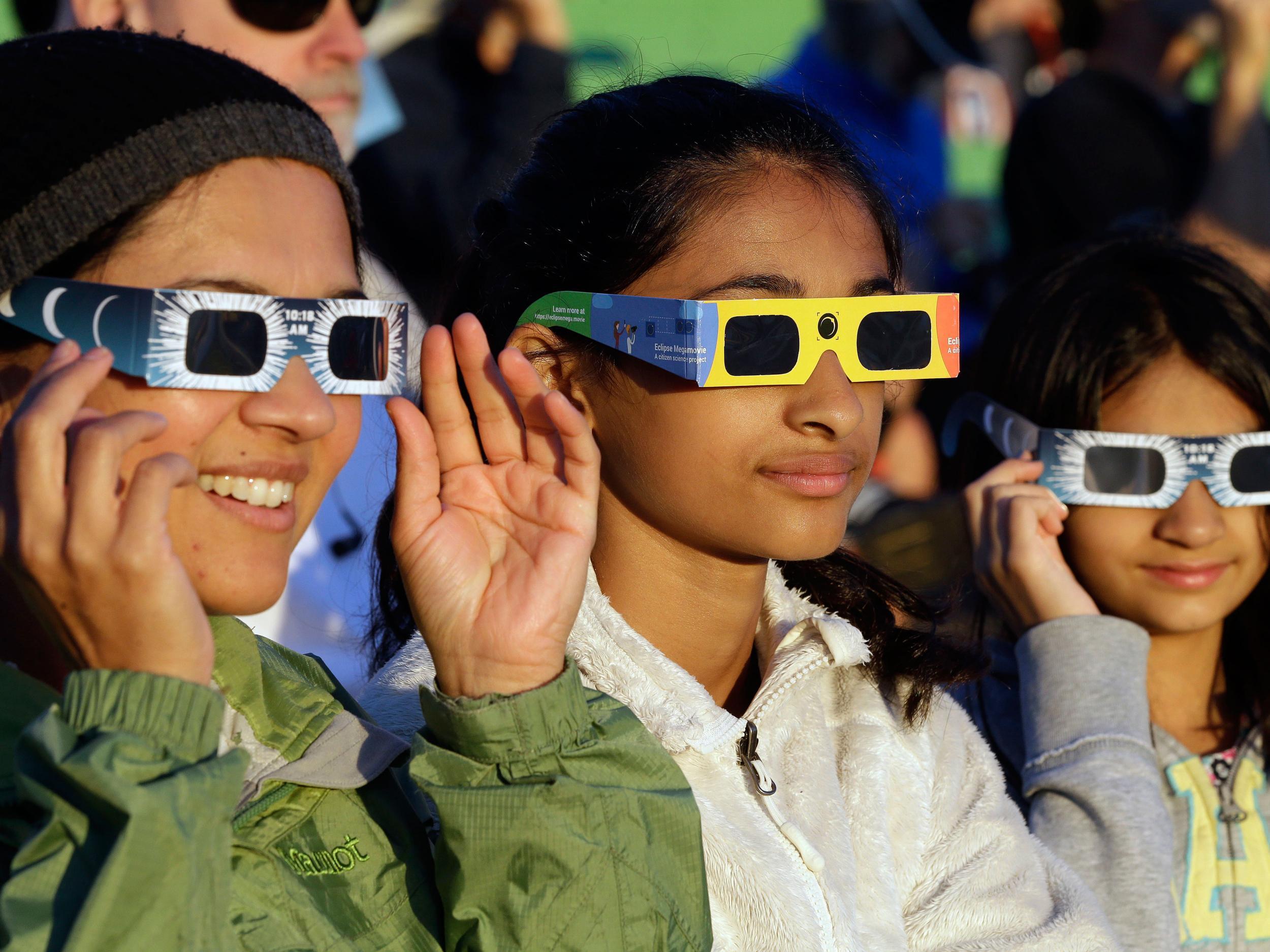
For any partial solar eclipse, and for the partial phases before and after totality in a total solar eclipse, direct viewing requires proper solar filters. That means eclipse safety glasses or handheld solar viewers that conform to ISO 12312-2. Ordinary sunglasses are not close to good enough.
NASA and the American Astronomical Society are both very clear on this point: outside the brief total phase of a total solar eclipse, it is not safe to look directly at the Sun without specialized solar viewing protection. That distinction matters enormously in group settings, because many adults have heard a simplified version of eclipse advice and may not realize that “glasses off” applies only during true totality, only inside the path of totality, and only for those few minutes when the Sun’s bright face is completely covered.
If your event is outside totality, there is no “safe quick peek” without protection. If your event is inside totality, your staff still need a script for exactly when viewers stay on and when they may come off. We explain that in more detail in When glasses on, when glasses off: eclipse phases explained for first-time viewers.
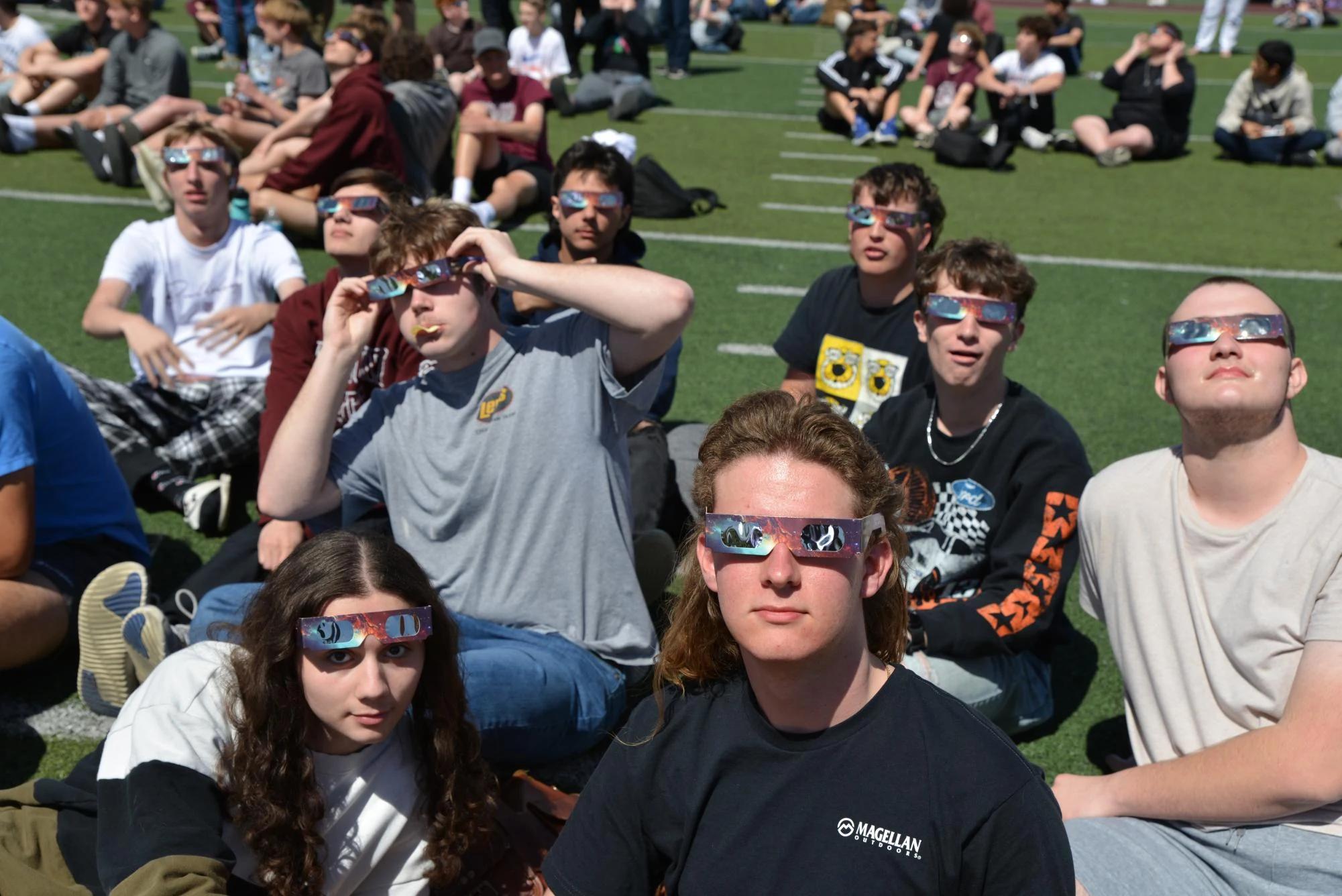
This is where many group plans fail: adults assume the rule is obvious, but students hear five different versions. A good eclipse school briefing uses one sentence, repeated consistently: If any bright part of the Sun is visible, viewers stay on.
Build the plan around supervision, not just supplies
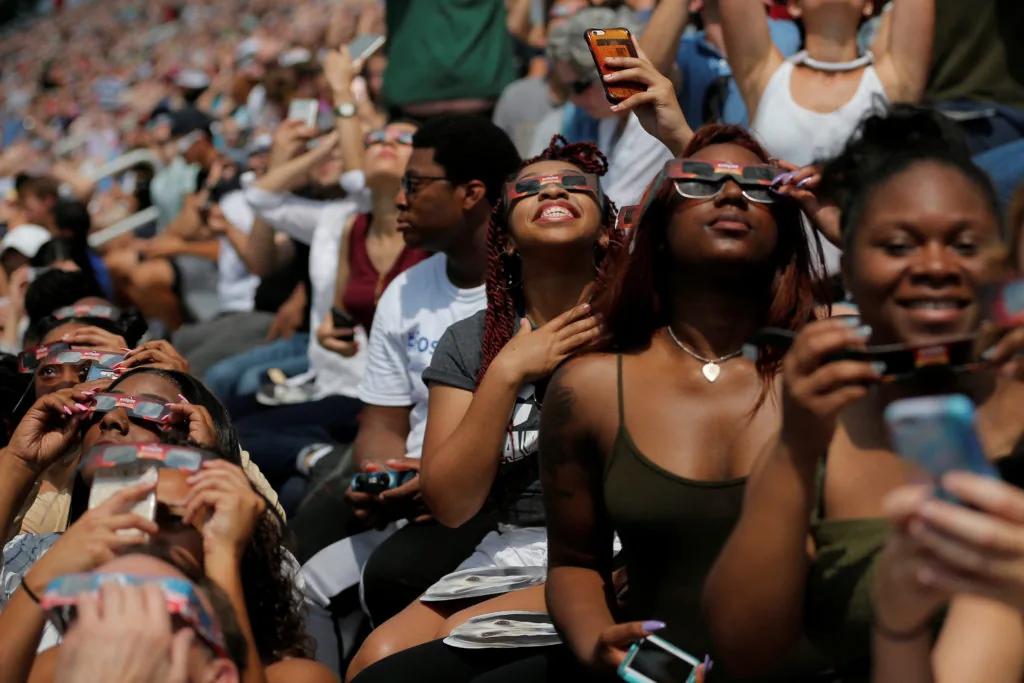
The phrase group safety, supervision, and distribution of viewers—education eclipse plannin may sound like internal logistics language, but it is exactly the right mindset. The safest event is not necessarily the one with the fanciest equipment. It is the one where every adult knows their role.
For most schools and organized youth events, we recommend assigning four simple functions:
1. A lead coordinator
This person owns the schedule, weather calls, and final go/no-go decisions for moving outdoors. They should know the local eclipse timing well enough to say when the partial phase begins, when maximum eclipse occurs, and whether totality is even relevant at your location.
2. Adult supervisors by small zones
Instead of one large crowd, divide students into smaller groups with named adults. A class, homeroom, scout patrol, or camp cabin structure works well. Supervisors should be close enough to notice damaged viewers, horseplay, or students trying to share one pair while looking up at the same time.
3. A viewer distribution lead
This person handles counting, inspection, and replacement. They should know which viewers are reserved, which are extras, and what to do if a pair is bent, scratched, punctured, or separating from its frame.
4. An indirect-viewing station lead
Not every participant needs to stare continuously through a viewer. In fact, the AAS notes that eclipse progress is slow enough that brief glances every few minutes are enough to notice change. That makes projection stations, tree-shadow observation, and pinhole activities especially useful for large groups.
In other words, a strong eclipse school plan is really a supervision plan with astronomy attached.
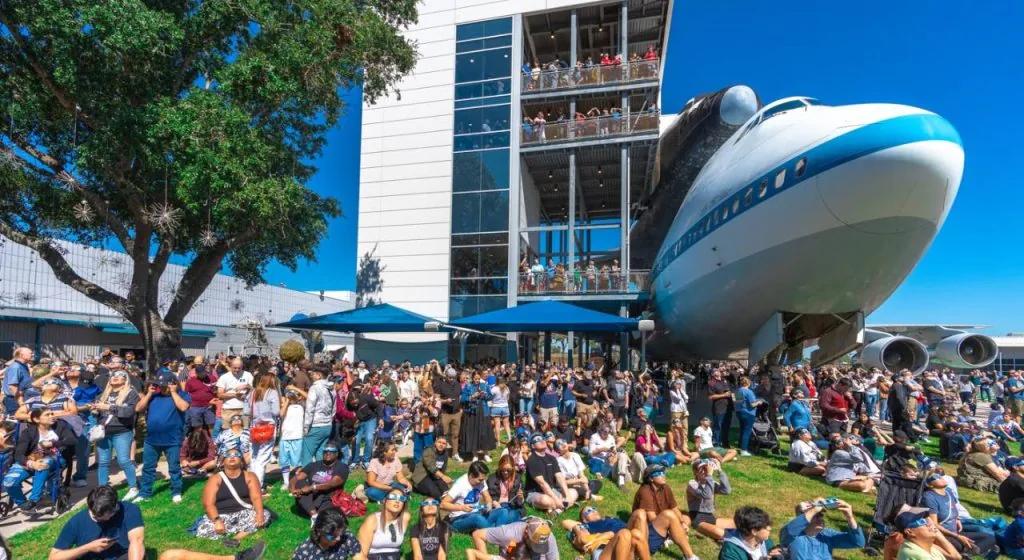
Buy viewers like a cautious institution, not an impulse shopper
Schools often ask the same practical question: what exactly should we order? The answer starts with sourcing, not branding language. NASA explicitly says it does not approve any particular brand of solar viewers. What matters is that the viewers conform to ISO 12312-2 and come from a trustworthy source.
That is why schools should be careful with phrases that sound reassuring but are often used loosely in online marketplaces. You will see shoppers look for approved solar eclipse glasses, solar eclipse glasses iso 12312-2 certified, or bulk solar eclipse glasses. Those phrases point toward the right category of product, but the wording alone on a package is not enough. The AAS warns that anyone can print an ISO claim; what matters is whether the product can be traced to a reputable manufacturer or authorized seller and whether the viewers are in good condition when they reach you.
For a school order, treat viewers the way you would treat lab safety supplies: document the source, order early, inspect on arrival, and keep them stored clean and dry until event day. If you are buying for a district, museum, library, or camp, our solar eclipse glasses shop is the natural place to start, especially if you need a clean bulk workflow rather than a last-minute scramble.
If you want the standards background for staff or procurement teams, see ISO 12312-2 and eclipse viewers: what the standard means for your family. It is useful reading before anyone signs off on a large order.
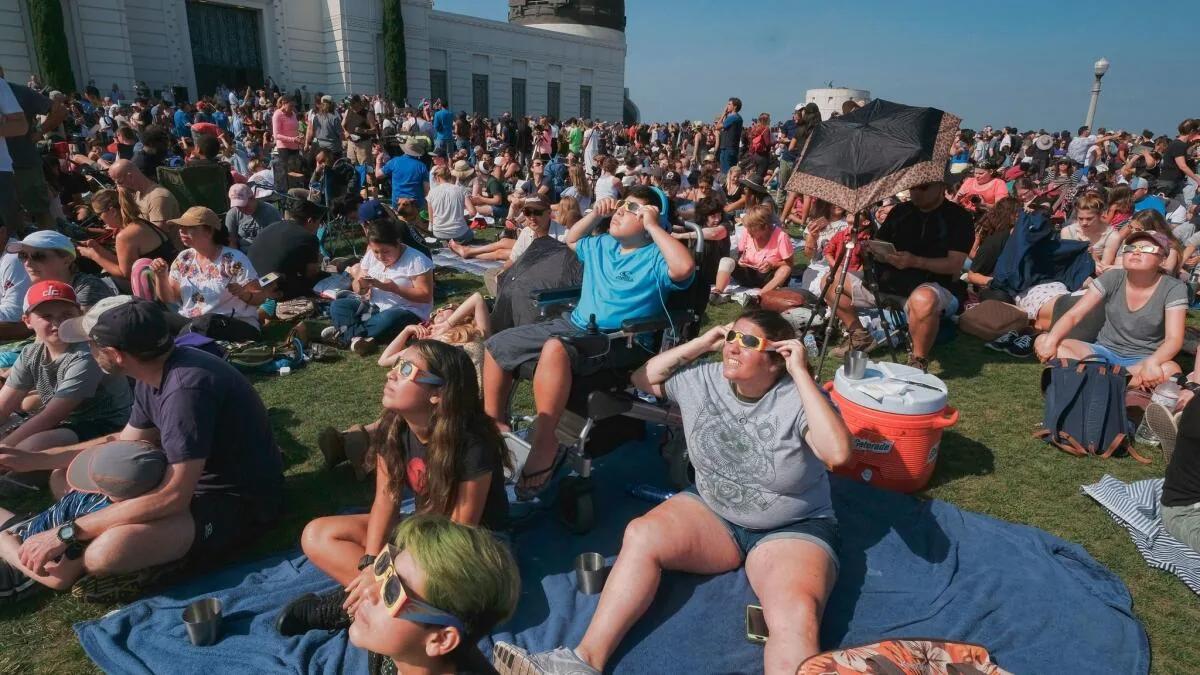
Inspect every viewer before the event day rush
A school event gets safer when inspection happens before students are outside. Do not wait until the Sun is already high and everyone is excited.
NASA and the AAS both advise checking viewers for damage. Discard any pair that is torn, scratched, punctured, coming loose from the frame, or otherwise compromised. The AAS also offers a practical reality check: indoors, you should not be able to see normal room details through proper eclipse viewers, except perhaps very bright lights appearing faint. Outdoors, you should not suddenly see the world as if through dark sunglasses. If a viewer behaves like ordinary tinted eyewear, do not use it.
For schools, that means creating a short inspection routine:
- Open boxes early, not on the playground.
- Spot-check random samples from each carton.
- Remove damaged units immediately.
- Keep a reserve supply for replacements.
- Brief staff that “looks dark” is not the same as “safe for the Sun.”
This is also the moment to stop myths before they spread. Eclipse glasses nasa approved is a phrase people say all the time, but NASA does not certify brands one by one. What NASA does provide is safety guidance: use proper solar viewers, inspect them, supervise children, and never use them with binoculars, telescopes, or cameras unless those devices have their own proper front-mounted solar filters.
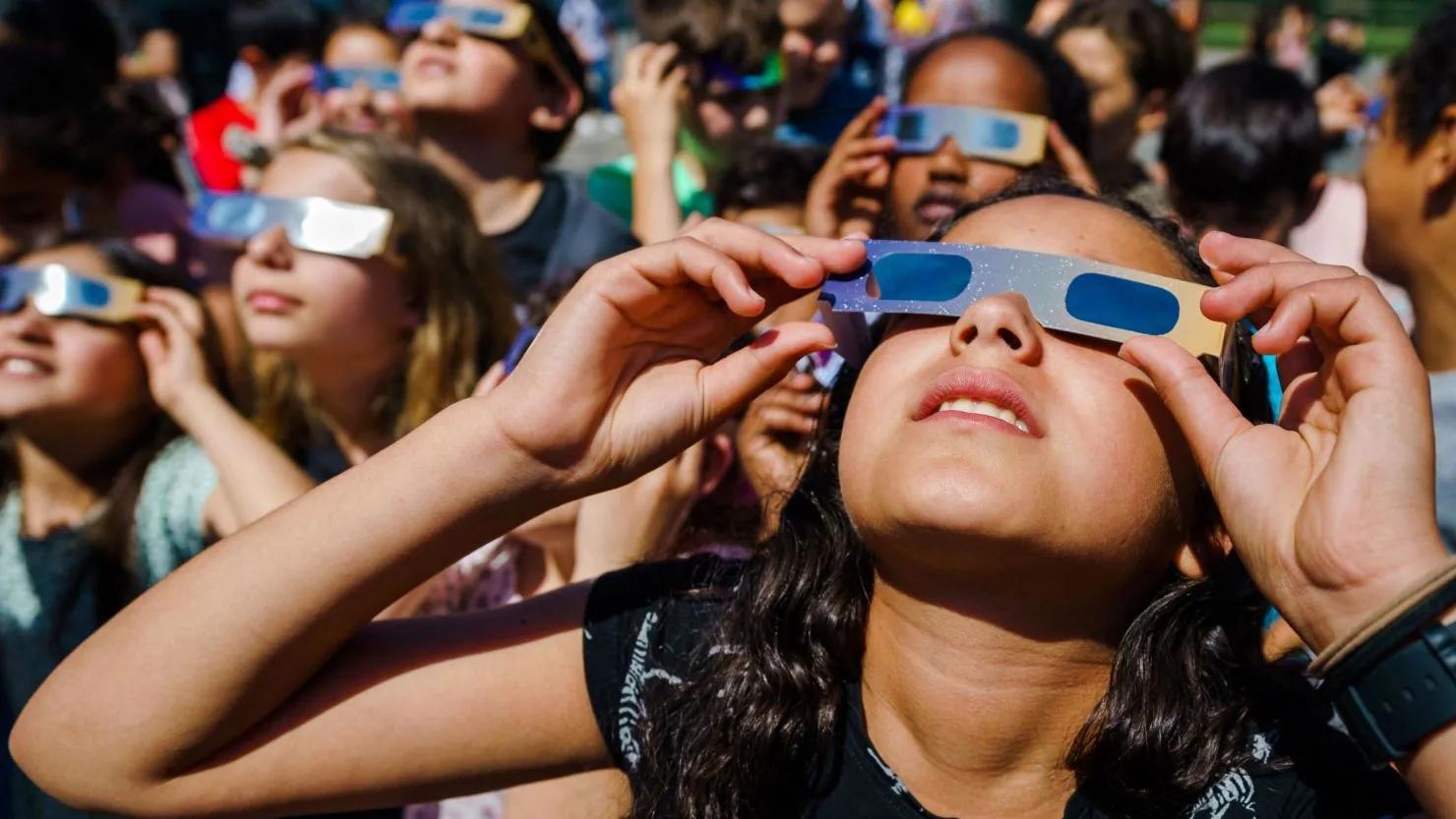
Decide whether every student needs a pair
This is where group planning gets interesting. The answer depends on your format.
If you want every student to have repeated direct-viewing opportunities at their own pace, then yes, one pair per participant is the cleanest option. It reduces sharing confusion and speeds up supervision.
But the AAS also makes an important point for large groups: not everyone needs to look continuously. The eclipse changes slowly enough that brief looks every few minutes are enough to appreciate the Moon’s motion across the Sun. That means a school can safely combine direct viewing with shared indirect methods.
For example, a middle school event might rotate students through:
- a direct-viewing line with supervised viewers,
- a pinhole projection table,
- a tree-shadow observation area,
- a teacher-led explanation station,
- and an indoor follow-up room showing an eclipse video middle school class can discuss afterward.
That kind of rotation is often better than 300 students all trying to look up at once.
For younger children, indirect viewing may deserve more time than direct viewing. They still get the science, the atmosphere, and the memorable shape of the crescent Sun, while adults keep the risk lower and the pace calmer.
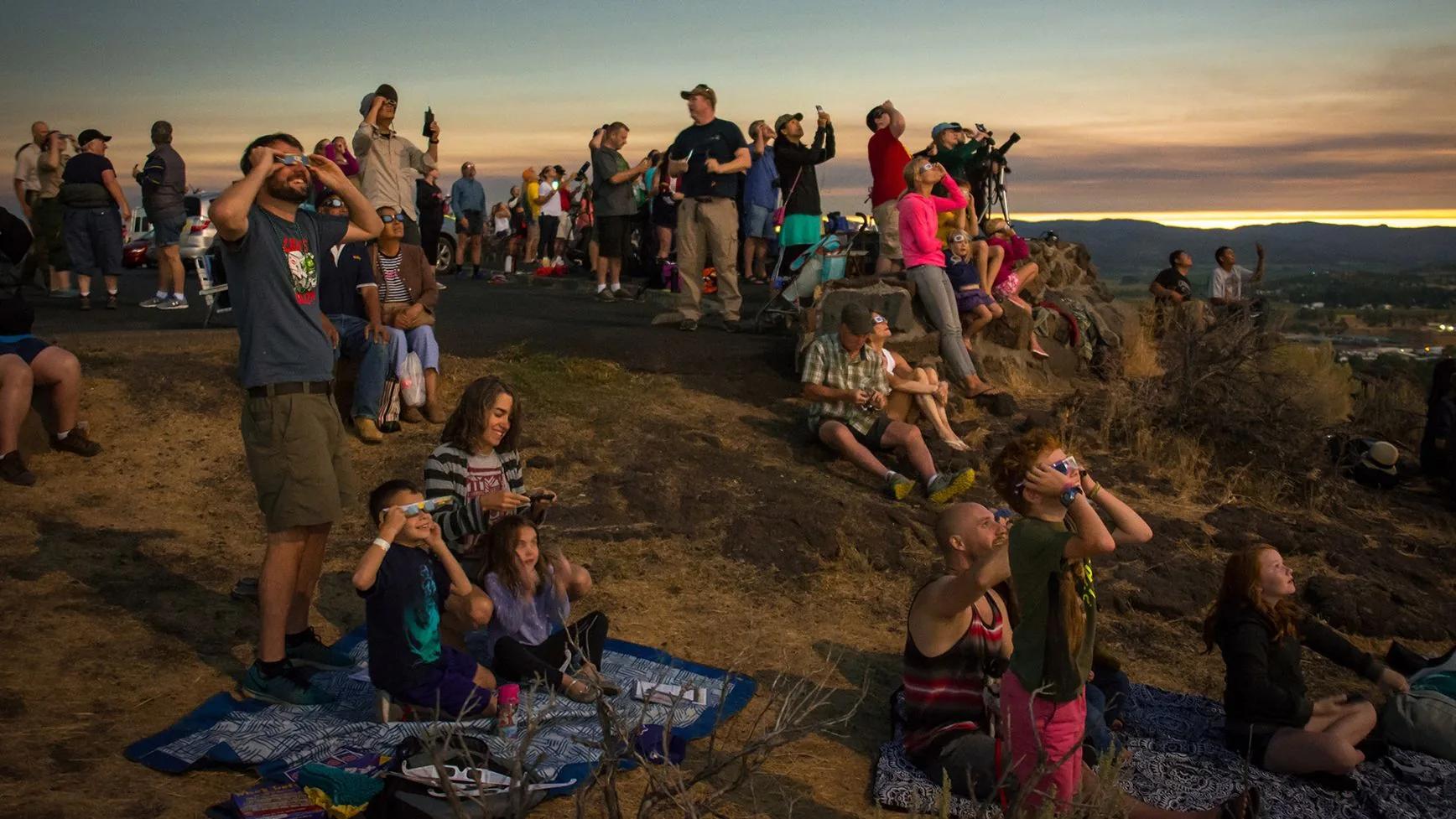
Use indirect viewing as a feature, not a consolation prize
A lot of organizers treat pinhole projection as the backup for people who forgot glasses. That undersells it.
Indirect viewing is one of the best teaching tools in a group event because many people can see the effect at once. AAS guidance highlights simple methods: a pinhole in a card, crossed fingers making a waffle pattern, or the tiny gaps between leaves projecting crescent Suns onto the ground. These are not gimmicks. They are elegant demonstrations of how light travels.
For schools, indirect viewing has three big advantages:
First, it scales. One station can serve many students.
Second, it lowers pressure. Students do not feel they must keep looking up to “catch” something every second.
Third, it turns the whole environment into the lesson. The ground under a leafy tree can become a field of little crescents. That is the kind of image students remember years later.
If your staff includes experienced astronomy educators with proper equipment, optical projection can also work well for group viewing. But the AAS is careful here: projection with binoculars or telescopes should only be done by experienced users who remain with the equipment at all times. In a general schoolyard setting, simple pinhole methods are usually the safer choice.
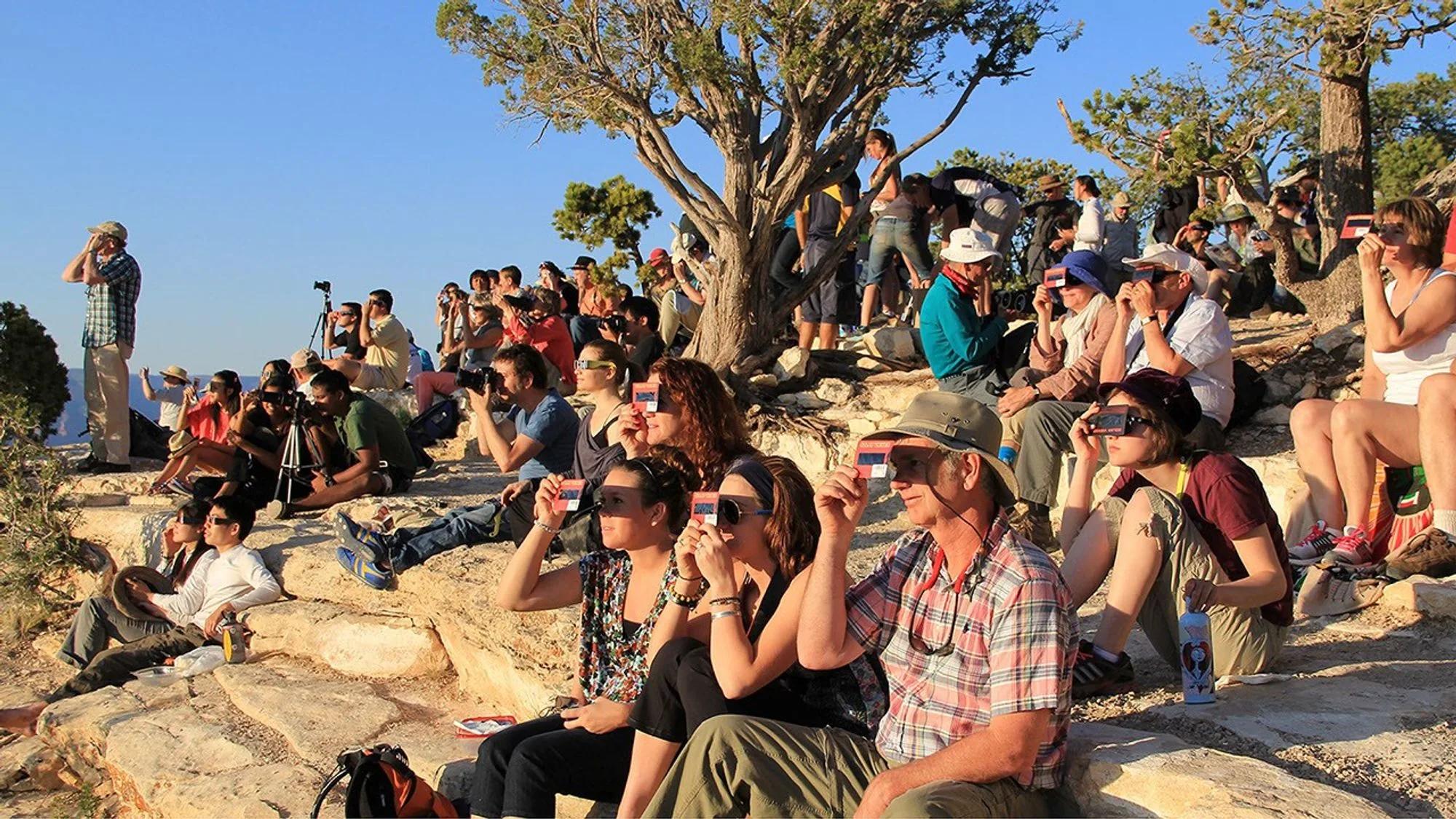
Write a script for adults, because excitement makes people improvise
The most useful thing you can hand staff is not a long memo. It is a one-page script.
Here is the version we would use for a typical school or youth event:
- Keep viewers on before looking up.
- Look briefly, then look away before removing viewers.
- Do not trade viewers while looking at the Sun.
- Do not use damaged viewers.
- Do not use viewers with cameras, binoculars, or telescopes.
- If any bright part of the Sun is visible, viewers stay on.
- If you are not in totality, viewers never come off for direct viewing.
That script matters in elementary school, but it matters just as much in eclipse high school settings. Teenagers are more independent, more likely to bring their own gear, and more likely to experiment. They need the same clarity, not less.
It also matters for adults who think they already know the rules. Every eclipse cycle brings a wave of half-remembered advice from previous events, social media clips, and old classroom materials. A clean script keeps the event from drifting into “I heard it was fine for a second.”
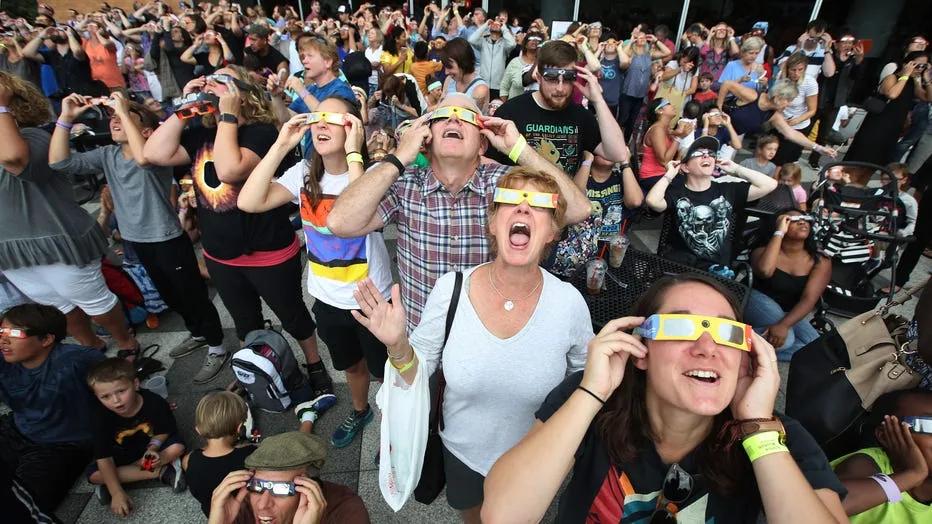
Plan the site like a crowd manager and a science teacher
The best places and timing for school eclipse viewing group events are not always the most dramatic-looking locations. They are the places where you can supervise well, keep sightlines open, and move people safely.
For most schools and community groups, the ideal site has:
- a wide open view of the Sun’s part of the sky,
- enough room to spread students into smaller supervised clusters,
- shade or indoor access before and after viewing,
- a clear walking route with no traffic conflict,
- and a weather backup nearby.
A football field may be better than a cramped courtyard. A playground may be worse than a parking lot if the equipment creates distraction and crowding. A museum terrace may look great in photos but fail if adults cannot keep students still while they put viewers on.
Timing matters too. Your coordinator should know not just the date of the 2026 eclipse, but the local sequence: when the eclipse begins, when maximum occurs, and whether dismissal, lunch, buses, or camp transitions collide with the best viewing window. If you are planning around the August 12, 2026 total solar eclipse in Europe and nearby regions, use the Helioclipse 2026 eclipse map to check whether your site is inside totality or only in a partial zone. That distinction changes the entire supervision script.
For broader planning around that event, our guide to August 12, 2026 total solar eclipse: what to expect and how to plan ahead is a good next read.
If your group is traveling for totality, the plan gets stricter
A local schoolyard event is one thing. A bus trip or regional outing is another.
If your students or community group are traveling into the path of totality, you need all the normal field-trip controls plus eclipse-specific timing discipline. Totality is brief. The partial phases last much longer. That means the dangerous part of the day, from a supervision standpoint, is not the dramatic minute or two everyone talks about. It is the long lead-in and long wind-down, when people get casual.
Your travel plan should answer these questions in advance:
- Are we definitely inside the path of totality, not just near it?
- Who is responsible for confirming that on a map?
- What is our weather backup radius?
- What is our arrival cutoff time?
- What is our “everyone stops and listens” signal before totality?
- Who gives the command for viewers off and viewers back on, if totality actually occurs at our exact location?
This is where a school eclipse viewing group 2026 guide should be more like an operations document than a poster. If you are moving people by bus, you also need to assume traffic, crowding, and delayed arrival. Our travel, crowds, and backup plans guide can help you think through that side of the day.
And if clouds are part of the risk picture, do not wait until the morning of the event to decide who is allowed to move and who is not. Cloud cover and eclipse day: how to read the sky and when to move is worth sharing with any adult leading a mobile group.
Teach the difference between a total eclipse and everything else
This is the concept that saves the most confusion.
A total solar eclipse is not just a deeper partial eclipse. It is a different experience with a different safety rule during one very specific interval. If your location is outside the path of totality, even by a little, the Sun never becomes fully covered and viewers must stay on the entire time.
That is why map literacy matters. A 2026 eclipse map is not just a nice visual; it is a safety tool. The same will be true when people start looking ahead to a 2027 eclipse map for future plans. For schools, camps, and public programs, the map tells you whether your script includes a totality transition or not.
This is also a good place to correct language students may hear online. Some people use eclipse old school to mean a simple, low-tech viewing method like pinhole projection or tree-shadow crescents. That is fine as a joke, but the underlying lesson is real: low-tech does not mean low-quality. A careful indirect-viewing station can be safer and more educational than a chaotic crowd all trying to use viewers at once.
And if a parent email mentions something oddly specific like eclipse school palisades, treat it as a reminder that local communities often search for hyperlocal guidance. Your event notice should therefore say plainly what applies at your exact site: date, local time window, whether your location is partial or total, what students should bring, and what the school will provide.
Make the day educational, not just procedural
A safe event should still feel alive.
Students remember the weirdness of eclipse light, the drop in glare, the sharpened shadows, the crescent projections under trees, and the collective moment when everyone notices the same thing at once. Build that into the plan. Ask students to predict what shadows will look like. Have them compare the Sun’s shape at different times. Let them sketch the crescent progression. If you have older students, connect the event to orbital geometry, angular size, and why totality exists only along a narrow path.
For younger groups, keep the science tactile and visual. For older groups, let the eclipse become a lesson in evidence and standards: why ISO 12312-2 matters, why labels alone are not enough, and why institutions rely on tested equipment and repeatable procedures.
That is also why a good solar eclipse website is useful before the event, not just during it. Students and families can explore the path, timing, and local circumstances in advance, then arrive already knowing what they are about to see.
A practical checklist for event week
Here is the condensed version we would want any organizer to have on hand.
Seven days out
- Confirm local eclipse timing and whether your site is partial or total.
- Finalize adult assignments.
- Inspect viewer shipments.
- Prepare replacement stock.
- Draft family communication.
- Decide on indoor and weather backups.
One to two days out
- Rebrief staff with the one-page script.
- Set up rotation groups.
- Test projection materials.
- Mark observation zones.
- Print a simple timing sheet for adults.
Event day
- Distribute viewers before students face the Sun.
- Keep students in small supervised groups.
- Use short direct-viewing intervals, not constant staring.
- Rotate through indirect-viewing stations.
- Recheck damaged viewers immediately.
- If in totality, follow one adult command structure for viewers off and back on.
After the event
- Collect reusable viewers only if they remain in excellent condition and your program stores them properly.
- Debrief what students noticed.
- Save your timing notes and staffing lessons for the next event.
Keeping students safe during total solar eclipse
WUSA9
Frequently asked questions
What are the basic safety steps for watching a solar eclipse in a group setting?
The main safety step is to make sure everyone uses proper solar viewing protection whenever any bright part of the Sun is visible. A good group plan also includes supervision, timing, distribution of viewers, backups, and one clear script that every adult follows.
What kind of eye protection is needed to view a solar eclipse safely?
You need eclipse safety glasses or handheld solar viewers that conform to ISO 12312-2. The excerpt says these are required for any partial solar eclipse and for the partial phases before and after totality in a total solar eclipse.
Are regular sunglasses safe to use during a solar eclipse?
No. The excerpt says ordinary sunglasses are not close to good enough for direct solar viewing, and you should not look at the Sun without specialized protection unless you are in the brief total phase of a total solar eclipse.
What should a school group keep in mind when planning for the 2026 eclipse?
A school eclipse viewing group should plan early rather than improvise at the last minute. The excerpt emphasizes supervision, timing, distribution of viewers, backups, and a simple, consistent rule so students know exactly when protection stays on.
What should people understand about the 2026 eclipse before organizing a viewing event?
They should understand that safe viewing depends on whether the event is inside totality or not. Outside the brief total phase, there is no safe quick peek without protection, and even in totality adults need a clear script for when viewers stay on and when they may come off.
On-site next steps
- Use our Eclipse Explorer / 3D map to confirm whether your school, camp, or group site is in partial eclipse or totality and to check the local timing window.
- If you are ordering for a class, district, library, museum, or youth program, visit our shop for eclipse glasses early so you have time to inspect and organize viewers before event day.
- For staff training and family handouts, browse more planning and safety articles in the Helioclipse blog.
Sources & further reading
- Eclipse Viewing Safety - NASA Science
- Total Solar Eclipse Safety - NASA Science
- How Can You Tell If Your Eclipse Glasses or Handheld Solar Viewers Are Safe? | Solar Eclipse Across America
- Indirect Solar Viewing: Pinhole & Optical Projection | Solar Eclipse Across America
- Safe Eclipse Viewing Flyer - NASA Science
- How to View a Solar Eclipse Safely | Solar Eclipse Across America
- About the ISO 12312-2 Standard for Solar Viewers | Solar Eclipse Across America
- Eyewear & Handheld Viewers | Solar Eclipse Across America
- How to Safely See a Solar Eclipse | Sky & Telescope
- Fake solar eclipse glasses are everywhere ahead of the total solar eclipse. Here's how to check yours are safe | Space