August heat in Spain: what “normal” cannot promise—and how to plan for body-level risk
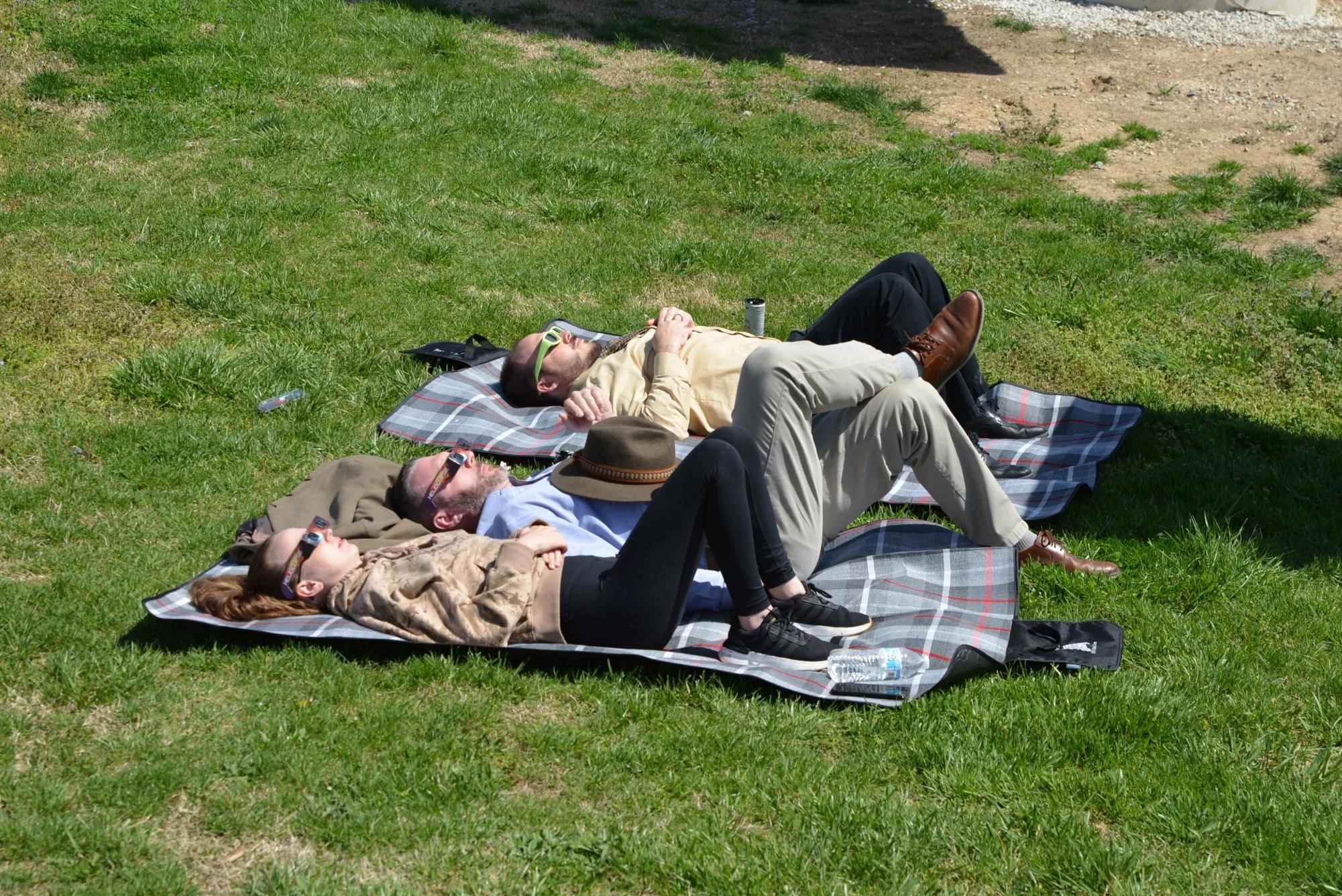
Spain’s total solar eclipse arrives on August 12, 2026, late in the day—but your physical exposure may begin hours earlier. A viewing site can be hot, dry and almost shadeless while you wait for a total phase lasting less than two minutes. Even after the Sun drops toward the western horizon, heat stored in pavement, rock and your own body does not disappear on cue.
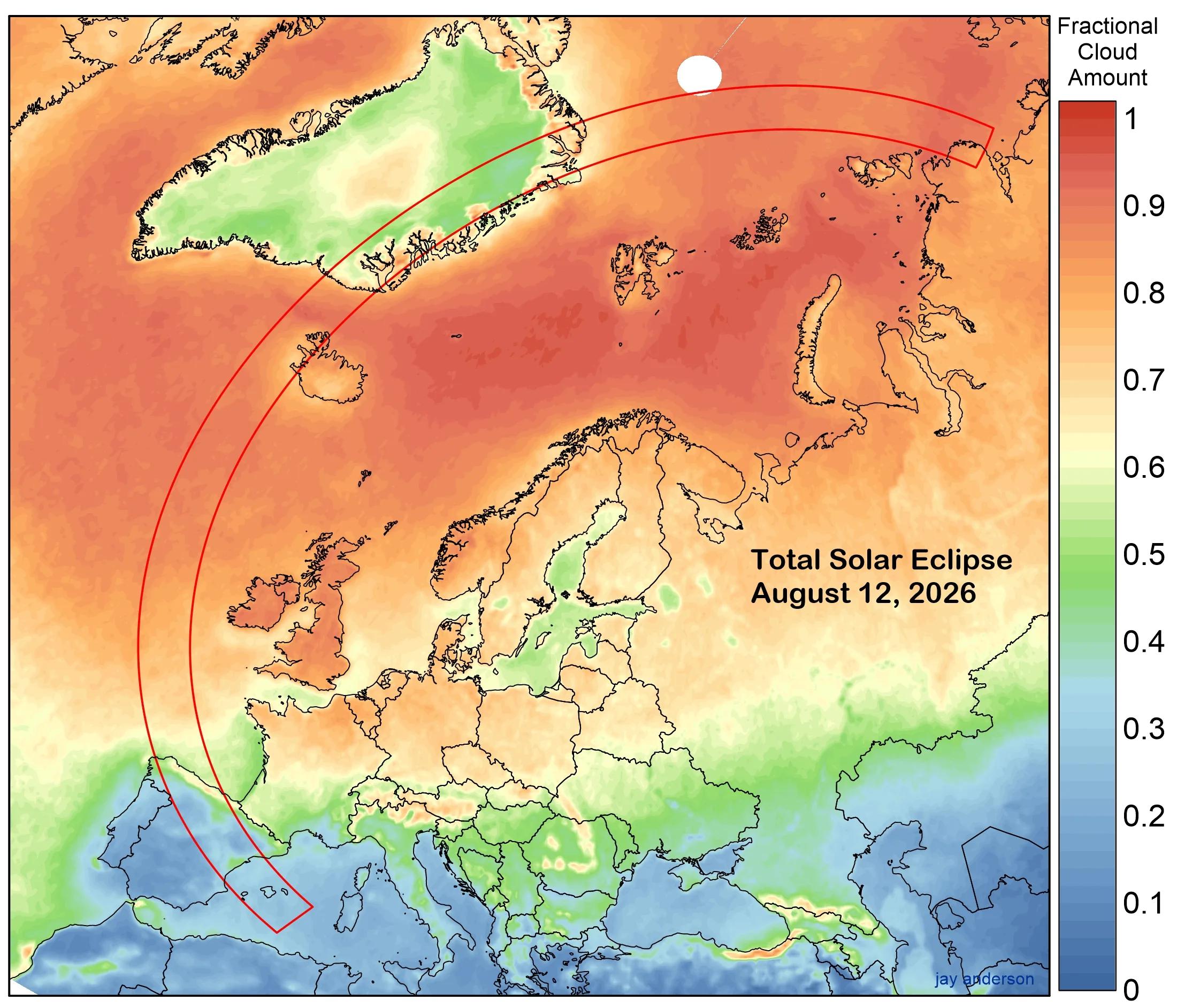
That is why a responsible Spain August heat wave eclipse day climate normals 2026 guide must begin with a limit: a seasonal average is not an eclipse-day forecast. It can tell us which kinds of heat deserve preparation, but not whether Zaragoza, León, Valencia or Mallorca will be unusually hot, pleasantly moderate or affected by cloud on one particular evening.
Start by locating your exact site in the Helioclipse Eclipse Explorer. A Spain eclipse 2026 map answers the first geometric questions—total or partial, how close you are to the path’s center and how low the Sun will be—while weather and health planning answer a different question: how safely can your group wait there?
Climate normals describe a background, not August 12
Climatology and meteorology are related, but they do different jobs. Climatology describes patterns across many years, commonly using 30-year reference periods so that one exceptional summer does not dominate the picture. Meteorology examines the evolving atmosphere and produces forecasts over much shorter periods.
A climate normal can show that August is generally hot in much of Spain. It can help you compare broad settings such as the Atlantic-influenced north, the drier interior and Mediterranean coastal or island locations. It cannot promise a particular maximum temperature, humidity, wind or cloud amount on August 12, 2026.
That distinction is the core of climatology framing from reputable meteorology summaries—not a eclipse planning forecast presented as certainty. Long-range climate signals may shift the odds of a warmer or cooler season, but they do not resolve the local cloud, wind and temperature at a specific field or viewpoint months in advance.
A heat wave is also more specific than “a very hot day.” A Spanish definition reported by Live Science described an episode lasting at least three consecutive days in which at least 10% of monitored stations exceeded a high historical threshold for maximum temperature. Operational definitions and reference periods can change, so check AEMET’s current terminology rather than treating an old threshold as timeless. The practical point remains: Spain August heat wave eclipse day climate normals indicate risk ranges, not a yes-or-no prediction for eclipse day.
Why past extremes matter without becoming forecasts
Iberian heat can intensify when persistent high pressure, very dry ground and the movement of exceptionally warm air reinforce one another. A Phys.org explainer about the 2018 heat episode reported temperatures above 46°C in parts of Spain and Portugal. That number is evidence of what the regional atmosphere can produce—not a prediction that eclipse visitors will encounter anything similar.
More recently, AEMET provisionally described the August 3–18, 2025 Spanish heat wave as the country’s most intense on record, according to a 2025 report carried by Phys.org. The agency said the ten days from August 8 to 17 were the hottest consecutive ten-day period in Spain’s record extending back to at least 1950. Again, this is historical context, not an eclipse-day forecast.
The distinction matters because two planning errors pull in opposite directions. Assuming “Spain is always scorching in August” can lead you to ignore cooler evenings, strong winds or cloud-driven mobility. Assuming a published average guarantees ordinary conditions can leave a family unprepared for an extreme spell. Climate change raises the background on which heat extremes occur, but it does not make every summer hotter than the one immediately before it or every Spanish location equally hot.
Build a plan that works under an ordinary warm evening and can be upgraded if official warnings indicate exceptional heat. That is more useful than trying to answer “Will summer 2026 be hot in Spain?” with false precision.
The eclipse is late, but heat exposure may start early
For the solar eclipse of August 12, 2026 Spain offers a remarkable but demanding geometry. NASA’s published city examples place the beginning of the partial phase at about 7:32 p.m. in León, 7:34 p.m. in Zaragoza and 7:38 p.m. in Valencia, all in local time. Totality is listed at approximately 8:28–8:30 p.m. in León, 8:29–8:30 p.m. in Zaragoza and 8:32–8:33 p.m. in Valencia. NASA’s table is rounded to the minute, so use an interactive map for precise circumstances at your coordinates.
Those times do not mean you should arrive at 7:30 p.m. Road congestion, parking restrictions and the need to find an unobstructed western horizon may push arrival into the hotter part of the afternoon. A three-hour wait on exposed ground can matter more to your body than the temperature during totality itself.
The Spain August eclipse also happens with the Sun low in the west. That creates a seductive planning trap: people may choose a bare hill, roadside pull-off or paved waterfront solely for its horizon. A technically clear sightline is not automatically a safe waiting area. Look for legal access, shade nearby, a short retreat to an air-conditioned building or vehicle, toilets, drinking water and an exit that will remain usable after the eclipse.
Totality does bring a rapid loss of direct sunlight and a noticeable environmental change, but the fully eclipsed interval is brief. NASA says most places along the 2026 path receive less than two minutes of totality. The cooling sensation is part of the spectacle; it is not treatment for accumulated heat strain.
Zaragoza, León, Valencia and Mallorca pose different planning questions
For Zaragoza, Spain eclipse 2026 preparation means combining an inland totality site with a late-evening, low-Sun view. NASA’s rounded table gives roughly one minute between the listed start and end of totality. Your exact duration and horizon clearance can change across the area, so do not choose a site from the city name alone. Check the coordinates, then inspect the western horizon in advance.
León’s NASA example gives about two minutes between 8:28 and 8:30 p.m., again using rounded local times. A northern Spain eclipse 2026 plan may benefit from different broad climate influences than one for the interior, but “north” is not a forecast. León can still experience substantial August heat, and cloud or wind can alter both comfort and visibility.
Valencia is listed inside totality, with about one minute in NASA’s rounded table and sunset at approximately 9:01 p.m. while the partial eclipse is still underway. Coastal humidity can make bodily cooling less efficient than the air temperature alone suggests. Meanwhile, an inland location with hotter but drier air can create intense solar and radiant exposure. Comparing the thermometer without humidity, wind, shade and surface conditions misses the risk that actually reaches your body.
A Mallorca, Spain eclipse 2026 itinerary adds island logistics and a horizon-sensitive path crossing. Exact circumstances vary across the island, so verify whether your chosen coordinates are inside totality, the local duration and the Sun’s altitude above the horizon. Do not assume that a beach automatically offers an unobstructed view: headlands, buildings, terrain and the orientation of the coast can still hide the low western Sun.
Madrid and Barcelona illustrate why geometry must remain separate from hype. NASA lists both as partial rather than total: approximately 99% coverage at maximum, around 8:32 p.m. in Madrid and 8:29 p.m. in Barcelona. That sounds nearly complete, but even a 99% partial eclipse is not totality; a bright portion of the photosphere remains visible, and solar viewers stay on throughout. Our Spain path guide explains why crossing the path boundary changes the experience fundamentally.
Do not confuse this event with eclipse Spain 2027 plans. Spain also lies in the path of the August 2, 2027 total eclipse, but that is a different event, seasonally and geographically, with its own path, timing and weather questions.
Heat stress is about the body, not just the thermometer
Air temperature is only one part of heat strain. Humidity controls how readily sweat can evaporate; wind can assist evaporation; direct sunlight adds radiant heat; and hot stone or asphalt can keep warming you from below. NASA’s heat-stress overview explains why researchers use measures such as wet-bulb temperature and wet-bulb globe temperature to describe conditions that a plain air-temperature reading cannot capture.
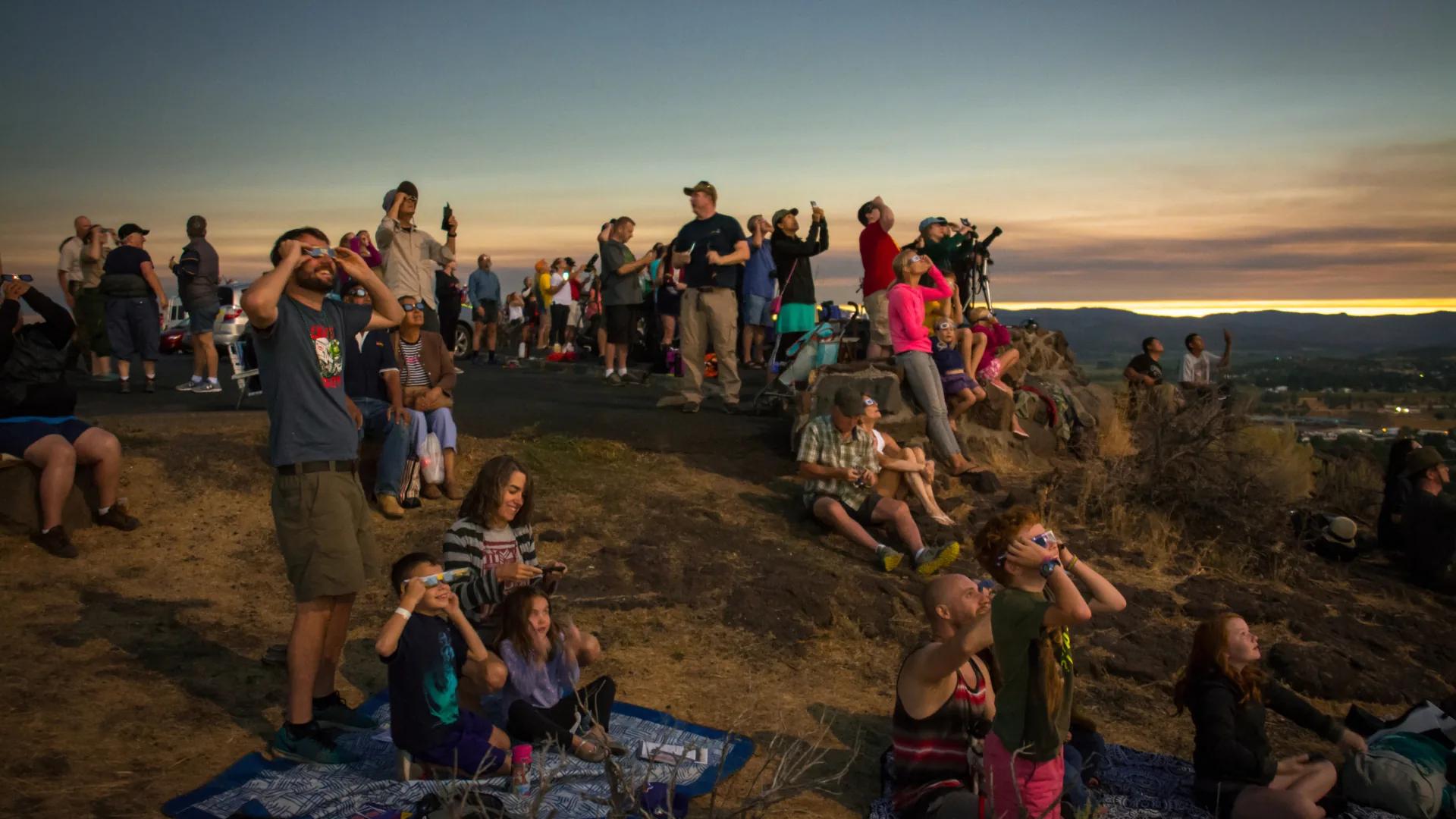
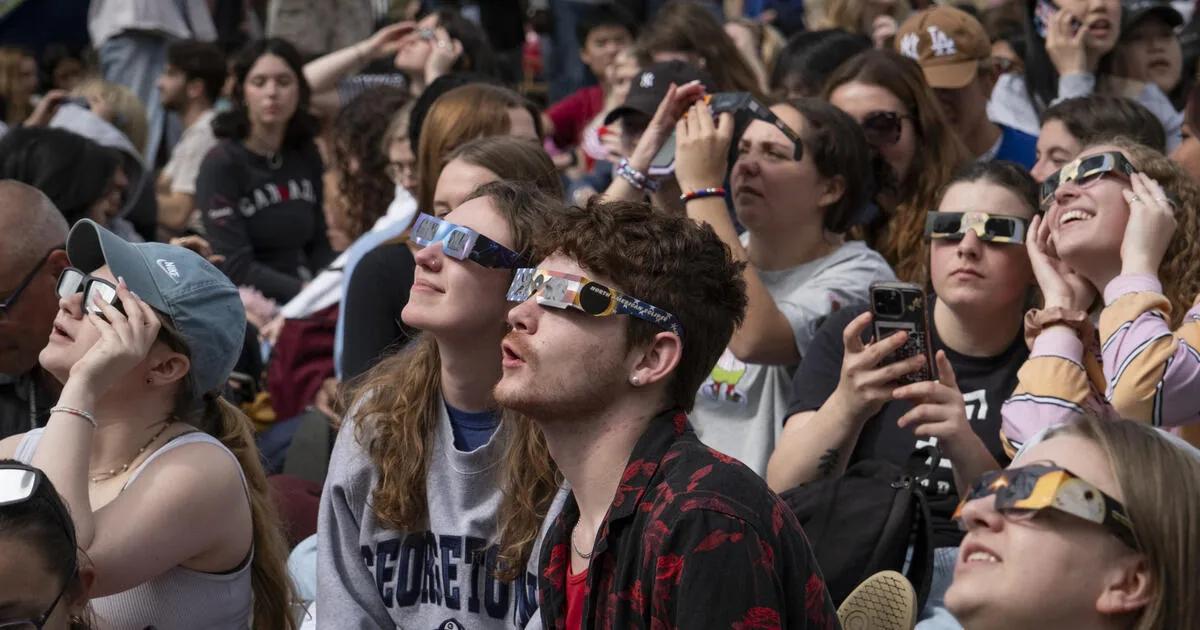
Your behavior changes the result too. Carrying camera equipment uphill, standing in a dense crowd, sitting on sun-heated ground or repeatedly craning your neck toward a low Sun all add physical load. Children may become irritable or quiet before they can describe overheating. Older adults, pregnant people and those with cardiovascular, respiratory or other chronic conditions may need a more conservative plan. Some medicines also affect hydration or temperature regulation; seek individual advice from a qualified clinician rather than relying on a generic checklist.
Watch for worsening headache, nausea, dizziness, weakness, heavy sweating, cramps, confusion or fainting. Move an affected person to a cooler place, loosen unnecessary clothing and seek medical help when symptoms are severe, worsening or include confusion or loss of consciousness. Spain’s emergency number is 112. Do not delay urgent care to preserve a viewing position.
Hydration helps, but “drink as much as possible” is not sound guidance. Bring enough water, drink regularly according to your needs and conditions, and avoid relying on alcohol as fluid replacement. For a long, sweaty wait, food and appropriate electrolyte intake may also matter. Anyone with a medical fluid or salt restriction should follow their clinician’s advice.
Posture and waiting time deserve their own plan
Eclipse planning often focuses on where to stand during totality. Heat planning asks what you will do during every minute before it.
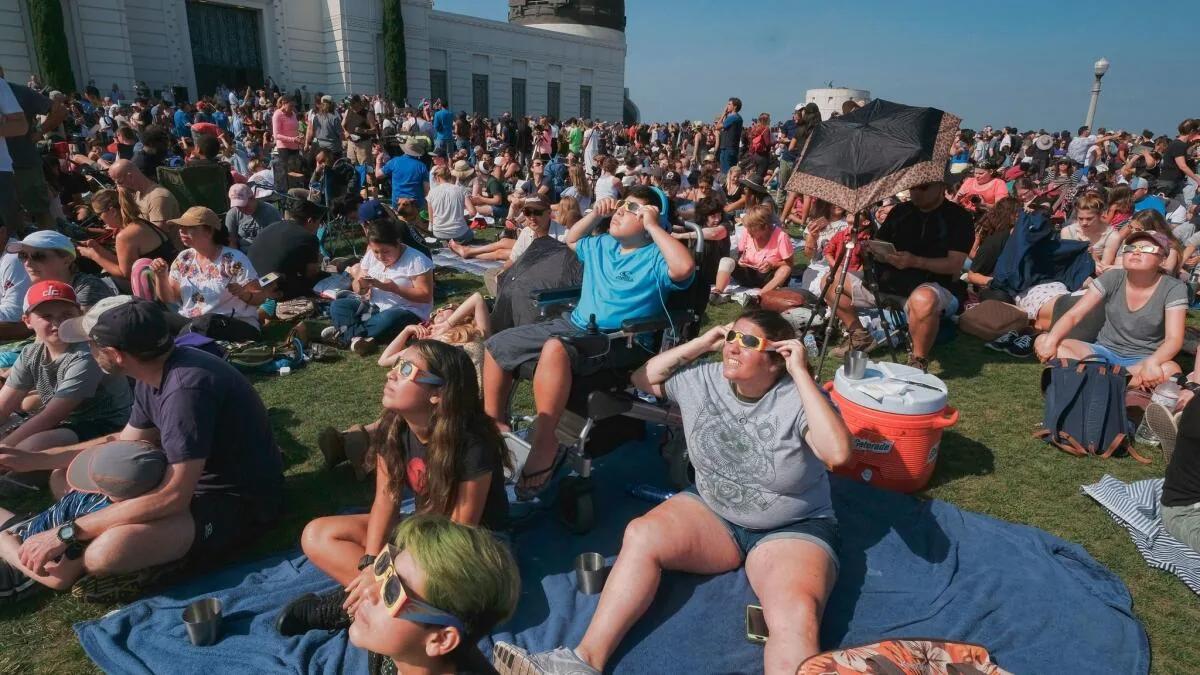
A low chair, ground mat or shaded rest point can reduce fatigue, but test the arrangement before eclipse day. A chair facing west may encourage an hour of neck extension. Sitting directly on rock or pavement can expose you to stored heat. Standing motionless in a packed viewing area can make it harder to reach shade, water or a toilet.
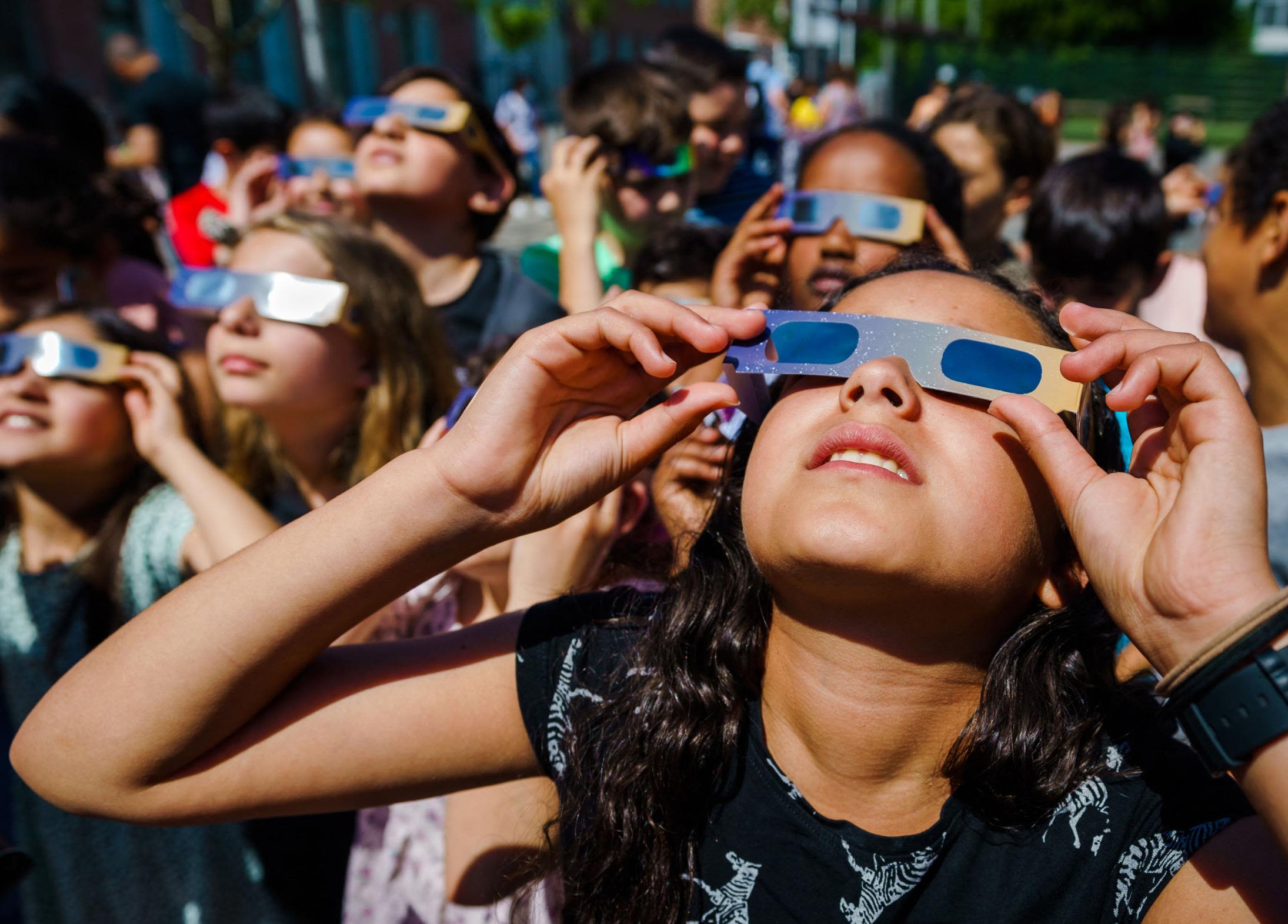
Use a rhythm instead: rest in shade, check the Sun briefly through proper viewers, then look away. The partial phases progress slowly, so no one needs to stare continuously. Keep children occupied with projection activities, a phase log or crescent-shadow spotting rather than asking them to hold their heads back for an hour.
For groups, assign roles before arrival. One adult can monitor timing and eye protection while another watches water, shade and how people are feeling. Tell friends and family early that your meeting point and departure trigger are part of the plan—not optional details to negotiate in a hot crowd.
A heat-ready eclipse-site checklist
Use this checklist when planning for 2026 eclipse travel, then revise it when short-range forecasts and official alerts become available:
- Confirm the geometry. Check total versus partial, totality duration, local phase times, Sun altitude and western horizon in the Eclipse Explorer.
- Separate the viewing spot from the recovery spot. Your best horizon may be exposed, but shade or cooled shelter should be close enough to reach quickly.
- Estimate total exposure. Count travel delays, the walk from parking, setup, the partial phase and the post-eclipse queue—not only the minute or two of totality.
- Bring water before you need it. Do not assume a rural venue, temporary event or roadside stop will have working taps or available stock.
- Reduce radiant load. Use breathable clothing, a brimmed hat, sunscreen and portable shade where venue rules allow. Shade does not eliminate heat risk, but it reduces direct solar exposure.
- Protect feet and equipment. Hot ground, uneven terrain and long standing times call for practical footwear. Never leave children, vulnerable adults, animals, batteries or pressurized equipment in a hot closed vehicle.
- Set a retreat trigger. Official heat alerts, wildfire restrictions, illness in the group or an unsafe crowd are valid reasons to move or leave.
- Keep a weather backup. Follow AEMET and local civil-protection information, and use our guide to cloud cover and eclipse-day mobility before making a late move.
- Download essentials. Save maps, accommodation details and meeting points in case mobile networks become congested.
The best place to see the eclipse is not simply the point with the longest calculated totality. It is a legal, reachable site inside the path where the Sun remains visible above the horizon and your group can wait without taking avoidable risks.
Solar safety still applies on an uncomfortable day
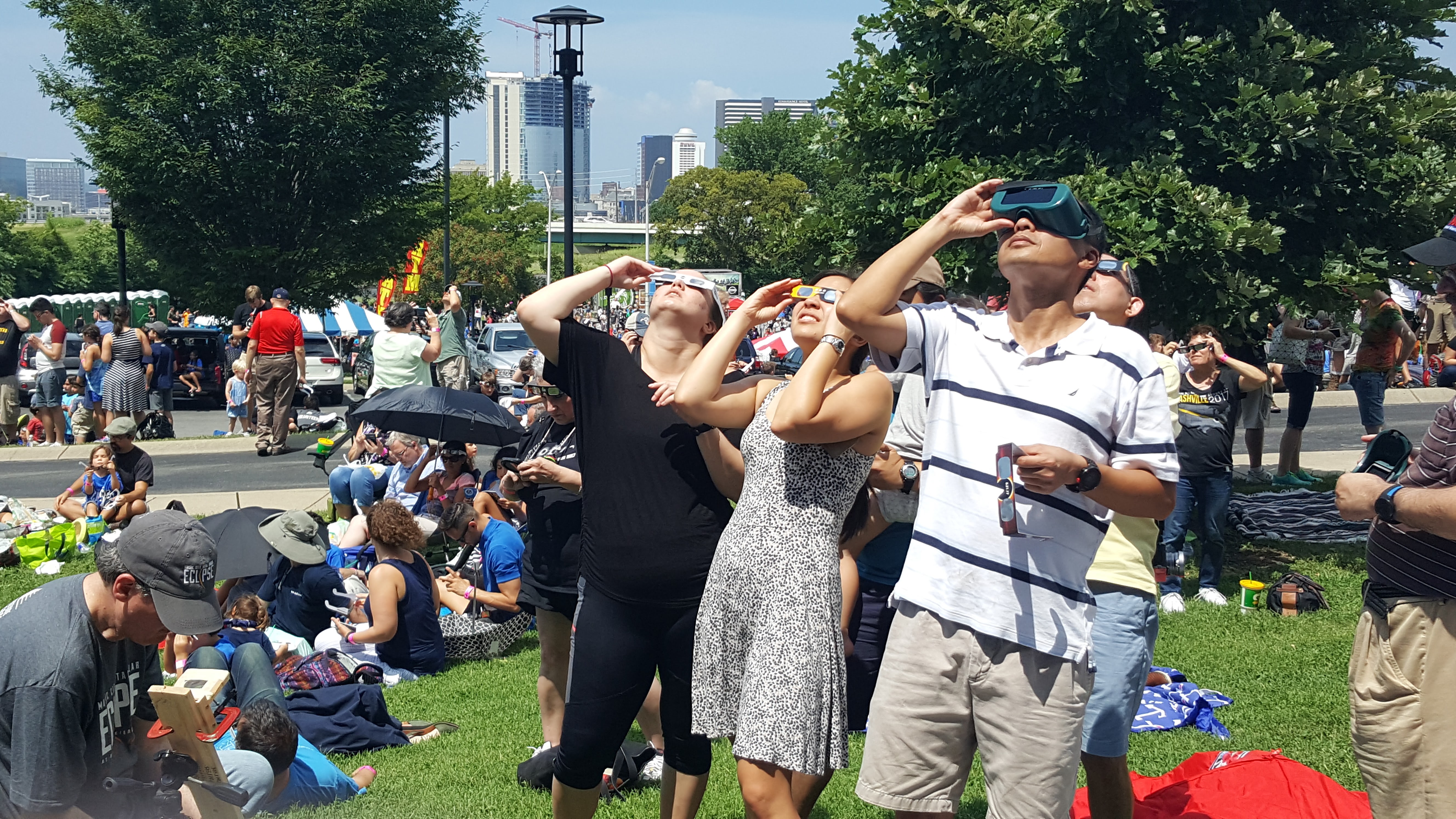
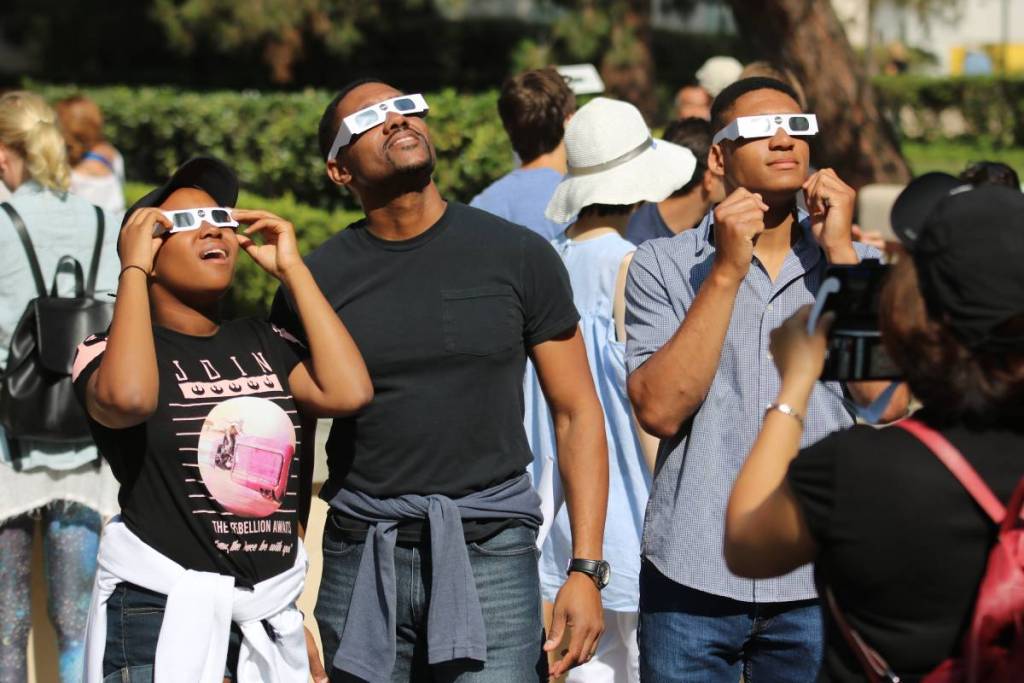
Heat and fatigue make small errors more likely. Inspect every solar viewer before travel and again before use. During all partial phases, look at the Sun only through a suitable viewer conforming to ISO 12312-2 or by using an indirect projection method. Ordinary sunglasses are not sufficient.
Only observers inside the path of totality may remove their viewers, and only after the Sun’s bright face is completely covered. Put them back on as soon as the first bright photosphere reappears. In Madrid, Barcelona and every other partial-only location, there is no glasses-off interval. Our phase-by-phase guide is worth sharing with everyone in your group before the trip.
Cameras, binoculars and telescopes require purpose-made solar filters secured over the front of the optics. Wearing eclipse viewing glasses while looking through an unfiltered optical device is dangerous because the concentrated light can damage the viewer and your eyes.
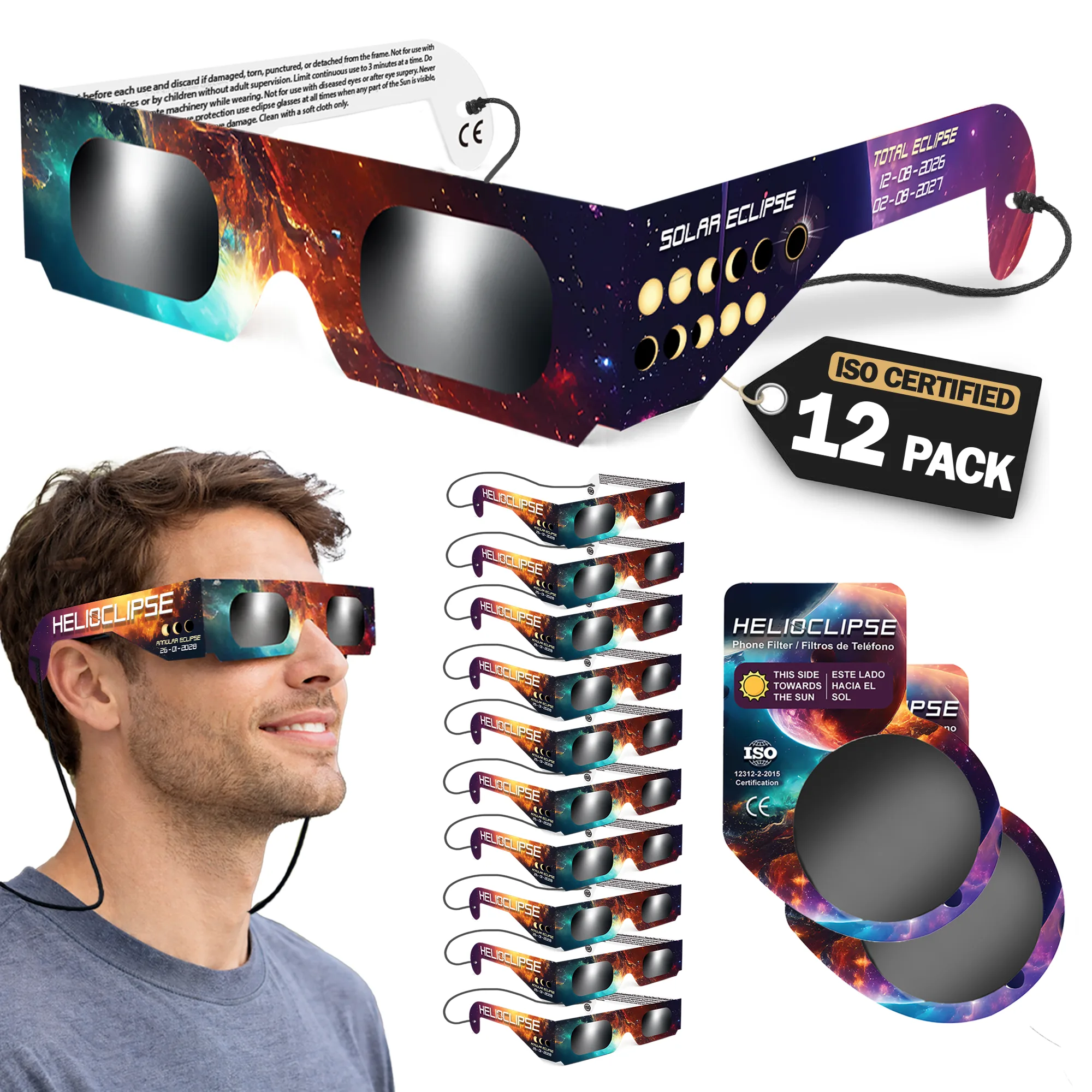
Product wording can be confusing. Phrases such as solar eclipse glasses iso 12312-2 certified and eclipse glasses iso 12312-2 refer to the relevant international standard for direct, unmagnified solar viewers; they do not mean ordinary sunglasses or filters intended for a camera lens. Order Helioclipse solar eclipse glasses early enough to inspect them, explain their use to children and pack spares without a last-minute scramble.
When forecasts become useful
Several months out, use climatology to design a resilient trip: shade, water, flexible transport, a safe horizon and accommodation that does not depend on one exposed field. Do not use a seasonal outlook as a city-level eclipse forecast.
As the date approaches, official forecasts become increasingly useful for comparing temperature, humidity, cloud, wind and the possibility of thunderstorms. Close to the event, monitor AEMET warnings and local civil-protection guidance. Wildfire restrictions, road closures or event rules can override a site that looked attractive on a map.
On the day itself, compare observations with the forecast. A cloud-driven relocation may change your heat exposure, walking distance and access to water. A clearer site is not an upgrade if reaching it requires a dangerous rush, an illegal stop or abandoning the needs of someone already showing heat-related symptoms.
That is the honest answer to the Spain climate August question: prepare for heat because it is plausible and consequential, but preserve enough flexibility to respond to the weather that actually develops.
🌑🇪🇸 Spain's Total Solar Eclipse is almost here… and you do NOT ...
Everything is Boffo with Bea and Paul
Frequently asked questions
Where should I watch the 2026 total solar eclipse in Spain?
Choose an exact site that lies within the path of totality and assess how close it is to the path’s center and how low the Sun will be. The excerpt does not identify one universally best location, because weather, shade, and heat exposure at a particular viewing site also matter.
Why can’t a weather forecast guarantee conditions for eclipse evening?
Weather forecasts examine an evolving atmosphere, so they cannot guarantee local temperature, wind, humidity, or cloud conditions far in advance. Climate averages describe long-term patterns, not the weather at one field or viewpoint on August 12, 2026.
How should I use August climate averages when planning for eclipse-day heat in Spain?
Use climate normals to prepare for likely types of heat, such as generally hot August conditions in much of Spain, rather than as an eclipse-day prediction. Plan for body-level exposure because a site may be hot, dry, and nearly shadeless for hours before a total phase lasting less than two minutes.
What information can an eclipse map provide for planning?
An eclipse map can show whether a location will experience totality or only a partial eclipse, how close it is to the path’s center, and how low the Sun will be. It does not answer the separate questions of local weather or whether your group can wait safely at that site.
Is Zaragoza certain to be hot or clear for the 2026 eclipse?
No. A seasonal average cannot tell whether Zaragoza will be unusually hot, pleasantly moderate, or affected by cloud on that particular evening. Check current meteorological information closer to the date and prepare for heat exposure rather than assuming normal August conditions will occur.
On-site next steps
- Open the Helioclipse Eclipse Explorer and check your exact coordinates, total or partial status, local timing, totality duration and western horizon.
- Compare at least two legal sites with different shade, access and mobility options—not only different eclipse durations.
- Review the latest official forecast and alerts shortly before travel, then set a clear heat, wildfire and congestion fallback.
- Get ISO 12312-2 certified Helioclipse viewers for your group in time to inspect them and practise safe use.
Sources & further reading
- NASA Science — Total Solar Eclipse on August 12, 2026
- NASA Science — Too Hot to Handle: How Climate Change May Make Some Places Too Hot to Live
- Live Science — For the first time, scientists have named a heat wave
- Phys.org — Parts of Spain and Portugal are more than 46 C – here’s what is going on
- Phys.org — Spain heatwave was ‘most intense on record’
- American Astronomical Society — How to View a Solar Eclipse Safely
- American Astronomical Society — About the ISO 12312-2 Standard for Solar Viewers
- American Astronomical Society — Solar Filters for Optics: Telescopes, Binoculars & Cameras
- NASA Science — Eclipses and the Moon
- NASA Science — Extreme Weather