Dust, haze, and ‘calima’ days: how layered air affects eclipse viewing—and your backup plan
A total eclipse can still be unforgettable under imperfect air. But if you are planning for Spain in August 2026, you should know that “clear” and “transparent” are not the same thing.
Thin dust, milky haze, and calima-type conditions can leave the Sun visible while quietly stripping away contrast from the sky around it. That matters for the parts of the experience people remember most: the sharpness of the crescent Sun before totality, the color and reach of the corona, the darkening of the horizon, and how easy it is to judge whether you should stay put or move. If you have not yet checked your location against the Helioclipse Eclipse Explorer / 3D map, do that early; path position and mobility matter even more when the air is not perfectly clean.
This is a practical guide to meteorology basics (aerosol haze) from institutional or eclipse planning sources, written for real eclipse decisions rather than weather drama. We are not going to pretend anyone can promise a city-by-city dust forecast a year out. We can explain what haze does, what it does not do, and how to build a backup plan that still gives you a real shot at a great day.
First: dust and haze do not make the Sun safe to view
Before we talk about visibility, we need to kill one dangerous idea: a dusty or dim-looking Sun is still the Sun.
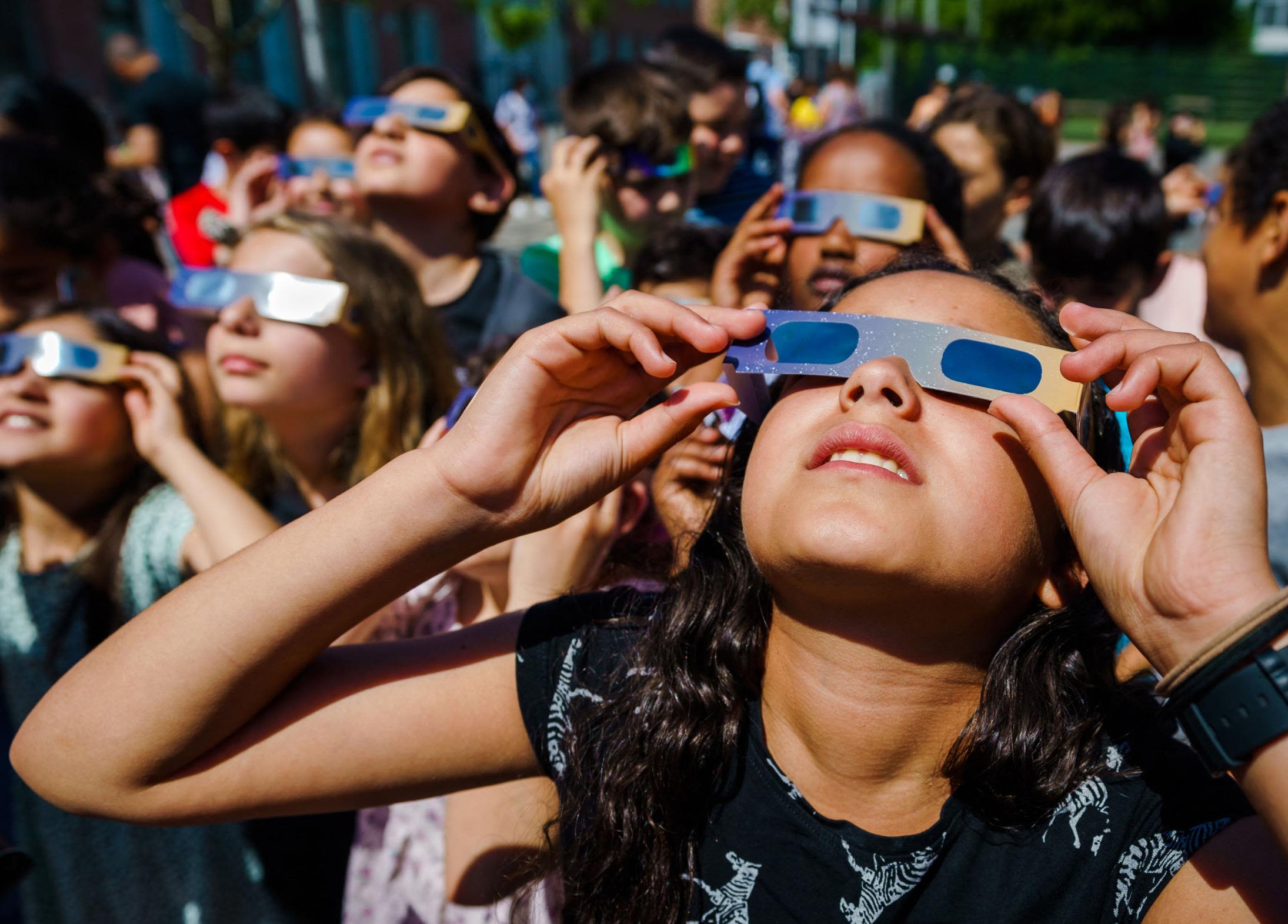
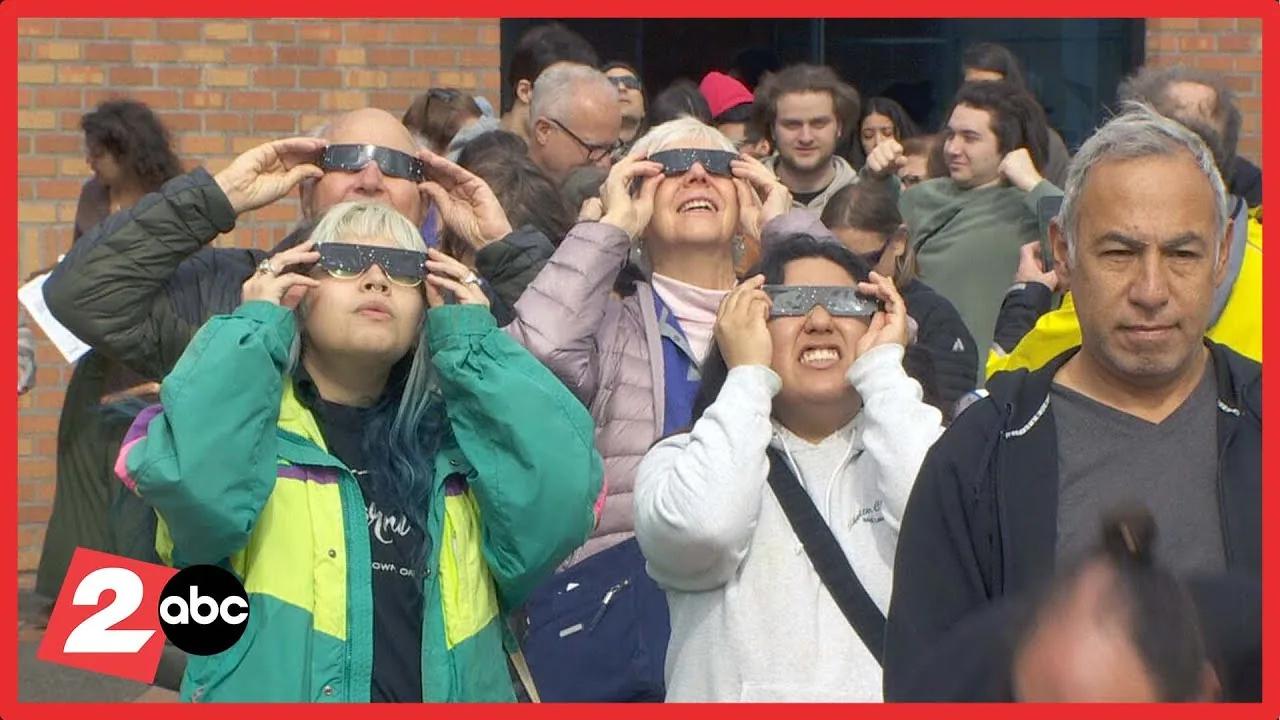
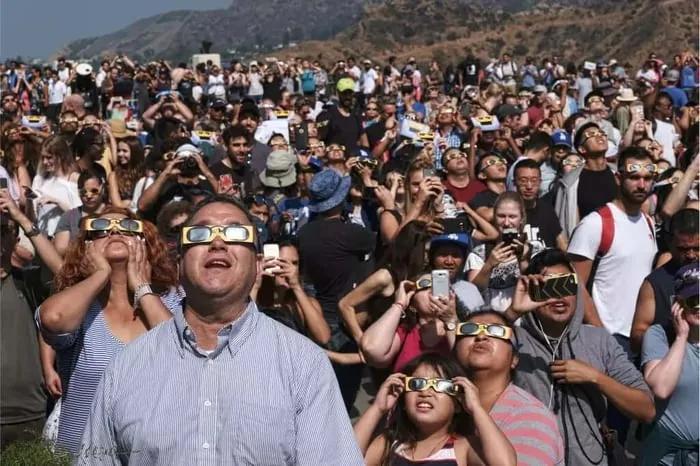
The American Astronomical Society is very clear on this. Outside the brief total phase of a total solar eclipse, direct viewing requires a proper solar filter that meets ISO 12312-2. Haze, smoke, thin cloud, or dust do not turn unsafe sunlight into safe sunlight. If you are outside totality, there is no glasses-off moment at all. If you are inside totality, the glasses come off only when the Sun’s bright face is completely covered, then go straight back on when the first bright point returns. If you want a fuller walkthrough, our guide to when glasses on, when glasses off: eclipse phases explained for first-time viewers is worth reading before eclipse week.
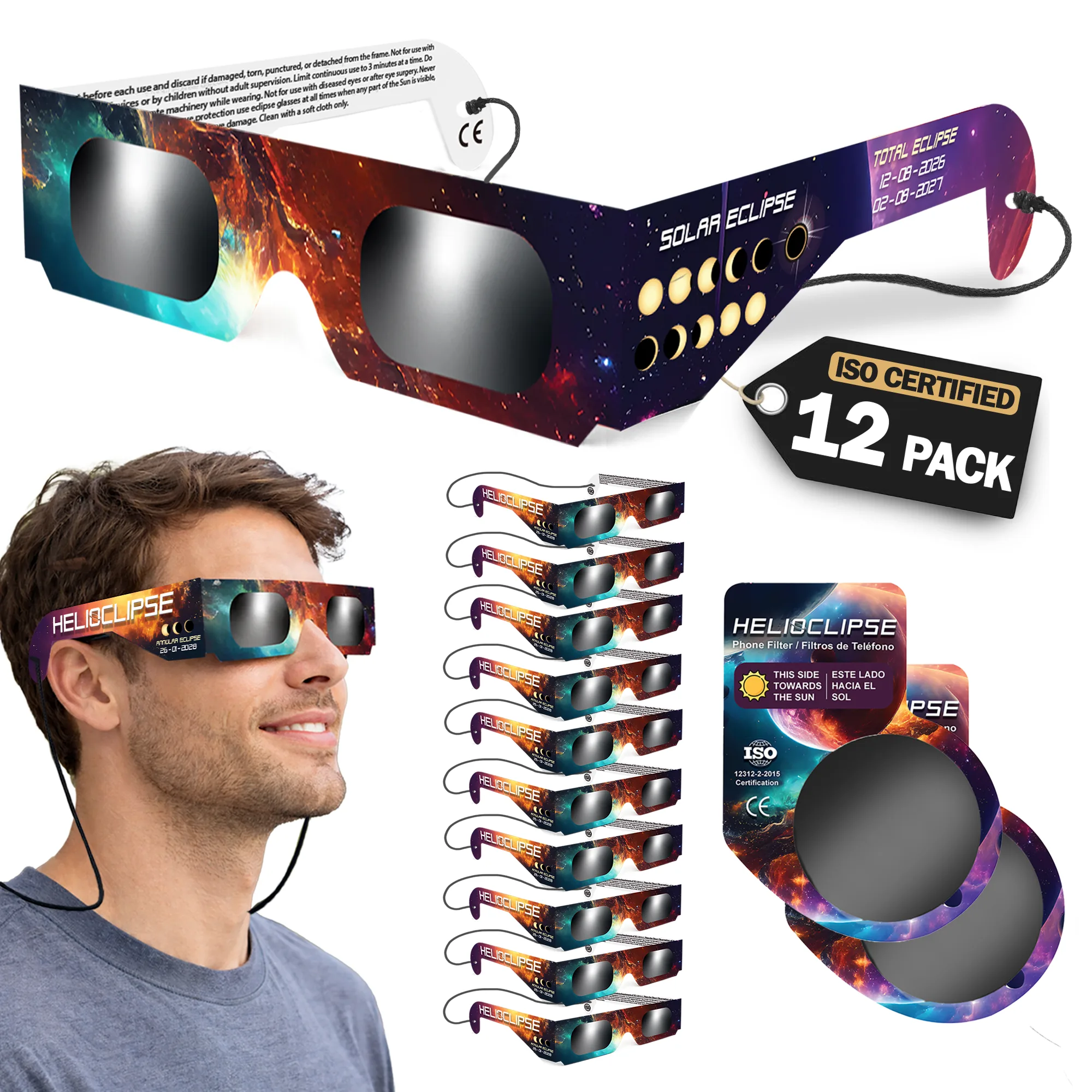
This is where product language online gets messy. You will see people searching for approved solar eclipse glasses, eclipse glasses nasa approved, or solar eclipse glasses iso 12312-2 certified. The useful part of those phrases is the standard: ISO 12312-2. NASA does not certify consumer eclipse glasses, and ordinary sunglasses are not a substitute. If you are buying for a family, school group, or road trip, use the standard as your anchor and buy early from a source you trust, such as the Helioclipse shop for eclipse glasses.
What “calima” actually means for eclipse viewing
In everyday Spanish usage, calima usually refers to airborne dust or haze that reduces clarity, often linked to Saharan dust intrusions. Meteorologically, the bigger idea is aerosols: tiny solid particles or liquid droplets suspended in the atmosphere. NASA’s Earth Observatory explains that aerosols include mineral dust, sea salt, smoke, ash, and pollution particles, and that they scatter and sometimes absorb sunlight.
That scattering is the key. A clean, dry sky lets the eclipse scene build dramatic contrast: a dark Moon, a bright but delicate corona, a deepening blue-black sky, and a horizon that can glow in a ring around you during totality. Add enough aerosol haze and the whole scene can look washed, flatter, and lower-contrast even if the Sun is still plainly visible.
So when people ask, does weather affect eclipse viewing? yes, absolutely. But not only through thick cloud. A sky can be technically “open” and still be disappointing for fine eclipse detail.
That is the heart of dust, haze, and ‘calima’ days: how layered air affects eclipse. The problem is not just whether you can detect the Sun. The problem is what the air does to the quality of the light between the Sun and your eyes.
What is haze in meteorology, and why does it matter so much?
What is haze in meteorology? In plain language, it is reduced visibility caused mainly by suspended particles that scatter light. NASA describes haze as a general term for aerosol particles that reduce visibility by scattering light, and that is exactly why eclipse observers care about it.
A partial phase seen through haze can still be obvious through certified viewers. The Moon’s bite out of the Sun is high-contrast at the disk itself. But the wider scene around you may suffer. The sky may not darken as dramatically. Distant hills can disappear into a pale gray-brown wash. The 360-degree horizon glow during totality can look less crisp. Fine coronal streamers may be harder to appreciate, especially if the air is dirty near the horizon.
Think of it this way: cloud is a curtain; haze is frosted glass. One blocks. The other blurs.
NASA’s aerosol optical depth pages offer a useful measurement concept here. Aerosol optical depth is a way of describing how much suspended material is interfering with light passing through the atmosphere. Lower values generally mean clearer skies and better visibility; higher values mean hazier conditions. You do not need to become an atmospheric scientist on eclipse week, but it helps to know that “blue sky” is not the whole story.
Why layered air changes the eclipse more than a normal sunny day
On an ordinary afternoon, many people barely notice moderate haze. The Sun is bright enough to punch through, and your brain accepts a washed-out horizon as normal summer weather.
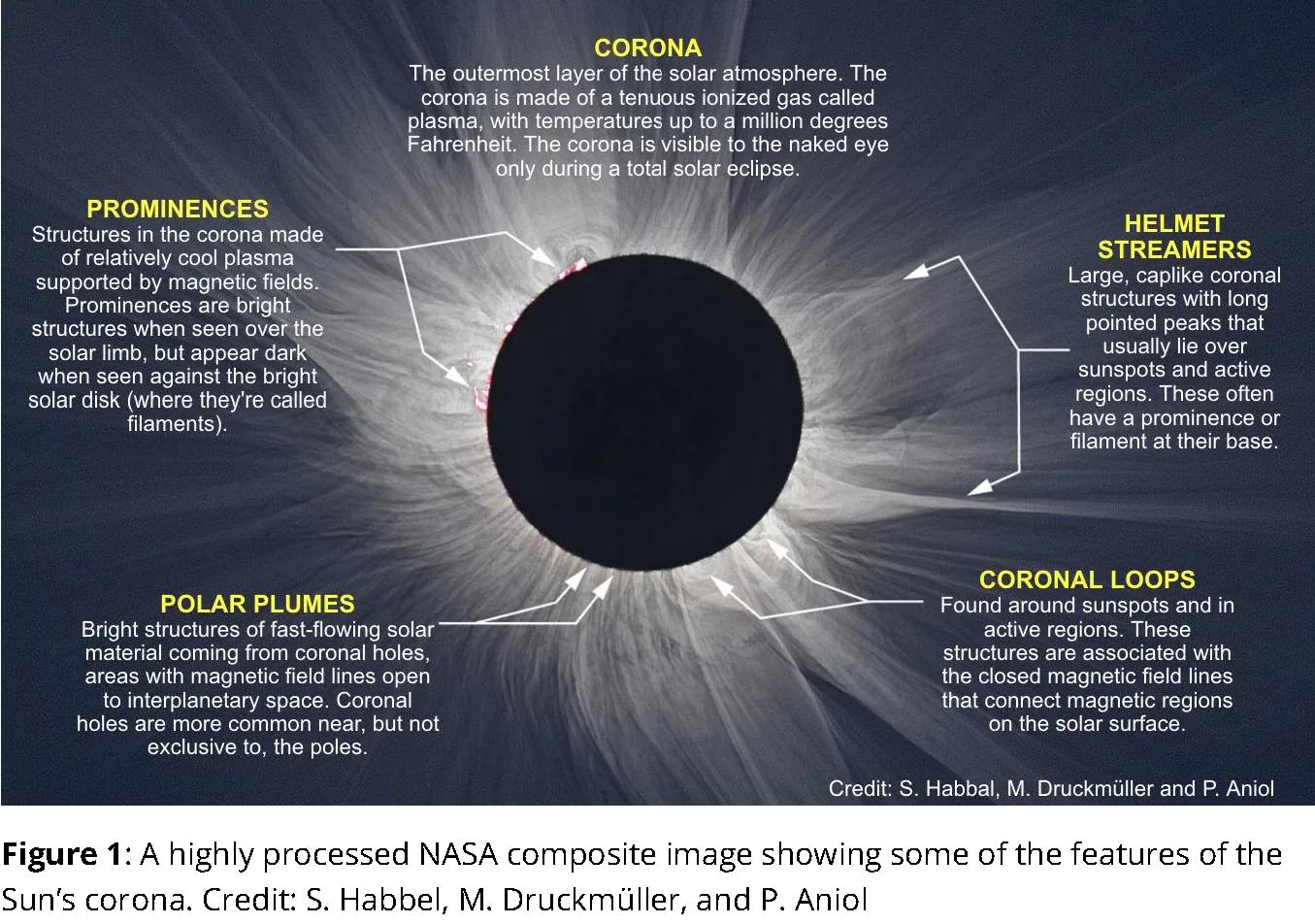
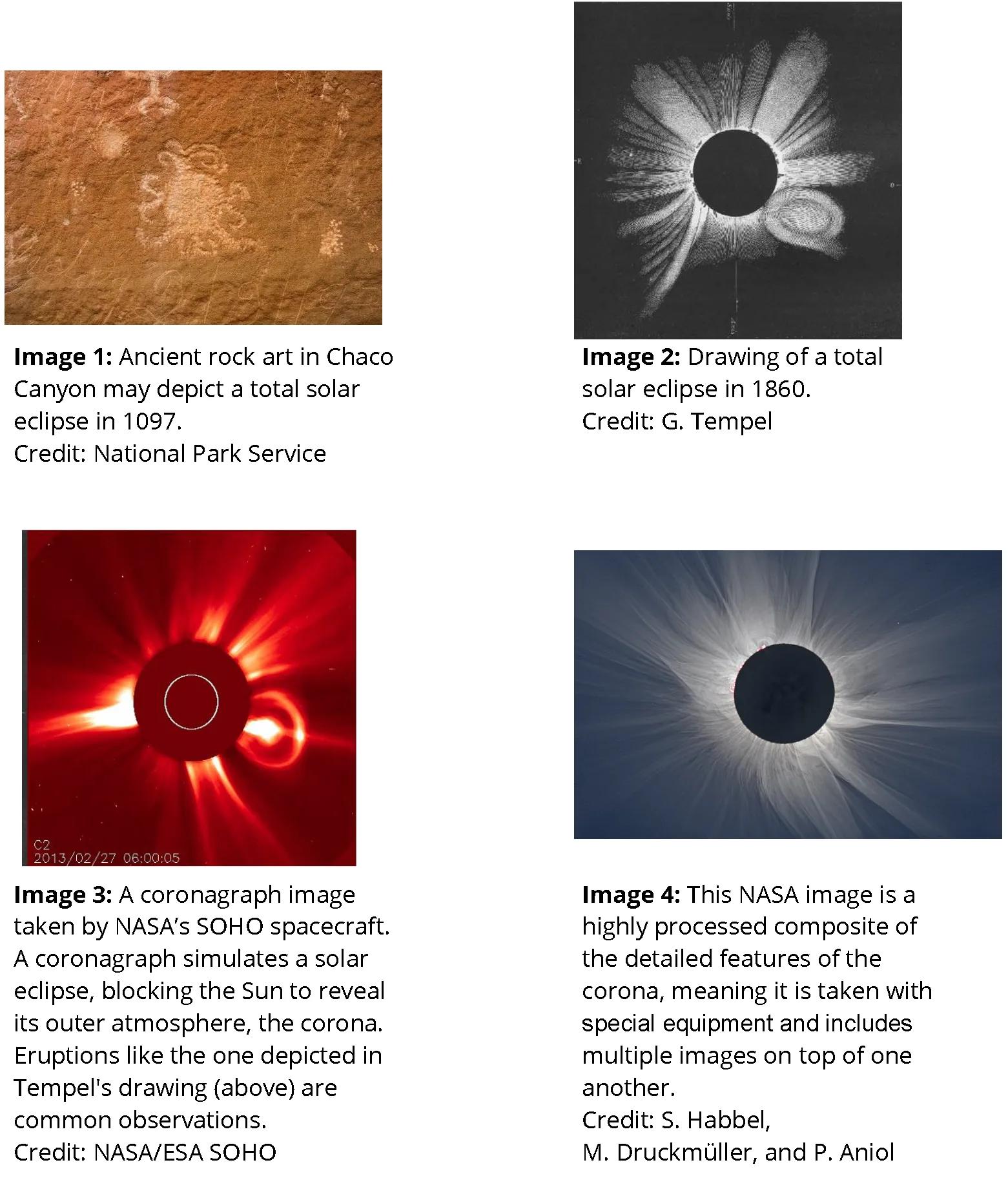
A total solar eclipse is different because it is a contrast event. The most beautiful parts are not the bright solar disk itself, but the sudden disappearance of that brightness and the faint structures revealed around it. The corona is visible only because the photosphere is blocked. The horizon glow is striking because the land around you drops into shadow while distant regions remain sunlit. Shadow bands, changing colors, and the eerie quality of the light all depend on subtle atmospheric optics.
That means layered air can steal from the experience in ways that are hard to describe in a forecast headline. A dusty sky may still deliver totality. It may still move you. But it can soften the edges of the spectacle.
There is also a practical side. Haze reduces long-distance visibility, which matters if your plan depends on reading the horizon, spotting approaching cloud fields, or deciding whether a move of 20 to 60 kilometers might improve conditions. If you are already thinking about same-day mobility, pair this article with our guide to cloud cover and eclipse day: how to read the sky and when to move.
Spain in August 2026: where haze matters, and where not to overclaim
The August 12, 2026 eclipse is a total solar eclipse visible along a narrow path that crosses parts of Greenland, Iceland, Spain, Russia, and a small area of Portugal, with a much broader partial eclipse elsewhere. In Spain, the event happens late in the day, which is thrilling for photography and atmosphere but also raises the stakes for low-altitude murk near the horizon.
That late-sun geometry matters. Even modest aerosol loading becomes more noticeable when you are looking through a longer slant path of atmosphere toward a lower Sun. In other words, the same amount of dust can hurt more near the horizon than it would at midday.
For Spain specifically, you should think in zones, not stereotypes. Coastal air, inland heat, local topography, sea breeze structure, and transported dust can combine differently from one area to another. We should not blame a whole region without data. What we can say is that any site with a low western Sun and a long atmospheric path is more vulnerable to reduced contrast from haze than the same site would be with the Sun high overhead.
This is one reason to use the Helioclipse Eclipse Explorer / 3D map alongside our planning guide to 2026 totality in Spain: path basics, timing, and what “on the centerline” really means. You want to know not just whether you are inside totality, but how much totality you gain or lose by shifting position, and whether your chosen site gives you a clean western view.
A practical contrast: totality path vs. partial-only cities
If you are in the Spanish path of totality, haze can reduce the quality of the view, but you still have the possibility of seeing totality itself if the Sun remains visible. That is a huge difference from being outside the path.
Madrid is the classic example of why geometry comes first. Madrid gets a serious partial eclipse, not totality. No amount of dust, drama, or social media confusion changes that. Even under a hazy sky, you are still outside the umbra, which means no safe glasses-off phase and no full corona experience. If that is your base, read our Madrid-specific guide at Madrid in August 2026: a serious partial eclipse—without pretending you are in totality.
By contrast, locations inside Spain’s totality track can gain you the defining event itself, though totality duration varies across the path. The exact number depends on where you stand relative to the centerline and path edge, so use the map for your site rather than trusting broad regional claims. A move that gains you deeper placement in the umbra can mean the difference between a very short total phase and a more relaxed one with extra seconds to actually look around.
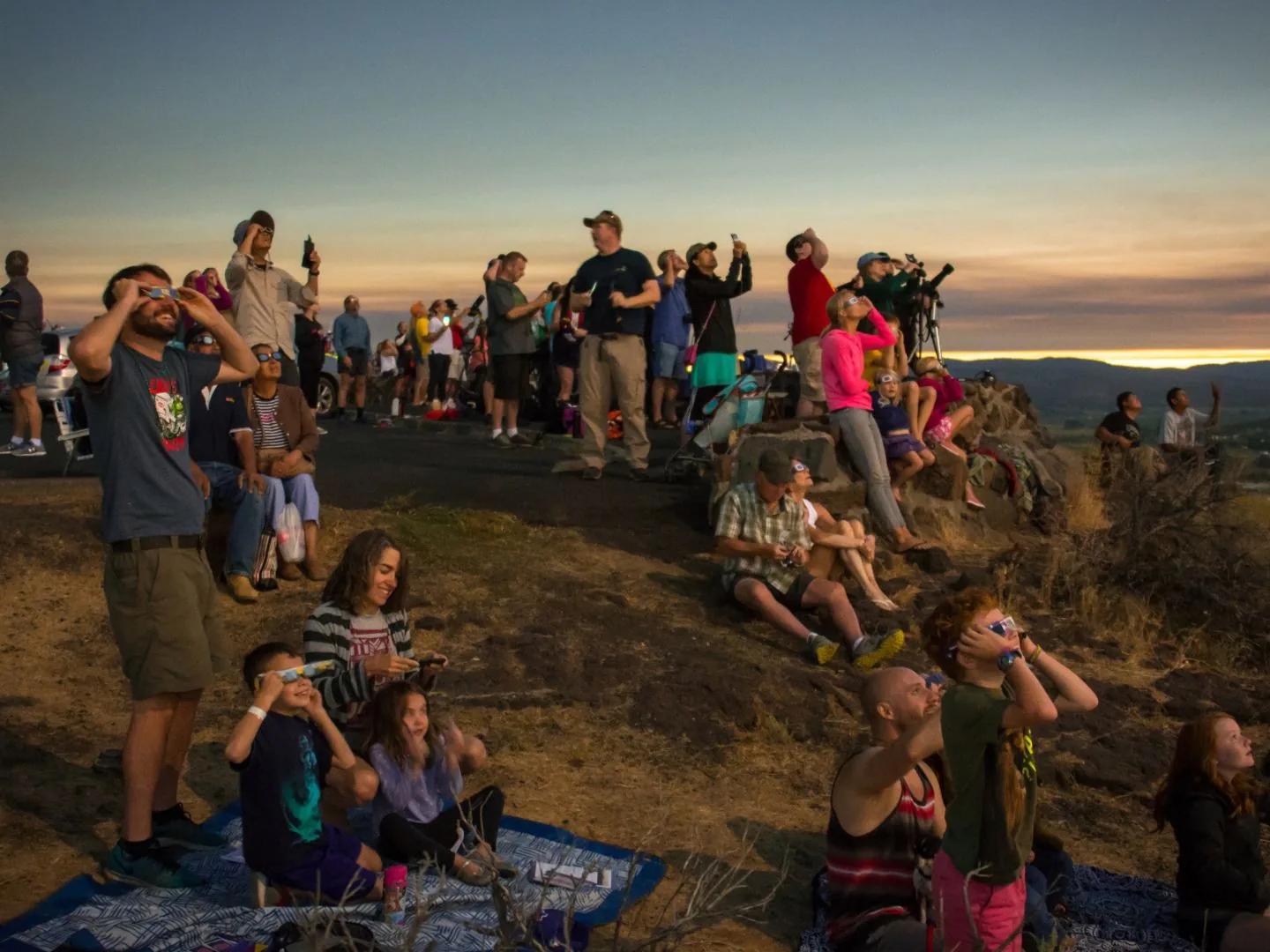
Dust is not cloud, and that changes your backup plan
Cloud and haze are cousins in the “bad for contrast” family, but they do not behave the same way.
Cloud can be local, lumpy, and movable around. One valley is blocked; the next ridge is open. A same-day drive can save you. Dust and aerosol haze are often broader and more uniform. If a large plume is affecting a region, driving 15 minutes may do almost nothing. That does not mean movement is useless. It means your movement should be strategic, not frantic.
A smart backup plan asks different questions for different sky problems:
- For cloud: where is the nearest break or thinner field?
- For haze: where is the cleaner air mass, higher transparency, or better horizon?
- For low Sun: where do I have the cleanest western view with the fewest terrain or building obstructions?
This is why we do not recommend a single “best places and timing for calima sahara dust spain sky august visibility” list months in advance as if the atmosphere were fixed. What matters is a framework: know your primary site, know one inland or elevation alternative if practical, know your road limits, and know when to stop chasing.
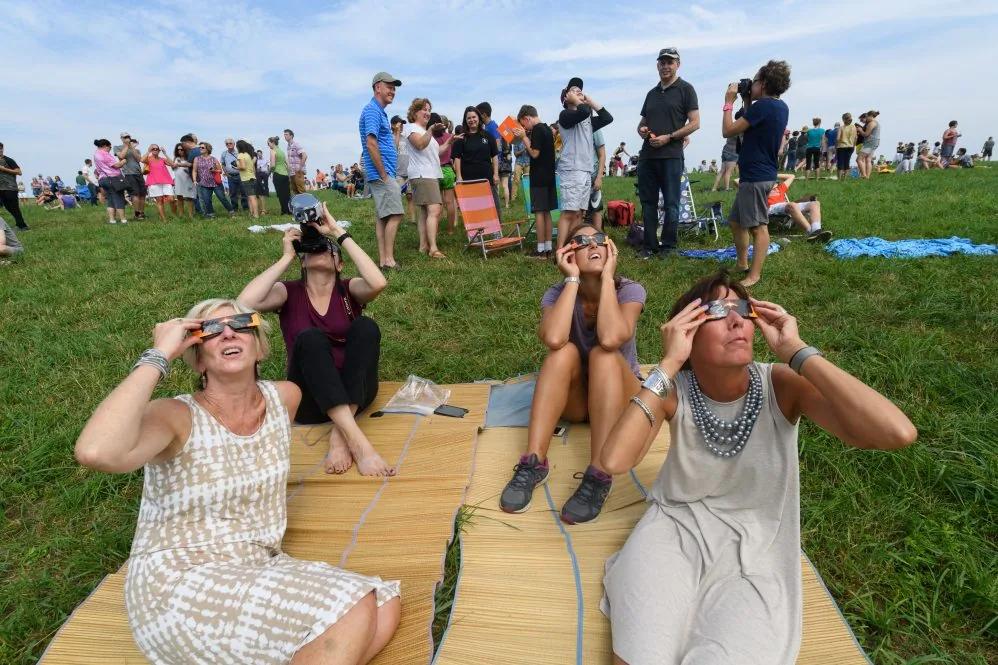
What you may still see beautifully under hazy conditions
Let’s be fair to the sky. Haze does not automatically ruin an eclipse.
The partial phases can still be excellent through proper viewers. The ambient light can still turn strange. Temperature and wind shifts can still be noticeable. If you are in totality, the emotional shock of the Sun vanishing can still land hard even through imperfect transparency. People often remember the human reaction as much as the optics: the shouting, the sudden quiet, the horizon glow, the feeling that the day has slipped sideways.
And some effects are surprisingly resilient. NASA notes that even if it is cloudy, the sky can still darken noticeably near totality. Research discussed by Space.com also points out that low-level cumulus can diminish during an eclipse as the surface cools, which is a reminder that eclipse weather is dynamic, not frozen. That does not rescue a dusty sky, but it does mean the atmosphere can evolve during the event.
If you are inside totality and the Sun stays visible enough for the final seconds before second contact, you may still get the diamond ring, the sudden drop in brightness, and at least some coronal structure. The experience may be softer, less photographic, less razor-edged than in pristine air. It can still be worth every kilometer you drove.
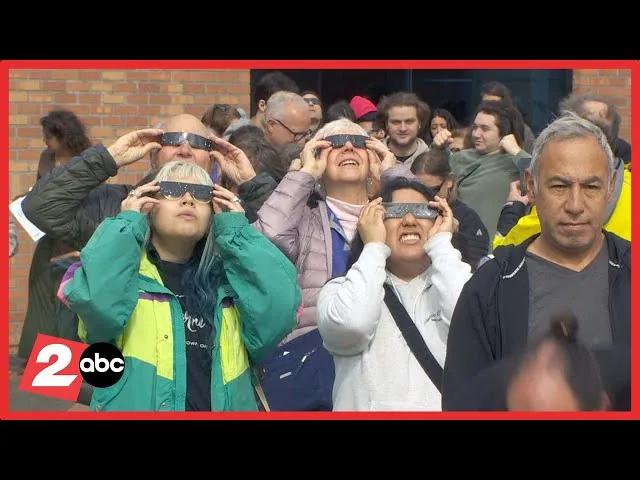
What haze can hide from you
This is the section people often skip, then regret.
Haze is especially good at stealing the subtle stuff. The outer corona may look shorter and less structured. The sky may not deepen as much as you expected from iconic eclipse photos. Distant landscape contrast can collapse. If the Sun is low, the final minutes before totality may feel more amber or muted than metallic and sharp.
That matters for expectations. A solar eclipse is not a studio production. The atmosphere is part of the show. If your mental picture comes from high-altitude, crystal-clear eclipse images, a dusty August evening in Spain may feel gentler and more diffuse.
It also matters for decision-making. A hazy Sun can tempt people to stare longer with naked eyes because it “doesn’t seem that bright.” That is exactly the wrong lesson. If you are bringing children or first-time viewers, set the rule in advance and keep it simple: viewers on unless totality has fully started and you are definitely inside the path.
How long does a calima last? Long enough to matter, short enough to stay flexible
How long does a calima last? There is no single answer. Dust intrusions can persist for part of a day, several days, or longer depending on transport patterns, mixing, and local weather. That uncertainty is the whole reason to avoid overconfident plans built around one scenic viewpoint and zero alternatives.
For eclipse planning, the useful takeaway is not the exact duration of an event a year in advance. It is lead time. Start watching broad aerosol and air-mass patterns in the final week, then tighten your decisions in the last 48 to 24 hours. If you are checking products like a sahara dust map today spain, sahara dust in spain today, or a sahara dust spain tracker today, treat them as context, not prophecy. They can tell you whether the air mass looks cleaner or dirtier than normal. They cannot promise what your exact western horizon will look like at eclipse time from one hilltop parking area.
The same caution applies to trend-chasing around phrases like sahara dust map august 2024, sahara dust plume 2024, sahara dust plume 2024 tracker, or sahara dust 2024 prediction. Those are useful reminders that long-range dust transport is real and common. They are not substitutes for near-event analysis in 2026.
Your backup plan should be built around transparency, horizon, and mobility
A good eclipse backup plan is not just “drive somewhere else if it looks bad.” It is a ranked set of choices made before you are stressed.
1. Pick a primary site with a clean western horizon
Because Spain’s 2026 eclipse occurs late in the day, a low western Sun is part of the challenge. A site with hills, apartment blocks, trees, or industrial haze to the west gives you less margin. Even if the sky overhead looks decent, the final approach to totality can be compromised by low-altitude murk.
2. Know whether your backup improves geometry or only scenery
A prettier site is not always a better eclipse site. Your backup should improve one of three things: your position inside totality, your odds of cleaner air, or your horizon. If it improves none of those, it is not really a backup.
3. Set a movement deadline
Do not spend the whole eclipse in the car. Decide in advance when you will commit. If the atmosphere looks broadly dusty rather than locally cloudy, endless micro-moves are often a trap.
4. Bring the right viewing kit anyway
Even if haze is likely, pack as if the sky will cooperate. That means certified viewers for everyone, water, shade, power, and a plan for sharing the moment with your group. If you are shopping, phrases like eclipse viewing glasses or certified solar eclipse glasses describe the category people want, but what matters is that your viewers are intact, labeled correctly, and ready before the rush.
5. Plan for the human experience, not just the perfect photo
Tell your group what haze may change. If the corona looks softer than the posters, that is not failure. It is the real atmosphere doing real atmospheric things. The goal is not to win against the sky. The goal is to be in the right place, safely, when the shadow arrives.
A quick eclipse basics reset, because people mix up solar and lunar events
Search behavior around eclipses is messy, and it is common to see solar eclipse and lunar eclipse language mixed together. They are not interchangeable.
A solar eclipse happens when the Moon passes between Earth and the Sun, blocking some or all of the Sun for observers in the right place. A lunar eclipse happens when Earth’s shadow falls on the Moon. Dust in our atmosphere can affect how a lunar eclipse looks too; NASA notes that more dust or clouds in Earth’s atmosphere can make the eclipsed Moon appear redder. But the planning problem is very different. For a solar eclipse, local path geometry and local sky conditions are everything.
And when can a solar eclipse occur? Only at new moon, during eclipse season, when the Sun, Moon, and Earth line up closely enough for the Moon’s shadow to reach Earth. That geometry is why being inside or outside totality is non-negotiable. Weather can change the quality of the experience. It cannot turn a partial site into a total one.
What to watch in the final days before eclipse day
In the last week, we would watch three things together rather than obsess over one app screenshot.
First, broad aerosol or dust analysis: is the region under cleaner or dirtier air than average? Second, ordinary cloud forecasts and satellite loops: are there local cloud fields that might matter more than the dust itself? Third, local horizon reality: if the eclipse is late, what does the west actually look like from your chosen site?
If those signals disagree, prioritize the one most likely to kill the view. Thick cloud beats haze as a problem. But if cloud risk is modest and dust is widespread, transparency and horizon become the deciding factors.
This is also the moment to simplify your logistics. Fuel up. Download maps. Share the meeting point. Put your viewers where nobody can forget them. If you are still shopping at the last minute, you are already behind.
How an eclipse affects weather, power grids
Scripps News
Frequently asked questions
Can dusty or hazy air change how an eclipse looks?
Yes. Thin dust, milky haze, and calima-type conditions can leave the Sun visible while reducing contrast in the sky, which can affect the sharpness of the crescent Sun, the color and reach of the corona, and the darkening of the horizon. The excerpt also notes that haze does not make sunlight safe, so proper solar protection is still required outside totality.
During a total eclipse, which part of the Sun becomes visible to the eye?
The excerpt says the corona is one of the main features people notice during totality. It describes the corona as something whose color and reach can be affected by haze, which is why cleaner air can improve the view.
What is the glowing halo seen around the Sun in totality?
That halo is the corona. The excerpt notes that haze can reduce the color and reach of the corona, so layered air can make it look less distinct even when the eclipse itself is still clearly happening.
What should someone planning for a solar eclipse keep in mind?
A dusty or dim-looking Sun is still unsafe to view directly outside the brief total phase of a total solar eclipse. The excerpt says proper solar filters meeting ISO 12312-2 are required outside totality, and that glasses come off only when the Sun’s bright face is completely covered and go back on as soon as the first bright point returns.
Does the same viewing advice apply to a lunar eclipse?
No. The excerpt only discusses solar eclipse viewing, including the need for proper solar filters outside totality and the special rules for glasses during totality. It does not provide guidance about lunar eclipses.
On-site next steps
- Check your exact eclipse geometry in the Helioclipse Eclipse Explorer / 3D map. Use it to compare your main site and backup site, especially if one option gives you a cleaner western horizon or a better position inside totality.
- If you still need viewers for your group, get them early from our shop eclipse glasses. For families and first-time observers, this is the easiest way to avoid last-minute confusion over standards and labeling.
- For the bigger planning picture, read our August 12, 2026 total solar eclipse planning guide and our travel backup guide at eclipse travel without the chaos: routes, crowds, and backup plans for 2026.
Sources & further reading
- NASA Earth Observatory: Aerosols: Tiny Particles, Big Impact
- NASA Earth Observatory: Aerosol Optical Depth
- NASA Earth Observatory: Smog or Fog? Actually, a Bit of Both
- NASA Kids: What Causes Air Pollution?
- Space.com: Why low-level clouds vanish during a solar eclipse
- American Astronomical Society: How to View a Solar Eclipse Safely
- American Astronomical Society: About the ISO 12312-2 Standard for Solar Viewers
- NASA: What to Expect: A Solar Eclipse Guide
- NASA: Why Do Eclipses Happen?
- NASA: Eclipses and the Moon