Handheld viewers, fold-flat cards, and wraparound frames: choosing a format you will actually use
The safest eclipse viewer is the one that is both genuinely compliant and genuinely likely to be on your face, or in your hand, at the exact moment you need it. That sounds obvious, but it is where a lot of buying advice goes wrong. People get stuck on labels, or on the idea that one style must be “best,” when the real question is more practical: will this format fit your face, your glasses, your kids, your pocket, your group, and the way you actually watch the sky?
That is the heart of this solar eclipse glasses styles handheld clip 2026 guide. Certification is not optional; it is the floor. But once you are looking at properly labeled, safe products, the next question is usability. If you want to compare options before eclipse day, start with our shop for eclipse glasses and keep our Eclipse Explorer / 3D map handy so you know whether you are planning for a brief partial phase or a long day of waiting for totality.
In other words: ergonomics and fit vs certification—iso 12312-2 compliance eclipse planning is not a luxury topic. It is the difference between a viewer that gets used calmly and correctly, and one that ends up bent in a bag, slipping off a child’s nose, or being passed around awkwardly when the crescent Sun is already changing shape.
Certification is the baseline, not the whole decision
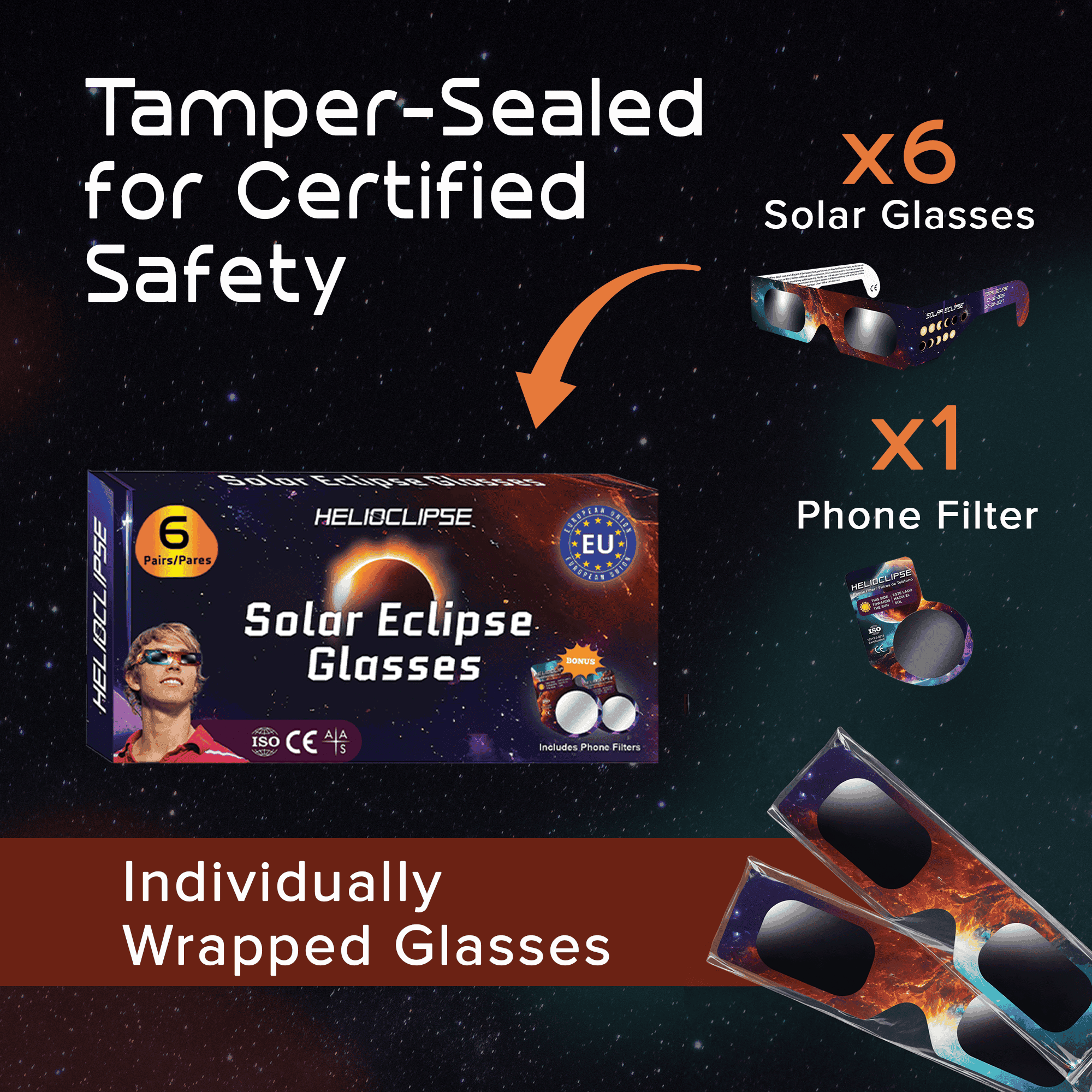
Before we compare formats, we need to be blunt about safety. For direct viewing of the Sun, you need special-purpose solar viewers that conform to ISO 12312-2. The American Astronomical Society explains that this standard applies to nonmagnifying, nonfocusing viewers that are handheld or worn like eyewear. NASA’s eclipse safety guidance says the same thing in plainer language: during any partial phase, you need proper solar protection at all times.
That means iso 12312-2 glasses are the starting point, not the premium upgrade. It also means ordinary sunglasses are out. The AAS notes that regular sunglasses pass far more light than is safe for direct solar viewing, and its technical guidance distinguishes solar-viewing filters from ordinary sunglass standards such as iso 12312-1. If you have seen confusing references to iso 12312 3, treat that as a red flag to slow down and verify what standard is actually being claimed.
The phrase iso 12312-2 certified eclipse glasses matters because it points you toward the right category of product, but it does not magically guarantee that every listing using those words is trustworthy. The AAS and NASA both warn that counterfeit or low-quality products exist, and NASA is explicit that it does not approve individual brands. So if packaging leans on phrases like “NASA approved,” that is not the proof people think it is. We cover that in more detail in ISO 12312-2 and eclipse viewers: what the standard means for your family and Fake and low-quality eclipse glasses: how to sanity-check what you are about to trust.
Once you have cleared that safety bar, then format becomes a real and useful comparison.
The three common formats most people are really choosing between
Most families are not choosing between twenty radically different technologies. They are choosing among a few familiar shapes.
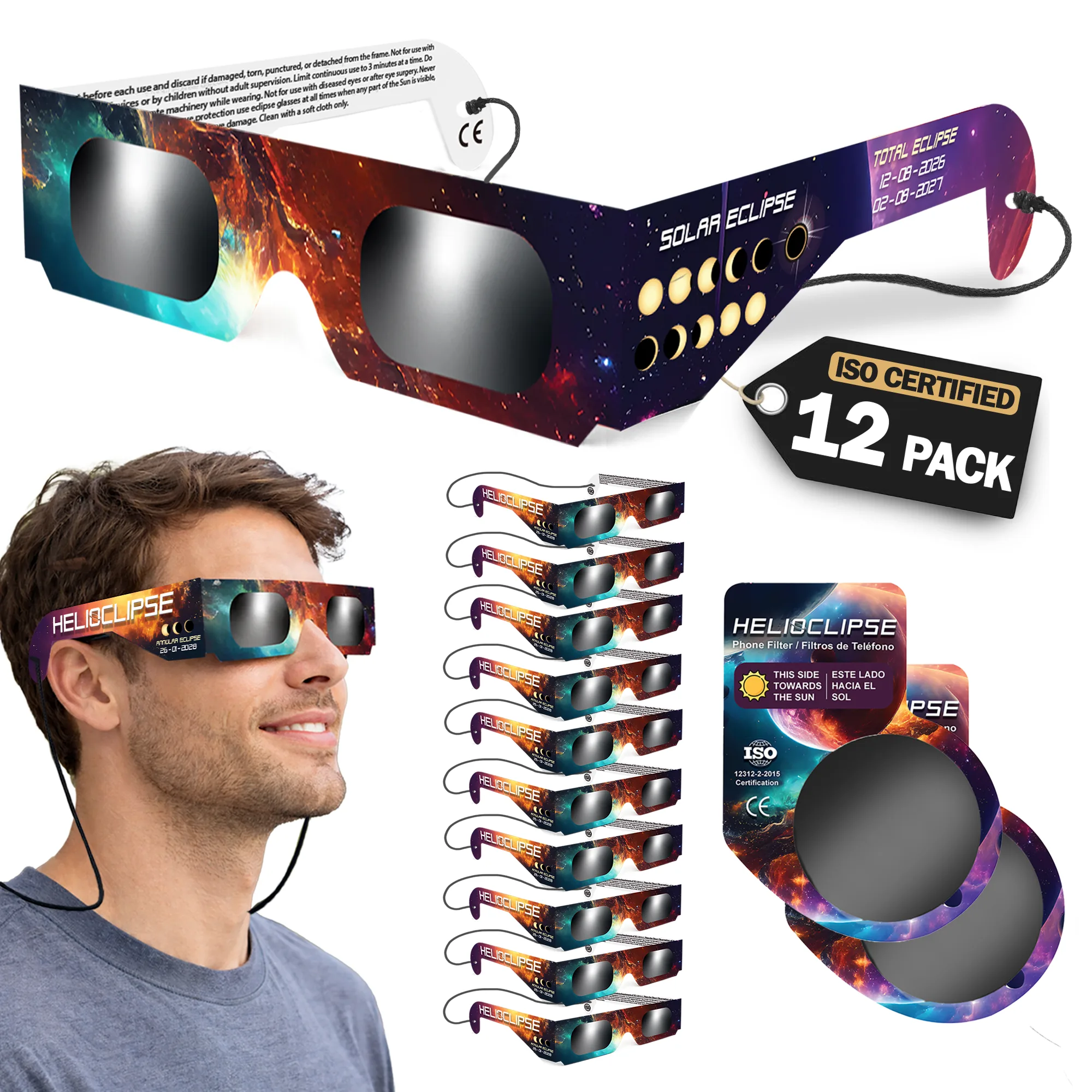
First are classic fold-flat paperboard glasses: light, cheap to store, easy to hand out, and usually the simplest option for groups. Second are wraparound or more structured frames, often sturdier and sometimes better at blocking stray side light, but not always ideal for every face. Third are handheld viewers, including simple card-style viewers and some magnifying designs that you hold up instead of wearing.
That is why handheld viewers, fold-flat cards, and wraparound frames: choosing a format is a more useful conversation than chasing hype about a single “best” viewer. The right answer depends on whether you are watching with children, wearing prescription glasses, sharing among several people, or trying to keep a set intact in a backpack for months.
You will also see people searching for handheld solar viewers and solar eclipse glasses as if they were interchangeable. They overlap, but they are not identical in use. A wearable frame leaves your hands free. A handheld viewer can be easier to share and can sit better in front of prescription glasses, but it asks more of your coordination. That difference matters more than it sounds like it should.
Fold-flat cards: the easiest format to stash, share, and buy in quantity
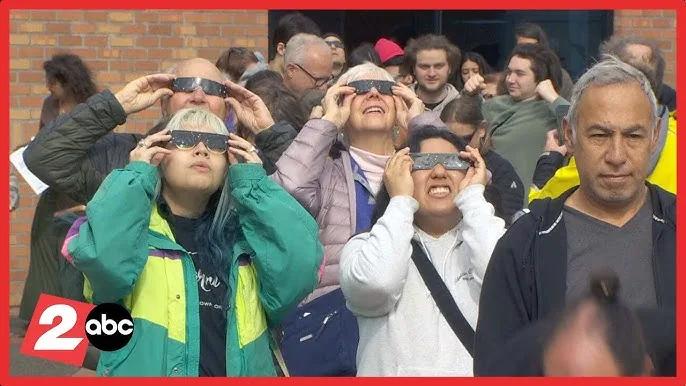
If you are planning for a family, a classroom, a scout group, or a car full of friends, fold-flat viewers are hard to beat. They store well, weigh almost nothing, and are easy to keep in a drawer, glove compartment, or travel pouch without taking over your life. This is the format many people picture first when they think of eclipse glasses.
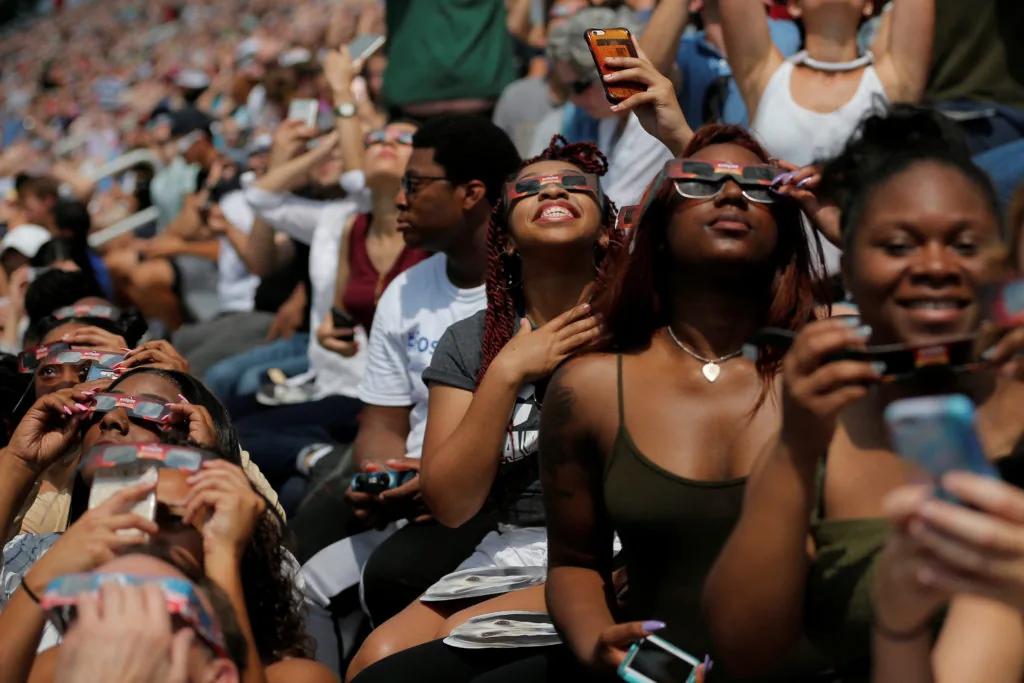
Their biggest strength is not glamour. It is logistics. A fold-flat card is the format most likely to survive bulk ordering, labeling, packing, and handing out on the day. If you are the person organizing a group text, a school event, or an office watch party, that matters. The AAS also points out something many first-time buyers miss: not everyone needs their own viewer every second. Partial phases move slowly, so sharing can work if people are patient and supervised.
That makes fold-flat cards especially good when your real need is “enough safe viewers for everybody, without drama.” In practical shopping language, this is where phrases like solar eclipse glasses where to buy, approved solar eclipse glasses, and certified solar eclipse glasses become less about bargain hunting and more about buying early from a source you trust. If you are outfitting a group, our shop for eclipse glasses is the cleanest place to start.
The tradeoff is fit. Fold-flat frames can feel flimsy on some faces. On windy days, on smaller heads, or over bulky prescription frames, they may need a little help staying aligned. That does not make them bad. It just means they are best when convenience, quantity, and portability matter more than a snug, all-day feel.
Wraparound frames: better side coverage, but not automatically better for everyone
Wraparound styles appeal to people for a simple reason: they feel more like “real glasses.” They can sit more securely, reduce stray light from the sides, and feel less disposable. For some adults, that makes them the most comfortable option during repeated short looks over a long afternoon.
This is where comfort can genuinely improve safety behavior. If a viewer feels stable and easy, you are less likely to fidget with it, peek around it, or take it off carelessly between glances. That is a real advantage.
But wraparound designs are not universally better. Some structured frames fit adult heads well and smaller faces poorly. Some do not sit comfortably over prescription glasses. Astronomy Magazine’s gear guide made exactly this kind of practical point: a wraparound design can be secure and protective, but may not fit small heads or work well over existing eyewear.
So if you wear glasses every day, do not assume a more rigid frame will automatically be easier. The AAS safety guidance specifically notes that if you normally wear eyeglasses, you should keep them on and either wear eclipse glasses over them or hold a handheld viewer in front. In real life, that means the “best” format may be the one that creates the least fuss with your normal glasses.
Handheld viewers: underrated for sharing, surprisingly good over prescription glasses
A solar eclipse handheld format can sound less convenient because it occupies one hand. Sometimes that is true. But handheld viewers solve a few problems extremely well.
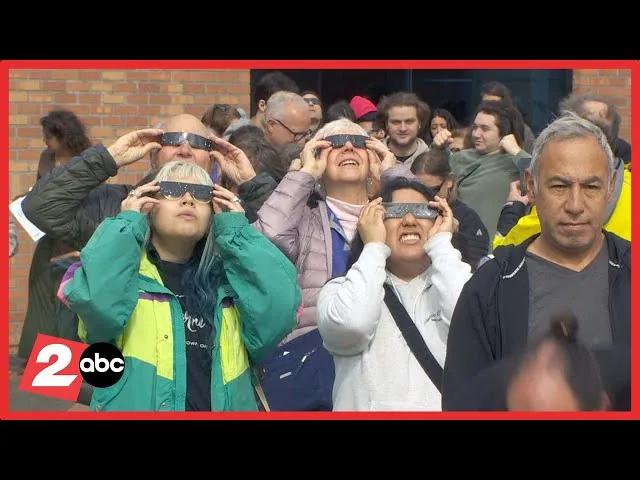
First, they are often easier for adults who already wear prescription glasses. Instead of forcing a frame over another frame, you simply hold the viewer in front. Second, they are naturally shareable. One person looks, lowers it, and passes it on. Third, they can be easier to supervise with children if the goal is a few short, deliberate looks rather than constant wear.
This is why handheld eclipse viewers deserve more respect than they usually get in generic buying roundups. They are not just a fallback for people who dislike glasses. They are a useful format for families where one person wears large frames, another is a child, and a third only wants occasional glances.
Some solar eclipse handheld viewer designs also offer modest magnification. That sounds exciting, and sometimes it is. Space.com’s review of a 2x handheld viewer found that magnification can make sunspots and the solar disk a bit more interesting, but it also noted a practical issue: fixed lens spacing can produce double vision for some users. In other words, magnification is not a free upgrade. It adds another ergonomic variable.
If your priority is simplicity, a plain handheld viewer may be better than a magnified one. If your priority is a slightly closer look and you know you will practice with it beforehand, a magnifying handheld can be fun. Just do not confuse “more features” with “better for everybody.”
Kids, families, and the question that matters most: will they keep it on correctly?
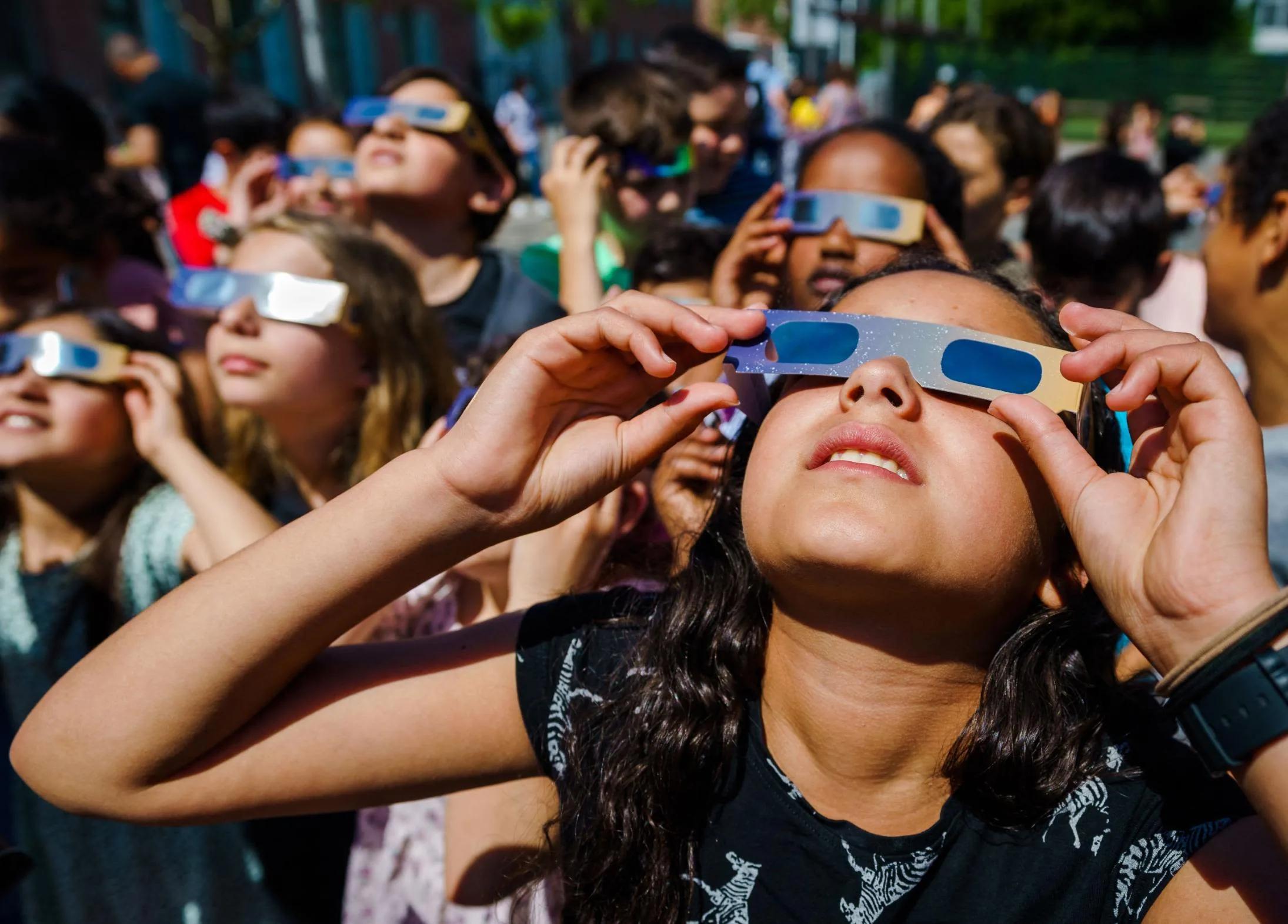
For children, the best viewer is usually the one that fits their face and their attention span. That sounds almost too basic, but it is the whole game.
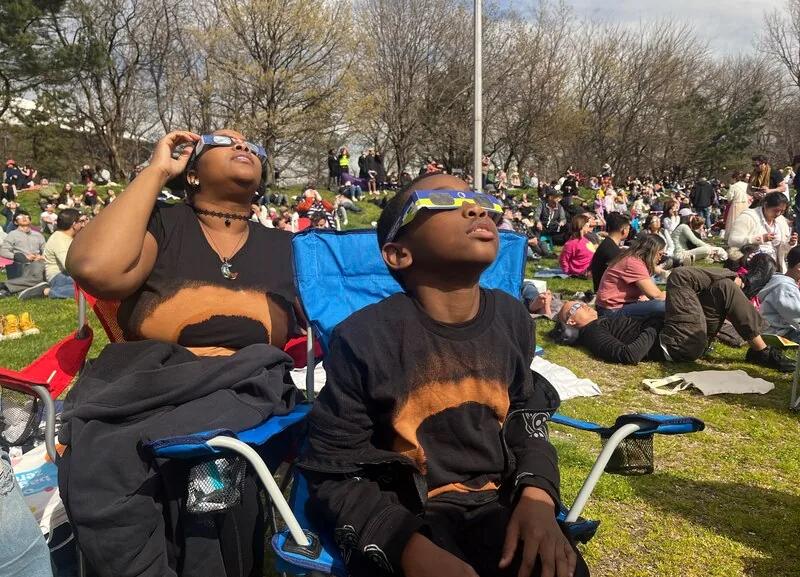
A child-size or smaller-fitting wearable frame can be great because it leaves hands free and reduces the temptation to tilt the filter away. On the other hand, some children do better with a supervised handheld viewer because an adult can control when it goes up and when it comes down. The AAS repeatedly emphasizes supervision, and that is not boilerplate. It is practical advice.
Think about the actual scene. Are you standing in a park for two hours? Are you traveling to totality with snacks, hats, and a lot of waiting? Are you trying to let three siblings take turns without one pair getting crushed in the grass? Those details should drive the format choice more than abstract product categories.
For many families, the answer is not one format. It is a mix: wearable viewers for kids who want their own pair, plus one or two handheld viewers for sharing or for adults wearing prescription glasses. That is often smarter than trying to force one style onto everyone.
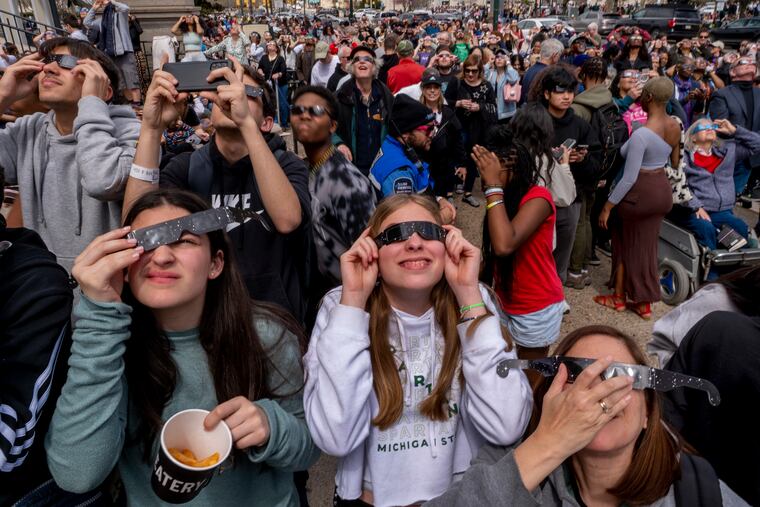
And if you are planning for a total eclipse, make sure everyone in your group understands the timing rules before the day arrives. Inside the path of totality, filters come off only during totality itself, when the Sun’s bright face is completely covered. Outside totality, or during any partial or annular eclipse, they stay on. Our guide When glasses on, when glasses off: eclipse phases explained for first-time viewers is worth sending to the family group chat before anyone packs the car.
Storage, durability, and why “cheap enough” can still be the wrong buy
A viewer that is technically safe on arrival can still become unusable if it is scratched, punctured, bent, or allowed to come loose from its frame. The AAS says to inspect viewers before use and discard them if damaged. Space.com’s review made the same point in a more vivid way: even a tiny pinhole can matter.
That is why storage is not an afterthought. It is part of the buying decision.
Fold-flat paperboard viewers are easy to store in envelopes or sleeves, but they do not love moisture. The AAS specifically warns against getting cardboard wet and advises keeping viewers clean, dry, and protected from scratches and punctures. More structured frames may survive repeated handling better, but they take up more room. Handheld viewers can be durable, but their shape may make them more awkward to pack unless they come with a sleeve or pouch.
This is also where people start comparing iso 12312 2 glasses price and assuming the cheapest safe option is always the rational one. Sometimes it is. If you need many pairs for one event and can store them properly, low-profile fold-flat viewers make perfect sense. But if you know a pair will live in a backpack, travel kit, or glove compartment for months, a slightly sturdier format may be the better value because it is more likely to remain intact and usable.
Price matters. So does the cost of replacing damaged viewers at the last minute, when stock is tight and shipping gets slow.
What about clip-ons, custom printing, and “special” formats?
The search phrase solar eclipse glasses styles handheld clip captures a real shopping instinct: people want something that works with their existing life, especially with prescription glasses, hats, or event giveaways.
Clip-on concepts can sound ideal for glasses wearers, but they are only a good idea if they are purpose-made solar viewers from a trustworthy source and if they sit securely enough to prevent stray direct sunlight from reaching your eyes. The AAS standard discussion is useful here because ISO 12312-2 applies to handheld or eyeglass-like, nonmagnifying viewers for direct solar observation. The shape can vary more than many people realize; the safety requirements do not.
You may also run into custom solar eclipse glasses for schools, companies, weddings, tourism boards, or public events. Custom printing is not automatically suspicious. The AAS supplier guidance explicitly notes that some manufacturers offer custom printing for bulk orders. What matters is not the logo on the cardboard. What matters is whether the underlying product is genuinely compliant, properly labeled, and sourced through a trustworthy chain.
That is also why random marketplace listings can be such a mess. People looking up solar eclipse glasses styles handheld clip reddit are often trying to crowdsource trust because the listings themselves are confusing. Community discussion can surface useful experiences about fit, but it cannot replace verification. Use other people’s comfort notes as a clue, not as your safety standard.
What not to use instead
This article is about choosing among safe formats, not about improvising unsafe ones. So let’s keep this simple.
Do not use ordinary sunglasses. Do not stack sunglasses. Do not use smoked glass, exposed film, improvised dark plastic, or a camera filter held in front of your eyes. NASA and the AAS are both clear on this.
If you do not have a safe viewer, use indirect viewing instead. A pinhole projector, a colander, or even the tiny gaps between leaves can project crescent Suns onto the ground during partial phases. That is a wonderful backup, especially for kids, but it is not a substitute for direct-viewing filters if your goal is to look at the Sun itself.
And if you are using binoculars, a telescope, or a camera, eclipse glasses and handheld viewers are not the right filter for the optics. Solar filters for magnifying equipment must go on the front of the instrument, not at the eyepiece. That distinction is non-negotiable.
So which format should you actually buy?
Here is the short version.
Choose fold-flat cards if you want the easiest storage, the simplest group distribution, and the least friction for family or school use. Choose wraparound frames if adult comfort, side-light blocking, and a more secure feel matter most, and you have checked that the fit works for your face. Choose handheld viewers if you wear prescription glasses, expect to share among several people, or prefer a deliberate look-up/look-down rhythm.
For many households, the smartest answer is a combination. One format does not have to do every job.
If you are shopping now, think in scenes, not slogans. Who is watching? How old are they? Will you be traveling? Will viewers sit in a bag for months? Will people share? Are you inside totality or only seeing a partial eclipse? Our Eclipse Explorer / 3D map helps with that last question, and it matters because the viewing rhythm is different when you are planning for a total eclipse versus a partial one. If you are building a 2026 plan, our August 12, 2026 total solar eclipse planning guide is the right next read.
And when you are ready to buy, keep the product language grounded. You want solar eclipse glasses iso 12312-2 certified, not vague “solar eclipse sunglasses.” You want eclipse viewing glasses from a source you trust, not a listing that leans on fake authority. You want something your family will actually wear correctly when the sky starts changing.
That is the real answer to best handheld viewers fold flat cards and wraparound frames choosing a format. Not the fanciest one. Not the one with the loudest packaging. The one that is safe, fits the people using it, and will still be in good condition when the Moon takes its first bite out of the Sun.
3D Fold Flat Card - Spinning Frame | Birthday Card
blondecards_n_crafts
Frequently asked questions
What kinds of eclipse viewers can I choose from if I want something practical to use?
You can choose from handheld viewers, fold-flat cards, and wraparound frames, as long as the product is genuinely compliant and likely to be used correctly when you need it. The article’s main point is that fit and convenience matter after certification, because the best viewer is the one that stays on your face or in your hand during the eclipse.
What do people usually call the glasses you wear to look at a solar eclipse?
They are usually called special-purpose solar viewers or eclipse glasses. The article says they must conform to ISO 12312-2 for direct viewing of the Sun, and they are meant to be handheld or worn like eyewear.
If I do not have eclipse glasses, what is safe to use instead?
For direct viewing of the Sun, the article does not offer a substitute for proper solar viewers. It says ordinary sunglasses are not safe, and during any partial phase you need proper solar protection at all times.
Do I really need special glasses to watch a solar eclipse?
Yes. The article says direct viewing requires special-purpose solar viewers that conform to ISO 12312-2, and that ordinary sunglasses are not enough because they let through far more light than is safe.
What should I keep in mind when choosing a viewer style for eclipse day?
Start with certification, then choose the format you are most likely to actually use comfortably. The article emphasizes that ergonomics and fit matter because a viewer can fail in practice if it bends in a bag, slips on a child, or is awkward to pass around.
On-site next steps
- Browse our shop for eclipse glasses if you are deciding between formats for family use, sharing, or travel kits.
- Use the Eclipse Explorer / 3D map to confirm whether your location is in totality or seeing a partial eclipse, because that changes how and when viewers are used.
- If you want the safety background before you buy, read ISO 12312-2 and eclipse viewers: what the standard means for your family, When glasses on, when glasses off: eclipse phases explained for first-time viewers, and Why staring at the Sun without protection is never “just a quick look”.
Sources & further reading
- Gear to safely see the 2024 eclipse
- Celestron EclipSmart 2x Power Viewers Solar Eclipse and Solar Eclipse Glasses Observing Kit review
- How to stay safe during the April 8 solar eclipse
- Fake solar eclipse glasses are everywhere ahead of the total solar eclipse. Here's how to check yours are safe
- Best solar eclipse glasses to stay safe when viewing 2026's total solar eclipse
- About the ISO 12312-2 Standard for Solar Viewers
- How to View a Solar Eclipse Safely
- Eyewear & Handheld Viewers
- Suppliers of Safe Solar Viewers & Filters
- Total Solar Eclipse Safety