Lodging and eclipse weekends: what “book early” looks like in practice
An eclipse trip compresses an unusual number of visitors into a narrow strip of geography for a spectacle that may last less than two minutes. The bed is only one part of the reservation; you are also choosing your position relative to the Moon’s shadow, your route on eclipse day, and how much freedom you will have if clouds threaten.
That is why an eclipse accommodation book early strategy should begin with a map, not a hotel search. Use our Eclipse Explorer to distinguish totality from a merely deep partial eclipse, identify several possible bases, and compare the roads around them. A room in the wrong place can be comfortable and still leave you outside totality.
The practical question behind lodging and eclipse weekends: what “book early” looks like in real life is not simply how many months ahead you should pay. It means making a reversible plan early, checking the conditions attached to it, and leaving yourself enough time and money to adapt.
Why eclipse lodging behaves differently from an ordinary weekend
A concert or festival draws people toward one venue. A total solar eclipse draws them into a moving shadow that crosses cities, villages, islands, farmland, and sometimes remote terrain. Demand can therefore spread across an entire path while concentrating sharply in communities with good transport, substantial lodging, favorable climate statistics, or longer totality.
The crucial divide is geometric. Inside the path of totality, the Moon completely covers the Sun for a brief interval. Just outside it, even if almost all of the solar surface is covered, the event remains partial: the sky does not produce the same full sequence of totality, and certified solar viewers stay on throughout. Our guide to what the centerline means in Spain explains why a few kilometres can change the experience.
Small communities may have limited hotels, holiday rentals, campsites, restaurants, fuel stations, parking areas, and access roads. Larger cities have more capacity, but they can also attract more visitors. There is no responsible universal claim such as “every room will sell out a year ahead,” and historical reports are not hotel forecasts. The useful lesson from 2017 and 2024 is narrower: rooms in strategically placed communities can become scarce well before eclipse day, policies may tighten, and the drive after the eclipse can take much longer than an ordinary journey.
Lists of the best places to stay for eclipse 2024 are now historical snapshots, not templates for 2026. They still show how varied eclipse accommodations can be—city hotels, farm stays, campgrounds, RV pitches, organized festivals, and homes shared by extended families—but every new path has different infrastructure and weather stakes.
The August 12, 2026 reality check
Will there be a solar eclipse in 2026? Yes. On August 12, 2026, a total solar eclipse will cross parts of Greenland, Iceland, Spain, and a small corner of northwestern Portugal after also touching a remote area of northern Russia and the North Atlantic. Much of Europe will see a partial eclipse instead.
For most locations inside the path, NASA says totality will last less than two minutes. Near the central portion of the path in Greenland, northern Russia, or the North Atlantic, the maximum remains under two and a half minutes. This is not a long midday event in Spain: totality arrives in the late evening, with the Sun low in the west and sunset close behind.
NASA’s published local-time examples make the planning stakes concrete:
- León, Spain: the partial phase begins around 7:32 p.m.; totality runs approximately from 8:28 to 8:30 p.m.
- Zaragoza, Spain: the partial phase starts around 7:34 p.m.; totality is shown from roughly 8:29 to 8:30 p.m., with sunset before the partial eclipse has formally finished.
- Valencia, Spain: the partial eclipse begins around 7:38 p.m.; totality is listed from approximately 8:32 to 8:33 p.m., very close to sunset.
- Reykjavík, Iceland: the partial phase starts around 4:47 p.m.; totality is approximately 5:48 to 5:49 p.m.
Those rounded times are for the named cities, not every hotel in the region. Exact circumstances vary with location, so use the interactive map to check your intended property and viewing site rather than assuming that a city name guarantees totality.
The low Sun creates an additional lodging filter in Spain: a western horizon blocked by buildings, hills, trees, or mountains can matter as much as distance from the centerline. Madrid and Barcelona provide a warning against treating “almost total” as total. NASA lists both at about 99% coverage, but each remains outside the path. Viewers there must keep proper solar protection on for the entire event.
What “book early” actually means
Use this eclipse accommodation book early 2026 guide as a sequence rather than a countdown. The best time to act is when you can secure a suitable, clearly documented reservation on terms you understand—not when anxiety pushes you into a bad nonrefundable purchase.
First, shortlist regions rather than one famous town
Choose at least three plausible bases. For each one, record whether it is inside totality, how far it is from the path edge, what lies to the west of likely viewing sites, and whether there is more than one practical road in and out. The best places and timing for eclipse accommodation book early planning emerge only when geometry, local time, horizon, transport, and weather are considered together.
A shared hotel bookings eclipse map can be genuinely useful for a family or group: mark each candidate property, its cancellation deadline, the nearest open viewing area, public-transport options, fuel stops, and alternate sites. Do not share sensitive booking details on a public map.
Then reserve the trip you can realistically keep
Before paying, read the full terms for:
- minimum-stay requirements;
- deposits and payment dates;
- cancellation and modification deadlines;
- whether the rate can change after confirmation;
- taxes, parking charges, and resort or cleaning fees;
- check-in hours if roads are congested;
- occupancy limits and rules for children;
- campsite restrictions, vehicle dimensions, and generator use;
- the policy if the property or host cancels.
Save the confirmation, rate, room type, dates, included services, and cancellation policy as a PDF or screenshot. If a host changes the arrangement, obtain the revision in writing. Consumer rights vary by country and booking method, so consult the relevant national or regional authority if a confirmed reservation is cancelled or repriced unexpectedly.
A refundable room can function as planning insurance, but it is not permission to hoard several scarce properties until the last moment. If you make overlapping reservations while comparing routes, cancel unwanted ones promptly and within their terms.
Recheck instead of assuming
Contact the property months ahead and again near the trip. Confirm that the reservation is active, the dates are correct, late arrival is possible, and planned transport or parking still exists. For a private rental, verify the address and legal check-in process through the booking channel rather than transferring money in response to an unsolicited message.
Choose a base for mobility, not bragging rights
The centerline offers the longest totality in a local cross-section of the path, but the gain from chasing every last second may be smaller than the logistical cost. A base somewhat away from the centerline can still provide a memorable interval of totality while offering more rooms, safer roads, better amenities, or a clearer western horizon.
This changes the usual idea of the best place and time to see eclipse conditions. There is no single best point for everyone. A family with young children may value toilets, shade, food, and a short walk. A traveler without a car may need a city where the viewing site is reachable on foot. A mobile observer may prioritize two road directions and a cancellation policy that preserves options.
A larger city inside the path can reduce the need to drive at all. If you can walk from your room to an open site with an unobstructed horizon, you remove parking and post-eclipse traffic from the most fragile part of the plan. In contrast, a remote rental may look peaceful on a map but become a trap if it has one narrow access road and no nearby viewing area.
Do not assume that sleeping outside the path and driving into it on August 12 will be easy. That approach may save money, but it transfers risk from the lodging budget to the road network. If you use it, choose a base close enough for an early departure, identify more than one destination inside totality, and carry water, food, medication, and offline maps. Our 2026 crowd and backup-plan guide goes deeper into route design.
Book the night after, not only the night before
A common mistake is to reserve one night, watch totality, and join the first wave leaving immediately afterward. During past major eclipses, the sharp outbound surge turned ordinary drives into prolonged journeys. The exact delay in 2026 cannot be predicted from old events, but the underlying pattern is easy to understand: thousands of people finish watching at almost the same moment and head toward a limited number of roads.
Staying the night after the eclipse changes the rhythm. You can watch the remaining partial phase safely, eat, let children decompress, and leave the next morning. In Spain, where the Sun sets during or soon after the later partial phases in several locations, an overnight stay also avoids beginning a long drive in evening traffic after an emotionally intense event.
If another night is impossible, do not race away at the first flash of returning sunlight. Finish observing with certified viewers, pack methodically, monitor official traffic information, and wait where it is legal and safe. The road may still be busy, but you avoid turning the end of totality into a dangerous starting gun.
Tell your group about this plan before the trip. Expectations matter: a friend who thinks everyone is leaving at 8:31 p.m. may make a sensible wait feel like a last-minute failure.
Weather flexibility has to be designed in advance
Climate describes long-term tendencies; it does not promise a clear sky on one afternoon. Forecasts become useful only closer to August 12, and even then uncertainty remains. The American Astronomical Society recommends balancing duration, amenities, and clear-sky prospects rather than maximizing just one variable.
Your room can either support flexibility or destroy it. A property surrounded by several viable roads gives you more options than an isolated site reached through one bottleneck. A booking that ends on eclipse morning may force you to pack and check out just when forecasts are changing. A two- or three-night stay can provide a calmer base for assessing conditions, although local availability and cost will determine what is realistic.
Decide in advance what would justify moving. A vague fear of clouds can send you into traffic for no gain. Compare reputable forecasts, satellite imagery, expected cloud type, travel time, road capacity, and the western horizon. Set a final decision time, after which the group stays put unless safety requires otherwise.
The lodging plan and weather plan should therefore be separate but connected:
- Base plan: where you sleep and what services you can rely on.
- Primary observing site: reachable without heroic travel.
- Weather alternatives: one or two realistic sites, not a dozen pins.
- Stay-put threshold: the point when movement becomes more likely to cost totality than save it.
Match the property to the people coming with you
Eclipse places to stay should be evaluated as temporary group headquarters. A low nightly rate loses its appeal if six people have one vehicle, no food nearby, no refrigerator for medication, and nowhere appropriate to wait before check-in.
For families, ask about blackout curtains for children who need an afternoon rest, food storage, stairs, accessible bathrooms, and walking distance to the observing area. For older relatives or anyone with limited mobility, confirm the surface of the route—not merely its mapped distance. A 500-metre walk across loose ground is different from a paved, step-free route.
Campgrounds and RV sites can place you close to open horizons, but they require a more detailed checklist: water, toilets, fire restrictions, shade, wind exposure, quiet hours, ground conditions, and legal arrival times. Never assume that an empty field visible online is public or available for parking.
For a group booking, choose one coordinator and one shared document. Record names, arrival times, room allocations, payment responsibilities, medical essentials, emergency contacts, and the viewing plan. Give everyone the address and offline directions. Mobile networks may be congested precisely when late arrivals are trying to call.
Answer the timing questions before paying
What time can you view the eclipse? The useful answer has three parts: the beginning of the partial phase, the beginning and end of totality for sites inside the path, and the end of the partial phase or local sunset. These times vary by coordinates. In Spain, the 2026 event unfolds in the evening; in Reykjavík, totality occurs in the late afternoon. Look up the property and observing site separately if they are far apart.
How long will the solar eclipse last? The partial phases unfold over much longer than totality. For example, NASA’s table for León runs from a partial beginning near 7:32 p.m. to an end near 9:22 p.m., while totality itself occupies roughly two minutes in the rounded table. Elsewhere inside the path, totality is generally under two minutes, and near the edge it becomes substantially shorter.
These numbers explain why accommodation matters. The astronomical climax is brief, but the trip occupies days: arriving before congestion, scouting the horizon, watching forecasts, observing the full sequence, and avoiding the immediate outbound rush. A good reservation creates room around those two extraordinary minutes.
Pack viewing safety with the room confirmation
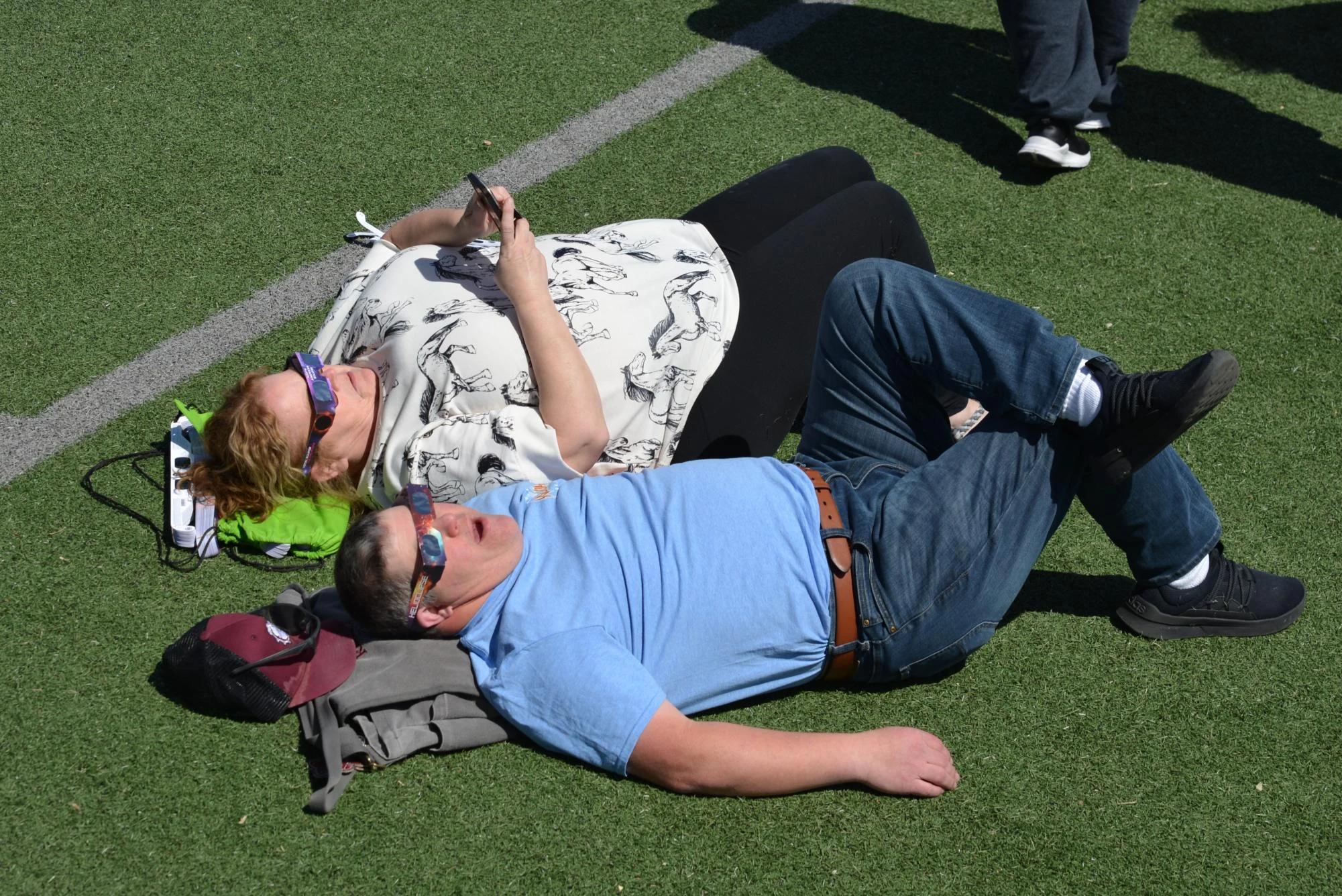
Lodging can be replaced; eyesight cannot. Whenever any bright part of the Sun is visible, look only through proper solar viewers that conform to ISO 12312-2 or use a safe indirect method such as pinhole projection. Ordinary sunglasses are not sufficient.
Only observers who are definitely inside the path of totality may remove their viewers, and only once the Sun’s bright face is completely covered. Put them back on as soon as sunlight begins to reappear. In Madrid, Barcelona, London, and every other partial-only location, there is no glasses-off phase.
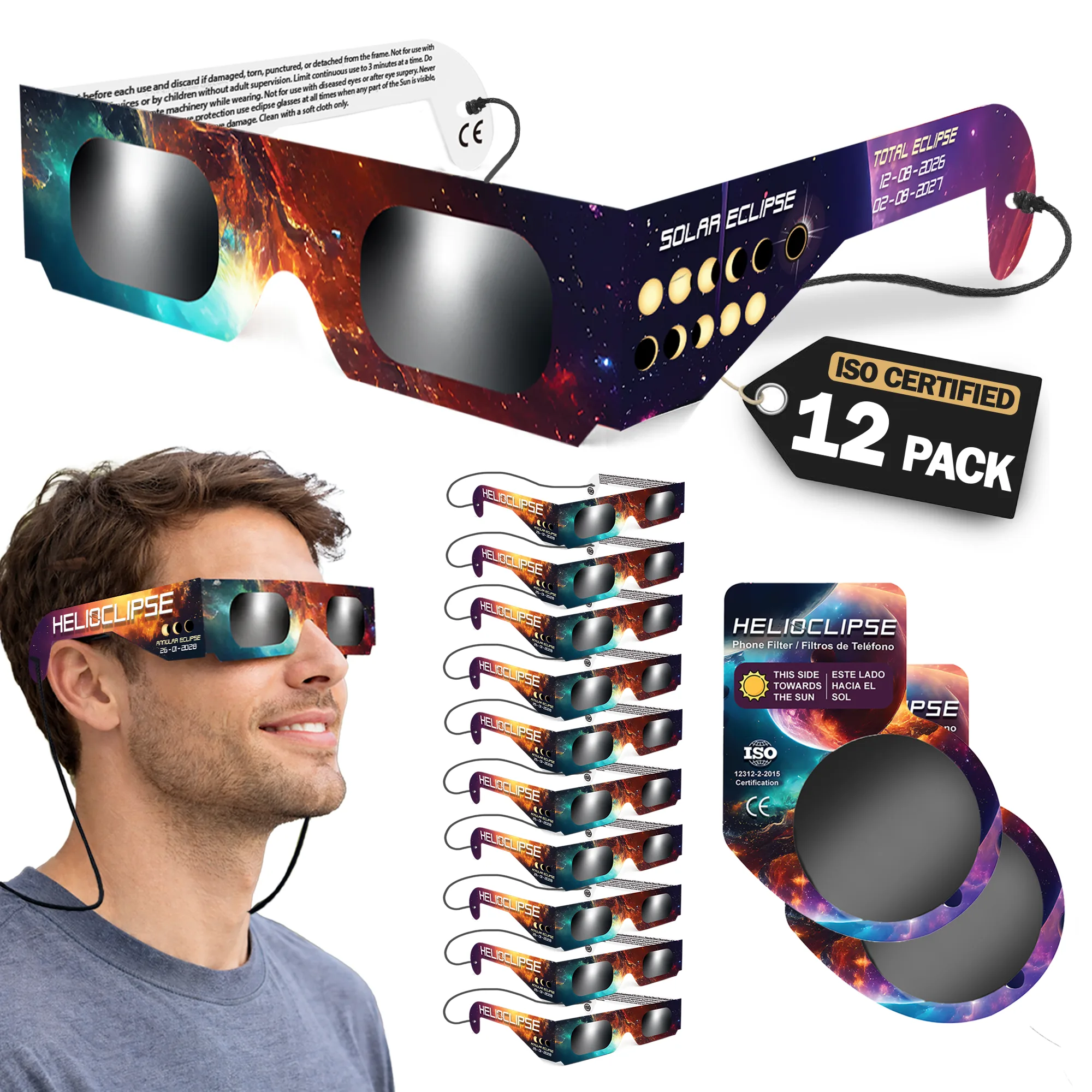
Order for your actual group rather than hoping to find supplies at the destination. Product language such as certified solar eclipse glasses and eclipse viewing glasses should lead you to check the stated standard, manufacturer information, instructions, and physical condition—not to trust a vague marketplace claim. For schools, clubs, or extended families considering solar eclipse glasses bulk quantities, allow time to distribute them and teach everyone how to use them before travel day.
Our ISO 12312-2 eclipse viewers can be packed with your confirmations, medication, and travel documents. Inspect every viewer before use and discard it if the filter is torn, punctured, scratched, or separating from its frame.
A booking timeline that stays useful
There is no universal month when every traveler must book. Instead, use milestones:
- As soon as the trip is serious: identify who is coming, establish a budget, inspect the path, and shortlist several regions.
- When suitable inventory opens: reserve lodging with understandable terms; document the confirmation and cancellation deadline.
- Several months before: verify transport, accessibility, horizon options, and the reservation itself. Buy certified viewers for the group rather than leaving safety equipment to chance.
- Several weeks before: check local authority announcements about parking, events, road closures, public transport, and restricted land.
- In the final forecast window: compare reputable weather information and decide whether any planned move remains practical.
- On eclipse day: leave generous time, keep offline directions, observe safely, and avoid treating the end of totality as a signal to race onto the road.
An eclipse accommodation book early 2026 guide is valuable only if it leaves you with a trip you can execute. The goal is not the earliest possible nonrefundable transaction. It is a confirmed base, a verified place inside the shadow, a visible horizon, and enough flexibility to respond intelligently.
Frequently asked questions
Is there a solar eclipse on August 12, 2026?
Yes. The article discusses the August 12, 2026 eclipse and emphasizes that viewers should use a map to distinguish the path of totality from areas that will see only a partial eclipse.
When will the eclipse be visible at my location?
The excerpt does not provide viewing times. It recommends checking a map to identify your position relative to the Moon’s shadow and to compare possible viewing bases.
How long will totality last during the eclipse?
The excerpt does not give a specific duration for this eclipse. It notes that totality is brief and that eclipse trips may be organized around a spectacle lasting less than two minutes.
What does booking accommodation early for the 2026 eclipse involve?
Booking early means making a reversible plan early, checking the reservation conditions, and keeping enough time and money to adapt if clouds threaten. Choose lodging with a map in mind, since a comfortable room outside the path of totality may not provide the full eclipse experience.
What is the safe way to watch if I am outside the path of totality?
If you are outside the path of totality, the eclipse remains partial even when most of the Sun is covered. Certified solar viewers should stay on throughout the event in those locations.
On-site next steps
- Open the Helioclipse Eclipse Explorer and check whether each potential property is inside totality, near the path edge, or in the partial zone.
- Compare your base with the detailed August 12, 2026 planning guide before committing to transport and viewing sites.
- Once the group size is firm, order ISO 12312-2 certified eclipse glasses early enough to inspect and distribute them before departure.
Sources & further reading
- American Astronomical Society: Eclipse 2024: Getting Your Business Ready
- Space.com: Want to See the 2017 Solar Eclipse? Better Book Your Hotel Room Now
- Space.com: Solar eclipse jam: How to avoid getting stuck in traffic on April 8, 2024
- Sky & Telescope: 2024 Total Solar Eclipse: 25 Events, Festivals, and Places to Stay
- American Astronomical Society: Solar Eclipse Climate & Weather Data
- NASA Science: Total Solar Eclipse on August 12, 2026
- NASA Science: Types of Solar Eclipses
- American Astronomical Society: Eclipse Basics
- American Astronomical Society: How to View a Solar Eclipse Safely
- American Astronomical Society: About the ISO 12312-2 Standard for Solar Viewers