Wholesale and large orders: what organizers should verify before buying
Buying eclipse viewers for 50 people is not the same job as buying them for 5,000. The larger the order, the more a small procurement mistake can spread: unclear test evidence, an unknown reseller, damaged filters, late delivery, or instructions that your audience cannot read.
The right wholesale solar eclipse glasses should come with more than a standards logo and a low unit price. Organizers need traceable manufacturing information, credible evidence of conformity with ISO 12312-2, suitable labeling, realistic delivery terms, and a plan for inspecting and distributing the viewers.
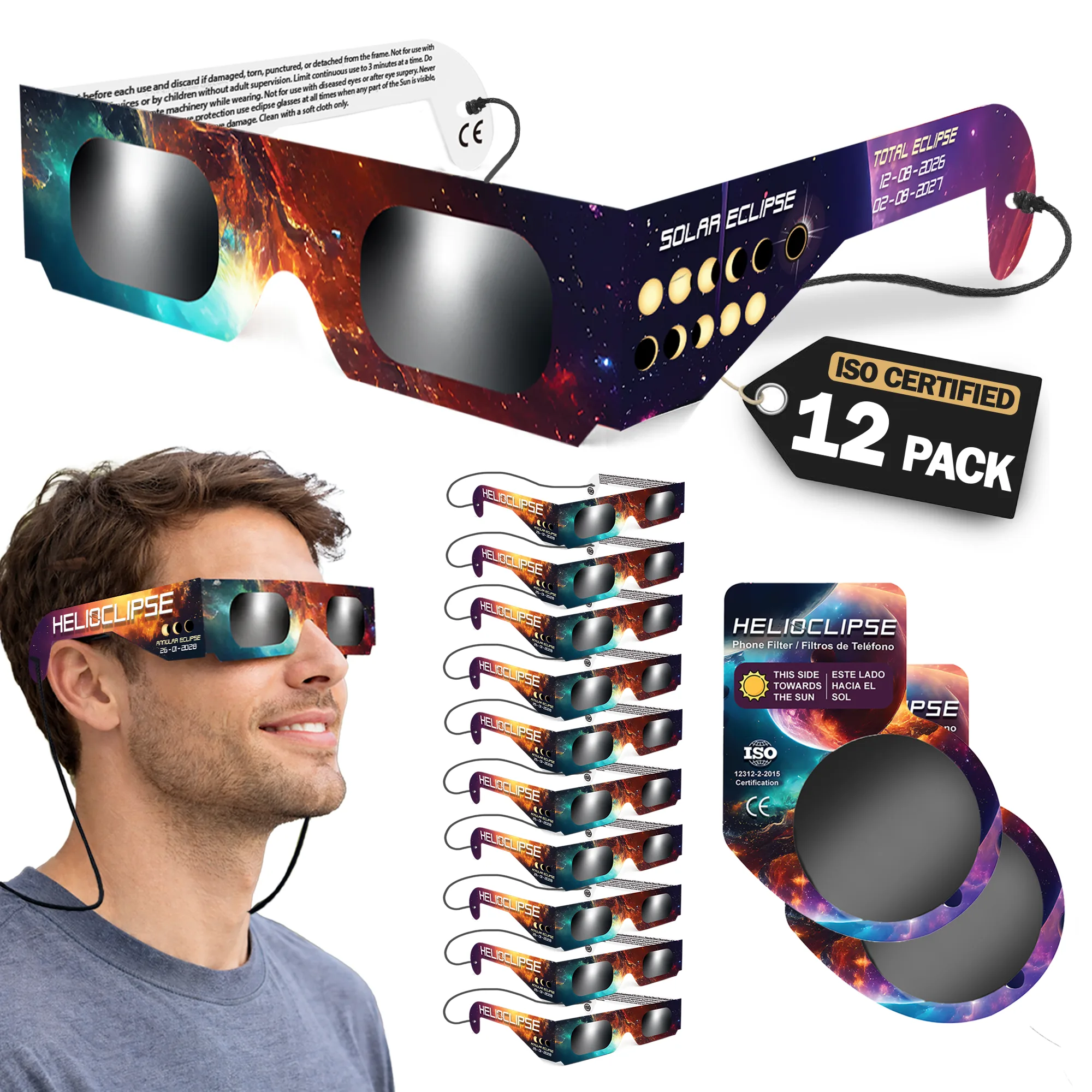
We sell ISO 12312-2 certified solar eclipse glasses through Helioclipse, but this guide starts one step before checkout. It gives schools, libraries, councils, employers, tour operators, museums, clubs, and event producers a repeatable way to evaluate a large order without treating a badge on a product page as proof.
The short checklist before you approve a purchase
A supplier should be able to answer each of these questions clearly and in writing:
| What to verify | Evidence to request | Why it matters | |---|---|---| | Product identity | Finished-product name, model or SKU, manufacturer, and manufacturing address | Documents are useful only if they apply to the exact viewers being delivered | | ISO 12312-2 conformity | A quantitative laboratory report for the relevant product or filter construction | Printing “ISO 12312-2” on a frame is not independent evidence | | Laboratory competence | Laboratory name, accreditation certificate, accreditation body, and relevant testing scope | A legitimate lab still needs accreditation for the work it performed | | Supply-chain traceability | Confirmation that the seller is the manufacturer or a publicly identified authorized reseller | This helps prevent unrelated products from borrowing a reputable manufacturer’s identity | | Labeling and instructions | Final artwork or a production sample in the audience’s language | People need legible directions, warnings, and manufacturer information at the moment of use | | Physical condition | Packaging method, storage conditions, and defect or replacement process | Scratches, punctures, loose filters, and moisture damage can make individual viewers unusable | | Quantity and schedule | Confirmed quantity, overage, production date, dispatch date, carrier, and delivery destination | “In stock” does not necessarily mean allocated to your order | | Total commercial cost | Goods, customization, setup, tax, shipping, duties, and rush charges | The lowest advertised unit price may not be the lowest delivered cost |
Do not accept a vague yes to all eight rows. Record the supporting files, URLs, names, dates, and written assurances in the event’s procurement folder. If responsibility changes hands before eclipse day, the next organizer should be able to reconstruct why the product was approved.
ISO 12312-2 is a starting point, not a decorative badge
ISO 12312-2 covers filters intended for direct, unmagnified observation of the Sun. Among other requirements, it addresses transmission of visible, ultraviolet, and infrared radiation, uniformity, material quality, mounting, and labeling. It does not mean that ordinary sunglasses become suitable because they are dark, mirrored, or marketed with solar language.
It is also important to use precise language. ISO develops standards; it does not personally inspect every retail batch or “approve” individual products. NASA publishes safety guidance but explicitly says that it does not approve particular viewer brands. Marketplace descriptions such as approved solar eclipse glasses or eclipse glasses nasa approved therefore cannot replace traceable test evidence.
Wording such as solar eclipse glasses iso 12312-2 certified or eclipse glasses iso 12312-2 may describe the intended standard, but the words alone prove nothing. Anyone can reproduce a logo or conformity statement. Our detailed guide to ISO 12312-2 and eclipse viewers explains what the standard does—and does not—tell a buyer.
The American Astronomical Society’s current manufacturer-vetting process asks for a quantitative test report, not merely a pass/fail certificate. Its criteria call for measurements covering visible, UVA, UVB, and infrared transmission, as well as transmission uniformity. The AAS also expects the testing laboratory to have appropriate ISO/IEC 17025 accreditation, or to be a suitable notified body in the European Union, with a scope relevant to ISO 12312-2 testing.
For an organizer, the practical question is not simply “Is there a PDF?” It is: Does this report identify the product we are buying, contain actual measurements, come from a suitably accredited laboratory, and remain connected to the manufacturer and seller through a traceable chain?
Verify the product, report, laboratory, and seller as one chain
A polished certificate can create false confidence when its relationship to the shipment is unclear. Treat due diligence as a four-link chain:
- The finished viewer: Record the model, construction, filter material, frame design, and manufacturer shown on the order.
- The report: Confirm that the tested sample corresponds to that viewer or its documented filter construction. Check report dates, sample identifiers, results, and page completeness.
- The laboratory: Verify the laboratory independently through the named accreditation body. The accreditation scope matters; general laboratory accreditation is not automatically evidence of competence for this test.
- The seller: Establish whether you are buying directly from the manufacturer or through an authorized reseller publicly identified by that manufacturer.
The AAS warns that the name of a reputable manufacturer can itself be copied onto unrelated products. That is why wholesale eclipse glasses should be traced through both the physical product and the commercial channel. A reseller’s claim of authorization is weaker than a manufacturer’s own published reseller record or direct written confirmation.
The same caution applies to trust badges. A graphic saying “tested,” “certified,” “NASA approved,” or “ISO” is a claim to investigate, not a finding to accept. Trust should come from evidence that can be read, matched, and independently checked—not from an image that looks official.
For additional warning signs, use our guide to spotting fake and low-quality eclipse glasses. It is especially useful when several departments are comparing bids and need the same rejection criteria.
Use the correct product category in your purchase order
Eclipse glasses and handheld viewers are for direct viewing with the unaided eye, apart from ordinary prescription glasses or contact lenses. They are not filters for cameras, binoculars, spotting scopes, or telescopes.
Magnifying optics concentrate sunlight. A proper solar filter for an optical instrument must be designed for that use and secured over the instrument’s front aperture. Wearing eclipse glasses while looking through unfiltered binoculars or a telescope is dangerously wrong: the concentrated light can damage the viewer and injure the eye.
Write that distinction directly into the order and event plan. If a science team will operate a filtered telescope, procure and manage that equipment as a separate technical system. Do not add generic “solar filter sheets” to the same order unless a qualified person has specified their intended use, mounting, provenance, and handling.
The naming can be confusing. Phrases such as wholesale solar eclipse sunglasses and wholesale eclipse sunglasses are commercially common, but eclipse viewers are not sunglasses. Ordinary sunglasses—including very dark ones—transmit far too much sunlight for direct solar observation. In procurement documents, use “eclipse glasses” or “handheld solar viewers conforming to ISO 12312-2” so that the required category cannot be mistaken for fashion eyewear.
Inspect labeling, fit, packaging, and instructions
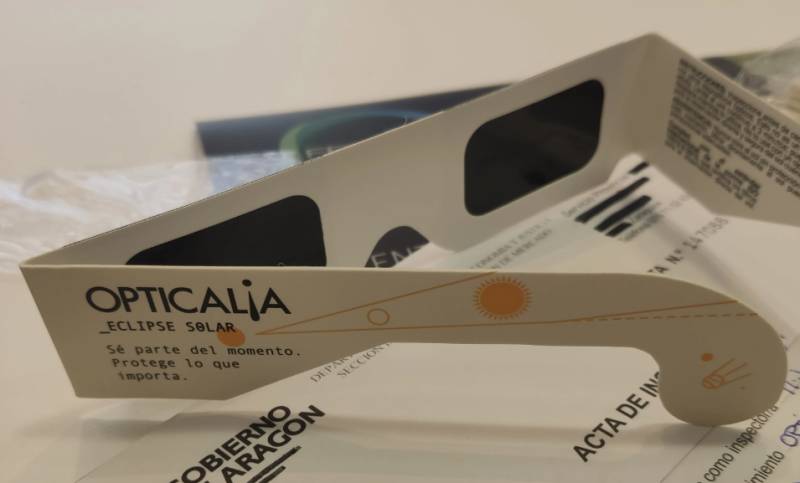
Ask to see the final production artwork or a physical sample before approving a customized run. At minimum, the viewer or its packaging should identify the responsible manufacturer and provide clear instructions for use in the language or languages of the audience. Check that text will remain legible after logos, sponsor messages, event schedules, and decorative artwork are added.
A useful sample review includes more than proofreading:
- Hold the viewer as an attendee would and check that the filter covers both eyes without direct sunlight leaking around an unsuitable frame.
- Confirm that the filter is firmly retained and that the frame has no sharp, rough, or uncomfortable edges.
- Check for scratches, punctures, bubbles, loose filter material, adhesive problems, or contamination.
- Test whether the instructions remain visible when units are packed or bundled for distribution.
- Confirm that packaging protects the filters from abrasion, bending, moisture, and careless handling.
- Ask how defects discovered on arrival will be counted, documented, and replaced.
Individual wrapping can simplify distribution and protect viewers in bags, welcome packs, classrooms, and volunteer stations. It does not eliminate the need for inspection. Organizers should reject any unit with a torn, scratched, punctured, detached, or otherwise damaged filter.
Children need supervision, and the instructions given by staff should match the printed instructions. If attendees normally wear prescription glasses, they should keep them on and place eclipse glasses over them, or hold a suitable handheld viewer in front.
Order for the event you are actually running
The best quantity is not automatically one viewer per ticket. Start by mapping how people will move through the event.
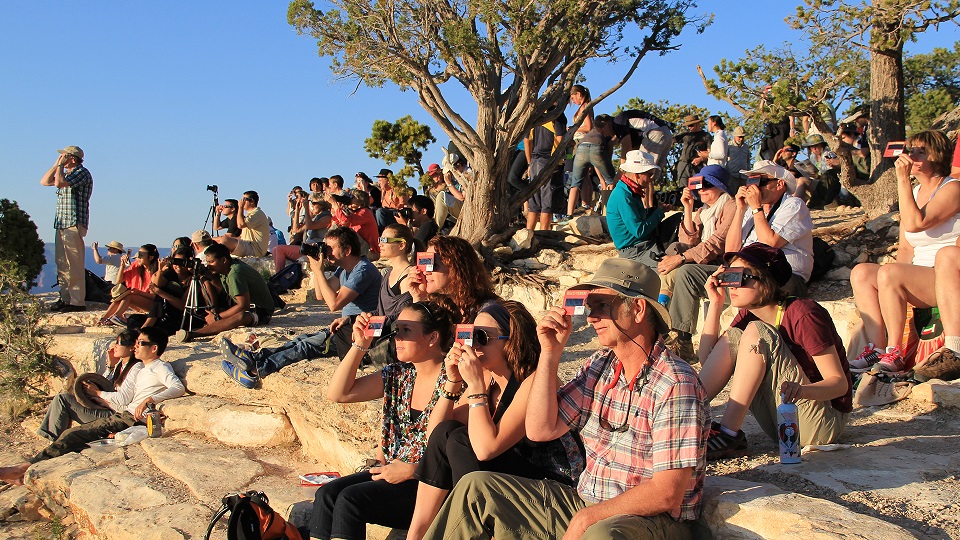
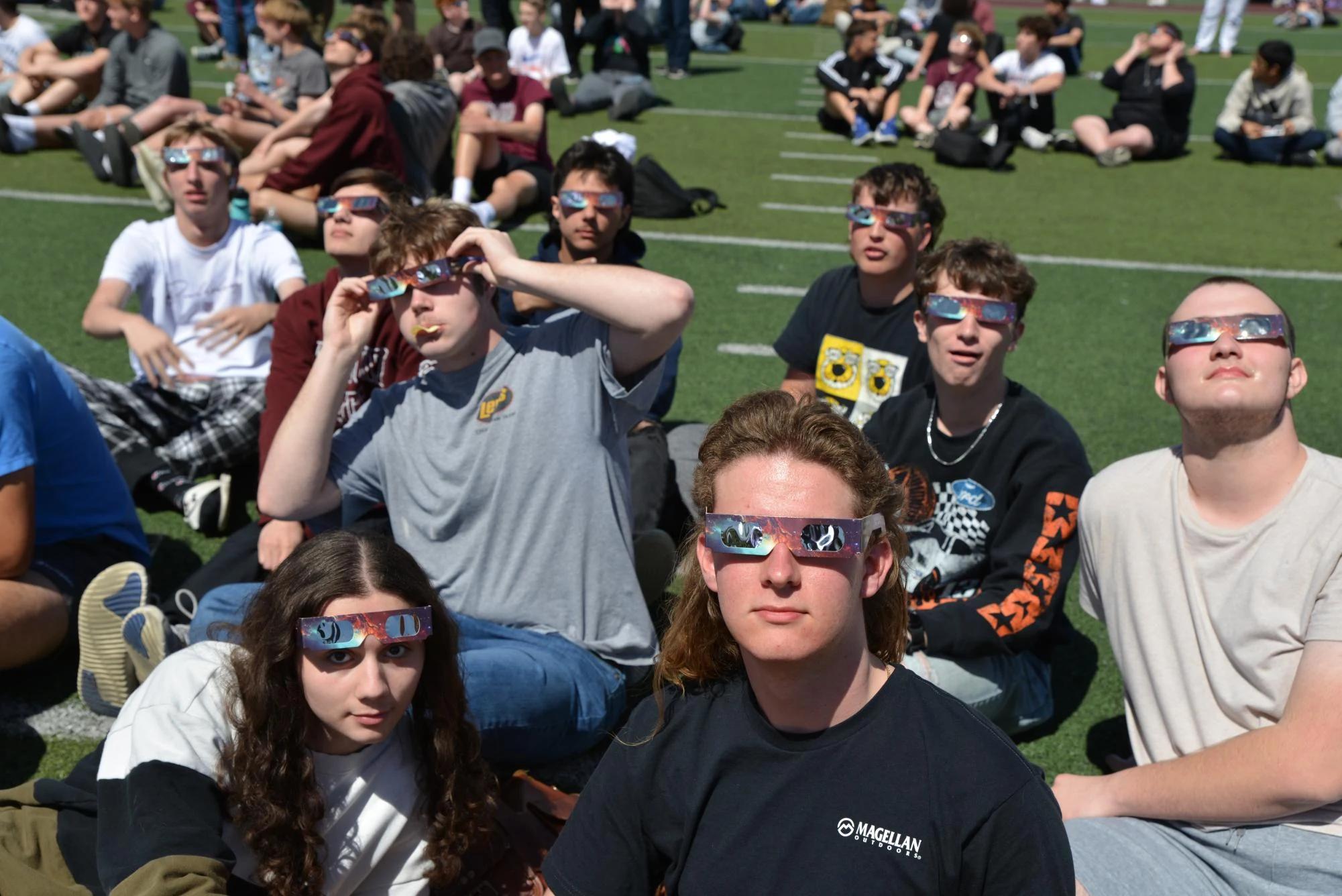
A classroom where everyone observes together may work best with one viewer per participant plus replacements. A museum with timed entry might safely reuse a managed pool only if staff inspect the viewers between sessions and storage prevents damage. A street festival with uncontrolled arrivals needs a different calculation: distribution points, volunteer stock, accessibility requirements, sponsor allocations, media kits, and late attendance can all change the total.
Build the order from named quantities:
- registered or expected attendees;
- staff, volunteers, speakers, and contractors;
- school or community partners receiving advance packs;
- accessible viewing formats, where offered;
- units reserved for demonstrations and training;
- a documented allowance for loss, defects, or attendance variance.
That final allowance should be an operational decision, not an excuse for arbitrary overbuying. A tightly controlled school event may need a smaller reserve than an open public gathering with several entrances. Whatever number you choose, record the assumption behind it.
The phrase bulk solar eclipse glasses can cover anything from a few multipacks to pallet-scale production. There is no universal threshold at which an order becomes “wholesale.” Suppliers may define it by minimum quantity, case size, account type, customization level, or negotiated pricing. Ask for the exact breakpoints and what changes at each one.
Likewise, organizations that want to bulk buy solar eclipse glasses do not always need a limited company or resale license. Requirements depend on the seller, jurisdiction, tax treatment, and whether the buyer will resell the product or distribute it at an event. A school, nonprofit, public agency, or employer may qualify for volume terms without becoming a wholesaler, while a retailer may need tax or business documentation. Confirm the rules before budgeting.
Price the delivered, usable viewer—not the headline unit
A solar eclipse glasses price shown on a product page may exclude the costs that dominate a customized or international order. Compare bids using the delivered cost per usable, on-time viewer.
Include:
- base quantity and unit cost;
- setup, printing, proofing, or artwork charges;
- packaging and case quantities;
- freight, insurance, taxes, customs duties, and brokerage;
- payment or currency-conversion fees;
- rush production or expedited shipping;
- replacement terms for shortages and defects;
- the financial effect of minimum-order increments.
For example, a cheaper viewer that arrives after staff training—or after the eclipse—is not cheaper. Nor is a low quote attractive if the seller cannot connect the delivered SKU to a credible test report.
Be cautious with promises of bulk solar eclipse glasses next day delivery. Next-day dispatch, next-day carrier service, and arrival at your venue on the next business day are three different commitments. Ask whether inventory is physically available and allocated, which warehouse will ship it, when the carrier takes possession, and what happens if the order misses its guaranteed date.
Local availability can also be misleading. A listing framed around solar eclipse glasses near me may identify a nearby shop without establishing who made the viewers or whether the retailer is authorized. Proximity is useful only after provenance and product evidence check out.
Plan backward from August 12, 2026
The total solar eclipse on August 12, 2026 will cross a narrow path that includes parts of Greenland, Iceland, and Spain, while a much broader region sees a partial eclipse. The distinction affects both demand and instructions. Use the Helioclipse Eclipse Explorer to check whether each event site is inside the path of totality and to examine local circumstances before writing your safety script.
Inside that path, certified viewers are required throughout the partial phases. They may be removed only during the brief interval when the Moon completely covers the Sun’s bright face. The moment any bright photosphere returns, viewers go back on. Outside the path—including locations experiencing a deep partial eclipse—there is no glasses-off interval at all. Our guide to eclipse phases and when to use solar glasses can form the basis of volunteer training.
Do not let sourcing language substitute for event geography. A wholesale solar eclipse glasses 2026 guide should connect purchasing deadlines to the actual event date, venue, audience, and local eclipse type. A wholesale solar eclipse glasses 2026 guide usa may be commercially oriented toward American buyers, but the August 2026 path of totality does not cross the contiguous United States; organizers there need location-specific partial-eclipse circumstances and must keep viewers on for every direct look.
Similarly, a page calling itself the best wholesale solar eclipse glasses 2026 guide is useful only if it verifies products and explains logistics rather than ranking attractive listings. Even the phrase best places and timing for wholesale solar eclipse glasses mixes two separate decisions: where and when the eclipse occurs is an astronomical question, while when to place an order depends on production, freight, customs, distribution, and training lead times.
Start with a delivery deadline, not the eclipse date. Allow time to inspect cartons, count inventory, replace defects, divide stock among venues, brief staff, and communicate instructions to attendees. Custom printing needs an earlier artwork lock, and cross-border freight needs contingency time. Tell partner schools, families, employees, and volunteers early so they do not arrive with unverified products bought at the last minute.
A practical approval workflow
Large orders are easier to manage when everyone uses the same gates. We recommend a six-stage workflow:
1. Define the use case
Record the eclipse date, every venue, expected attendance, audience ages, language needs, distribution method, and whether the event is inside totality or partial-only. Separate unaided-eye viewers from any filtered telescope or camera program.
2. Prequalify the supplier
Establish the legal seller, actual manufacturer, manufacturing location, authorized-reseller relationship, and point of contact for technical questions. Save independent verification rather than relying only on material sent with the quote.
3. Review technical evidence
Match the exact product to a quantitative ISO 12312-2 laboratory report. Verify the laboratory and its accreditation scope. Resolve inconsistent model names, dates, company names, or sample descriptions before moving forward.
4. Approve a sample and final artwork
Inspect construction, fit, filters, labeling, instructions, packaging, and customization. Make safety text a protected element of the design; sponsor artwork should never crowd it out.
5. Contract for quantity and delivery
Put the SKU, quantity, tolerance, packaging, destination, dispatch deadline, arrival deadline, replacement process, and total charges into the purchase order. “Wholesale solar glasses” or “solar eclipse glasses bulk” is too vague to identify what must arrive.
6. Inspect, quarantine, and distribute
Count cartons on arrival and inspect samples from across the shipment. Keep damaged or questionable units separate so they cannot drift back into usable stock. Store approved viewers dry, clean, and protected from bending, scratches, and punctures, then train the people handing them out.
This process also clarifies what wholesale means. A wholesaler typically supplies goods in quantity to retailers or organizational buyers, while a retailer primarily sells to the end user. Some manufacturers operate both channels. The label matters less than traceability: your contract and safety evidence must lead to the actual finished product.
Red flags that should pause the order
Stop and investigate if you encounter any of the following:
- ISO 12312-2 appears in marketing, but no relevant test report is available.
- The document reports only “pass” without quantitative transmission results.
- The tested product name does not match the quoted or sampled viewer.
- The laboratory cannot be found through the stated accreditation body, or its scope is unclear.
- The reseller says it is authorized, but the manufacturer will not confirm the relationship.
- The supplier refuses to identify the manufacturer or manufacturing address.
- A sample’s filter is loose, scratched, punctured, creased, or poorly retained.
- Safety instructions disappear beneath custom branding or are not in the audience’s language.
- The seller claims endorsement by NASA or treats a standards logo as government approval.
- Delivery promises are verbal, conditional, or inconsistent with the production schedule.
- Payment must be completed before you can review final artwork or product evidence.
The broad phrase wholesale solar eclipse can attract sellers with expertise in promotional merchandise but little knowledge of solar safety. Promotional capability is not the same as technical competence. Custom printing, attractive packaging, and a fast quote become relevant only after the viewer itself passes due diligence.
Build safety into distribution, not just purchasing
A verified product can still be misused. Include a short briefing with every staff or volunteer team: inspect before use, put the viewer on before looking up, turn away before removing it, supervise children, and never combine eclipse glasses with unfiltered magnifying optics.
For total-eclipse events, the glasses-off instruction must be location-aware and controlled. Only observers inside the path of totality may look without viewers during complete coverage of the Sun’s bright face. Partial and annular eclipses never provide that interval. If the team cannot confidently identify totality’s beginning and end, it should use a trained announcer or keep the audience following conservative direct-viewing instructions.
Have an indirect-viewing fallback as well. Pinhole projection allows a crowd to follow the changing solar crescent without looking through a device at the Sun. It does not replace the emotional immediacy of direct filtered viewing, but it keeps an event educational if inventory is damaged, delayed, or exhausted.
Most importantly, do not distribute questionable viewers because the event has already started. A delayed or reduced handout is inconvenient; abandoning the verification standard is not an acceptable fix.
Frequently asked questions
What should organizers check before placing a large order of solar eclipse viewers in 2026?
Verify the exact product identity, written evidence of conformity with ISO 12312-2, laboratory competence, supply-chain traceability, labeling, physical condition, delivery terms, and total delivered cost. Keep the supporting files, links, names, dates, and written assurances in the procurement folder.
What should a U.S.-based organizer confirm when ordering solar eclipse viewers in bulk?
Request documentation that applies to the exact viewers being delivered, including the finished-product name or model, manufacturer, manufacturing address, and a quantitative laboratory report. Also confirm the quantity, production and dispatch dates, carrier, destination, taxes, shipping, duties, and any rush charges in writing.
How can I compare bulk solar eclipse viewer suppliers without relying only on price or a standards label?
Do not treat a standards marking or a low unit price as proof of suitability. Compare suppliers by their test evidence, relevant laboratory accreditation and testing scope, authorized-reseller status, final labeling, packaging, defect process, and confirmed delivery schedule.
What is the safest procurement approach for providing eclipse viewers to a large audience?
Use viewers supported by credible evidence of conformity with ISO 12312-2 and ensure that the documentation applies to the exact product being supplied. Before distribution, check that instructions and warnings are legible in the audience’s language and that viewers are not scratched, punctured, loose, or moisture-damaged.
How should an event organizer plan for weather and visibility when ordering eclipse viewers?
The excerpt does not provide weather or visibility planning advice. For order planning, it recommends confirming realistic production, dispatch, carrier, and delivery details rather than assuming that an “in stock” claim means inventory is allocated to your event.
On-site next steps
- Review Helioclipse solar eclipse glasses and available pack options, then contact us with enough lead time to discuss the quantity and destination relevant to your event.
- Use the Eclipse Explorer to confirm whether each venue will experience totality or a partial eclipse before finalizing printed instructions.
- Keep the order record together: product identity, test evidence, supplier traceability, approved artwork, delivery commitments, inspection results, and staff guidance.
Sources & further reading
- American Astronomical Society, Suppliers of Safe Solar Viewers & Filters
- American Astronomical Society, How to Get Onto Our List of Manufacturers of Safe Solar Viewers & Filters
- American Astronomical Society, How Can You Tell If Your Eclipse Glasses or Handheld Solar Viewers Are Safe?
- American Astronomical Society, About the ISO 12312-2 Standard for Solar Viewers
- American Astronomical Society, Community Eclipse Planning White Paper, 2nd Edition
- NASA Science, Eclipse Viewing Safety
- American Astronomical Society, How to View a Solar Eclipse Safely
- American Astronomical Society, Solar Filters for Optics: Telescopes, Binoculars & Cameras
- NASA Science, Eclipses Frequently Asked Questions
- NASA Science, Eclipses