Umbras, penumbras, magnitude, obscuration: eclipse vocabulary in plain language
If eclipse language has ever made you feel like you need a decoder ring, you are not alone. A lot of the most important words sound technical at first: umbra, penumbra, obscuration, magnitude, antumbra, contacts. But once you connect them to what you would actually see in the sky, the whole subject gets much easier.
This guide is our plain-English walkthrough of the terms people trip over most often. Think of it as umbra penumbra solar eclipse terms explained, but without the textbook stiffness. We will tie the vocabulary to real experience on the ground, to what eclipse maps are showing you, and to the safety decisions that matter. If you want to see where you would be inside or outside totality for a future event, start with our Eclipse Explorer / 3D map.
You may also have landed here looking for umbra penumbra solar eclipse terms explained 2026 guide material ahead of the August 12, 2026 eclipse. The good news is that the same core words work for every eclipse. Learn them once, and maps, forecasts, and planning guides suddenly make much more sense.
Start with the big idea: eclipses are shadow geometry
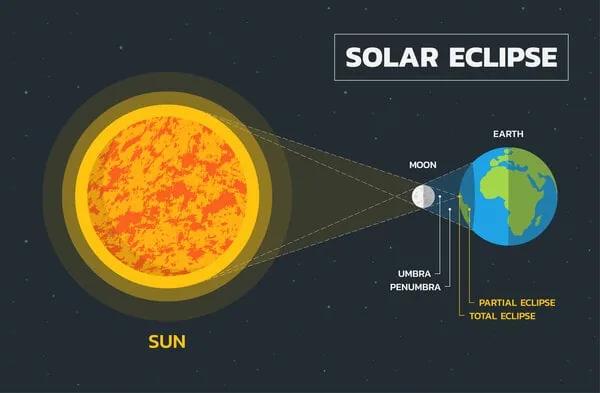
A solar eclipse happens when the Moon moves between Earth and the Sun and casts a shadow on Earth. A lunar eclipse happens when Earth moves between the Sun and the Moon and Earth’s shadow falls on the Moon.
That is why so much solar eclipse vocabulary is really shadow vocabulary. The key question is always: where are you relative to the darkest part of the shadow, the lighter outer part, or neither?
For solar eclipses, that answer determines whether you see a partial eclipse, an annular eclipse, or a total solar eclipse. For lunar eclipses, it determines whether the Moon passes through Earth’s penumbra, Earth’s umbra, or both.
If you remember only one thing, remember this: eclipse terms are not fancy labels pasted on top of the event. They describe the actual geometry that decides what you see.
Umbra and penumbra in simple words
Let’s do the two words everyone asks about first.
Umbra
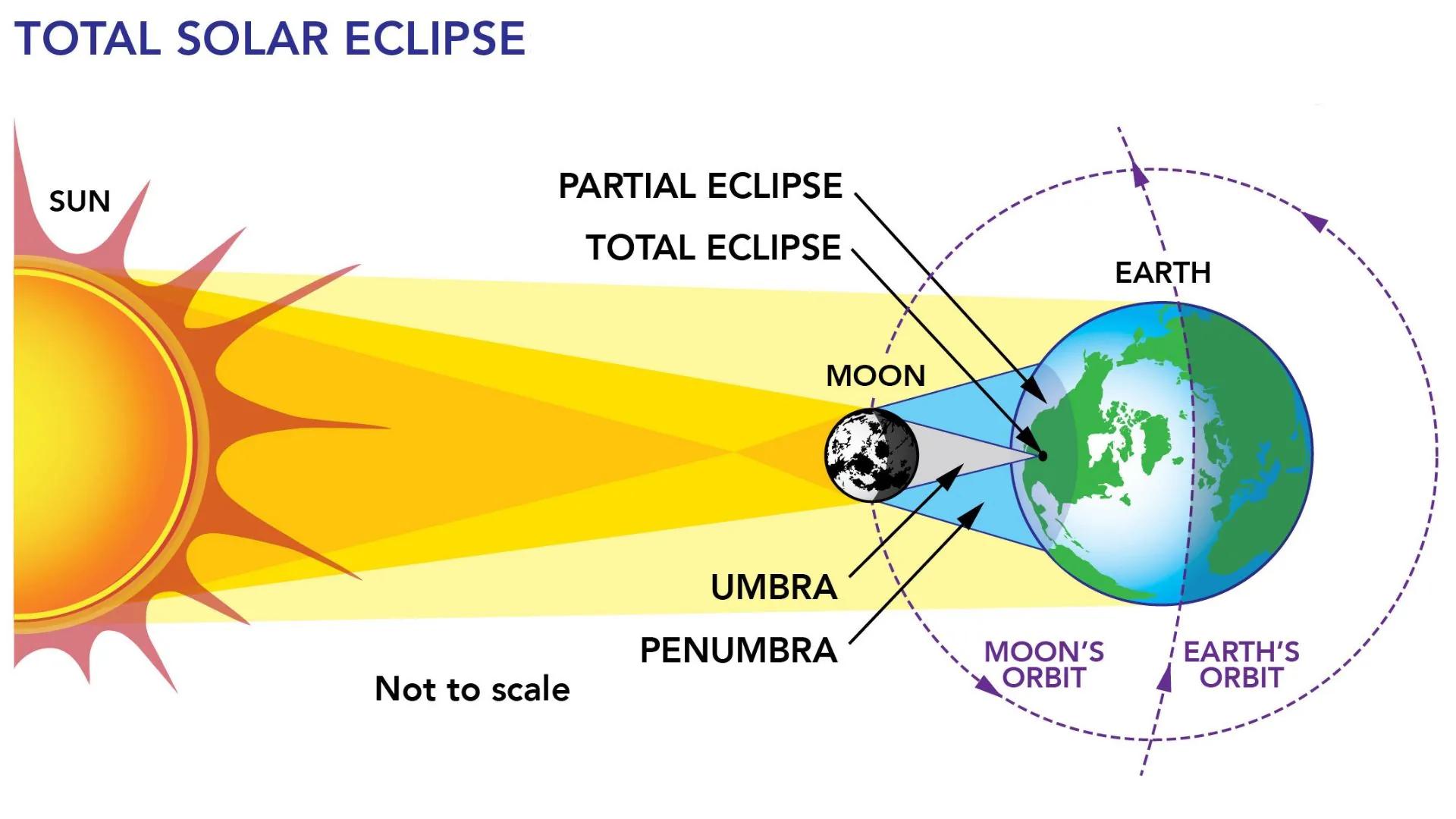
The umbra meaning in solar eclipse language is simple: it is the darkest central part of the Moon’s shadow. If you are standing inside the umbra during a solar eclipse, the Moon completely covers the Sun’s bright face. That is where totality happens.
A more formal umbra definition in a solar eclipse would be: the region of shadow where the bright solar disk is fully blocked. In plain language, it is the “you are in the right place for totality” zone.
That is why maps matter so much. The path of totality is basically the track of the umbra across Earth. If your town is outside that narrow path, you are not in the umbra, and you will not get totality no matter how dramatic the partial eclipse looks.
Penumbra
The penumbra is the lighter outer part of the shadow. During a solar eclipse, if you are in the penumbra, the Moon covers only part of the Sun. You see a partial eclipse, not totality.
This is the heart of solar eclipse penumbra language: the penumbra is huge compared with the umbra, so many more people see a partial eclipse than a total one. NASA notes that the umbral path on Earth can be relatively narrow, while the penumbral zone can spread across a much wider region.
Put those together and you get the core pair behind eclipse terms umbra penumbra: the umbra gives you totality, the penumbra gives you partial phases.

Solar eclipse umbra and penumbra: what it feels like on the ground
Definitions are useful, but the sky is better.
In the solar eclipse umbra and penumbra story, the penumbra is where daylight stays daylight, even if it becomes eerie. The Sun turns into a bitten disk, then a crescent. Shadows sharpen. Light can look strange and metallic. Temperatures may dip a little. But the world does not suddenly become night.
The umbra is different. During totality, daylight collapses into deep twilight. Bright planets or stars may appear. The corona becomes visible around the black disk of the Moon. The horizon can glow like a 360-degree sunset. This is why experienced observers are so insistent about the difference between “99% partial” and totality: they are not almost the same experience.
That distinction is central to planning for events like August 12, 2026. If you are reading broader guides for that eclipse, our post on August 12, 2026 total solar eclipse: what to expect and how to plan ahead goes deeper into the travel and timing side.
Magnitude vs obscuration: the two numbers people mix up most
These two terms cause more confusion than almost anything else.
Eclipse magnitude
Eclipse magnitude is the fraction of the Sun’s diameter covered by the Moon.
That sounds abstract, but picture the Sun as a circle measured straight across. Magnitude tells you how much of that width is covered. If the eclipse magnitude is 0.5, then half the Sun’s diameter is covered.
Eclipse obscuration
Eclipse obscuration is the fraction of the Sun’s surface area covered by the Moon.
That is a different measurement. Area is not the same thing as width, so the numbers do not match. The American Astronomical Society points out a useful example: when eclipse magnitude is 50%, the obscuration is only about 40%. And when 50% of the Sun’s area is obscured, the magnitude is roughly 60%.
Why this matters
If you read a forecast saying “90% eclipse,” you need to know which number it means. A headline may sound dramatic, but magnitude and obscuration are not interchangeable.
This is also why a very high partial eclipse can still fail to deliver the emotional punch of totality. Even a large obscuration leaves some of the Sun’s bright photosphere uncovered, and that remaining sunlight is powerful enough to keep the sky much brighter than people expect.
So when you compare locations on a map, do not just chase a big percentage. Ask: am I in the penumbra or the umbra? That is the real dividing line.
Totality, partial eclipse, annular eclipse, and antumbra
Once you know umbra and penumbra, the main eclipse types fall into place.
Partial solar eclipse
A partial solar eclipse means the Moon covers only part of the Sun. You are in the penumbra, not the umbra.
This is what most people see for most eclipses. It can still be beautiful, but it never becomes safe to look directly without proper solar protection.
Total solar eclipse and totality
A total solar eclipse happens when the Moon completely covers the Sun’s bright photosphere for observers inside the umbra.
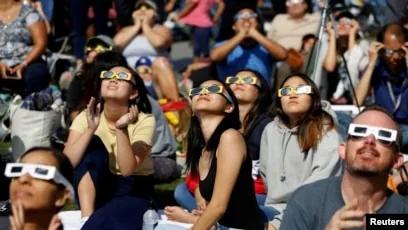
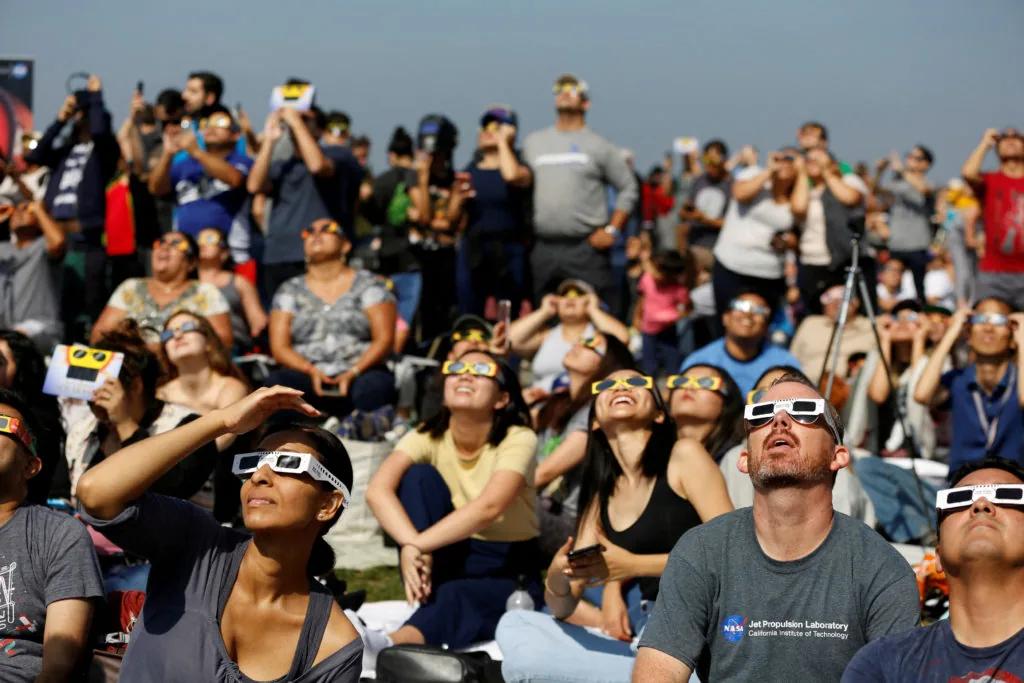
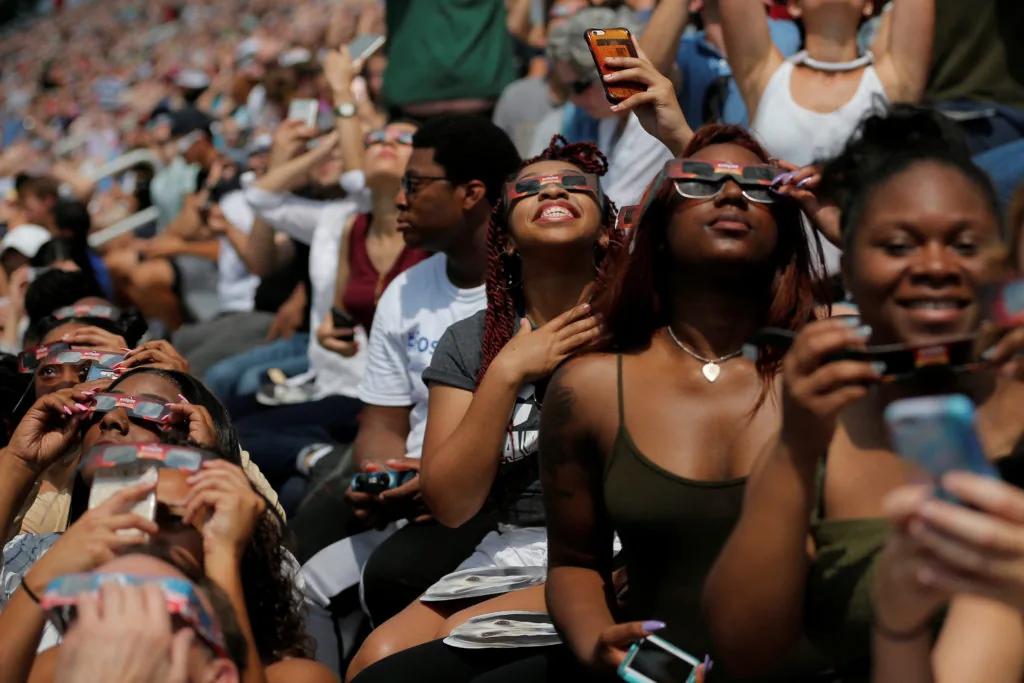
Totality is the brief interval between second and third contact when the Sun’s bright face is fully covered. This is the only time during a solar eclipse when direct viewing without eclipse glasses is appropriate, and only for people actually inside the path of totality. If you want the practical version of that rule, read When glasses on, when glasses off: eclipse phases explained for first-time viewers.
Annular eclipse and antumbra
An annular eclipse happens when the Moon is too far away from Earth to appear large enough to cover the Sun completely. Instead, a bright ring remains around the Moon.
The relevant shadow term here is antumbra. That is the region beyond the umbra where the Moon appears smaller than the Sun. If you are in the antumbra, you see an annular eclipse, not totality.
This is one of the most useful answers to “what is umbra, penumbra and antumbra?” Umbra means full cover of the Sun’s bright face, penumbra means partial cover, antumbra means the Moon is centered but still too small to finish the job.
Contacts: the timestamps that structure the whole event
Eclipse chasers talk about contacts because they mark the major transitions.
- First contact (C1): the Moon first appears to touch the Sun. The partial phase begins.
- Second contact (C2): totality or annularity begins.
- Third contact (C3): totality or annularity ends.
- Fourth contact (C4): the Moon fully leaves the Sun’s disk. The eclipse is over.
If you are reading local circumstances tables, these labels matter. They tell you whether a listed duration refers to the full event or only to totality/annularity.
For a total eclipse, “duration” usually means the time from C2 to C3. That is the precious part. It may last only seconds near the edge of the path and a few minutes near the centerline.
Centerline, path of totality, and why a few kilometers can matter
A map is not just a pretty stripe across a country. It is a geometry tool.
The path of totality is the area on Earth swept by the Moon’s umbra. Inside it, you get totality. Outside it, you do not.
The centerline is the middle of that path. In general, it is where totality lasts longest. Move toward the edge of the path and totality gets shorter. Move outside the path and totality disappears entirely, replaced by a partial eclipse in the penumbra.
That is why we encourage people not to plan from a single percentage alone. Use the Eclipse Explorer / 3D map to check whether your exact viewing spot is inside the umbra, near the centerline, or only in the penumbra. For regional planning pieces, such as our guide to 2026 totality in Spain: path basics, timing, and what “on the centerline” really means, those distinctions are the difference between a life-list sky event and a strong but still partial show.
Baily’s beads, diamond ring, corona, chromosphere, prominence
These are the words people often hear in dramatic eclipse coverage.
Baily’s beads
Just before and just after totality, sunlight can shine through valleys along the Moon’s edge and appear as bright beads.
Diamond ring
When one especially bright bead remains with the faint corona around it, you get the diamond ring effect. It is beautiful, but it is also a warning sign that totality is beginning or ending. Outside the brief safe interval of totality, you need proper eye protection.
Corona
The corona is the Sun’s outer atmosphere, visible only when the bright photosphere is blocked. This is the ghostly white halo people travel across countries to see.
Chromosphere and prominences
The chromosphere is a thin reddish layer above the photosphere, briefly visible around totality. Prominences are arcs or loops of hot gas that can show up as pink-red features along the edge.
These terms matter because they explain why totality is not just “the Sun covered up.” It reveals solar structures you normally cannot see with the naked eye.
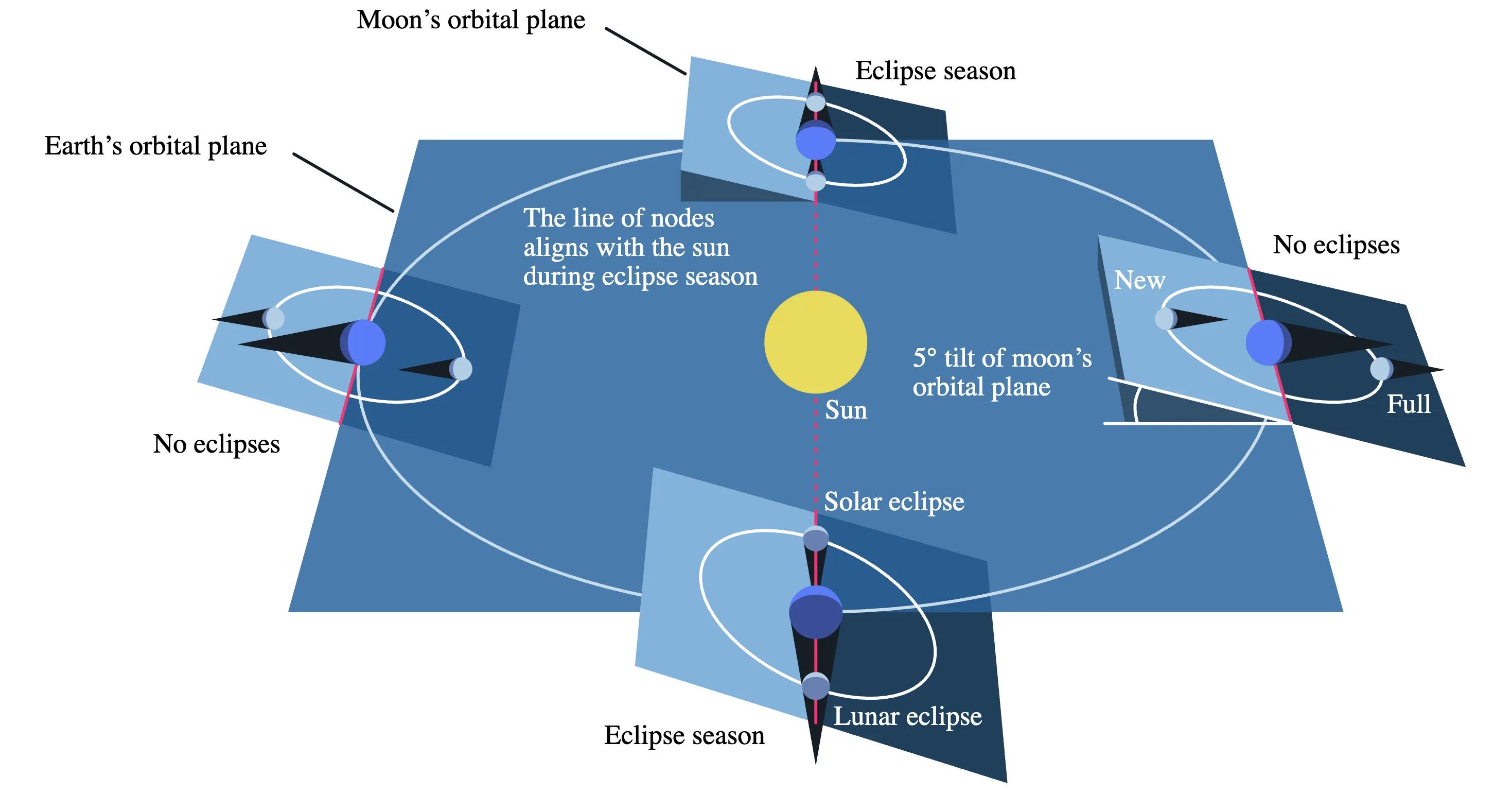
Eclipse season, nodes, ecliptic, syzygy: the words behind “why doesn’t this happen every month?”
A new Moon happens every month, but a solar eclipse does not. Why?
Because the Moon’s orbit is tilted by about 5 degrees relative to Earth’s orbital plane. Most months, the Moon passes a little above or below the Sun from our point of view, so its shadow misses Earth.
The two places where the Moon’s orbit crosses Earth’s orbital plane are called the nodes. Eclipses can happen only when the Sun is near one of those nodes at the same time the Moon is new or full.
An eclipse season is the period when that alignment is possible. The ecliptic is the plane of Earth’s orbit around the Sun, or the Sun’s apparent yearly path in the sky. And syzygy is the wonderfully odd technical word for a lineup of three bodies.
You do not need to use “syzygy” at dinner, but it is a real term, and yes, astronomers love it.
Lunar eclipse terms: same shadow words, different event
The phrase lunar eclipse terms matters because people often mix solar and lunar shadow language together. The words overlap, but the geometry flips.
In a solar eclipse, the Moon’s shadow falls on Earth.
In a lunar eclipse, Earth’s shadow falls on the Moon.
That means lunar eclipse vocabulary still includes umbra and penumbra, but now they refer to parts of Earth’s shadow.
A total lunar eclipse happens when the Moon moves fully into Earth’s umbra. A partial lunar eclipse happens when only part of the Moon enters the umbra. A penumbral lunar eclipse happens when the Moon passes only through Earth’s penumbra, often causing a subtler dimming.
If you have ever wondered what is umbra and penumbra in lunar eclipse, the answer is straightforward: the umbra is Earth’s darker central shadow, and the penumbra is Earth’s fainter outer shadow. The Moon can pass through one, the other, or both.
That is why what is umbra and penumbra in lunar eclipse is not really a separate mystery from solar eclipses. The same shadow logic applies; the casting body changes.
Umbra and penumbra examples you can picture without a diagram
Good definitions stick better when you can imagine them.
Here are a few umbra and penumbra examples in everyday language:
- If you are in the path of totality during a solar eclipse, you are in the umbra.
- If your city gets a deep partial eclipse but never totality, you are in the penumbra.
- If an annular eclipse leaves a bright ring around the Moon, observers on that narrow central track are in the antumbra.
- During a lunar eclipse, the dark bite crossing the Moon is the advancing umbra; the subtler dimming before or after can be the penumbra.
You can even think of an ordinary shadow cast by a lamp: the darkest central part is like an umbra, and the fuzzier edge is like a penumbra. Eclipse shadows are the same idea, just on a planetary scale.
The safety words that matter most
Not every eclipse term is about geometry. Some are about not making a painful mistake.
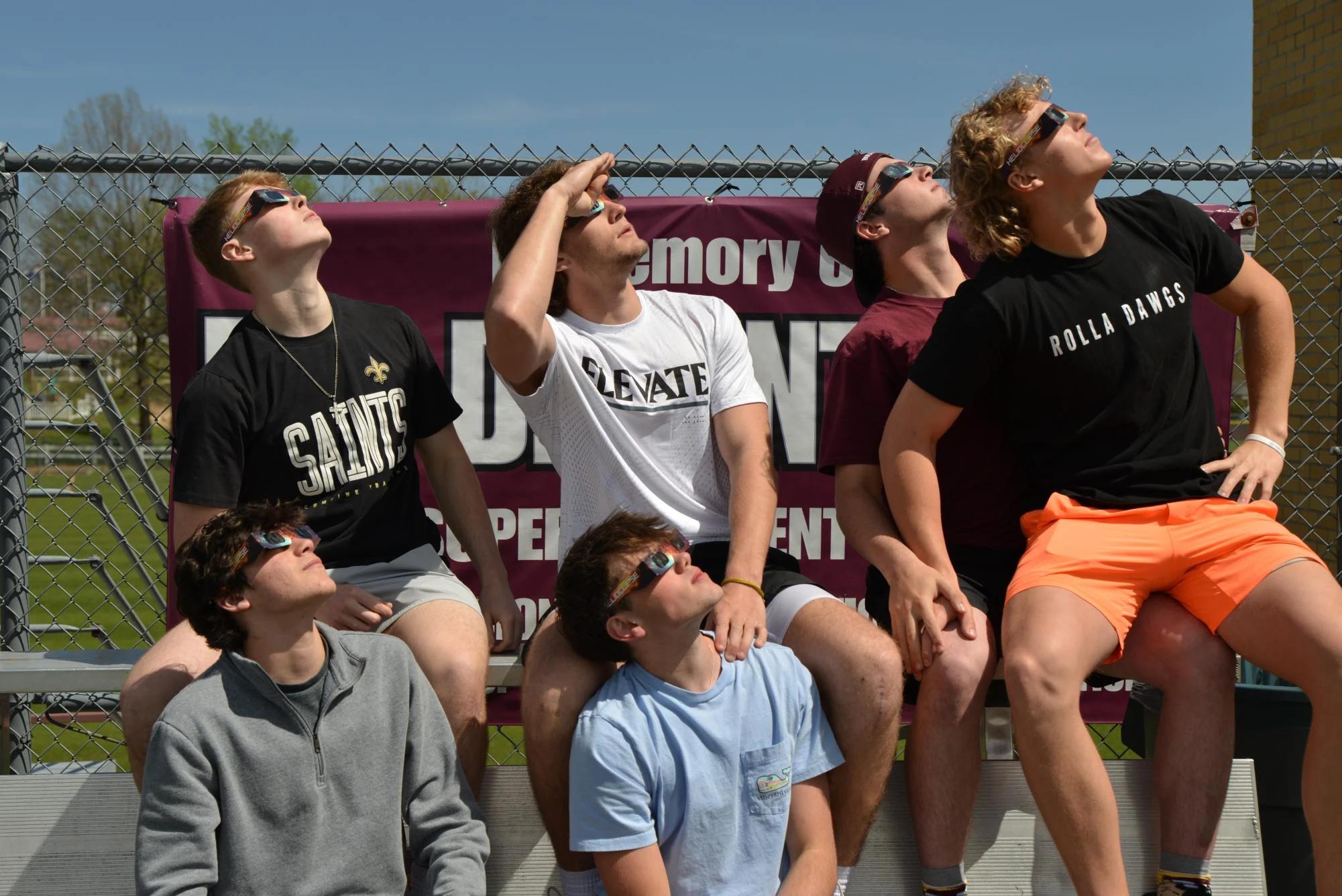
The visible surface of the Sun is the photosphere. As long as any part of that bright photosphere is still visible, you need proper solar viewing protection for direct viewing.
That is why “almost total” is not a safety category. A 99% partial eclipse is still a partial eclipse. If any bright photosphere remains, keep your certified viewers on.
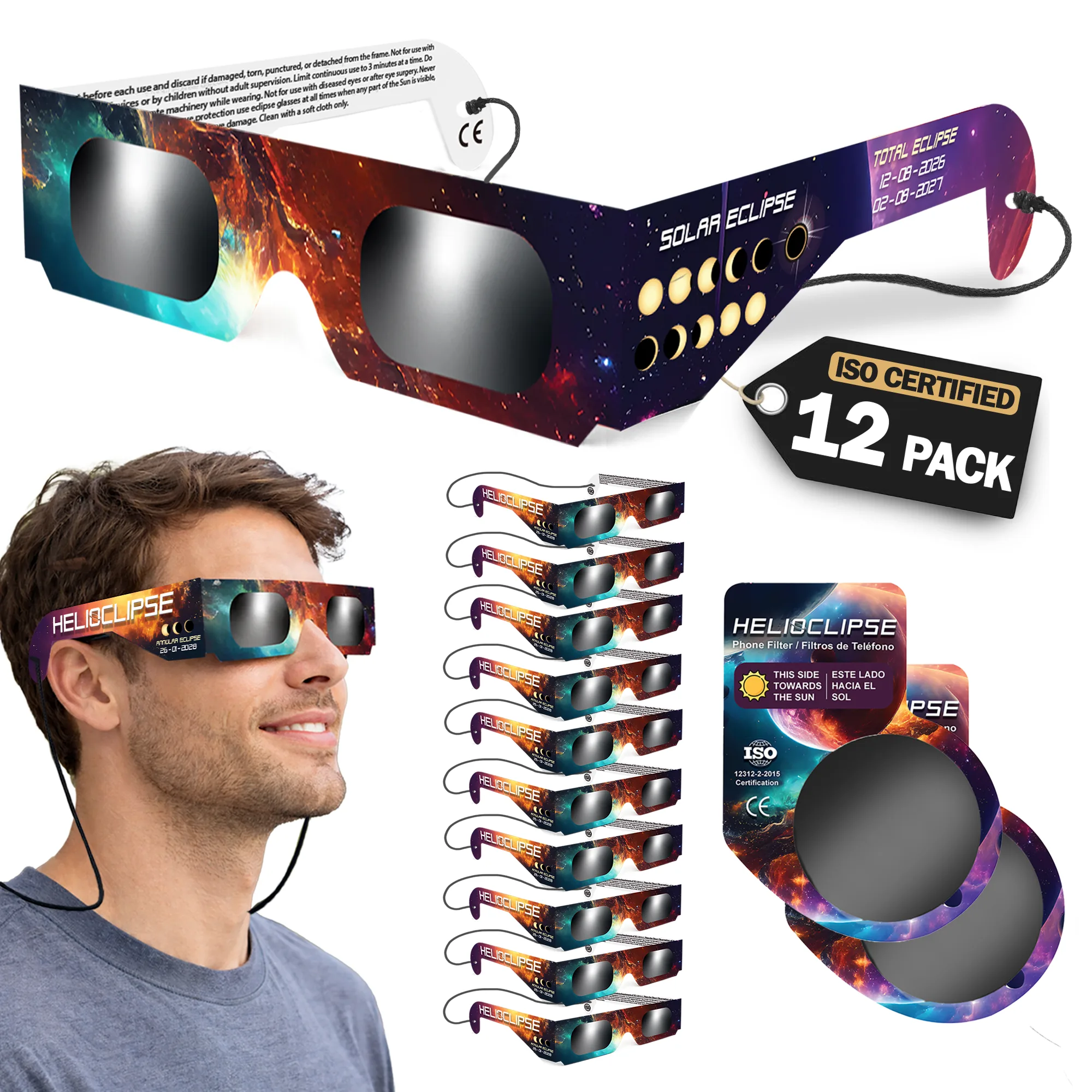
If you are shopping, ignore vague marketing and look for clear standards language. Readers often search phrases like approved solar eclipse glasses, solar eclipse glasses iso 12312-2 certified, or certified solar eclipse glasses because they are trying to separate real solar viewers from random dark eyewear. That instinct is right. Regular sunglasses are not enough, and neither is a product page that sounds reassuring without giving you a real standard to verify.
For our practical breakdown of the standard, see ISO 12312-2 and eclipse viewers: what the standard means for your family. If you are ready to get viewers sorted early for your group, our Shop eclipse glasses page is the place to start.
One more important note: NASA does not certify a particular retail brand of eclipse glasses. So when shoppers use phrases like eclipse glasses nasa approved, what they usually mean is that they want viewers that meet accepted safety guidance and are sold with credible standards information. That is a good goal, but the wording can be misleading if you take it too literally.
Why this vocabulary matters more in 2026 and other big eclipse years
When a major eclipse approaches, language that seemed academic suddenly becomes practical.
For the August 12, 2026 eclipse, for example, NASA notes that totality will cross Greenland, Iceland, northern Russia, the Atlantic, Spain, and a small corner of Portugal, while a much larger surrounding region will see a partial eclipse. That is a perfect real-world use of the terms in this guide: a narrow umbral path for totality, a broad penumbral zone for partial phases.
If you are planning with friends, family, or a school group, this is exactly when umbra penumbra solar eclipse terms explained 2026 guide language stops being search jargon and starts being logistics. Are you traveling into the umbra or staying in the penumbra? Are you near the centerline or near the edge? Are you reading magnitude or obscuration? Are you prepared for the partial phases before and after totality?
And if you were hoping to find an umbra penumbra solar eclipse terms explained pdf, we would make a small suggestion: a live glossary is usually more useful than a static handout because you can jump straight from the terms to maps, safety guides, and planning posts.

A quick plain-English glossary you can actually remember
Here is the short version to keep in your head:
- Umbra: darkest central shadow; in a solar eclipse, this is where totality happens.
- Penumbra: lighter outer shadow; in a solar eclipse, this is where you see a partial eclipse.
- Antumbra: region where the Moon is centered on the Sun but appears too small to cover it fully; this gives an annular eclipse.
- Magnitude: how much of the Sun’s diameter is covered.
- Obscuration: how much of the Sun’s area is covered.
- Totality: the brief interval when the Sun’s bright face is fully covered.
- Path of totality: the track of the umbra across Earth.
- Centerline: the middle of that path, usually where totality lasts longest.
- Contacts: the key moments marking the start, middle transitions, and end of the eclipse.
- Corona: the Sun’s outer atmosphere, visible during totality.
If you came here wanting umbra penumbra solar eclipse terms explained, that is the compact version. If you came here for umbras, penumbras, magnitude, obscuration: eclipse vocabulary in plain language, that is the fuller version with the “why it matters” attached.
Every ECLIPSE Types & Terms explained by an Iris Grandpa
Everything Explained
Frequently asked questions
What do the umbra and penumbra mean in an eclipse?
The umbra is the darkest central part of the Moon’s shadow, where the Sun is fully blocked and totality can happen. The penumbra is the lighter outer part of the shadow, where you see a partial eclipse instead of totality.
Do the same eclipse terms still apply for the 2026 eclipse?
Yes. The article says the core shadow terms work for every eclipse, including the August 12, 2026 event. Learning them once makes maps, forecasts, and planning guides much easier to understand.
Can a plain-language guide help me understand eclipse terms in a downloadable format?
Yes, if it explains the terms through real shadow geometry rather than just definitions. The article’s approach is to connect words like umbra and penumbra to what you would actually see in the sky and on eclipse maps.
How are the umbra and penumbra used when describing a solar eclipse?
They describe where you are relative to the Moon’s shadow and what kind of eclipse you see. If you are in the umbra, the Sun is completely covered and totality occurs; if you are in the penumbra, you see only a partial eclipse.
What does the penumbra tell me during a solar eclipse?
The penumbra is the lighter outer shadow, so being in it means you are outside the path of totality. In that region, the eclipse is partial rather than total, because the Moon does not fully cover the Sun.
On-site next steps
- Explore your exact eclipse geometry with our Eclipse Explorer / 3D map. Check whether your location is in the umbra, penumbra, or outside the shadow entirely.
- If you will be viewing any partial phases, get your eye protection sorted early at our Shop eclipse glasses.
- Keep learning with the Helioclipse blog, especially our guides on eclipse phases and when to use solar glasses and why looking at the Sun unprotected is never “just a quick look”.
Sources & further reading
- A Solar Eclipse Glossary - American Astronomical Society
- Why Do Eclipses Happen? - NASA Science
- A guide to eclipse vocabulary - The Planetary Society
- Eclipses - NASA Science
- Eclipses Frequently Asked Questions - NASA Science
- Eclipses and the Moon - NASA Science
- Solar eclipse glossary - Astronomy Magazine
- Glossary term: Umbra - Astro4Edu
- How Dark Does It Get During a Total Solar Eclipse? - Sky & Telescope
- Partial: The Solar Eclipse for the Rest of Us - Sky & Telescope